Guru Tattva Meaning: The Hindu Principle of the Spiritual Teacher
Guru Tattva is the Hindu principle of wisdom that removes inner darkness through teaching, discipline, and lived guidance.
The Guru is not only a person who answers questions. In Hindu thought, the Guru is the light by which a question becomes worthy of the Self.
Guru Tattva meaning is the principle that spiritual wisdom descends through a teacher, scripture, disciplined practice, and inner readiness. Guru (गुरु, spiritual teacher who removes darkness) and tattva (तत्त्व, principle or truth) together point to the living force of guidance that helps a seeker move from confusion to discernment. This is why Guru Purnima, observed in 2026 on Wednesday, July 29 according to Drik Panchang, is not merely a teacher appreciation day. It is a sacred pause to honor the source of wisdom itself. Drik Panchang
In Sanatan Dharma, the Guru is respected because knowledge is not treated as information alone. True knowledge must be received, contemplated, tested in conduct, and allowed to purify the heart.
What is Guru Tattva meaning in Hindu wisdom?
Guru Tattva meaning begins with a simple insight: spiritual teaching is not complete until it changes the way a person sees. A textbook may inform. A speaker may inspire. A Guru, in the classical sense, points the disciple toward truth with the authority of lineage, experience, and compassion.
The word guru is often explained through the syllables gu and ru: darkness and remover. While this popular etymology is taught in many traditions, its deeper force is practical. The darkness is not ordinary ignorance alone. It is avidya (अविद्या, mistaken knowledge or spiritual ignorance), the confusion that makes the temporary look permanent and the ego look like the Self.
The tattva part matters equally. A Guru may appear as a human teacher, a scripture, a mantra, a life event, a deity form, or even an inner clarity that arrives after sincere practice. But the principle behind all of these is the same: wisdom reveals what was hidden.
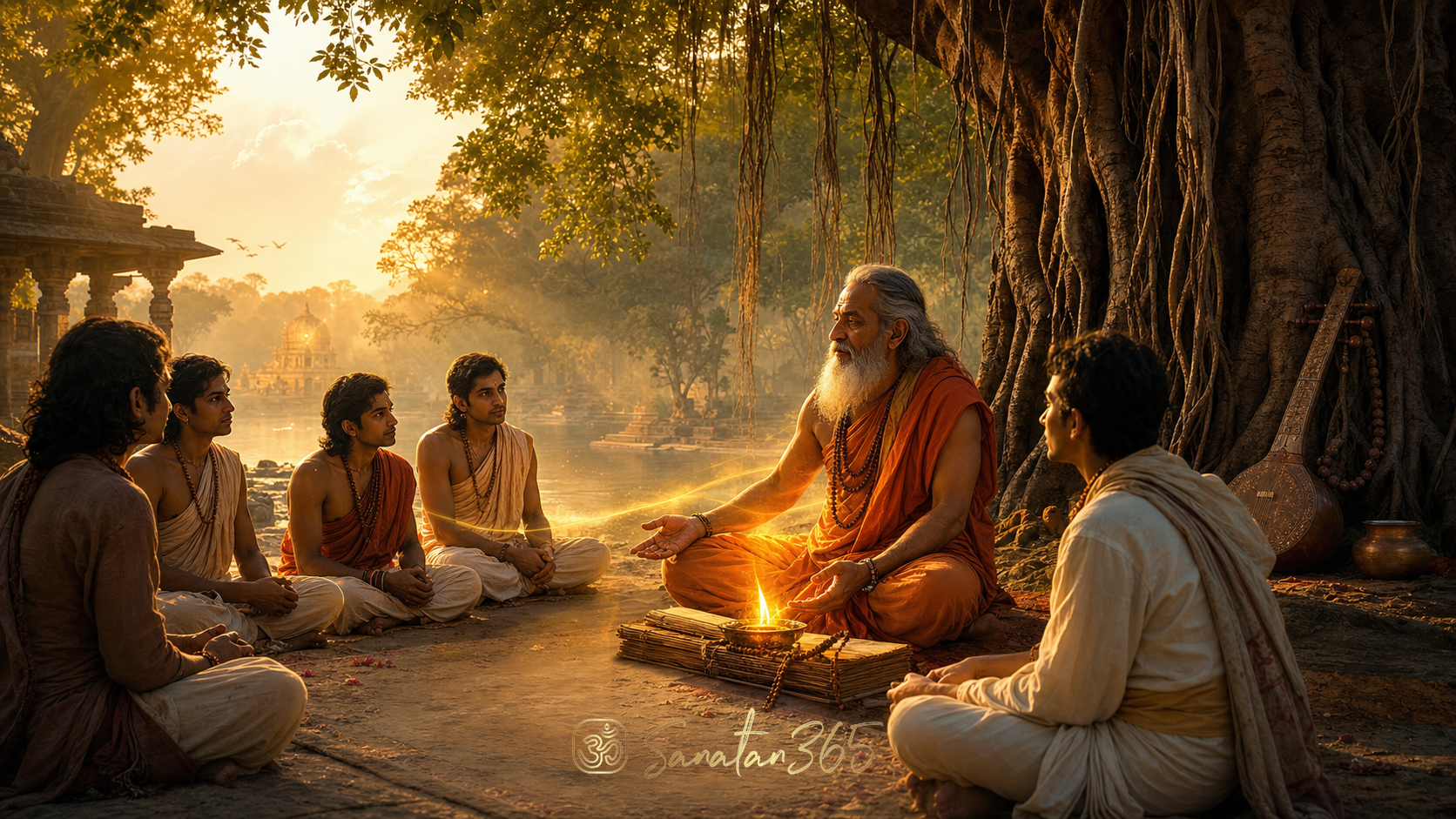
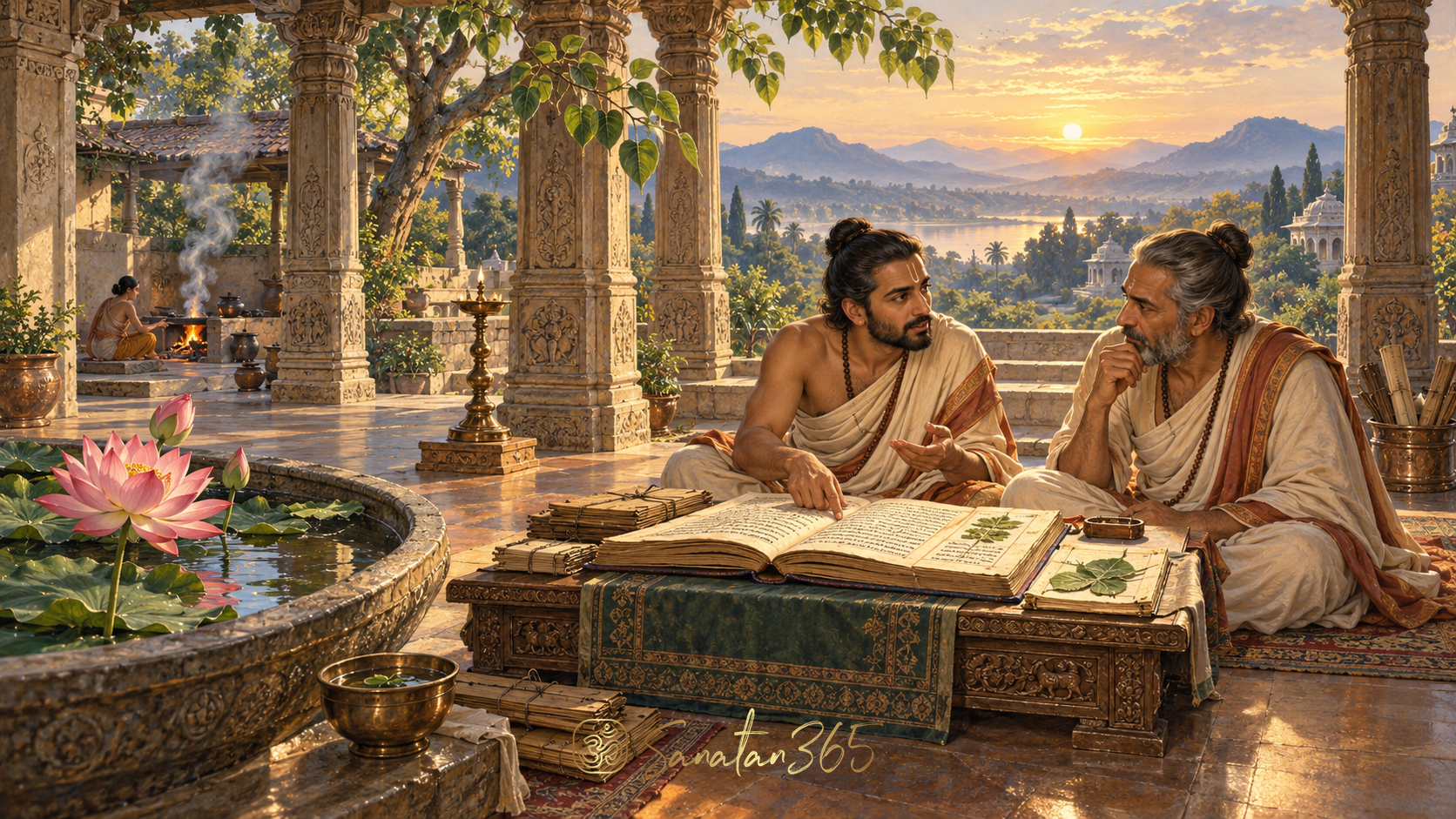
This is why Hindu tradition speaks of the guru-shishya parampara (गुरु-शिष्य परम्परा, teacher-disciple lineage). Wisdom is carried not as a private opinion, but as a living current. The disciple receives it with humility, tests it through practice, and then becomes capable of preserving it without distortion.
Key takeaway: Guru Tattva is the wisdom principle that turns teaching into transformation.
Why is the Guru central in Sanatan Dharma?
The Guru is central because Sanatan Dharma treats liberation as a matter of direct seeing, not borrowed belief. A seeker may read many texts, perform rituals, and hear many talks, but the inner knots of pride, fear, and confusion can remain. The Guru helps the seeker place knowledge in the right order.
The Mundaka Upanishad gives one of the clearest instructions. It says that a seeker who wishes to know the highest truth should approach a teacher who is shrotriya (श्रोत्रिय, rooted in scripture) and brahmanishtha (ब्रह्मनिष्ठ, established in Brahman). This is a demanding standard. The Guru must not only know the words of the tradition; the Guru must also be anchored in the truth those words reveal. Mundaka Upanishad reference
This distinction protects the seeker from two extremes. One extreme is intellectual pride, where sacred texts become material for argument. The other is emotional dependence, where devotion becomes personality worship. Guru Tattva is neither. It joins disciplined learning with reverence.
In the Hindu imagination, the Guru also appears through divine forms. Dakshinamurti (दक्षिणामूर्ति, Shiva as the silent teacher) is a powerful example. He is shown as the supreme teacher whose silence itself communicates knowledge to sages. This does not mean words are unnecessary. It means that the highest teaching finally becomes direct recognition, beyond debate and display. Indica Today
Key takeaway: The Guru is honored because right guidance protects sacred knowledge from becoming either dry theory or blind emotion.
How does Guru Purnima 2026 connect to Guru Tattva?
Guru Purnima is the annual full-moon observance dedicated to honoring teachers and the lineage of wisdom. In 2026, Guru Purnima falls on Wednesday, July 29 for New Delhi, with the Purnima tithi beginning on July 28 and ending on July 29 according to Drik Panchang. Local panchang timings can vary by region, so families and temples usually follow their local calendar. Drik Panchang
For Hindus, Guru Purnima is strongly associated with Sage Vyasa, also called Veda Vyasa, who is traditionally honored for arranging the Vedas and composing or preserving central streams of Hindu sacred literature. The Hindu American Foundation notes that Guru Purnima is observed by Hindus, Jains, and Buddhists as a day to express gratitude to teachers, with Hindus especially honoring Vyasa. Hindu American Foundation
This makes the festival a natural moment to reflect on Guru Tattva. The full moon becomes a symbol of reflected light. The disciple does not create wisdom from ego. The disciple receives, reflects, and lives it.
Common observances include:
- Offering gratitude to one's spiritual teacher, parents, school teachers, or mentors.
- Reading from the Bhagavad Gita, Upanishads, Guru Gita, or the life of a saint.
- Performing simple puja with a diya, flowers, and clean intention.
- Giving dakshina (दक्षिणा, respectful offering) or charity.
- Renewing one spiritual discipline for the coming year.
For diaspora families, Guru Purnima can be observed at home even when temple access is limited. A small reading, a phone call to a teacher, or a family discussion about gratitude can carry the spirit of the day.
Key takeaway: Guru Purnima turns Guru Tattva into a yearly practice of gratitude, study, and renewed discipline.
What does a true disciple learn from the Guru?
A true disciple learns how to listen. This may sound simple, but Hindu practice gives listening a sacred status. Shravana (श्रवण, deep listening), manana (मनन, reflection), and nididhyasana (निदिध्यासन, sustained contemplation) form a classical path of absorbing wisdom. The Guru does not merely hand over answers; the Guru trains the student's capacity to receive truth.
The first lesson is humility. Humility does not mean weakness or loss of intelligence. It means the willingness to be corrected by truth. In the Bhagavad Gita, Arjuna's transformation begins when he stops arguing from distress and asks Krishna to teach him as a disciple. That shift from debate to discipleship opens the door for wisdom.
The second lesson is discrimination. A disciple learns viveka (विवेक, discernment): the ability to distinguish the lasting from the passing, dharma from impulse, and sincere guidance from spiritual performance. This matters today because spiritual content is everywhere. Without discernment, a seeker can confuse volume with wisdom.
The third lesson is practice. A Guru's instruction must become daily conduct. If the teaching is compassion, it must appear in speech. If the teaching is truthfulness, it must appear in business and family life. If the teaching is meditation, it must appear as a steady appointment with silence.
The fourth lesson is gratitude without dependency. The Guru is revered, but the goal is not helplessness. The goal is maturity. A good teacher strengthens the disciple's relationship with dharma, scripture, and inner steadiness.
Key takeaway: The disciple learns humility, discernment, practice, and mature gratitude.
How can modern seekers honor Guru Tattva without confusion?
Modern seekers need both openness and safeguards. Sanatan Dharma honors the Guru deeply, but reverence should not cancel discrimination. A sincere teacher does not demand that students abandon dharma, family responsibility, moral clarity, or personal conscience.
A practical way to honor Guru Tattva today is to look for four signs.
First, the teaching should deepen dharma. It should make the seeker more truthful, compassionate, disciplined, and steady. Second, the teacher should point beyond the ego, including the teacher's own ego. Third, the instruction should be rooted in some recognizable lineage, scripture, or tested practice. Fourth, the relationship should create clarity rather than fear.
This is especially important for online seekers. The internet can introduce people to beautiful teachings, but it can also flatten the difference between a qualified teacher, a charismatic speaker, and a content creator. Respect all learning, but reserve the sacred word Guru for guidance that carries depth, responsibility, and transformation.
Families can also teach children Guru Tattva in simple ways:
- Thank school teachers and elders with sincerity.
- Keep a small reading practice on Guru Purnima.
- Tell stories of Vyasa, Adi Shankaracharya, Ramanuja, Chaitanya Mahaprabhu, Mirabai, or other lineage figures with care.
- Practice one instruction for a week instead of collecting many quotes.
- Ask, "What did this teaching change in my behavior?"
For Sanatan365 readers, the principle also gives a lens for using digital spiritual tools wisely. AI guides, daily mantras, meditation, and darshan can support remembrance, but they should serve dharma and humility. Technology is useful when it helps the seeker practice; it should never replace reverence for living traditions, elders, and genuine teachers.
Key takeaway: Honor Guru Tattva with reverence, discernment, and steady practice, not passive dependence.
What is the inner Guru?
Many Hindu traditions speak of the inner Guru, but this teaching is often misunderstood. The inner Guru does not mean "whatever I feel is true." It means that after disciplined learning and purification, the light of awareness begins to guide from within.
The outer Guru trains the seeker to recognize the inner witness. Scripture gives the map. Practice steadies the mind. Grace softens the heart. Slowly, the disciple begins to see that truth was not absent. It was covered.
Dakshinamurti's silent teaching expresses this beautifully. Silence here is not emptiness. It is the stillness in which borrowed concepts fall away and recognition becomes possible. The true Guru does not create the Self. The Guru removes confusion so that the Self is known.
This is why Guru Tattva is both personal and universal. A seeker may feel gratitude toward a particular teacher, parent, saint, deity, or lineage. At the same time, the principle being honored is larger than any single form. It is the compassion of wisdom itself.
Key takeaway: The inner Guru is not impulse; it is awakened discernment shaped by scripture, practice, and grace.
FAQ
What is Guru Tattva meaning in simple words?
Guru Tattva meaning is the spiritual principle of guidance that removes ignorance and reveals truth. It can work through a teacher, scripture, deity, lineage, disciplined practice, or inner clarity.
Is Guru Purnima 2026 connected with Vyasa Puja?
Yes. For Hindus, Guru Purnima is also observed as Vyasa Puja, honoring Sage Vyasa and the lineage of sacred learning. In 2026, Drik Panchang lists Guru Purnima on Wednesday, July 29 for New Delhi.
Is a Guru the same as a teacher?
Every Guru teaches, but not every teacher is a Guru in the spiritual sense. A Guru guides the seeker toward Self-knowledge, dharma, and transformation, not just information.
Can someone honor Guru Tattva without having one personal Guru?
Yes. A seeker can honor parents, school teachers, scriptures, saints, and the Divine as sources of guidance while praying for the maturity to recognize deeper instruction when it appears.
How should families observe Guru Purnima at home?
Families can light a diya, read a short passage from scripture, thank teachers and elders, offer charity, and choose one spiritual discipline to practice with sincerity.
The final lesson of Guru Tattva is gratitude with responsibility. A Guru does not walk the path for the disciple; the Guru lights the path so the disciple can walk with steadier steps.
Key takeaway: Honor the Guru by receiving wisdom, living it, and becoming a clearer vessel for dharma.
About the author
Sanatan365 Editorial
Bringing Sanatan Dharma to modern seekers through authentic, scripture-grounded content.
Related in Wisdom
 Wisdom
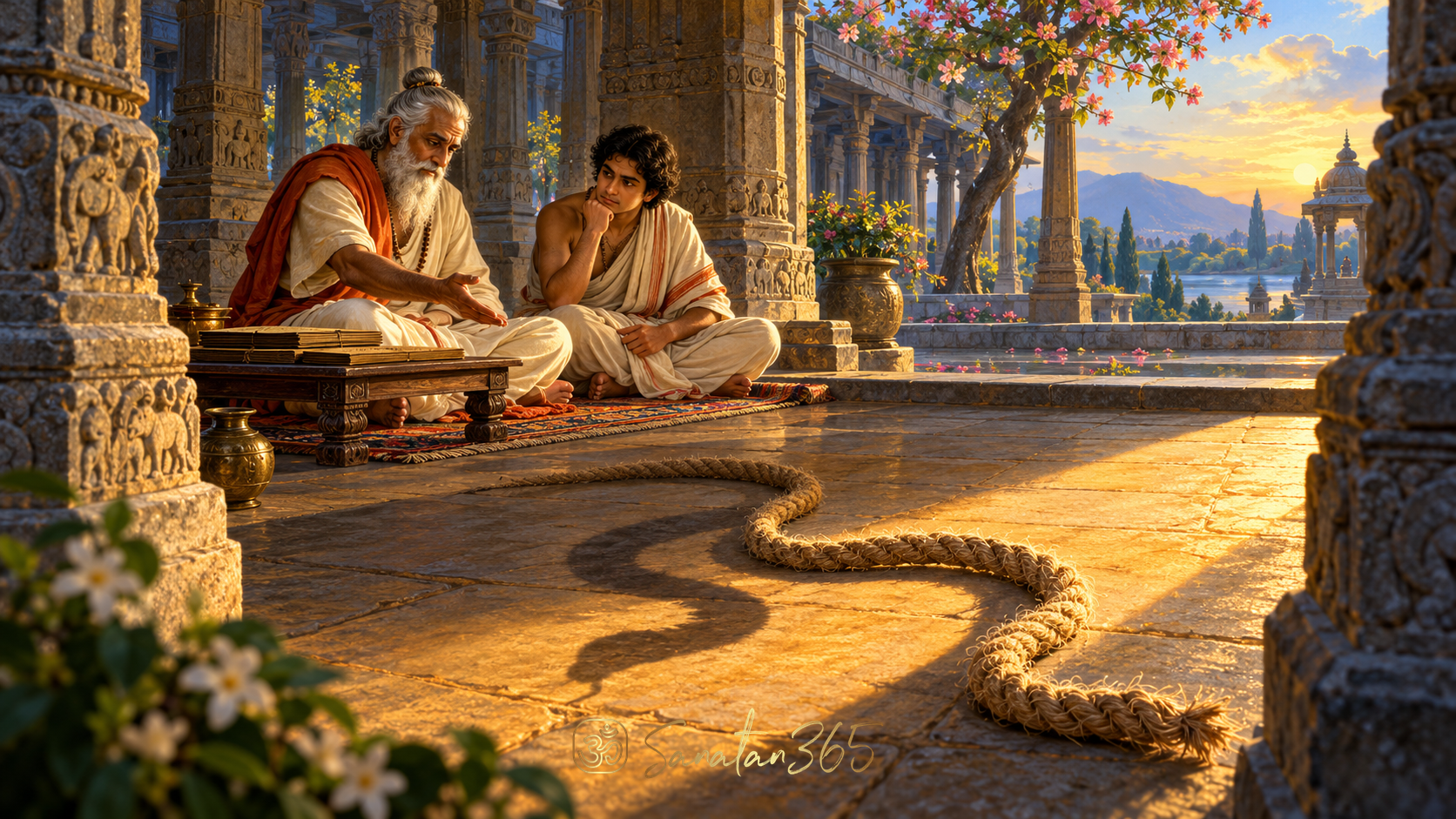
Adhyasa Meaning: Why a Rope Can Look Like a Snake
An accessible introduction to superimposition in Advaita Vedanta: the rope-and-snake example, the confusion of Self and body, and the patie…
 Wisdom
Pramana Meaning: How Hindu Philosophy Examines Knowledge
Explore pramana, the means of valid knowledge, through perception, inference and testimony, with clear distinctions among Hindu philosophic…
 Wisdom
Shadripu Meaning: Six Inner Adversaries and Responsible Choice
Understand desire, anger, greed, delusion, pride and envy as six inner adversaries, with practical distinctions that keep self-discipline h…