Kedarnath Temple Meaning: Shiva, the Himalayas, and Sacred Endurance
Explore Kedarnath Temple's meaning as a Himalayan Jyotirlinga, a Panch Kedar shrine, and a pilgrimage that turns effort, humility, and darshan into spiritual practice.
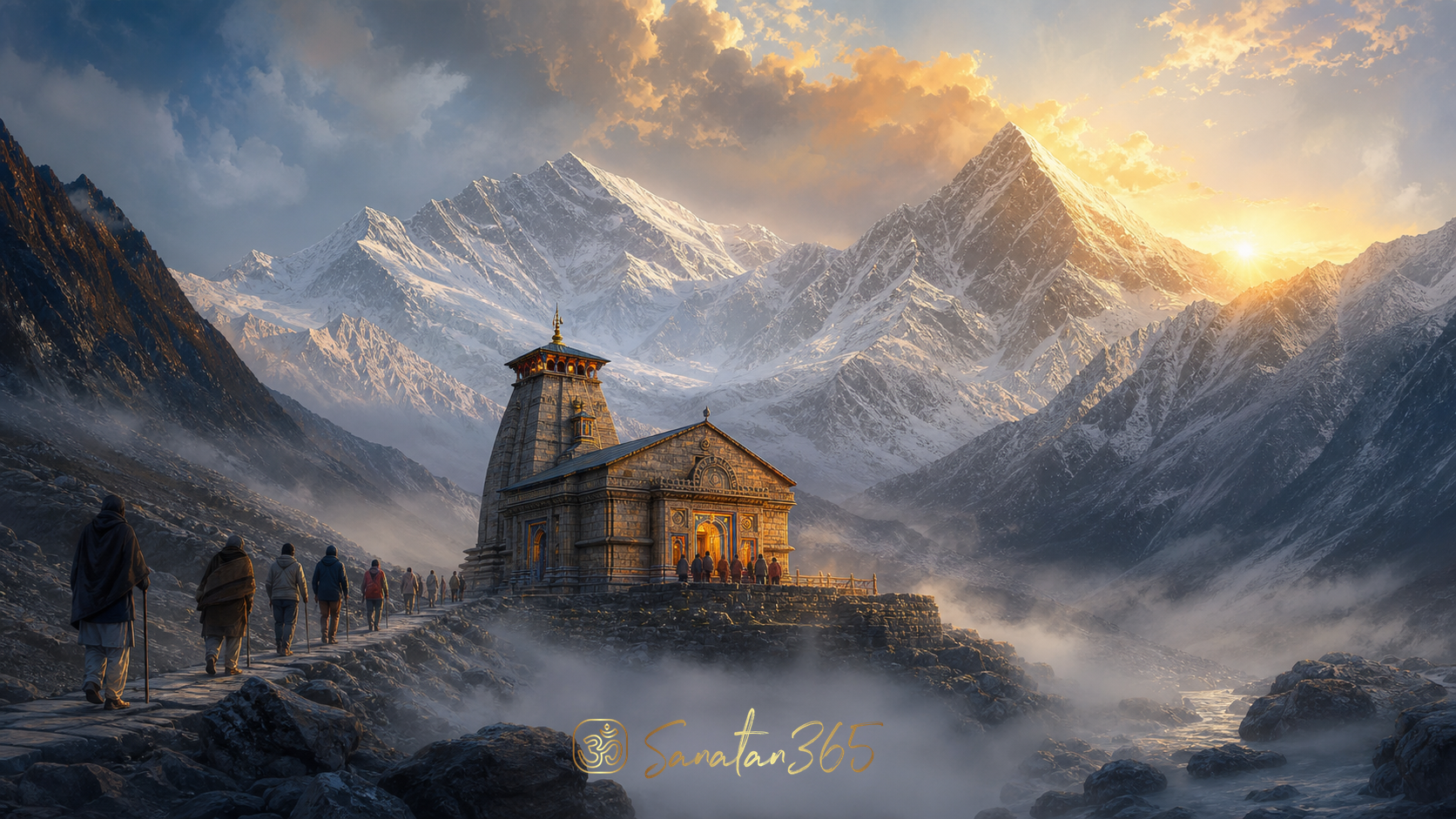
At Kedarnath, the road ends before the devotion does. The final approach rises into the Garhwal Himalaya, where a stone temple stands beneath immense snow peaks and Lord Shiva is worshipped not as an easy answer, but as a presence discovered through effort, humility, and endurance.
The Kedarnath Temple meaning rests in this union of place and practice. Kedarnath is one of Shiva's twelve Jyotirlingas (ज्योतिर्लिङ्ग, radiant emblems of Shiva), part of Uttarakhand's Chota Char Dham circuit, and the foremost shrine of the Panch Kedar (पञ्च केदार, five sacred Shiva sites). Its Himalayan setting turns pilgrimage into embodied prayer: every step asks the pilgrim to loosen control, respect nature, and approach darshan (दर्शन, sacred seeing in the presence of the Divine) with sincerity.
What Is the Kedarnath Temple Meaning?
Kedarnath means more than the location of a famous Shiva shrine. The name is commonly understood as “Lord of Kedar,” linking Shiva to the sacred Himalayan region historically called Kedarkhand. The official Shri Badarinath Kedarnath Temple Committee describes the shrine as one of the twelve Jyotirlingas, part of both Uttarakhand's Char Dham and the Panch Kedar tradition.
The temple stands near the Mandakini River at about 3,584 metres above sea level. That altitude matters spiritually as well as geographically. Kedarnath cannot be separated from thin air, changing weather, steep paths, and the vast silence of the mountains. The pilgrim does not simply view a sacred object; the whole landscape becomes a teacher in impermanence and proportion.
Three ideas gather at Kedarnath:
- Shiva as stillness: the mountain setting evokes stability beyond the restless mind.
- Pilgrimage as purification: the difficult approach makes intention visible through action.
- Darshan as grace: the final encounter is received, not possessed or controlled.
This is why Kedarnath's power is not reduced to architecture or legend. Its meaning emerges from the relationship between Shiva, the Himalayan tirtha (तीर्थ, a sacred crossing place), and the devotee who arrives with reverence.
Key takeaway: Kedarnath represents sacred presence encountered through humility, disciplined effort, and openness to grace.
Why Is Kedarnath a Jyotirlinga and a Panch Kedar Shrine?
A Jyotirlinga is a shrine where Shiva is revered in the form of boundless divine light. The Sanskrit combines jyoti (ज्योति, light or radiance) and linga (लिङ्ग, the emblem through which Shiva is worshipped). The tradition points beyond a merely physical form: Shiva is understood as consciousness and presence without measurable beginning or end.
Kedarnath is also the first and most prominent of the Panch Kedar shrines. The five are Kedarnath, Tungnath, Rudranath, Madhyamaheshwar, and Kalpeshwar, all in Uttarakhand. Their shared tradition is linked to the Pandavas after the Kurukshetra war.
According to the devotional account, the Pandavas sought Shiva to ask release from the moral burden of war. Shiva, unwilling to appear immediately, took the form of a bull and disappeared into the earth. Different parts of the form manifested at five Himalayan sites. At Kedarnath, the raised, irregular stone worshipped in the sanctum is traditionally associated with the bull's hump and revered as Shiva in the Sadashiva form.
This story is best read as sacred tradition rather than modern historical reportage. Its moral force is clear: even celebrated heroes must face the consequences of action. Power does not remove accountability. The Pandavas' pilgrimage expresses prayaschitta (प्रायश्चित्त, atonement or restorative spiritual discipline), not an attempt to erase responsibility cheaply.
The Panch Kedar narrative therefore makes Kedarnath a shrine of honest return. One comes before Shiva without performance, carrying both achievement and regret. The Divine is not treated as a machine that cancels consequences; grace becomes possible when pride gives way to truthfulness.
Key takeaway: Kedarnath's Jyotirlinga and Panch Kedar identities unite Shiva's limitless presence with the human need for accountability and inner renewal.
What Does the Kedarnath Pilgrimage Teach?
Many sacred journeys create distance from routine. Kedarnath adds altitude, uncertainty, and physical demand. Uttarakhand Tourism identifies the shrine as a major Shiva pilgrimage site in the Char Dham circuit, reached through a high Himalayan landscape where conditions can change quickly.
The outer journey can illuminate five inner practices:
- Sankalpa: Sankalpa (सङ्कल्प, a clear sacred intention) gives the journey direction. The question is not only “Can I reach?” but “Why am I going?”
- Tapas: Tapas (तपस्, disciplined effort that refines) appears in preparation, patience, and the willingness to continue without drama.
- Seva: Seva (सेवा, selfless service) emerges when pilgrims help elders, share supplies, respect workers, and keep the route clean.
- Vairagya: Vairagya (वैराग्य, wise non-attachment) grows when plans must yield to weather, health, or official safety instructions.
- Darshan: The destination becomes a meeting rather than a conquest. No one “conquers” Kedarnath; the language of conquest is too small for a living sacred landscape.
These lessons apply even to those who cannot travel. A person may practise Kedarnath's discipline by simplifying a day, chanting a Shiva mantra with attention, studying a trusted account of the shrine, offering service, or sitting quietly before an image of the Himalayas. Such practices do not pretend to replace the actual pilgrimage. They allow its values to inform daily life.
Physical difficulty should never be romanticised into recklessness. High altitude, cold, rain, and demanding terrain require preparation. Pilgrims should follow current government and temple-board guidance, respect closures, disclose health concerns to qualified professionals, and turn back when safety requires it. Spiritual sincerity is compatible with prudence.
Key takeaway: The Kedarnath pilgrimage teaches that devotion is not stubbornness; it is disciplined effort joined with humility, service, and respect for limits.
How Do the Himalayas Shape Kedarnath's Spiritual Significance?
In Hindu imagination, the Himalayas are not merely scenery. They are associated with Shiva, meditation, rivers, sages, and the meeting of earth and sky. Kedarnath's temple architecture is powerful partly because it does not compete with the mountains. Its heavy stone walls and compact form appear almost like an act of listening.
Encyclopaedia Britannica describes Kedarnath as a major Shiva shrine traditionally linked with the Pandavas and Adi Shankaracharya. Traditions credit Adi Shankaracharya with renewing the shrine's importance as a tirtha, although precise claims about the earliest structure should be stated carefully because sacred memory, reconstruction, and documented history do not always share the same timeline.
The Himalayan setting deepens several Shaiva themes:
Silence is not emptiness
Shiva's stillness is not withdrawal from life. It is the ground from which clear action becomes possible. In the mountains, silence may feel less like absence and more like scale: human noise becomes small enough for attention to return.
Stone makes endurance visible
The shrine's stone form suggests continuity without denying vulnerability. Mountains weather; rivers change course; routes close; buildings require care. Sacred endurance is not the fantasy that nothing changes. It is the capacity to remain rooted in dharma while conditions change.
The river carries movement through stillness
The Mandakini flows through a landscape associated with Shiva's immovability. Together, mountain and river offer a balanced image: the centre can remain steady while life continues to move.
The devastating 2013 floods are part of Kedarnath's recent public memory. They should be remembered with restraint and compassion, never converted into sensational proof claims. The loss of life calls for mourning, respect for Himalayan ecology, and seriousness about safety. The temple's survival may inspire devotees, but reverence should not erase the human suffering of the disaster.
Key takeaway: Kedarnath's Himalayas teach a mature form of steadiness—rooted but not rigid, enduring but never careless about nature's power.
How Is Shiva Worshipped at Kedarnath?
Inside the temple, Shiva is worshipped in an aniconic stone form traditionally understood as the hump that manifested in the Panch Kedar account. Aniconic means that the sacred presence is revered through a form that is not a human-like statue. Devotees approach this form as Kedarnath, the Lord of the sacred region, and as Sadashiva, the ever-auspicious presence.
Temple worship includes offerings, mantra, aarti, and darshan according to established custom and the seasonal schedule. Because the high-altitude shrine closes during winter, the worship tradition continues at Ukhimath, where the ceremonial presence of Kedarnath is honoured during the cold months. This movement makes an important point: sacred continuity is not limited to keeping one building accessible throughout the year.
Pilgrims can prepare inwardly before entering:
- Pause and let the urgency of the queue soften.
- Hold one simple intention rather than a long list of demands.
- Offer gratitude before asking for anything.
- Remember those who enabled the pilgrimage, including porters, workers, local communities, and fellow travellers.
- Receive a brief darshan without judging its value by duration.
A common Shiva mantra is Om Namah Shivaya (ॐ नमः शिवाय, “Om, reverence to Shiva”). It may be repeated gently while walking or waiting, without using it to ignore instructions or surroundings. The mantra turns attention from possession toward reverence: not “What can I obtain?” but “How can I become more truthful, steady, and compassionate?”
Key takeaway: Worship at Kedarnath is strongest when the devotee brings simplicity, gratitude, and attentive presence rather than a transactional demand.
How Can Kedarnath's Wisdom Be Practised at Home?
Kedarnath is geographically specific, but its spiritual disciplines can shape ordinary days. A home practice may be simple:
- Light a lamp safely before a Shiva linga, Shiva murti, or sacred Shiva symbol.
- Chant Om Namah Shivaya 11 or 108 times at a comfortable pace.
- Sit in silence for five minutes after chanting.
- Name one responsibility that requires honest action.
- Choose one act of service that does not seek recognition.
- Reduce one unnecessary demand on the natural world that day.
This practice should not imitate temple rites without understanding. It should translate Kedarnath's core principles—stillness, accountability, disciplined effort, and ecological humility—into household life.
Families can also explore the pilgrimage through maps, photographs from official sources, and age-appropriate retellings of the Panch Kedar tradition. Children can be invited to notice how the story differs from a victory tale: the Pandavas are not seeking another triumph, but moral repair.
For diaspora communities, Kedarnath can become a bridge between inherited memory and lived ethics. The shrine matters not only because ancestors revered it, but because its questions remain immediate: What burden must be faced honestly? What effort is worth making? What must be surrendered? How can reverence include care for land, water, and vulnerable people?
Key takeaway: Kedarnath comes home when devotion becomes steadiness, responsibility, service, and respect for the living world.
Conclusion
Kedarnath Temple stands where stone, snow, river, legend, and worship meet. Its meaning is not that difficulty automatically makes a person holy. It is that a demanding sacred journey can reveal intention: whether the pilgrim arrives to collect an experience or to become more humble before Shiva.
As a Jyotirlinga, Kedarnath points toward divine radiance beyond measure. As a Panch Kedar shrine, it remembers accountability and return. As a Himalayan tirtha, it teaches that stillness and change belong together. The temple's deepest invitation is therefore quiet and exacting: carry less pride, act with greater care, and let endurance become an offering.
Key takeaway: Kedarnath reveals sacred endurance as the union of truthful effort, humility before nature, and openness to Shiva's grace.
FAQ
What is the spiritual meaning of Kedarnath Temple?
Kedarnath represents Shiva's steady presence, the discipline of pilgrimage, honest accountability, and grace received through humility. Its Himalayan setting makes effort and respect for nature part of the spiritual experience.
Why is Kedarnath called a Jyotirlinga?
Kedarnath is revered as one of the twelve Jyotirlingas, sacred sites where Shiva is worshipped as limitless divine radiance through the linga. It is also the foremost shrine in the Panch Kedar tradition.
What is the Pandava story connected to Kedarnath?
Sacred tradition says the Pandavas sought Shiva after the Kurukshetra war for atonement. Shiva appeared as a bull and entered the earth; the hump manifested at Kedarnath, while other parts were associated with the remaining Panch Kedar shrines.
Is Kedarnath Temple open throughout the year?
No. The high-altitude temple follows a seasonal opening schedule and closes during winter. The worship tradition continues at Ukhimath. Travellers should always check current official temple-board and Uttarakhand government guidance.
Can someone follow Kedarnath's teachings without travelling there?
Yes. Home prayer, Shiva mantra, silence, service, honest self-examination, and ecological responsibility can express Kedarnath's values. These practices honour the pilgrimage's wisdom without claiming to replace the physical tirtha.
About the author
Sanatan365 Editorial
Bringing Sanatan Dharma to modern seekers through authentic, scripture-grounded content.
Related in Temples
 Temples
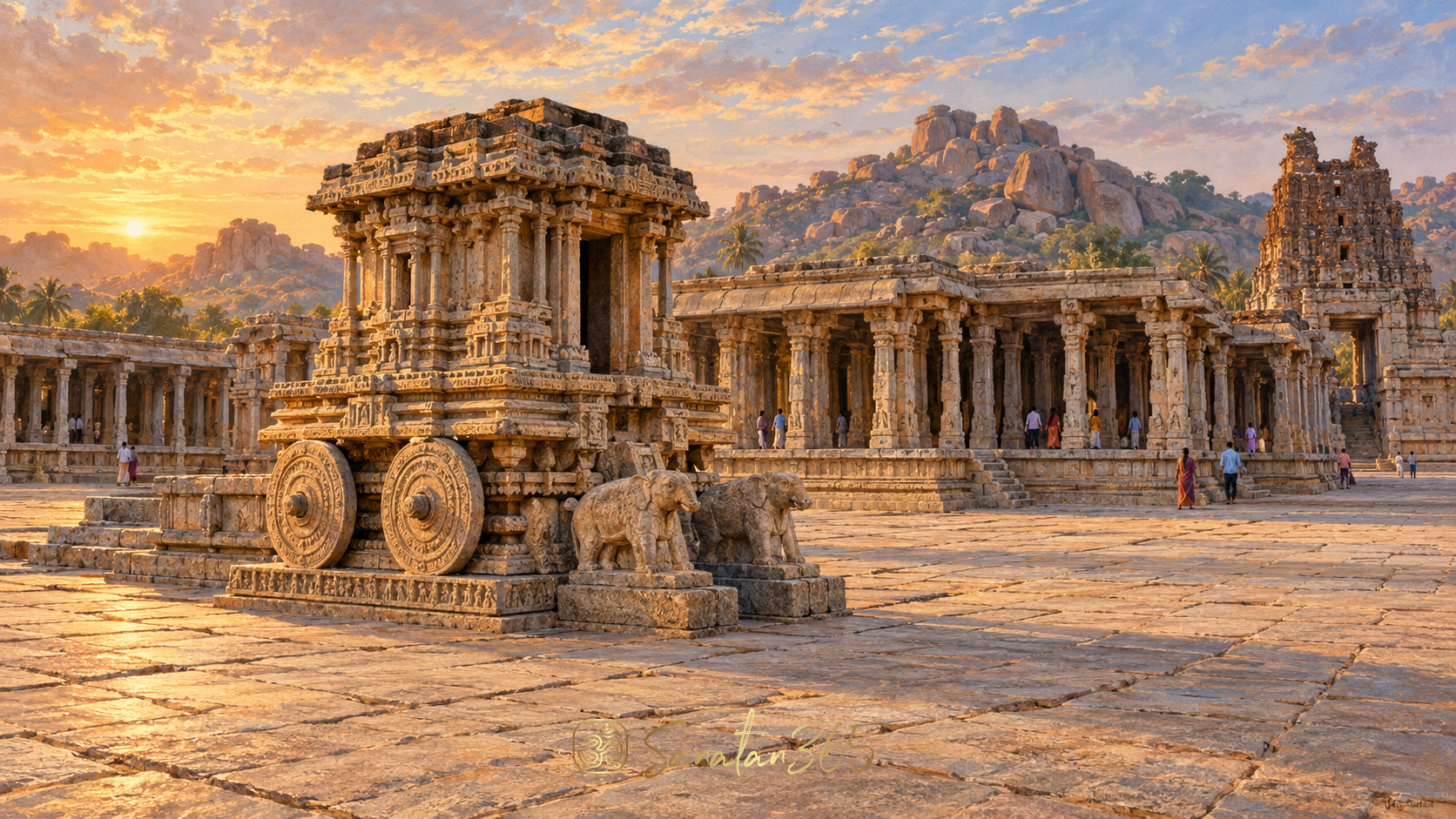
Vittala Temple Hampi: Reading the Stone Chariot and Sacred Courtyard
Understand Hampi’s Vittala Temple through its Garuda stone chariot, pillared halls, Vishnu devotion, and careful heritage visiting.
 Temples
Kirtimukha Meaning: The Face of Glory Above the Temple Door
The fierce face above a temple doorway is not a warning to turn away. Learn to recognize Kirtimukha, read its sacred story, and notice how…
 Temples
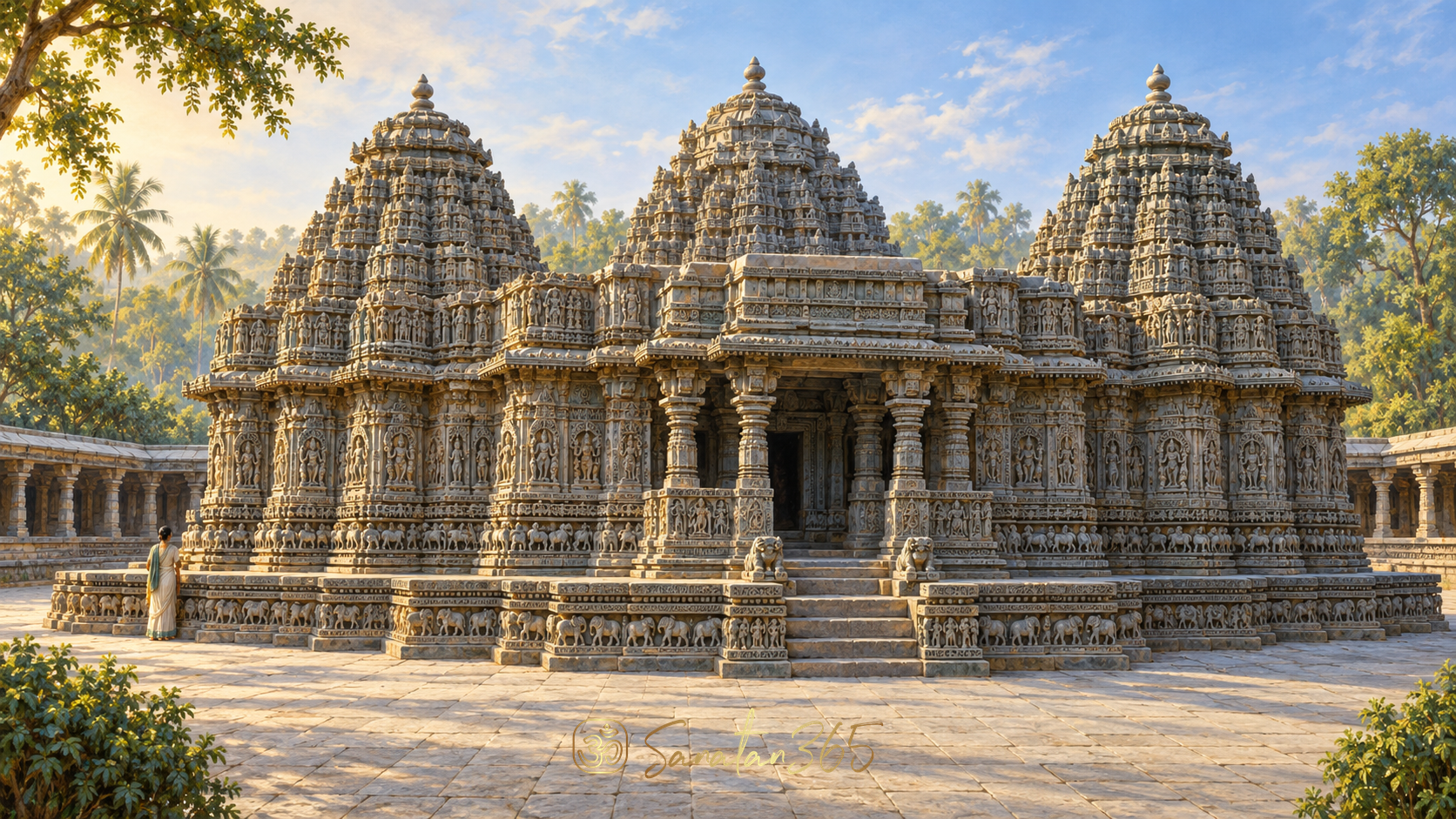
Somanathapura Keshava Temple: Three Shrines and the Art of Looking
Read the star-shaped plan, three Vishnu shrines and carved narratives of Somanathapura, with a respectful guide to a protected Hoysala monu…

