Chidambaram Nataraja Temple Meaning: Shiva's Cosmic Dance and Sacred Space
Chidambaram Nataraja Temple is one of Tamil Nadu's great Shaiva temples, where Shiva is worshipped as Nataraja, the cosmic dancer, and as the subtle Akasha Lingam.
At Chidambaram, Shiva is not only worshipped as a still presence; he is worshipped as sacred movement.
Chidambaram Nataraja Temple meaning begins with this vision: Lord Shiva appears as Nataraja (नटराज, Nataraja, lord of dance), the cosmic dancer whose rhythm holds creation, preservation, dissolution, concealment, and grace. The temple in Chidambaram, Tamil Nadu, is also linked with Akasha Lingam (आकाश लिङ्गम्, akasha lingam, the linga of space), making it one of the most profound Shaiva temples for understanding dance, consciousness, and sacred space.
This is why Chidambaram is more than an architectural landmark. It is a living teaching. The temple asks a subtle question: what if the universe is not a dead machine, but a divine rhythm in which stillness and movement belong together?
What Is Chidambaram Nataraja Temple Meaning?
Chidambaram Nataraja Temple meaning can be understood through three connected ideas: Shiva as dancer, the temple as sacred stage, and space as the hidden form of the Divine. The Cuddalore district tourism reference identifies the temple as Thillai Nataraj Temple, dedicated to Lord Shiva in Tamil Nadu, and notes that Chidambaram is associated with meanings such as "clothed in thought" or an atmosphere of wisdom Cuddalore District.
The name itself carries a teaching. Chidambaram is often explained through chit (चित्, chit, consciousness) and ambaram (अम्बरम्, ambaram, space or atmosphere). In devotional interpretation, it becomes the space of consciousness. That does not mean every historical layer of the name is simple or uniform. Temple names grow through language, poetry, ritual, and local memory. But the spiritual reading is powerful because it matches the temple's deepest symbol: the Divine is not only outside the seeker. The Divine is also the inner space in which awareness awakens.
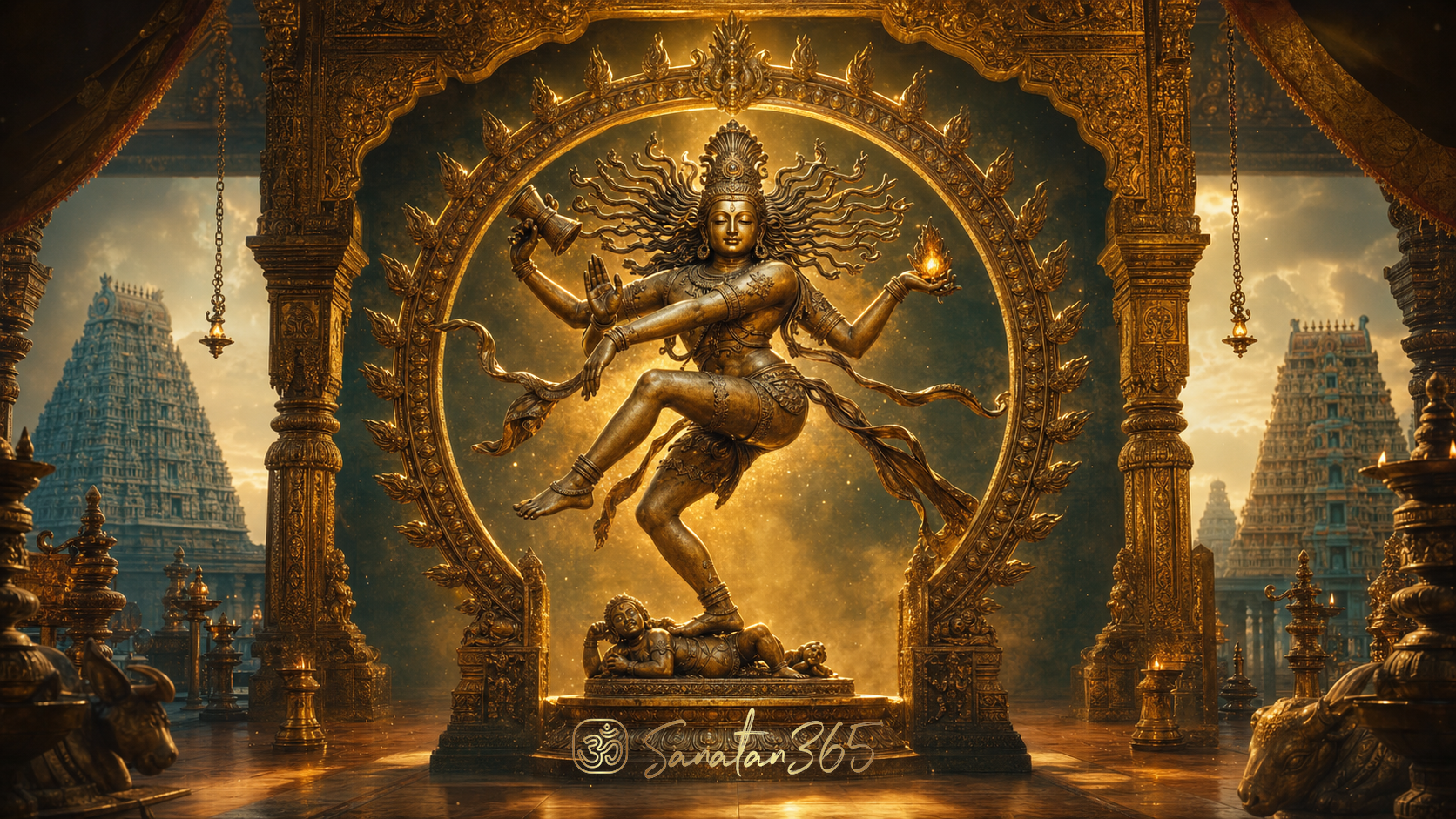
The temple's primary deity is Shiva as Nataraja. This matters because many Shiva temples focus on the linga (लिङ्ग, linga, sign or aniconic emblem of Shiva). Chidambaram gives special prominence to the dancing form. The dance is not entertainment. It is theology in motion. Nataraja's lifted foot offers grace. His drum suggests creation. His fire suggests dissolution. His steady face suggests peace inside cosmic change. His foot upon Apasmara (अपस्मार, Apasmara, forgetfulness or ignorance) teaches that spiritual freedom requires the overcoming of confusion.
Key takeaway: Chidambaram teaches Shiva as both cosmic dancer and the spacious consciousness in which the dance is known.
Why Is Shiva Worshipped as Nataraja in Chidambaram?
Shiva as Nataraja is one of Hinduism's most recognizable sacred forms, but its meaning becomes especially concentrated at Chidambaram. The National Museum of Asian Art explains that Shiva Nataraja became deeply linked with the Chola world, where Shiva was central to religious and cultural authority National Museum of Asian Art. Chidambaram's temple tradition preserves that intensity through worship, architecture, music, and dance.
The Sanskrit word nata (नट, nata, dancer or actor) and raja (राज, raja, king) combine in Nataraja: the king of dance. In Tamil Shaiva devotion, this is not a decorative title. Shiva's dance is the rhythm by which the universe appears, changes, and returns. The body of Nataraja becomes a complete teaching:
- The drum points to the pulse of manifestation.
- The flame points to transformation and dissolution.
- The open palm offers abhaya (अभय, abhaya, fearlessness).
- The lifted foot offers refuge and release.
- The dwarf underfoot shows ignorance being held down by wisdom.
Smarthistory's discussion of a Chola-period Nataraja bronze notes the figure's religious significance and the symbolic force of Shiva standing upon Apasmara, the embodiment of ignorance Smarthistory. That symbolism helps explain why Nataraja speaks to artists, philosophers, dancers, and devotees at the same time. The image is beautiful, but beauty is only the doorway.
For a devotee, the dance also gives emotional guidance. Life moves. Relationships change. Bodies age. Plans break. Seasons turn. Nataraja does not deny motion; he sanctifies it. The teaching is not that everything stays fixed. The teaching is that divine awareness can remain centered even while the world moves.
Readers interested in Shiva's wider symbolism may also continue with Adiyogi Shiva Meaning: Why Shiva Is Called the First Yogi and Om Namah Shivaya Meaning: Shiva's Five-Syllable Mantra of Surrender.
Key takeaway: Nataraja turns cosmic change into a sacred image of rhythm, fearlessness, and liberation from ignorance.
What Is the Akasha Lingam at Chidambaram?
The Akasha Lingam is central to Chidambaram's distinctiveness. Akasha (आकाश, akasha, space or ether) is the subtlest of the five great elements in Hindu thought. Chidambaram is traditionally counted among the Pancha Bhoota Sthalams (पञ्चभूत स्थलम्, pancha bhoota sthalams, five elemental Shiva temples), where Shiva is associated with space. The morning Sanatan365 article on Akasha Meaning in Hinduism: Space, Sound, and the Subtle Element explains the philosophical side of this element in greater depth.
At Chidambaram, this teaching becomes temple experience. Space is not treated as emptiness only. It is treated as sacred presence. A visible murti of Nataraja receives worship, but the temple also points toward the invisible: the Divine as all-pervading, subtle, and beyond the limits of form.
This is why Chidambaram can feel so different from a temple where the main symbol is a clearly visible linga. The devotee is invited to honor both form and formlessness. Form helps the heart love. Formlessness prevents the mind from shrinking God into one object. Together, they create a mature devotional vision.
The idea also has a practical meaning. A person may fill spiritual life with objects, lists, vows, and rituals, yet still avoid inner openness. Chidambaram asks the seeker to make space: space for listening, space for silence after mantra, space for humility, space for the mystery that cannot be possessed.
This does not make ritual less important. It makes ritual deeper. Lamps, bells, flowers, mantras, and darshan all matter because they train attention. But the final aim is not accumulation. The final aim is awakened consciousness.
Key takeaway: The Akasha Lingam teaches that Shiva is present not only in visible form, but also as sacred space and consciousness.
What Is Chidambara Rahasya?
Chidambara Rahasya (चिदम्बर रहस्य, Chidambara rahasya, the secret or mystery of Chidambaram) is one of the temple's most famous teachings. In simple terms, it points to the hiddenness of the Divine: what seems empty is not spiritually empty. The mystery is that the sacred can be present as space, silence, and subtle awareness.
The phrase is often connected with the temple's sanctum tradition, where the devotee is invited to contemplate Shiva beyond ordinary visibility. This is not a puzzle to be solved like a riddle. It is a contemplative teaching. Human beings usually trust what can be seen, touched, counted, and displayed. Chidambara Rahasya asks whether the unseen can be more foundational than the seen.
This teaching connects naturally with Hindu ideas of Atman (आत्मन्, atman, the Self) and Brahman (ब्रह्मन्, brahman, ultimate reality). The temple does not reduce these ideas to abstraction. It makes them devotional. The seeker stands before a sacred space and learns: the deepest reality may be veiled, but it is not absent.
There is also an ethical lesson. Many relationships fail because people notice only surface behavior and miss the inner space of another person. Many spiritual efforts fail because the seeker wants immediate proof and misses quiet transformation. Chidambara Rahasya trains a subtler gaze. It says: do not assume absence just because the eye cannot grasp everything.
For readers exploring the philosophical side of unseen reality, Neti Neti Meaning: The Upanishadic Way of Knowing by Letting Go and Atman Meaning: The Hindu Teaching of the True Self are useful companion readings.
Key takeaway: Chidambara Rahasya teaches that sacred presence may be hidden, subtle, and spacious rather than obvious.
How Does the Temple Connect Dance, Architecture, and Devotion?
Chidambaram is not only a temple of doctrine. It is a temple of embodied culture. Nataraja's form connects Shaiva devotion with classical Indian dance, temple architecture, and Tamil sacred poetry. The visual language of the dancing Shiva has shaped South Asian art for centuries, and the Met Museum's object record for a late 11th-century Chola Nataraja identifies the form as Indian, Tamil Nadu, Chola-period copper alloy sculpture The Metropolitan Museum of Art.
This art-historical detail matters because Chidambaram is not an isolated idea floating outside time. It belongs to a living South Indian sacred world. Tamil Shaiva hymns, temple festivals, bronze processional images, sacred halls, drums, lamps, and dance traditions all help devotees experience theology through the senses.
The temple's architectural symbolism also matters. A temple is not just a building that contains worship. In Hindu tradition, it can become a map of the cosmos and the body. Gateways mark transition. Courtyards slow the mind. Halls gather community. The sanctum focuses attention. At Chidambaram, this movement inward is especially meaningful because the innermost teaching concerns consciousness and space.
For a modern visitor or reader, this can change how temple darshan is approached:
- Enter slowly, not as a tourist rushing toward a checklist.
- Notice sound: bells, chants, footsteps, silence.
- Notice movement: priests, devotees, lamps, processions, your own breath.
- Notice space: courtyards, thresholds, the pause before prayer.
- Offer one clear intention rather than many scattered demands.
This is a disciplined way to receive Chidambaram's teaching even from afar. The temple is in Tamil Nadu, but its insight can shape a home shrine, a dance practice, a meditation seat, or a quiet evening of mantra.
Key takeaway: Chidambaram unites art, architecture, music, dance, and worship into a single Shaiva vision of consciousness in motion.
Why Does Chidambaram Still Matter Today?
Chidambaram matters today because it offers a counterweight to two modern extremes. One extreme treats spirituality as only emotion. The other treats philosophy as dry abstraction. Chidambaram refuses both. It gives philosophy a dancing body and gives devotion a deep metaphysical center.
The temple also speaks to a generation living with constant motion. Work moves quickly. Attention jumps. Screens compress space. Many people feel both overstimulated and spiritually undernourished. Nataraja does not tell the seeker to hate movement. He teaches sacred rhythm. Akasha does not tell the seeker to escape the world. It teaches spacious awareness inside the world.
This is why the Chidambaram Nataraja Temple meaning remains powerful for families, artists, students, seekers, and diaspora Hindus. It says that Sanatan Dharma is not only a set of inherited customs. It is a refined way of seeing reality: sound, space, body, art, and consciousness all belong in the spiritual life.
The practical lesson is simple but demanding. Make the day less cramped. Listen before speaking. Let mantra have silence around it. Let worship include beauty. Let change become a reminder of the dancer rather than only a source of anxiety.
Chidambaram's final teaching is not that the sacred is far away. It is that the sacred may already be present as the space in which awareness, devotion, and transformation become possible.
Key takeaway: Chidambaram remains relevant because it teaches modern seekers how to move through change without losing inner sacred space.
The single key takeaway: Chidambaram Nataraja Temple teaches Shiva as the cosmic dancer and as sacred space, joining visible devotion with the subtle mystery of consciousness.
FAQ
What is Chidambaram Nataraja Temple meaning?
Chidambaram Nataraja Temple meaning refers to the temple's teaching of Shiva as Nataraja, the cosmic dancer, and Shiva as Akasha Lingam, the subtle presence of sacred space. It unites dance, consciousness, and devotion.
Why is Shiva called Nataraja?
Shiva is called Nataraja because nata means dancer and raja means king. As Nataraja, Shiva represents the divine rhythm of creation, preservation, dissolution, concealment, and grace.
What is Akasha Lingam in Chidambaram?
Akasha Lingam means the linga of space or ether. In Chidambaram, Shiva is associated with akasha, the subtle element of space, which points to the Divine as formless, all-pervading, and beyond ordinary sight.
What is Chidambara Rahasya?
Chidambara Rahasya means the mystery of Chidambaram. It teaches that sacred presence can be hidden, subtle, and spacious. What seems empty to the eye may be full of divine meaning.
Where is Chidambaram Nataraja Temple located?
Chidambaram Nataraja Temple is located in Chidambaram in Cuddalore district, Tamil Nadu, South India. It is one of the most important Shaiva temples connected with Shiva as Nataraja.
About the author
Sanatan365 Editorial
Bringing Sanatan Dharma to modern seekers through authentic, scripture-grounded content.
Related in Temples
 Temples
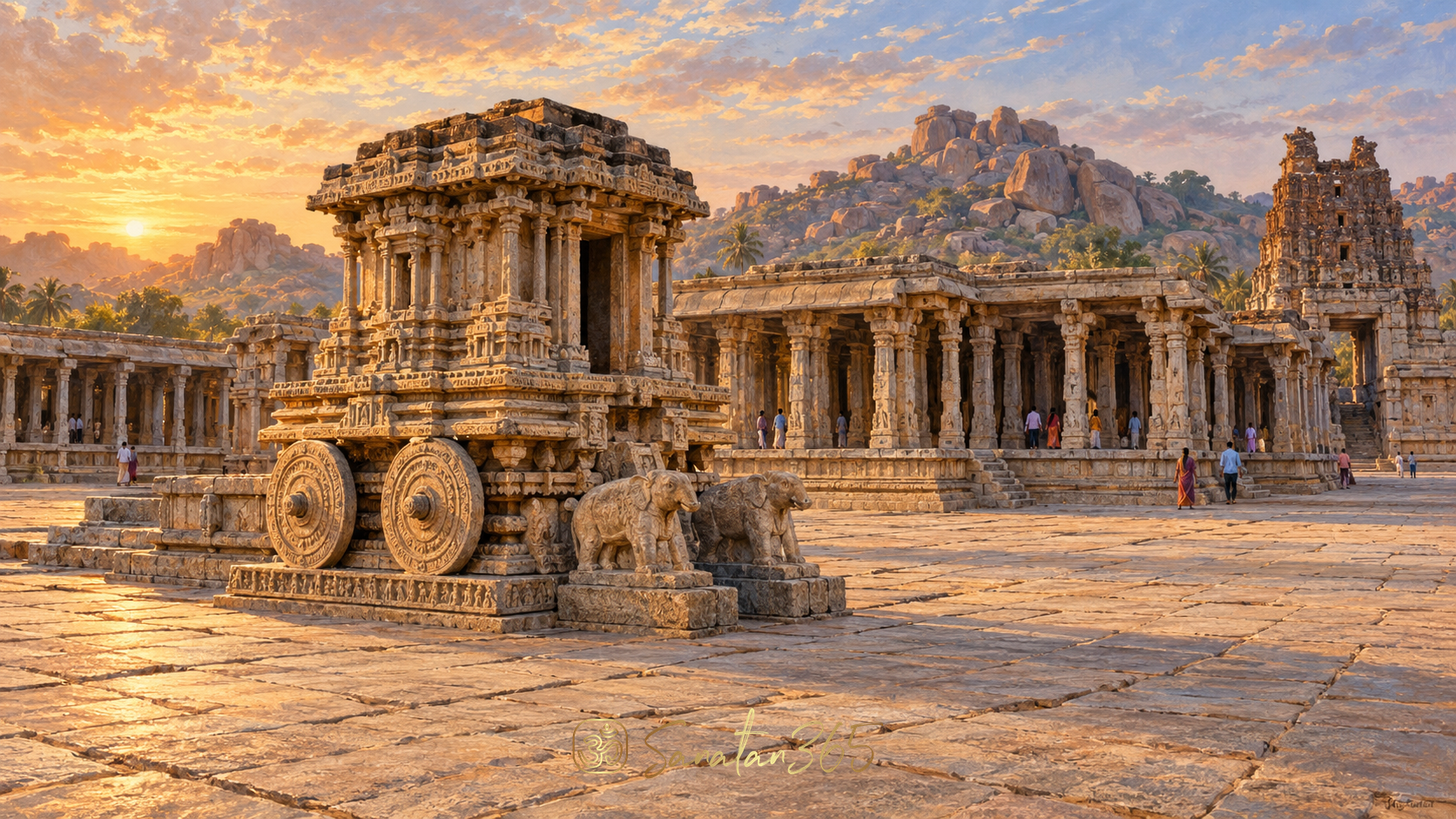
Vittala Temple Hampi: Reading the Stone Chariot and Sacred Courtyard
Understand Hampi’s Vittala Temple through its Garuda stone chariot, pillared halls, Vishnu devotion, and careful heritage visiting.
 Temples
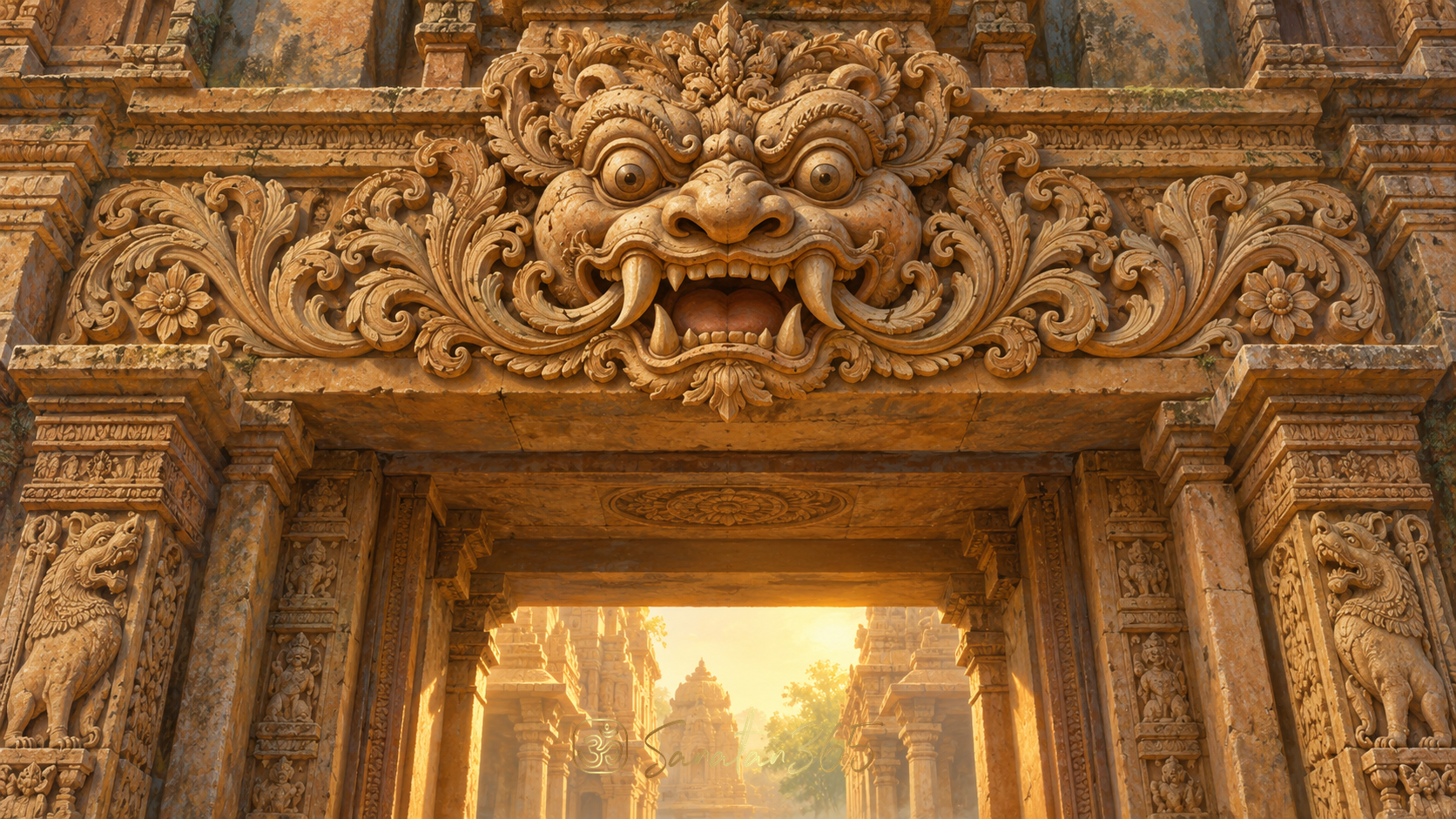
Kirtimukha Meaning: The Face of Glory Above the Temple Door
The fierce face above a temple doorway is not a warning to turn away. Learn to recognize Kirtimukha, read its sacred story, and notice how…
 Temples
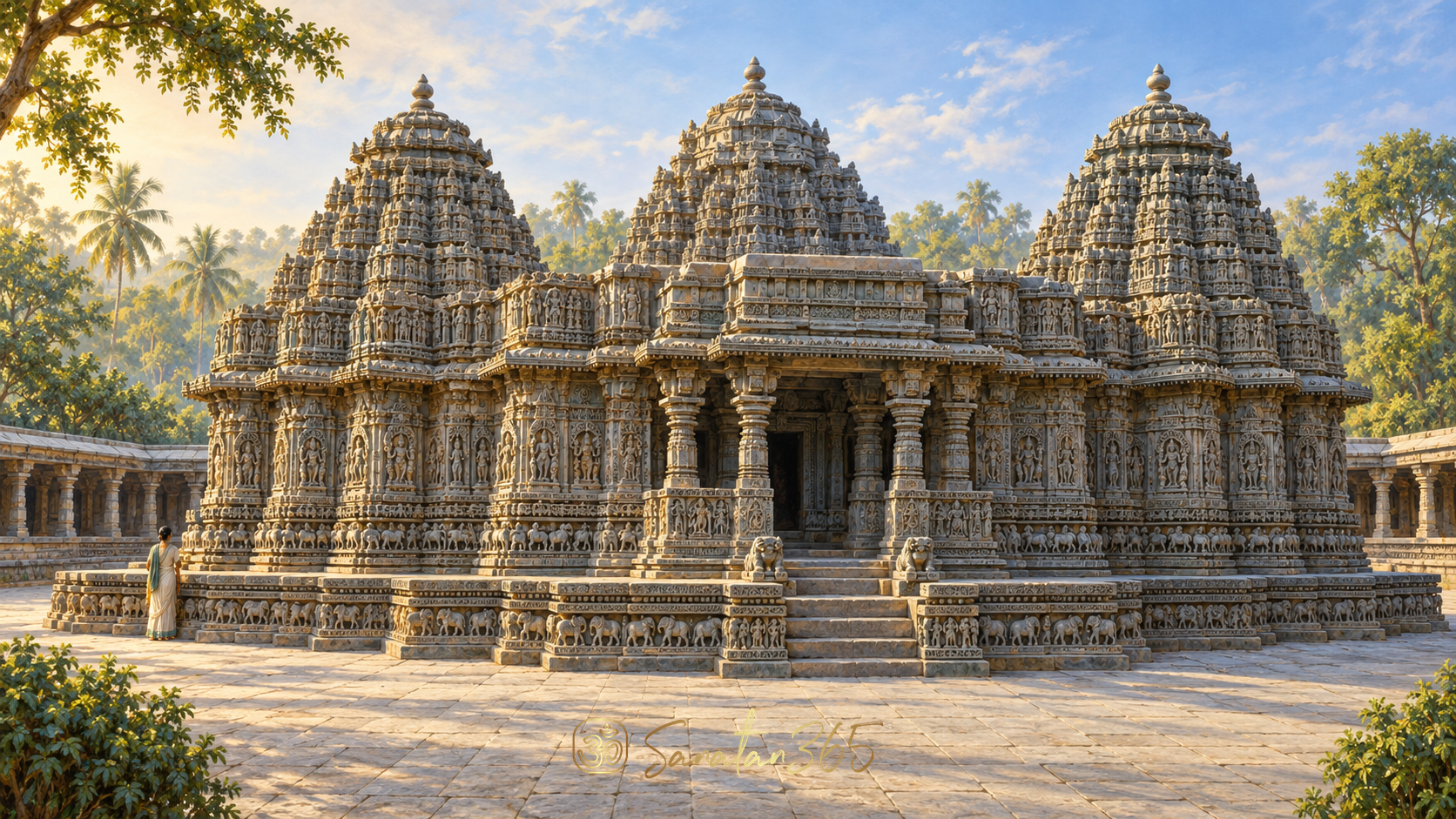
Somanathapura Keshava Temple: Three Shrines and the Art of Looking
Read the star-shaped plan, three Vishnu shrines and carved narratives of Somanathapura, with a respectful guide to a protected Hoysala monu…