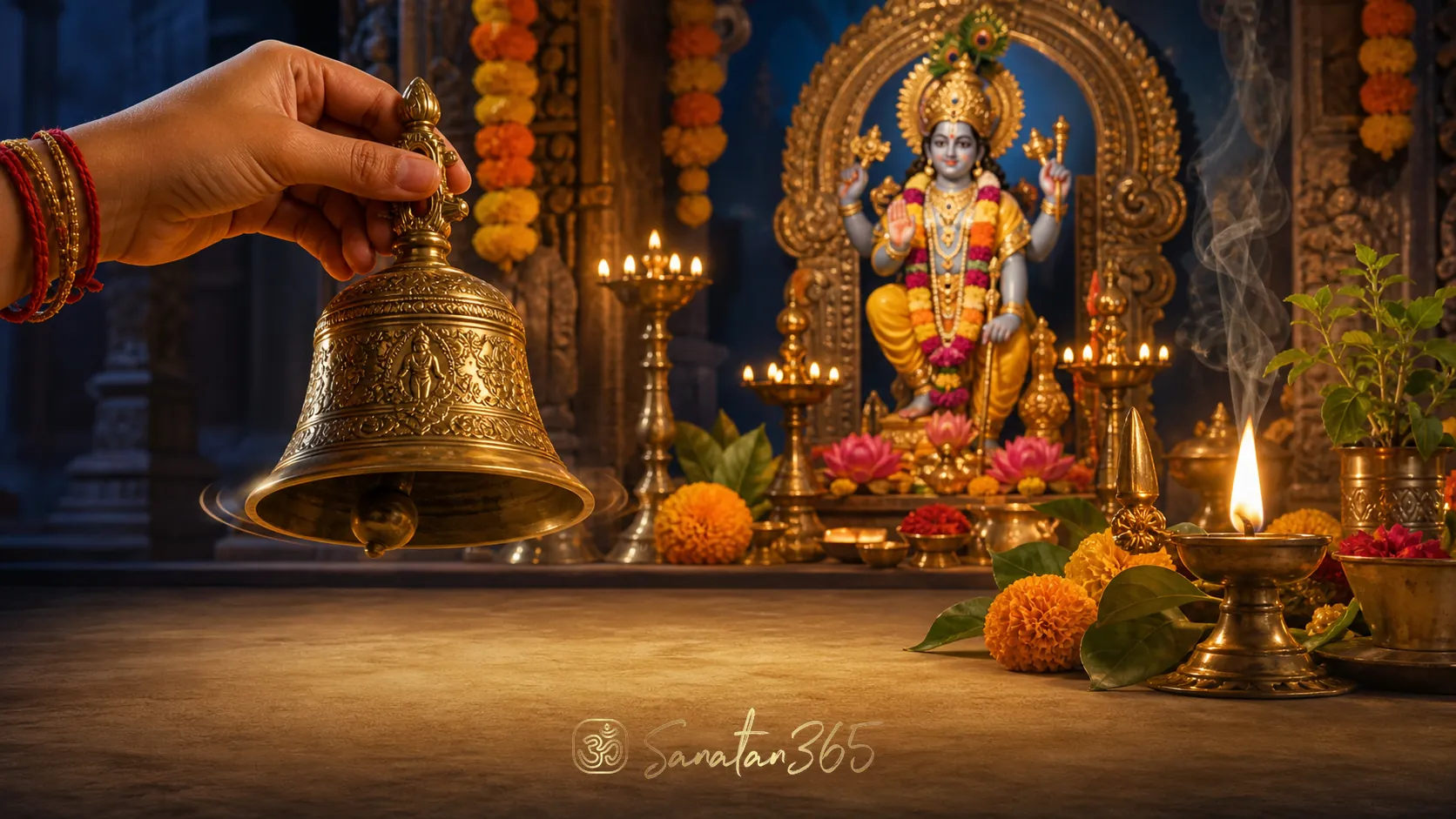
Daily Bell Ringing: Hindu Worship, Sacred Sound, and Presence
Daily Bell Ringing turns a simple temple sound into a mindful devotional pause. Learn the meaning of ghanta, how bells support puja and darshan, and how Sanatan365 makes the practice accessible at home.
A bell can change the quality of a room before any long prayer has begun.
Daily Bell Ringing in Hindu worship is the practice of sounding a ghanta (घण्टा, ritual bell) to mark attention, welcome sacred presence, and prepare the mind for puja (पूजा, worship). In Sanatan365, the Daily Bell Ringing feature brings that familiar temple gesture into a simple home devotional rhythm, especially for users who want a small, repeatable pause before darshan, mantra, meditation, or family prayer.
Why Does Daily Bell Ringing Matter in Hindu Worship?
The Hindu bell is not merely a musical object. It is a ritual signal. In many temples, devotees ring a bell before entering for darshan (दर्शन, sacred seeing), and priests may ring bells during puja, aarti (आरती, offering of light), food offering, or other moments of worship. Public references on puja describe it as worship through offerings to deities, both at home and in temples, while aarti is one of the most familiar temple and household rites involving light, song, and reverence (Britannica: puja, Britannica: arti).
The bell belongs naturally to this world of offering. It gives the body something precise to do. It gives the ear a bright sound. It tells the scattered mind: begin here.
In Sanskrit-led ritual vocabulary, ghanta usually refers to a bell used in worship. Temple and home practice often treat the sound as a way to announce presence, awaken attention, and create a sacred boundary around the act of worship. Contemporary Hindu practice guides commonly note that bells are rung at temple entrances and during rites such as puja and aarti, reflecting how deeply the sound is woven into everyday devotional life (Ghanta overview, Exotic India: Ghanta).
Key takeaway: Daily Bell Ringing matters because it turns worship from an abstract intention into a clear embodied beginning.
What Is the Meaning of Ghanta, the Hindu Puja Bell?
Ghanta (घण्टा) means bell. In Hindu worship, it is usually made of metal and rung by hand. Some bells are plain and household-sized; others are large temple bells suspended near the entrance. Smaller ritual bells may be held by priests during worship, especially when light, incense, water, flowers, or food are offered.
The meaning of the bell is layered:
- It marks arrival. The devotee does not drift casually into worship; the sound announces a conscious shift.
- It gathers attention. The bell's vibration gives the mind a single point of awareness.
- It honors the Divine. The act is a gesture of reverence, not performance.
- It supports rhythm. Repeated daily, the sound becomes a cue for devotional consistency.
In many homes, a bell is rung before aarti or while moving a lamp before a murti, image, Shiva linga, or sacred symbol. In a temple, it may be heard alongside conch, cymbals, chanting, and lamps. These sounds do not need to be loud to be meaningful. Their purpose is alignment.
The bell also teaches something subtle about Hindu worship: spirituality is not only silent inward reflection. It can involve sound, light, scent, food, movement, and touch. A small bell can hold a complete theology of attention.
Key takeaway: The ghanta is a simple ritual tool that helps the worshipper move from ordinary distraction into sacred attention.
How Does Daily Bell Ringing Support Darshan from Home?
Darshan is often translated as "seeing," but in Hindu practice it is more than looking at an image. It is the devotional act of being present before the Divine and receiving presence in return. In temples, bells often frame this moment: one enters, rings, looks, bows, and lets the mind settle.
At home, the same pattern can be smaller but still sincere. A person may stand before a clean altar, light a diya, ring a bell, and offer a short prayer. A family may ring the bell before evening aarti. A child may learn that the bell is not a toy, but a gentle sign that the room has entered a sacred mode.
This is where Sanatan365's Daily Bell Ringing feature can be useful. It does not replace a temple bell, a family altar, or lived tradition. It gives users a simple digital devotional cue, especially when they are away from home, traveling, living in a small apartment, or beginning a habit from scratch. For users already using Daily Live Temple Darshan, Daily Mantras, or Daily Aarti Singing, the bell can become the opening moment: pause, ring, then enter the practice. That sequence keeps the feature devotional rather than decorative.
This is especially helpful for diaspora families and modern urban users. Many people cannot visit a temple daily. Some do not have a full home puja room. Some are rebuilding practice after years of distance. A small daily bell moment can make the beginning less heavy and more repeatable.
Key takeaway: Daily Bell Ringing supports darshan from home by creating a clear threshold before prayer, viewing, chanting, or meditation.
What Is a Simple Daily Bell Ringing Practice?
The strongest daily practice is often the one that can be repeated without drama. Bell ringing should not become mechanical noise. It should be brief, clean, and intentional.
A simple home rhythm can look like this:
- Choose a steady time, such as morning before work or evening before dinner.
- Stand or sit before a clean worship space, murti, image, diya, or sacred symbol.
- Take one slow breath.
- Ring the bell once or three times with attention.
- Offer a short prayer, mantra, or moment of silence.
- Continue with darshan, aarti, japa, meditation, or reading.
If using Sanatan365, a user can treat the Daily Bell Ringing feature as the first step before opening Daily Live Temple Darshan, Daily Mantras Chanting with Sage Narada Muni, Daily Meditation, or Daily Aarti Singing with Goswami Tulsidas. The feature is strongest when used as a cue, not as a substitute for devotion.
Families can also make the practice educational. A parent can explain to a child: "This sound means we are becoming quiet and respectful." That one sentence may do more than a long lecture. Children understand rhythm before they understand philosophy.
For users who live with others, the practice should remain considerate. Hindu devotion does not require disturbing a household. A soft bell, a digital bell, or even a brief mindful sound can preserve the meaning without creating friction. The inner test is simple: after the bell, is the worshipper more present, more respectful, and more ready to pray? If yes, the sound has served its purpose.
Key takeaway: A useful bell practice is short, respectful, repeatable, and connected to a real devotional next step.
What Should Bell Ringing Not Become?
Ritual tools can become powerful when they are used with reverence. They can also become hollow when treated as automatic spiritual technology. Bell ringing should not be described as a guaranteed cure, a supernatural hack, or a way to force results. Sanatan Dharma has a rich ritual imagination, but it also values sincerity, discipline, humility, and right conduct.
A balanced understanding avoids three mistakes:
- Treating the bell as superstition. The bell has a real role in attention, ritual rhythm, and devotional culture.
- Treating the bell as magic. The sound supports practice; it does not control the Divine.
- Treating the bell as decoration. A bell is not just ambience; it is a sign of intentional worship.
The best use is reverent and practical. Ring the bell, become present, and then act with devotion. If the sound helps a person remember God before beginning the day, that is meaningful. If it helps a family gather for aarti, that is meaningful. If it helps a traveler feel connected to home practice for one minute, that too has value.
This also keeps Sanatan365's feature in its right place. The app offers a daily devotional utility, not a promise of instant transformation. The user's sincerity gives the sound its human depth.
Key takeaway: Bell ringing should remain a humble devotional aid, not a fear-based or result-guaranteeing practice.
How Can Daily Bell Ringing Build a Habit of Presence?
Most spiritual habits fail because they demand too much at the beginning. A person may want to meditate for an hour, chant a full mala, read scripture daily, and visit temples often. These are beautiful aspirations, but daily life may not immediately allow them.
The bell begins smaller. One ring can become one breath. One breath can become one prayer. One prayer can become a daily relationship with sacred time.
This is the deeper value of Daily Bell Ringing. It is not the size of the action; it is the consistency of return. In Hindu practice, repeated gestures shape memory. Lighting the lamp, touching the feet of elders, offering water, chanting a name, ringing a bell: each act teaches the body what the mind may forget.
For a beginner, the bell can be a low-barrier start. For a regular devotee, it can renew attentiveness. For a family, it can create a shared signal. For someone far from a temple, it can preserve a thin but real thread of devotional belonging.
Sanatan365's Daily Bell Ringing feature fits best in that space: a small, accessible reminder that sacred presence can be invited into ordinary time. Used before darshan, mantra, meditation, or aarti, it helps the day acquire a devotional center.
Key takeaway: Daily Bell Ringing builds presence because it makes sacred attention repeatable in a small daily form.
FAQ
What is Daily Bell Ringing in Hindu worship?
Daily Bell Ringing is the practice of sounding a ghanta (घण्टा, ritual bell) before or during worship. It marks attention, reverence, and the beginning of puja, darshan, mantra, meditation, or aarti.
Why do Hindus ring a bell before puja?
Many Hindus ring a bell to announce the start of worship, gather the mind, and create a sacred atmosphere. In temples and homes, the bell often accompanies offerings, lamps, chanting, and darshan.
Is bell ringing required for every Hindu prayer?
No. Hindu practice varies by family, region, lineage, and circumstance. Bell ringing is a respected devotional aid, not a universal requirement for sincere prayer.
How does Sanatan365 use Daily Bell Ringing?
Sanatan365 includes Daily Bell Ringing as a simple devotional utility. Users can use it as an opening cue before Daily Live Temple Darshan, Daily Mantras, Daily Meditation, or Daily Aarti Singing.
Can beginners use Daily Bell Ringing at home?
Yes. Beginners can ring once or three times with a calm breath, then offer a short prayer or sit quietly. The key is reverence and consistency, not complexity.
A single bell sound can become a doorway: from noise into attention, from routine into worship, and from a busy day into a remembered relationship with the Divine.
About the author
Sanatan365 Editorial
Bringing Sanatan Dharma to modern seekers through authentic, scripture-grounded content.
Related in Features
 Features
AI Adi Shankaracharya Guide: Viveka and the Practice of Clear Judgment
Explore viveka, the Vedantic discipline of discernment, and learn how the AI Adi Shankaracharya guide can support thoughtful reflection wit…
 Features
AI Venkateswara Guide: Patience, Stewardship, and Responsible Hope
Explore Sri Venkateswara's devotional lessons on patience, stewardship, and responsible hope, with practical reflection through Sanatan365'…
 Features
AI Vaishno Devi Guide: Faith, Courage, and the Divine Mother's Grace
Explore Vaishno Devi's living symbolism of faith, courage, and maternal grace, with practical ways to bring these teachings into daily deci…