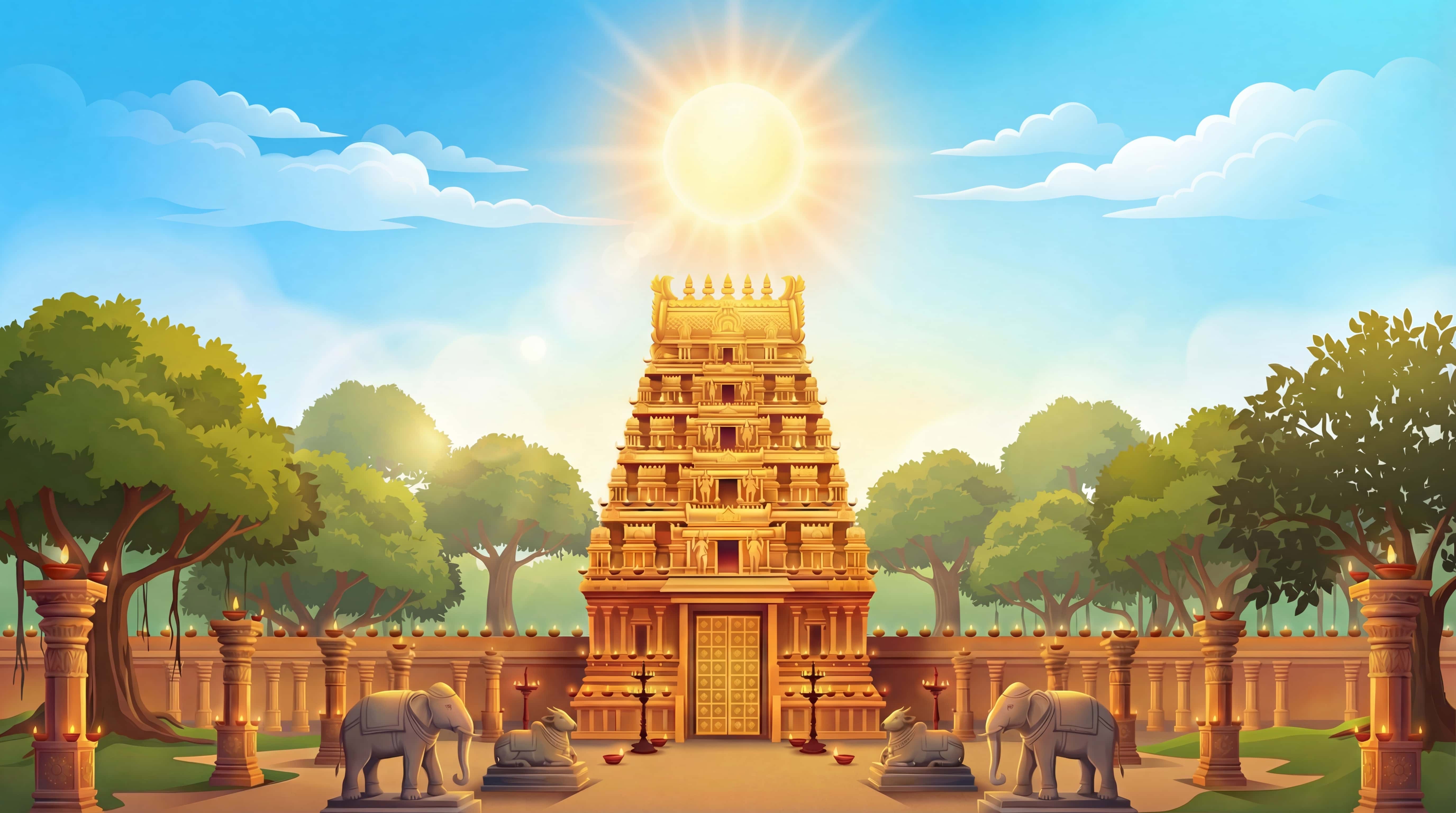
AI Vaishno Devi Guide: Faith, Courage, and the Divine Mother's Grace
Explore Vaishno Devi's living symbolism of faith, courage, and maternal grace, with practical ways to bring these teachings into daily decisions through Sanatan365's AI Vaishno Devi Guide.
A pilgrim may climb for hours before receiving a few quiet moments of darshan, yet the ascent itself has already begun to teach. The AI Vaishno Devi guide on Sanatan365 brings that same pattern into daily reflection: sincere faith does not remove effort; it gives effort direction, courage, and a sense of the Divine Mother's shelter.
Vaishno Devi, reverently called Mata Rani, is worshipped as a form of Shakti (शक्ति, śakti, divine power). Her sacred geography in the Trikuta Hills joins three ideas that modern seekers often need together: trust in grace, disciplined action, and the courage to keep moving when the whole path is not visible. The guide offers real-time conversation shaped around this devotional archetype, while the tradition itself remains the foundation.
What does the AI Vaishno Devi guide offer?
Sanatan365's AI Vaishno Devi guide is one of its named real-time spiritual conversation guides. It is designed for reflective dialogue inspired by the qualities devotees associate with Mata Rani: maternal care, steadfast faith, protection, moral courage, and purposeful effort. It does not replace a guru, scripture, temple, family elder, or pilgrimage. Its useful role is more modest and practical: helping a seeker slow down, frame a sincere question, examine a decision through dharma, and turn devotional insight into a next step.
That distinction matters. In Sanatan Dharma, darshan (दर्शन, darśana, an auspicious seeing of the Divine) is not merely the transfer of information. It is a relationship of presence, reverence, and transformation. A digital guide cannot reproduce the sanctity of the Holy Cave or the grace a devotee experiences there. It can, however, create a consistent space for manana (मनन, manana, thoughtful reflection) between visits to a temple, family worship, or personal prayer.
The best conversations therefore begin with lived questions rather than demands for prediction:
- “What would courageous but compassionate action look like here?”
- “Where am I confusing faith with passivity?”
- “Which part of this decision is within my duty, and which part must I release?”
- “How can I protect a boundary without hardening my heart?”
- “What small act of devotion can steady me today?”
These questions keep the conversation grounded in self-examination. They also reflect the deeper lesson of the Vaishno Devi yatra: the seeker walks, rests, asks for help, continues, and receives darshan without pretending to control grace.
Key takeaway: Use the guide as a structured devotional mirror, not as an oracle or substitute for human and sacred relationships.
Why does Mata Rani's mountain path matter?
The official Shri Mata Vaishno Devi Shrine Board describes the yatra as a journey through places connected with Mata Vaishnavi's spiritual disciplines and penance. The shrine lies in the folds of the Trikuta mountain, and the pilgrimage is administered from the Katra base by the Shrine Board (Shri Mata Vaishno Devi Shrine Board). The Reasi district government places the Holy Shrine about 13 kilometres from Katra in the Trikuta Hills (District Reasi).
These facts are more than travel details. Sacred geography teaches through the body. A mountain path asks for preparation, patience, humility, and attention to fellow travellers. The destination matters, but the manner of reaching it also reveals character.
That is why the yatra can serve as a metaphor for difficult decisions:
- The path is real. A sincere aim still requires practical work.
- The ascent is gradual. Not every question is solved in one dramatic moment.
- Support is part of the journey. Pilgrims rely on routes, services, companions, and acts of care.
- Rest is not surrender. Pausing can preserve the strength needed for dharmic action.
- Darshan is received. Effort creates readiness, but grace is not a transaction.
Hindu traditions do not reduce pilgrimage to self-improvement. A yatra (यात्रा, yātrā, sacred journey) is undertaken in devotion, often with vows, remembrance, and service. Yet its discipline naturally exposes impatience, fear, pride, and generosity. A seeker returning home may find that the mountain continues inward: the next ascent may be an honest conversation, a family responsibility, or a habit that requires steady correction.
This complements the practical understanding of pilgrimage explored in Kanwar Yatra Meaning: Shiva, Gangajal, and Walking Devotion, where movement, restraint, and devotion similarly become inseparable.
Key takeaway: The Trikuta ascent teaches that grace and disciplined effort are partners, not opposites.
What do the three sacred pindis teach about wholeness?
At the Holy Cave, devotees receive darshan of three natural rock formations known as pindis. Devotional accounts associate them with Mahakali, Mahalakshmi, and Mahasaraswati. The Hindu American Foundation's overview explains Vaishno Devi's connection with the Divine Feminine and the revered cave shrine in the Trikuta Hills (Hindu American Foundation).
The threefold symbolism can be contemplated as an integrated spiritual life:
- Mahakali evokes transformative power: the courage to confront fear, falsehood, and inertia.
- Mahalakshmi evokes sustaining abundance: the capacity to nourish what is worthy, responsible, and harmonious.
- Mahasaraswati evokes knowledge and discernment: the clarity to understand before acting.
This is not a formula for reducing three goddesses to psychological traits. Each has vast, living traditions of worship. The reflection simply shows why devotees may experience Vaishno Devi's presence as complete maternal power: strength without wisdom can become harsh; abundance without responsibility can become attachment; knowledge without courage can remain unused.
In a difficult choice, the threefold lens becomes practical. A seeker can ask:
- Clarity: What is actually true, and what am I assuming?
- Sustenance: Which choice protects people, duties, and resources entrusted to me?
- Courage: What necessary action am I avoiding because it is uncomfortable?
Those who want to explore related expressions of Shakti can also read AI Durga Guide: Courage, Protection, and Shakti for Daily Life and AI Kali Guide: Fearlessness, Transformation, and Fierce Compassion. The goal is not to rank forms of the Divine Mother, but to appreciate how different devotional relationships illuminate different aspects of spiritual life.
Key takeaway: Vaishno Devi's threefold symbolism invites clarity, sustaining care, and courageous transformation to work together.
How can Vaishno Devi spiritual guidance shape daily decisions?
Faith is sometimes mistaken for waiting until uncertainty disappears. The pilgrimage image suggests otherwise. The next portion of the path may be visible even when the summit is hidden. Dharmic action often works in the same way: gather the facts available, consult trustworthy people, choose the most responsible step, and remain open to correction.
A simple five-part reflection can make a conversation with the guide more useful.
1. State the situation without drama
Describe observable facts before interpretations. “A deadline was missed twice” is clearer than “Nothing ever works.” This discipline reduces the chance of seeking only emotional confirmation.
2. Name the duty
Ask which responsibility is truly yours. Dharma (धर्म, dharma, sustaining order and right conduct) includes context: a parent's duty, a leader's duty, and a friend's duty may differ. A spiritual reflection should sharpen responsibility, not erase it.
3. Separate fear from caution
Fear can exaggerate danger; caution can identify it accurately. Ask what evidence supports the concern, what safeguards are reasonable, and whether delay itself carries a cost.
4. Choose one climbable step
A mountain is crossed through steps. Select an action that is specific and proportionate: make the call, apologise plainly, review the document, set the boundary, seek expert advice, or complete the next hour of work.
5. Close with offering
After acting, release the demand to control every outcome. This is not indifference. It is the devotional balance of purushartha (पुरुषार्थ, puruṣārtha, purposeful human effort) and prasada-buddhi, the attitude of receiving results with steadiness. The broader Hindu teaching on sacred effort is explored in Purushartha Meaning: The Four Goals of Hindu Life.
For high-stakes medical, legal, financial, safety, or mental-health questions, the guide should never replace qualified professional care. Spiritual reflection can support courage and values while trained experts address specialised risks.
Key takeaway: Faith becomes practical when it clarifies duty, strengthens one responsible action, and releases compulsive control over results.
How should a seeker use the guide with reverence and discernment?
The quality of the question shapes the quality of reflection. A seeker can begin with a brief pranam (प्रणाम, praṇāma, reverential salutation), state the concern honestly, and ask for a dharmic perspective. After receiving a response, it helps to test it through three filters:
- Scriptural and ethical fit: Does it encourage truthfulness, compassion, restraint, courage, and responsibility?
- Reality fit: Does it acknowledge facts, consequences, and the limits of available knowledge?
- Human counsel: Would a trustworthy elder, teacher, or qualified professional recognise the response as responsible?
Avoid asking any AI system to guarantee blessings, predict certain outcomes, or speak with unquestionable authority. Hindu devotion is not a vending machine, and technology should not present itself as the Divine. The guide is best understood as an app-based reflective experience inspired by a named sacred archetype within Sanatan365's canonical guide roster.
A balanced rhythm might be ten minutes once or twice a week:
- Light a lamp or sit quietly if appropriate and safe.
- Take three calm breaths.
- Ask one focused question.
- Write down one insight and one action.
- End with gratitude or a familiar prayer.
- Revisit the action later and note what was learned.
This keeps the experience connected to practice rather than endless conversation. If the same issue repeats, the next step may not be another prompt. It may be accountability, study, seva (सेवा, sevā, selfless service), or a direct conversation with someone involved.
Key takeaway: Reverent use requires clear limits, ethical testing, human counsel, and a movement from reflection into action.
The Divine Mother as courage with shelter
Mata Rani's appeal is not only that she represents power. Devotees approach her as Mother. Maternal grace joins two needs that can seem contradictory: the need to be protected and the need to grow strong enough to walk.
That image corrects two extremes. Spirituality need not make a person passive, because the Mother calls forth courage and discipline. Nor must courage become lonely self-reliance, because the seeker remembers that effort unfolds within a larger field of grace, relationship, and care.
The AI Vaishno Devi guide is most valuable when it supports that balance. It can remind a seeker to tell the truth without cruelty, protect a boundary without contempt, fulfil duty without pride, and accept help without shame. It can also make devotional reflection available to people living far from Katra, while clearly pointing beyond the screen to prayer, study, family tradition, temple community, and, when possible, pilgrimage itself.
Key takeaway: Vaishno Devi's maternal symbolism teaches a courage that acts firmly while remaining sheltered in grace.
FAQ
What is the AI Vaishno Devi guide on Sanatan365?
It is a named real-time spiritual conversation guide inspired by Goddess Vaishno Devi's devotional qualities, including faith, courage, protection, maternal grace, and disciplined effort. It supports reflection and should not be treated as the deity, a guru, or an infallible authority.
Can the guide replace a pilgrimage to Vaishno Devi?
No. The Holy Cave, Trikuta Hills, physical yatra, temple community, and darshan have a sacred reality that a digital experience cannot reproduce. The guide can support reflection before or after pilgrimage and help distant seekers maintain a devotional rhythm.
What questions work best with the AI Vaishno Devi guide?
Questions about courage, duty, fear, boundaries, family care, disciplined effort, and releasing control tend to be constructive. Focus on perspective and responsible action rather than guaranteed predictions or supernatural claims.
Is Vaishno Devi associated with three forms of Shakti?
Devotional accounts of the Holy Cave associate its three sacred pindis with Mahakali, Mahalakshmi, and Mahasaraswati. They are contemplated as expressions of the Divine Mother's transformative power, sustaining abundance, and wisdom.
Is AI spiritual guidance suitable for serious personal problems?
It can complement reflection, but it should not replace qualified medical, mental-health, legal, financial, or safety advice. Serious problems deserve competent human help, trusted relationships, and appropriate professional care.
The single key takeaway: Mata Vaishno Devi's path joins faith with effort, teaching seekers to take the next courageous step while resting the heart in the Divine Mother's grace.
About the author
Sanatan365 Editorial
Bringing Sanatan Dharma to modern seekers through authentic, scripture-grounded content.
Related in Features
 Features
AI Adi Shankaracharya Guide: Viveka and the Practice of Clear Judgment
Explore viveka, the Vedantic discipline of discernment, and learn how the AI Adi Shankaracharya guide can support thoughtful reflection wit…
 Features
AI Venkateswara Guide: Patience, Stewardship, and Responsible Hope
Explore Sri Venkateswara's devotional lessons on patience, stewardship, and responsible hope, with practical reflection through Sanatan365'…
 Features
AI Kali Guide: Fearlessness, Transformation, and Fierce Compassion
A reverent guide to Goddess Kali's symbolism, her meaning as time and fierce compassion, and how Sanatan365's AI Kali guide can support dai…