Ekadashi Fasting for Beginners: A Gentle Guide Before Nirjala Ekadashi
A practical, safety-conscious guide to Ekadashi fasting for beginners, including vrat options, spiritual meaning, and how to prepare for Nirjala Ekadashi without pressure.
The hardest part of Ekadashi is often not hunger. It is confusion.
One family says no grains. Another says only fruit. Someone online says water is not allowed. A grandmother says intention matters more than the menu. A temple calendar mentions parana time, and a beginner wonders whether a small mistake ruins the whole vrat.
Ekadashi fasting for beginners should begin with clarity, not fear. Ekadashi (एकादशी, the eleventh lunar day) is a sacred observance in many Sanatan traditions, especially Vaishnava practice, where the day is dedicated to remembrance of Lord Vishnu. A vrat (व्रत, sacred vow or disciplined observance) is not meant to become a performance of toughness. It is meant to turn the body, food, time, speech, and attention toward the Divine.
This becomes especially important before Nirjala Ekadashi (निर्जला एकादशी, the Ekadashi traditionally observed without water in some lineages). Nirjala is widely regarded as one of the strictest Ekadashi vrats. For a beginner, that does not mean rushing into severity. It means understanding the spirit of Ekadashi first, preparing gradually, and adapting the practice with wisdom.
A necessary safety note comes first: fasting is not suitable in the same way for everyone. People with health conditions, pregnancy, breastfeeding, eating disorder history, dehydration risk, demanding physical work, or medication needs should consult qualified medical professionals and adapt practices safely. Children, elders, and anyone under medical care should not attempt strict fasting without appropriate guidance. In Sanatan Dharma, discipline is honored, but harming the body through imitation is not the goal.
Key takeaway: Ekadashi is a devotional discipline, not a test of ego. Beginners should start gently, safely, and with sincere remembrance.
What Is Ekadashi and Why Is It Observed?
Ekadashi falls twice in each lunar month: once during Shukla Paksha (शुक्ल पक्ष, the bright fortnight) and once during Krishna Paksha (कृष्ण पक्ष, the dark fortnight). Because the Hindu calendar follows lunar movement, the exact dates vary by location and panchang. Devotees often check a trusted local calendar for the correct tithi and parana window.
Traditionally, Ekadashi is associated with Lord Vishnu, the sustainer and preserver. Many devotees spend the day in nama-japa (नाम-जप, repetition of divine names), reading or listening to sacred texts, visiting temples, offering tulsi, doing charity, and simplifying food. The food restriction is only one layer. The deeper purpose is restraint of the senses and steadiness of mind.
A useful way to understand the day is this: on Ekadashi, the seeker reduces outer consumption so inner remembrance can become stronger. Food becomes simpler. Speech becomes softer. Entertainment becomes lighter or absent. Time that usually gets scattered is gathered back into sadhana.
The Bhagavad Gita 9.26 offers a gentle devotional principle, where Krishna says that a leaf, flower, fruit, or water offered with devotion is accepted. The verse does not reduce dharma to minimalism, but it reminds the beginner that bhava — sincere inner feeling — matters deeply. A fruit offered with humility is spiritually different from a feast prepared with distraction.
Key takeaway: Ekadashi is observed to simplify the senses, remember Lord Vishnu, and practice devotion with steadiness.
Why Is Nirjala Ekadashi Considered So Powerful?
Nirjala Ekadashi occurs in the Jyeshtha period and is traditionally connected with the story of Bhima from the Mahabharata tradition. Bhima, known for his great strength and appetite, found it difficult to observe every Ekadashi fast through the year. He was advised to observe one especially strict Ekadashi with full sincerity. Because this vrat involved abstaining even from water, it came to be called Nirjala — “without water.”
For many devotees, Nirjala Ekadashi carries the feeling of concentrated discipline. It is often treated as a way to honor the spirit of all Ekadashis through one intense observance. In 2026, widely used panchang listings place Nirjala Ekadashi on June 25 for New Delhi, with local parana timing varying by place; readers should verify the exact local date and parana window through their family calendar, temple, or a trusted panchang such as AstroSage Panchang.
The key point for beginners is not to copy the strictest version immediately. A waterless fast can be physically risky for many people, especially during hot weather. The Jyeshtha season is often associated with heat in many parts of India, which makes hydration safety even more important. Spiritual discipline should be practiced with viveka (विवेक, discernment), not pressure.
Some devotees may observe Nirjala in the full traditional way. Others may keep a grain-free fast, take fruits and milk, drink water, reduce meals, or focus on japa and charity. A sincere adapted observance is better than an unsafe extreme that leaves the person weak, resentful, or medically distressed.
Key takeaway: Nirjala Ekadashi is powerful because of concentrated devotion, but beginners should approach it gradually and safely.
Ekadashi Fasting for Beginners: Which Vrat Option Should You Choose?
There is no single beginner path that fits every body, family, region, and lineage. The best first Ekadashi is the one a person can complete with steadiness and reverence.
1. Sattvic simplification
This is the gentlest starting point. The devotee avoids heavy, tamasic, or overly stimulating food and eats simple sattvic meals. The day may include fruits, milk, curd, nuts, sabudana, sweet potato, or other items allowed in the family tradition. Grains and beans are often avoided in many Ekadashi practices, but rules vary by sampradaya and household.
This option is helpful for beginners who want to honor Ekadashi without suddenly changing everything. The focus is on purity, moderation, and remembrance.
2. Phalahar vrat
Phalahar (फलाहार) means taking fruits or fruit-based nourishment. Some devotees include milk or simple vrat foods. This is stricter than ordinary sattvic eating but still manageable for many adults.
A beginner choosing phalahar should plan ahead. If the day becomes a cycle of cravings, irritation, and overeating vrat snacks, the point is missed. The food should support prayer, not become the center of the day.
3. One-meal observance
Some devotees take one simple meal during the day, often without grains, and spend the rest of the time in prayer and restraint. This can work for people with work or family responsibilities who cannot function well on a full fast.
The one meal should be calm and intentional. Before eating, the devotee can pause, offer gratitude, remember Lord Vishnu, and keep the meal free from distraction.
4. Water-only or stricter fasting
More experienced practitioners may fast with water or observe stricter forms according to their lineage. This should not be treated casually. If a person has any medical concern, medication schedule, heat exposure, travel, pregnancy, or heavy work, qualified professional advice and safe adaptation are essential.
5. Nirjala observance
Nirjala, in its strict form, means fasting without food and water until parana. This is not a beginner default. It should be undertaken only by those for whom it is genuinely safe and appropriate, ideally with family or guru guidance. For many seekers, preparing for Nirjala may mean honoring the day with japa, Vishnu worship, charity, and a gentler food discipline.
Key takeaway: Beginners can observe Ekadashi through graded options. The goal is not maximum difficulty; the goal is sincere discipline.
What to Do on Ekadashi Besides Fasting
A strong Ekadashi is built around more than the plate.
Begin the day with a sankalpa (संकल्प, sacred intention). It can be simple: “Today I observe Ekadashi with devotion to Lord Vishnu. May my mind become steady, my speech become pure, and my actions become aligned with dharma.” A clear intention prevents the day from becoming only a diet change.
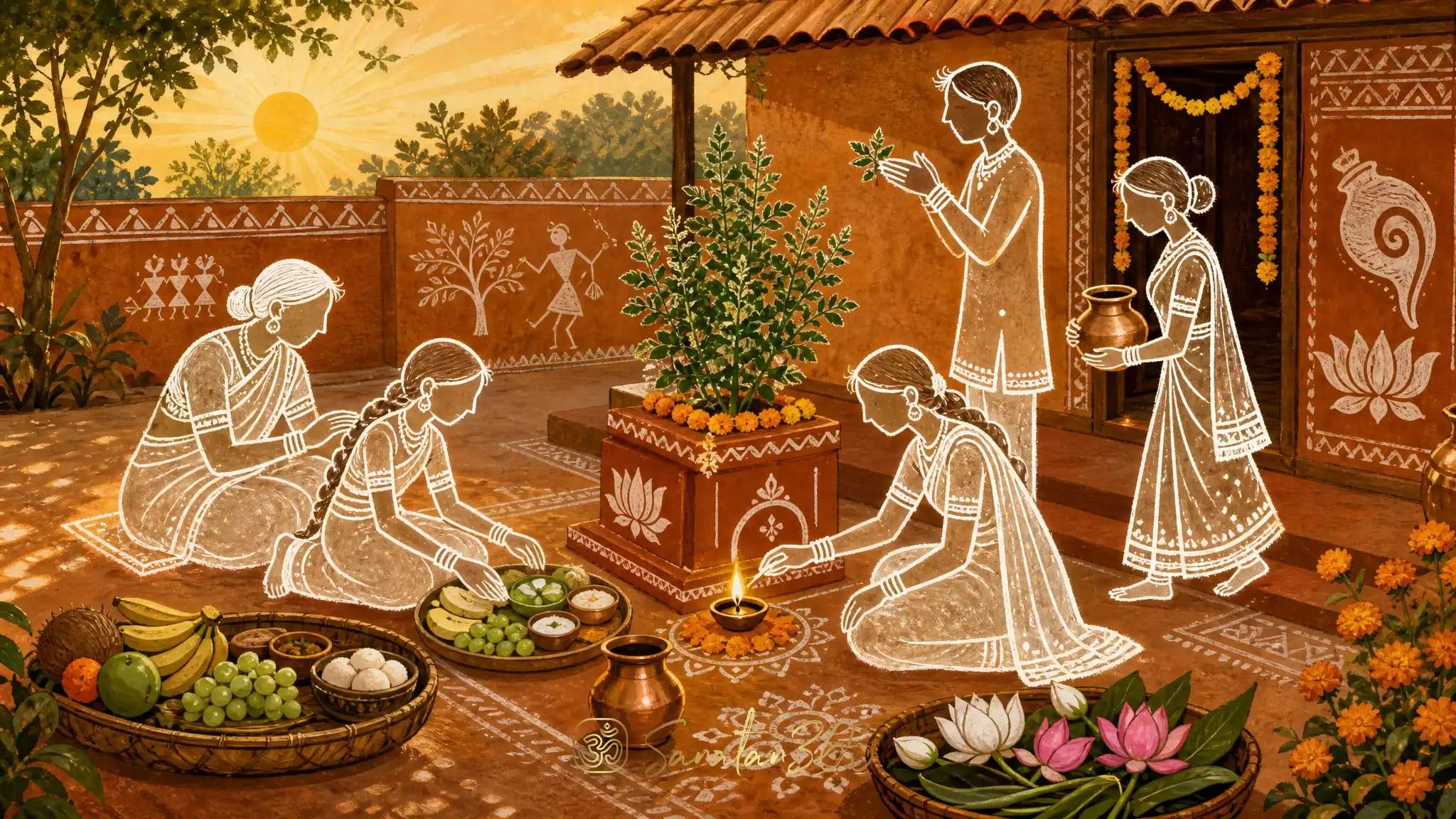
If the household keeps a Vishnu, Krishna, Rama, or Venkateswara altar, offer a diya, flowers, tulsi leaves if available, and simple prayers. Tulsi is especially beloved in Vishnu worship. Devotees may chant the names of Vishnu, read a chapter of the Bhagavad Gita, listen to Vishnu Sahasranama, or repeat a simple mantra such as “Om Namo Bhagavate Vasudevaya.”
Charity is also meaningful on Ekadashi. The offering can be food, water, support to a temple, help to someone in need, or quiet service at home. The principle is that restraint should open the heart, not make the person self-absorbed.
Speech discipline matters. A person may fast from grains but still spend the day in anger, gossip, comparison, or digital noise. That weakens the vrat. A beginner can choose one additional restraint: no gossip, no unnecessary scrolling, no harsh words, or no entertainment until evening prayers are complete.
Families can make the day child-friendly by explaining the meaning without forcing adult austerity. Children can offer flowers, chant one name of Vishnu, listen to a story, or help prepare a simple offering. In this way, Ekadashi becomes a living family rhythm rather than a rule imposed by fear.
Key takeaway: Ekadashi fasting becomes spiritually complete when joined with prayer, charity, mantra, restraint, and kindness.
How to Prepare for Nirjala Ekadashi Without Pressure
Preparation begins several days earlier, not on the morning of the fast.
First, choose the level of observance honestly. A beginner should ask: What is safe for my body? What does my family tradition allow? What duties do I have that day? Do I need medical advice? Am I trying to impress someone, or am I trying to deepen devotion?
Second, reduce heaviness the day before. Many devotees avoid overeating before a fast because it makes the next day harder. A simple evening meal, early sleep, and a calm mind create better conditions than last-minute indulgence.
Third, prepare the puja space. Clean the altar, keep a diya ready, arrange tulsi or flowers if available, and decide which text or mantra will anchor the day. If the vrat is adapted, that does not make the puja less sincere.
Fourth, plan parana (पारण, the proper breaking of the fast), usually done during a specific time after Ekadashi, depending on the tithi and local calendar. Beginners should check a reliable panchang for the correct window. Breaking the fast should be gentle: prayer, water if appropriate, fruit, or simple sattvic food according to tradition and health needs.
Fifth, remove shame from adaptation. Some people cannot safely do Nirjala. Some may intend a stricter fast and need to adjust midway. That is not failure. A vrat is a vow made before the Divine, and the Divine is not honored by recklessness. If the body shows warning signs or a professional has advised against fasting, adaptation is the dharmic path.
Key takeaway: Nirjala preparation should combine devotion, planning, safety, and humility.
Common Mistakes Beginners Should Avoid
The first mistake is treating Ekadashi as a weight-loss technique. Ekadashi is a spiritual observance. Physical simplicity may be part of it, but the aim is devotion and self-mastery.
The second mistake is arguing over food rules without understanding the heart of the vrat. Traditions differ. Some households allow certain grains or regional vrat foods; others are strict. A beginner should follow a trusted family, guru, temple, or sampradaya source rather than collecting random rules from social media.
The third mistake is overcompensating with “fasting food.” If the whole day becomes elaborate vrat recipes, constant snacking, and obsession over what is technically allowed, the spirit becomes diluted.
The fourth mistake is neglecting parana. Breaking the fast is part of the observance, not an afterthought. It should be done calmly, at the right time where possible, and without overeating.
The fifth mistake is pride. A person who completes a strict fast but becomes harsh toward others has missed something subtle. Ekadashi should increase humility. If the vrat makes the heart softer, speech cleaner, and remembrance deeper, it has begun to work.
Key takeaway: The most important Ekadashi rule for beginners is to keep the practice devotional, safe, and free from pride.
A Simple Beginner Ekadashi Schedule
The following rhythm is only a gentle example. It can be adapted by family tradition, health needs, work duties, and local panchang.
Morning: Wake early, bathe, clean the altar, light a diya, offer tulsi or flowers, and make a short sankalpa. Chant one mala of a Vishnu mantra or repeat the divine name for five to ten minutes.
Midday: Keep food simple according to the chosen level of observance. Read or listen to one section of the Bhagavad Gita, Vishnu Sahasranama, or a story connected with Vishnu bhakti. Avoid gossip and unnecessary digital distraction.
Evening: Light a diya again. Offer gratitude. Chant or listen to bhajans. If observing with family, let each person share one quality they want to practice: patience, truthfulness, devotion, restraint, or service.
Next morning or parana time: Break the fast gently according to the correct local timing and health needs. Offer the first thought to the Divine before returning to ordinary routine.
This schedule is intentionally simple. A beginner who completes it with attention may gain more than someone who attempts an extreme fast while remaining restless all day.
Key takeaway: A good beginner Ekadashi is simple enough to complete and meaningful enough to repeat.
FAQ
Can beginners drink water on Ekadashi?
Yes, many beginners drink water and observe a gentler fast. Nirjala Ekadashi is the strict waterless form in some traditions, but it is not suitable for everyone. Anyone with health conditions, pregnancy, medication needs, heat exposure, or medical concerns should consult qualified professionals and adapt safely.
What foods are usually avoided on Ekadashi?
Many traditions avoid grains, beans, and certain heavy foods on Ekadashi. Common vrat foods may include fruit, milk, nuts, sabudana, sweet potato, or other regionally accepted items. Rules vary by lineage and household, so follow a trusted family, temple, or sampradaya source.
Is Nirjala Ekadashi compulsory for everyone?
No. Nirjala Ekadashi is a revered and strict observance, but it should not be forced on every person. Devotion can be expressed through adapted fasting, japa, puja, charity, and self-restraint. Safety and sincere intention matter.
What if I accidentally break my Ekadashi fast?
Do not turn one mistake into guilt or abandonment. Pause, remember the purpose of the vrat, continue with prayer and restraint, and learn for next time. Ekadashi is meant to cultivate humility, not anxiety.
When should Ekadashi fast be broken?
The fast is traditionally broken during parana, the proper time after Ekadashi, which depends on local tithi calculations. Check a reliable panchang, temple calendar, or family tradition for your location.
About the author
Sanatan365 Editorial
Bringing Sanatan Dharma to modern seekers through authentic, scripture-grounded content.
Related in Festivals
 Festivals
Parivartini Ekadashi 2026: Date, Meaning, and Gentle Vrat Guide
Parivartini Ekadashi 2026 falls on September 22. Learn why it is called Parsva or Vamana Ekadashi, how it relates to Chaturmas, and how to…
 Festivals
Hartalika Teej 2026: Date, Meaning, Puja, and Parvati's Resolve
Hartalika Teej 2026 is observed on September 14 in honour of Goddess Parvati and Lord Shiva. Learn the festival's story, vrat meaning, regi…
 Festivals
Radha Ashtami 2026: Date, Meaning, and Devotion at Home
Radha Ashtami falls on 19 September 2026 in India. Explore its meaning, Braj traditions, local timing guidance, and a thoughtful home obser…