
Parivartini Ekadashi 2026: Date, Meaning, and Gentle Vrat Guide
Parivartini Ekadashi 2026 falls on September 22. Learn why it is called Parsva or Vamana Ekadashi, how it relates to Chaturmas, and how to observe the vrat responsibly.
A sacred calendar can turn an ordinary Tuesday into a lesson about inner change.
Parivartini Ekadashi 2026 falls on Tuesday, September 22, 2026. It is the bright-fortnight Ekadashi of Bhadrapada, dedicated to Lord Vishnu and remembered within Chaturmas as the day of a symbolic divine turning. Also called Parsva Ekadashi and Vamana Ekadashi, the observance invites devotees to renew prayer, simplify food, practise self-restraint, and turn one habit toward dharma. Exact tithi and parana (पारण, the prescribed conclusion of a fast) times vary by location, so families should follow a trusted local panchang.
This Ekadashi arrives during a season already rich with devotion. Its deepest meaning is not that a cosmic event can be reduced to a timetable. It is that stillness can contain movement, and a disciplined pause can prepare a person to change direction.
Key takeaway: Parivartini Ekadashi makes “turning” a spiritual practice: from distraction toward remembrance, excess toward restraint, and intention toward action.
When Is Parivartini Ekadashi 2026?
Parivartini Ekadashi 2026 is observed on Tuesday, September 22 in India. The date is determined by the presence of Bhadrapada Shukla Ekadashi at the appropriate sunrise, not by the Gregorian date alone. A published Hindu calendar for 2026 lists Parsva Ekadashi on September 22, while the surrounding sequence includes Anant Chaturdashi on September 25 and Bhadrapada Purnima on September 26 (Drik Panchang Hindu calendar).
The fast is normally concluded on Dwadashi, the following lunar day, during the suitable parana window. Those details can change with city, sunrise, and tradition. A devotee in Delhi, Chennai, London, or New York should therefore avoid copying a single clock time from a general article. A location-aware panchang, family priest, or temple calendar is the better authority for the final timing.
Three names commonly appear for the observance:
- Parivartini Ekadashi, from parivartana (परिवर्तन, turning or change).
- Parsva or Parshva Ekadashi, from pārśva (पार्श्व, side or flank).
- Vamana Ekadashi, because the day is associated in devotional tradition with Lord Vishnu's Vamana avatara.
Some regions also connect this period with Dol Gyaras or Jal Jhulni Ekadashi. The names and public customs are not perfectly uniform across India. That variation should be received as a sign of living tradition, not forced into one universal script.
Ekadashi itself means the eleventh lunar day. In Vaishnava practice, it is especially associated with Vishnu remembrance, moderated eating or fasting, prayer, study, and greater care over the senses. Readers who are new to the discipline may first review this gentle guide to Ekadashi fasting.
Key takeaway: The date is September 22, 2026, but the exact start, parana, and household method should be confirmed locally.
Why Is It Called Parivartini, Parsva, and Vamana Ekadashi?
The Parivartini and Parsva names point to the same devotional image: during Chaturmas, Lord Vishnu is remembered as resting in yoga nidra (योगनिद्रा, divine yogic repose) upon Shesha in the cosmic ocean, and on this Ekadashi he turns from one side to the other. The image is theological poetry, not a claim that the Divine is subject to ordinary human sleep.
In sacred narrative, divine rest can express preservation rather than absence. A seed beneath soil appears inactive while transformation is underway. Night looks still while life repairs itself. The monsoon interrupts ordinary travel while the earth renews. In the same way, Vishnu's yoga nidra can be contemplated as sustained cosmic order: the Preserver remains present even when activity takes a quieter form.
The turning gives the day its ethical force. A change of side is small, but it changes orientation. Devotees can ask equally precise questions:
- Which repeated action is pulling attention away from what matters?
- Which duty has remained postponed?
- Where has devotion become mechanical?
- What can be simplified for the rest of Chaturmas?
- Which promise needs one visible next step?
The name Vamana Ekadashi introduces another layer. Vamana is Vishnu's dwarf avatara, remembered for approaching King Bali and asking for three paces of land before revealing a cosmic form. The sacred account has received many theological readings concerning humility, generosity, rightful order, surrender, and the limits of possession. A fuller treatment appears in the Vamana and King Bali story.
On this Ekadashi, the Vamana association can become a discipline of measure. The apparently small request contains vast meaning. Likewise, a modest vrata may contain a serious reorientation. One meal simplified, one hour protected from distraction, one act of charity completed, or one apology offered can be spiritually larger than a dramatic promise that is not sustained.
Key takeaway: The festival's names join three ideas: sacred turning, divine preservation, and the Vamana lesson that small, truthful steps can reorder a life.
What Does Vishnu's Turning During Chaturmas Mean?
Chaturmas means “four months,” although its exact ritual span and starting convention vary among regions and lineages. It broadly covers a monsoon-season period in which many devotees, renunciants, and communities take additional vows, reduce travel, simplify food, intensify study, or observe specific restraints.
The season carries practical wisdom. Monsoon travel was historically more difficult, and settled practice allowed teachers and communities to remain in one place. The rains also made ecological care especially relevant because countless small forms of life emerged. Different traditions developed distinct rules, but the shared pattern is disciplined limitation for spiritual attention.
Parivartini Ekadashi stands within that longer arc. It is neither the beginning nor the final awakening associated with Devutthana Ekadashi. It is a midpoint image: the vow continues, but its energy can be refreshed.
That matters because spiritual disciplines often weaken in the middle. Beginnings feel inspiring. Endings offer satisfaction. The middle contains repetition, fatigue, and the temptation to perform the outer rule while forgetting its purpose. Vishnu's symbolic turn asks the devotee to turn the vow itself: examine it, correct it, and restore its inner direction.
A useful Chaturmas review can be simple:
- Remember the original sankalpa. A sankalpa (संकल्प, solemn intention) should be clear enough to guide conduct.
- Check the fruit of the practice. Is it producing humility, steadiness, and kindness, or pride and irritation?
- Reduce unnecessary severity. A practice that harms health or duties is not automatically spiritually superior.
- Repair one lapse without abandoning the whole vow. Returning matters more than self-punishment.
- Connect restraint to service. Savings of time, food, or money can support someone else.
The Bhagavad Gita repeatedly joins discipline with balance. Its teaching on moderation in food, recreation, effort, sleep, and wakefulness warns against confusing extremes with yoga (Bhagavad Gita 6.16–17). The passage is especially relevant when fasting or undertaking seasonal vows.
Key takeaway: Vishnu's turn is a midpoint correction: continue the discipline, but make sure its direction remains balanced, compassionate, and awake.
How Can Devotees Observe Parivartini Ekadashi Responsibly?
A responsible Parivartini Ekadashi vrat begins with devotion, not food anxiety. Vrata (व्रत, a sacred vow or disciplined observance) can include fasting, but it also includes prayer, restraint, truthfulness, charity, scripture, and mindful conduct. The strongest observance is the one a person can keep without neglecting health or essential duties.
A simple home observance
Devotees may adapt the following outline according to family and lineage:
- Prepare on Dashami. Eat simply, reduce excess, and decide the level of fasting before the day begins.
- Take a clear sankalpa. State the intention to remember Lord Vishnu and practise restraint without pride.
- Offer simple worship. A clean space, lamp, water, flowers, tulsi where customary, and a Vishnu mantra may be enough.
- Read or hear sacred teaching. Choose a passage connected with Vishnu, Vamana, bhakti, or ethical self-restraint.
- Protect the senses. Reduce gossip, anger, compulsive scrolling, and entertainment that scatters attention.
- Offer dana or seva. Dāna (दान, giving) and sevā (सेवा, selfless service) turn personal restraint into care for others.
- Conclude at the proper time. Break the fast gently on Dwadashi according to a location-aware parana window.
Fasting practices range from complete abstinence to fruit, milk, water, or a simple grain-free meal, depending on tradition and capacity. No article can prescribe one method safely for every reader. Children, pregnant or breastfeeding people, older adults, people with diabetes, those taking medication, and anyone with a history of disordered eating or a relevant medical condition should not undertake a demanding fast without appropriate professional guidance. Prayer, charity, study, or a simplified sattvic meal can form a sincere observance when fasting is unsuitable.
Ekadashi is not a contest in deprivation. If hunger produces anger, faintness, or inability to care for family and work, the form of the vow should be reconsidered. Spiritual discipline should refine attention and conduct, not become a source of harm or superiority.
One practical “turning vow” for 2026 may be added to the day:
- turn one meal into food shared with someone in need;
- turn thirty minutes of screen time into mantra or scripture reading;
- turn one unresolved irritation into a respectful conversation;
- turn an unused purchase into a charitable gift;
- turn one wasteful household habit toward greater care.
Key takeaway: A good vrat is proportionate, devotional, safe, and visible in kinder conduct.
How Do Dol Gyaras and Jal Jhulni Traditions Vary by Region?
Parivartini Ekadashi is not observed identically everywhere. In parts of Rajasthan, Madhya Pradesh, Gujarat, and Braj-influenced communities, the period may be known through names such as Dol Gyaras, Jal Jhulni Ekadashi, or Jal Jhilani. Temple deities may be placed in a decorated dola (डोला, swing or palanquin), carried in procession, or ceremonially brought near water.
The imagery adds a public, festive dimension to the inward discipline of Ekadashi. Movement through the community expresses the Divine coming among devotees. Water suggests purification, refreshment, and the monsoon environment. Music, darshan, and procession can turn private restraint into shared celebration.
Yet customs differ by temple and region. Some communities emphasize Vamana worship. Some focus on Vishnu's turning during Chaturmas. Some celebrate a procession and ceremonial bath. Others keep a quiet household fast with little public ritual. None of these local forms should be presented as compulsory for every Hindu family.
Respectful participation means following the host temple's guidance, dressing appropriately, avoiding obstruction during processions, and treating water bodies responsibly. Offerings should not become litter. Photography should not interfere with worship. Families in the diaspora can preserve the spirit without imitating a ritual they do not understand: a temple visit, Vishnu nama-japa, shared reading, water conservation, or food donation can carry the day meaningfully.
Regional variation also helps children understand that Sanatan Dharma is held together by shared principles without requiring identical expression. Vishnu remembrance, restraint, renewal, and service may remain constant even as language, music, food, timing, and procession style change.
Key takeaway: Dol Gyaras and Jal Jhulni traditions show how one Ekadashi can become many locally rooted expressions of Vishnu devotion.
How Can the Festival's “Turning” Continue After the Fast?
The most useful test of Parivartini Ekadashi begins after parana. If the day ends only with eating again, its central symbol has been left incomplete. The turning should continue as a small change in orientation.
Choose one action that can survive for the remaining Chaturmas period. It should be specific, modest, and measurable. “Become more spiritual” is too vague. “Read ten verses before opening social media,” “serve one simple meal without waste each week,” or “pause before reacting in anger” can actually shape conduct.
The Vamana association supports this scale. Three steps, not three hundred promises. A limited commitment can reveal whether a person is willing to make room for dharma. The goal is not self-improvement detached from devotion; it is to let remembrance change the way time, speech, food, money, and attention are used.
Families can make the lesson visible by asking each member to name one gentle turn. Children might choose less food waste. Adults might choose patient speech or regular prayer. Elders may share a family Ekadashi practice and explain its meaning rather than only enforcing its rule.
This keeps the observance free from two common errors. The first is magical bargaining: assuming one fast guarantees a desired outcome. The second is empty symbolism: admiring the story of transformation without changing anything. Hindu vrata traditions are richer when devotion, self-restraint, and ethical action support one another.
Key takeaway: Let the fast end, but let one truthful turn remain.
FAQ
When is Parivartini Ekadashi 2026?
Parivartini Ekadashi 2026 is observed on Tuesday, September 22, 2026, in India. Exact Ekadashi tithi and Dwadashi parana times depend on location, so devotees should consult a city-specific panchang or trusted temple calendar.
Is Parivartini Ekadashi the same as Parsva Ekadashi?
Yes. Parivartini Ekadashi and Parsva or Parshva Ekadashi are names for the same Bhadrapada Shukla Ekadashi. The names refer to Lord Vishnu's symbolic turning from one side to the other during Chaturmas.
Why is it also called Vamana Ekadashi?
The day is associated in devotional tradition with Lord Vishnu's Vamana avatara. The Vamana account of King Bali and three measured steps adds themes of humility, surrender, rightful measure, and the limits of possession.
Must everyone keep a complete fast?
No. Ekadashi practices vary, and a demanding fast is not suitable for everyone. Health, age, pregnancy, medication, work, and caregiving duties matter. Prayer, scripture reading, charity, sense restraint, and a simple suitable diet can all support a sincere vrata.
What is the main spiritual meaning of Parivartini Ekadashi?
Its central image is turning: renewing a Chaturmas discipline and redirecting one habit toward dharma. The observance asks devotees to join Vishnu remembrance with balanced restraint, service, and one lasting change in conduct.
About the author
Sanatan365 Editorial
Bringing Sanatan Dharma to modern seekers through authentic, scripture-grounded content.
Related in Festivals
 Festivals
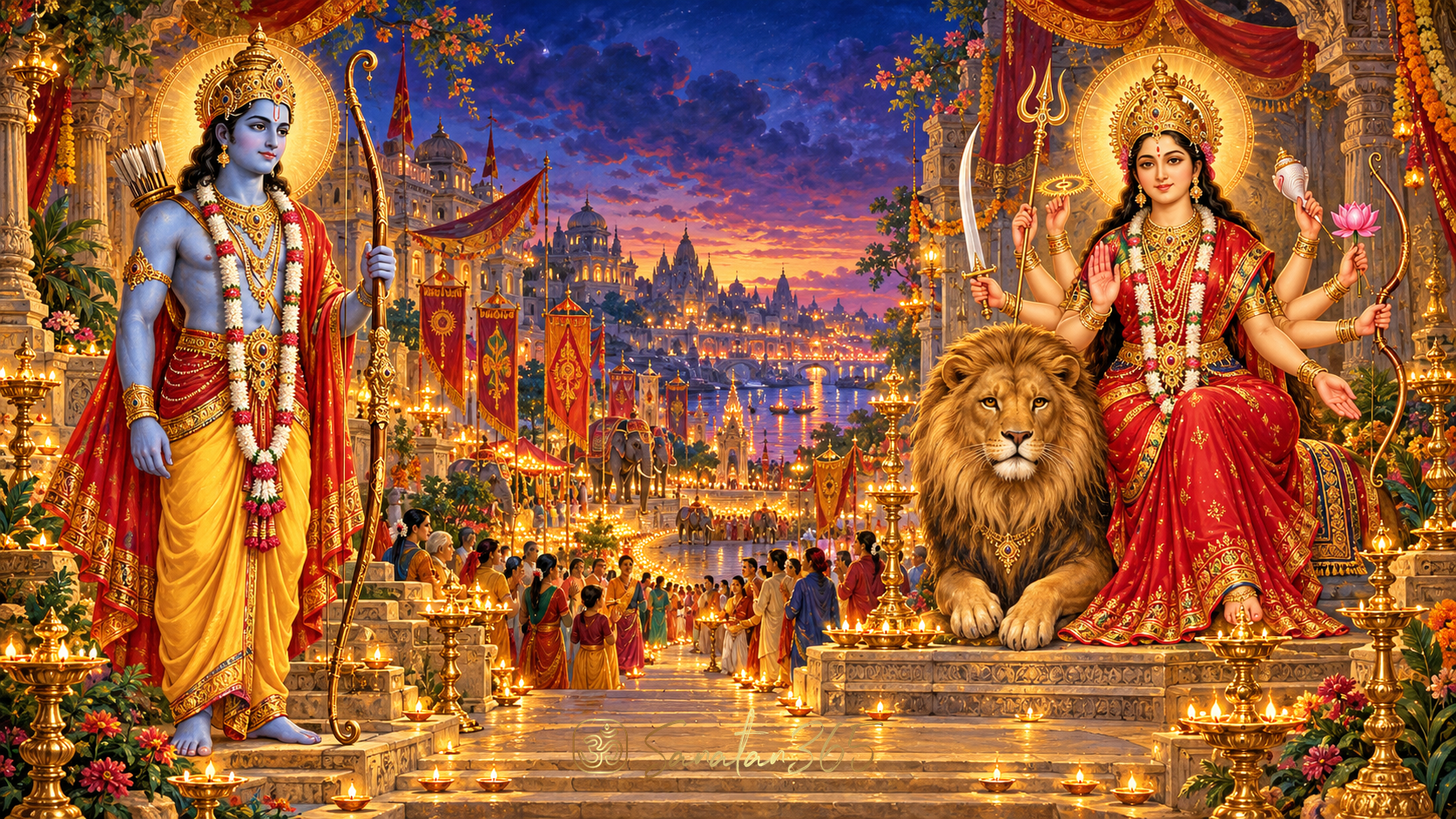
Dussehra 2026: Date, Vijayadashami Meaning, and Living Traditions
Understand the 2026 Dussehra date, the meanings of Rama and Durga’s victories, regional celebrations, and a thoughtful way to observe Vijay…
 Festivals
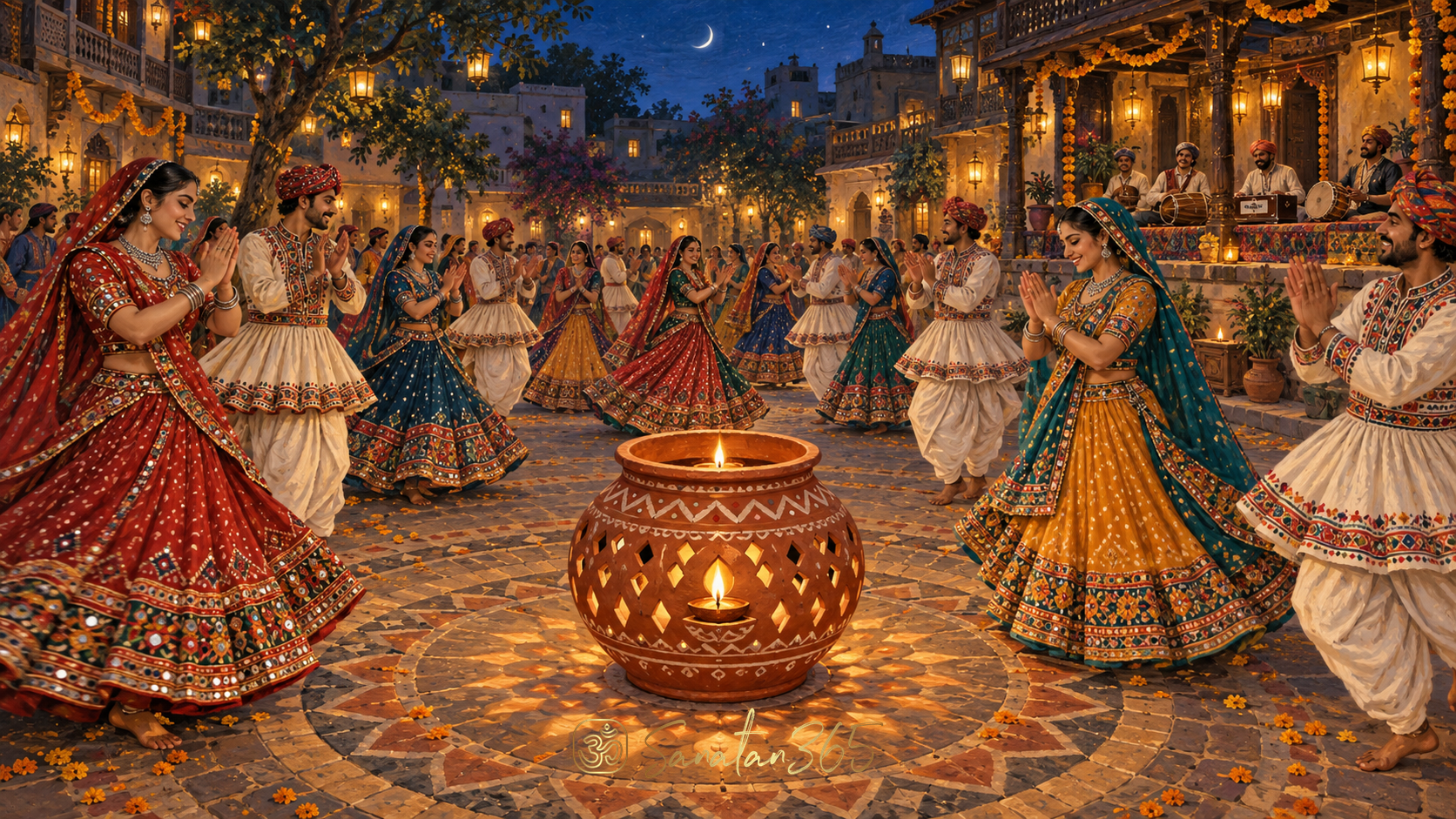
Garba Meaning: The Lamp at the Heart of Navratri
Garba is a Gujarati devotional dance associated with Navratri. Its central lamp, shared circular rhythm and reverence for Goddess Amba expl…
 Festivals
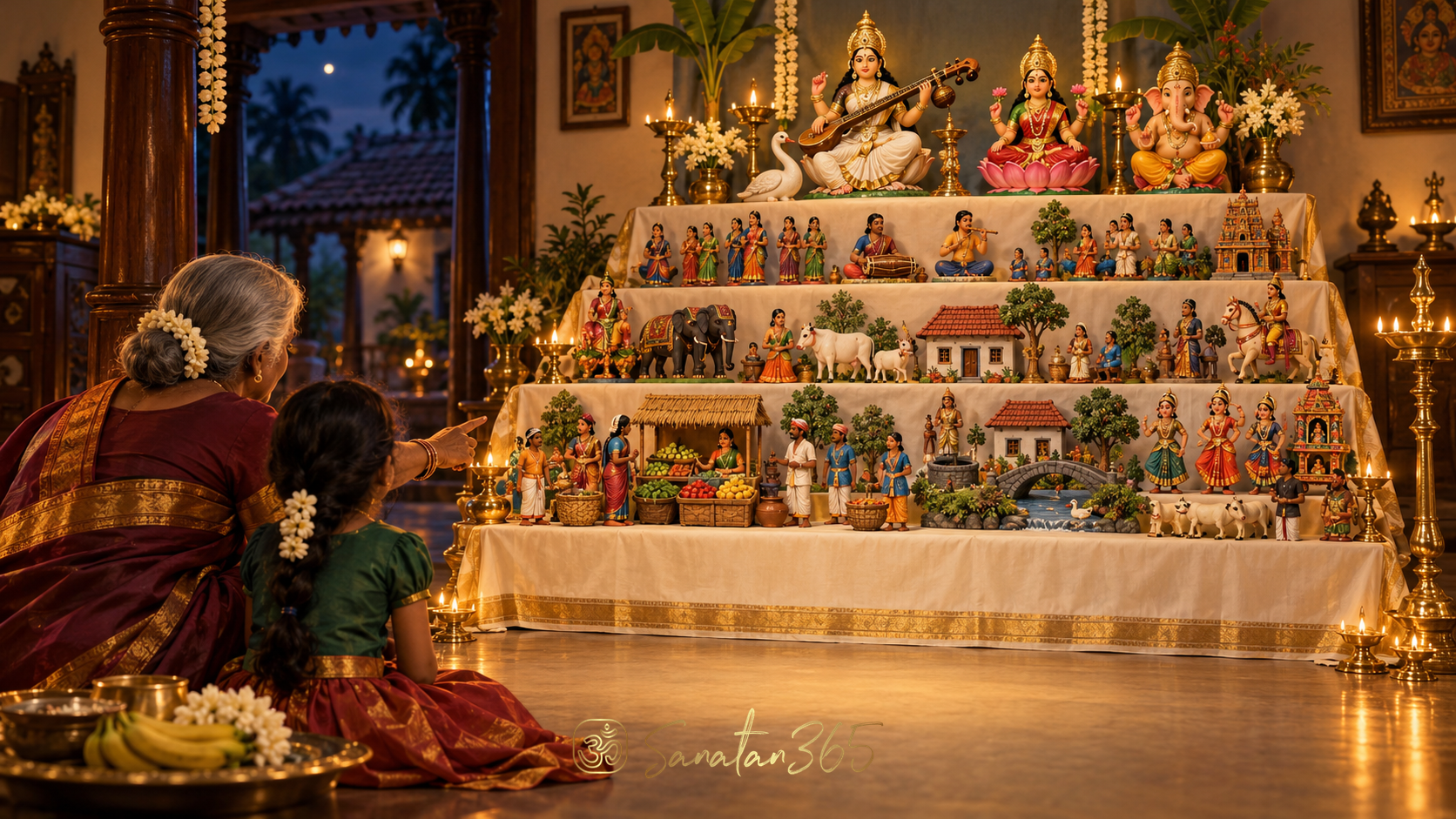
Golu Meaning: Navratri Dolls, Living Stories, and Hospitality
Understand Navratri Golu through its handmade dolls, regional names, family stories and welcoming home visits, with thoughtful preparation…

