Somnath Jyotirlinga Meaning: Shiva’s Light on the Western Shore
A reverent guide to Somnath Jyotirlinga meaning, the Moon-linked legend, Prabhas Patan, temple history, and how devotees approach the first among the twelve Jyotirlingas.
At Somnath, the sea does not feel like a backdrop; it feels like a witness.
Somnath Jyotirlinga meaning begins with Shiva as jyoti (ज्योति, sacred light) and linga (लिङ्ग, sign or symbol of the Divine). Somnath, revered as Shree Somnath Mahadev at Prabhas Patan in Gujarat, is traditionally honored as the first among the twelve Jyotirlingas of Lord Shiva. Its name means “Lord of Soma,” linking the shrine to the Moon, renewal, worship, and the devotee’s return from decline toward grace.
What is Somnath Jyotirlinga meaning in Shiva worship?
Somnath Jyotirlinga meaning is not only that a famous Shiva temple stands by the Arabian Sea. It points to a deeper Shaiva idea: the Divine is remembered as light that cannot be reduced to stone, story, history, or architecture alone.
A Jyotirlinga (ज्योतिर्लिङ्ग, linga of light) is a sacred form of Lord Shiva worshipped as a manifestation of radiant presence. The linga is not treated as a human-shaped image. It is a sign of the formless Divine becoming approachable for devotion, meditation, and ritual attention.
Somnath is especially important because tradition places it first in the list of the twelve Jyotirlingas. The Shree Somnath Trust describes the temple as “the First Aadi Jyotirling Shree Somnath Mahadev” and notes its location on the western edge of the Indian subcontinent by the Arabian Sea (Shree Somnath Trust). The district history page for Gir Somnath also identifies Somnath as one of the twelve holy Jyotirlings of Lord Shiva and connects it with the Shiva Purana tradition (Gir Somnath District).
The word Somnath itself combines Soma (सोम, the Moon or lunar nectar in sacred usage) and nath (नाथ, lord or protector). In devotional understanding, Somnath is Shiva as Lord of the Moon: the one who restores what has waned, steadies what has become restless, and receives worship from beings who are incomplete but sincere.
This is why Somnath’s meaning is so powerful for modern seekers. The temple does not merely say, “Shiva is great.” It says: even when brightness decreases, the path back to light remains open.
Key takeaway: Somnath Jyotirlinga means Shiva worshipped as sacred light, with the Moon-linked name reminding devotees of renewal, humility, and return.
Why is Somnath called the first Jyotirlinga?
Somnath is called the first Jyotirlinga because the traditional twelve-Jyotirlinga lists begin with it, and temple tradition remembers it as the Aadi Jyotirlinga (आदि ज्योतिर्लिङ्ग, the first or primordial Jyotirlinga). “First” here should be understood with reverence, not as a claim meant to diminish other Shiva shrines. Every Jyotirlinga carries its own sacred mood, region, and devotional history.
The twelve Jyotirlingas are spread across India, from Somnath in Gujarat to Kashi Vishwanath in Varanasi, Kedarnath in the Himalayas, Rameswaram in Tamil Nadu, Mahakaleshwar in Ujjain, and other revered sites. Together they create a sacred map of Shiva bhakti across regions and languages.
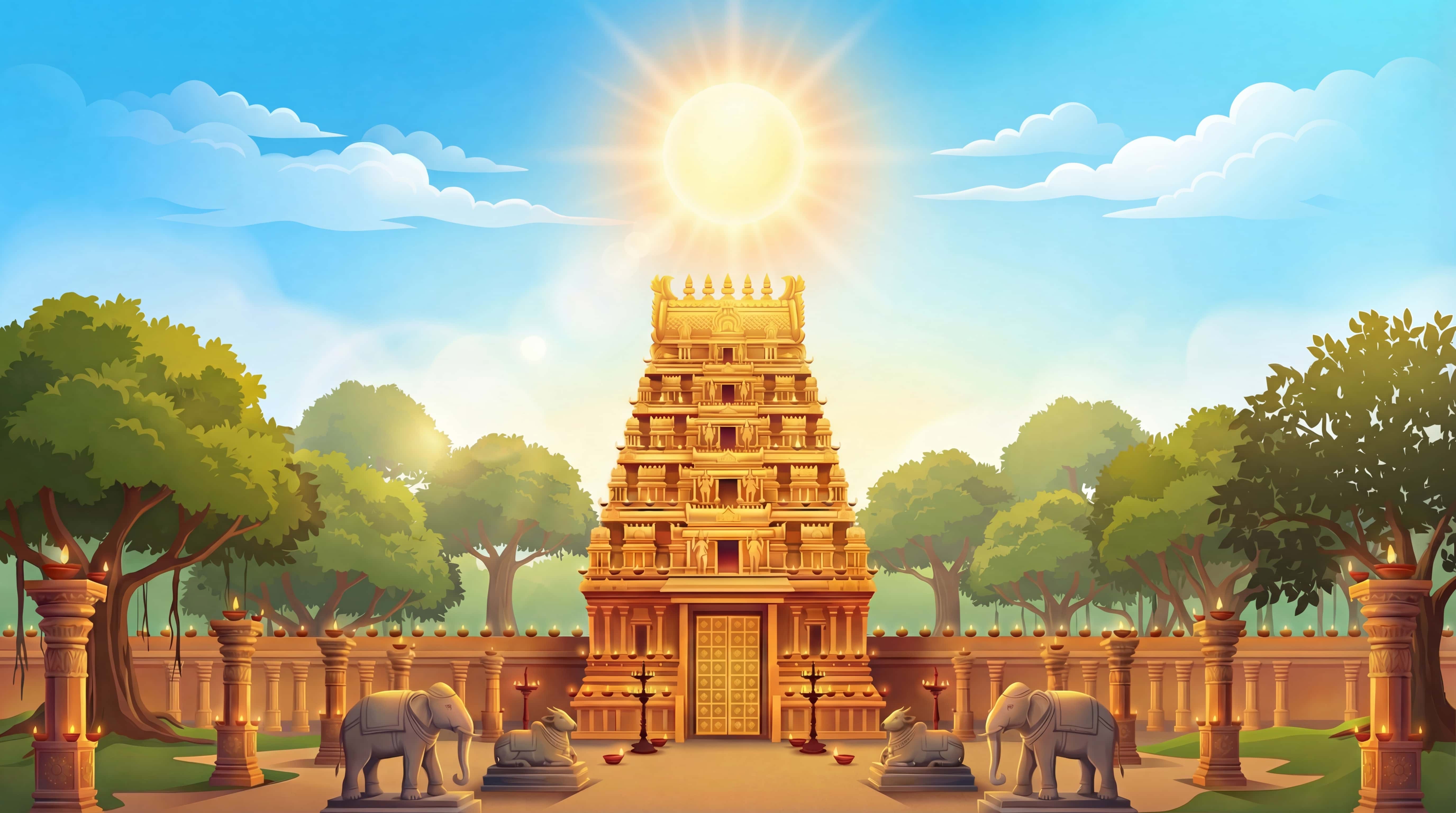
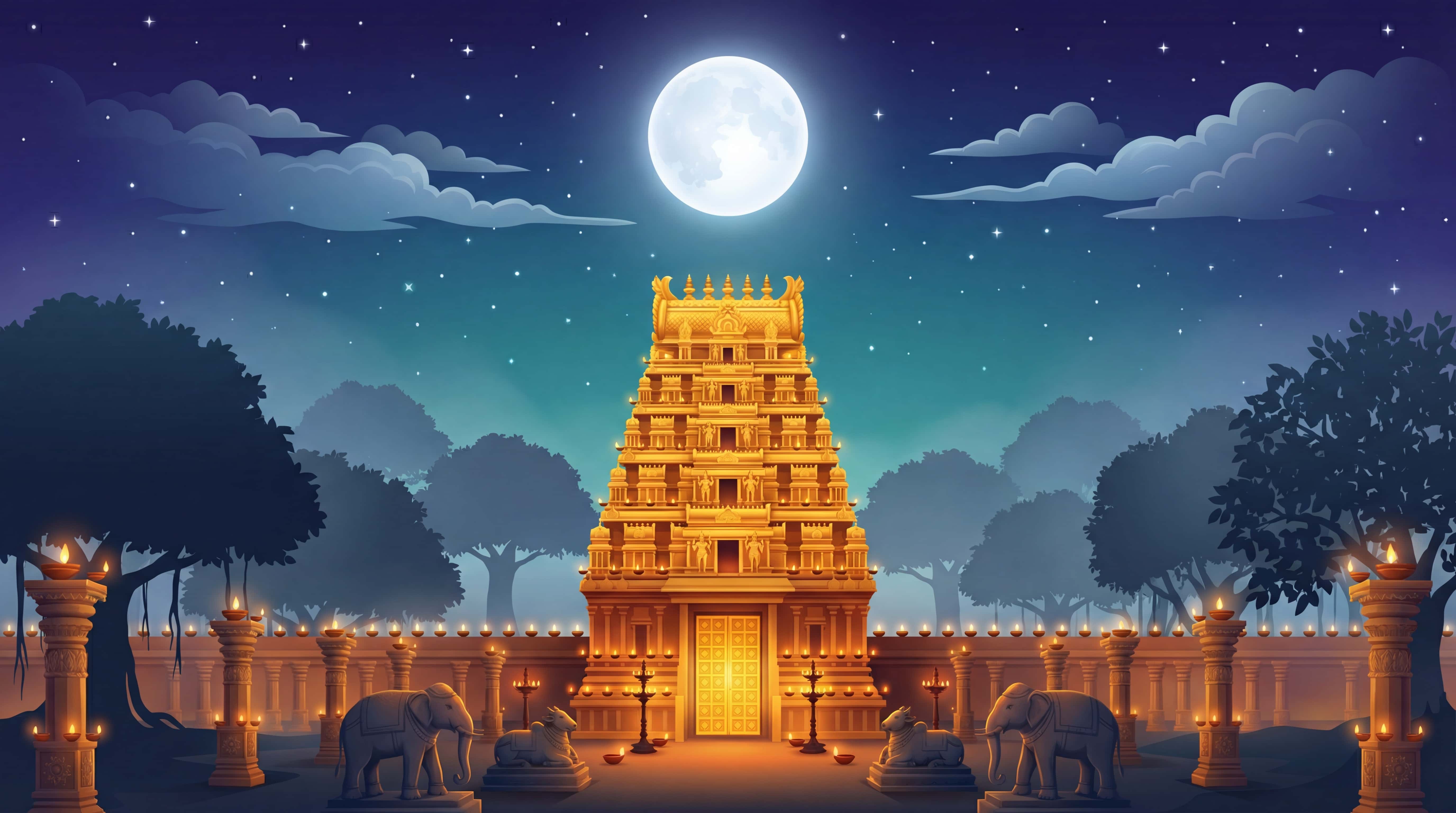
Somnath’s place at the beginning gives it a special symbolic charge. It stands at the western shore, where land meets ocean and the sun sinks into the horizon. For a devotee, that geography becomes theology. The shore suggests boundary. The horizon suggests mystery. The Jyotirlinga suggests light that remains even when visible daylight fades.
This is also why Somnath is not only a local temple of Gujarat. It belongs to a pan-Indian memory of pilgrimage. A family from Maharashtra, a pilgrim from Tamil Nadu, a Gujarati devotee, a diaspora seeker returning after years abroad, and a Shaiva practitioner studying the Jyotirlinga tradition can all approach the shrine through different doors of meaning.
Many devotees who understand Char Dham Yatra Meaning: Four Sacred Directions of Hindu Pilgrimage as sacred geography also understand Somnath in a similar way. A temple is not simply a point on a map. It becomes a center of memory, story, and disciplined reverence.
Key takeaway: Somnath is called the first Jyotirlinga because tradition begins the twelve-shrine Shiva circuit with this Aadi Jyotirlinga on India’s western coast.
What is the Moon legend behind Somnath temple?
The Moon legend behind Somnath temple gives the shrine its name and emotional depth. In the traditional narrative, Chandra or Soma, the Moon deity, falls into decline after a curse connected with partiality and imbalance. Seeking relief, Soma worships Lord Shiva with devotion. Shiva grants grace, and the Moon regains radiance in cycles.
This story should not be read only as mythology in the casual sense of “old story.” It is a spiritual teaching encoded through cosmic imagery.
The Moon waxes and wanes. Human life does the same. Confidence rises and falls. Health, wealth, clarity, relationships, energy, and faith all move through phases. The legend of Somnath gives a devotional grammar for this truth: decline is not the end if it leads to humility, worship, and reorientation.
Three teachings stand out:
- Partiality disturbs dharma. The story warns against favoritism and imbalance.
- Austerity can purify decline. Soma does not merely complain; he turns toward Shiva.
- Grace restores rhythm, not ego. The Moon does not become permanently full; it enters a meaningful cycle.
The cyclical restoration matters. Sanatan Dharma often sees life through rhythm: day and night, lunar fortnight, seasonal change, festival cycles, birth and death, effort and rest. Somnath’s legend honors that rhythm. It does not promise that a devotee will never face loss. It teaches that loss can become a doorway into deeper surrender.
For this reason, many devotees approach Somnath not only for success or relief, but for steadiness. The temple’s Moon symbolism invites a person to ask: where has life become imbalanced, and what would it mean to return to Shiva with sincerity?
Key takeaway: The Moon legend makes Somnath a shrine of restoration, reminding seekers that decline can become renewal when met with humility and devotion.
Where is Somnath temple, and why does Prabhas Patan matter?
Somnath temple is located at Prabhas Patan near Veraval in the Gir Somnath district of Gujarat. The official district history describes Somnath as situated along the coastline in Prabhas Patan, in the Saurashtra region of Gujarat (Gir Somnath District). The Shree Somnath Trust also presents the temple as standing on the shore of the Arabian ocean at the western corner of the Indian subcontinent (Shree Somnath Trust).
This location matters because Hindu sacred geography often gives meaning to landscape. Mountains, rivers, forests, confluences, seashores, and temple towns are not treated as empty settings. They become carriers of memory.
At Somnath, the sea is central to the experience. The sound of waves can make the temple feel both ancient and immediate. The shore suggests the meeting of the finite and the vast. A devotee stands on land, but the eye is pulled toward something immeasurable.
Prabhas Patan is also associated in tradition with the final earthly departure of Lord Krishna. The Somnath Trust references the sacred soil where Lord Shri Krishna took his last journey to Neejdham, the divine abode (Shree Somnath Trust). This association gives the region a layered sacredness: Shiva worship, Krishna memory, sea, pilgrimage, and the long continuity of western Indian devotion.
For visitors, this means Somnath should be approached slowly if possible. A hurried darshan may still be meaningful, but the place reveals more when a devotee notices the coastline, the temple rhythm, the evening atmosphere, and the surrounding tirtha memory.
A tirtha (तीर्थ, sacred crossing place) is not only a destination. It is a crossing between ordinary attention and sacred attention. Somnath’s geography supports that crossing.
Key takeaway: Somnath’s location at Prabhas Patan makes the temple a coastal tirtha where Shiva devotion, Krishna memory, and oceanic vastness meet.
How should devotees understand Somnath temple history carefully?
Somnath temple history is often told with intensity because the shrine has lived through destruction, rebuilding, memory, and renewal. A careful devotional approach should honor this history without turning the temple into a political slogan or a weapon against any community.
The current temple’s Pran-Pratistha (प्राण प्रतिष्ठा, consecration ceremony) took place on 11 May 1951, according to the Shree Somnath Trust, with Dr. Rajendra Prasad present as then President of India (Shree Somnath Trust). That modern consecration is part of Somnath’s public history and marks a major moment in the shrine’s recent life.
At the same time, the deeper devotional lesson is not resentment. It is resilience.
Temples in Sanatan tradition are not only buildings. They are living centers of worship, sound, offering, memory, and community. When a temple is restored, devotees often experience that restoration as more than architectural repair. It feels like the renewal of a vow.
Somnath’s history therefore asks for a balanced tone:
- remember the shrine’s endurance;
- respect documented facts;
- avoid inflammatory exaggeration;
- keep devotion at the center;
- let resilience become gratitude, not anger.
This matters especially for public writing. Reverence does not require hostility. The strength of Somnath is that worship continues. Bells ring. Mantras are offered. Pilgrims arrive. The sea keeps witnessing. Shiva remains the center.
For seekers who also visit Kashi Vishwanath Live Darshan: Bringing Varanasi’s Sacred Rhythm Into Daily Practice or read about other Shiva temples, Somnath can deepen the understanding that sacred places survive through daily worship as much as through monuments.
Key takeaway: Somnath temple history should be remembered with reverence and accuracy, focusing on resilience, consecration, and living worship rather than divisive rhetoric.
What can a modern seeker learn from Somnath Jyotirlinga?
A modern seeker can learn from Somnath Jyotirlinga that spiritual life is not a straight line of constant brightness. It is closer to the Moon: phases, returns, quiet losses, renewed light, and steady orbit around the sacred.
Somnath offers several practical reflections:
- Return before you feel perfect. Soma approaches Shiva in decline. The seeker does not need to wait for ideal conditions.
- Let rhythm become practice. Daily prayer, weekly temple visits, monthly vrat observances, and seasonal festivals all train attention.
- Hold history without bitterness. Memory can create dignity without creating hostility.
- Stand at the shore inwardly. A person can pause before the vastness of life and remember humility.
- Let Shiva be light, not concept only. The Jyotirlinga invites worship, silence, mantra, and presence.
A simple home practice inspired by Somnath can be done without travel. On a Monday or during the evening, light a diya, sit quietly, and chant “Om Namah Shivaya” with attention. If the mind is restless, do not fight it harshly. Let the mantra become like the tide: returning, returning, returning.
Those who can visit Somnath may approach with sankalpa (संकल्प, sacred intention): not merely “I want to see the temple,” but “May this darshan restore balance, humility, and devotion in me.” That inner wording changes the pilgrimage.
The Shiva Purana-linked Jyotirlinga tradition gives Somnath cosmic grandeur. But its daily teaching is intimate: what has waned can be offered; what is offered can be illumined.
Key takeaway: Somnath teaches modern seekers to return to Shiva through rhythm, humility, accurate memory, and renewed devotion.
FAQ
What is Somnath Jyotirlinga meaning?
Somnath Jyotirlinga meaning is Shiva worshipped as a linga of sacred light at Prabhas Patan in Gujarat. “Somnath” means Lord of Soma, or Lord of the Moon, linking the temple to renewal, lunar rhythm, and devotional restoration.
Why is Somnath called the first Jyotirlinga?
Somnath is called the first Jyotirlinga because traditional lists of the twelve Jyotirlingas begin with it, and the Shree Somnath Trust identifies it as the First Aadi Jyotirling Shree Somnath Mahadev.
Where is Somnath temple located?
Somnath temple is located at Prabhas Patan near Veraval in the Gir Somnath district of Gujarat, on the western coast of India by the Arabian Sea.
What is the story of the Moon at Somnath?
In the traditional legend, Soma or Chandra worships Lord Shiva after falling into decline through a curse. Shiva’s grace restores the Moon’s radiance in cycles, which is why Somnath is understood as a shrine of renewal and balance.
Is Somnath only important for Shiva devotees?
Somnath is especially sacred in Shiva worship, but its meaning can speak to many seekers. The temple carries lessons of renewal, sacred geography, resilience, humility, and the discipline of returning to the Divine.
Somnath’s final teaching is simple and demanding: when light seems to wane, return to the source of light.
Key takeaway: Somnath Jyotirlinga is not only a historic temple; it is a living reminder that decline can become renewal when the seeker turns toward Shiva with humility.
About the author
Sanatan365 Editorial
Bringing Sanatan Dharma to modern seekers through authentic, scripture-grounded content.
Related in Temples
 Temples
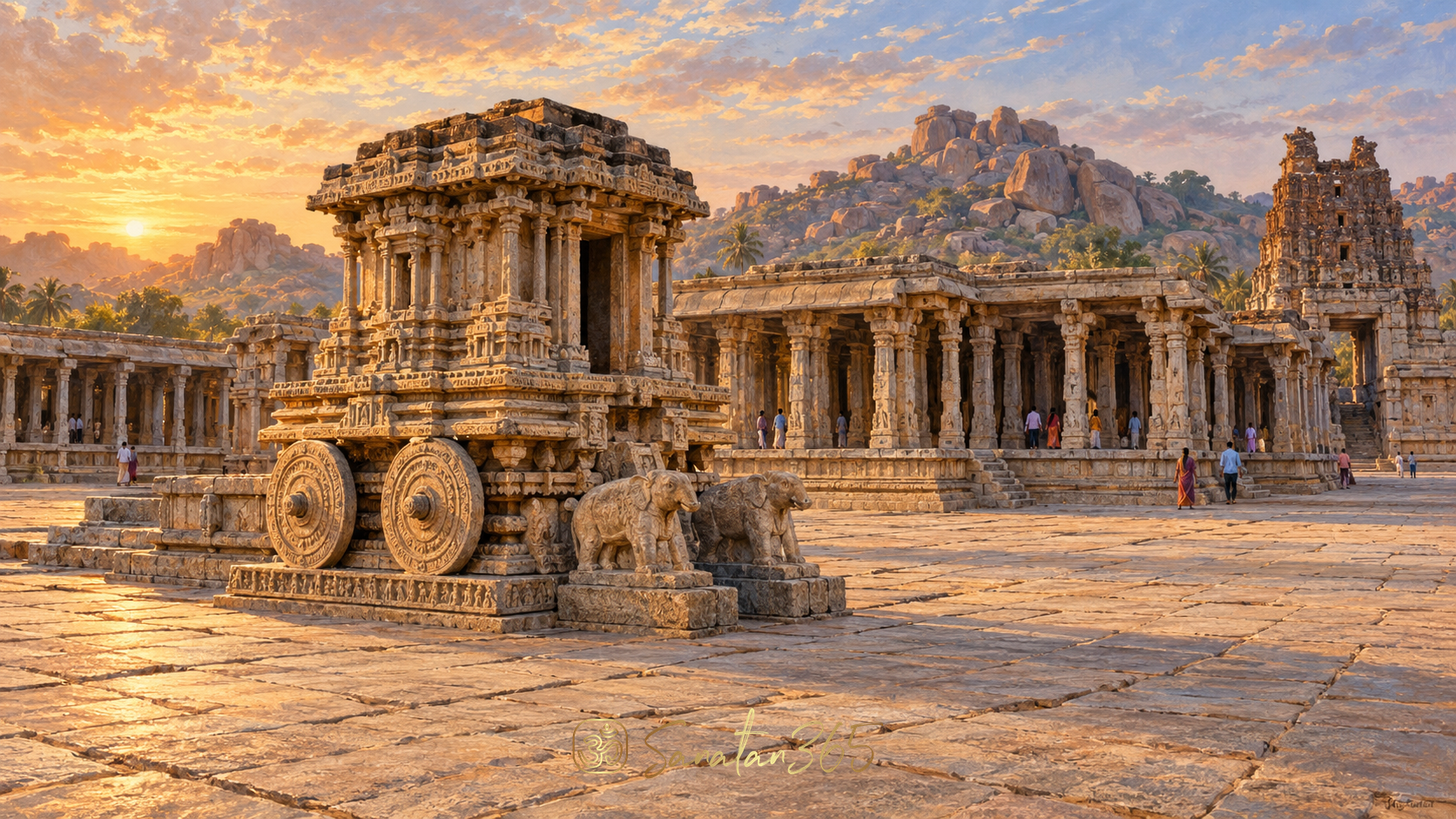
Vittala Temple Hampi: Reading the Stone Chariot and Sacred Courtyard
Understand Hampi’s Vittala Temple through its Garuda stone chariot, pillared halls, Vishnu devotion, and careful heritage visiting.
 Temples
Kirtimukha Meaning: The Face of Glory Above the Temple Door
The fierce face above a temple doorway is not a warning to turn away. Learn to recognize Kirtimukha, read its sacred story, and notice how…
 Temples
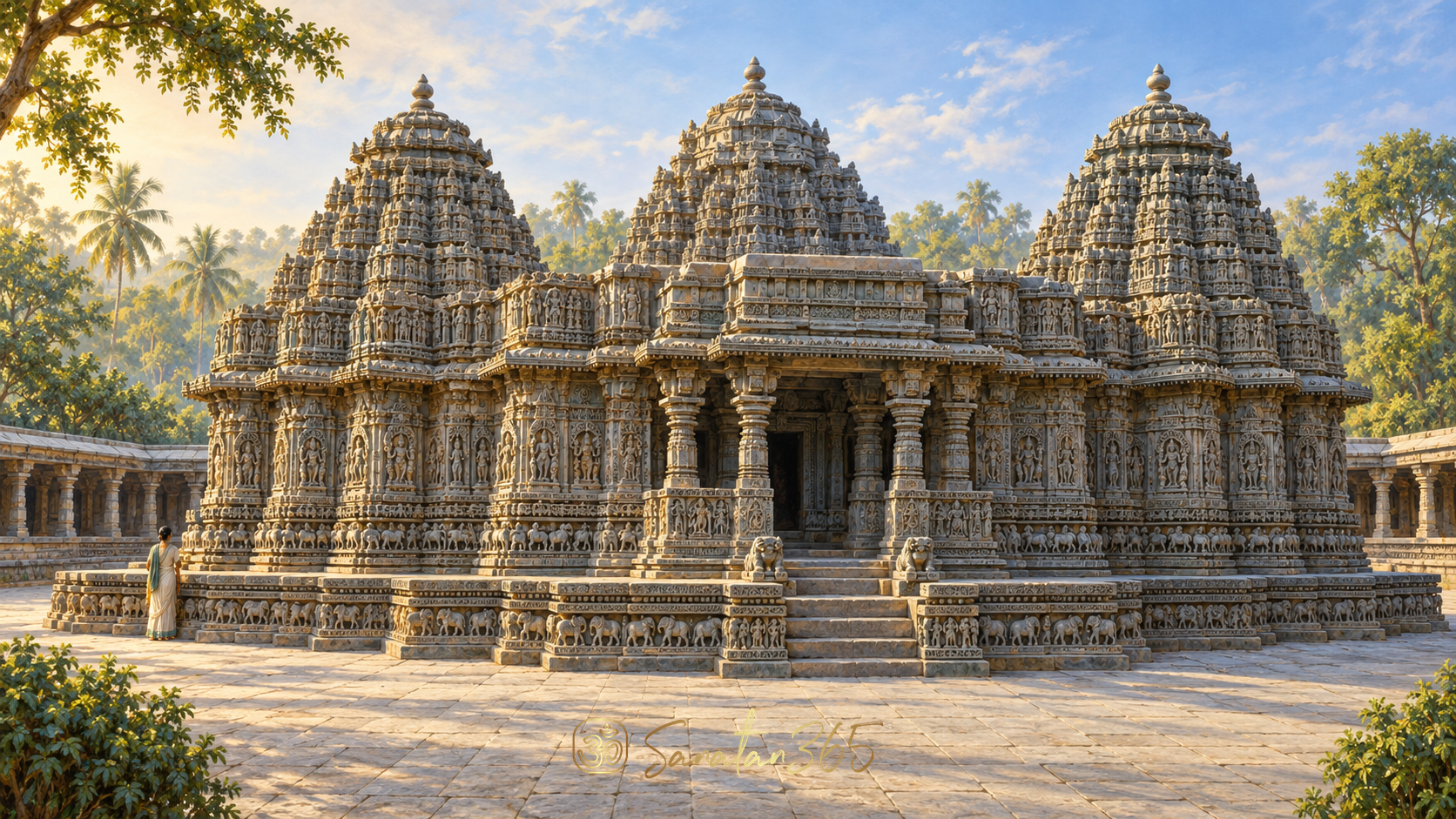
Somanathapura Keshava Temple: Three Shrines and the Art of Looking
Read the star-shaped plan, three Vishnu shrines and carved narratives of Somanathapura, with a respectful guide to a protected Hoysala monu…