Char Dham Yatra Meaning: Four Sacred Directions of Hindu Pilgrimage
A careful guide to Char Dham Yatra meaning, the difference between the pan-India Char Dham and the Himalayan Chota Char Dham, and how pilgrimage becomes inner practice.
A pilgrimage can redraw a person’s map of India and their map of the self at the same time.
Char Dham Yatra meaning is the spiritual idea of journeying toward four sacred abodes, or dham (धाम, divine dwelling place), in a disciplined act of yatra (यात्रा, pilgrimage). In common use, the phrase can refer to the pan-India Char Dham of Badrinath, Dwarka, Puri, and Rameswaram, or to the Himalayan Chota Char Dham of Yamunotri, Gangotri, Kedarnath, and Badrinath in Uttarakhand. Both point to the same deeper practice: travel becomes devotion, memory, humility, and inner reorientation.
What is Char Dham Yatra meaning in Hindu pilgrimage?
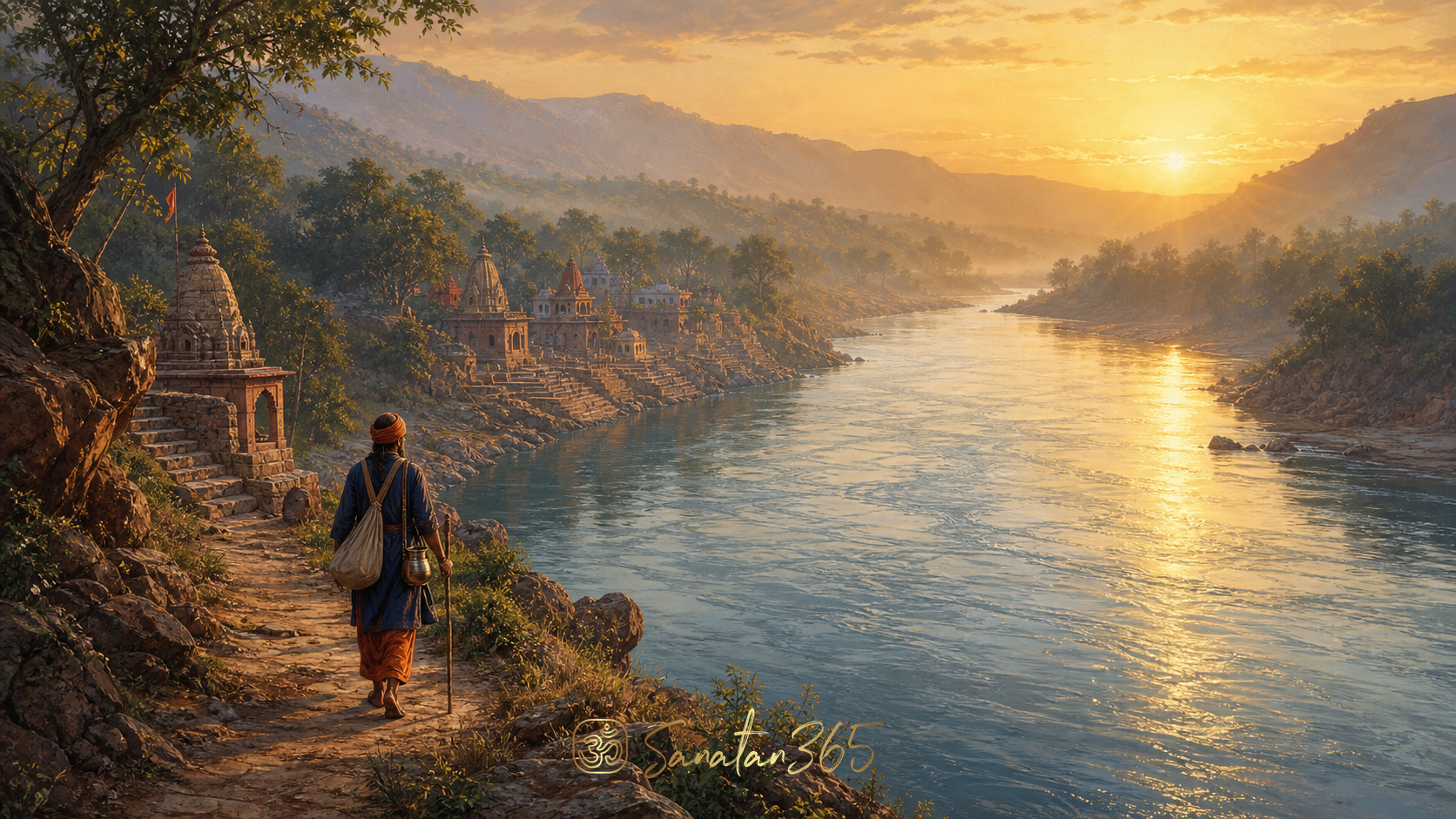
Char Dham Yatra meaning begins with two simple words. Char means four. Dham means a sacred abode, especially a place where the divine is remembered as present, worshipped, and approached with reverence. Yatra is not tourism in religious clothing. It is a vowed movement of the body, mind, and conduct toward sacred presence.
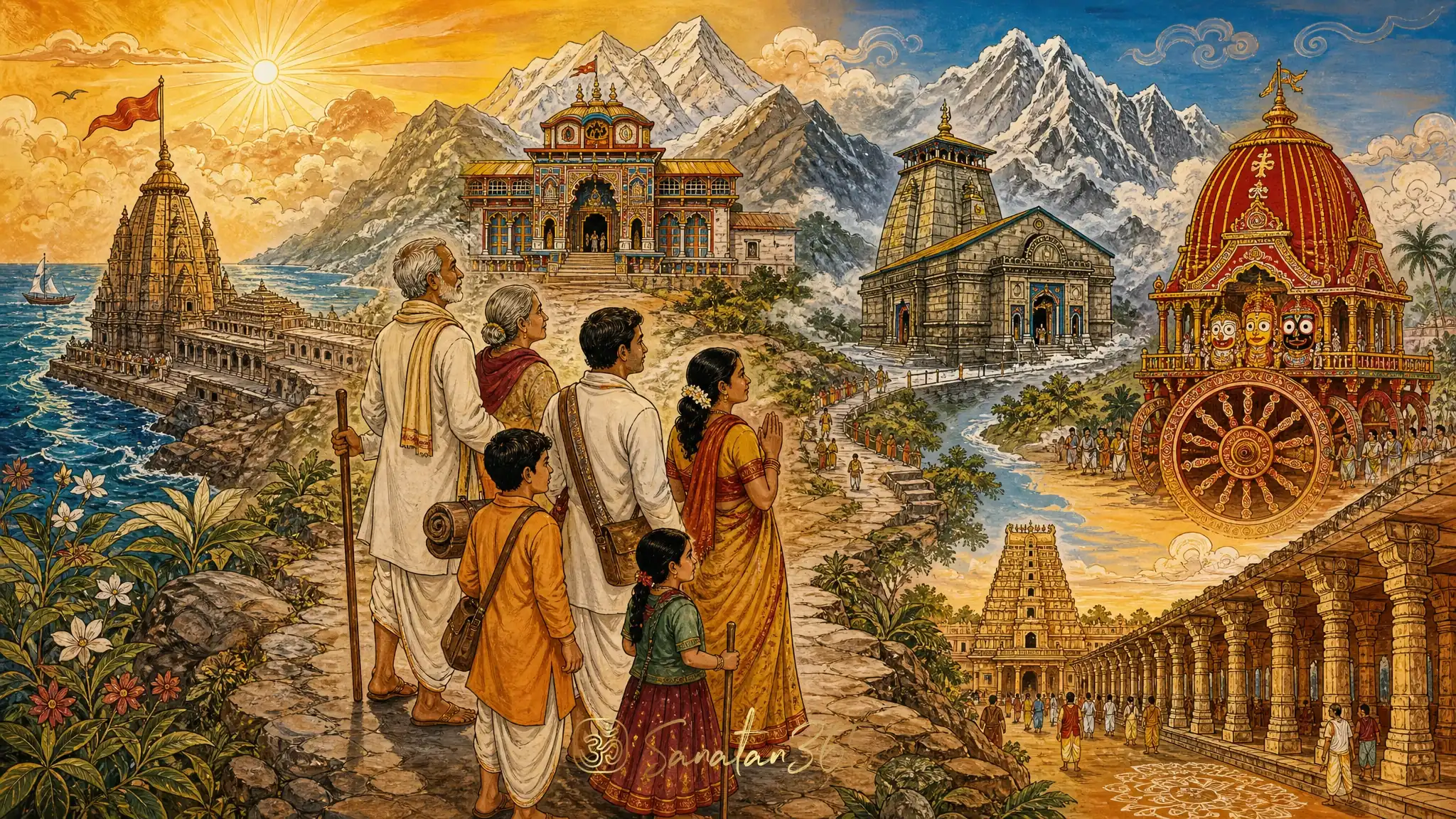
In the broader pan-India sense, Char Dham traditionally points to four great pilgrimage centers in the four directions of India:
- Badrinath in the north, associated with Lord Vishnu.
- Dwarka in the west, associated with Lord Krishna.
- Jagannath Puri in the east, associated with Lord Jagannath.
- Rameswaram in the south, associated with Lord Shiva and the Rama tradition.
Together, these places form a sacred geography. The pilgrim does not only visit temples. The pilgrim moves across mountains, coasts, river regions, languages, food cultures, and devotional moods. India becomes a mandala of worship.
In North India today, many people also use “Char Dham Yatra” for the Himalayan circuit of Yamunotri, Gangotri, Kedarnath, and Badrinath. Uttarakhand Tourism describes this pilgrimage as a journey to four holy sites nestled high in the Himalayas: Yamunotri, Gangotri, Kedarnath, and Badrinath (Uttarakhand Tourism). This is often called Chota Char Dham (छोटा चार धाम, the smaller four abodes), not because it is spiritually small, but to distinguish it from the pan-India four-dham circuit.
The distinction matters. The pan-India Char Dham maps the four directions of Bharat. The Chota Char Dham maps a Himalayan ascent through river origins, Shiva worship, and Vishnu devotion.
Key takeaway: Char Dham Yatra means sacred travel toward divine abodes, with both pan-India and Himalayan forms carrying deep devotional meaning.
Why does Char Dham pilgrimage matter beyond visiting temples?
Char Dham pilgrimage matters because it changes the conditions under which a person remembers the sacred. At home, worship can become comfortable. On pilgrimage, comfort is reduced. The pilgrim wakes early, walks more, waits longer, eats simply, adjusts to weather, and depends on others.
This discipline is not an accident. It is part of the teaching.
A yatra asks the seeker to practice:
- shraddha (श्रद्धा, reverent trust), because the road is uncertain;
- seva (सेवा, service), because fellow pilgrims need patience and help;
- sankalpa (संकल्प, sacred intention), because the journey must be held inwardly;
- darshan (दर्शन, sacred seeing), because the goal is not merely arrival, but reverent encounter;
- tapas (तपस्, disciplined effort), because the body participates in devotion.
In Sanatan Dharma, place is not treated as empty geography. Rivers, mountains, forests, temple towns, and pilgrimage routes carry memory. They remember stories, saints, vows, songs, and the footsteps of earlier devotees. When a pilgrim joins that route, the individual life enters a larger stream.
This is why pilgrimage has never been only about “covering” places. A hurried itinerary can produce photographs without transformation. A slower yatra can produce humility, gratitude, and a clearer sense of life’s priorities.
The Bhagavad Gita teaches that even a small measure of sincere dharma protects one from great fear: “svalpam apy asya dharmasya trāyate mahato bhayāt” (2.40). A pilgrimage may be long, but its inner offering can begin in one sincere step.
“Even a little of this dharma protects from great fear.” Bhagavad Gita 2.40
Key takeaway: Char Dham pilgrimage matters because the journey itself becomes a practice of humility, discipline, service, and sacred seeing.
How are the pan-India Char Dham and Chota Char Dham different?
The pan-India Char Dham and Chota Char Dham are often confused, especially in online travel content. A clear distinction helps families, diaspora readers, and first-time seekers understand what they are planning.
The pan-India Char Dham
The larger Char Dham circuit is spread across India:
- Badrinath: northern Himalaya, linked with Lord Vishnu and Nara-Narayana traditions.
- Dwarka: western coast of Gujarat, linked with Lord Krishna.
- Puri: eastern coast of Odisha, linked with Lord Jagannath and the great Rath Yatra tradition.
- Rameswaram: southern Tamil Nadu, linked with Lord Shiva and the Ramayana memory of Lord Rama.
This circuit carries the feeling of sacred completeness through direction. North, south, east, and west are not just compass points. They become ways of honoring the breadth of Sanatan tradition.
The Himalayan Chota Char Dham
The Chota Char Dham circuit is in Uttarakhand:
- Yamunotri, connected with Maa Yamuna.
- Gangotri, connected with Maa Ganga.
- Kedarnath, one of the deeply revered Shiva temples of the Himalayas.
- Badrinath, the Vishnu dham in the high mountains.
The official Uttarakhand pilgrimage registration portal lists Yamunotri, Gangotri, Kedarnath, and Badrinath as the Char Dham registration sites for the state circuit (Official Registration Portal). For 2026, many public travel notices place the Himalayan season from spring into autumn, but pilgrims should always verify current opening dates, weather advisories, and registration rules from official sources before travel.
The Himalayan circuit has a different emotional rhythm. It is more intensely shaped by altitude, mountain roads, weather, river origins, and seasonal access. The pan-India circuit is geographically vast. The Chota Char Dham is concentrated but physically demanding.
Key takeaway: The pan-India Char Dham honors sacred directions across India, while Chota Char Dham honors a Himalayan path through rivers, Shiva, and Vishnu.
What inner practice should a pilgrim carry on Char Dham Yatra?
The deepest Char Dham Yatra meaning is lost if the pilgrim carries only luggage and not intention. A sacred journey begins before the road begins.
A thoughtful pilgrim can prepare through five inner practices.
-
Set a sankalpa. Decide the inner reason for the yatra. It may be gratitude, remembrance of ancestors, healing after grief, renewed discipline, family bonding, or devotion to a chosen deity.
-
Practice speech discipline. Long journeys test language. Complaints, irritation, and gossip can quietly drain the merit of a pilgrimage. Gentle speech is a form of offering.
-
Respect local tradition. Each temple town has its own rhythm. Dress, queue discipline, photography rules, and ritual customs should be followed without argument.
-
Serve fellow travelers. Offer water, space, patience, or practical help where appropriate. Pilgrimage is not a private spiritual performance.
-
Return with one habit. A yatra should not end at the doorstep. Bring back one daily practice: lighting a diya, chanting a mantra, reading a shloka, calling parents more often, feeding someone, or keeping a weekly vrat.
For those unable to travel, the principle still applies. One can create a home-based yatra through reading, mantra, Daily Live Temple Darshan from Home, simple offerings, and ethical action. A seeker may also pair remembrance with Daily Mantras or a steady meditation habit like the one explored in dhyana-meaning-hindu-meditation-practice. Physical pilgrimage is sacred, but Sanatan Dharma also recognizes sincere remembrance wherever a seeker stands.
This is especially meaningful for elders, caregivers, people with disabilities, families abroad, and those whose finances or health do not permit travel. The point is not to imitate a mountain road from home. The point is to preserve devotion, humility, and daily practice.
Key takeaway: A pilgrim should carry sankalpa, disciplined speech, respect, service, and one lasting habit back from the yatra.
How can families and diaspora seekers understand Char Dham Yatra today?
For many families, Char Dham Yatra is both spiritual aspiration and intergenerational memory. Grandparents may speak of a difficult journey made decades ago. Parents may want children to know why these places matter. Diaspora families may recognize the temple names but feel far from the geography.
A helpful way to teach Char Dham is to present it in three layers.
First, it is sacred geography. The dhams show that Sanatan practice is not confined to one region. Mountains, oceans, rivers, forests, and temple cities all become part of the spiritual imagination.
Second, it is devotional diversity. The yatra includes Vishnu, Krishna, Jagannath, Shiva, Ganga, Yamuna, and many regional traditions. It does not flatten them into one style. It honors each with its own mood.
Third, it is ethical training. Children can understand pilgrimage through practical virtues: patience in line, gratitude for food, respect for elders, care for nature, and reverence at sacred places.
This framing prevents pilgrimage from becoming either superstition or sightseeing. It becomes a living classroom.
For modern seekers, a balanced approach also means planning responsibly. Himalayan travel requires attention to altitude, weather, medical readiness, official registration, and local advisories. Spiritual faith and practical preparation should support each other, not compete.
A family may not complete all four dhams in one lifetime. That does not make devotion incomplete. The dhams are not trophies. They are reminders that life itself can be walked as a pilgrimage.
Key takeaway: Families can understand Char Dham Yatra as sacred geography, devotional diversity, and ethical training across generations.
Why does Char Dham Yatra meaning still matter in daily life?
Char Dham Yatra meaning still matters because most people are also traveling through four inner directions: duty, relationship, uncertainty, and longing. Pilgrimage gives shape to that movement.
Badrinath can remind a seeker of stillness and divine refuge. Dwarka can remind the heart of Krishna’s wisdom amid worldly responsibility. Puri can teach surrender before a Lord who comes out to meet devotees in public procession. Rameswaram can hold the memory of devotion, bridge-building, and worship before action. Yamunotri and Gangotri can remind the mind of purity at the source. Kedarnath can speak of endurance before Shiva. These are not rigid meanings. They are devotional reflections that help the pilgrim listen.
The daily-life lesson is simple: do not wait for a rare pilgrimage to become a pilgrim. Walk to the puja space with attention. Eat with gratitude. Speak with restraint. Do work as offering. See elders, children, guests, rivers, animals, and the earth with more reverence.
A person may visit a dham once. But the meaning of dham can be remembered every morning.
Key takeaway: Char Dham Yatra teaches that sacred travel should return as sacred living.
Conclusion
Char Dham Yatra meaning is not only “a trip to four temples.” It is the disciplined movement of a seeker toward sacred presence, whether across India’s four directions or through the Himalayan Chota Char Dham. The outer route may pass through Badrinath, Dwarka, Puri, Rameswaram, Yamunotri, Gangotri, or Kedarnath. The inner route passes through humility, service, restraint, remembrance, and devotion.
The single key takeaway: the truest Char Dham Yatra is completed not when the journey ends, but when the pilgrim returns home with a life that walks more gently toward the Divine.
FAQ
What is Char Dham Yatra meaning?
Char Dham Yatra meaning is the sacred pilgrimage to four divine abodes, or dhams. It can refer to the pan-India circuit of Badrinath, Dwarka, Puri, and Rameswaram, or the Himalayan Chota Char Dham of Yamunotri, Gangotri, Kedarnath, and Badrinath.
What is the difference between Char Dham and Chota Char Dham?
The pan-India Char Dham spans four directions of India: Badrinath, Dwarka, Puri, and Rameswaram. Chota Char Dham is the Uttarakhand Himalayan circuit: Yamunotri, Gangotri, Kedarnath, and Badrinath.
Is Char Dham Yatra only for elderly devotees?
No. Char Dham Yatra is meaningful for seekers of many ages, provided they are physically prepared and follow safety guidance. Families often use pilgrimage to teach devotion, discipline, patience, and respect across generations.
Can someone practice Char Dham devotion without traveling?
Yes. Those who cannot travel can still honor the spirit of yatra through mantra, scripture reading, live darshan from verified temple streams, charity, simple home worship, and ethical daily conduct.
Which sources should pilgrims check before Chota Char Dham travel?
Pilgrims should check official Uttarakhand tourism, registration, weather, road, and temple-opening advisories before travel. Himalayan conditions can change quickly, so spiritual intention should be paired with responsible planning.
About the author
Sanatan365 Editorial
Bringing Sanatan Dharma to modern seekers through authentic, scripture-grounded content.
Related in Pilgrimage
 Pilgrimage
Panch Prayag: Five Sacred Confluences of the Alaknanda
Learn the five Panch Prayag river pairs, their downstream order, the naming of the Ganga at Devprayag, and a respectful way to visit.
 Pilgrimage
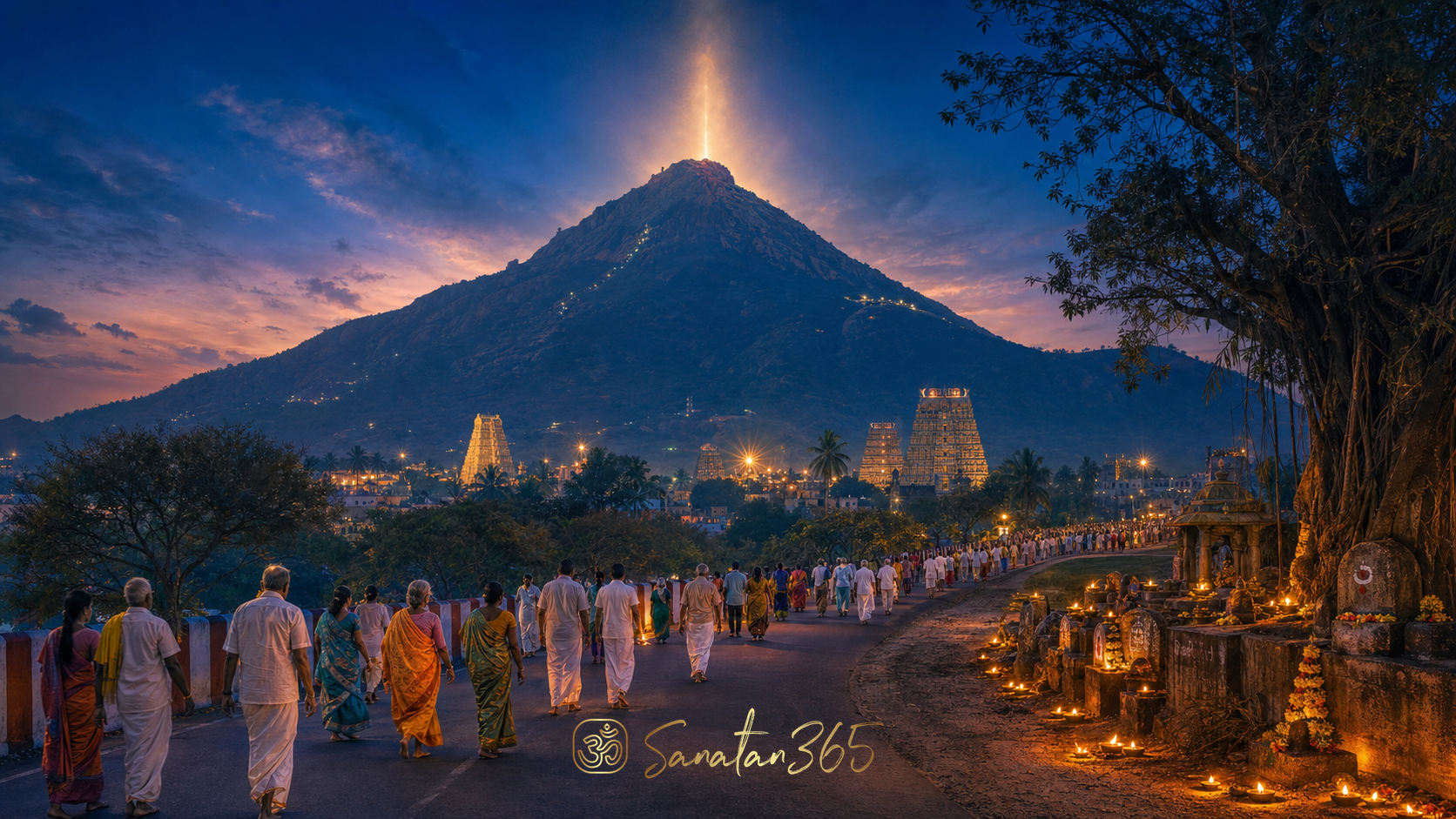
Tiruvannamalai Girivalam: Meaning of the Sacred Arunachala Walk
A grounded guide to the meaning, route, traditions, and respectful practice of Girivalam around Arunachala in Tiruvannamalai.
 Pilgrimage
Narmada Parikrama Meaning: Walking with a Sacred River
Narmada Parikrama is the devotional circumambulation of the Narmada, traditionally following one bank to the river mouth and returning alon…