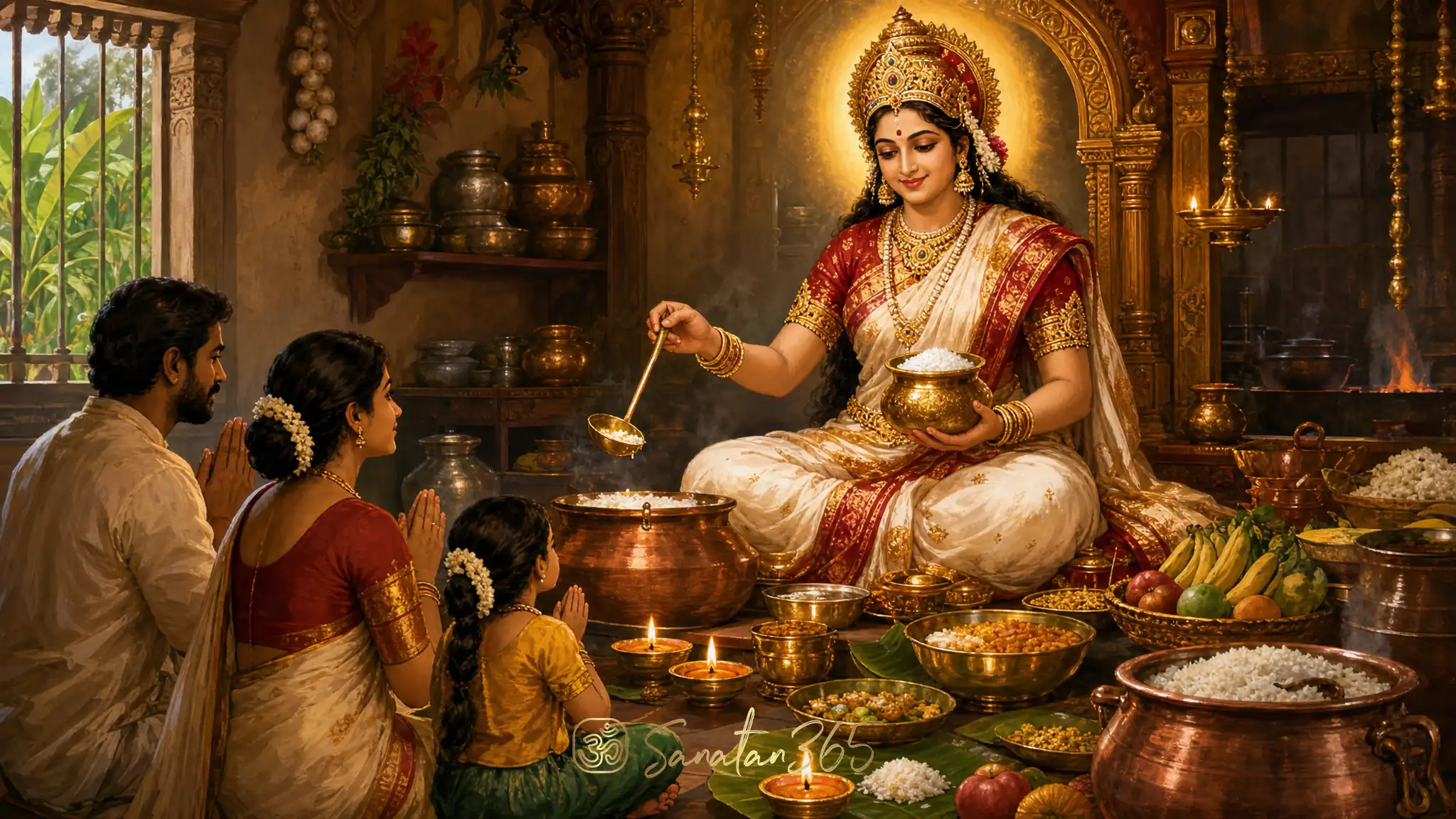
Annapurna Devi Meaning: Food, Prasad, and the Sacred Act of Feeding
Annapurna Devi is the Hindu goddess of food, nourishment, and sacred abundance. This guide explains her meaning, symbolism, and how families can honor food as prasad.
Annapurna Devi is not only a goddess of food; she is a reminder that feeding is sacred work.
Annapurna Devi meaning begins with her name: anna (अन्न, food or grain) and purna (पूर्ण, full, complete, abundant). In Hindu worship, Annapurna Devi is revered as the Mother who nourishes life through food, prasad (प्रसाद, blessed offering), generosity, and the humility to receive. Her symbolism teaches that food is never merely fuel. It is life, duty, gratitude, and grace placed on a plate.
This matters because Hindu tradition treats eating as a moral and spiritual act. The way food is earned, cooked, offered, shared, and consumed shapes the mind. A kitchen can become a small temple when the meal is prepared with care and received with thankfulness.
Key takeaway: Annapurna Devi turns ordinary food into a lesson in abundance, gratitude, and sacred responsibility.
What Is Annapurna Devi Meaning in Hindu Tradition?
Annapurna Devi meaning is rooted in nourishment that is both physical and spiritual. She is the form of Devi who fills the world with food and reminds human beings that life depends on gifts they did not create alone: soil, rain, sunlight, farmers, cooks, family care, and divine order.
In many homes, devotees remember Annapurna before meals because food carries memory. A bowl of rice may hold the labor of a farmer, the timing of the monsoon, the care of a mother, the discipline of a cook, and the blessing of a household that has enough to share. Annapurna worship gathers all of this into one devotional insight: abundance is not possession. Abundance is the capacity to nourish.
The Devi is often shown with a vessel of food and a ladle. These are simple symbols, but they are powerful. The vessel suggests fullness. The ladle suggests serving. Annapurna is not hoarding grain. She is giving it. The image corrects a common misunderstanding of prosperity. In dharma, wealth becomes noble when it feeds, protects, educates, heals, and serves.
This is why Annapurna is especially meaningful in family life. Children may first learn gratitude not from philosophy, but from being taught to avoid wasting food, to thank the person who cooked, to serve elders first, and to share sweets or prasad without grabbing. These small habits become ethics.
The Kashi Annapurna tradition in Varanasi also connects her with one of India’s most sacred cityscapes, where Shiva, Devi, food, pilgrimage, and liberation are remembered together. In Kashi, nourishment is not separate from spiritual seeking. The hungry body must be fed; the restless soul must also be steadied.
Key takeaway: Annapurna Devi teaches that food is sacred because life itself is received, sustained, and shared through nourishment.
Why Is Food Treated as Sacred in Sanatan Dharma?
Food is sacred in Sanatan Dharma because it sustains prana (प्राण, life force), influences the mind, and links the human body to cosmic order. A meal is not isolated from the universe. It depends on water, earth, fire, air, space, time, community, and karma.
The Bhagavad Gita describes a chain of mutual dependence: beings arise from food, food from rain, rain from yajna (यज्ञ, sacred offering or sacrifice), and yajna from action aligned with sacred order. A careful translation of Bhagavad Gita 3.14 shows how food is placed within a wider cycle of responsibility rather than private consumption alone.
The Taittiriya Upanishad gives one of the clearest food teachings in Hindu thought: food should not be dishonored, and food should be increased. Traditional translations render this as a discipline of reverence, not waste. The teaching is practical: do not insult food, do not waste food, do not deny food to one who needs it when you can help. The Taittiriya Upanishad food passages show how anna becomes a sacred category of life.
This does not mean every meal must become formal ritual. It means the inner posture matters. Food prepared with anger, greed, carelessness, or cruelty affects the home differently from food prepared with cleanliness, steadiness, and love. The Gita’s discussion of sattvic food in Bhagavad Gita 17.8 connects food with vitality, clarity, strength, health, and satisfaction.
Annapurna Devi brings these teachings into a personal form. Instead of treating food ethics as a dry rule, the devotee sees the Mother behind the meal. The rice is not anonymous. The dal is not casual. The roti is not merely routine. Each can become an opportunity to remember dependence and practice gratitude.
A family can begin with three simple habits:
- Pause before eating.
- Offer the meal mentally to the Divine.
- Take only what can be finished.
These habits are small enough for daily life and deep enough to change the mood of a home.
Key takeaway: Hindu food reverence is not superstition; it is a discipline of gratitude, ecology, health, and dharmic conduct.
How Does Prasad Change the Meaning of a Meal?
Prasad means a blessed offering received with humility. When food is offered to the Divine and then shared, it is no longer treated as ordinary possession. It becomes prasad: a gift returned through grace.
This shift is subtle but important. Before offering, the mind often says, “This is mine.” After offering, the mind learns to say, “This has been given.” That change softens ego. It also changes the act of eating. A person who receives prasad is invited to eat with respect, not entitlement.
In temple practice, prasad may be a small sweet, fruit, rice, tulsi leaf, or other offering. In home practice, a family may place a portion of food near the altar, offer a short prayer, and then serve the meal. The exact custom varies by region, sampradaya (सम्प्रदाय, spiritual lineage or tradition), household, and family elders. The common thread is reverence.
Annapurna Devi is deeply connected to this spirit because she reminds devotees that food becomes complete when it is offered and shared. The sacredness is not only in what is cooked. It is in the direction of the heart.
For modern families, prasad can also become a daily teaching for children. A parent can say, “We offer first, then receive.” This teaches patience. “We share before we take more.” This teaches generosity. “We do not throw food casually.” This teaches respect. The theology becomes visible through behavior.
Food as prasad also prevents spiritual practice from becoming disconnected from the body. Hunger is real. Cooking is real. Cleaning is real. Feeding guests is real. Annapurna worship says these are not inferior to meditation or study. They are among the ways dharma enters the kitchen.
Key takeaway: Prasad transforms food from private consumption into a received blessing that should be honored and shared.
What Does Annapurna Teach About Generosity and Seva?
Annapurna Devi teaches that the highest form of abundance is the ability to feed without pride. In Hindu life, feeding is one of the most direct forms of seva (सेवा, selfless service). It answers a real need before offering philosophy.
This is why annadana (अन्नदान, the giving of food) is widely honored. Food giving is immediate. It does not require the recipient to understand doctrine, belong to a particular background, or prove worthiness. Hunger is answered with nourishment. The act is simple, but spiritually demanding because it asks the giver to serve without superiority.
The Bhagavad Gita’s teaching on dana (दान, giving) distinguishes sattvic giving from giving done for display or reward. In Bhagavad Gita 17.20, sattvic giving is described as offered at the proper place and time to a worthy recipient, without expectation of return. Food seva becomes sattvic when it carries dignity, cleanliness, and humility.
Annapurna’s ladle is therefore a symbol of spiritual leadership. The one who serves food must consider fairness, purity, timing, and care. At a family table, this may mean ensuring elders, children, guests, and workers are fed. In a temple or community setting, it may mean serving many people without impatience. In diaspora life, it may mean keeping festival meals and prasad distribution alive so children experience faith through taste, smell, and shared memory.
Generosity also includes restraint. A household that wastes food while speaking of devotion has missed part of the lesson. Annapurna worship asks for gratitude before abundance and responsibility after abundance.
Practical forms of Annapurna-inspired seva include:
- cooking one extra portion for someone who may need it;
- supporting a trusted food seva or temple annadana program;
- teaching children to serve guests water or prasad respectfully;
- reducing food waste at home;
- remembering farmers, cooks, and delivery workers with gratitude;
- preparing festival food with cleanliness and a prayerful mind.
Key takeaway: Annapurna’s abundance is not luxury. It is nourishment placed in the service of others.
How Can a Modern Family Honor Annapurna Devi at Home?
A modern family can honor Annapurna Devi through simple, repeatable practices that make food more conscious. The goal is not to create pressure around every meal. The goal is to bring reverence into the rhythm that already exists.
Start with cleanliness. In many Hindu homes, the kitchen is treated with special care because food shapes the body and mind. Clean hands, clean surfaces, and a calm cooking atmosphere matter. Even when life is busy, the intention can remain respectful.
Second, create a short food blessing. It may be a Sanskrit prayer known in the family, a simple “Annapurne sadapurne” remembrance, or a quiet mental offering. If a family does not know a formal prayer, a sincere line is enough: “May this food nourish our body, mind, and actions.”
Third, make serving part of the practice. Instead of rushing everyone into separate screens and separate plates, choose at least one meal where the family sits together. Let children help set plates, offer water, or place fruit near the altar. These gestures teach that devotion is lived, not only spoken.
Fourth, connect food with conduct. After a meal, ask: What action will this nourishment support? Study, service, honest work, patience, or care for elders? Food becomes sacred when its energy is used well.
Families already building a wider devotional routine can pair Annapurna remembrance with Aarti Meaning, Sattvic Food Meaning, or Dana Meaning. These practices support one another: light, food, giving, and gratitude.
Sanatan365 can support this broader rhythm through daily devotional tools such as mantras, meditation, aarti, stories for children, and live temple darshan. Still, the heart of Annapurna practice remains close to home: the kitchen, the plate, the person serving, and the person receiving.
Key takeaway: A family honors Annapurna Devi best by making food cleaner, kinder, less wasteful, more grateful, and more shareable.
FAQ
What is Annapurna Devi meaning?
Annapurna Devi meaning comes from anna, meaning food or grain, and purna, meaning full or complete. She is revered as the Hindu goddess of nourishment, sacred abundance, and the grace that sustains life through food.
Is Annapurna Devi connected to Lord Shiva?
Yes. In popular Hindu tradition, Annapurna Devi is closely connected with Shiva, especially in Kashi or Varanasi traditions. The relationship teaches that even the highest spiritual knowledge must honor the basic sacredness of food and nourishment.
How can I worship Annapurna Devi at home?
A household can worship Annapurna Devi by keeping the kitchen clean, offering food before eating, avoiding waste, feeding guests or those in need when possible, and remembering the Divine Mother with gratitude before meals.
What is food as prasad?
Food as prasad means food offered to the Divine and then received as a blessing. The act changes the devotee’s attitude from ownership to gratitude, humility, and respect.
Why is wasting food considered wrong in Hindu practice?
Wasting food is discouraged because food represents life, labor, nature, and divine grace. Hindu teachings such as the Taittiriya Upanishad’s reverence for anna remind families not to dishonor nourishment.
Annapurna Devi meaning finally returns to one simple truth: the sacred is not far from the kitchen. The hand that cooks, the hand that serves, the hand that receives, and the hand that shares can all become part of worship. When food is treated as prasad, abundance becomes gratitude, and gratitude becomes dharma.
About the author
Sanatan365 Editorial
Bringing Sanatan Dharma to modern seekers through authentic, scripture-grounded content.
Related in Deities
 Deities
Ushas, the Vedic Goddess of Dawn: Light, Renewal, and Time
Ushas, the Vedic goddess of dawn, appears in the Rigveda as radiant light that awakens life, calls beings to activity, and reveals both ren…
 Deities
Chitragupta Meaning: Divine Records and Ethical Accountability
Chitragupta is remembered as the divine keeper of karmic records in Yama's court. His symbolism connects writing, memory, justice, and ethi…
 Deities
Varuna Deva Meaning: Rta, Waters, and Cosmic Order
Discover Varuna Deva's Vedic role as guardian of rta, his bond with waters, and what his hymns teach about truth, accountability, and mercy.

