Arghya Meaning: Why Hindu Worship Offers Water with Reverence
Arghya is a respectful offering of water in Hindu worship. Learn its meaning, its forms in Surya worship and puja, and a simple way to offer it thoughtfully.
A thin stream of water can carry an entire grammar of reverence. Arghya meaning begins with this simple idea: in Hindu worship, arghya (अर्घ्य, a respectful offering) is water, sometimes prepared with other auspicious substances, presented to a deity, honoured guest, or sacred presence as an act of welcome, gratitude, and devotion. In the familiar morning practice of Surya Arghya, the offering is poured toward the rising Sun.
Arghya is not a bargain for guaranteed results. It is a disciplined gesture that teaches the worshipper to pause, acknowledge what sustains life, and offer something pure with attention.
What Is the Arghya Meaning in Hindu Worship?
The Sanskrit word arghya is related to honour and worth. In ritual use, it refers both to the offering and to the water prepared for that offering. The form changes by context: a worshipper may pour plain water to Surya, place a small vessel of water before a deity during puja, or include arghya within a formal sequence of welcoming an honoured presence.
This is why arghya should not be reduced to “throwing water at the Sun.” Its meaning rests on three connected movements:
- Recognition: the worshipper acknowledges a sacred presence.
- Offering: water is presented with clean hands and a steady intention.
- Reorientation: attention moves away from hurry and self-importance toward gratitude and dharma.
Water is especially fitting because it supports every form of embodied life. It cleans, nourishes, cools, flows, and adapts without losing its nature. When water is offered, an ordinary necessity becomes a language of respect.
Arghya also belongs to the larger logic of puja (पूजा, reverential worship). Puja often treats the Divine as an honoured presence who is welcomed with care. Different traditions arrange the sequence differently, but water may be offered for welcome, washing, sipping, bathing, or honour. Encyclopaedia Britannica's overview of puja notes the broad place of offerings and images within Hindu devotion; actual household and temple procedures are guided by lineage, region, and family custom.
Key takeaway: Arghya is water transformed by reverence: its value lies less in complexity than in the quality of attention with which it is offered.
Why Is Water Offered to Surya at Sunrise?
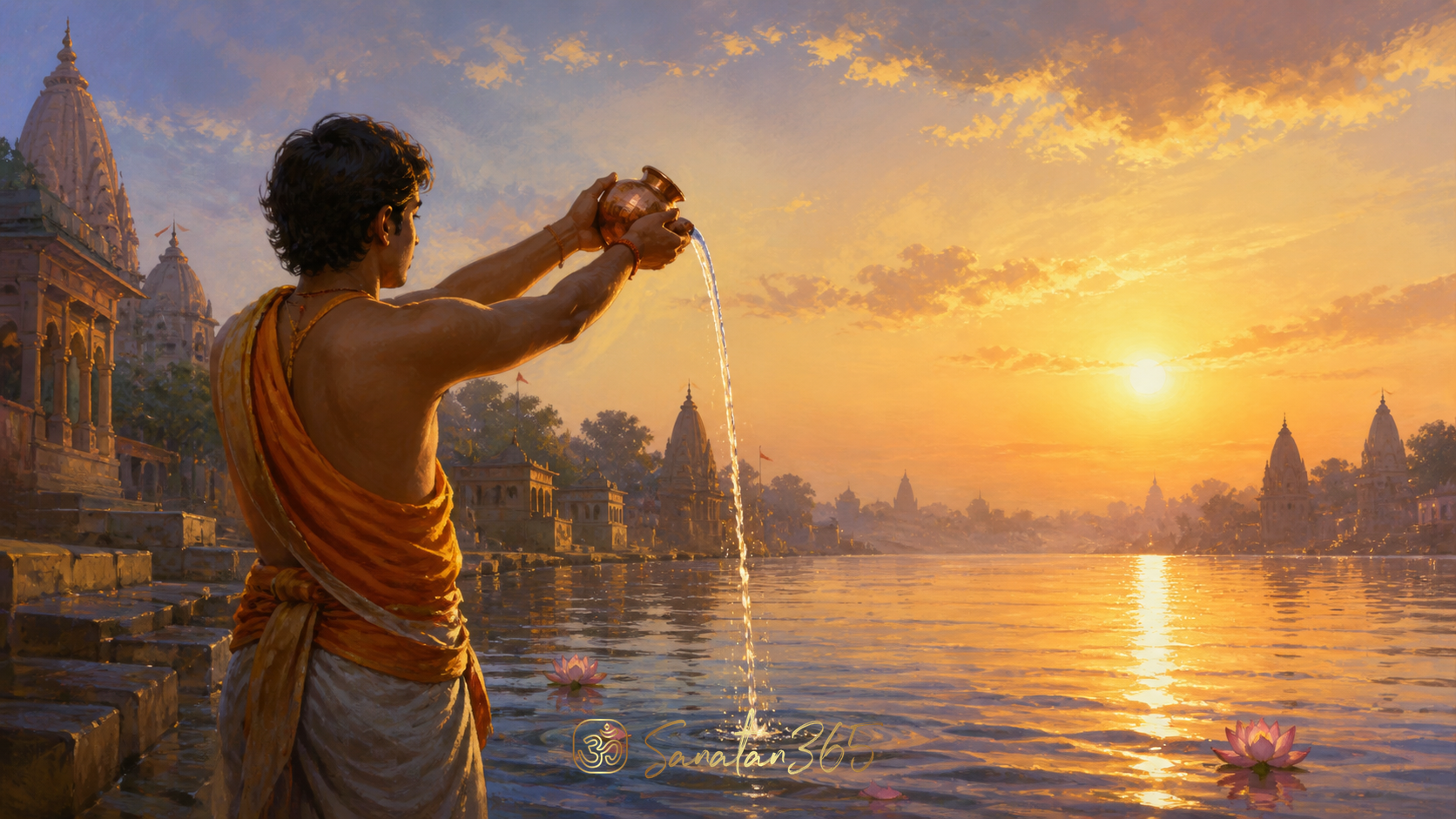
Surya Arghya is the most widely recognized form of the practice. Surya (सूर्य, the Sun and solar deity) is honoured as the visible source of light, warmth, rhythm, and earthly vitality. At sunrise, a devotee faces the emerging light and pours a narrow stream of water from a clean vessel, often a lota (लोटा, a small rounded water vessel).
The timing carries meaning. Dawn is a threshold: darkness has not vanished all at once, yet direction becomes visible. Offering water at that moment joins bodily action to a cosmic rhythm. The worshipper does not create the sunrise or control its gifts. The practice trains one to receive the new day with humility and responsibility.
Some practitioners look through the falling stream as sunlight meets the water. This may create a beautiful visual focus, but the ritual should not be dressed in unsupported scientific claims. Its religious significance does not depend on promises that it will cure disease, guarantee prosperity, or alter fate. A careful account keeps spiritual symbolism distinct from medical or astrological certainty.
The practice naturally complements other morning disciplines. A person may offer arghya after washing, before prayer, or alongside Surya Namaskar as a morning discipline. Another may connect it with Dinacharya, the idea of a purposeful daily rhythm. These links are optional; arghya remains meaningful as a brief act on its own.
In many homes, a short salutation such as “Om Suryaya Namah” accompanies the offering. Mantra use varies. A beginner need not imitate a long liturgy without guidance. Clear intention, clean water, and respectful conduct are a sound beginning.
Key takeaway: Surya Arghya makes sunrise a daily appointment with gratitude, without turning devotion into a promise of guaranteed worldly outcomes.
How Does Arghya Appear Beyond Surya Worship?
Arghya has a wider ritual life than the sunrise offering. In formal puja, it can appear among the upachara (उपचार, acts of respectful service) offered to a deity. In older patterns of hospitality, water offered to a guest signified welcome in a climate where arrival often followed a long, dusty journey. Ritual language elevates this ethic: honour is expressed through practical care.
The exact contents are not universal. Depending on the tradition, arghya may be plain water or water combined with flowers, grains, sandalwood, sacred grass, or other approved substances. A temple manual may specify one formula; a household may follow a simpler inherited custom. Neither should be presented as the single rule for all Hindus.
Several related water offerings can be confused with arghya:
- Padya (पाद्य, water offered for washing the feet) expresses welcome.
- Achamaniya (आचमनीय, water offered for ritual sipping) relates to purification and reception.
- Abhisheka (अभिषेक, ritual bathing) pours water or other substances over a murti, Shiva linga, or sacred object.
- Tarpana (तर्पण, a water offering of satisfaction or remembrance) is used in particular rites for devas, rishis, or ancestors.
The shared element is water, but the ritual purpose is different. Calling every sacred use of water “arghya” erases distinctions that practitioners carefully preserve.
Key takeaway: Arghya belongs to a family of water-based offerings, yet its particular emphasis is honour, welcome, and reverential presentation.
How Can Someone Offer Surya Arghya Respectfully?
A simple household form can be practised without theatricality. Family instruction and sampradaya (सम्प्रदाय, a living spiritual tradition) should take priority where available.
A simple five-step practice
- Choose a clean place. Stand where the water can fall safely into soil, a garden, or a clean vessel. Avoid creating slippery public surfaces or wasting water.
- Use clean water and a clean vessel. A copper lota is common, but devotion is not measured by expensive equipment. Follow household custom.
- Face the sunrise when practical. Hold the vessel steadily with both hands or as taught in the family tradition.
- Pour slowly with awareness. Offer a narrow stream while holding a brief prayer, a traditional mantra, or silent gratitude.
- Close with intention. Let the practice shape the day: truthful speech, useful work, restraint, kindness, and responsibility are stronger evidence of worship than display.
Where sunrise is not visible because of weather, apartment design, latitude, work schedules, or disability, the spirit of the practice need not disappear. A person may stand near a safe window, use a small symbolic offering before a Surya image or sacred focal point, or follow guidance from their family or teacher. Hindu practice has always lived across varied geographies; sincerity does not require unsafe improvisation.
Environmental care matters. Water should not be poured onto electrical equipment, from balconies where it may fall on others, or into areas where it becomes a hazard. Flowers or other additions should be biodegradable and locally appropriate. Ritual purity should not create civic disorder.
Key takeaway: A respectful arghya is clean, safe, modest, environmentally considerate, and connected to ethical action after the ritual ends.
What Regional Variations Give Arghya a Wider Meaning?
Across India, arghya takes on the colour of local calendars and devotional cultures. During Chhath Puja in Bihar, eastern Uttar Pradesh, Jharkhand, Nepal's Terai, and diaspora communities, devotees offer arghya to the setting and rising Sun while observing demanding disciplines. This is a collective festival tradition, not merely an enlarged version of a private morning habit.
Ratha Saptami and Makara Sankranti observances also bring heightened attention to Surya in many regions. In Tamil traditions, water offerings may appear within daily sandhyavandanam (सन्ध्यावन्दनम्, twilight prayer) according to initiation and lineage. In Odisha, Bengal, Maharashtra, Karnataka, Andhra Pradesh, and Telangana, household vocabulary, vessel choice, mantras, and accompanying offerings may differ.
Diaspora families adapt to cold climates, short winter daylight, water restrictions, and apartment living. Responsible adaptation preserves the heart of the act: honouring light, receiving the day consciously, and using water without waste. There is no need to claim that one region's method is superior.
The variations reveal a larger truth. Sanatan Dharma often holds unity through purpose rather than uniformity of procedure. The offering remains recognizable because gratitude, water, light, and reverence stay at its centre.
Key takeaway: Regional diversity does not weaken arghya; it shows how a stable sacred intention can take many responsible forms.
What Does Arghya Teach Beyond the Ritual Moment?
The physical offering lasts less than a minute. Its ethical invitation lasts all day.
First, arghya teaches reciprocity. Human beings constantly receive: sunlight, water, food, care, knowledge, and the labour of others. The offering interrupts the illusion of self-sufficiency. It says, in effect, “This life is supported; let it answer support with responsibility.”
Second, arghya teaches direction. Water takes the shape of its vessel, but once poured it moves steadily. Attention behaves similarly. A morning intention needs a channel: a promise kept, a task completed carefully, anger restrained, or help offered without applause.
Third, arghya teaches release. The water cannot be taken back once offered. This does not mean abandoning practical judgment. It means acting sincerely without trying to own every outcome. The ritual becomes a small rehearsal for disciplined action and non-attachment.
Finally, arghya teaches that sacredness is not limited to rare materials. Water is ordinary and therefore profound. A tradition that can turn a daily necessity into a gesture of honour invites spiritual life into the structure of every day.
Key takeaway: The deepest offering is completed when gratitude becomes conduct: reverence for water, truthful work, and care for the shared world.
FAQ
What is the simple meaning of arghya?
Arghya means a respectful offering, commonly water presented to a deity, sacred presence, or honoured guest. Surya Arghya specifically refers to offering water to Surya, usually at sunrise.
Is arghya the same as abhisheka?
No. Arghya is an offering of honour, while abhisheka is the ritual bathing of a murti, Shiva linga, or sacred object. Both may use water, but their ritual functions differ.
Must Surya Arghya be offered in a copper vessel?
A copper lota is traditional in many households, but practices vary. A clean, suitable vessel used respectfully is more important than display. Family or lineage guidance should take priority.
Can Surya Arghya be offered when the Sun is not visible?
Clouds, apartment living, latitude, disability, or schedules may make direct sunrise viewing difficult. Practitioners can follow a safe symbolic form or their family's guidance without making unsafe arrangements.
Does offering arghya guarantee health, wealth, or success?
No responsible spiritual account should promise guaranteed medical, financial, or astrological outcomes. Arghya is a devotional discipline of gratitude, reverence, and ethical orientation; it does not replace professional advice or practical action.
Arghya begins with water but ends in the way a person lives. The single key takeaway is this: offer with reverence, conserve with responsibility, and let gratitude become conduct.
About the author
Sanatan365 Editorial
Bringing Sanatan Dharma to modern seekers through authentic, scripture-grounded content.
Related in Rituals
 Rituals
Vastra Offering Meaning: Why Clothing Is Offered in Puja
The offering of cloth turns ordinary care into sacred hospitality. Understand vastra in Hindu worship without confusing expense with devoti…
 Rituals
Madhuparka Meaning: Sweetness and Sacred Hospitality
Read madhuparka as a ceremonial honey mixture of welcome, exploring textual recipes, guest reception and its distinction from panchamrita.
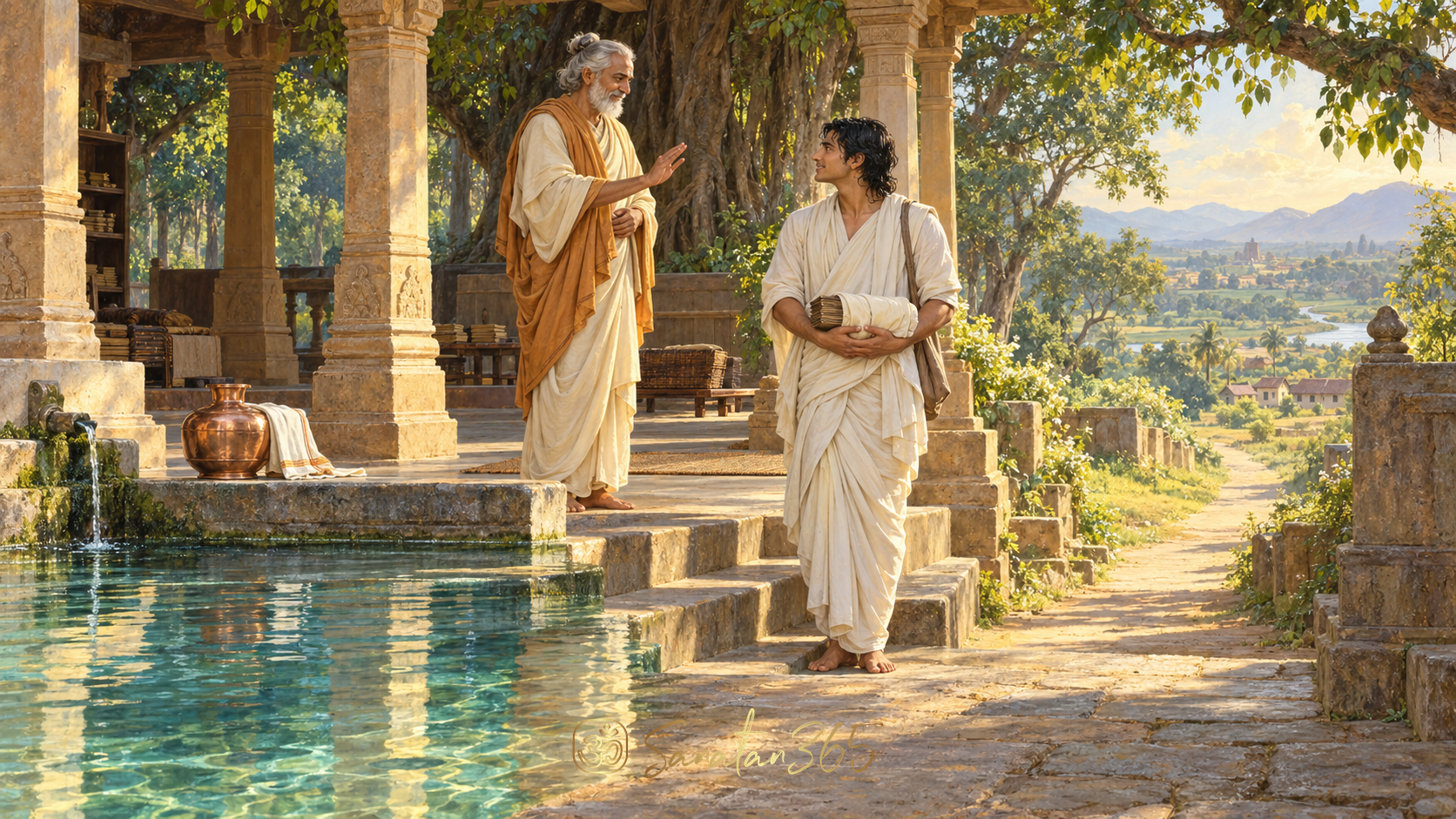 Rituals
Samavartana Meaning: Returning Home After Sacred Study
Samavartana marks the completion of traditional study through a ceremonial bath and return. Its lasting question is how learning becomes re…