Vastra Offering Meaning: Why Clothing Is Offered in Puja
The offering of cloth turns ordinary care into sacred hospitality. Understand vastra in Hindu worship without confusing expense with devotion.
A fold of cloth can express something that a costly gift cannot: the willingness to attend to another with care.
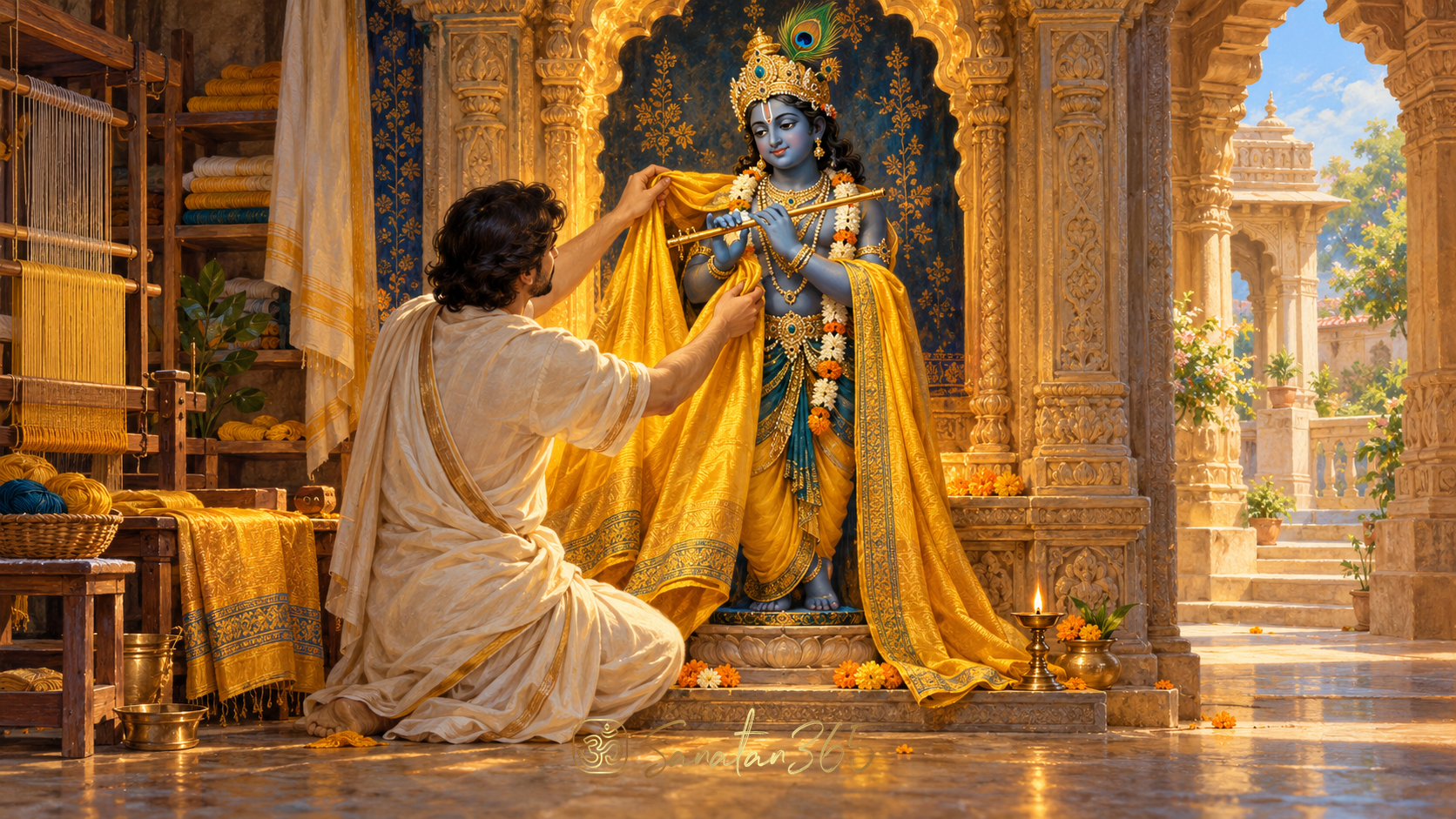
The vastra offering is the presentation of clothing or cloth to the Divine during puja (पूजा, reverential worship). Vastra (वस्त्र) means clothing; vastram is a form of the same Sanskrit word commonly heard in ritual recitation. In worship, the offering treats the sacred presence as an honoured guest, expressing welcome, dignity, and loving service. Its meaning lies in attention, not the price of the fabric, and its exact form varies with the deity, household, and tradition.
What does the vastra offering mean in Hindu puja?
The most direct explanation begins with the order of hospitality. A guest is welcomed, offered refreshment, and helped to feel at ease. Hindu worship gives this familiar language a sacred direction. Care is offered to the Divine through actions that a human heart can understand.
The Hindu American Foundation's guide to traditional sixteen-step puja places vastram after bathing the Divine form. Its explanation is plain: clothing is offered after the bath. The surrounding sequence includes other distinct acts of welcome and adornment. This is not simply a pile of sacred objects; it is a progression of attentive service.
The sixteen-offering form is called shodashopachara (षोडशोपचार, sixteen acts of reverential service). An upachara (उपचार) is an offering or act of attendance. These terms help explain the role of clothing without suggesting that every household must perform an elaborate ceremony every day. The same guide explicitly recognises shorter worship and variation in how offerings are grouped or ordered.
Clothing has a particular place within that sequence. Water refreshes; a garment follows with the warmth of welcome and the dignity of being received. The two actions are related, but they are not interchangeable. Likewise, the cloth is not the same offering as fragrance, a flower, or food, even when all express devotion.
For a broader comparison, the five-offering form of worship explains how a shorter sequence can remain meaningful. The existence of a fuller ritual does not turn a simpler one into a failure.
Key takeaway: Vastra is a specific act of sacred hospitality, not a requirement to make worship materially elaborate.
Why offer clothing to a Divine presence that needs nothing?
The question is reasonable. If the Divine is not limited as a human being is limited, why offer a garment at all? The answer rests in the difference between supplying a need and expressing a relationship.
A flower placed before a sacred image does not imply that the Divine lacks flowers. A lamp does not mean that God cannot see without it. In a similar way, clothing can express a devotee's care without reducing the Divine to a dependent human guest. The language is personal, while the presence being honoured is not confined to the objects offered.
The Hindu American Foundation describes the deity in puja as a revered guest in the home and heart. It also explains that Hindus do not consider the Divine to be limited to the murti (मूर्ति, a sacred embodied form or image). These two ideas belong together: the form makes loving service tangible, while the theology need not make that form the boundary of the Divine.
A garment is especially eloquent because clothing ordinarily touches questions of dignity, intimacy, and care. Someone has chosen it, folded it, and noticed whether it fits its purpose. In worship, these ordinary abilities become ways of attending to a sacred presence. This is a devotional interpretation of the action, not a claim that every Hindu school explains it in identical language.
There is also a useful limit on material display. In Bhagavad Gita 9.26, Krishna speaks of accepting a leaf, flower, fruit, or water offered with devotion. The verse does not prescribe the vastra offering or provide a manual for dressing a deity. It does, however, place loving intention at the centre of an offering rather than its expense.
That distinction protects the practice from becoming a transaction. A beautiful garment may be offered generously, but it does not purchase guaranteed prosperity, forgiveness, success, or divine favour. Devotion is not an invoice with a promised result.
Key takeaway: The garment expresses the devotee's relationship with the Divine; it does not meet a deficiency in God or buy a guaranteed blessing.
How does cloth change the way a sacred form is encountered?
Cloth does more than cover a surface. Its fall, texture, and colour influence what the eye notices. When offered carefully, it can draw attention to the sacred form without overwhelming it. This observation concerns the visual and devotional experience of worship, not a universal rule about which fabric produces which spiritual effect.
Consider an imagined household scene. A family prepares a modest garment for a small Krishna murti. One person folds the cloth, another makes space around the image, and a child asks why this piece has been kept separately. The answer can be simple: it has been prepared for worship, so it is handled attentively. Nothing in that scene requires a luxury purchase.
This example is an illustration, not a prescribed ritual. Its significance is the change in attention. The devotee stops treating an object as disposable and starts considering its purpose. Is the cloth clean? Will it rest securely? Can it be placed without disturbing the sacred form? Such questions turn a general feeling of reverence into practical care.
The garment also makes craftsmanship visible. A woven border or carefully stitched edge reflects work that existed before the offering. Remembering that work can deepen gratitude. It is possible to admire a textile's beauty without claiming that one region, weave, or price range is spiritually superior.
Adorning an image should not obscure what is being honoured. A garment that crowds a small shrine or covers important features may not serve the setting well. More fabric is not necessarily more care. The relevant question is whether the offering helps sustain respectful attention to the deity.
This distinguishes clothing from the mere decoration of a room. The garment is offered in relationship to the sacred presence. A beautiful backdrop may support that setting, but a backdrop and a garment offered to the deity are not automatically the same ritual object. When unsure, a household can ask its teacher or priest rather than assume that visual similarity makes two actions equivalent.
Key takeaway: The beauty of a garment serves its devotional purpose when craft, proportion, and care keep the sacred form central.
What varies between temple service and worship at home?
A temple ceremony is not a large-scale instruction sheet for every home. Established temples have their own authorised service, materials, schedules, and responsibilities. Visitors can appreciate what they see without assuming that they should reproduce it independently.
The Hindu American Foundation's guide notes differences of deity tradition, spiritual lineage, region, community, and family. That qualification matters. An instruction encountered online may belong to a specific setting, even when its author writes confidently. It should not be turned into a universal rule for every household in North India, Tamil Nadu, Bengal, Maharashtra, or the diaspora.
There is therefore no single colour chart or fabric checklist supplied here. A devotee who wishes to offer a garment at a temple should first ask the temple whether it accepts such offerings and what is appropriate. Size, material, handling, and the way the gift is received are practical matters for that temple to explain. An unsolicited item may not fit its actual needs.
At home, several distinctions are worth keeping clear:
- A garment placed on an image is different from cloth spread beneath a worship arrangement.
- Caring for a permanent sacred image is different from arranging a temporary festival setting.
- An explanatory article is not a substitute for instructions attached to a specific initiated or priest-led practice.
- Following a family custom does not require judging a neighbour's different custom as deficient.
A picture, a small image, and a larger consecrated form do not necessarily invite identical handling. A person should not force a cloth around a fragile object, disturb an established arrangement, or handle an image that they have not been authorised to touch. Respect can include asking, waiting, and letting the responsible person perform the service.
The broader subject of consecration and continuing worship offers context for why an established sacred form is not treated like ordinary household decoration. It does not imply that a beginner must acquire a consecrated image or perform formal service in order to pray sincerely.
For a family living away from an ancestral home, uncertainty need not become embarrassment. Asking an elder what the family actually does can recover a specific memory: who prepared the garment, when it was offered, and how it was cared for afterward. Those answers are more useful than a sweeping claim that every Hindu household follows the same rule.
Key takeaway: Learn the actual custom of the household or temple; do not mistake one visible practice for a universal obligation.
How can an offering remain thoughtful rather than extravagant?
The simplest safeguard is to begin with purpose. Before buying or preparing cloth, ask what it is for, whether it is appropriate, and who will care for it. These are practical suggestions for responsible preparation, not additional religious commandments.
A modest offering made with attention can be more useful than an impressive item that cannot be used. Equally, an elaborate garment is not automatically shallow. Skilled work, generosity, and beauty can be offered sincerely. The distinction is not cheap versus expensive, but attentive service versus display that forgets the recipient.
A useful preparation sequence is:
- Ask first. Confirm the actual custom and whether a garment is needed.
- Choose suitability. Consider the size, fabric, and established way of placing it.
- Prepare carefully. Keep the offering clean, folded, and away from sources of damage.
- Plan continuing care. Ask how it should be stored, cleaned, reused, or passed on according to that setting.
- Keep comparison out. Do not measure another person's devotion by the cost of their gift.
Ordinary safety remains part of care. Loose fabric should be kept away from a burning lamp or incense. A sacred purpose does not make cloth fireproof. Preparation should also avoid damaging the image or creating an unstable arrangement in a small worship space.
The life of the cloth after the ceremony deserves attention. Temple and household customs differ, so it is better to ask than invent a disposal rule. An article cannot declare that every offered garment must be burned, immersed, kept forever, or given away. What matters is learning the relevant practice and avoiding thoughtless waste.
Children can participate through a suitable, supervised task, such as folding cloth before it is brought to the worship space. The explanation should emphasise care rather than fear: this has a particular purpose, so it is handled respectfully. A mistake in folding is an opportunity to teach, not evidence that a child lacks devotion.
Finally, the gesture can invite reflection beyond the shrine. Noticing the dignity expressed through a garment may make a person more attentive to the care they offer others. This is an ethical reflection inspired by the ritual, not a replacement for it or an instruction that every ritual gift must become a different kind of donation.
Key takeaway: The strongest offering joins sincere intention with suitability, safety, continuing care, and freedom from competitive display.
FAQ
What is the meaning of vastram in puja?
Vastram refers to clothing offered to the Divine. In the sixteen-step sequence described by the Hindu American Foundation, it follows bathing the sacred form and expresses reverential hospitality.
Does a vastra offering have to be expensive?
No universal price requirement follows from the sources discussed here. Suitability and the actual custom matter. Bhagavad Gita 9.26 emphasises devotion in a simple offering; it does not establish a spending threshold or a garment-purchasing rule.
Is the same colour of cloth suitable for every deity?
This article does not prescribe a universal colour. Follow the specific household, teacher, or temple tradition rather than apply a general internet chart to every form of worship.
Can a devotee give cloth directly to a temple deity?
Only follow the temple's authorised process. Ask whether garments are accepted and who may handle the sacred form. A visitor should not independently dress or touch a deity image.
What should be done with the cloth after worship?
Ask the person responsible for that household or temple practice. Storage, cleaning, reuse, and distribution depend on the setting; there is no single disposal instruction given here. The enduring lesson is to let a loving offering remain an act of care from preparation onward.
About the author
Sanatan365 Editorial
Bringing Sanatan Dharma to modern seekers through authentic, scripture-grounded content.
Related in Rituals
 Rituals
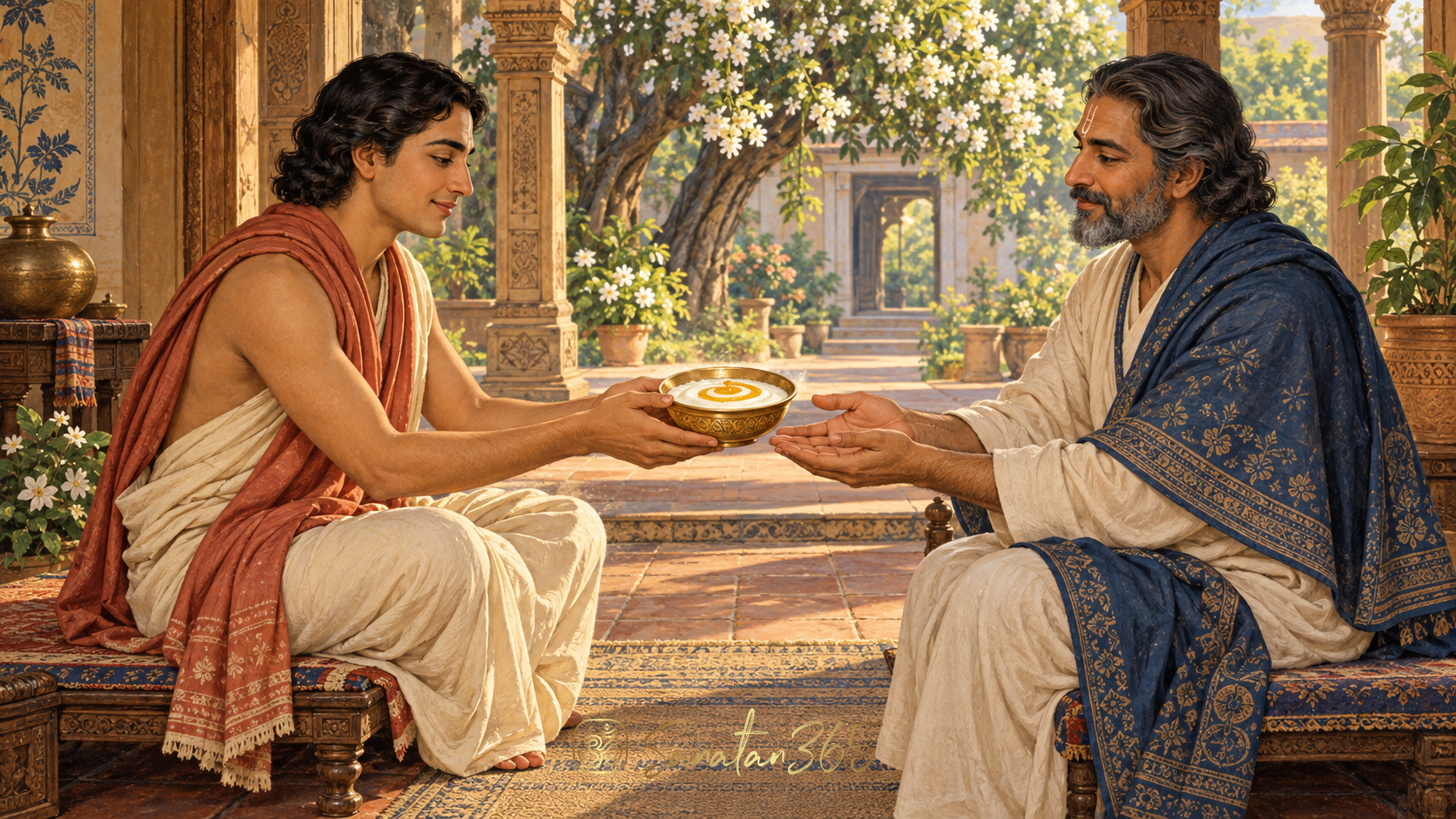
Madhuparka Meaning: Sweetness and Sacred Hospitality
Read madhuparka as a ceremonial honey mixture of welcome, exploring textual recipes, guest reception and its distinction from panchamrita.
 Rituals
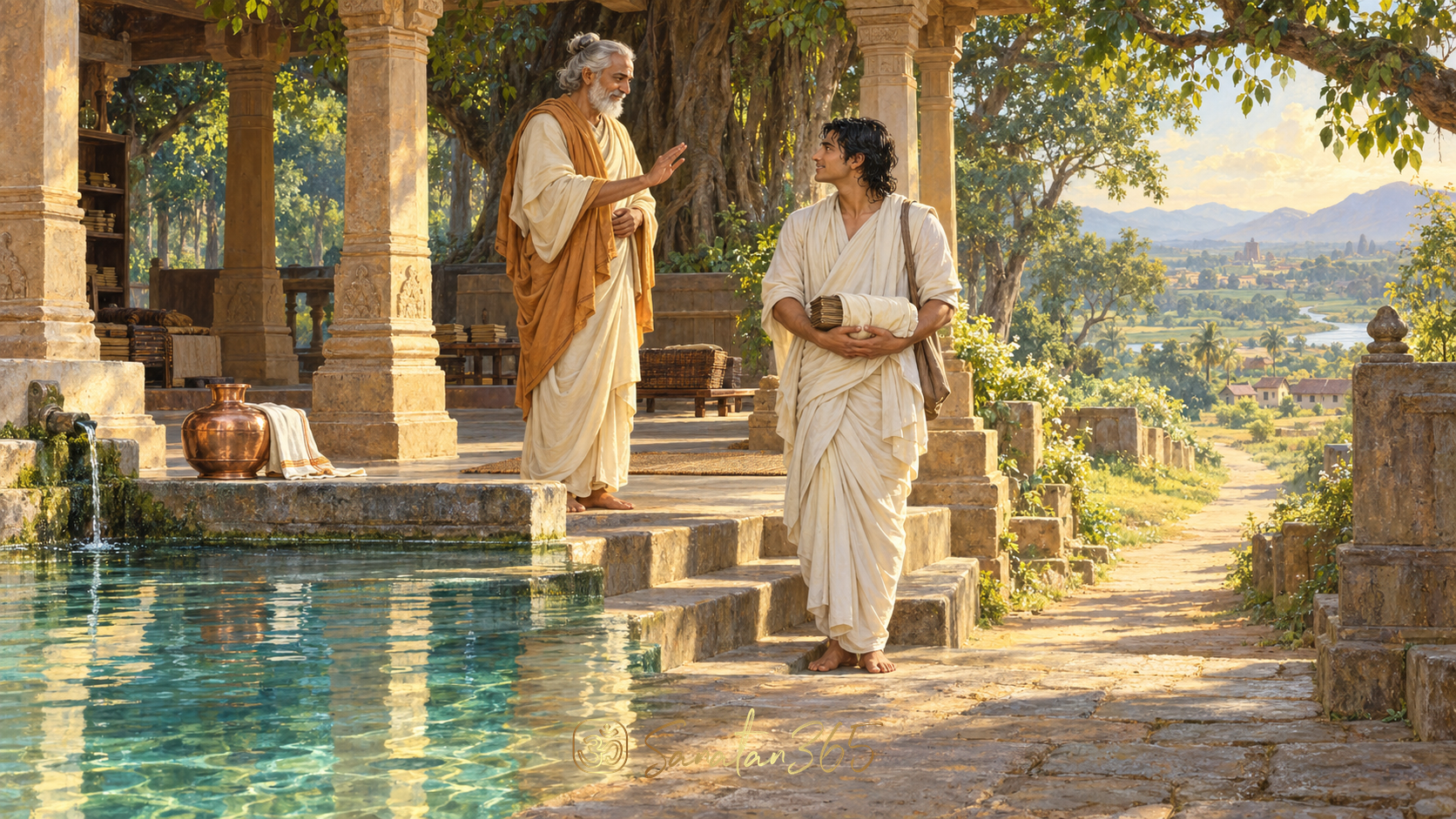
Samavartana Meaning: Returning Home After Sacred Study
Samavartana marks the completion of traditional study through a ceremonial bath and return. Its lasting question is how learning becomes re…
 Rituals
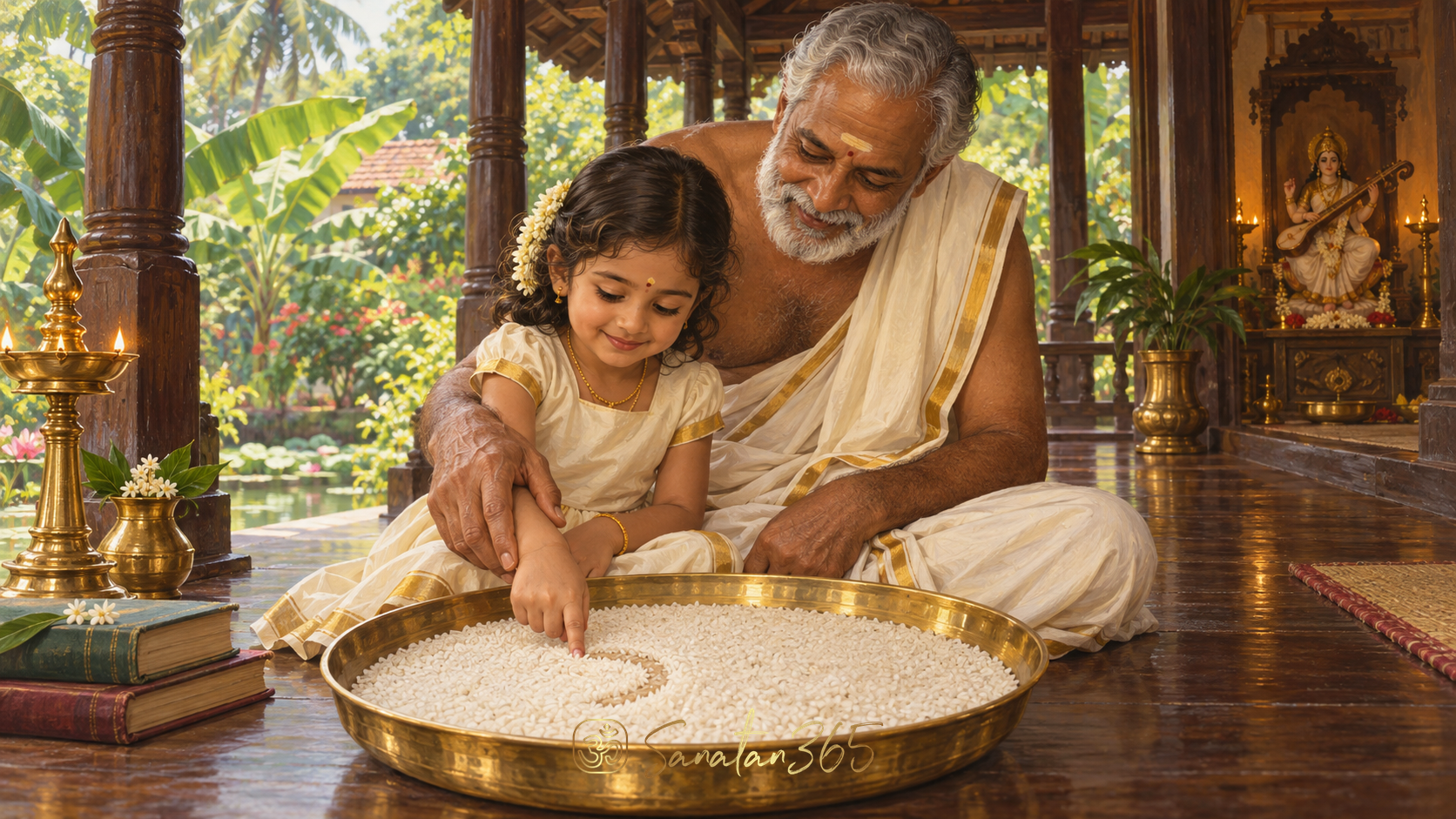
Vidyarambham Meaning: First Letters, Learning, and Reverence
Explore Kerala’s ceremony of beginning letters, its Vijayadashami setting, rice-writing customs, and the meaning of a gentle first step int…

