Garba Meaning: The Lamp at the Heart of Navratri
Garba is a Gujarati devotional dance associated with Navratri. Its central lamp, shared circular rhythm and reverence for Goddess Amba explain why it is more than a festive performance.
Garba Meaning: The Lamp at the Heart of Navratri
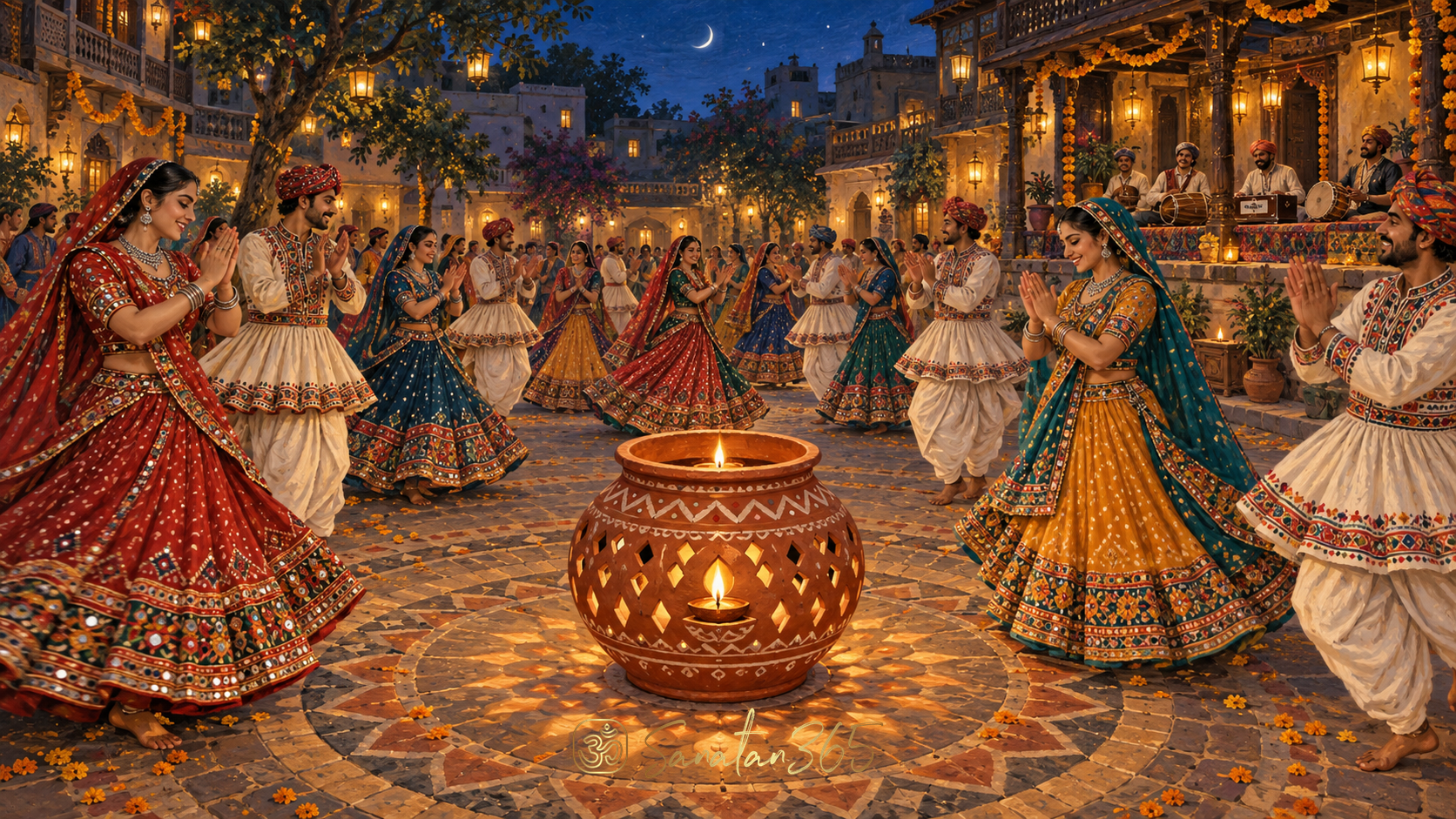
The smallest light in a Garba gathering can be its most important presence. Garba meaning begins with a Gujarati devotional dance associated with Navratri: people sing, clap and move in a circle around a lit earthen pot or an image of Goddess Amba (mother, a name of the Goddess). Navarātri (नवरात्रि) means “nine nights”; Śakti (शक्ति) means divine power or energy, here revered in the feminine Divine. The circle is not simply a stage formation. Its shared centre gives the movement a devotional orientation, turning a festive gathering toward the Mother Goddess.
That distinction matters when Garba is encountered through a crowded event poster or a few seconds of dazzling footwork. The clothes, pace and spectacle are visible immediately. The central light, the words of a song and the patient knowledge of experienced dancers can be easier to miss. Understanding those quieter elements makes the celebration more readable without making it less joyful.
UNESCO's account of Garba of Gujarat describes precisely this relationship between dance, devotion and community. It records a living practice rather than one compulsory choreography. A visitor can begin with that simple idea: the circle belongs to the people moving in it, but it is gathered around something they honour together.
What does Garba meaning reveal about the lamp and circle?
UNESCO identifies two possible devotional centres: a perforated earthenware pot illuminated by an oil lamp, or an image of the mother goddess Amba. Amba means “mother” and is a name of the Goddess. The Gujarati pot is often called a garbo. In the lamp-centred arrangement, light passes through the pot's openings while dancers move around it. A small, carefully tended flame becomes visible within a much larger field of movement.
It is worth separating an observed practice from an interpretation of it. The pot, lamp and circular formation are documented features. Reading the steady light as a reminder of divine presence amid changing human movement is a devotional reflection on those features, not a claim that every dancer explains them identically. Families and teachers may share further meanings through their own songs and inherited accounts.
The centre changes how the gathering is seen. A performance usually draws attention toward the most impressive dancer. Garba can certainly include skill and virtuosity, yet its devotional structure makes room for an attention that is shared rather than owned. Many people can orient themselves toward the same light without having the same age, experience or style.
UNESCO describes counter-clockwise movement, coordinated singing and clapping, and a tempo that builds from slower circular steps. Those details give a useful introduction, not a licence to correct every local gathering from a distance. A participant should follow the formation and instructions actually used by the hosts, especially when several circles or choreographed groups share a venue.
The pot also invites a different scale of attention. Its clay surface, openings and flame are modest beside embroidered clothes and amplified music. Remembering it restores a relationship between the individual step and the purpose of the gathering. The celebration does not have to become quiet to remain reverent.
Key takeaway: The lamp or Goddess image is a devotional centre, not merely a decoration placed inside a dance floor.
Why is Navratri Garba a form of Goddess worship?
The UNESCO description explicitly calls Garba a ritualistic and devotional dance performed during Navratri in worship of Shakti. This is firmer ground than treating it only as seasonal entertainment, or presenting one modern festival format as the whole tradition. Joy, artistry and religious attention can coexist within the same evening.
Gujarat Tourism's Navratri account describes neighbourhood and village gatherings centred on Goddess worship. It also describes pūjā (पूजा), meaning worship or reverential offering, before the music and circular dancing. Exact sequences differ, so this should be understood as a regional account rather than a universal timetable imposed on every community.
That sequence explains why a newcomer benefits from arriving before the busiest dancing begins. There may be a prayer, an announcement or a period when the centre should not be approached. Watching the hosts reveals which moments call for stillness and which invite participation. Respect starts with recognising the gathering's rhythm beyond its musical beat.
Songs matter as much as steps. Listening for names of the Goddess, repeated lines and the way a group answers a singer helps restore the connection between movement and meaning. A visitor need not pretend to understand every Gujarati lyric. Asking a host what a particular song says is more useful than assigning a spiritual explanation to unfamiliar words.
Navratri also takes different forms across India. Garba is strongly associated with Gujarat, but it does not define the entire festival. The household displays explored in Golu's dolls, stories and hospitality offer another way communities make the season meaningful. These practices need not be arranged in a hierarchy to be appreciated on their own terms.
Reverence does not require suppressing delight. A well-loved refrain, the arrival of relatives and the moment a learner catches the shared step can all belong to a devotional evening. The useful distinction is not serious worship versus joyful dance. It is participation that remembers the centre versus attention that treats the gathering only as a backdrop.
Key takeaway: Garba's devotional identity comes from its relationship to the Goddess, the songs and the shared centre, not from an absence of festivity.
How is Garba different from Dandiya Raas (stick dance)?
Garba and Dandiya Raas, the stick-dance form discussed here, often appear on the same programme, and casual speech may group them together. They are not interchangeable labels. The clearest beginner's distinction is visible in the action: the Garba described by UNESCO uses singing, hand-clapping and circular movement, while Dandiya uses small wooden sticks as part of its rhythmic dancing.
Gujarat Tourism discusses these forms together within the state's Navratri celebrations, while also noting Krishna-related traditions and songs associated with regional Raas practice. That account is a reminder that the cultural setting contains overlapping histories. It should not be flattened into a claim that every form has one origin, one meaning or one identical devotional focus.
For a first visit, a few practical contrasts are enough:
- Garba: look for clapping, repeating footwork and a circular formation associated with the devotional centre.
- Dandiya: look for sticks and coordinated exchanges, often requiring attention to a partner's timing as well as one's own.
- A mixed programme: listen to the organiser; the music, formation and expectations may change between portions of the evening.
This distinction has an immediate etiquette consequence. A person should not carry sticks into a clapping-only circle simply because the event advertisement uses both names. Equally, joining a stick sequence without learning the basic exchange can disrupt someone else's timing. A short explanation from an experienced participant is more helpful than guessing at speed.
Online clips are especially easy to misread because they show only one song or one formation. A highly choreographed group, a large public event and a smaller neighbourhood gathering may each look different. None of those fragments should be used to declare that another community is doing the celebration incorrectly.
The point is not to police ordinary language. It is to give each practice enough attention to be recognisable. Asking “Is this the clapping circle or the stick sequence?” can be a respectful and entirely adequate beginner's question.
Key takeaway: Garba and Dandiya may share an evening, but their movements and participation cues should not be confused.
What can a beginner do before joining the circle?
The most useful preparation is observation. Before entering, watch one complete repeated phrase of movement. Notice where people turn, how much space they leave and whether the group follows an experienced dancer. A short period at the edge often teaches more than memorising an elaborate routine without knowing the venue's pattern.
A considerate first visit can follow this sequence:
- Ask where learners should join. Some gatherings have a slower or less crowded area; others have particular entry points.
- Learn the simplest repeating step. Match the shared rhythm before adding flourishes or faster turns.
- Keep the centre clear. Do not move the lamp, touch the pot or approach a sacred image without the hosts' invitation.
- Follow the event's practical guidance. Check footwear, clothing, bags, photography and entry arrangements beforehand.
- Leave the formation considerately. Signal or step out where space permits instead of cutting abruptly across others.
These are courtesy suggestions, not a newly prescribed religious rite. Clothing should be comfortable for the movement and appropriate to the venue. Particular dress expectations belong to the organising community; expensive clothing or advanced dancing is not what establishes thoughtful participation.
Photography deserves the same care. A visually striking lamp does not make the people praying around it public props. Ask before making close portraits, avoid interrupting worship for a better angle and respect areas where filming is restricted. The same restraint applies to children and to people who have not agreed to appear in a social post.
Participation also need not mean dancing continuously. Someone can listen, watch from an agreed place, help with preparations or join only a manageable portion. UNESCO includes musicians, craftspeople, religious figures and social groups among the practice's broad community of bearers. The visible dancer is part of a larger gathering, not its only meaningful role.
A beginner who loses the step can simply return to the basic pattern or leave the circle politely. There is no need to turn a learning moment into embarrassment. The best practical question is often small: “Would you show me where that step starts again?”
Key takeaway: Begin by following the hosts and the simplest shared rhythm; confidence can grow without making the evening about individual performance.
How does a living tradition travel across generations?
Garba survives through people doing it together. UNESCO describes transmission through practice, performance, imitation and observation in both rural and urban settings. It also identifies workshops, educational institutions, musicians, choreographers, craftspeople and other organisations as contributors to its continuity. Learning is therefore neither confined to a formal classroom nor limited to one household.
A child watching an older relative clap may first learn a rhythm. Later, a song's words, the handling of the central pot or a story about an annual gathering can add another layer. The physical step is an entry point into relationships and meanings that take longer to absorb. An adult beginner can learn in much the same patient way.
The surrounding craft deserves attention too. Garba's recognisable world includes music, garments, ornament and the organisation of shared space. UNESCO notes training in dance, music, costume and related design work. Looking beyond the dance floor makes visible the skill and labour that allow an evening of collective celebration to happen.
Gujarat Tourism describes a range from acoustic music to amplified ensembles and from simpler steps to more elaborate ones. Change is therefore part of the contemporary setting. A useful question is what a particular change preserves or obscures: Can the singers be heard? Is the centre understood? Can learners find a place? Do the hosts still shape the gathering?
For Gujarati communities outside India, passing on the practice can also include explaining words to younger participants and arranging a gathering within local venue constraints. No single overseas event should be treated as representative of the whole diaspora. The general lesson remains modest: living continuity depends on people having opportunities to learn, organise and participate.
UNESCO inscribed Garba of Gujarat on the Representative List of the Intangible Cultural Heritage of Humanity in 2023. That recognition acknowledges a living cultural practice. It does not replace the authority of local hosts or turn every evening into a museum demonstration. The tradition continues in the ordinary work of teaching, listening and gathering again.
Key takeaway: Garba is passed on through shared practice and surrounding craft, not only through preserving a performance on video.
What should visitors check about local timing and customs?
A Navratri gathering has both a festival context and a venue-specific schedule. Opening times, prayer periods, music programmes, pass requirements and photography rules should be checked with the organiser. A date mentioned on a tourism page is not a substitute for a current local announcement, particularly when planning travel.
This article explains Garba rather than giving a universal ritual calendar. The broader Navratri date and worship guide can provide festival context, while local hosts remain the best source for their particular gathering. Different regions and families may organise their observances differently without diminishing each other's devotion.
A visitor can hold two kinds of curiosity together: learning the cultural meaning and finding out what is expected tonight. The first gives depth; the second makes participation considerate. Neither requires making sweeping claims about all Gujarati communities or all Hindu celebrations.
The central flame offers a fitting final image. Many steps pass around it, and the evening's sounds may rise and fall. Remembering what gathers those steps helps the visitor see a community's devotion within the celebration's colour and movement.
Key takeaway: Learn the meaning from reliable cultural accounts, and learn the evening's arrangements directly from its hosts.
FAQ
What is the meaning of Garba during Navratri?
Garba is a Gujarati devotional dance associated with Navratri and worship of the feminine Divine. UNESCO describes participants singing, clapping and moving in a circle around a lit earthen pot or an image of Goddess Amba. Its shared centre distinguishes the devotional practice from a dance understood only as entertainment.
Why is a lamp placed at the centre of Garba?
A perforated earthen pot containing an oil lamp is one documented devotional centre. The visible light gives the circle a focal point. Further symbolic explanations vary across families and teachers; they should be presented as interpretations rather than one compulsory meaning for every gathering.
Are Garba and Dandiya the same dance?
No. They may occur in the same celebration, but the Garba described here uses clapping and circular movement, while Dandiya uses wooden sticks in coordinated sequences. Follow the organiser's cues when the programme changes and ask before entering an unfamiliar formation.
Can someone unfamiliar with Garba participate respectfully?
A newcomer can ask the hosts about participation, observe the rhythm and learn a simple step before joining. Respect the central lamp or sacred image, the venue's guidance and other participants' space. Watching or helping can also be a meaningful way to take part.
When did UNESCO recognise Garba of Gujarat?
Garba of Gujarat was inscribed on UNESCO's Representative List of the Intangible Cultural Heritage of Humanity in 2023. The recognition concerns a living cultural practice sustained by communities, musicians, craftspeople, teachers and participants.
About the author
Sanatan365 Editorial
Bringing Sanatan Dharma to modern seekers through authentic, scripture-grounded content.
Related in Festivals
 Festivals
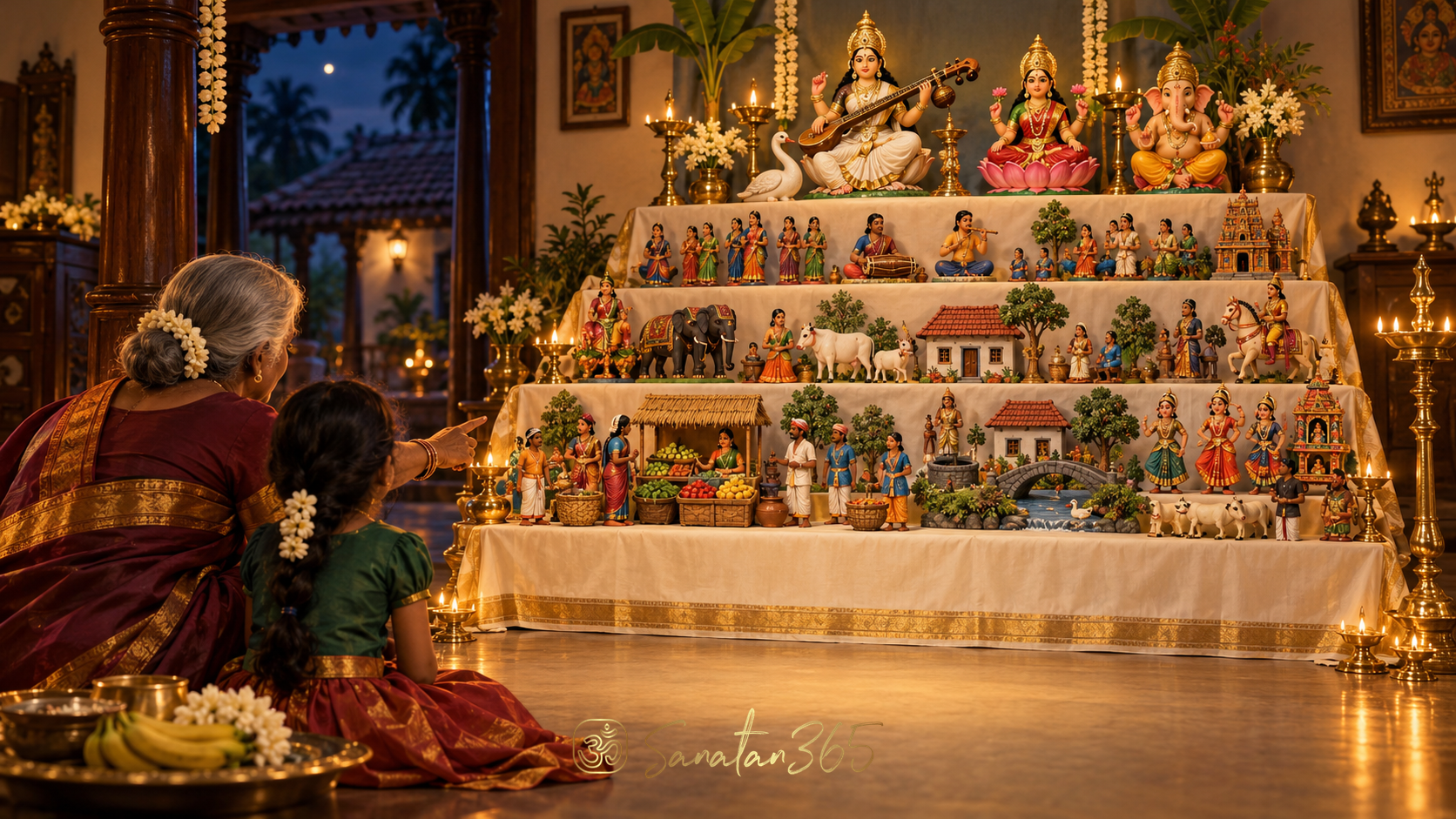
Golu Meaning: Navratri Dolls, Living Stories, and Hospitality
Understand Navratri Golu through its handmade dolls, regional names, family stories and welcoming home visits, with thoughtful preparation…
 Festivals
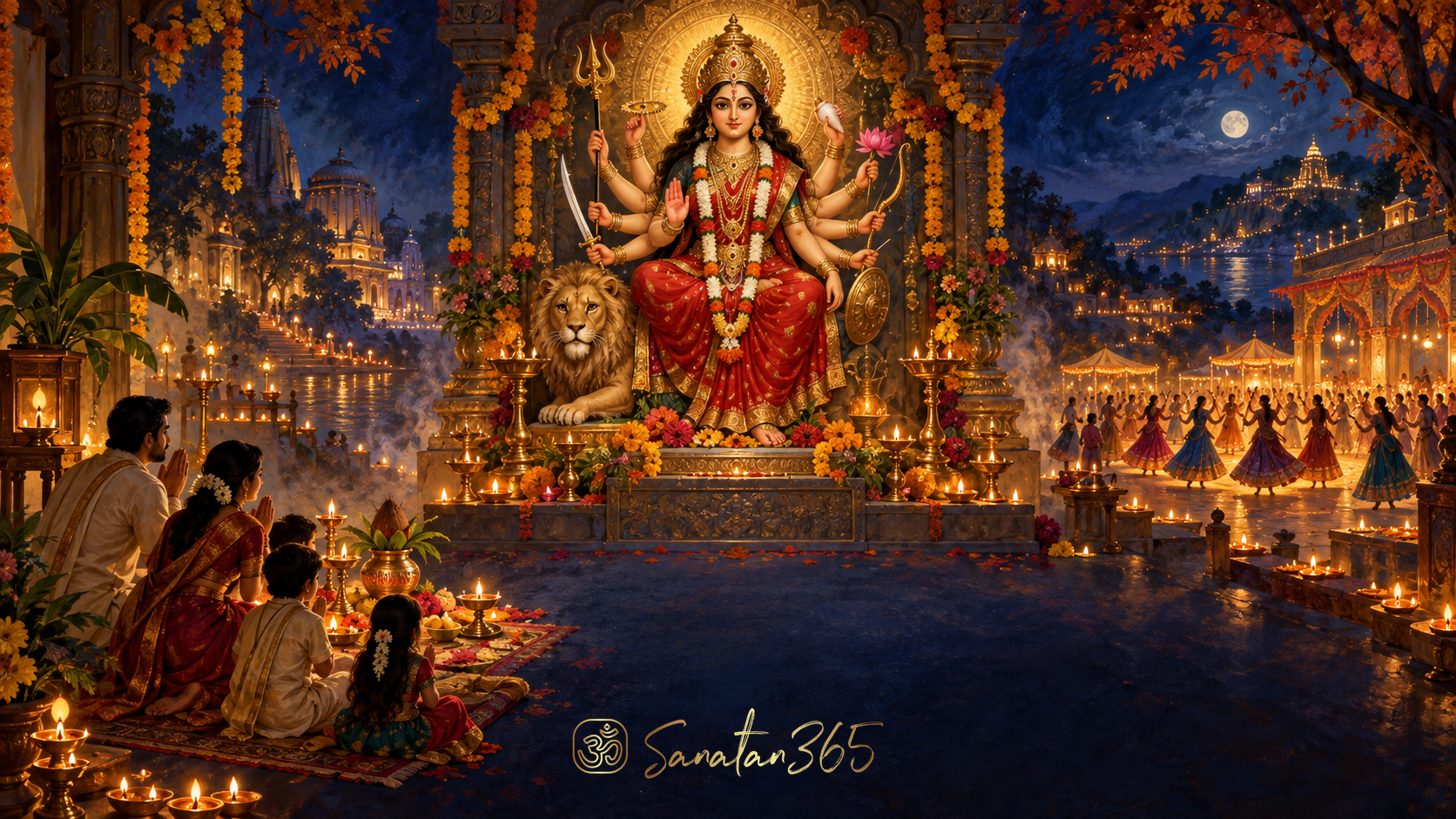
Sharad Navratri 2026: Dates, Nine Nights, and Devotion at Home
Understand Sharad Navratri 2026, its October dates, the meaning of nine nights, regional traditions, and a thoughtful home observance witho…
 Festivals
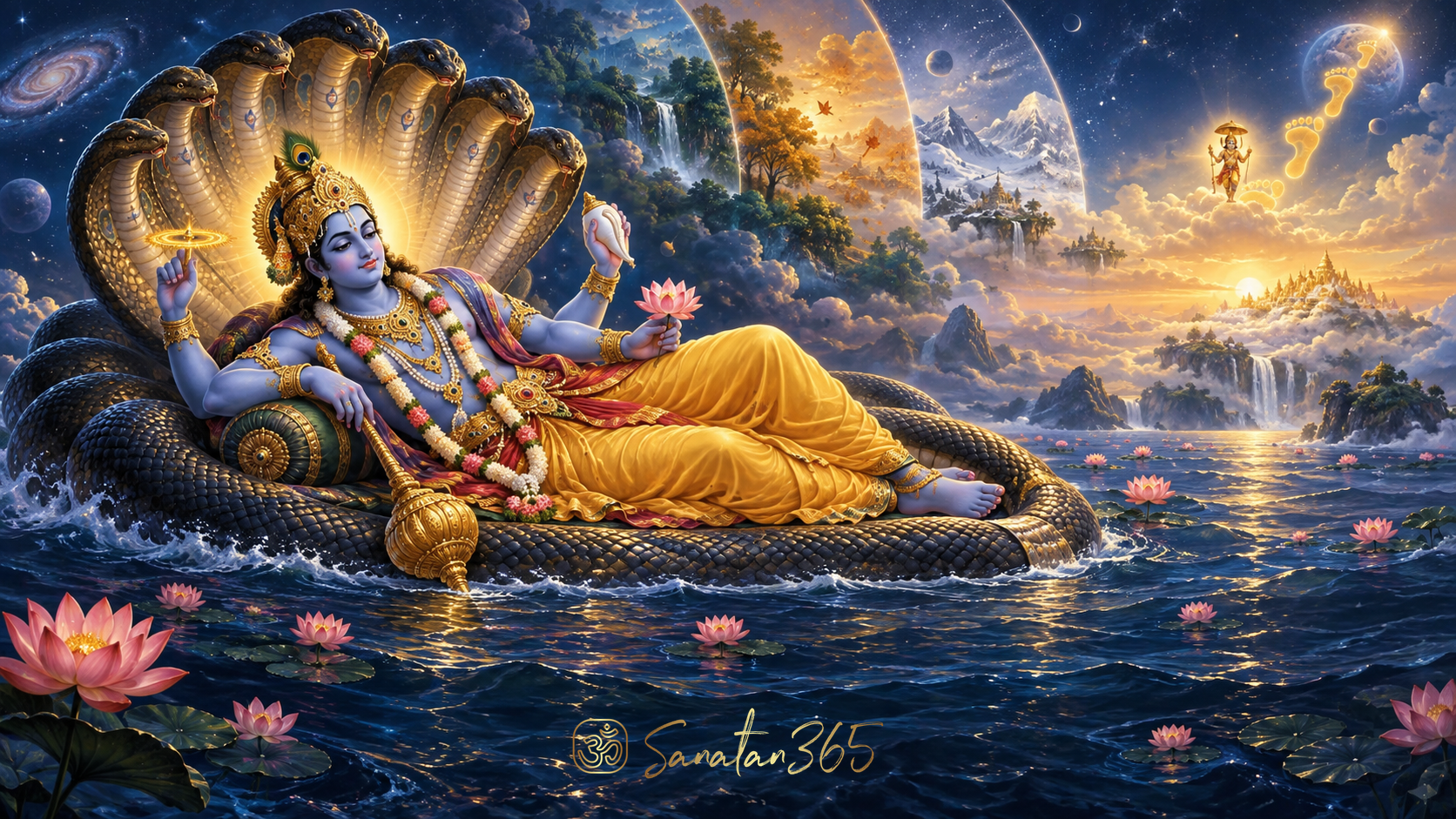
Parivartini Ekadashi 2026: Date, Meaning, and Gentle Vrat Guide
Parivartini Ekadashi 2026 falls on September 22. Learn why it is called Parsva or Vamana Ekadashi, how it relates to Chaturmas, and how to…

