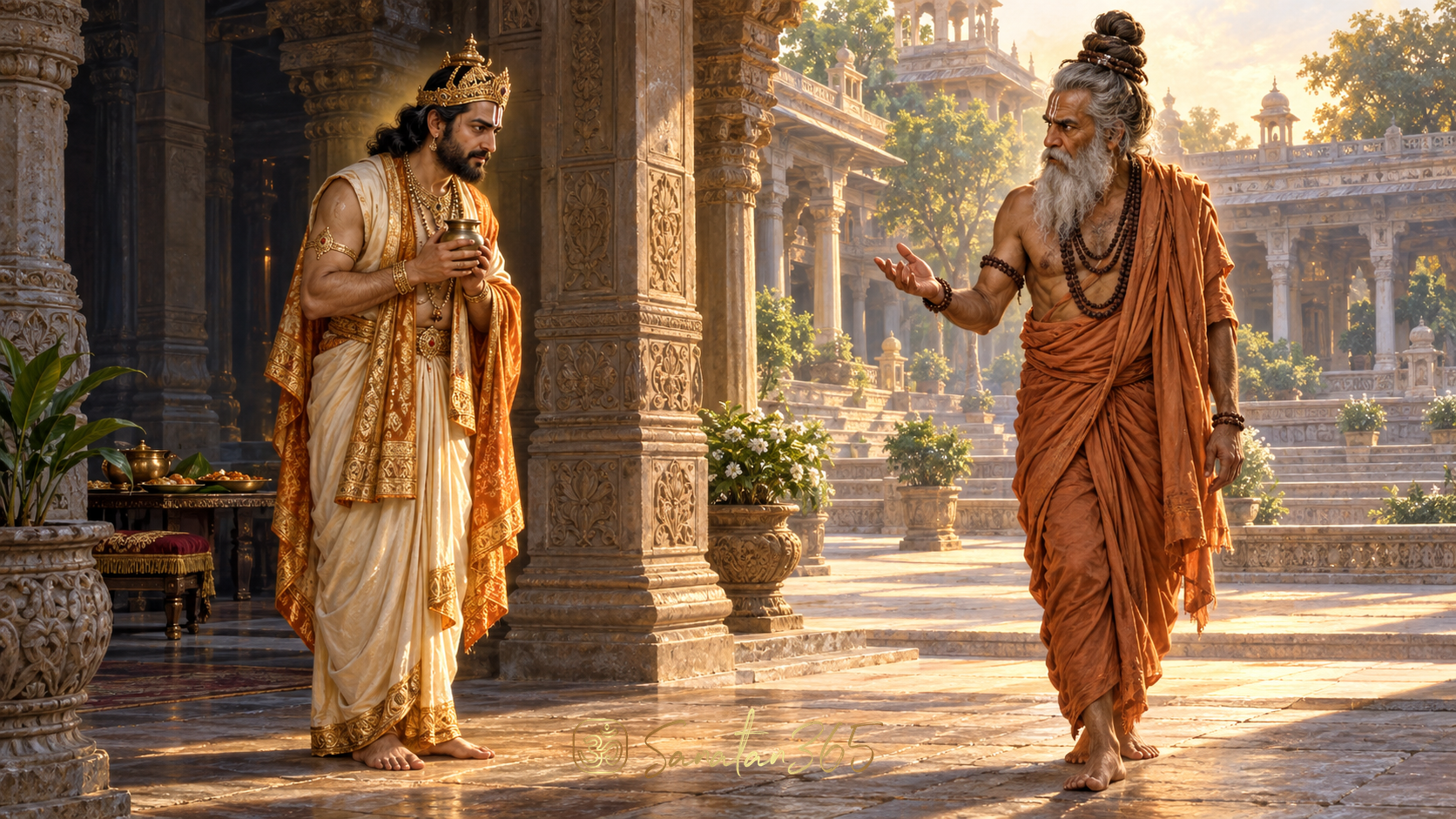
King Ambarisha and Durvasa: A Story of Devotion and Humility
The Bhagavata Purana story of King Ambarisha and Sage Durvasa explores a difficult fast, an angry visitor, and the restraint behind devotion.
A king waits to feed a guest. The auspicious moment to end his fast is nearly gone. A sip of water turns a careful act of conscience into a confrontation.
The King Ambarisha story, told in the Bhagavata Purana (Book 9, chapters 4–5), follows a devoted ruler and the sage Durvasa through an Ekadashi observance, an accusation of disrespect, and an unexpected reversal. Ambarisha's significance lies less in royal power than in his restraint: he tries to honor both a religious vow and a guest, then responds to anger without retaliating. The narrative is a devotional teaching, not a formula promising immunity from conflict.
Who was King Ambarisha in the Bhagavata Purana?
Ambarisha is presented as a ruler deeply devoted to Vishnu. The Bhagavata Purana describes him using his senses in service: his mind rests on Vishnu, his speech praises the Divine, and his hands undertake worship (9.4.18–20). This poetic portrait is an ideal of integrated devotion. It does not claim that every decision made by a ruler automatically becomes sacred.
The story is set around Ekadashi, the eleventh lunar day, observed by many Vaishnava devotees through fasting and prayer. Customs differ by lineage, health, place, and household. The following day, Dvadashi, is associated with parana—the prescribed ending of the fast within an appropriate time. The narrative uses this timing to create a real ethical tension: Ambarisha wants to keep his vow, but he also wants to honor a guest who has not yet eaten. Readers need not fast to understand that tension.
Ambarisha and his wife observe a long vow, worship Vishnu, give generously, and prepare to break the fast. Durvasa arrives as a guest with disciples. Ambarisha invites them to eat, and Durvasa goes to bathe before the meal. While he is away, the appointed window for ending the fast approaches its close (Bhagavata Purana 9.4.29–39). The king cannot simply treat the guest as an inconvenience; hospitality is itself part of the moral world of the story.
The Sanskrit term dharma means a sustaining moral and religious order, including duties that can compete in a particular circumstance. Here, vow and hospitality are both meaningful. The tale does not make good conduct seem effortless. It asks what responsible action looks like when two valued obligations meet at an awkward hour.
Key takeaway: Ambarisha's devotion is measured in ordinary conduct as well as formal worship.
Why did Ambarisha face a difficult Ekadashi decision?
A fast can be ended at a prescribed time, yet Ambarisha has promised to feed Durvasa. To eat before the sage returns could appear inhospitable. To miss the Dvadashi window could compromise the observance. The king consults learned advisers rather than assuming that royal rank makes his preference right. They consider the status of drinking water: in this ritual setting it can serve as a minimal way of ending the fast without beginning the full meal (Bhagavata Purana 9.4.39–40).
Ambarisha therefore sips water and waits for Durvasa. The act matters because it is deliberately narrow. He does not sit down to a feast while the guest is absent. Nor does he abandon the timing of his vow without reflection. The verse sequence records a decision under constraint, not a general rule that everyone should end every Ekadashi fast in this way. Practices differ, and anyone considering fasting should follow appropriate tradition and their own health needs.
When Durvasa returns, he perceives the water as an insult: in his view the host has eaten first. The narrative's tension grows from this gap between intention and interpretation. Ambarisha has tried to reconcile obligations; Durvasa sees a breach of respect. Good intentions do not guarantee that others will understand them, especially when ritual expectations and strong emotion are involved.
It would be easy to read this episode as a contest of technicalities: Was water food, or was it not? The deeper question is how one behaves after a conscientious choice is challenged. The king's response is not an argument that humiliates the sage. He remains exposed to anger even though the text presents him as careful and sincere.
This detail gives the story contemporary force. A person may seek counsel, make a modest decision, and still face another person's hurt or outrage. The narrative does not remove the need to explain oneself with respect. It also does not suggest that anger grants its bearer unlimited authority.
Key takeaway: The sip of water is a carefully considered response to competing duties, not a shortcut around hospitality.
What happened when Sage Durvasa became angry?
Durvasa is famous in Sanskrit narrative for formidable ascetic power and a volatile temper. In this passage he becomes angry with Ambarisha and creates a threatening being to attack him. The Bhagavata Purana says Vishnu's Sudarshana chakra, a divine discus, destroys the threat and pursues Durvasa (Bhagavata Purana 9.4.41–50). The supernatural sequence belongs to the story's devotional worldview. It should be described as what the text narrates, not presented as a verifiable historical event or a promise of physical intervention for modern readers.
Durvasa seeks protection in several places. The text describes his appeal to Brahma, Shiva, and finally Vishnu, none of whom can simply cancel the consequences within the story. Vishnu directs him back to Ambarisha (Bhagavata Purana 9.4.51–71; 9.5.1–7). This is not an invitation to rank Hindu deities against one another. The episode's theological emphasis is the gravity of harming a devotee and the need to repair a wrong with the person involved. Traditions interpret divine relationships differently; this article follows the narrative's own stated devotional frame.
The decisive turn is human, not martial. Durvasa returns and asks Ambarisha for refuge. Ambarisha does not answer with a display of triumph. He prays for the sage's safety. In the account, the discus withdraws after Ambarisha's appeal (Bhagavata Purana 9.5.8–13). The king's restraint is especially striking because he has been threatened. Forgiveness is shown as a chosen response, not an excuse for the original aggression.
The Bhagavata Purana further says that Ambarisha had remained without eating while Durvasa was away, and only after ensuring the sage was fed did he take food himself (9.5.20–24). That ending circles back to the conflict's beginning. Hospitality was not a mere rhetorical defense for drinking water. He followed through on it, even after the guest's anger made the encounter dangerous.
It is worth keeping the narrative's asymmetry clear. Durvasa has spiritual power but initially lacks composure. Ambarisha has political power but does not use it to crush a critic. The story questions the idea that status, austerity, or force automatically reveal inner maturity. In its devotional setting, humility becomes visible when power could have been used otherwise.
Key takeaway: The story resolves when injury is acknowledged and the threatened host chooses a compassionate response.
How does the story distinguish devotion from pride?
The tale is often told as proof that Vishnu protects devotees. That is one strand of its theological meaning, but reducing it to “be devout and nothing bad will happen” misses much of the text. Ambarisha experiences misunderstanding and threat. Durvasa experiences fear and has to return to the person he wronged. The narrative's moral center lies in how they respond, not in a guarantee of easy outcomes.
Bhakti, or loving devotion to the Divine, appears in Ambarisha as disciplined attention joined to conduct. The opening portrait of his senses serving Vishnu (9.4.18–20) prepares readers to recognize the later actions: he takes counsel, limits his own meal, waits, prays, and feeds his guest. Worship is not separated from responsibility toward another person.
Durvasa's arc cautions against another confusion: rigorous spiritual practice does not make anger wise. His ascetic accomplishment is not denied, but the narrative places it beside a harmful reaction. An insult can be perceived even where none was intended. Power can then amplify the reaction. In everyday life, the analogy is not supernatural punishment; it is the familiar damage that follows when authority is used to intimidate rather than understand.
Ambarisha's humility should also not be romanticized into passivity. He makes a decision, knowing it may be questioned. He does not abandon the vow or his guest. After the threat, he prays rather than boasting about being vindicated. Restraint here has moral substance: it is the ability to choose one's response despite the pressure to defend status.
Some readers may ask whether the tale demands unconditional reconciliation with a threatening person. It does not supply such a universal rule. The episode unfolds inside a sacred narrative where divine protection and the sage's plea change the situation. In real relationships, safety, accountability, and boundaries still matter. Forgiveness need not mean remaining exposed to harm. A responsible reading draws on the king's composure without turning a story into advice to tolerate abuse.
The difference between devotion and pride is therefore visible in small acts. One can be technically observant yet impatient with another person; one can also take a ritual duty seriously while trying to preserve another's dignity. The story asks its audience to value the latter combination.
Key takeaway: Devotion in this account deepens responsibility and humility; it is not a badge that exempts anyone from them.
What can readers learn about restraint and hospitality?
The first practical lesson is to pause when duties collide. Ambarisha seeks counsel and chooses the least expansive action he can see. That does not make every hard choice obvious, but it models deliberation. Before deciding between a promise and another person's immediate needs, ask what each obligation actually requires and what a proportionate response might be.
The second is to distinguish the meaning of an act from the story someone else may tell about it. Durvasa interpreted a sip of water as contempt. Ambarisha intended to honor both vow and guest. When conflict begins this way, explanation and listening are often more useful than a quick claim of moral superiority. The text does not show Durvasa doing that at first; his later return carries the cost of that failure.
The third is to notice what happens after a threat ends. Ambarisha does not merely win an argument. He prays for the guest, serves him, and only then eats. Hospitality becomes credible because it survives offense. That does not require anyone today to ignore risk or abandon boundaries. It invites readers to consider whether they can remain humane without surrendering judgment.
There is also an important limit to the analogy. The details of Ekadashi parana belong to specific observances; the chase of the divine discus belongs to the Purana's devotional vision. Neither should be flattened into an everyday rule or a prediction. The transferable question is more modest and perhaps more demanding: can devotion shape patience when one is misunderstood?
For readers interested in other narrative explorations of competing duties, the story of Vibhishana's request for refuge offers a different setting for principled compassion. Each story has its own context; neither replaces careful judgment in present circumstances.
Ambarisha's example is memorable because its first visible action is so small. A sip of water does not look heroic. In the story, however, it reveals a person trying to keep faith with two responsibilities at once. The ensuing crisis tests whether that care was sincere. His answer is not a speech about virtue, but the meal he still makes room to serve.
Key takeaway: Restraint can be active: seek counsel, make a proportionate choice, and keep another person's dignity in view.
FAQ
What is the King Ambarisha story about?
In the Bhagavata Purana 9.4–9.5, King Ambarisha drinks water to end an Ekadashi fast at the proper time while waiting to feed the sage Durvasa. Durvasa takes offense and threatens him. The divine discus pursues the sage, who eventually returns to Ambarisha. The king prays for him and serves him food.
Why did Ambarisha drink water before Durvasa ate?
The Dvadashi window for ending his fast was nearly over. After consulting advisers, Ambarisha chose a sip of water as a minimal way to honor the vow while delaying the meal until his guest returned (Bhagavata Purana 9.4.39–40). This is a detail of the narrative, not a universal instruction for fasting.
What does Durvasa learn in the story?
Within the text's devotional frame, Durvasa learns that power and austerity do not erase the consequences of harming another person. His return to Ambarisha makes reconciliation personal rather than merely procedural (Bhagavata Purana 9.5.1–13).
Does the story say Vishnu will always prevent harm to devotees?
No such guaranteed outcome should be inferred for modern life. The Purana narrates divine protection in this episode. Readers can respect its theological meaning without turning it into a prediction about every devotee's circumstances.
Final key takeaway: Ambarisha's strength is not that he never faces anger; it is that devotion helps him answer it with counsel, restraint, and care for a guest.
About the author
Sanatan365 Editorial
Bringing Sanatan Dharma to modern seekers through authentic, scripture-grounded content.
Related in Stories
 Stories
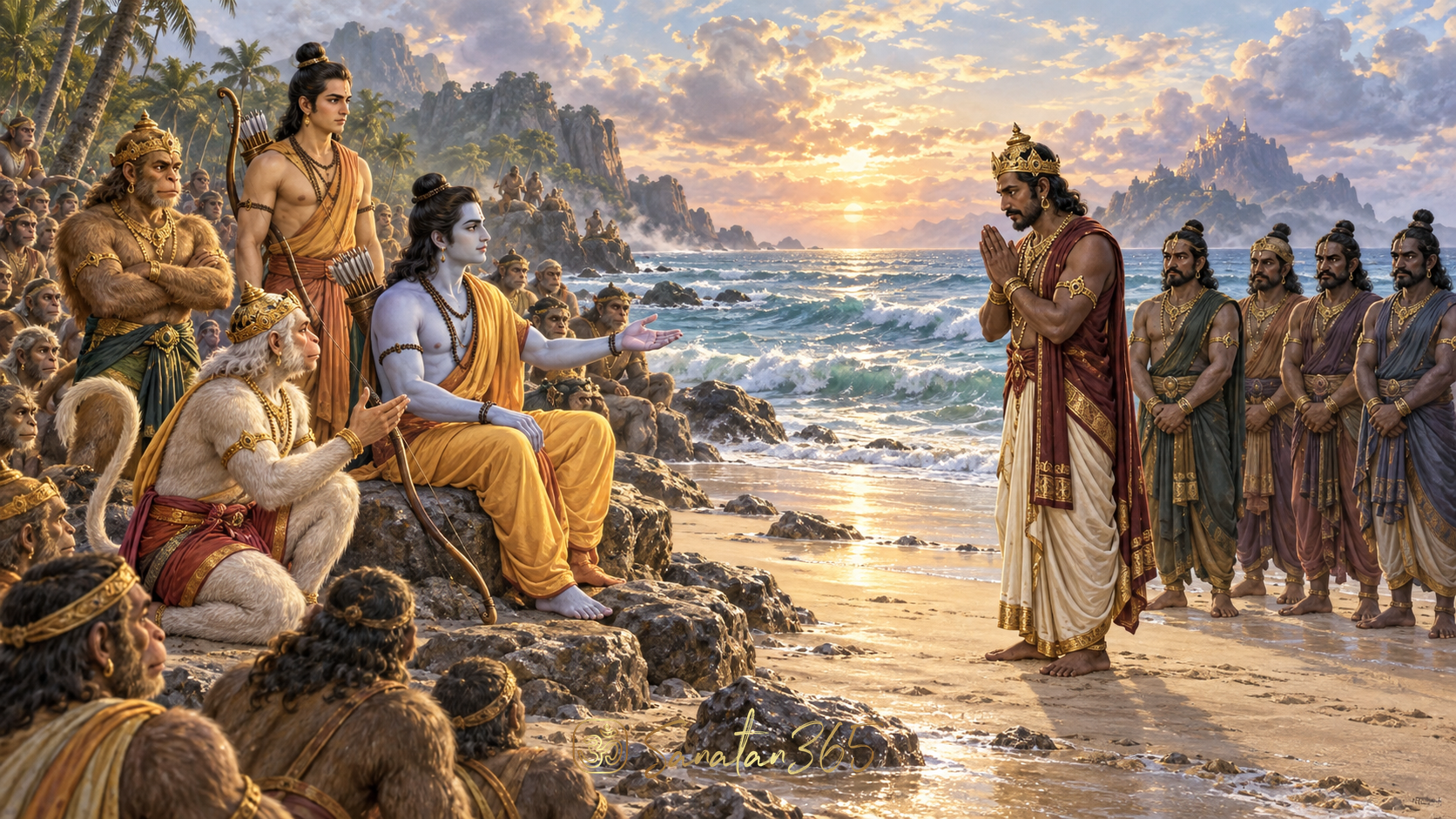
Vibhishana's Story: Why Rama Welcomed Him
Why did Vibhishana leave Lanka, and why did Rama welcome him? Read the Ramayana's debate about refuge, trust, and dharma with nuance.
 Stories
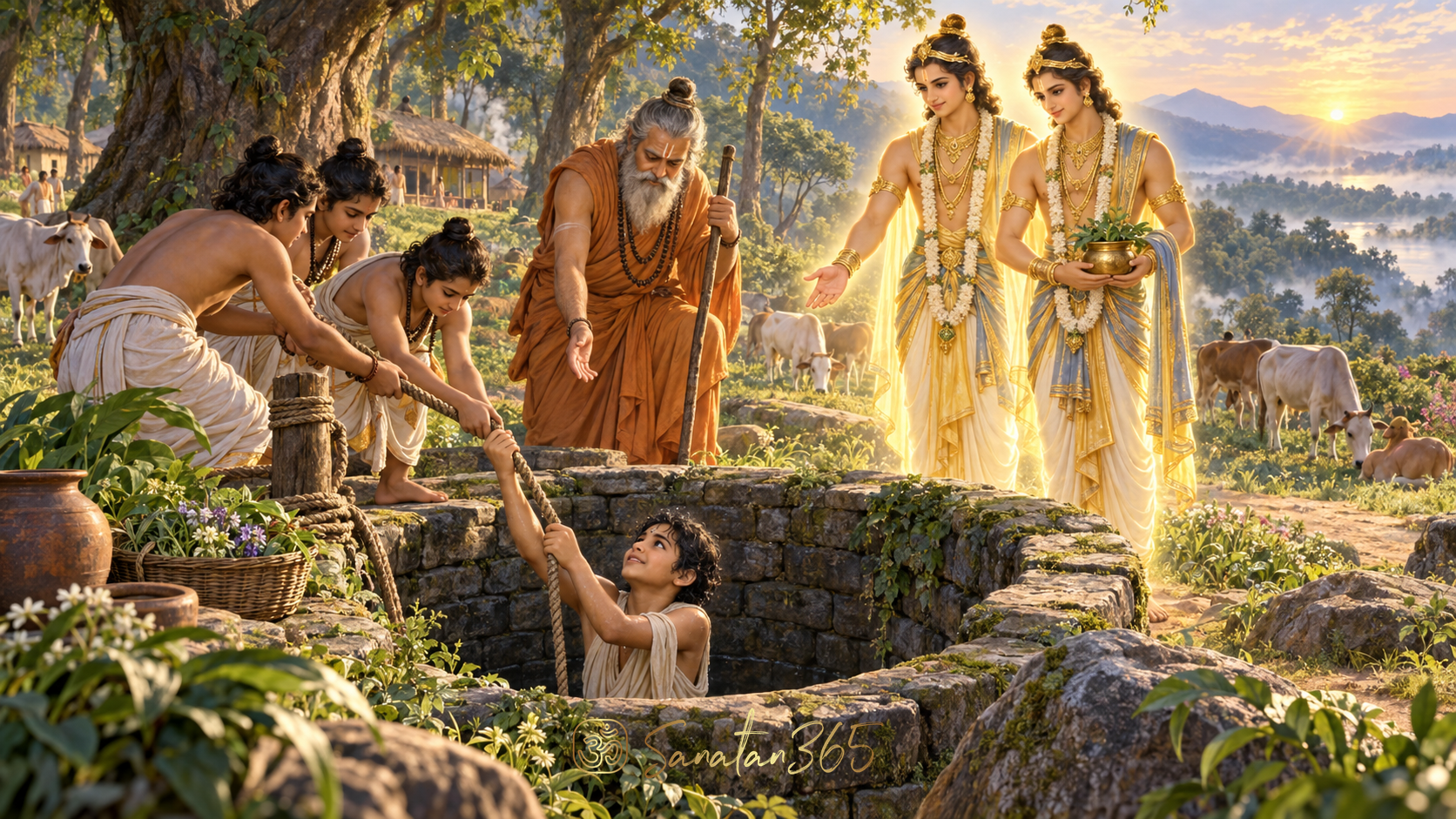
Upamanyu’s Story: Discipline, Discernment, and the Ashvins’ Grace
Upamanyu’s early Mahabharata story follows a hungry student tested by his teacher, blinded after eating harmful leaves, and restored by the…
 Stories
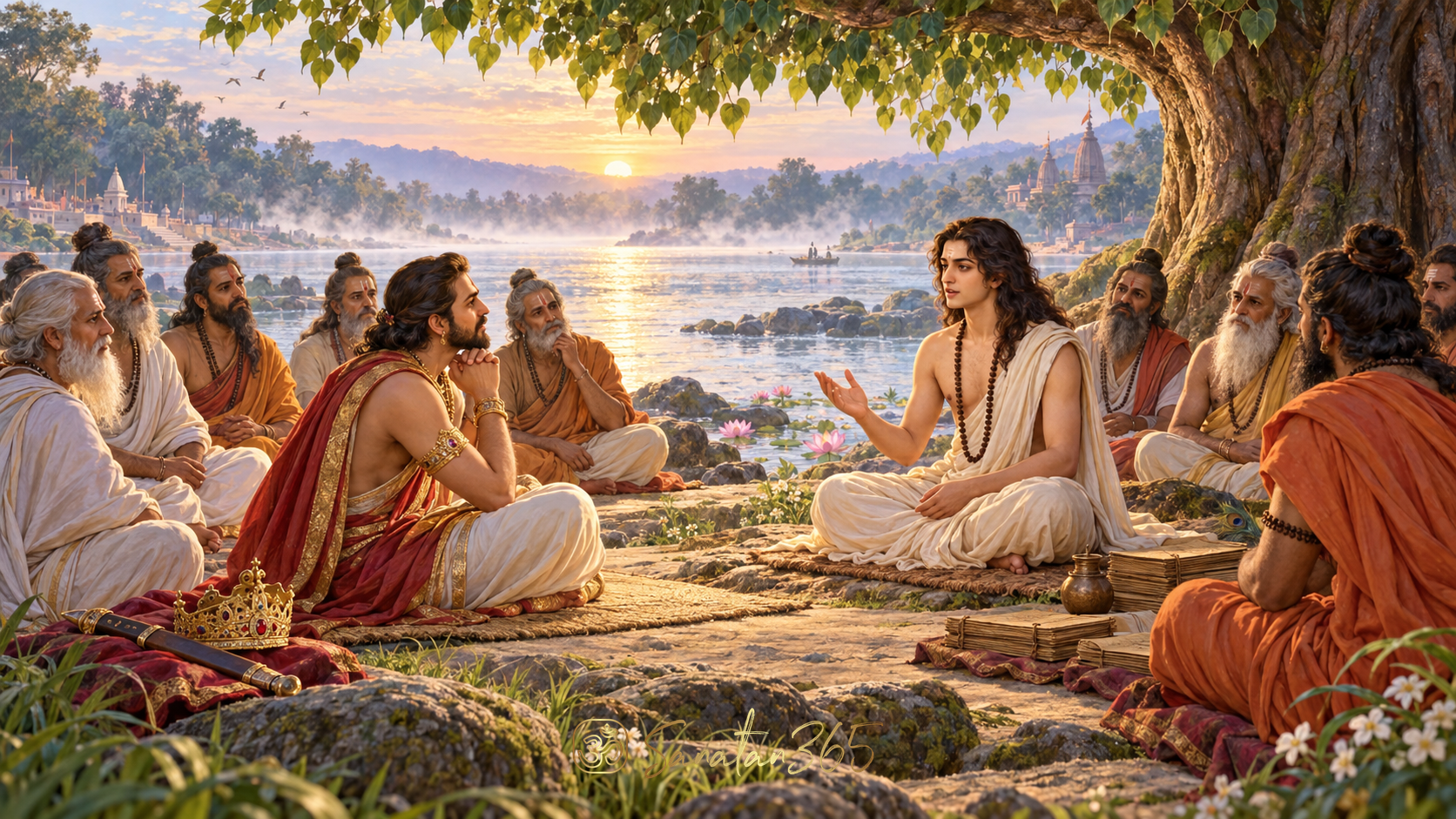
King Parikshit and Shukadeva: Seven Days of Sacred Listening
When King Parikshit learned that only seven days remained, the Bhagavata Purana says he turned from power toward one urgent question: what…

