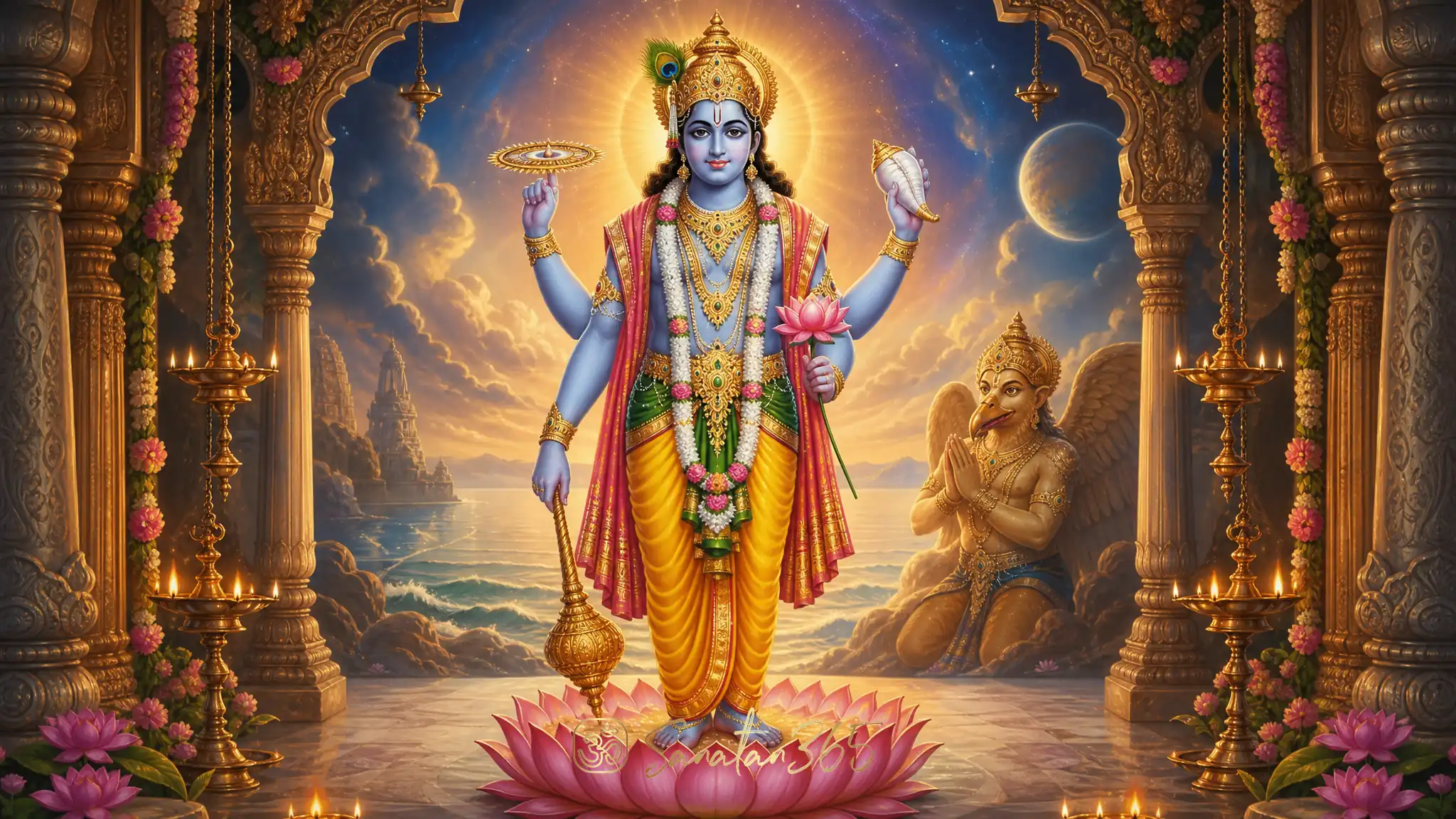
Lord Vishnu Symbolism: Shankha, Chakra, Gada, and Padma
A clear guide to Lord Vishnu symbolism through the conch, discus, mace, lotus, four arms, blue form, and Vaishnava devotional meaning.
Lord Vishnu is often recognized before a single story is told: blue form, four arms, conch, discus, mace, and lotus.
Lord Vishnu symbolism begins with preservation. Vishnu (विष्णु, the all-pervading one) is worshipped in many Hindu traditions as the sustainer who protects cosmic order, restores dharma (धर्म, right order and responsibility), and responds when balance is threatened. His four emblems are not decorative accessories. The shankha (शङ्ख, conch), chakra (चक्र, discus or wheel), gada (गदा, mace), and padma (पद्म, lotus) teach how divine preservation works: through sacred sound, clear vision, disciplined strength, and purity that remains untouched by the mud around it.
This is why Vishnu's iconography is so memorable. It gives the devotee a visual theology of calm power.
What Is Lord Vishnu Symbolism?
Lord Vishnu symbolism is the language of protection, balance, and presence made visible through sacred form.
In Vaishnava traditions, Vishnu is not only an abstract principle. He is the preserver whose compassion appears through avatars such as Rama and Krishna, whose form rests on the cosmic serpent Ananta, and whose presence is remembered in temple worship, mantra, story, and household devotion. The Asian Art Museum's teaching resource on Vishnu describes him as a kingly deity whose raised arms hold a mace and discus while his lower hands hold a conch and seed or lotus-like emblem. The Metropolitan Museum of Art's South and Southeast Asian art educator resource also identifies Vishnu's familiar attributes as the chakra, conch shell, and gada in sculptural depictions.
These art-historical notes matter because they show continuity. Across regions and centuries, devotees and artists repeatedly returned to a recognizable grammar: Vishnu's body is calm, but his emblems are active. He stands or reclines in serenity while holding powers that awaken, protect, correct, and bless.
For a modern reader, this can be read as a spiritual sequence:
- The conch calls the mind back to the sacred.
- The discus cuts through confusion and disorder.
- The mace reminds strength to serve dharma.
- The lotus teaches purity without escape from the world.
This is not merely mythology as ornament. It is a practical way to contemplate how protection should feel: alert but not anxious, strong but not cruel, beautiful but not vain, steady but not passive.
Key takeaway: Lord Vishnu symbolism presents preservation as sacred sound, moral clarity, disciplined power, and purity.
Why Does Vishnu Hold the Shankha?
The shankha, or conch, is one of Vishnu's most recognizable symbols.
In Hindu ritual life, the sound of a conch often marks a sacred beginning. It can announce worship, gather attention, and shift the atmosphere from ordinary activity to devotional focus. In Vishnu's hand, the shankha is commonly called Panchajanya in later devotional tradition. Its meaning is not only "a shell." It is the sound that awakens.
The conch also has a natural oceanic association. Its spiral form, deep resonance, and connection with water fit Vishnu's larger imagery: cosmic waters, preservation, and the life-sustaining field from which order emerges. When a conch sounds in a temple or home, the body hears it before the intellect explains it. That is part of its power. It interrupts scattered attention and says: remember.
In this sense, the shankha is related to mantra (मन्त्र, sacred sound). A mantra gives the tongue and breath a sacred pattern. The conch gives the ear and space a sacred vibration. Both can turn attention toward the Divine.
For devotees, the shankha can suggest three inner practices:
- Begin the day with remembrance rather than reaction.
- Let speech become cleaner, less harsh, and more purposeful.
- Use sound, prayer, and mantra to steady the mind before action.
The shankha also corrects a common misunderstanding about preservation. Preservation is not silence in the face of disorder. Sometimes dharma must be announced. Sometimes the heart needs a call strong enough to wake it from habit.
Key takeaway: Vishnu's shankha symbolizes sacred sound that awakens attention and prepares the mind for dharma.
What Does the Sudarshana Chakra Mean?
The Sudarshana Chakra is Vishnu's discus, but its symbolism is wider than a weapon.
The word chakra means wheel or disc. Sudarshana is often understood as "auspicious vision" or "beautiful seeing." Put together, the emblem suggests a power that moves with precision and restores order through clear sight. In Vishnu's iconography, the chakra is not random violence. It is protection guided by wisdom.
This distinction matters. Hindu imagery often uses weapons in divine hands, but these should not be read as glorifications of aggression. In a deity's hand, a weapon can represent the removal of adharma (अधर्म, disorder or unrighteousness), the cutting of confusion, and the protection of those who seek refuge. The chakra turns because time turns, karma unfolds, and disorder cannot hold forever.
The chakra can also be contemplated as the wheel of cosmic order. A wheel must have a center and motion. If there is motion without a center, life becomes restless. If there is a center without motion, life becomes inert. Vishnu's chakra holds both: centeredness and action.
For daily life, the Sudarshana Chakra asks a direct question: what needs clearer seeing?
- Is anger pretending to be justice?
- Is attachment pretending to be love?
- Is delay pretending to be patience?
- Is fear pretending to be caution?
- Is ego pretending to be duty?
These questions make the symbol practical. The discus cuts because clear seeing cuts. It removes the extra story that the mind builds around desire, resentment, or fear. This is why Vishnu's calm face matters. The chakra belongs to serenity, not agitation.
For related devotional context, readers can pair this with Bhagavad Gita Chapter 12 Meaning, where devotion is measured through steadiness, humility, and freedom from hatred.
Key takeaway: The Sudarshana Chakra symbolizes clear vision in motion, protecting dharma without becoming restless or cruel.
Why Is the Gada Important in Vishnu Symbolism?
The gada, or mace, is Vishnu's emblem of strength disciplined by wisdom.
In many images, Vishnu's mace is known as Kaumodaki. A mace is physically direct. It does not suggest subtle argument or soft persuasion. Yet in Vishnu's hand, the gada does not create a mood of rage. It rests under the authority of the preserver. This tells the devotee that strength is sacred only when it serves order.
The gada can represent knowledge, authority, courage, and the power to restrain harmful force. Asian Art Museum notes identify the mace as one of Vishnu's raised-hand attributes in a medieval South Asian image, showing how firmly this emblem belongs to Vishnu's visual identity. Across Vaishnava art, it appears as a sign that compassion is not weak. Protection sometimes requires firmness.
This has a sober lesson for modern life. Many people confuse gentleness with helplessness and strength with domination. Vishnu's gada refuses both errors. It teaches strength that can stand guard without losing dignity.
A devotee might contemplate the gada through everyday questions:
- Where do I need discipline rather than complaint?
- Where must I protect a boundary without hatred?
- Where has comfort made my resolve weak?
- Where can strength serve family, community, or truth?
The gada also belongs with humility. Power without humility becomes frightening. Humility without courage can become avoidance. Vishnu's mace is held by a deity whose face remains composed, whose lotus remains pure, and whose conch still calls the world to sacred remembrance.
Key takeaway: Vishnu's gada symbolizes strength that protects, disciplines, and serves dharma without ego.
What Does the Padma Teach?
The padma, or lotus, is the softest of Vishnu's four emblems, but not the least powerful.
A lotus grows from mud and water yet rises clean above the surface. For this reason, it is one of the most beloved symbols in Hindu, Buddhist, and broader Indian sacred art. In Vishnu symbolism, the lotus points toward purity, beauty, spiritual unfolding, and the possibility of remaining inwardly clean while living in the world.
This is an essential balance to the chakra and gada. Without the lotus, preservation could be imagined only as force. The padma teaches that preservation also means nurturing beauty, patience, virtue, and inner openness. Dharma is not maintained only by correcting what is wrong. It is also maintained by cultivating what is good.
The lotus also recalls creation imagery. Brahma is often shown emerging from a lotus connected with Vishnu, suggesting that preservation and creation are not isolated ideas. The world is sustained so that life, learning, and devotion can unfold.
For a devotee, the padma can become a daily meditation:
- Stay rooted without becoming dirty in conduct.
- Let beauty serve devotion rather than vanity.
- Grow slowly without despising the mud from which growth began.
- Keep the heart open even while practicing discipline.
This connects naturally with Bhakti Meaning, because devotion is not only emotion. It is the flowering of attention, humility, love, and surrender in ordinary living.
Key takeaway: Vishnu's padma symbolizes purity, beauty, and spiritual unfolding within the world rather than escape from it.
Why Does Vishnu Have Four Arms and a Blue Form?
Vishnu's four arms show that divine capacity exceeds ordinary human limitation.
A two-armed figure can hold only so much. A four-armed form expresses superhuman completeness. Vishnu can call, protect, strengthen, and bless at once. The four arms also allow the four emblems to be seen together, so the devotee does not isolate one quality from the whole.
This is important. The conch without the chakra may become sound without clarity. The chakra without the lotus may become sharpness without tenderness. The gada without the conch may become force without sacred orientation. The lotus without the gada may become beauty without courage. Vishnu holds all four.
His blue form is also significant. Many Vaishnava images show Vishnu with deep blue or cloud-like skin. Devotional interpretation often links this blue with vastness: sky, ocean, depth, and the immeasurable presence of the Divine. Blue suggests that Vishnu is near enough to worship in form and vast enough to exceed form.
In temple art, this symbolism becomes embodied. The devotee sees ornaments, weapons, flowers, posture, gesture, and color together. The image does what abstract explanation cannot always do: it lets the heart meet theology through beauty.
For diaspora families and younger readers, Vishnu's form can be introduced gently: "These symbols show how God protects the world." That is often enough as a beginning. Deeper meanings can unfold over time.
Key takeaway: Vishnu's four arms and blue form express complete divine capacity: vast, calm, protective, and compassionate.
How Can Devotees Contemplate Vishnu's Symbols Today?
Vishnu symbolism becomes most useful when it shapes conduct.
A simple home reflection can take five minutes. Sit before a Vishnu image, or simply remember the four emblems in the mind. Breathe slowly and contemplate each one:
- Shankha: What sacred sound or prayer should begin my day?
- Chakra: What confusion needs clearer seeing?
- Gada: What discipline or boundary must I uphold?
- Padma: Where can I remain pure, kind, and open?
This practice should not become superstition or pressure. It is a reflective way to let iconography become inner guidance. The aim is not to claim guaranteed outcomes. The aim is to let sacred symbols educate attention.
Families can use the same approach with children. Ask them to draw the four symbols and write one simple quality beside each: sound, clarity, strength, purity. Over time, the image of Vishnu becomes more than something seen during puja. It becomes a map for how to live.
Devotees who already chant Vishnu Sahasranama may find the four emblems especially meaningful. The thousand names praise many aspects of Vishnu, while the image gathers those meanings into a form the heart can remember. For a deeper chanting lens, see Vishnu Sahasranama Meaning.
Key takeaway: Vishnu's symbols are most powerful when they become daily questions about sound, clarity, strength, and purity.
FAQ
What is the main meaning of Lord Vishnu symbolism?
Lord Vishnu symbolism centers on preservation, protection, and cosmic order. His shankha, chakra, gada, and padma show sacred sound, clear vision, disciplined strength, and purity.
What are the four things Vishnu holds?
Vishnu is commonly shown holding the shankha (conch), Sudarshana Chakra (discus), gada (mace), and padma (lotus). These are among his most recognizable Vaishnava iconographic emblems.
Why is Vishnu blue?
Vishnu's blue form is often understood devotionally as a sign of vastness, depth, and immeasurable presence, like the sky or ocean. It helps express that the Divine is both personal and beyond ordinary limits.
Is the Sudarshana Chakra only a weapon?
No. It is a divine discus, but spiritually it also symbolizes clear vision, protection of dharma, and the removal of disorder. It should not be reduced to aggression.
How can children understand Vishnu's symbols?
Children can learn the four emblems through simple qualities: the conch means sacred sound, the discus means clear thinking, the mace means good strength, and the lotus means purity and kindness.
Vishnu's form teaches that preservation is not passive. It calls, sees, protects, and blesses. The single key takeaway: Lord Vishnu's shankha, chakra, gada, and padma show how divine order remains both strong and beautiful.
About the author
Sanatan365 Editorial
Bringing Sanatan Dharma to modern seekers through authentic, scripture-grounded content.
Related in Deities
 Deities
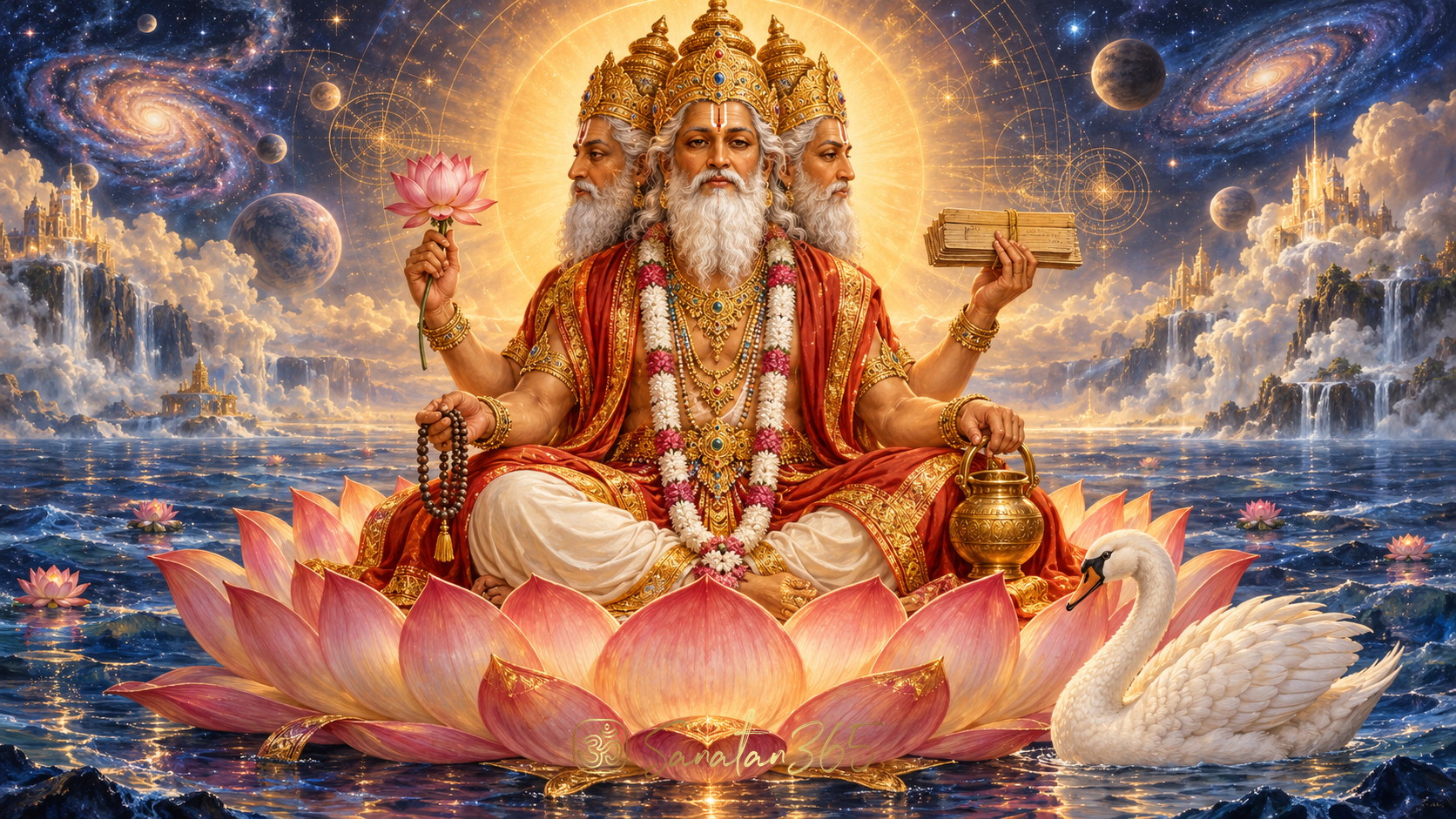
Brahma Deva Meaning: Four Faces, Creation, and Sacred Knowledge
Understand Brahma, the Hindu creator deity, through his four faces, lotus imagery, sacred knowledge, and a careful distinction from Brahman…
 Deities
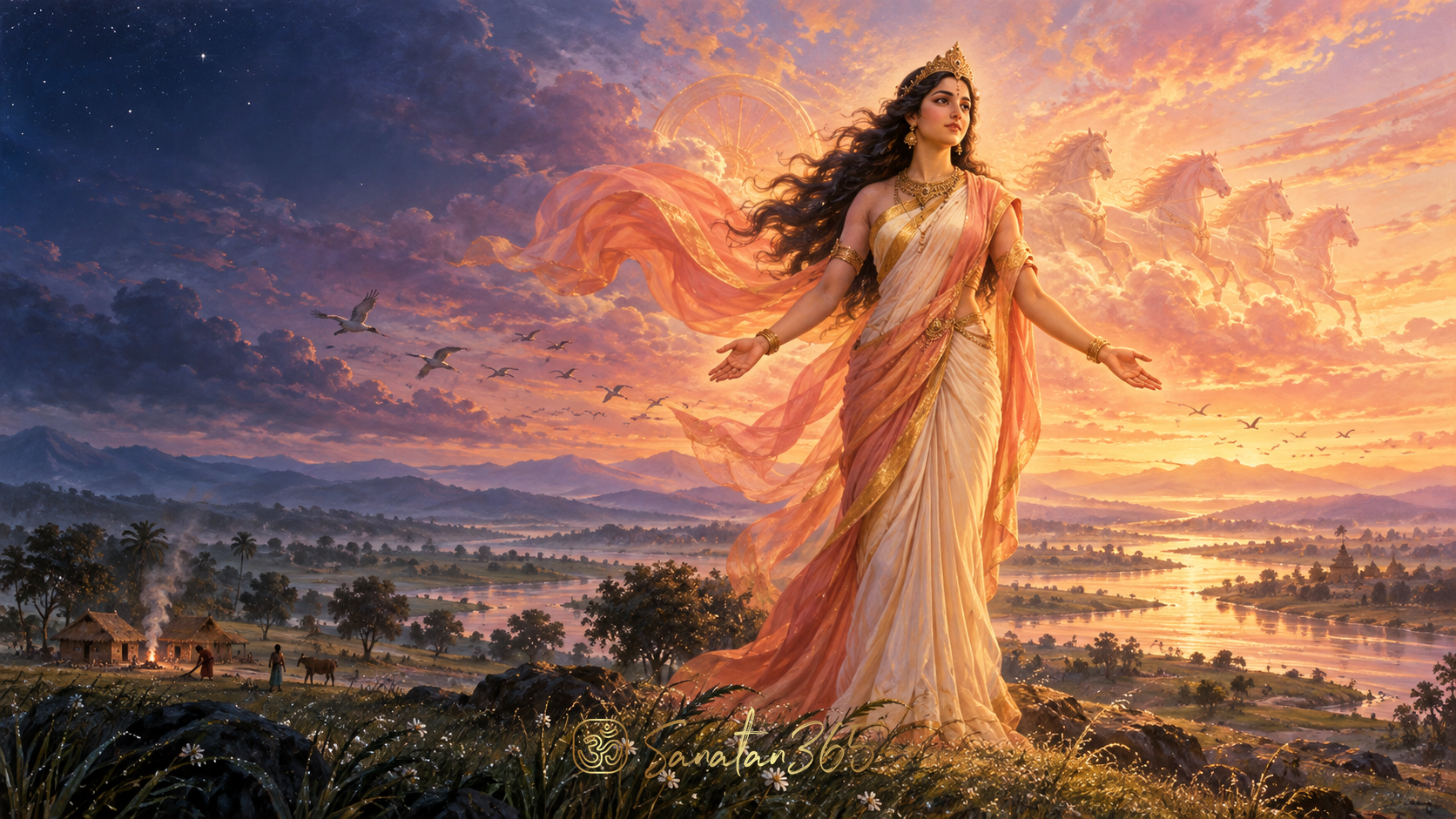
Ushas, the Vedic Goddess of Dawn: Light, Renewal, and Time
Ushas, the Vedic goddess of dawn, appears in the Rigveda as radiant light that awakens life, calls beings to activity, and reveals both ren…
 Deities
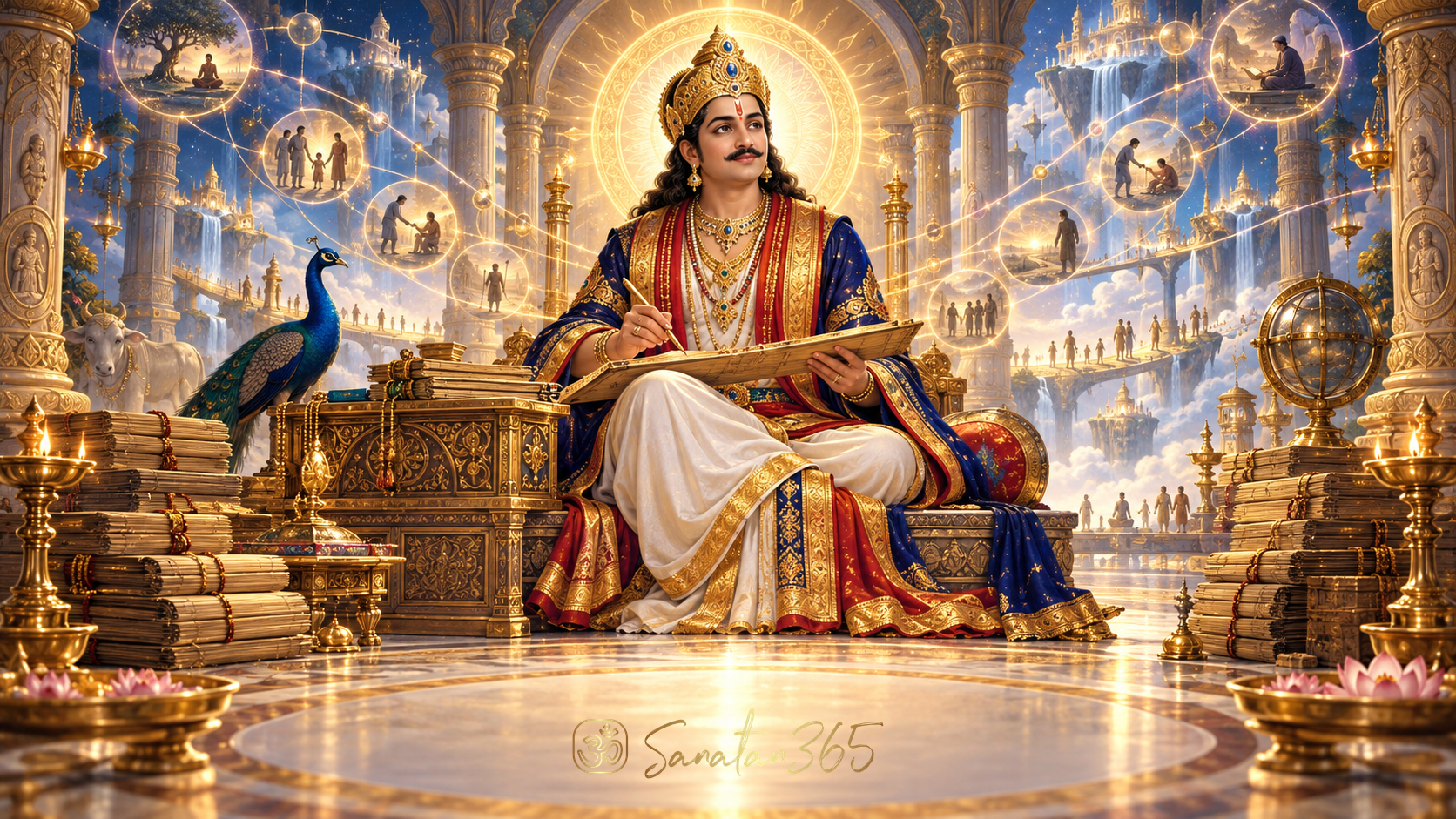
Chitragupta Meaning: Divine Records and Ethical Accountability
Chitragupta is remembered as the divine keeper of karmic records in Yama's court. His symbolism connects writing, memory, justice, and ethi…

