Muhurta Meaning: How Hindu Tradition Chooses an Auspicious Time
Muhurta is the Hindu discipline of choosing a fitting time for a meaningful action by considering the Panchanga, the purpose of the act, and responsible human judgment.
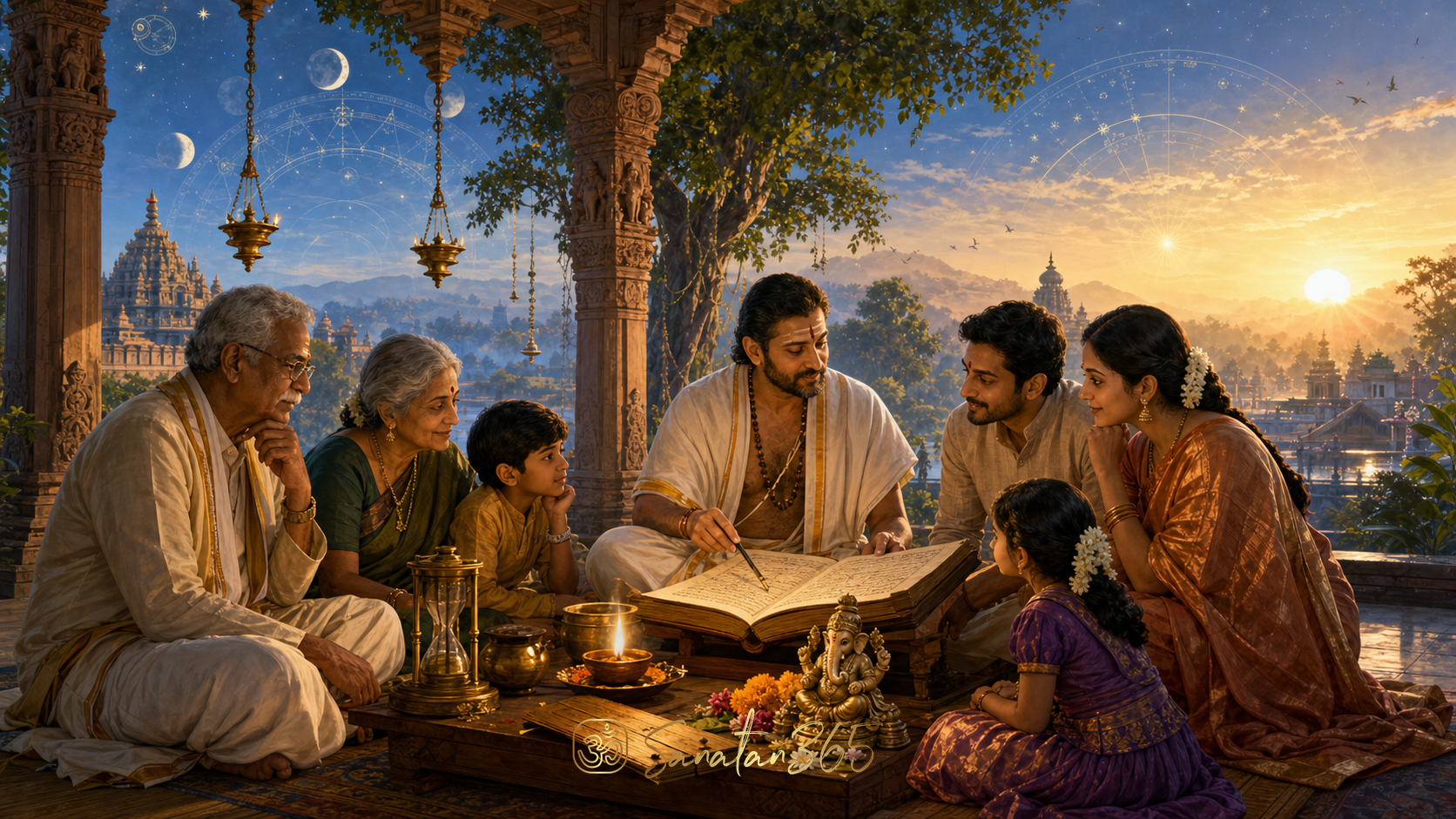
A wedding may be planned for months, yet the final invitation often carries one carefully chosen hour. That detail reveals the heart of Muhurta meaning: Hindu tradition does not treat time as an empty container, but as a living pattern in which some moments fit a particular action more harmoniously than others.
Muhurta (मुहूर्त, muhūrta, a chosen or fitting period) is the discipline of selecting an auspicious time for a meaningful undertaking. A traditional selection may consider the Panchanga, the nature of the action, family custom, location, and the people involved. It is not a guarantee that nothing difficult will happen. It is a way of beginning with attention, prayer, preparation, and respect for sacred time.
What Is Muhurta Meaning in Hindu Tradition?
In everyday speech, people often say Shubh Muhurat (शुभ मुहूर्त, auspicious time). Shubha means auspicious, beneficial, or conducive to well-being. Muhurta can refer both to a traditional unit of time and, more commonly today, to a selected interval considered suitable for a specific act.
The older time-unit sense is precise: one civil day and night may be divided into thirty muhurtas, making each approximately forty-eight minutes. The selection discipline, however, is not simply a hunt for any forty-eight-minute block. A jyotishi (ज्योतिषी, practitioner of Jyotisha) examines how the qualities of a particular date and time relate to the intended activity.
This is why one time is not automatically “best” for everything. A suitable period for study, travel, marriage, entering a new home, beginning worship, or signing an agreement may be evaluated differently. The action supplies the question; the calendar supplies context.
The Encyclopaedia Britannica overview of the Hindu calendar explains how lunar months, solar movement, and religious observances interact in Hindu calendrical life. Muhurta belongs to this wider understanding: sacred time is read through cycles, not reduced to a single universal clock.
Key takeaway: Muhurta means choosing a time that fits the purpose of an action, not declaring one hour universally lucky.
How Is an Auspicious Time in Hinduism Chosen?
The most familiar foundation is the Panchanga (पञ्चाङ्ग, pañcāṅga, “five limbs”), the traditional Hindu almanac. Its five principal elements describe the calendrical quality of a moment:
- Tithi (तिथि, lunar day): the angular relationship between the Sun and Moon, used throughout festival and ritual calendars.
- Vara (वार, weekday): the solar day, traditionally associated with a planetary ruler.
- Nakshatra (नक्षत्र, lunar mansion): the section of the sky occupied by the Moon.
- Yoga (योग, a calendrical combination): a value derived from the longitudes of the Sun and Moon.
- Karana (करण, half of a tithi): a smaller lunar division used in timing judgments.
Readers can explore the broader logic of these five limbs in this guide to the Panchanga. A practitioner may also consider sunrise, local coordinates, planetary conditions, customary exclusions, and the birth details of the principal people when the occasion calls for individualized analysis.
Location matters because sunrise, tithi boundaries, and other calculations change with place. A time printed for Delhi should not be copied blindly for Chennai, London, Singapore, or New Jersey. The Government of India’s Positional Astronomy Centre publishes astronomical and calendrical resources that illustrate why accurate location-based computation matters.
Tradition also includes regional and lineage differences. North Indian calendars may present months using a different convention from calendars common in parts of South India. Bengali, Gujarati, Marathi, Tamil, Telugu, Kannada, Odia, and Nepali households may emphasize different customs. These variations do not mean the tradition is incoherent. They show that sacred time is interpreted within living communities.
Key takeaway: A Muhurta is chosen through Panchanga factors, location, purpose, and tradition rather than from a generic “lucky time” list.
Why Does Purpose Matter More Than a Generic Lucky Hour?
Imagine two families using the same clock time. One is beginning a journey; another is performing a house-entering rite. The actions are not identical, so the reasoning behind their timing need not be identical either.
Classical Muhurta practice is purpose-sensitive. It asks whether the moment supports the karya (कार्य, intended work) being undertaken. This protects the tradition from becoming vague superstition. The question is not simply, “Is this time good?” It is, “Good for what, for whom, and under which circumstances?”
Common occasions for which families seek a Muhurta include:
- vivaha (विवाह, marriage);
- griha pravesha (गृह प्रवेश, entering a new home);
- namakarana (नामकरण, naming a child);
- beginning education or a significant course of study;
- opening a business or commencing a major project;
- starting a long journey;
- installing a murti or beginning a major puja;
- sowing, building, or other locally important work.
Not every daily action needs elaborate calculation. Brushing one’s teeth, answering routine messages, cooking dinner, or beginning ordinary work should not become sources of anxiety. Many households reserve detailed Muhurta consultation for major, difficult-to-reverse transitions. Daily life is usually guided by duty, common sense, prayer, and a steady rhythm.
This distinction matters. When every small choice is treated as cosmically dangerous, timing stops supporting life and begins to control it. A healthy tradition strengthens responsible action; it does not produce helplessness.
Key takeaway: Muhurta is most meaningful when matched to a specific important action, not used to make ordinary life fearful.
Does Muhurta Guarantee Success?
No. Muhurta is not a contractual promise from the cosmos. It does not erase human effort, ethics, circumstances, or the consequences of poor decisions.
The Bhagavad Gita’s teaching on action is useful here. Gita 2.47 places attention on one’s responsibility to act without claiming total control over results; readers can consult the verse through Gita Supersite. Gita 18.14 also describes multiple factors involved in the accomplishment of action. Together, these teachings resist the idea that one isolated factor determines every outcome.
A carefully selected wedding Muhurta cannot replace mutual respect, truthful communication, financial responsibility, and patient family work. A business opening time cannot rescue an unsound product or dishonest practice. A house-entering ceremony cannot replace structural safety. A medical procedure should never be delayed against qualified medical advice merely to obtain a preferred time.
The deeper value of Muhurta is orientation. It invites a person to pause before beginning, clarify intention, seek blessings, gather the right people, and enter the action with humility. That pause can improve practical readiness as well as spiritual focus.
This is similar to a sankalpa (संकल्प, solemn intention) before worship. The ritual moment does not perform the responsibility on one’s behalf. It makes the responsibility conscious.
Key takeaway: Muhurta supports a mindful beginning, but character, preparation, skill, and ethical action remain essential.
How Can Families Use Shubh Muhurat Responsibly?
A responsible approach keeps reverence and practicality together. The following steps help:
- Define the action clearly. “Starting something” is too vague. State whether the event is a wedding, move, ceremony, journey, or business opening.
- Identify real-world constraints first. Health, safety, law, travel, venue access, elders, children, and essential services deserve serious consideration.
- Use the correct location. Panchanga boundaries should be calculated for the place where the event occurs.
- Consult a trusted practitioner when needed. For major samskaras or individualized timing, ask someone who explains the reasoning and respects family tradition.
- Ask for a practical window. A humane two-hour or multi-option window may serve a family better than one rigid minute that creates distress.
- Understand the observance. Learn what preparation, prayer, or ritual is associated with the event instead of focusing only on the clock.
- Refuse fear-based claims. A responsible guide should not threaten catastrophe, demand secrecy, or sell expensive remedies through panic.
- Begin with prayer and accountability. Many families remember Lord Ganesha as Vighnaharta (विघ्नहर्ता, remover of obstacles), while also doing the practical work required.
Diaspora families often face an added question: should they use Indian time or local time? For an event taking place abroad, local sunrise and local astronomical conditions are ordinarily relevant. The family’s tradition may guide details, but copying an India-based timetable without adjustment can be inaccurate.
Families should also distinguish between respectful consultation and compulsive checking. If two qualified practitioners differ slightly, that does not automatically mean one is fraudulent. Methods, regional conventions, and priorities can vary. Ask each person to explain their basis calmly, then choose a coherent approach rather than mixing incompatible rules.
Key takeaway: Responsible Muhurta practice uses local calculation, trusted guidance, practical flexibility, and freedom from fear.
What Does Muhurta Teach Beyond Astrology?
Muhurta carries a philosophical lesson: beginnings deserve care. Modern life often treats time as a commodity to fill, save, or monetize. Hindu sacred-time traditions add another question: what quality of attention does this moment ask from us?
Choosing a Muhurta creates a threshold. Before the threshold is preparation; after it is commitment. A family cleans the home, gathers relatives, arranges offerings, settles responsibilities, and becomes emotionally ready. The selected time concentrates these scattered efforts into one conscious beginning.
This does not make every other moment spiritually empty. Hindu practice also honors nitya karma (नित्य कर्म, regular duty) and the possibility of remembering the Divine throughout the day. Muhurta highlights a moment without denying the sacredness of ordinary time.
There is also humility in consulting a calendar. Human plans do not exist alone. They unfold amid sunlight, seasons, lunar phases, family histories, community rhythms, and forces no individual controls. Sacred timing reminds people to act decisively without imagining that they stand outside the larger order.
For modern seekers, this may be Muhurta’s most durable gift. One need not become passive before the stars. One can prepare carefully, choose thoughtfully, pray sincerely, and then act with steadiness.
Key takeaway: Muhurta teaches that a good beginning joins cosmic awareness, practical preparation, and humble commitment.
FAQ
What is Muhurta meaning in simple words?
Muhurta means a chosen period considered suitable for a particular action. In Hindu tradition, it is selected by considering the Panchanga, location, purpose, custom, and sometimes individual birth details.
Is Muhurta the same as Shubh Muhurat?
In common usage, the terms are closely related. Shubh Muhurat means an auspicious or beneficial chosen time. Muhurta can also refer to a traditional unit of approximately forty-eight minutes.
Which five Panchanga elements are checked for Muhurta?
The five limbs are tithi (lunar day), vara (weekday), nakshatra (lunar mansion), yoga (Sun-Moon calendrical combination), and karana (half-tithi). A full selection may consider additional factors.
Can the same Muhurta be used in every city?
Not necessarily. Sunrise and calendrical boundaries vary by location, so a time calculated for one city should not automatically be used elsewhere. Local calculation is especially important for events outside India.
What if an emergency happens outside an auspicious time?
Safety, health, and urgent duty come first. Emergencies should be addressed immediately. Muhurta is a discipline for thoughtfully planned beginnings, not a reason to delay necessary action or professional care.
Muhurta does not ask people to surrender judgment to a clock. It asks them to begin important work with fuller awareness: of purpose, place, tradition, responsibility, and forces larger than the individual. When practiced without fear, sacred timing becomes a discipline of preparation rather than prediction.
Key takeaway: The deepest Muhurta meaning is not “luck on demand,” but a thoughtful, prayerful, and responsible beginning.
About the author
Sanatan365 Editorial
Bringing Sanatan Dharma to modern seekers through authentic, scripture-grounded content.
Related in Astrology
 Astrology
Panchang Yoga Meaning: Reading the 27 Nitya Yogas
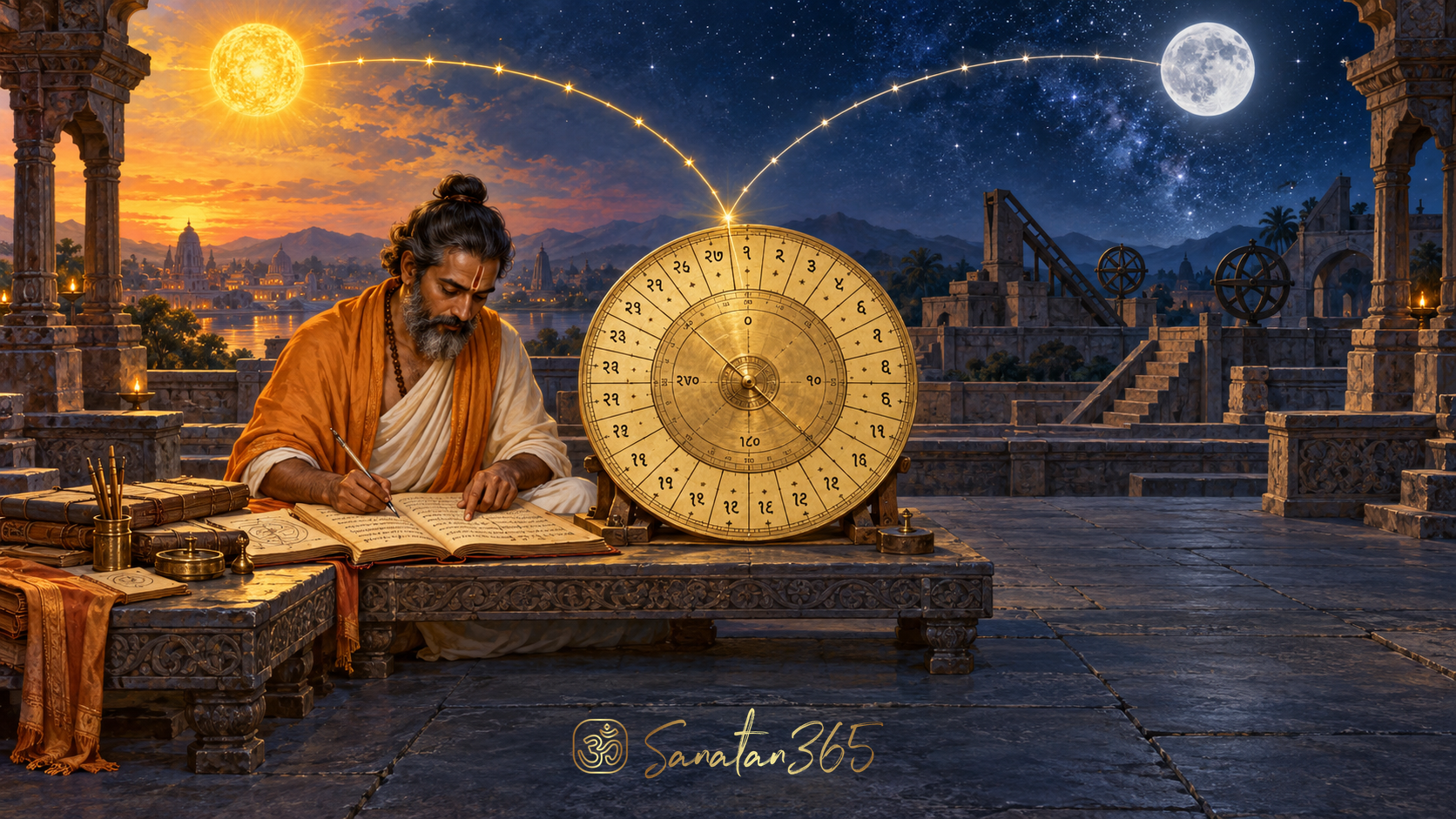
Understand the Sun–Moon calculation behind Panchang yoga, its 27-name cycle, ending times, and why it is different from yogic practice or a…
 Astrology
Karana Meaning: How to Read the Half-Tithi in a Panchang
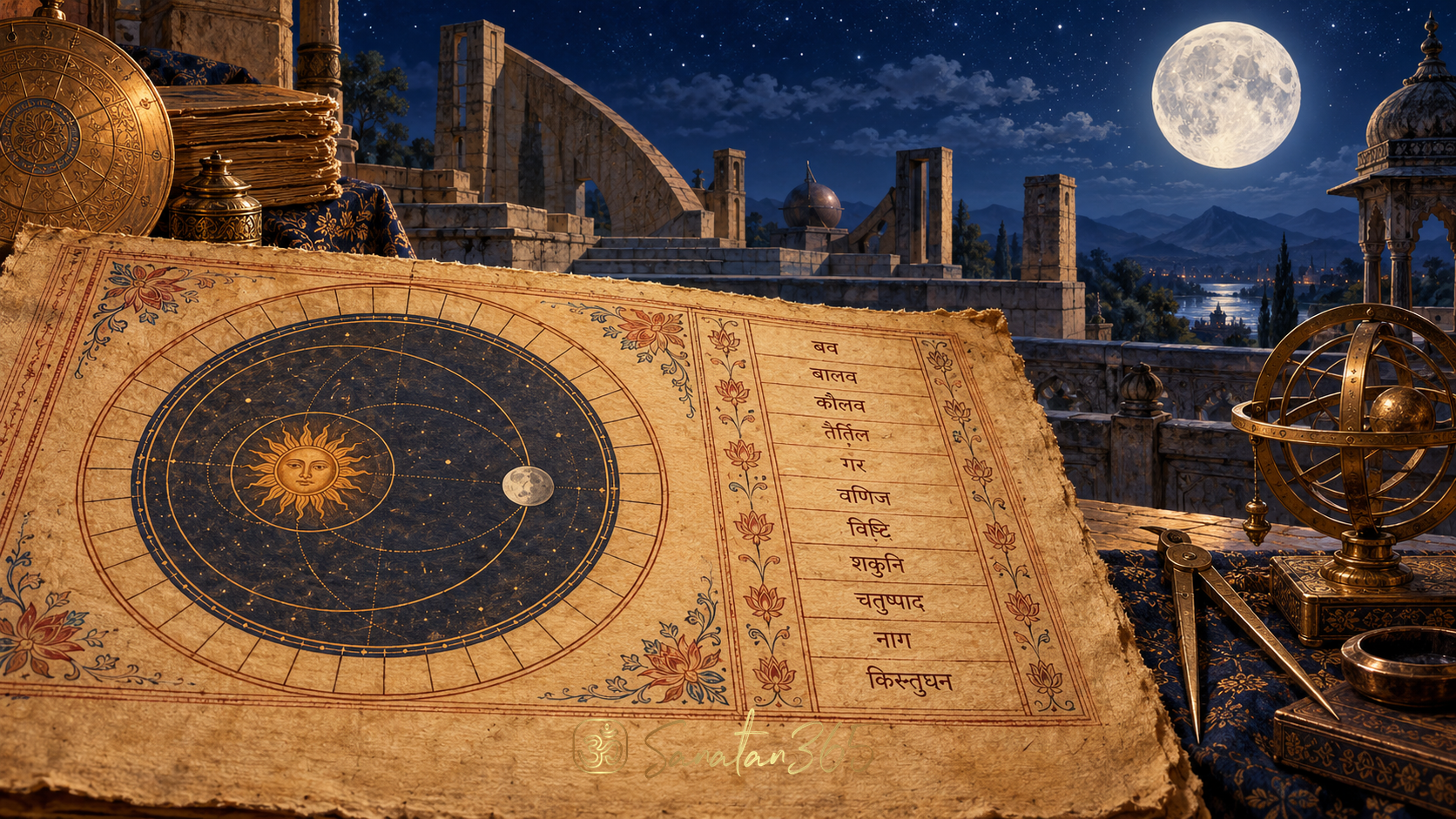
Understand the eleven karanas, their six-degree lunar measure, why they change within a day, and how to read timings without fear-based pre…
 Astrology
Rahu Kalam Meaning: Timing, Calculation, and Thoughtful Practice
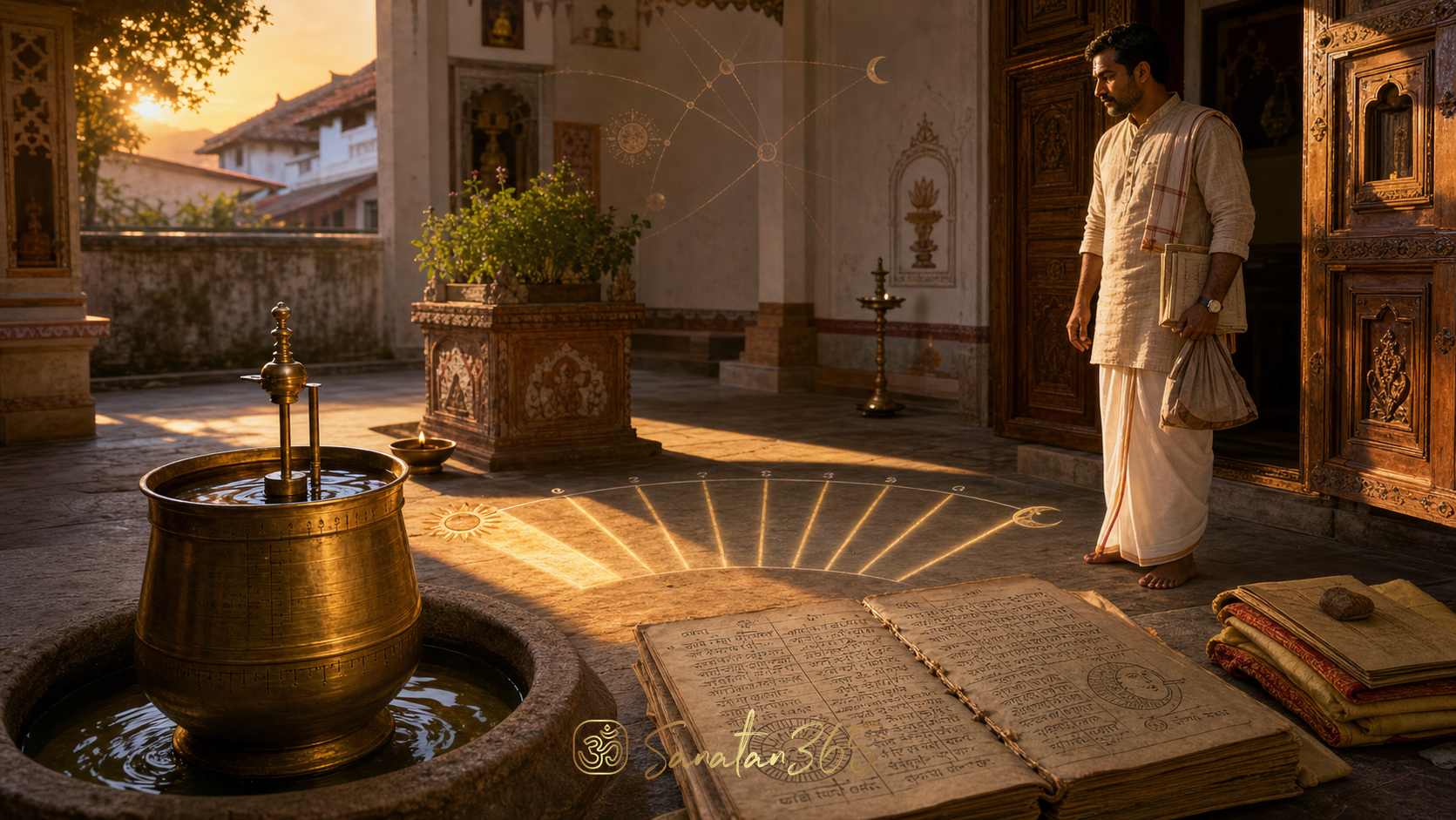
Rahu Kalam is a daily interval traditionally treated as unsuitable for beginning important worldly undertakings. Learn how it is calculated…

