Nakshatra Meaning: How Hindu Astrology Reads the Moon’s Sacred Map
Nakshatra meaning begins with the Moon. Learn how the 27 lunar mansions shape Hindu astrology, muhurta, temperament, and spiritual self-reflection.
A Hindu birth chart does not begin only with the Sun sign; it listens first to where the Moon was resting.
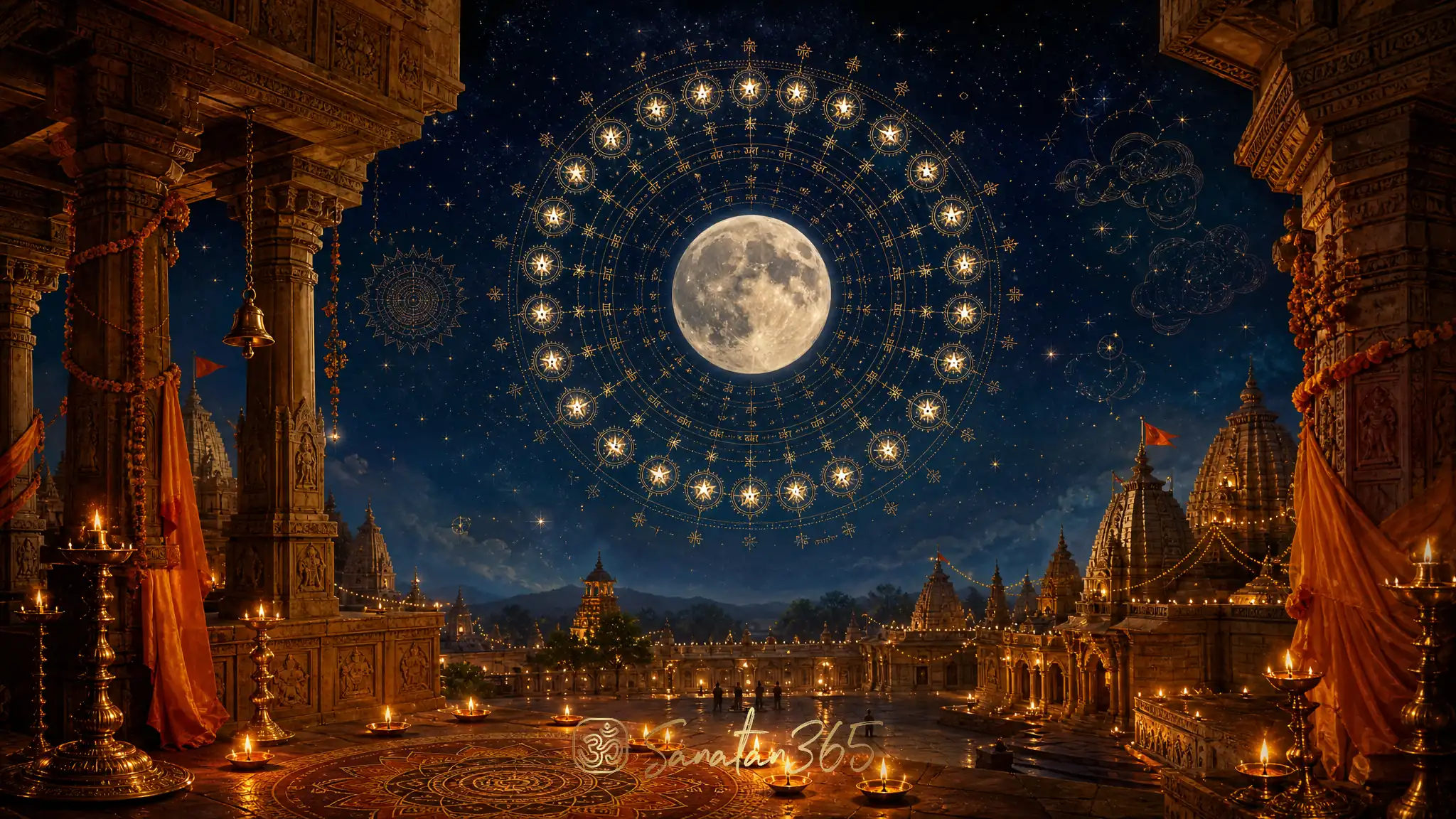
Nakshatra meaning begins with this lunar focus: a nakshatra (नक्षत्र, lunar mansion or star cluster) is one of the 27 sky divisions used in Hindu astrology to track the Moon’s movement. Each nakshatra marks roughly one day of the Moon’s monthly path and carries traditional associations with temperament, timing, deity symbolism, and spiritual reflection. In Jyotisha (ज्योतिष, the Hindu science of light and time), nakshatras help explain not fixed fate, but the subtle rhythm through which a person may understand tendencies, choose auspicious moments, and relate inner life to cosmic order.
What is Nakshatra meaning in Hindu astrology?
Nakshatra meaning is best understood as “the Moon’s sacred address.” The zodiac divides the sky into 12 rāśis (राशि, signs), but the nakshatra system refines that circle into 27 smaller lunar stations. Britannica describes lunar mansions as divisions of the ecliptic that represent positions the Moon occupies over successive days; in India, these are known as nakshatras and each spans 13°20′ of the ecliptic circle (Britannica).
This matters because Hindu astrology is deeply lunar. In many Indian families, a priest asking “What is your nakshatra?” is asking for the Moon’s position at birth, not merely a decorative detail. The Moon is traditionally associated with manas (मनस्, mind, feeling, and inner responsiveness). Because the Moon changes signs and nakshatras quickly, it gives a more personal and time-sensitive reading than the slower Sun-sign approach popular in modern newspaper astrology.
The standard system uses 27 nakshatras, though older references also preserve a 28th, Abhijit. The 27-fold system fits the Moon’s sidereal rhythm, with the Moon passing through the nakshatras over the course of a lunar month. Himalayan Academy’s overview notes that the 27 nakshatras are “star clusters” or “lunar mansions,” and that the Moon moves through them at about one per day, with ancient lists appearing in Vedic textual tradition such as the Taittiriya Samhita (Himalayan Academy).
For a beginner, this is enough: the rāśi tells a broad zodiacal field, while the nakshatra gives a finer lunar texture.
Key takeaway: Nakshatra meaning is the study of the Moon’s 27 sacred stations and how those stations are interpreted in Hindu astrology.
Why are there 27 nakshatras instead of only 12 zodiac signs?
The 12 rāśis divide the sky into large 30-degree segments. The 27 nakshatras divide the same circular path into smaller 13°20′ segments. This makes the system more granular. If the rāśi is a broad landscape, the nakshatra is the village, doorway, and local atmosphere within it.
Traditional Hindu astrology therefore reads both. Two people may share the same Moon sign but have different nakshatras, producing a different interpretive emphasis. For example, a Moon in Taurus may fall in Krittika, Rohini, or Mrigashira depending on its exact degree. Each nakshatra carries its own symbolic field, presiding deity, planetary lord, motivation, and temperament in classical practice.
The 27 divisions also support timing. A panchang (पञ्चाङ्ग, Hindu almanac) uses lunar day, weekday, nakshatra, yoga, and karana to evaluate the quality of time. That is why nakshatras appear in muhurta (मुहूर्त, auspicious timing) for weddings, housewarming rituals, naming ceremonies, travel beginnings, and other important life events. The goal is not superstition in the shallow sense, but harmony: to begin important actions when time is considered supportive.
The deeper insight is that Hindu time is qualitative, not only quantitative. Modern clocks tell how much time has passed. Jyotisha asks what kind of time is present.
Key takeaway: The 27 nakshatras give Hindu astrology a finer lunar map than the 12-sign zodiac alone.
How does your birth nakshatra shape interpretation?
A birth nakshatra is the nakshatra occupied by the Moon at the moment of birth. In many traditions, this is called janma nakshatra (जन्म नक्षत्र, birth star). It is used for naming syllables, compatibility checks, festival observances, and personal chart interpretation.
A careful reading does not reduce a person to a label. It looks at the birth nakshatra along with the full chart: rāśi placements, planetary strengths, dashā (दशा, planetary period), house positions, and yogas. Still, the Moon’s nakshatra is treated as psychologically important because it reflects instinctive response patterns: how a person receives emotion, forms attachment, seeks safety, and moves through uncertainty.
In traditional language, each nakshatra may be associated with:
- A devata or presiding deity: the symbolic intelligence behind that lunar field.
- A śakti (शक्ति, specific power): what the nakshatra is said to enable or express.
- A symbol: such as a horse’s head, chariot, drum, lotus, or blade of grass.
- A planetary ruler: used in dashā timing and interpretive layers.
- A motivation: dharma (purpose), artha (resources), kama (desire), or moksha (liberation).
These categories should be read as archetypal language, not mechanical prediction. A person born under a strong, sharp, nourishing, or contemplative nakshatra still has free will, family context, education, karma, and sadhana (साधना, disciplined spiritual practice). Hindu astrology at its best invites self-observation, not fatalism. Readers exploring chart foundations can also compare this with kundali-meaning-vedic-birth-chart.
A practical way to use janma nakshatra is to ask: What qualities does this symbol ask me to refine? What habit should become conscious? What form of devotion, service, study, or discipline helps this nature mature?
Key takeaway: A birth nakshatra can reveal traditional psychological and spiritual tendencies, but it should be read with humility and the whole chart.
How are nakshatras used in muhurta and daily decisions?
Nakshatras are not only birth-chart markers. They also help assess the quality of a day. In muhurta, astrologers look at the Moon’s current nakshatra to decide whether a moment supports a particular action.
Some nakshatras are traditionally considered more suitable for beginnings, travel, learning, healing, worship, artistic work, or stable commitments. Others may be treated cautiously for certain activities, depending on the action and chart context. This is why panchang-based families may check the nakshatra before fixing a wedding date or beginning a major rite.
For modern seekers, the healthiest use is not anxiety. It is rhythm. A person might use nakshatra awareness to:
- choose a calmer day for a sacred family ritual;
- align study, mantra, or vrata (व्रत, vow or disciplined observance) with lunar mood;
- understand why certain days feel inward, active, or unsettled;
- remember that human life is part of a larger cosmic calendar.
This approach is especially useful for diaspora families who want to preserve devotional timing without becoming overwhelmed by technical astrology. A panchang can become a bridge between tradition and everyday life: a reminder that even ordinary days have texture. For a related reflection on sacred counts and symbols, see hindu-numerology-meaning-sacred-numbers.
The caution is equally important. Nakshatra timing should not replace medical, legal, financial, or safety judgment. It can support spiritual timing, but it should not become a substitute for responsibility. Sanatan Dharma holds both: reverence for sacred time and clarity in worldly duty.
Key takeaway: Nakshatras guide muhurta by describing the quality of time, but wise practice keeps astrology supportive rather than fear-based.
What is the difference between a beginner and advanced nakshatra reading?
A beginner reading often stops at a list: “Your nakshatra is Rohini, so you are creative,” or “Your nakshatra is Ashwini, so you are quick.” These descriptions can be useful, but they become shallow if treated as personality entertainment.
An advanced reading asks better questions:
- Which pada (पाद, quarter) of the nakshatra is involved?
- What rāśi does that pada fall in?
- What is the condition of the Moon in the chart?
- Which planet rules the nakshatra, and how is that planet placed?
- What dashā period is active?
- Is the nakshatra being activated by current transits?
- Does the interpretation encourage dharma, or merely ego-confirmation?
Each nakshatra has four padas, giving 108 total quarters across the zodiac. This connects the nakshatra system symbolically with the sacred number 108, familiar from japa mala (जप माला, mantra-counting beads). The advanced view sees astrology not as isolated trivia, but as an integrated mandala of Moon, sign, planet, timing, and practice.
Most importantly, advanced reading becomes ethical. It avoids frightening language and simplistic guarantees. It does not tell someone they are doomed, superior, or spiritually fixed. Instead, it asks how knowledge of pattern can lead to better self-mastery.
This is where nakshatra study becomes valuable even for people who do not consult charts often. It teaches that identity is layered. Human beings are not one-line descriptions. A chart is not a cage; it is a map. And every map is useful only when it helps the traveler move with more awareness.
Key takeaway: Beginner nakshatra study identifies a birth star; advanced study integrates pada, Moon strength, planetary context, timing, and ethical guidance.
How can a modern seeker use Nakshatra meaning wisely?
Nakshatra meaning becomes most useful when it supports practice. A modern seeker can begin with three steps.
First, learn the janma nakshatra from a reliable panchang or chart calculation using accurate birth time, date, and location. If birth time is uncertain, avoid overclaiming. The Moon changes nakshatra roughly every day, so an uncertain time near a boundary can change the result.
Second, study the nakshatra as a mirror, not a verdict. Look for patterns that help self-understanding: emotional rhythm, devotional attraction, work style, relational needs, and repeating challenges. Keep what deepens honesty; leave what produces fear.
Third, connect insight to sadhana. If a nakshatra suggests restlessness, cultivate steadiness through daily mantra. If it suggests intensity, practice compassion. If it suggests artistic beauty, offer that talent in seva (सेवा, service). If it suggests analysis, balance study with bhakti (भक्ति, devotion).
This is the Sanatan spirit of astrology: cosmic pattern should lead back to dharma. It should make a person kinder, steadier, more truthful, and more aware of divine order. If astrology produces pride or anxiety, the interpretation has missed its purpose.
For families, nakshatra study can also preserve culture beautifully. Children may learn their birth star, naming syllable, and related story in the same way they learn a family gotra, festival ritual, or temple memory. The practice becomes identity rooted in reverence, not fear.
Key takeaway: Use nakshatra knowledge as a gentle mirror for self-reflection, timing, and spiritual discipline, never as fatalistic prediction.
FAQ
What is the simple meaning of nakshatra?
A nakshatra is a lunar mansion or star cluster used in Hindu astrology. The Moon moves through 27 nakshatras over a lunar month, and the nakshatra at birth is called janma nakshatra.
How many nakshatras are there?
The standard Hindu astrology system uses 27 nakshatras. Some older references also mention a 28th nakshatra, Abhijit, but most practical chart and panchang systems use 27.
Is nakshatra more important than zodiac sign?
In Hindu astrology, the Moon’s nakshatra is highly important because it gives a finer lunar reading than the broad zodiac sign. A full interpretation, however, considers both nakshatra and rāśi along with the entire chart.
Can nakshatra predict my future?
Nakshatra interpretation can describe tendencies, timing, and traditional patterns, but it should not be treated as guaranteed prediction. Wise Jyotisha supports self-awareness, dharma, and better decisions without fear or fatalism.
How do I find my birth nakshatra?
You need an accurate birth date, time, and place. A reliable Hindu panchang or Vedic astrology chart calculator can identify the Moon’s nakshatra at birth. If the birth time is uncertain, treat the result carefully.
The final lesson is simple: nakshatra meaning is not about shrinking life into a label. It is about seeing the Moon’s path as a sacred mirror, then using that mirror to live with more rhythm, humility, and dharma.
About the author
Sanatan365 Editorial
Bringing Sanatan Dharma to modern seekers through authentic, scripture-grounded content.
Related in Astrology
 Astrology
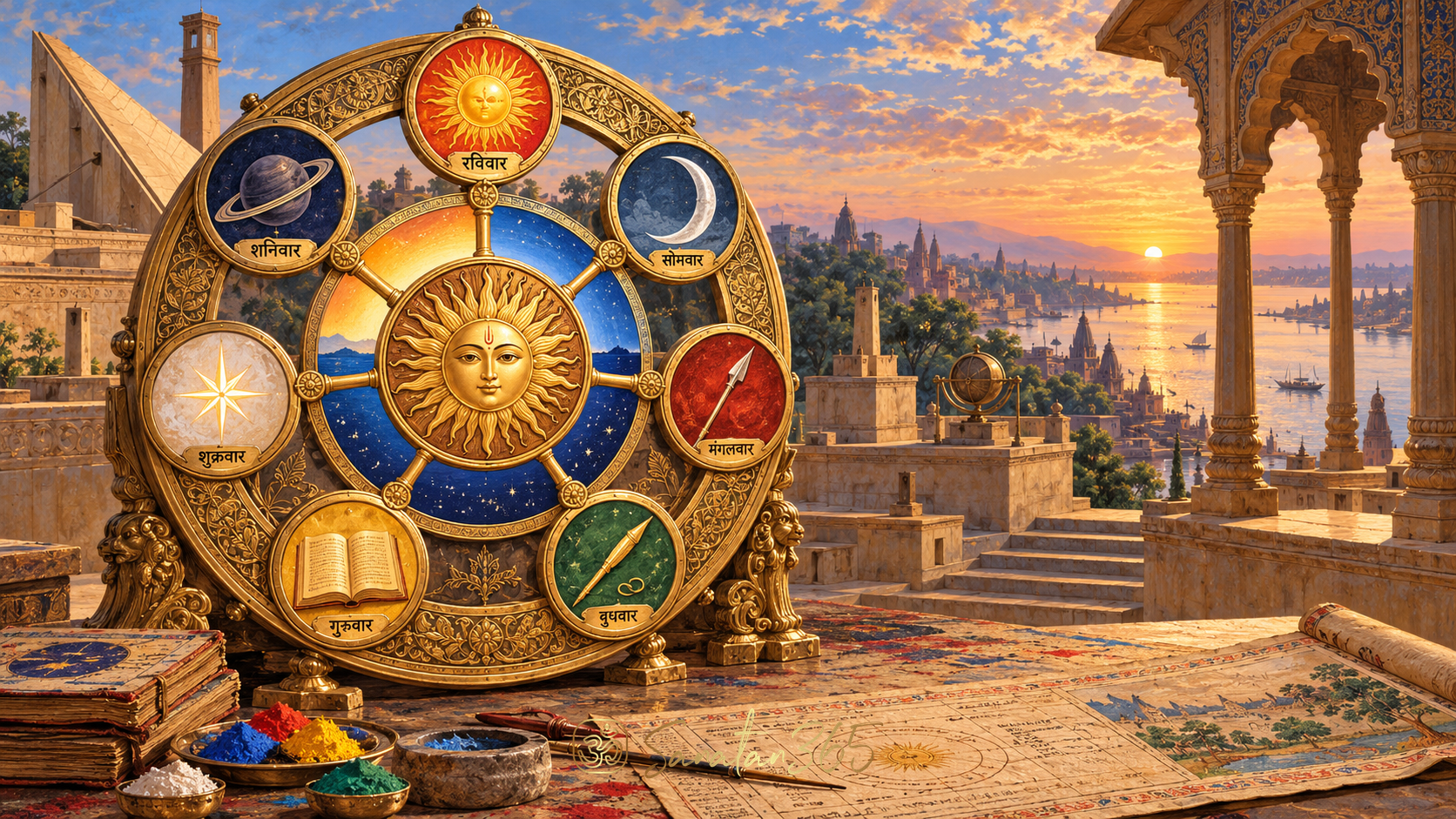
Vara Meaning: Seven Weekdays and the Sunrise-to-Sunrise Day
Vara is the weekday limb of a Hindu panchang. Read its seven planetary names, sunrise boundary and relationship with lunar dates without tr…
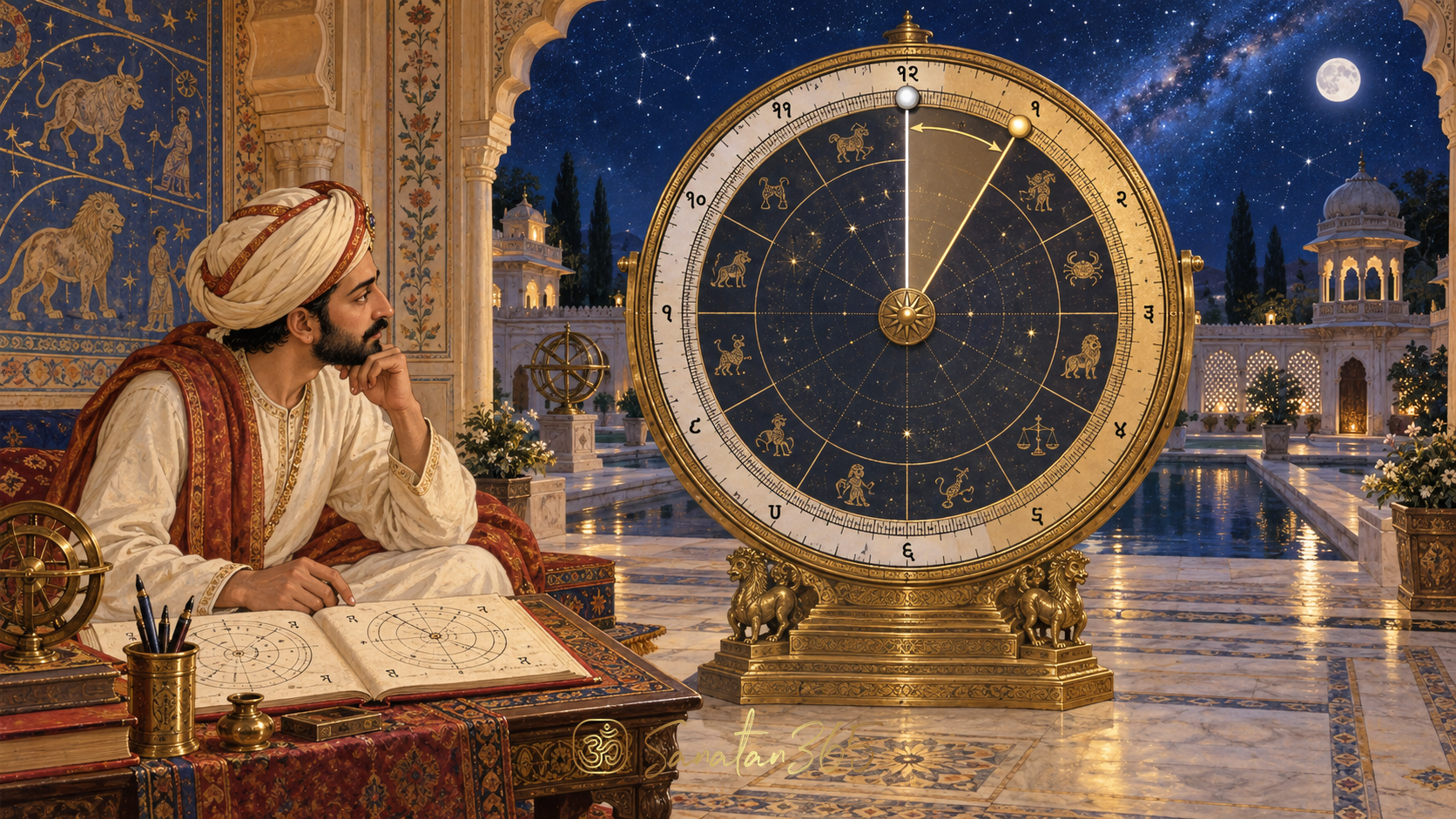 Astrology
Ayanamsha Meaning: Why Two Zodiac Charts Can Differ
Understand the zodiac reference offset, a simple longitude conversion and the settings to check when astrology charts disagree.
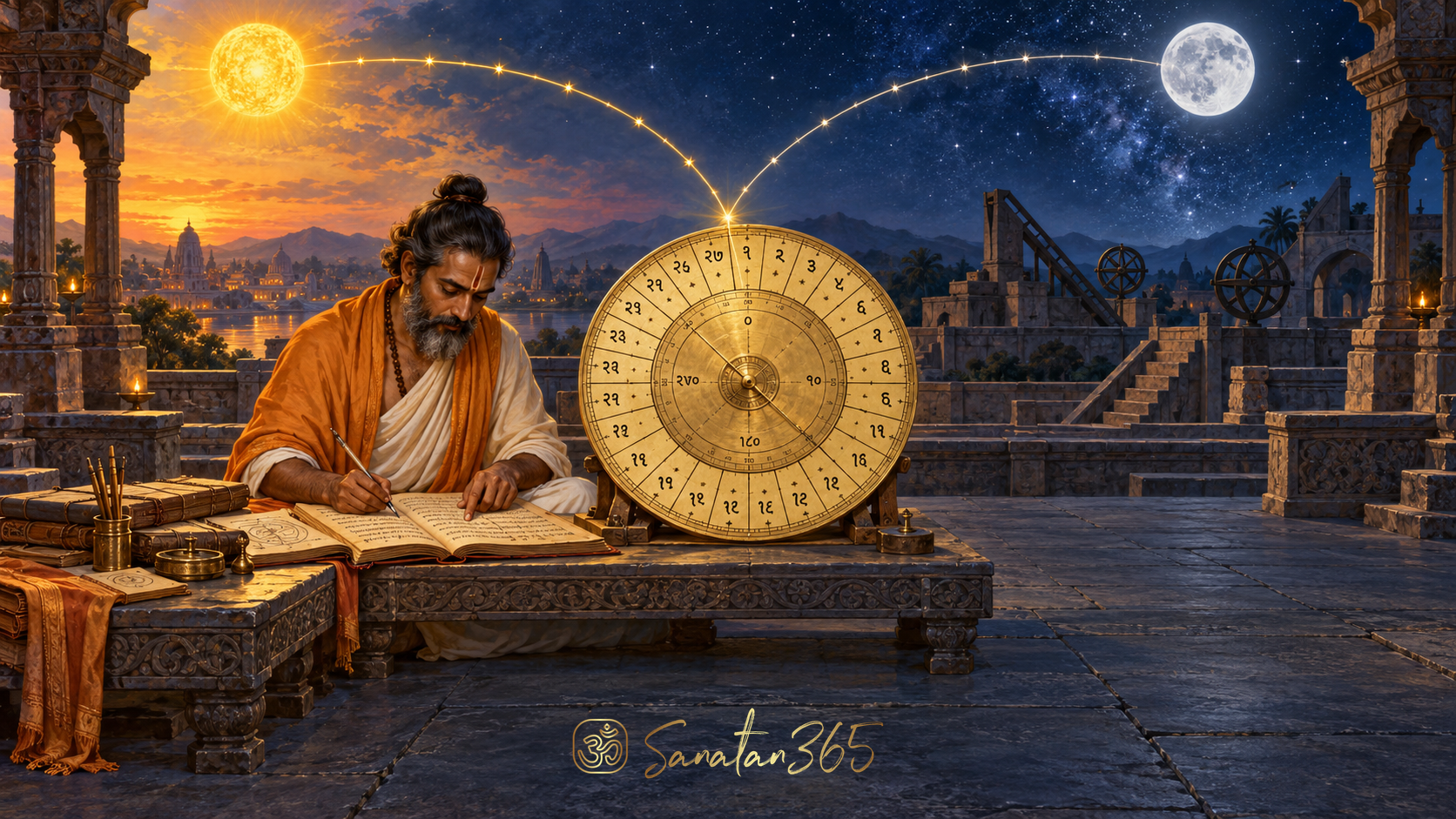 Astrology
Panchang Yoga Meaning: Reading the 27 Nitya Yogas
Understand the Sun–Moon calculation behind Panchang yoga, its 27-name cycle, ending times, and why it is different from yogic practice or a…