Nirjala Ekadashi 2026: Date, Meaning, Parana Time, and Safe Vrat Practice
Nirjala Ekadashi 2026 falls on June 25. Learn the meaning of the waterless Vishnu vrat, key timings, Bhima story, puja rhythm, parana, and safe practice.
The most demanding Ekadashi is not remembered for abundance, but for the refusal of even a sip of water.
Nirjala Ekadashi 2026 is observed on Thursday, June 25, 2026, with Ekadashi tithi beginning on June 24 evening and ending on June 25 night in standard Indian panchang listings. Nirjala means "without water": nir (निर्, without) and jala (जल, water). The vrat (व्रत, sacred vow) is dedicated to Lord Vishnu and is traditionally broken through parana (पारण, ritual fast-breaking) on Friday, June 26, 2026, after sunrise within the prescribed morning window.
For many Hindu families, this day carries a double lesson. It honors the discipline of fasting, but it also teaches compassion through water donation, food charity, and realistic care for the body. A sincere observance is never meant to become recklessness.
Why is Nirjala Ekadashi 2026 important?
Nirjala Ekadashi 2026 falls on Jyeshtha Shukla Ekadashi, the eleventh lunar day of the bright fortnight in the hot Indian summer season. General panchang references list the tithi from the evening of June 24 to the night of June 25, with parana on June 26 morning. Prokerala's Ujjain panchang listing gives the 2026 observance date as June 25 and places the tithi from 6:12 PM on June 24 to 8:09 PM on June 25, with parana on June 26 morning. The Economic Times and other current festival reports also list June 25, 2026 as the observance date.
The day is important because it condenses the spirit of all Ekadashi observances into one severe vow. Ekadashi itself is associated with sense-restraint, Vishnu worship, prayer, and a disciplined diet. Nirjala Ekadashi intensifies this by asking the devotee to abstain not only from grains and regular food, but also from water.
This is why the festival is also called Pandava Nirjala Ekadashi, Bhima Ekadashi, or Bhimseni Ekadashi. In devotional retellings, Bhima, one of the Pandavas, struggled to observe every fortnightly Ekadashi fast because of his powerful appetite. Sage Vyasa advised him to observe this one intense Nirjala vow with full devotion. The story does not praise hunger as a performance. It points to sincerity: even a person who finds regular discipline difficult can choose one vow and keep it with truthfulness.
Key takeaway: Nirjala Ekadashi is a Vishnu vrat of concentrated discipline, remembered through both austerity and humility.
What are the Nirjala Ekadashi 2026 date and parana timings?
The most searched practical question is simple: when should the vrat be observed and when should it be broken? For India-based readers using common panchang references, Nirjala Ekadashi is observed on Thursday, June 25, 2026. The fast is broken on Friday, June 26, 2026 during the morning parana window after sunrise.
Commonly cited 2026 timings include:
- Ekadashi tithi begins: June 24, 2026, evening, around 6:12 PM IST in Ujjain-based listings.
- Ekadashi tithi ends: June 25, 2026, night, around 8:09 PM IST.
- Parana date: June 26, 2026.
- Parana window: after sunrise on June 26, with panchang sites listing a morning window around 5:25-8:28 AM depending on location.
- Dwadashi tithi ends: June 26, 2026, night in widely cited listings.
Because Hindu festival timing depends on local sunrise and lunar calculations, devotees should check a trusted local panchang for their city, especially outside India. A family in Varanasi, Chennai, London, New Jersey, or Singapore may follow the same festival spirit, but the exact parana window should be aligned with the local calendar used by that community.
The word parana matters. It is not casual eating after hunger becomes uncomfortable. It is the proper completion of the vrat. In many traditions, breaking the fast at the right time is treated as part of the vow itself.
Key takeaway: Observe Nirjala Ekadashi on June 25, 2026, and confirm your local parana window for June 26 before beginning the vrat.
What does the waterless vrat teach?
At the literal level, Nirjala Ekadashi is a waterless fast. At the spiritual level, it is a lesson in desire, dependence, and remembrance. The body asks for water. The mind asks for ease. The vow asks the devotee to remember Lord Vishnu in the middle of that demand.
This does not make water impure. Hindu practice treats water as sacred: Ganga jal, kalash water, abhisheka water, and charanamrita all carry devotional meaning. Nirjala Ekadashi becomes powerful precisely because water is precious. To give up water for a short, disciplined period is to notice how much life depends on divine support.
The summer context deepens the teaching. Jyeshtha often falls in intense heat across North India, while many regions are waiting for monsoon relief. That is why charity on Nirjala Ekadashi often includes water pots, cooling drinks, hand fans, umbrellas, fruits, and help for people exposed to heat. The person who restrains personal thirst is also asked to notice the thirst of others.
This is a crucial balance. A strict vrat without compassion becomes ego. A relaxed observance without awareness can become habit. The ideal sits between them: disciplined, reverent, and kind.
For householders, the day may include:
- Early morning bath and sankalpa (संकल्प, sacred intention).
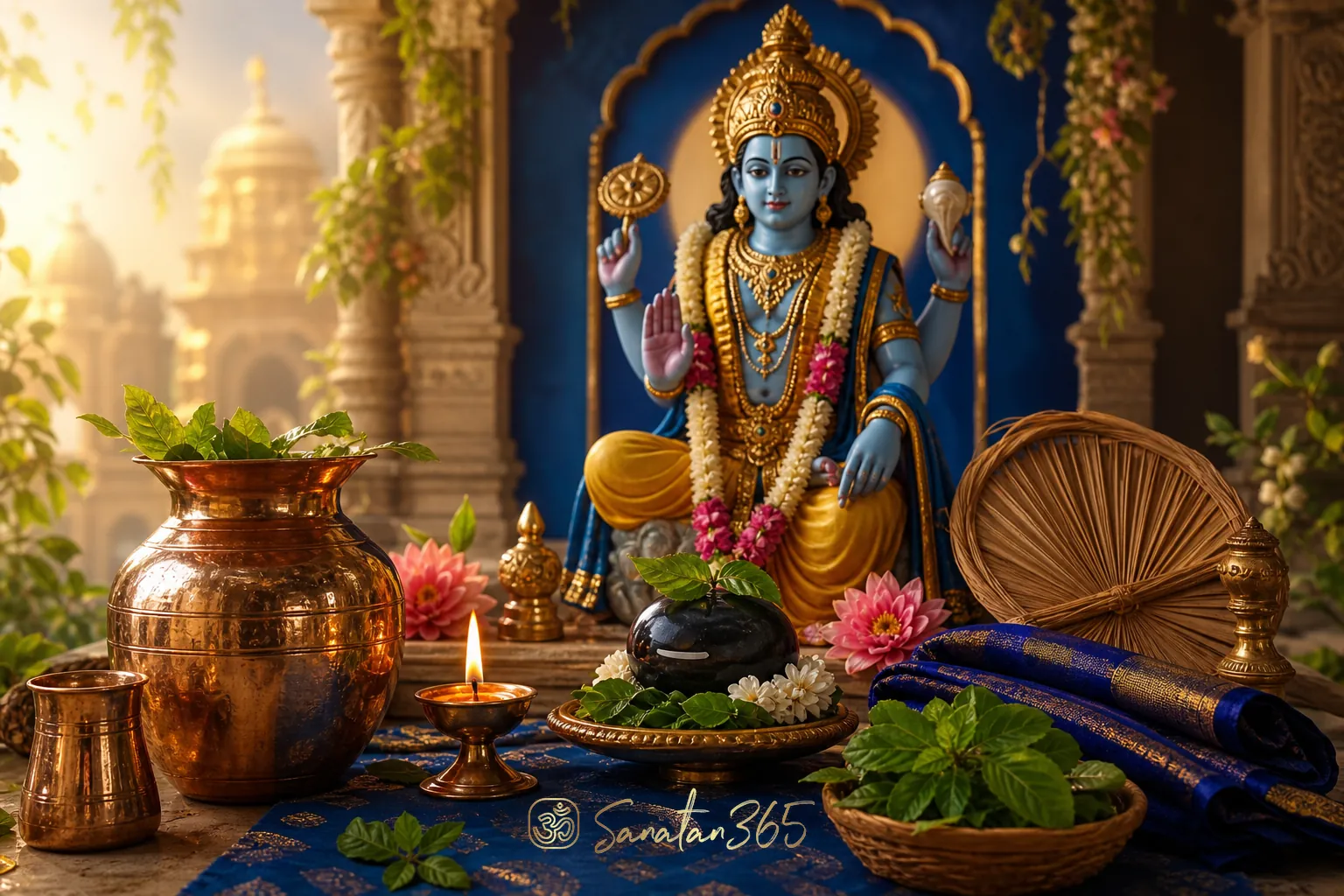
- Vishnu puja with tulsi leaves, diya, incense, and simple offerings.
- Recitation of Vishnu Sahasranama, Om Namo Narayanaya, or the Hare Krishna maha-mantra according to family tradition.
- Avoidance of grains and indulgent foods.
- Charity of water, fruits, umbrellas, or cooling aid.
- Quiet evening prayer and preparation for next morning parana.
Key takeaway: The waterless vow is not only about refusing water; it is about remembering the sacredness of water and serving life with humility.
Who should avoid a strict Nirjala fast?
The word "safe" belongs in any responsible Nirjala Ekadashi guide. A waterless fast in late June can be physically demanding. Children, elderly people, pregnant or breastfeeding women, people with diabetes, kidney issues, heart conditions, heat sensitivity, eating disorders, medication schedules, or any serious health concern should not attempt a strict waterless fast without medical guidance.
This is not a weakness in devotion. Dharma (धर्म, sustaining order and right conduct) includes care for the body through which worship is performed. If a strict waterless vrat risks harm, a devotee can observe according to capacity.
Many families follow alternative forms of Ekadashi observance:
- Phalahar: fruits, milk, or simple sattvic foods.
- Jalahar: water-only or water with minimal fruit-based support.
- Grain-free fasting: avoiding rice, wheat, pulses, onion, garlic, and heavy foods while continuing necessary hydration.
- Mantra-focused vrat: increased japa, Vishnu worship, and charity without physical strain.
- Seva-focused observance: donating water and food, serving elders, or supporting temple/community work.
The inner question is not "How severe can this become?" It is "Can this vow make the heart steadier, kinder, and more truthful?" For some devotees, the sincere answer is a strict Nirjala fast. For others, it is a moderated fast done with prayer and health awareness.
A good rule for families is simple: never shame someone for adapting the vrat. Guide them toward devotion, not fear. Lord Vishnu is approached through surrender, not through unsafe competition.
Key takeaway: A strict Nirjala fast is optional and demanding; a safe, capacity-based observance with Vishnu remembrance is spiritually valid for many devotees.
How can families observe Nirjala Ekadashi at home?
A home observance does not need to be elaborate. It needs clarity. The family can decide the fasting level, confirm the local parana time, and keep the day centered on Lord Vishnu rather than on food debates.
A simple home rhythm can look like this:
- Before sunrise or in the morning, bathe and make a sankalpa.
- Place a clean image or murti of Lord Vishnu, Krishna, Rama, Venkateswara, or Narayana on the altar.
- Offer tulsi, flowers, sandal paste, diya, and incense.
- Recite a Vishnu mantra, Vishnu Sahasranama, or a short chapter from the Bhagavad Gita.
- Keep speech gentle and avoid unnecessary anger, gossip, or argument.
- Donate water, fruits, or cooling aid to someone in need.
- Sleep early if possible, or keep the evening quiet with bhajan and japa.
- Break the fast next morning during parana after prayer.
For children, the day can be taught through compassion rather than austerity. They can help fill water bowls for guests, prepare fruit for donation, listen to the story of Bhima, or chant a short mantra. This protects the festival from becoming merely a difficult adult rule.
Diaspora families may adapt around school and work schedules. A child in California, a student in London, or an office worker in Dubai may not be able to keep the same rhythm as a retired devotee in Vrindavan. The shared principle remains Vishnu smarana (स्मरण, remembrance), restraint, gratitude for water, and charity.
Key takeaway: The strongest home observance is simple, safe, disciplined, and centered on Lord Vishnu.
What is the connection between Bhima and Nirjala Ekadashi?
The Bhima story gives the vrat its human face. Bhima is not presented as weak because he loves food. He is presented as honest. He knows his limitation and asks for a way to honor Ekadashi sincerely.
Sage Vyasa's instruction gives him one concentrated vow: observe Nirjala Ekadashi with devotion. The story is why the festival is also called Bhima Ekadashi or Pandava Nirjala Ekadashi. It allows everyday devotees to see themselves in the tradition. Not everyone is naturally steady in every discipline. The path still opens when one takes one vow seriously.
There is also a lesson for modern readers. Spiritual life often fails when people try to imitate someone else's capacity. One person can fast strictly. Another can serve quietly. Another can chant deeply. Another can give water, fruit, or time. Bhima's example suggests that truthfulness about one's nature can become the beginning of discipline.
This is why the vrat is not merely a test of thirst. It is a test of intention. A person may fast without water and still spend the day in irritation. Another person may drink water for medical reasons but spend the day in prayer, charity, and self-restraint. The tradition honors discipline, but it also asks for bhava (भाव, devotional feeling).
Key takeaway: Bhima's story makes Nirjala Ekadashi practical: know your capacity, take a clear vow, and keep it sincerely.
FAQ
When is Nirjala Ekadashi 2026?
Nirjala Ekadashi 2026 is observed on Thursday, June 25, 2026 in standard India-based panchang listings. The Ekadashi tithi begins on June 24 evening and ends on June 25 night, with parana on June 26 morning.
What is Nirjala Ekadashi parana time in 2026?
Parana is on Friday, June 26, 2026, after sunrise within the prescribed morning window. Common listings place it roughly between 5:25 AM and 8:28 AM IST depending on city and panchang method. Check a local panchang for your exact place.
Can everyone do a waterless Nirjala fast?
No. Children, elderly people, pregnant or breastfeeding women, and anyone with health concerns should avoid a strict waterless fast unless medically cleared. Devotees may observe through a moderated Ekadashi vrat, mantra, puja, and charity.
Why is Nirjala Ekadashi called Bhima Ekadashi?
It is linked to the story of Bhima, who found regular Ekadashi fasting difficult and was advised by Sage Vyasa to observe one intense Nirjala Ekadashi vow with devotion. This is why it is also called Pandava Nirjala Ekadashi or Bhimseni Ekadashi.
What should be donated on Nirjala Ekadashi?
Traditional charity includes water, earthen pots, hand fans, umbrellas, fruits, cooling drinks, food, and clothing. The spirit is especially connected to relieving thirst and hardship during the hot season.
The single key takeaway: Nirjala Ekadashi 2026 is a Vishnu-centered vrat of restraint, water gratitude, and compassion, best observed with a clear vow, local parana timing, and honest care for one's health.
About the author
Sanatan365 Editorial
Bringing Sanatan Dharma to modern seekers through authentic, scripture-grounded content.
Related in Festivals
 Festivals
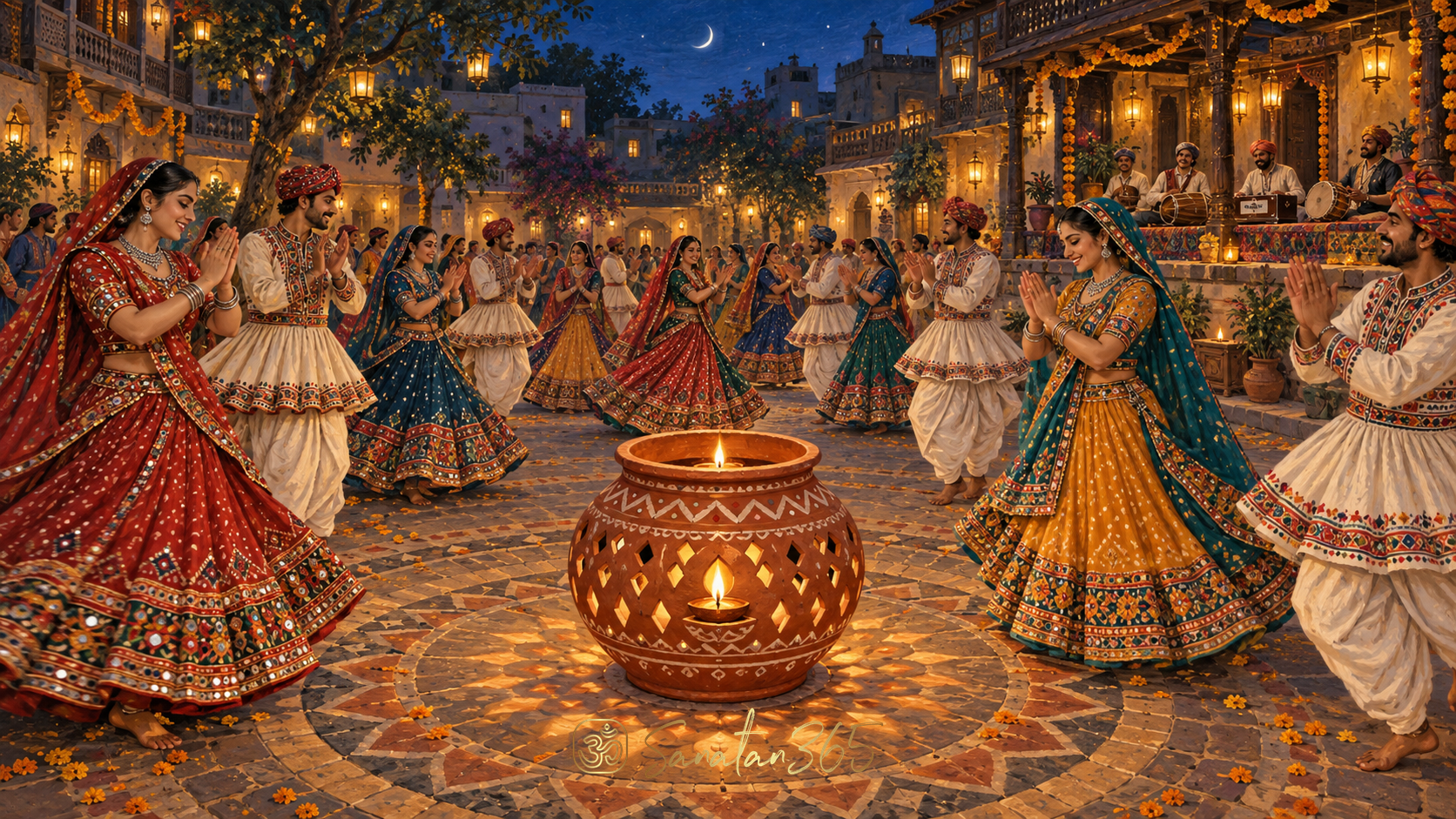
Garba Meaning: The Lamp at the Heart of Navratri
Garba is a Gujarati devotional dance associated with Navratri. Its central lamp, shared circular rhythm and reverence for Goddess Amba expl…
 Festivals
Golu Meaning: Navratri Dolls, Living Stories, and Hospitality
Understand Navratri Golu through its handmade dolls, regional names, family stories and welcoming home visits, with thoughtful preparation…
 Festivals
Sharad Navratri 2026: Dates, Nine Nights, and Devotion at Home
Understand Sharad Navratri 2026, its October dates, the meaning of nine nights, regional traditions, and a thoughtful home observance witho…