
Shreyas and Preyas Meaning: What Makes a Choice Worthwhile?
The Katha Upanishad asks where a choice leads. Yama’s teaching to Nachiketas gives the good and the pleasant a more demanding meaning than easy versus hard.
An attractive offer can answer almost every wish a person has, while leaving the question that brought them there untouched.
The shreyas and preyas meaning in the Kaṭha Upaniṣad (कठ उपनिषद्, the Upanishad of the Kaṭha tradition) concerns the different ends a choice can serve. Śreyas (श्रेयस्, the good or what leads to true welfare) and preyas (प्रेयस्, the pleasant or immediately dear) both draw a person toward action. Yama asks the thoughtful person to examine them. Nachiketas has already shown why that examination matters by declining offers that would have diverted him from the knowledge he sought.
What is the shreyas and preyas meaning?
The teaching begins in 1.2.1 with a distinction between the good and the pleasant. The verse says that they serve different ends. Its emphasis falls on what a choice leads toward. Someone may desire both, but their attractiveness alone cannot settle whether they carry the person in the same direction.
That detail gives the words more depth than a contrast between a difficult task and an easy reward. “Good” has to be understood in relation to the aim of this conversation. Nachiketas wants knowledge about what lies beyond death, and Yama is preparing to teach him. The good is connected with that inquiry and its fulfillment. The pleasant becomes a diversion when its promise substitutes for the answer he has asked for.
The complete Katha Upanishad text and commentary makes this movement visible. The first section presents the offers and Nachiketas’ replies. The next section names the distinction that those replies have demonstrated. The reader meets a choice in action before meeting the terms that explain it.
“True welfare” can be a useful English rendering of śreyas because it asks the reader to think about the whole direction of a life. “Pleasant” identifies the pull of what is welcome or desirable now. Those meanings give a person a question to ask about an appealing option. What end does this serve, and is that the end being sought?
Key takeaway: The distinction asks what an attractive choice leads toward and whether that is the aim that matters.
Why does Yama teach this after making his offers?
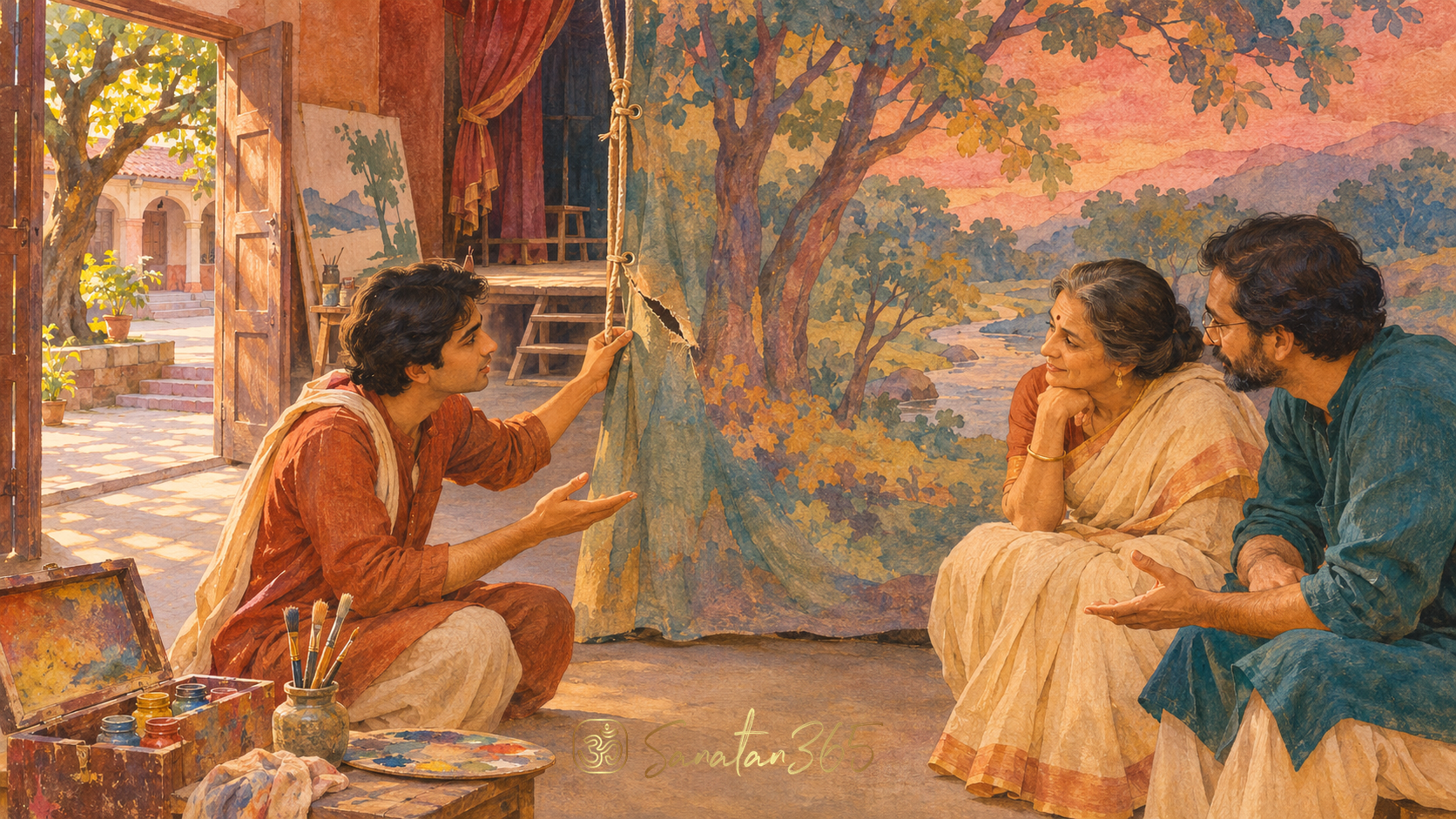
Before this teaching, Yama offers Nachiketas long life, descendants, wealth, possessions and pleasures. The scale matters. A small reward would make refusal easy to admire without asking much of the reader. These offers encompass the kinds of things that could occupy an entire life.
Nachiketas replies by considering their limits. Pleasures pass, the capacity to enjoy them passes, and even a long life has an end. His original question remains. He wants the teaching for which he came, and he asks Yama to keep the promised attractions. The scene gives his refusal a clear reason. He has compared the offers with the question he is trying to answer.
The exchange also shows a listener who pays attention to what is being offered. Nachiketas does not simply announce that he dislikes possessions. He understands the promise and examines whether it reaches his purpose. That makes his response more searching. A reward can be genuinely desirable and still fail to address the need that brought someone to a teacher.
In Sri Aurobindo’s translation of the Katha Upanishad, the opening of the second section then names the good and the pleasant and describes the thoughtful person’s examination. The teaching emerges from the conversation itself. The distinction has a voice, a setting and a demand before it becomes a pair of terms to memorise.
Readers who want the wider narrative can turn to the story of Nachiketas and his questions. Here the focus is narrower. It concerns the reason his answer to Yama’s offers is relevant to the knowledge that follows.
Key takeaway: Nachiketas judges the offers against his original question. Yama’s teaching explains the judgment he has already shown.
What does the thoughtful person examine?
Verse 1.2.2 describes someone who considers the two and distinguishes between them. Dhīra (धीर, thoughtful or discerning) names the person capable of that examination. The person has to perceive more than the immediate attraction. Their task is to see the relation between what is offered and the end it serves.
Three questions help a reader follow the scene:
- What is the attraction promising?
- How long can that promise hold?
- Does fulfilling it answer the question that matters here?
In Nachiketas’ case, the questions are unusually clear. Long life extends the time available, yet his question concerns what remains beyond its limit. Wealth supplies possessions, yet the inquiry asks about a reality that further possession cannot establish. The mismatch becomes visible once the promised result and the intended aim are put side by side.
The same reading can deepen how people understand distraction. A distraction can be an excellent activity whose goodness belongs to a different purpose. Reading a thoughtful book may be valuable. Reading it during a conversation in which someone has asked for full attention carries a different meaning. The worth of the book alone cannot tell the person whether that is the right moment to open it.
That example is a contemporary application of the distinction. It helps make the relation of means and ends easier to see. The Upanishadic setting remains a demanding inquiry into knowledge and the self. Keeping its purpose in view prevents the terms from becoming labels for whatever habit someone already likes or dislikes.
The Gita’s account of four distinctions in judgment offers another way to study discernment. The Katha’s question here is more specific. It asks whether the pleasant draws the seeker toward the intended end or draws attention away from it.
Key takeaway: Discernment compares the promise of an option with the purpose it is supposed to serve.
Does the good always have to feel unpleasant?
The teaching gives no simple rule that the most uncomfortable option must be best. Its starting point is the difference in ends. A hard action can be chosen for praise, rivalry or a wish to appear unusually disciplined. Difficulty by itself says little about the purpose being pursued.
Likewise, an ordinary joy can have a fitting place. A family meal can express care, and music can be part of attentive worship. The relevant question is how the action stands in relation to the aim. These everyday examples extend the reader’s reflection. They should not replace the sharper Upanishadic distinction between knowledge and the attractions that can divert the seeker from it.
Consider a student who likes collecting beautiful editions of a text. The books can give pleasure and support study. If collecting continually replaces reading, the activity begins to serve a different end from the one used to justify it. The issue becomes clearer when the student asks what happened at the end of the afternoon. Was a difficult passage understood more carefully, or was a new object acquired and put on a shelf?
This is a useful place to notice how quickly the mind can defend an attractive action with the language of a worthy purpose. The student can describe every purchase as preparation for study. The question remains whether study is taking place. A small amount of honest observation can make the answer available without a dramatic declaration about giving everything up.
The word “pleasant” thus needs careful handling. It points toward what draws and satisfies a desire. The scene asks whether such satisfaction can stand in for the knowledge being sought. Nachiketas’ reply has force because he sees that it cannot answer his particular inquiry.
Key takeaway: Judge the end being served. Discomfort alone cannot establish the worth of an action.
How can this distinction deepen everyday reflection?
A reader can begin with an activity already described as preparation for something important. The intention may be to study, to listen, to complete a piece of work or to serve another person. Write that aim in one sentence, then name the activity currently occupying the time set aside for it.
The exercise becomes useful when the two descriptions are specific. “Learning” can justify almost any reading. “Understanding the first two verses of this section” gives the reader something observable. A person can then ask whether the notes, purchases or discussions of the past week brought them closer to that understanding.
The result may be reassuring. The attractive activity may support the aim very well. Someone who enjoys listening to a recording might be gaining a clearer sense of how a passage is recited. Pleasure and purpose can meet within that activity. In another case, the same recording may be playing while attention is elsewhere, and the listener may discover that they remember little of the passage.
A modest adjustment follows from the observation. The learner can read the two verses before looking for a new edition, or give one recording full attention before adding another to a list. The point is to make the relation between activity and purpose more honest. This is an editorial exercise for ordinary reflection, with a limited scope. Nachiketas’ inquiry concerns a much larger end, and a small study habit should be understood in that proportion.
There is another question worth leaving open on the page. What would be lost if the attractive option were accepted? In the story, the loss would be the inquiry itself, displaced by the very abundance meant to make refusal difficult. In a small daily exercise, the loss might be one undistracted hour of reading or an opportunity to hear somebody out. Naming that cost makes the proposed exchange more visible.
The final step is to return to the story. Read Yama’s offer, then read Nachiketas’ reason for declining it. His answer remains directed toward his question. That steadfast relation between aim and response gives the terms their life. The reader can hear why Yama finds him ready to be taught.
Key takeaway: Name the purpose, observe what the activity actually serves, and use the distinction to bring the two into a clearer relation.
The good and the pleasant are easy words to remember. The work begins when a person examines what each is promising. Nachiketas preserves the question that matters to him, and the teaching opens because he has kept that question in view.
FAQ
What do shreyas and preyas mean?
Śreyas means the good or what leads to true welfare, and preyas means the pleasant or immediately dear. In Katha Upanishad 1.2.1–2, the distinction concerns their different ends and the thoughtful person’s ability to examine them.
Why does Nachiketas refuse Yama’s offers?
He considers the limits of long life, wealth and pleasures and maintains his request for the knowledge he originally sought. The attractive offers do not resolve that inquiry.
Does preyas mean every enjoyable activity is wrong?
The verses distinguish the pleasant as an aim that can divert the seeker from the good. In everyday reflection, it helps to ask what an enjoyable activity serves. The original teaching remains grounded in Nachiketas’ pursuit of knowledge.
Is shreyas simply delayed gratification?
The teaching goes further than waiting longer for a reward. Nachiketas questions whether the reward offered can answer his inquiry at all. Śreyas concerns the end worth seeking, as well as the discipline involved in choosing it.
About the author
Sanatan365 Editorial
Bringing Sanatan Dharma to modern seekers through authentic, scripture-grounded content.
Related in Wisdom
 Wisdom
Bhagavad Gita 18.30 Meaning: Four Tests of Discernment
Read Krishna’s four pairs in Bhagavad Gita 18.30 and see how they distinguish action, duty, fear and freedom.
 Wisdom
Apaisunam Meaning: Speaking About Others with Care
Read apaisunam in Gita 16.2 through the words beside it, then practise describing a concern without turning one person into a story about t…
 Wisdom
Amanitvam Meaning: Humility That Makes Learning Possible
The Bhagavad Gita places humility among the qualities of knowledge. Learn what it means to receive correction, acknowledge skill and make r…

