Airavatesvara Temple Darasuram: Shiva, Stone, and Living Chola Art
Explore the Airavatesvara Temple at Darasuram as a living Shiva shrine, from its Chola stonework to the devotional rhythms that continue today.
A stone temple can be studied as an achievement of design and still be entered as a place of prayer. At Darasuram, those two ways of seeing meet in unusually fine detail.
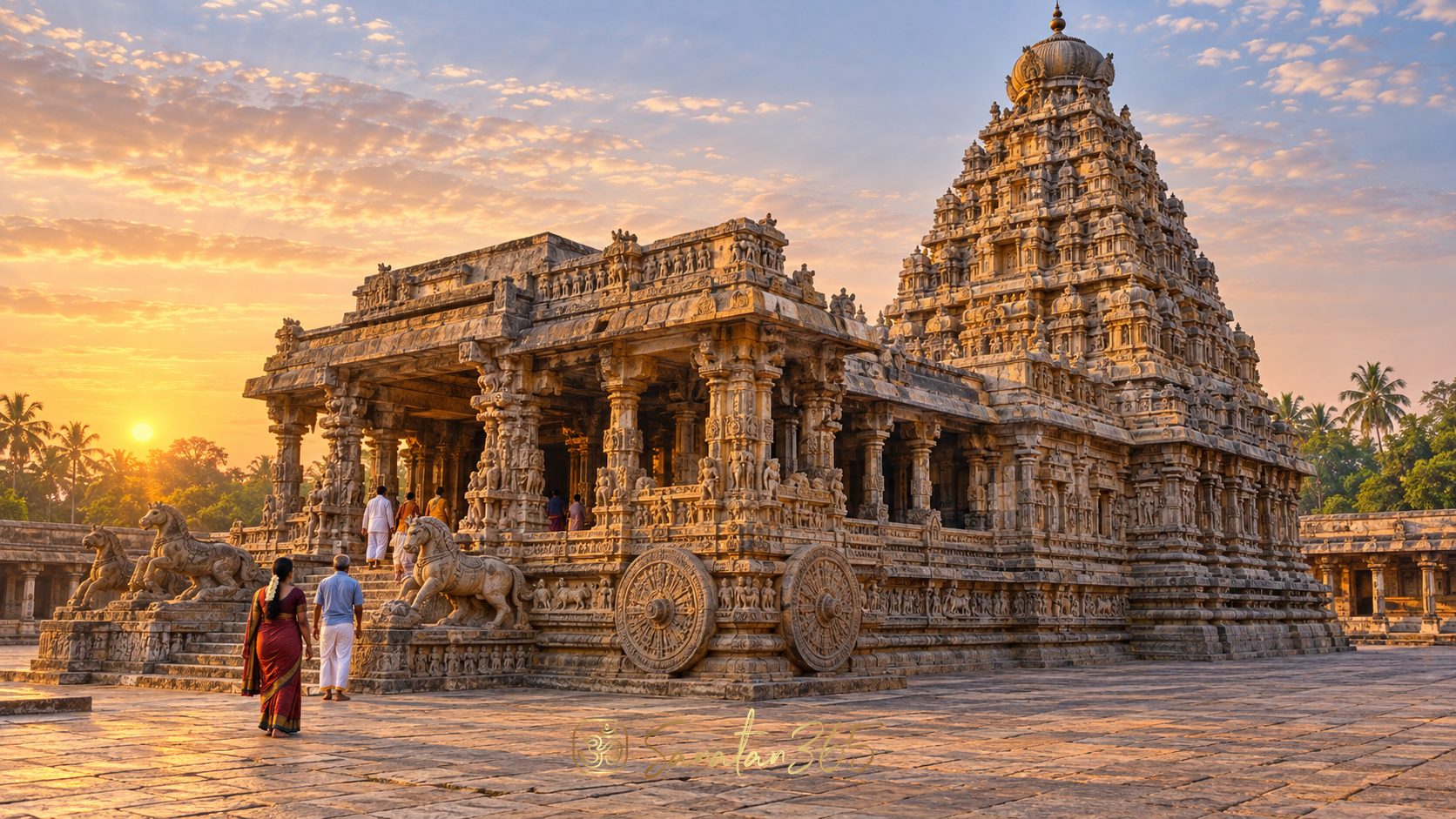
Airavatesvara Temple at Darasuram is a Shiva shrine built under the Chola ruler Rajaraja II in present-day Tamil Nadu. It is one of UNESCO's Great Living Chola Temples, alongside the temples at Thanjavur and Gangaikondacholapuram. Its sculpted halls, compact tower, and continuing worship make it more than a preserved monument: the building is part of an ongoing devotional life. UNESCO World Heritage Centre describes the three temples together as testimony to Chola achievement in architecture and art, while stressing the continuity of ritual traditions.
What is special about Airavatesvara Temple Darasuram?
Darasuram's temple rewards slow looking. The monumental Chola temple at Thanjavur may first impress through height; Airavatesvara offers another experience, one of concentrated detail. UNESCO records its vimana (vimāna, the tower above the sanctum) as approximately 24 metres high. The figure helps orient a visitor, but it does not explain why the space feels so richly composed. The relationship among tower, pillared halls, stone surfaces, and sculptural narratives does that work. UNESCO identifies the complex as an important example of the Chola period's architectural and sculptural excellence.
The temple is dedicated to Shiva as Airavatesvara. The name connects the shrine with Airavata, the elephant associated with Indra in Hindu narrative, as Tamil Nadu Tourism’s temple account notes. That association gives the place a devotional identity, although local tellings may vary. A visitor need not treat every sculpted detail as an illustration of that one story. The stonework supports many kinds of sacred attention: to Shiva, to the stories of devotees, and to the skill of the craftspeople whose work still shapes the route toward worship.
The designation Great Living Chola Temples matters. These are not simply three adjacent stops on a heritage checklist. UNESCO says that their temple worship and ritual traditions continue daily, weekly, and annually within the surrounding communities. To call the sites living is to recognise people who continue to offer prayer, maintain practice, and gather there, not merely the survival of old stones. UNESCO's living-heritage account is a useful corrective to an exclusively architectural description.
Key takeaway: Darasuram stands apart through the intimacy and precision of its Chola sculpture, while remaining an active Shiva shrine.
How did Chola builders shape the temple?
The temple's history belongs to the later Chola period. UNESCO attributes the Darasuram complex to Rajaraja II, placing it in the twelfth-century setting of a dynasty whose temple-building practices united royal patronage, specialised crafts, and devotional institutions. That attribution gives us a reliable historical frame; it should not be stretched into claims that a single ruler personally designed each image or that every present feature survives unchanged. Buildings have histories of maintenance, alteration, and care. UNESCO's site account is the soundest starting point for the building's broad chronology.
A visitor encounters carved stone almost as a sequence of invitations. The mandapa (maṇḍapa, a pillared hall used for gathering and passage)—does not function like an empty corridor. Columns, steps, and carved surfaces slow the body down. Sculpture creates occasions to notice, reflect, and sometimes identify a sacred narrative. The vimana draws the eye toward the sanctum's centre without erasing the significance of the approach. Temple architecture here is not only a display of engineering. It arranges movement and attention around Shiva's presence in worship.
It is easy to flatten the Chola legacy into a single claim about grandeur. Darasuram suggests a subtler achievement: large-scale coherence built from carefully resolved parts. A carved figure may be small, yet its placement in a larger architectural rhythm gives it force. Repeating forms do not make the hall monotonous; they give the eye a measure against which differences become visible. Stone can convey both weight and movement when a craft tradition understands how light passes across relief.
The three UNESCO-listed temples should also be seen as related but distinct. Thanjavur, Gangaikondacholapuram, and Darasuram share a Chola historical setting, yet each has its own proportions and visual character. UNESCO specifically notes Darasuram's 24-metre vimana and stone image of Shiva. A thoughtful comparison can sharpen observation; it should not turn sacred places into a ranking of which temple is “best.” The World Heritage description presents the ensemble as evidence of several Chola arts—architecture, sculpture, painting, and bronze work—rather than one isolated feat.
The result is a lesson in how material art can support devotion. A beautifully worked hall can make a person pause before approaching the sanctum. That pause is not a guaranteed spiritual effect produced by stone. It is an opening: an environment made with care may invite the visitor to respond with care.
Key takeaway: The temple's design works at several scales, using tower, hall, and relief to guide attention toward worship.
What does the Airavata legend mean?
The shrine's name recalls Airavata, Indra's elephant, in Hindu sacred tradition. Tamil Nadu Tourism’s account explicitly connects the temple’s name with the elephant. That association explains a relationship between a place and a divine name. It should not be turned into a dated construction report or a promise that any visitor will obtain a particular result.
That distinction is important because a legend can be meaningful without being pressed into the wrong kind of evidence. Historians can examine inscriptions, patronage, plans, and stylistic relationships to understand a building. Devotees can hear the Airavata association as part of the shrine’s sacred identity. Neither mode of understanding must cancel the other. The name conveys part of a temple's living memory; the stone and historical record tell us different, complementary things.
The elephant association can also prompt a modest reflection. Even a figure associated with power belongs, in the temple’s name, to a setting centred on Shiva. That relationship can invite humility in a devotional reading. This is an interpretation, not a claim that every tradition around the shrine teaches precisely the same lesson. When local guides or temple materials offer a fuller telling, listening carefully is more respectful than insisting on one universal version.
Shiva's name at Darasuram keeps the legend tied to worship rather than spectacle. To ask why Airavata is associated with the shrine is a reasonable beginning. To ask what kind of posture its sacred name might encourage takes the encounter further. Humility and gratitude are possible reflections, not guaranteed outcomes of visiting the shrine.
Key takeaway: The Airavata association gives Darasuram a devotional name and invites reflection, while remaining distinct from verifiable construction history.
How is Shiva worship lived at Darasuram?
A heritage designation cannot by itself tell us what a place means to its worshipping community. UNESCO's term living points to the continuing cycle of worship and ritual at the Chola temples. That continuity changes the ethics of looking. A visitor may admire a carved pillar, but the route through the complex is also used by people coming for darshan—darśana, the reverent seeing of a deity—and prayer. UNESCO's account of living heritage explicitly links the three temples to ongoing daily and seasonal practices.
At a Shiva temple, attention gathers around the sanctum and the Shiva linga (liṅga, a sacred aniconic form through which Shiva is worshipped). Describing the linga as “just a symbol” misses its devotional role, while treating it as an object of curiosity alone can flatten the experience of those who pray there. An outsider can simply acknowledge that this is a consecrated focus of worship and follow local instructions about where to stand, whether to enter, and when to photograph.
Puja—pūjā, an act of worship or offering—may include lamps, flowers, recitation, and other elements according to temple custom. The precise schedule and access rules can change. A travel article should therefore avoid presenting an unverified permanent timetable. The dependable advice is to check current temple or local authority guidance, arrive with patience, and let worship take priority over a visitor's photographic plan.
There is also a community of skill around a living shrine. Priests, caretakers, worshippers, and local people sustain practices that a visitor may not fully see in a short stay. The building's beauty is inseparable from that human continuity, even though no one visitor can claim to know the whole tradition. The most honest writing about Darasuram leaves room for voices on site and for the ordinary devotion that has no need to perform for a camera.
For readers who know other Shiva temples, Darasuram can illuminate a broader point: the Hindu temple is neither only a museum nor only a private prayer room. Its public, artistic, ritual, and communal dimensions overlap. Respect begins with recognising that overlap and refusing to make any one dimension erase the others.
Key takeaway: Continuing worship gives the temple its present tense; architecture and ritual should be encountered together.
How can a visitor approach the temple respectfully?
Begin by allowing time. A hurried circuit may collect photographs but miss how light reveals the carving and how the halls lead toward the sanctum. Walk slowly enough to notice changes of scale. Observe where people pause to pray. If a ritual is in progress, make space and follow posted directions. If you are unsure whether an area is accessible or photography is welcome, ask an authorised guide or temple representative rather than guessing.
Dress and behave in a way that respects a working place of worship. This does not require pretending to belong to a tradition you do not practice. It asks for ordinary courtesy: speak quietly near prayer, avoid blocking a queue or an offering, and do not touch sculpture merely to test whether it is “real.” Stone survives through attentive conservation, not through thousands of hands testing its surface. Local rules, including footwear and camera restrictions, take precedence over general travel advice.
Read the site in layers. First, look at the plan: how does the hall position you in relation to the sanctum? Next, notice a smaller carving and ask what you can identify with confidence. Then remember that a devotee may be attending to something other than the art you have noticed. These layers need not compete. The skill is to be present to each without turning worshippers into scenery.
A prepared visitor can compare reliable sources before arriving. UNESCO's World Heritage entry provides the ensemble's historical and conservation context. A current official or local notice is better for opening hours and access conditions. Neither replaces respectful attention on site. If a guide tells a sacred story, hear it as part of the temple's living memory and distinguish it from an archaeological claim when writing about it later.
The strongest souvenir may be a more careful habit of seeing. Darasuram teaches through its details, but it also tests the visitor's ability to hold art, history, and devotion in one frame. The temple deserves more than a superlative. It deserves an encounter that does not interrupt the worship for which it remains alive.
Key takeaway: Prepare with reliable history, follow current local guidance, and give worshippers priority over sightseeing.
Conclusion
Airavatesvara Temple at Darasuram is remarkable because Chola craftsmanship and continuing Shiva worship meet in the same space. Its tower and sculpted halls can be studied with historical care; its Airavata story can be heard as devotional memory; its present rituals ask visitors for humility. None of these dimensions needs to be reduced to the others.
Single key takeaway: The best way to understand Darasuram is to see a beautifully made Chola temple as a living shrine, not merely an old monument.
FAQ
Where is Airavatesvara Temple?
It is in Darasuram, near Kumbakonam in Tamil Nadu, India. It belongs to the UNESCO-listed Great Living Chola Temples group. Check current local guidance before planning access. UNESCO World Heritage Centre provides the historical overview.
Who built Airavatesvara Temple at Darasuram?
UNESCO attributes the temple complex to the Chola ruler Rajaraja II. Its twelfth-century setting is part of the later Chola architectural tradition. This does not mean that every part of the site has remained unchanged since construction.
Why is the temple called Airavatesvara?
The name associates Shiva at this shrine with Airavata, the elephant connected with Indra in Hindu sacred narrative. The naming association is devotional memory, not a dated construction record. Tamil Nadu Tourism records the Airavata connection.
Is Airavatesvara Temple still used for worship?
Yes. UNESCO describes continuing worship and ritual at the Great Living Chola Temples. Visitors should treat Darasuram as a working sacred place and follow present-day temple guidance. UNESCO's living-heritage account explains this continuity.
About the author
Sanatan365 Editorial
Bringing Sanatan Dharma to modern seekers through authentic, scripture-grounded content.
Related in Temples
 Temples
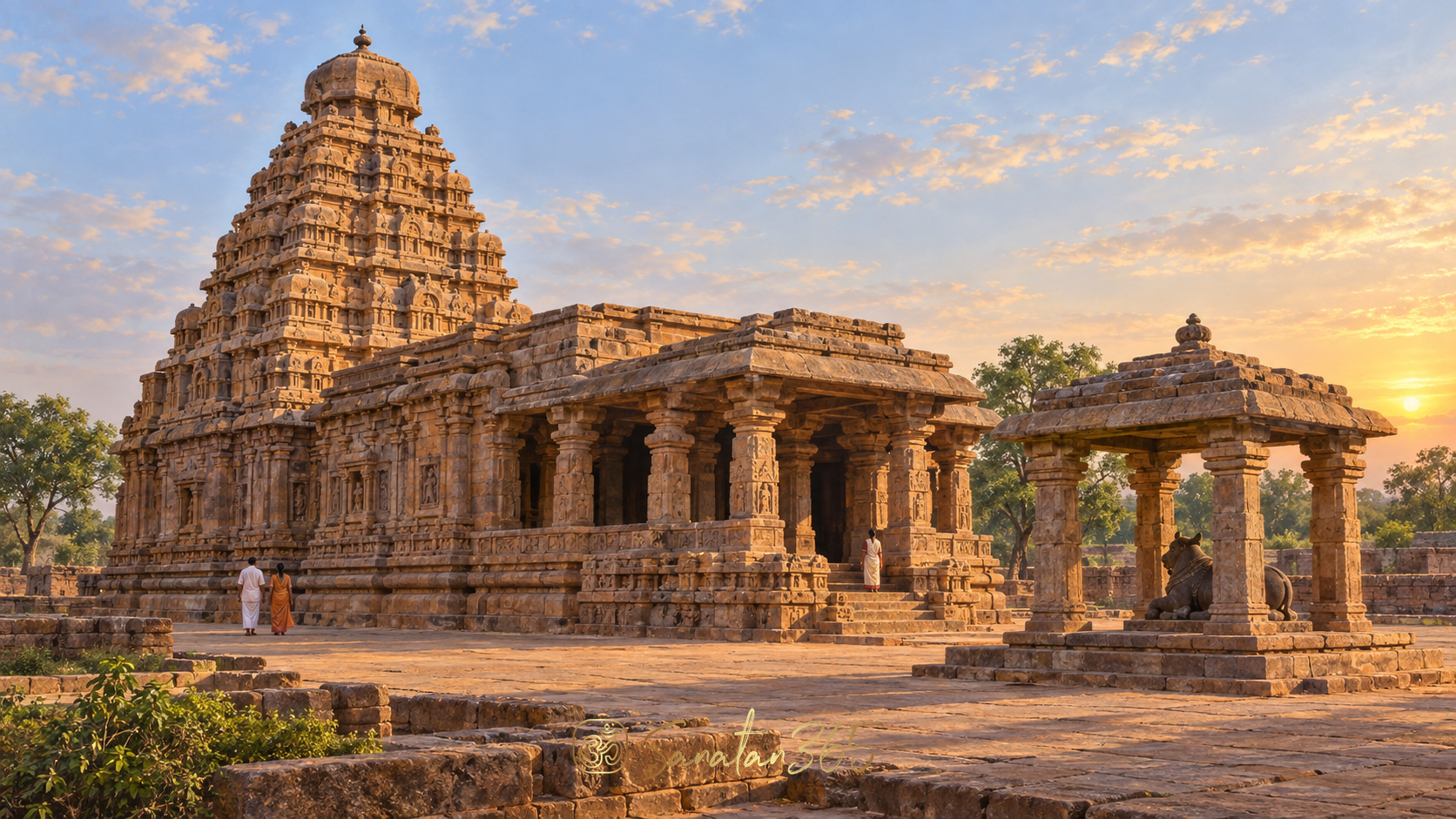
Virupaksha Temple Pattadakal: Shiva and Chalukya Art
A guide to Pattadakal's Virupaksha Temple: its Shiva dedication, Queen Lokamahadevi's patronage, intricate Chalukya architecture, and thoug…
 Temples
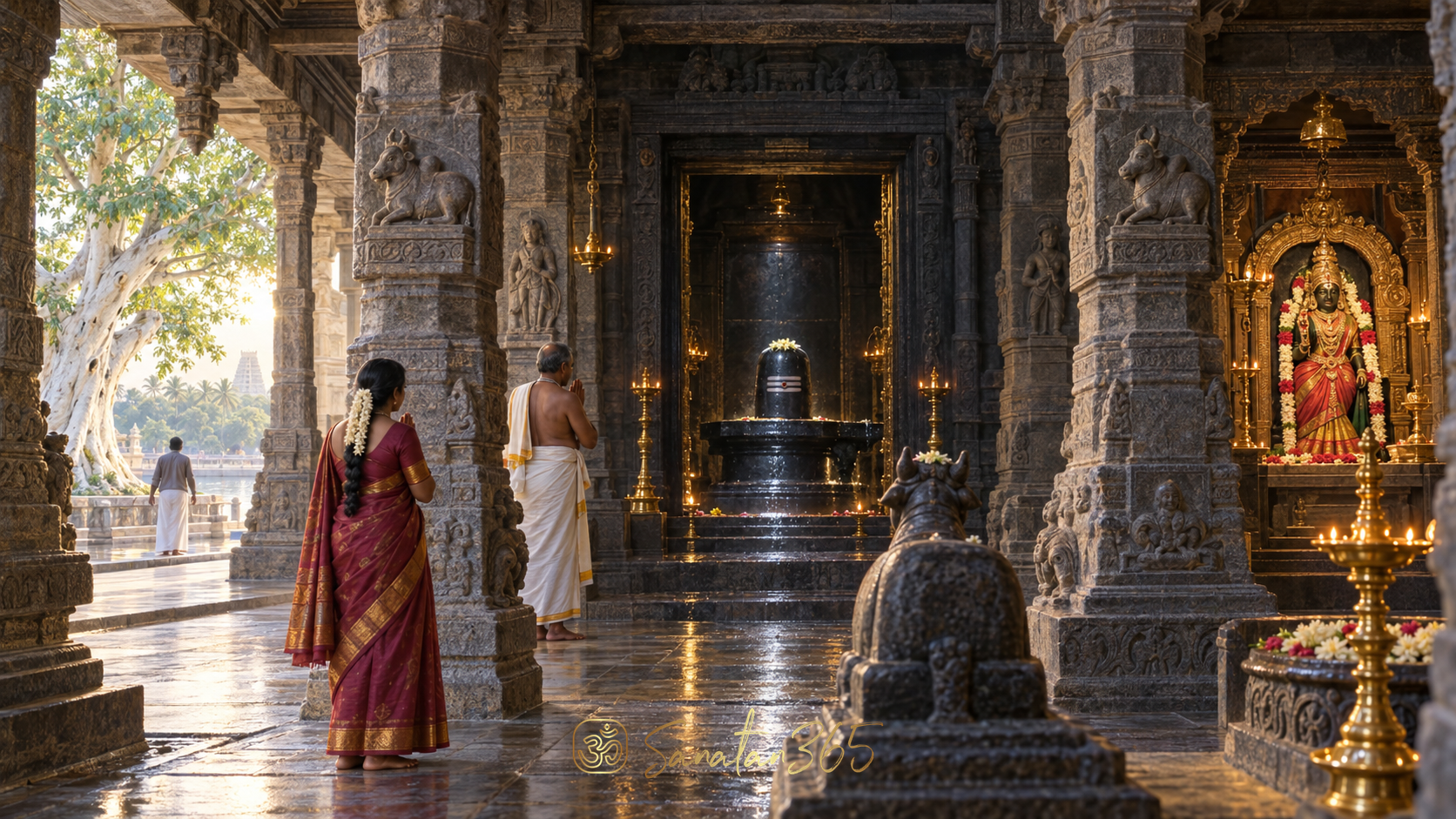
Jambukeswarar Temple: Water, Shiva, and Akilandeswari
Explore why Jambukeswarar Temple at Thiruvanaikaval is a sacred water-element Shiva shrine, and how to approach its living worship respectf…
 Temples
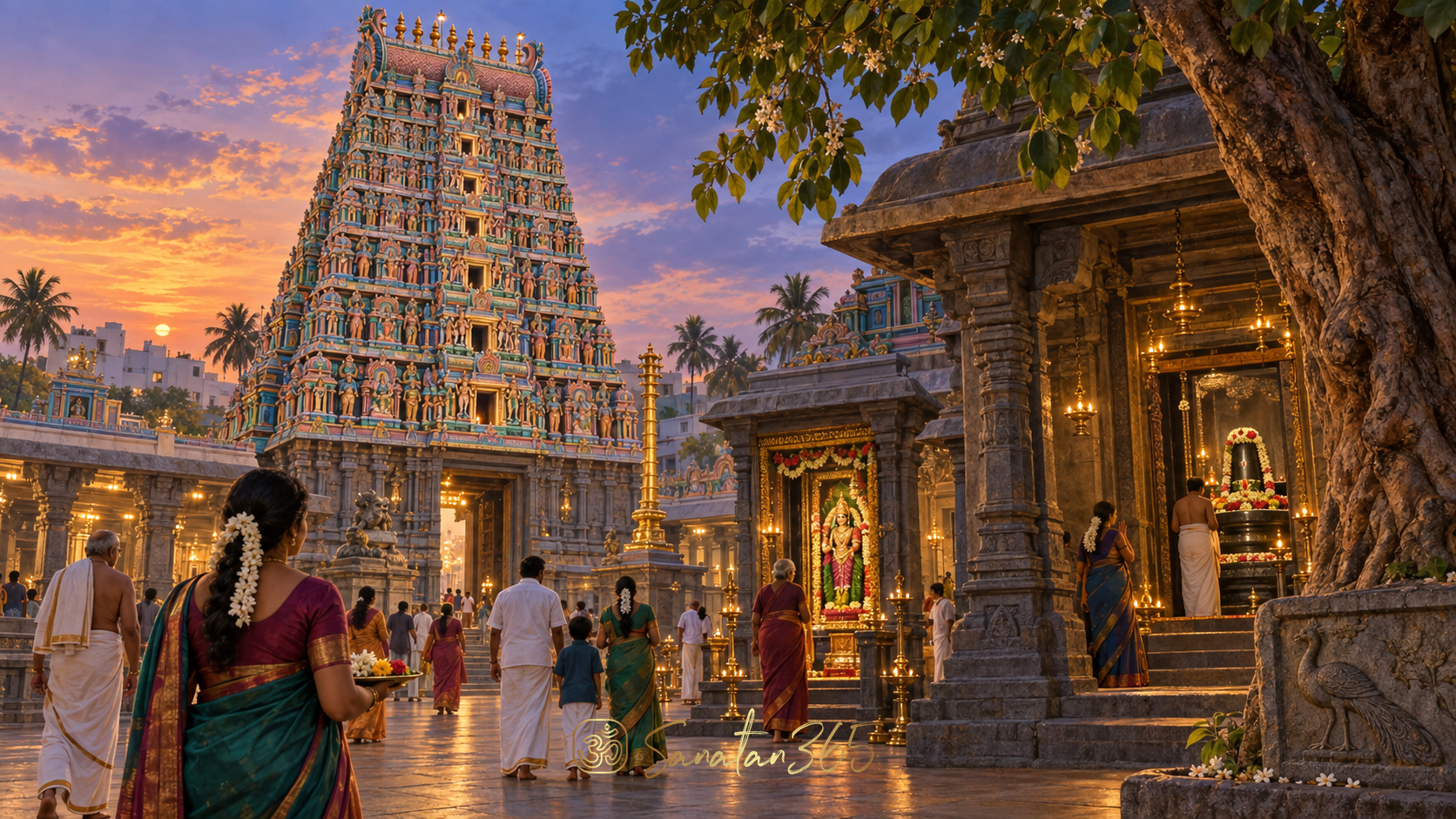
Kapaleeshwarar Temple Mylapore: Shiva, the Peacock Legend, and Living Devotion
Explore Kapaleeshwarar Temple in Chennai's Mylapore: its Shiva shrine, Parvati's peacock legend, Tamil Shaiva heritage, architecture, and r…

