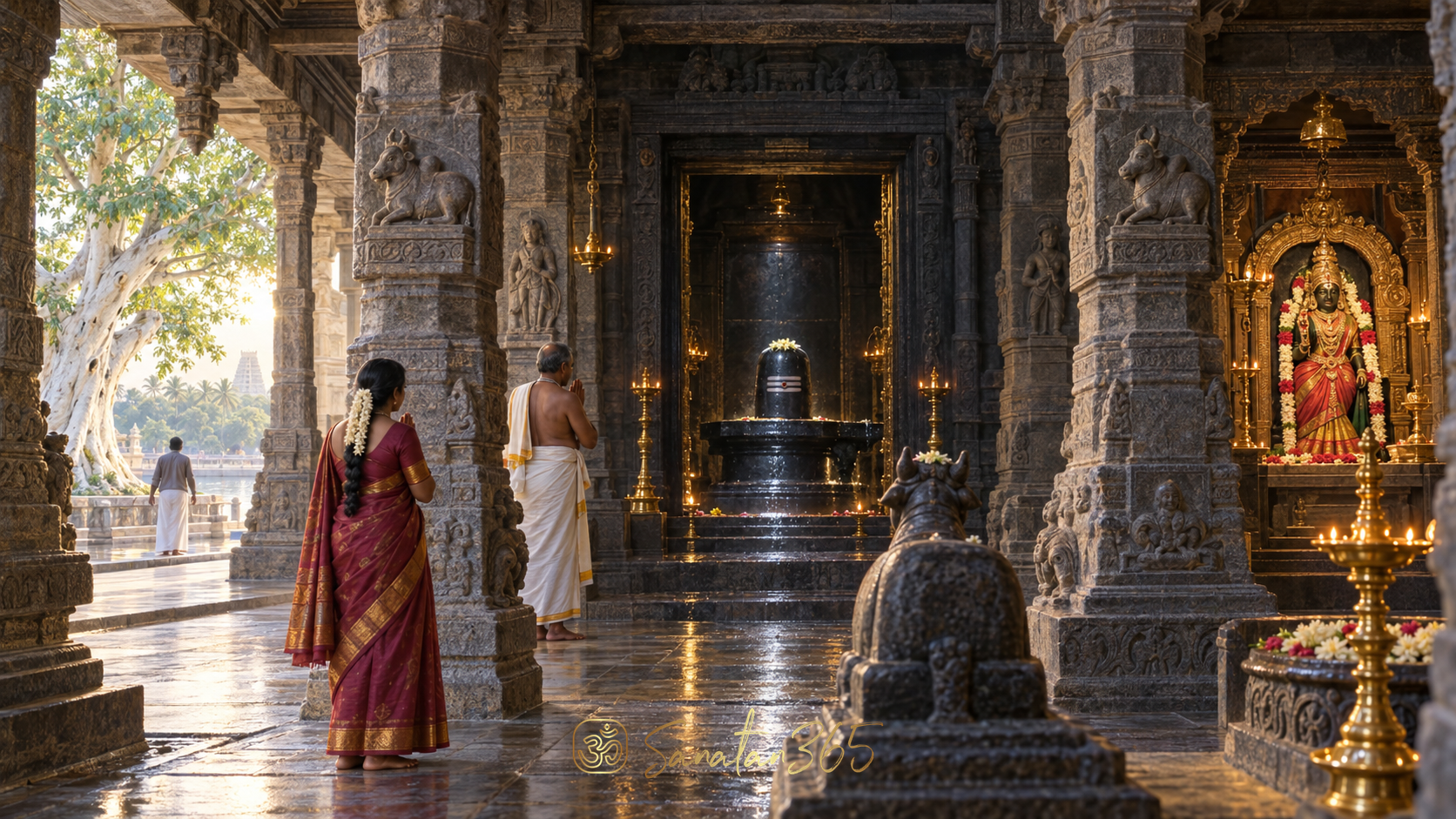
Jambukeswarar Temple: Water, Shiva, and Akilandeswari
Explore why Jambukeswarar Temple at Thiruvanaikaval is a sacred water-element Shiva shrine, and how to approach its living worship respectfully.
At Jambukeswarar Temple, water is not merely scenery around a sacred building. It belongs to the way the shrine is understood. Located at Thiruvanaikaval in Tiruchirappalli, Tamil Nadu, this living temple honours Shiva as Jambukeswarar and Goddess Parvati as Akilandeswari. It is traditionally counted among the Pancha Bhuta Sthalams (pañca-bhūta-sthalas, पंचभूत स्थल, five sacred places associated with the elements), representing water. The association invites a visitor to notice a physical place, a devotional story, and an elemental symbol at once—not to collapse one into the other.
The temple's official Tamil Nadu Hindu Religious and Charitable Endowments page identifies its water association and names the presiding deities. That is a useful starting point. Yet the most important question for a pilgrim is not simply why a guidebook lists “water.” It is how a centuries-old worshipping community has learned to encounter Shiva through the presence, movement, and sustaining quality of water.
Jambukeswarar Temple: Why Is This Shiva Shrine Linked to Water?
The answer begins with appu—a Tamil and Sanskrit-derived devotional term used here for water. The Shiva linga (लिङ्ग, a sacred emblem of Shiva) at Thiruvanaikaval is commonly called the Appu Lingam, the water-associated linga. Temple accounts describe water at the sanctum, giving the elemental identity a tangible setting rather than leaving it at the level of an abstract diagram. The amount of visible water can vary with conditions; it is wiser to appreciate the tradition than to promise a particular sight on every visit.
The temple stands in the Kaveri river region, between branches of the river system. The official temple account explicitly connects its location and the water element. This geography matters without reducing worship to geography. Rivers support settlement, agriculture, travel, and memory; at a shrine, water can also become a way to contemplate dependence. Every life needs it, and no one commands it absolutely. The elemental language offers a disciplined form of humility.
In many Shaiva interpretations, Shiva is encountered through forms that awaken attention to the whole created world. Water is not a separate god replacing Shiva, nor is the Appu Lingam a scientific claim about a supernatural spring. It is a devotional focus in which the element becomes part of worship. The visitor who sees only a curious physical feature misses that broader practice. The visitor who treats the feature as a guaranteed miracle also risks missing it.
Key takeaway: The temple's water identity joins a specific Shiva sanctum, Kaveri-region geography, and a living tradition of elemental reflection.
What Does the Jambu Tree Legend Teach?
The name Jambukeswarar points toward the jambū (जम्बू, jamun or Indian blackberry) tree in the temple's sacred memory. The official temple description associates the place with white jamun trees and preserves traditional narratives about its name. Such stories are best received as temple traditions: they tell us how devotees have imagined and transmitted the sanctity of a place, not as independently verified dates in a modern historical record.
One familiar Thiruvanaikaval tradition tells of an elephant worshipping Shiva. Versions of the narrative differ in details, as oral and temple stories often do. What remains clear is the emphasis on devotion expressed through action. The elephant is not important because a modern reader can reconstruct an event in a laboratory. The narrative offers a memorable picture of reverence crossing the usual boundaries of status and speech. A creature without ritual expertise can still be remembered as devoted.
The tree, the elephant, and the water belong to different layers of meaning. A tree offers shade and rootedness; water sustains it; the elephant story speaks of offering and attention. Together they form a local devotional imagination anchored in this particular place. That is why a shrine is more than a generic “Shiva temple.” Its name carries ecological memory, Tamil storytelling, and worship inherited by successive generations.
The right balance is to honour a tradition without pretending that every episode is a documented chronicle. Historians may study inscriptions, buildings, and patronage; devotees may tell sacred stories that shape prayer. Both modes have value when each is named honestly. A pilgrim need not settle every historical question before entering a temple respectfully.
Key takeaway: The Jambu and elephant narratives are living sacred traditions that deepen the temple's identity; they should not be presented as verified chronology.
How Do Shiva and Akilandeswari Shape Worship Here?
Jambukeswarar is not the temple's only devotional presence. Goddess Akilandeswari is honoured here as a form of Parvati. Her name is often understood as “the sovereign of all worlds,” though devotional names carry layers of praise beyond a single English equivalent. The official temple designation names both Jambukeswarar and Akilandeswari, a reminder that the shrine's life is not adequately described by a water-element label alone.
A visitor can approach the two shrines without flattening their distinct iconography and worship. Shiva's linga is a focus of Shaiva darshan (दर्शन, reverent seeing or encounter). Akilandeswari's shrine offers a separate focus of devotion to the Goddess. The relationship between them is integral to the temple's sacred imagination, but the two should not be conflated into one visual or ritual object. That distinction also matters in any representation of the temple.
Tamil Shaiva sacred geography is carried not only by stone but by song. The official temple account notes praise of Jambukeswarar by major Shaiva poet-saints, including Jnanasambandar, Appar (Tirunavukkarasar), and Sundarar. The Tevaram (தேவாரம், Tamil hymns of the Shaiva poet-saints) gives voice to a tradition in which visiting, singing, and remembering a deity's place are acts of devotion. A temple can be learned through the ear as well as through architecture.
For a modern visitor, this suggests a different rhythm from sightseeing. Pause long enough to notice the direction of worship, the movement of local devotees, and the soundscape. One need not perform an unfamiliar ritual to participate respectfully. Quiet attention is itself a meaningful beginning. The temple is not a set for an aesthetic photograph; it is a place where others have come to pray.
This perspective also avoids making one form of worship superior to another. The Shiva shrine and the Goddess shrine may draw different emotional and theological associations for different devotees. The purpose of a careful guide is to make room for that diversity within a shared reverence.
Key takeaway: Jambukeswarar and Akilandeswari are distinct, honoured presences in one living sacred complex, enriched by Tamil Shaiva hymn tradition.
What Can Visitors Notice in the Temple's Architecture?
Large South Indian temples are often described through towers and corridors, but architecture at Thiruvanaikaval is not only about scale. A sequence of entrances, courtyards, and shrines changes the visitor's pace. As one moves inward, public movement gradually gives way to a more concentrated act of seeing. Stone columns, thresholds, and ritual routes make attention physical: one walks, waits, turns, and looks with others.
Temple-building history is rarely the work of a single moment. The official temple narrative associates the shrine with the Chola king Kochengat Cholan; that is a traditional attribution, while the wider built complex bears evidence of long periods of patronage and use. It is responsible to distinguish a remembered founder from a simplistic claim that every visible wall was built in one reign. A living temple changes as communities maintain, repair, and expand it.
The sacred setting is also distinctive. Thiruvanaikaval is close to the Kaveri's river branches in the Tiruchirappalli region. The association with water is therefore reinforced by the wider landscape, even though the sanctum's religious meaning cannot be reduced to hydrology. A pilgrim may hold both truths: this is a real place with real water, and it is a sacred place interpreted through worship.
Visitors interested in elemental Shiva temples may also read about Chidambaram's association with space. That comparison is useful precisely because it shows how different temples offer different contemplative languages. It does not make the temples interchangeable. Jambukeswarar's intimacy with water and Akilandeswari's presence must be understood on their own terms.
Likewise, Kapaleeshwarar Temple in Mylapore offers another example of a Tamil Shiva shrine whose local legend, urban setting, and worship shape its identity. Comparing them can sharpen attention to what is unique about Thiruvanaikaval: water is not a decorative theme but a central thread linking setting, sanctum, and sacred memory.
Key takeaway: The temple's architecture organizes a gradual movement toward worship, while its water identity remains rooted in a specific Kaveri-region site.
How Can Pilgrims Visit Respectfully?
Begin with the fact that Jambukeswarar Temple is active. Opening hours, special services, dress expectations, and photography rules can change. Check the official temple website close to the visit and follow posted guidance or staff directions on arrival. Do not rely on an old travel-blog timetable or assume that a phone camera is welcome in every area.
Plan enough time to walk without rushing worshippers. If a queue forms, treat it as part of the shared devotional space, not an obstacle to be bypassed. Clothing should be modest and suitable for a functioning Hindu temple. Keep voices low near sanctums; make room for local devotees; and ask before photographing people or ritual activity. These are practical forms of respect, not tests of religious identity. A curious visitor of any background can approach thoughtfully.
Offerings should follow the temple's own procedures. A guidebook cannot authorize a visitor to place flowers, food, or water wherever it seems symbolically appealing. The presence of water at the shrine is not an invitation to touch a sanctum, collect water, or improvise a ritual. If unsure, ask a priest or authorized attendant. The same restraint protects both worship and the temple fabric.
It helps to leave time for the Goddess's shrine rather than treating it as a footnote after the Shiva sanctum. A visit shaped only by the wish to see the Appu Lingam can become a search for one striking feature. A visit shaped by attention can register several dimensions: the Goddess's presence, the Tamil hymnic memory, the material beauty of the complex, and the ordinary devotion of people around you.
A family might prepare by discussing three simple ideas before arriving: water sustains life; sacred stories preserve values as well as place-names; and darshan asks for receptive attention. None requires a child to accept a sensational claim. The temple can become an occasion to learn how a community cares for a sacred space and how symbols invite reflection.
There is also value in honesty after a visit. If the water at the linga was not visible, do not claim to have seen it. If one does not know the meaning of a ritual, do not invent an explanation. Responsible writing about pilgrimage preserves room for inquiry. Reverence is strengthened, not weakened, by accurate observation.
Key takeaway: Verify current temple guidance, honour both shrines, follow local ritual boundaries, and let attentive presence matter more than collecting a spectacle.
The question “What is special about Jambukeswarar Temple?” has more than one answer. It is a water-associated Shiva shrine, a place of Akilandeswari's worship, a Kaveri-region temple with Tamil sacred stories and songs, and a functioning community of devotion. None of these layers needs to erase the others. The temple's deepest invitation may be simple: notice what sustains life, and meet a living tradition with humility.
FAQ
Where is Jambukeswarar Temple?
It is at Thiruvanaikaval in Tiruchirappalli, Tamil Nadu, in the Kaveri river region. For current visitor information, use the temple's official Tamil Nadu HR&CE website.
Why is Jambukeswarar called a water-element temple?
In the traditional group of Pancha Bhuta Sthalams, this shrine represents water, or appu. The water-associated Shiva linga and the temple's river-region setting are central to that identity. The tradition is devotional; it is not a promise that every visitor will see an identical amount of water.
Who is Akilandeswari at Thiruvanaikaval?
Akilandeswari is a form of Goddess Parvati worshipped in her own shrine within the temple complex. She and Jambukeswarar are both named in the temple's official designation.
Is the elephant story a verified historical event?
It is a sacred temple narrative transmitted in tradition. It can be appreciated for its devotional meaning without presenting it as a modern, independently verified historical record.
Can visitors photograph inside the temple?
Rules may vary by area and over time. Check current official guidance and follow signs and staff directions. Never assume photography is permitted in a sanctum or during worship.
About the author
Sanatan365 Editorial
Bringing Sanatan Dharma to modern seekers through authentic, scripture-grounded content.
Related in Temples
 Temples
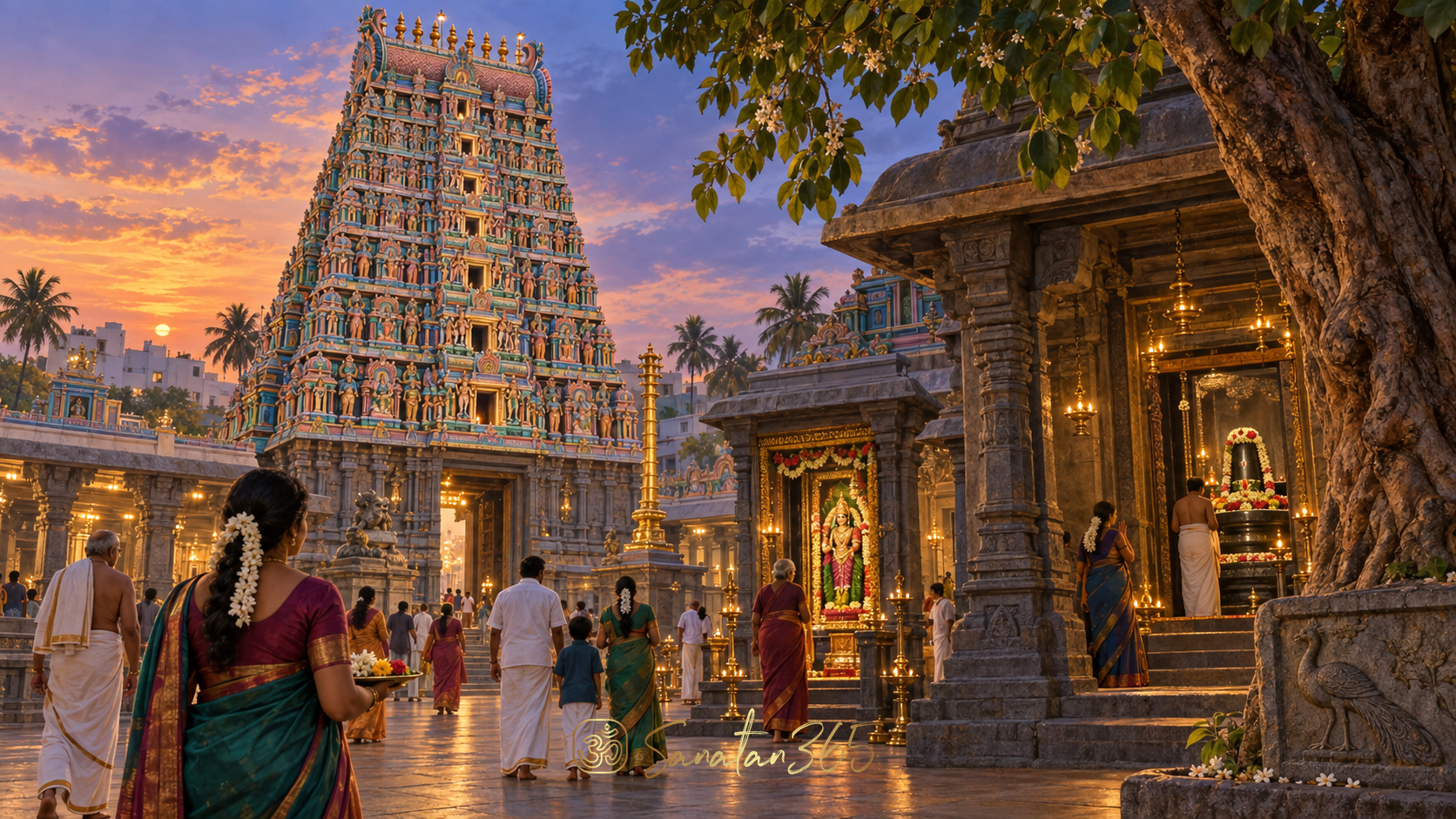
Kapaleeshwarar Temple Mylapore: Shiva, the Peacock Legend, and Living Devotion
Explore Kapaleeshwarar Temple in Chennai's Mylapore: its Shiva shrine, Parvati's peacock legend, Tamil Shaiva heritage, architecture, and r…
 Temples
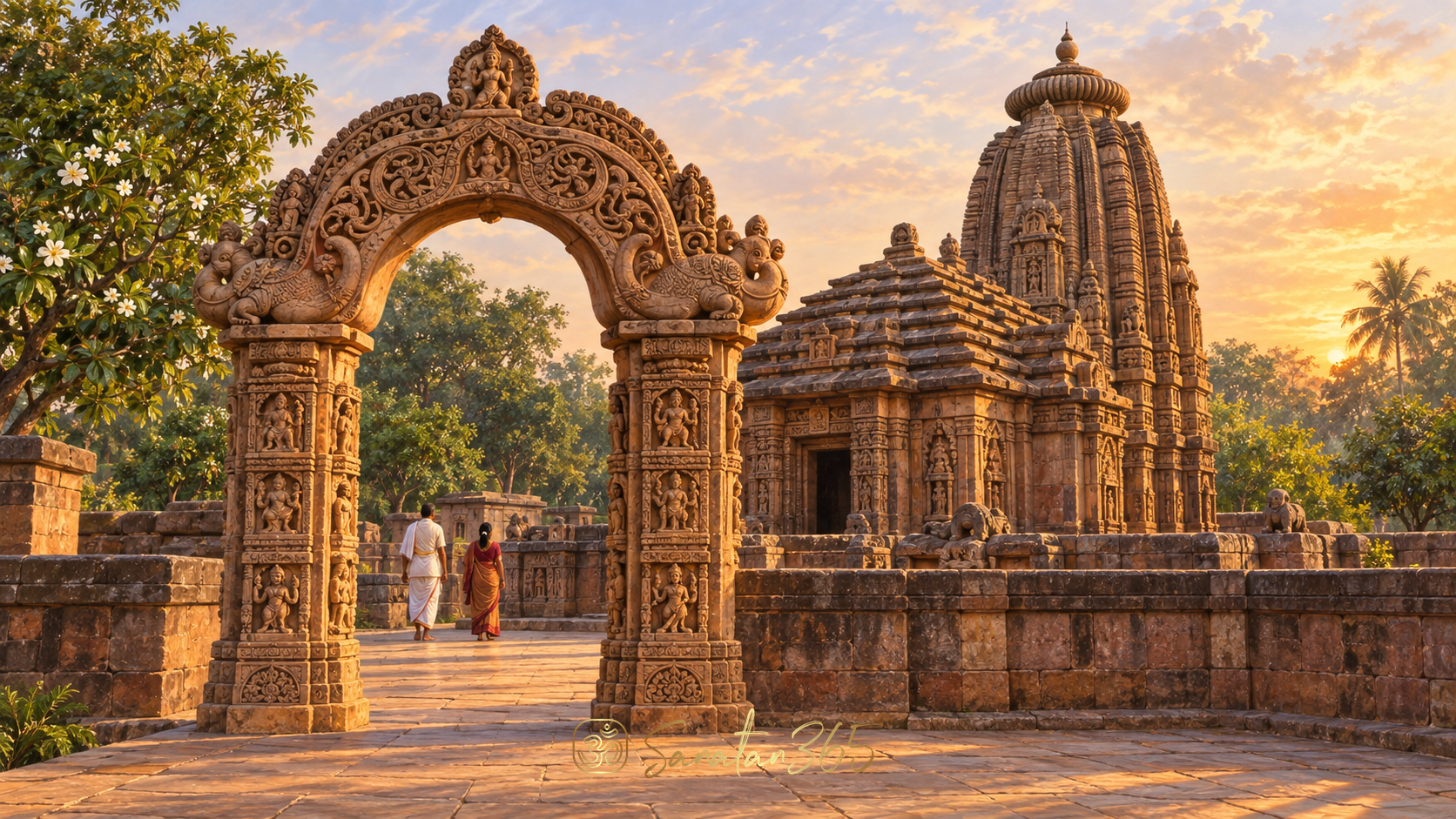
Mukteshvara Temple, Bhubaneswar: Shiva, Stone, and the Art of Arrival
Explore Mukteshvara Temple in Bhubaneswar through its sculpted torana, Kalinga architecture, Shiva devotion, and a thoughtful way to visit…
 Temples
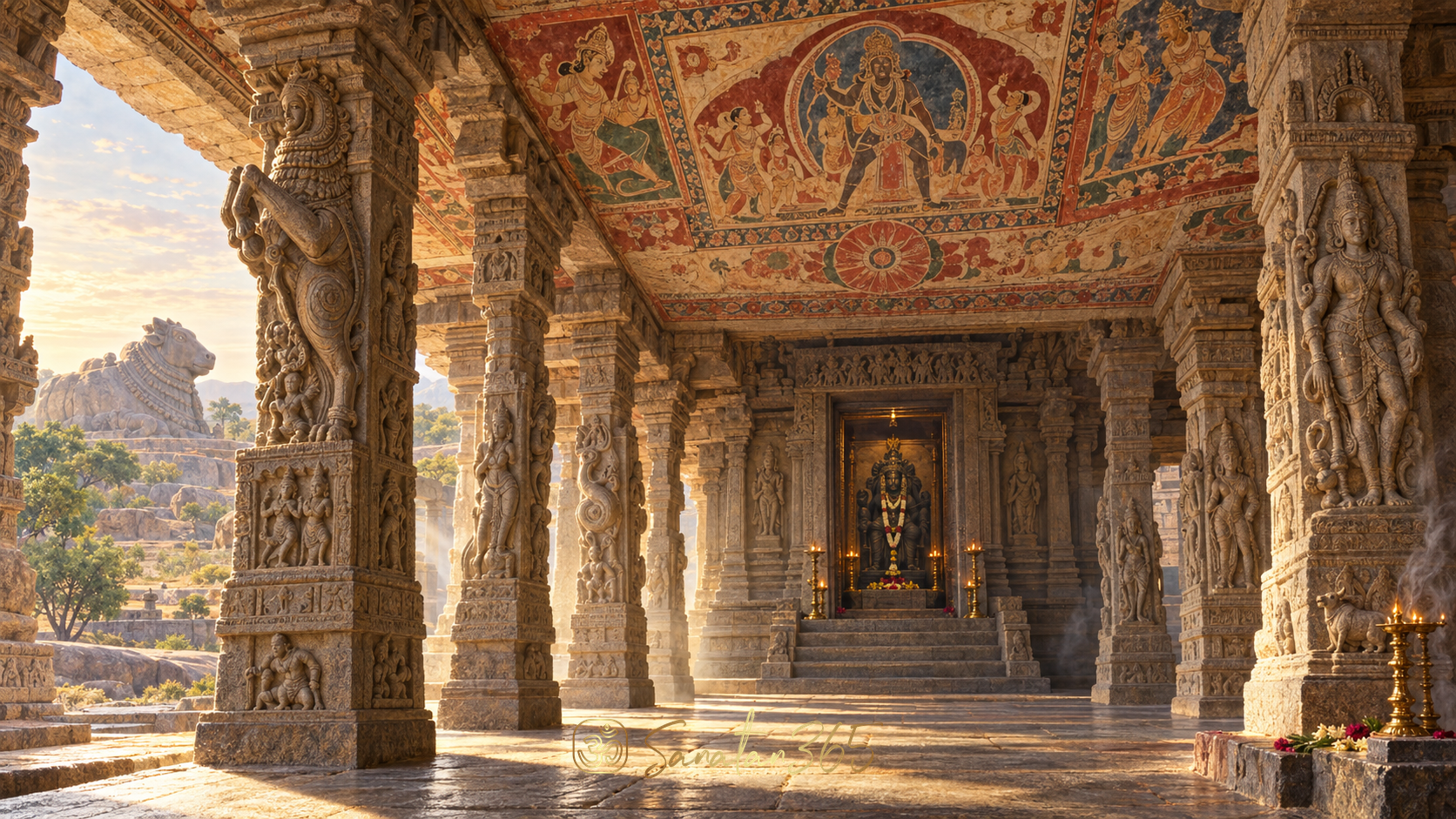
Lepakshi Veerabhadra Temple: Sacred Art, Architecture, and Devotion
Lepakshi's Veerabhadra Temple brings Vijayanagara architecture, Shaiva devotion, painted ceilings, carved pillars, and living sacred memory…

