Bhagiratha Story: How Devotion Brought Ganga to Earth
The Bhagiratha story explains how patient tapasya, divine grace, and Shiva's compassion brought Maa Ganga from the heavens to Earth.
A king's prayer became a river.
The Bhagiratha story is the Hindu account of how King Bhagiratha's tapasya (तपस्या, disciplined spiritual austerity), Maa Ganga's compassion, and Lord Shiva's grace brought the celestial river Ganga to Earth. Remembered especially on Ganga Dussehra, the story teaches that devotion is not passive emotion. It is patient responsibility, prayer joined with action, and the courage to serve even those who can no longer thank us.
The story appears in the wider Ganga avatarana (गङ्गावतरण, descent of Ganga) tradition connected with the Ramayana, the Mahabharata, and later Puranic retellings. Modern reference works also preserve the broad outline: Bhagiratha is remembered as the sage-king who brought the Ganges from heaven to sanctify the ashes of his ancestors, while Shiva receives the force of the descending river in his matted locks. Britannica summarizes Bhagiratha in this role, and its entry on Shiva notes the mythic significance of Shiva controlling Ganga's descent.
Why is the Bhagiratha story remembered on Ganga Dussehra?
The Bhagiratha story is remembered on Ganga Dussehra because the festival celebrates Ganga's descent to Earth, known as Ganga avatarana. In many Hindu calendars, Ganga Dussehra falls on Jyeshtha Shukla Dashami, and in 2026 it is observed on May 25 in many panchang listings. Families mark the day with snana (स्नान, sacred bathing), dana (दान, giving), prayer, and remembrance of Maa Ganga as purifier, nourisher, and mother.
The festival is not only about water as a physical river. In the story, Ganga is divine grace made visible. She descends because one person refuses to abandon a sacred duty. Bhagiratha does not pray for a private kingdom, victory, or comfort. He prays so that his ancestors may receive release and so that Earth may receive a sacred flow.
That is why the phrase "Bhagiratha prayatna" is still used in Indian languages for a heroic, patient effort. It refers to work so difficult that it requires endurance, humility, and help from the Divine.
Key takeaway: Ganga Dussehra turns the story of a river into a lesson about responsibility, grace, and effort that serves more than the self.
What happened before King Bhagiratha's tapasya?
The story begins before Bhagiratha. King Sagara, an ancestor of Bhagiratha, performs an ashvamedha (अश्वमेध, horse sacrifice) in the classical royal tradition. The sacrificial horse disappears, and Sagara's sons search across the earth for it. In many retellings, they find the horse near Sage Kapila, whose meditation they disturb or wrongly suspect. Through the force of the sage's tapas, the sons are reduced to ashes.
The family line continues, but the ancestral wound remains unresolved. The ashes of Sagara's sons need the purifying touch of Ganga for their liberation. Generations pass. The task is too large for ordinary strength. Eventually, the responsibility comes to Bhagiratha.
This beginning matters. Bhagiratha is not correcting a small mistake. He inherits a burden that began before him. Many people know this feeling in gentler forms: a family conflict, a duty left unfinished, a cultural memory that needs care, or a spiritual practice that earlier generations preserved with difficulty.
The story does not tell us to carry guilt for everything that came before us. It teaches something subtler: when a duty comes into our hands, we can respond with dignity rather than complaint.
Key takeaway: Bhagiratha's greatness begins with accepting responsibility for a sacred duty he did not personally create.
How did Bhagiratha bring Ganga to Earth?
Bhagiratha performs tapasya with unwavering focus. Tapasya does not mean punishment of the body for its own sake. In Hindu thought, tapas is disciplined heat: the inner fire created when desire, distraction, and ego are steadily offered into a higher purpose.
First, Bhagiratha prays for Maa Ganga to descend. Ganga agrees in many retellings, but her descent from the heavens would be too powerful for Earth to bear. A river of celestial force cannot simply crash upon the world. Grace itself must be received with preparation.
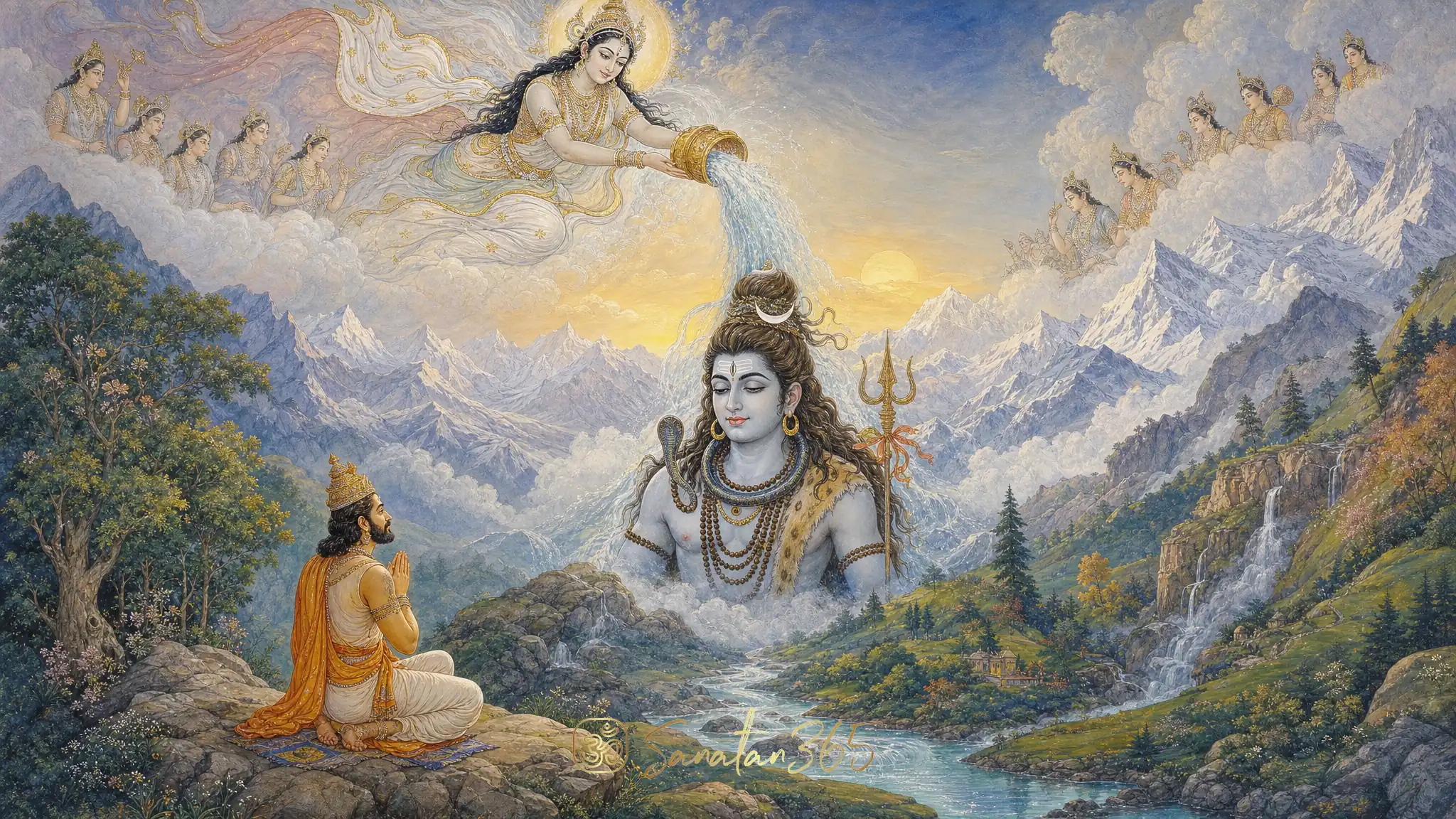
So Bhagiratha turns to Lord Shiva. Shiva, the ascetic lord who holds both stillness and cosmic power, receives Ganga in his jata (जटा, matted locks). Her force is absorbed, softened, and released in streams that can bless the Earth rather than destroy it. Britannica's entry on Shiva also recalls this mythic role: Shiva permits the river to descend and controls her immense force.
The image is spiritually precise. Ganga is compassion, but compassion without steadiness can overwhelm. Shiva is restraint, but restraint without compassion can become cold. Bhagiratha's prayer brings both together: flowing grace and disciplined containment.
"Where devotion is steady, grace finds a channel. Where power is humbled, it becomes blessing."
After Shiva releases Ganga, Bhagiratha leads her across the land toward the ashes of Sagara's sons. In the geography of devotion, this is why the Bhagirathi stream in Uttarakhand carries his name, and why the Ganga is remembered from Himalayan source to eastern delta as both river and mother. Britannica notes that the Bhagirathi is a key source stream of the Ganges and holds special significance in Hindu mythology.
Key takeaway: The descent of Ganga requires three forces together: Bhagiratha's effort, Ganga's grace, and Shiva's capacity to receive divine power safely.
What does Maa Ganga symbolize in the story?
Maa Ganga is not only a sacred river in this story. She symbolizes purification, continuity, memory, nourishment, and divine compassion moving through the world.
The Sanskrit word Ganga (गङ्गा) refers to the sacred river personified as a goddess. In lived Hindu practice, devotees approach her as mother, purifier, and witness. Her waters carry ritual significance in homes, temples, pilgrimages, and samskara (संस्कार, sacred life-cycle rites). For many families in Varanasi, Haridwar, Prayagraj, Rishikesh, Gangotri, Kolkata, and the diaspora, even a small vessel of Ganga jal (गङ्गा जल, Ganga water) carries the memory of pilgrimage and blessing.
In the Bhagiratha story, Ganga does three things at once:
- She purifies the ashes of the ancestors.
- She blesses the Earth with sacred water.
- She shows that divine grace can descend when human effort becomes selfless.
This is why Ganga worship is both intimate and cosmic. A devotee may offer a simple diya by the river, while the same river is also imagined as a heavenly current entering earthly life. The story holds both scales without conflict.
Regional memory deepens the meaning. In North India, Ganga Dussehra often emphasizes bathing, offerings, and riverbank worship. In Bengal and eastern India, the river's journey toward the sea is tied to pilgrimage memory around Ganga Sagar. In the diaspora, families may not live near the river, but they remember her through prayer, stories, and respectful use of Ganga jal brought from India.
Key takeaway: Maa Ganga symbolizes grace that purifies the past, nourishes the present, and connects families across place and time.
What spiritual lessons does the Bhagiratha story teach for daily life?
The story is ancient, but its lessons are practical for modern seekers.
1. Sacred duty may outlast convenience. Bhagiratha does not choose the easiest task. He chooses the necessary one. Dharma (धर्म, righteous order and duty) often appears not as glamour, but as responsibility carried with steadiness.
2. Prayer and effort are not opposites. The king prays, but he also acts. He performs tapasya, seeks the right divine help, and follows through. Hindu practice often holds this balance: surrender is not laziness, and effort is not ego when offered with humility.
3. Power needs a vessel. Ganga's descent requires Shiva's jata. In daily life, blessings also need structure: a calm mind, ethical conduct, disciplined speech, and a routine that can hold what we ask for.
4. Ancestors are honored through living dharma. The story centers on the liberation of ancestors, but its deeper teaching is not fear-based. It invites gratitude. The past becomes sacred when we respond to it with healing action.
5. Purification is not only external. Bathing in a sacred river has ritual value, but the inner movement matters too: letting go of arrogance, resentment, and carelessness. Ganga flows outward as water and inward as remembrance.
A seeker observing Ganga Dussehra at home can honor these lessons simply: offer water with reverence, chant a Ganga stotram if known, give in charity, avoid wasteful use of water, and spend a few minutes reflecting on one duty that deserves patient effort.
Key takeaway: The Bhagiratha story teaches that devotion matures when it becomes disciplined, useful, humble, and generous.
How can families tell the Bhagiratha story to children?
The story is powerful for children because it has clear images: a king praying in the mountains, a river descending from heaven, Lord Shiva catching the river in his hair, and ancestors receiving peace. But the telling should be gentle, not frightening.
A family-friendly version can be simple:
- King Bhagiratha wanted to help his ancestors.
- He prayed with patience for Maa Ganga to come to Earth.
- Maa Ganga was very powerful, so Lord Shiva helped by receiving her safely.
- Ganga flowed across the land and became a blessing for many people.
- The lesson is to work patiently for good things and to use strength with kindness.
Parents can ask children: "What is one good thing that needs patience?" or "How can we use water respectfully today?" This turns the story into values without reducing it to a moral slogan.
For older children, the story can open discussion about ecology and reverence. If Ganga is mother, then keeping rivers clean is not separate from devotion. Respect for sacred water can become respect for all water.
Key takeaway: For children, Bhagiratha's story can teach patience, gratitude, care for nature, and the idea that real strength protects others.
Why does this story still matter?
The Bhagiratha story matters because every generation inherits something unfinished. Some inherit family duties. Some inherit cultural memory. Some inherit ecological responsibility. Some inherit inner patterns that need purification. The story does not promise instant relief. It shows a king who stays with a sacred task until heaven, earth, river, and ascetic power come into alignment.
This is the quiet force of Sanatan storytelling. A river is never only a river. A king is never only a king. A myth is not merely an old event. It is a living pattern through which a seeker can understand effort, grace, and responsibility.
On Ganga Dussehra, the story asks one practical question: what is the one worthy effort that deserves our Bhagiratha-like patience?
Key takeaway: The story endures because it gives a name to noble effort: patient work done for healing, blessing, and the welfare of others.
FAQ
What is the Bhagiratha story in simple words?
The Bhagiratha story tells how King Bhagiratha performed deep tapasya to bring Maa Ganga from heaven to Earth so that his ancestors could receive liberation. Lord Shiva received Ganga in his matted locks to soften her powerful descent.
Why did Lord Shiva catch Ganga in his hair?
Lord Shiva caught Ganga in his jata, or matted locks, because her celestial force was too powerful for Earth to bear directly. Shiva's role shows that divine power must be received with steadiness and compassion.
Is the Bhagiratha story connected to Ganga Dussehra?
Yes. Ganga Dussehra celebrates Ganga avatarana, the descent of Maa Ganga to Earth. The Bhagiratha story is one of the central narratives remembered during the festival.
What does Bhagiratha mean spiritually?
Spiritually, Bhagiratha represents patient, selfless effort. The expression "Bhagiratha prayatna" means a great and difficult effort undertaken with determination for a noble purpose.
What can modern families learn from the story?
Modern families can learn patience, responsibility, reverence for water, gratitude toward ancestors, and the balance of prayer with action. The story is especially useful for teaching children that devotion becomes meaningful when it helps others.
The single lesson of the Bhagiratha story is this: when effort becomes selfless and steady, grace can find a way to flow through the world.
About the author
Sanatan365 Editorial
Bringing Sanatan Dharma to modern seekers through authentic, scripture-grounded content.
Related in Stories
 Stories
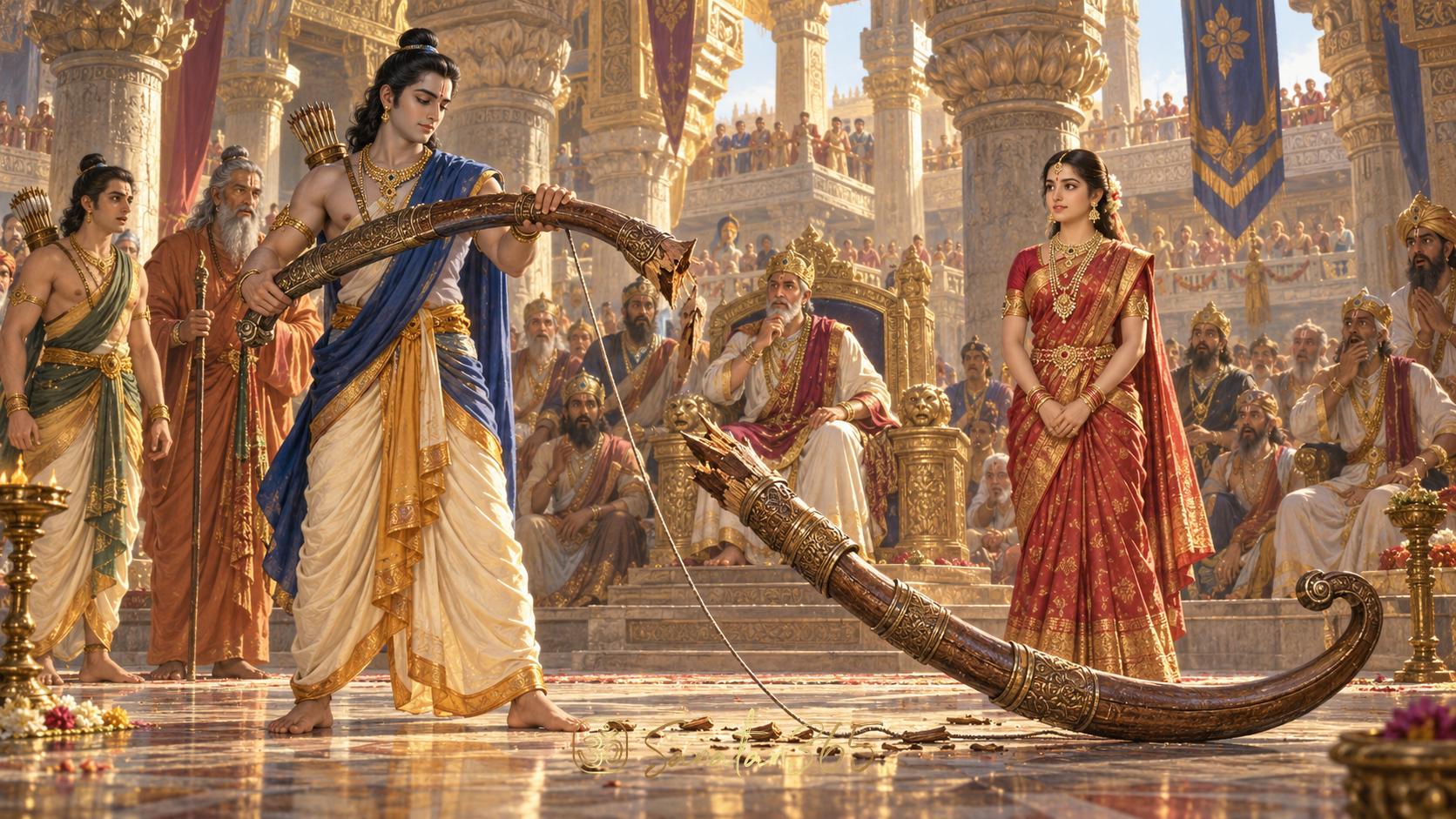
Sita Swayamvara in the Ramayana: Shiva's Bow and the Meaning of the Marriage
Read the Bala Kanda account of Rama, Sita, Janaka and Shiva's bow, and separate the text's sequence from later devotional retellings.
 Stories
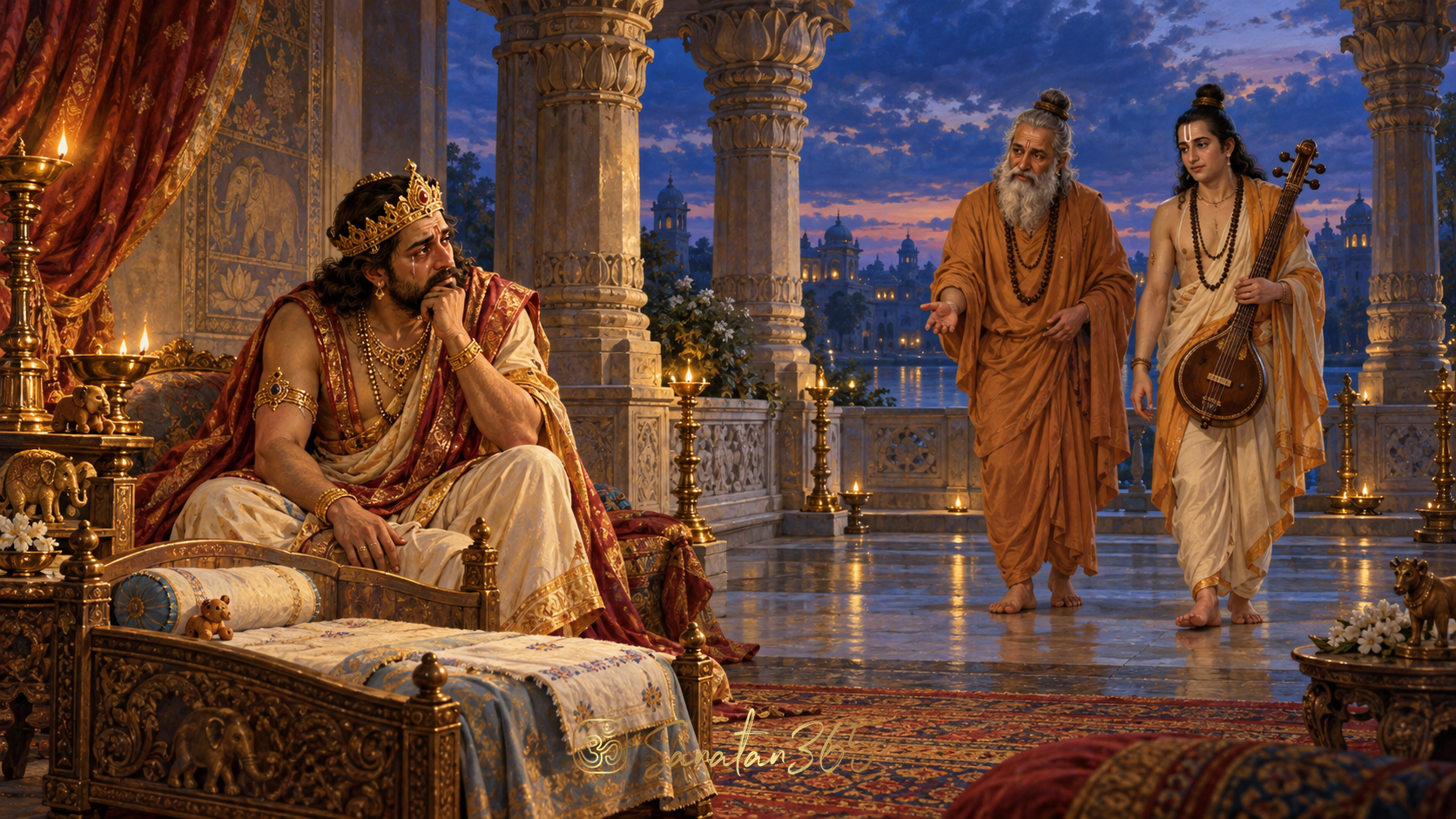
King Chitraketu Story: Grief, Wisdom, and Humility in the Bhagavata
The Bhagavata Purana tells how King Chitraketu met devastating loss, listened to Narada and Angira, and learned a difficult humility. Read…
 Stories
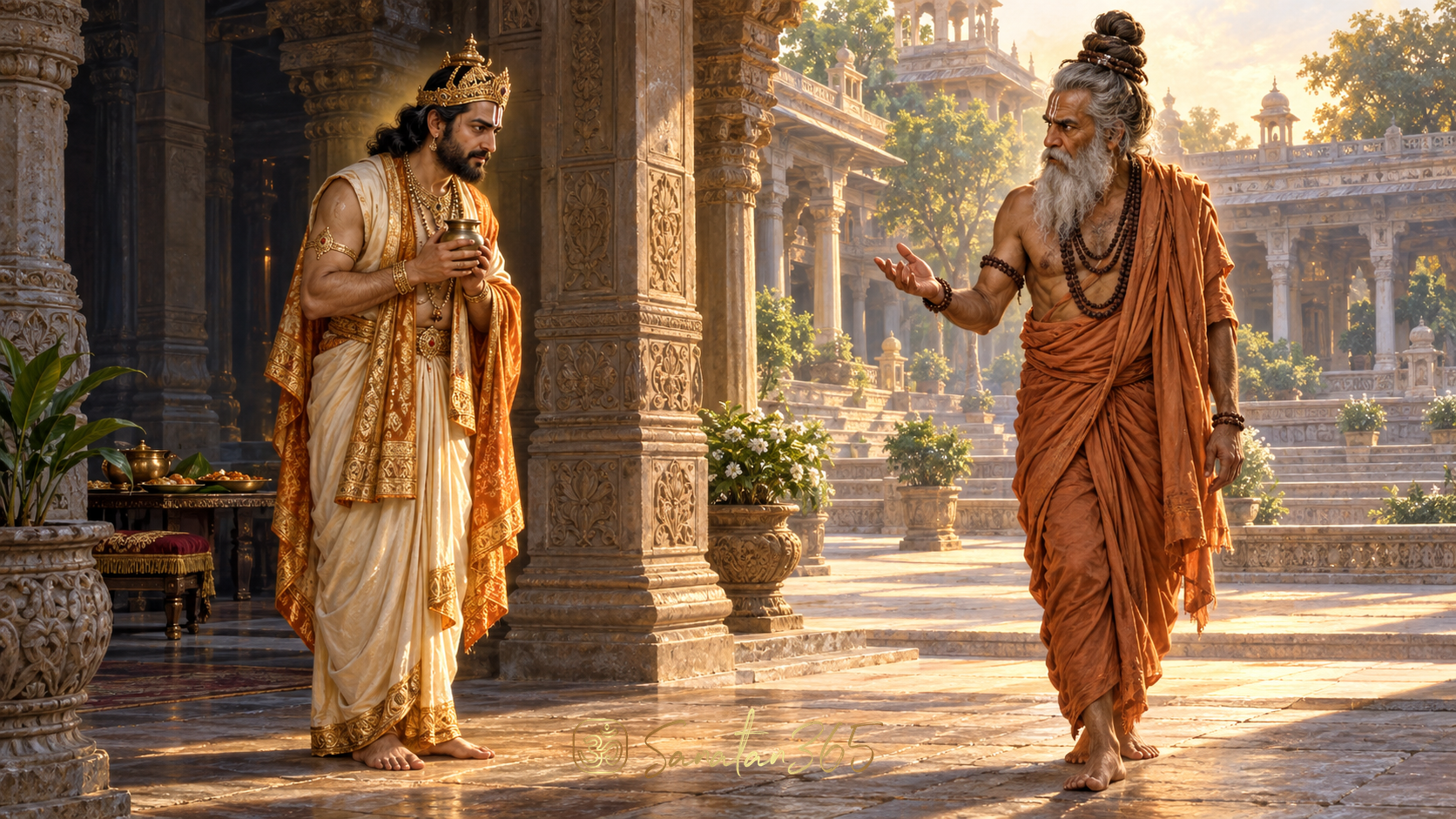
King Ambarisha and Durvasa: A Story of Devotion and Humility
The Bhagavata Purana story of King Ambarisha and Sage Durvasa explores a difficult fast, an angry visitor, and the restraint behind devotio…

