Goddess Lakshmi Symbolism: Lotus, Owl, Coins, and Prosperity with Dharma
A clear guide to Goddess Lakshmi's symbols, from the lotus and owl to coins and elephants, and what they teach about prosperity rooted in dharma.
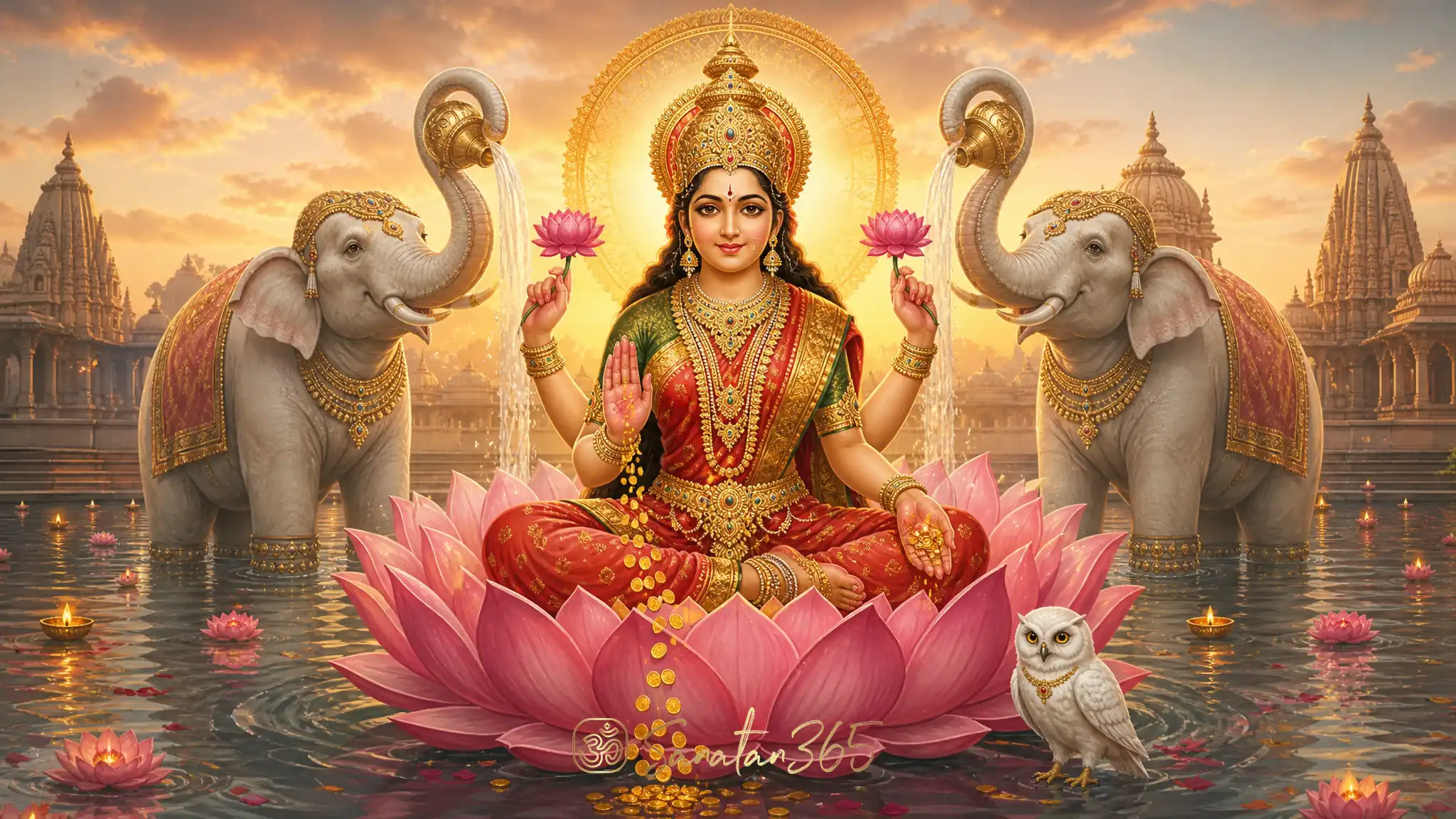
The most familiar image of Lakshmi is also one of the most misunderstood: a radiant goddess on a lotus, gold flowing from her hand, with elephants and sometimes an owl nearby.
Goddess Lakshmi symbolism explains prosperity as more than money. In Hindu tradition, Lakshmi, also called Shri (श्री, radiance and auspicious abundance), represents beauty, fertility, good fortune, dignity, and the kind of wealth that supports dharma (धर्म, righteous order). Her lotus, coins, elephants, and owl each teach a different discipline: stay pure in the world, let wealth circulate, receive abundance with humility, and use discernment before desire.
Why does Goddess Lakshmi symbolism matter?
Lakshmi is often introduced as the Hindu goddess of wealth, prosperity, and good fortune. That is accurate, but incomplete. Britannica's overview of Lakshmi notes her associations with prosperity, beauty, and royal power, while also identifying her as Shri and as the consort of Vishnu. The deeper meaning is that prosperity is not isolated from preservation, order, and responsibility.
In many Hindu homes, Lakshmi is invoked during Diwali, Friday worship, weddings, housewarmings, business openings, and daily puja (पूजा, worship). People pray for food, stability, income, beauty, harmony, and auspicious beginnings. The same domestic sacredness appears in practices such as Tulsi worship and aarti, where beauty and order prepare the heart for devotion. Yet the image of Lakshmi does not say, "accumulate at any cost." It says, "receive abundance in a way that keeps life aligned."
That is why her symbolism is so practical. A devotee looking at Lakshmi sees a complete teaching:
- Wealth should be clean.
- Prosperity should be shared.
- Beauty should refine conduct.
- Fortune should support dharma.
- Desire should be guided by wisdom.
Lakshmi is not a rejection of worldly life. She sanctifies worldly life when it becomes generous, ordered, and grateful.
Key takeaway: Lakshmi's symbols turn prosperity from a private possession into a sacred responsibility.
What does the lotus mean in Goddess Lakshmi symbolism?
The lotus is the central visual language of Lakshmi. She is often seated or standing on a lotus, holding lotuses, or named through lotus-linked epithets such as Padma and Kamala. Britannica identifies Padma and Kamala among her names, both connected to the lotus.
The lotus grows from mud but blooms above the water without becoming stained by it. In Hindu thought, this makes the lotus a symbol of purity within participation. It does not escape the world; it rises through it.
For Lakshmi, the lotus gives prosperity a moral direction. A home may earn, build, decorate, celebrate, and enjoy, but not by losing inner cleanliness. The lotus asks: can the seeker remain graceful in success, truthful in trade, and generous when secure?
This is why the lotus is not merely decorative. It teaches the discipline of remaining inwardly clear while living among money, family duties, social obligations, and changing fortune.
The Hindu American Foundation's Lakshmi overview emphasizes that Lakshmi's lotus symbolism points beyond material wealth toward spiritual progress. That balance is essential. Lakshmi is not anti-material. She is anti-corruption.
In a daily setting, the lotus can be read as a simple test:
- Does prosperity make the mind cleaner or more restless?
- Does beauty increase gratitude or vanity?
- Does success lead to service or only comparison?
- Does comfort deepen devotion or dull it?
Lakshmi's lotus reminds devotees that wealth becomes auspicious only when it helps the heart bloom.
Key takeaway: The lotus teaches prosperity without inner pollution.
Why do coins flow from Lakshmi's hand?
Coins flowing from Lakshmi's hand are among her most recognizable symbols. They represent abundance, but they also show movement. The coins are not clenched. They flow.
That detail matters. Hindu prosperity is not only what one stores; it is also what one circulates rightly. Wealth supports family, education, seva (सेवा, selfless service), hospitality, temple life, charity, artisanship, agriculture, and cultural continuity. When wealth freezes into fear or ego, it loses its Lakshmi-like quality.
The Sri Sukta, a Vedic hymn addressed to Shri-Lakshmi, repeatedly invokes radiance, nourishment, cattle, grain, gold, and auspiciousness. These are not abstract blessings. They are the foundations of a stable life. In agrarian, household, and temple cultures, prosperity meant food, animals, land, skill, protection, and continuity.
Coins in Lakshmi's hand therefore point to artha (अर्थ, material means or resources), one of the four purusharthas (पुरुषार्थ, aims of human life). But artha is never meant to overpower dharma. It is meant to serve dharma. A person may seek wealth, but wealth must not become the person's master.
This is a useful correction to two extremes. One extreme treats money as spiritually dirty. The other treats money as the final proof of worth. Lakshmi's image rejects both. Wealth is sacred when earned rightly, used wisely, enjoyed gratefully, and shared where it can relieve suffering or support noble work.
In household puja, offering a coin, rice, fruit, or flower before Lakshmi can become a small act of reordering: "May what comes into this home be pure, and may what leaves this home be useful."
Key takeaway: Lakshmi's coins symbolize abundance in circulation, not greed in storage.
What do elephants mean in Gaja Lakshmi imagery?
Gaja Lakshmi, the form of Lakshmi flanked by elephants, is one of her most widespread visual forms. Gaja (गज) means elephant. In this image, elephants often pour water over Lakshmi, a motif associated with royal consecration, fertility, rain, and honor. Indian Express, in an iconography explainer, notes the broad popularity of Gaja Lakshmi imagery, especially with the goddess on or near a lotus and accompanied by elephants.
Elephants add a different quality from coins. Coins show resources. Elephants show majesty, strength, and stable power. They suggest prosperity that is not nervous or fragile. In traditional Indian imagination, elephants are linked with rain clouds, kingship, temple processions, and ceremonial dignity.
Water poured by elephants also carries meaning. Water nourishes crops, cleanses ritual space, and sustains life. A dry prosperity, one without nourishment, is incomplete. Gaja Lakshmi points to fullness: land, rain, food, social order, beauty, and royal responsibility.
In a spiritual reading, the elephants can also remind the devotee that abundance should be strong enough to protect others. A prosperous household should become a place of shelter. A prosperous business should practice fairness. A prosperous society should support learning, worship, elders, children, and the vulnerable.
Gaja Lakshmi is therefore not only about a grand image. It is a vision of prosperity that has weight, grace, and public benefit.
Key takeaway: Gaja Lakshmi teaches that true abundance has strength, dignity, and nourishment.
What does Lakshmi's owl mean?
Lakshmi's owl, often called Uluka, is one of her most interesting symbols. Some devotees are surprised by it because the owl has layered associations across regions. Britannica notes the white owl Uluka as Lakshmi's vehicle, while Bengal's Lakshmi traditions often make the owl especially visible in domestic worship and art.
The owl can be read in several ways. It sees in darkness, so it can symbolize watchfulness. It moves quietly, so it suggests restraint. It is also sometimes interpreted as a warning: wealth without wisdom can make a person spiritually blind, even while appearing successful.
That warning is valuable. Lakshmi's owl sits near abundance but does not celebrate recklessness. It asks the devotee to look carefully. Not every opportunity is auspicious. Not every gain is clean. Not every desire deserves fuel.
In this sense, the owl balances the coins. Coins say that resources may flow. The owl says: know where they come from, where they go, and what they are doing to the mind.
This is especially relevant in modern life. A person may have income, technology, speed, and choice, yet still lack inner steadiness. Lakshmi's owl asks for viveka (विवेक, discernment): the power to distinguish what shines from what is truly auspicious.
Key takeaway: Lakshmi's owl teaches watchful discernment around wealth and desire.
How do Lakshmi's four arms connect prosperity to dharma?
Many images of Lakshmi show four arms. A common interpretation connects them with the four purusharthas: dharma (righteous order), artha (resources), kama (काम, rightful desire and enjoyment), and moksha (मोक्ष, liberation). Not every regional image emphasizes the same details, but the fourfold reading is widely used in devotional explanation.
This matters because it prevents a narrow reading of Lakshmi. If she were only about artha, her worship could collapse into wanting more. But her four arms place artha inside a larger human map. Wealth is one aim, not the whole aim.
Dharma gives wealth direction. Kama gives life beauty and affection when kept within dharma. Moksha reminds the seeker that no outer possession can finally replace inner freedom. Lakshmi's grace is complete when these aims are held together rather than torn apart.
For a family, this means prosperity may include:
- Enough food and stability to live with dignity.
- Education that shapes character, not only career.
- Beauty in the home through cleanliness, music, flowers, and devotion.
- Generosity toward guests, relatives, community, and sacred institutions.
- Inner freedom from panic, envy, and endless comparison.
This is why Lakshmi puja often includes cleaning the home, lighting lamps, arranging flowers, opening account books, and offering gratitude. The external order reflects an internal wish: may this home be worthy of abundance. It also connects with wider Hindu reflections on dana, or sacred giving, because prosperity matures when it becomes useful beyond the self.
Key takeaway: Lakshmi's four arms place wealth within the complete Hindu vision of human life.
How can devotees understand Lakshmi symbolism in daily life?
Lakshmi symbolism becomes most powerful when it shapes conduct. The symbols are not meant only for calendars, temple walls, or festival posters. They can become daily practices.
A devotee can honor the lotus by keeping work clean. This includes honest earning, respectful speech, and refusing habits that stain the mind. A devotee can honor the coins by budgeting with gratitude, giving regularly, and avoiding wasteful display. A devotee can honor the elephants by making prosperity protective and nourishing for others. A devotee can honor the owl by pausing before major desires and asking whether they strengthen dharma.
The home itself can become a Lakshmi practice. Cleanliness, order, beauty, hospitality, and gratitude are not superficial details in Hindu domestic life. They prepare the space for auspiciousness. A lamp near the altar, fresh water, flowers, respectful food, and mindful speech all say that prosperity begins with attention.
None of this requires fear-based worship. Lakshmi is not a goddess who blesses only perfect people. She is approached with sincerity, beauty, and the desire to align life with abundance that is clean and useful.
For diaspora families, Lakshmi's symbols can also help children understand Hindu values without reducing them to "wealth goddess" shorthand. A child can understand the lotus as staying good in difficult surroundings, the coins as sharing, the elephants as strength, and the owl as wise choices.
Key takeaway: Lakshmi worship becomes daily dharma when her symbols guide earning, spending, giving, and desire.
FAQ
What is the main meaning of Goddess Lakshmi symbolism?
Goddess Lakshmi symbolism teaches that prosperity should be auspicious, generous, beautiful, and guided by dharma. Her lotus, coins, elephants, and owl show different aspects of wealth: purity, flow, strength, nourishment, and discernment.
Why is Goddess Lakshmi shown on a lotus?
Lakshmi's lotus represents purity and spiritual beauty within worldly life. The lotus grows from mud but remains unstained, reminding devotees to seek prosperity without losing inner cleanliness.
What do Lakshmi's coins represent?
Lakshmi's coins represent abundance, but their flowing form also suggests circulation. Wealth becomes sacred when it supports family, service, worship, learning, and generosity rather than only private accumulation.
Why is an owl associated with Goddess Lakshmi?
The owl is often understood as Lakshmi's vehicle and a symbol of watchfulness. It reminds devotees to use discernment around wealth, because prosperity without wisdom can become spiritually blinding.
Is Lakshmi only the goddess of money?
No. Lakshmi includes wealth, but also beauty, auspiciousness, fertility, dignity, harmony, and spiritual prosperity. Her symbolism places money within a larger Hindu framework of dharma, desire, responsibility, and liberation.
Lakshmi's image is a complete teaching in visual form. The lotus asks for purity, the coins ask for generous circulation, the elephants ask for strength with nourishment, and the owl asks for discernment. The single key takeaway is simple: prosperity becomes Lakshmi-like only when it is beautiful, useful, and aligned with dharma.
About the author
Sanatan365 Editorial
Bringing Sanatan Dharma to modern seekers through authentic, scripture-grounded content.
Related in Deities
 Deities
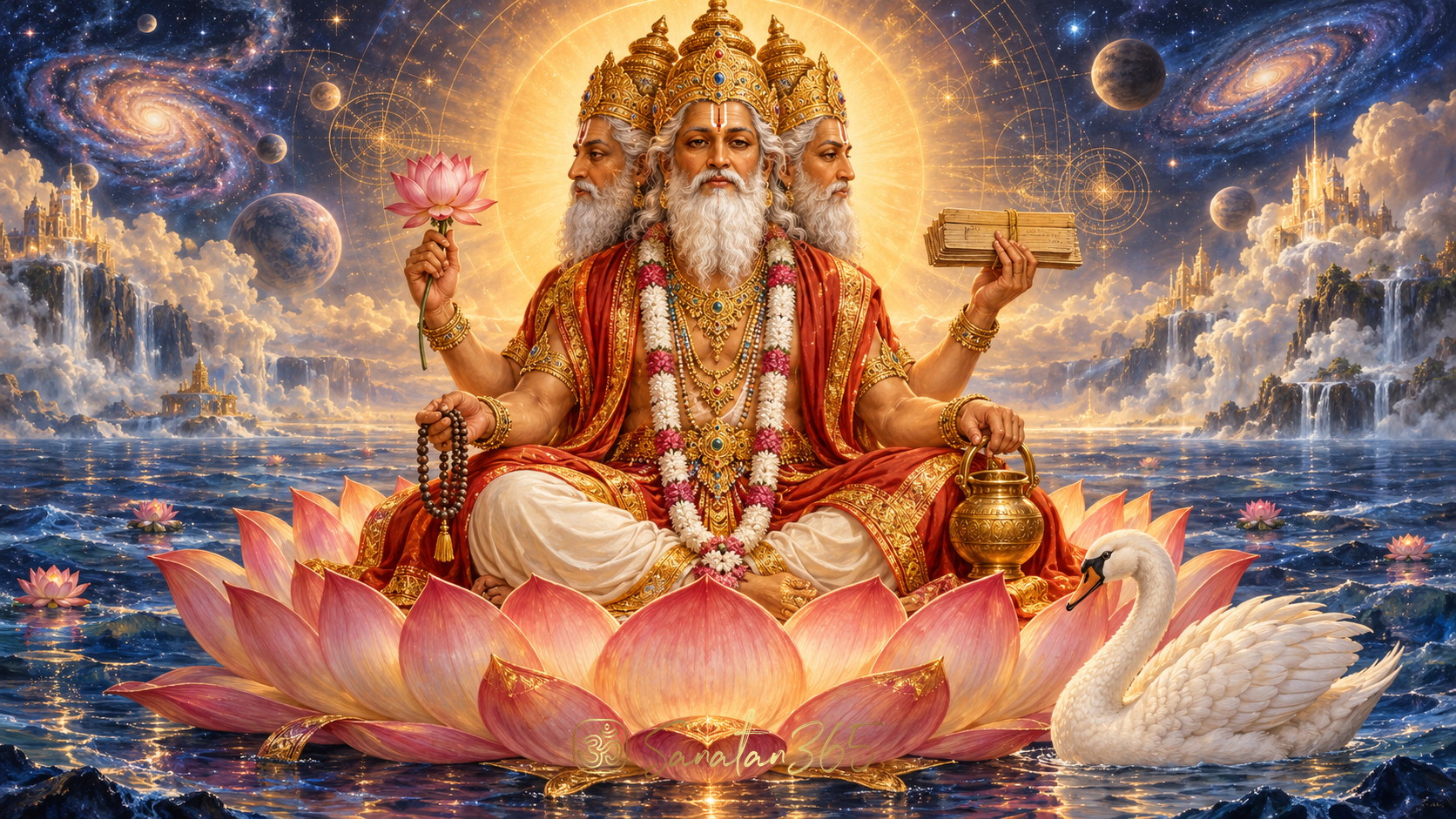
Brahma Deva Meaning: Four Faces, Creation, and Sacred Knowledge
Understand Brahma, the Hindu creator deity, through his four faces, lotus imagery, sacred knowledge, and a careful distinction from Brahman…
 Deities
Ushas, the Vedic Goddess of Dawn: Light, Renewal, and Time
Ushas, the Vedic goddess of dawn, appears in the Rigveda as radiant light that awakens life, calls beings to activity, and reveals both ren…
 Deities
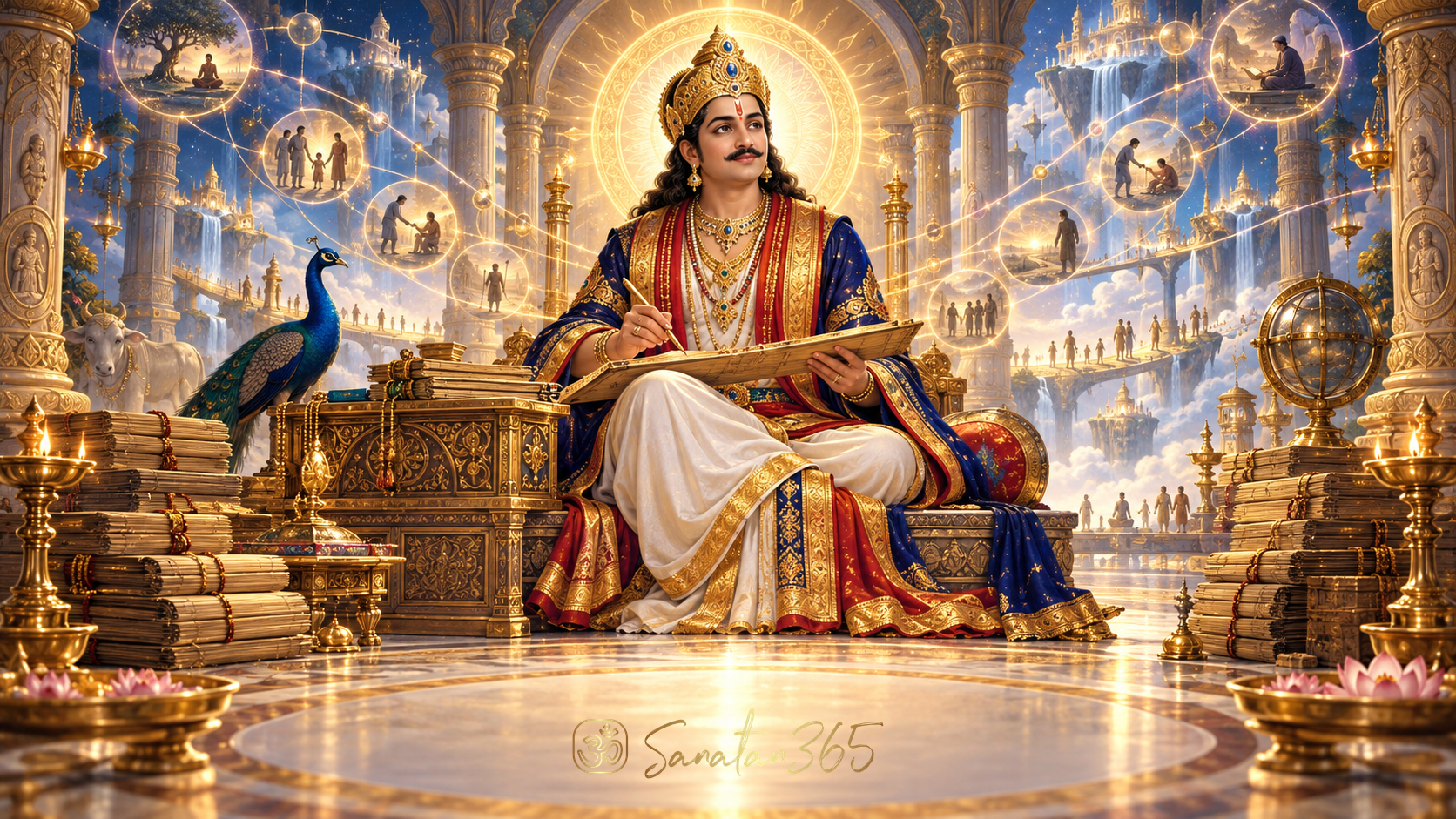
Chitragupta Meaning: Divine Records and Ethical Accountability
Chitragupta is remembered as the divine keeper of karmic records in Yama's court. His symbolism connects writing, memory, justice, and ethi…

