Kamakhya Temple Meaning: Shakti, Ambubachi Mela 2026, and Nilachal Hill
A reverent guide to Kamakhya Temple in Guwahati, its Shakti Peetha meaning, Ambubachi Mela 2026, and the deeper symbolism of sacred feminine power.
A temple can teach without placing a visible idol at the centre.
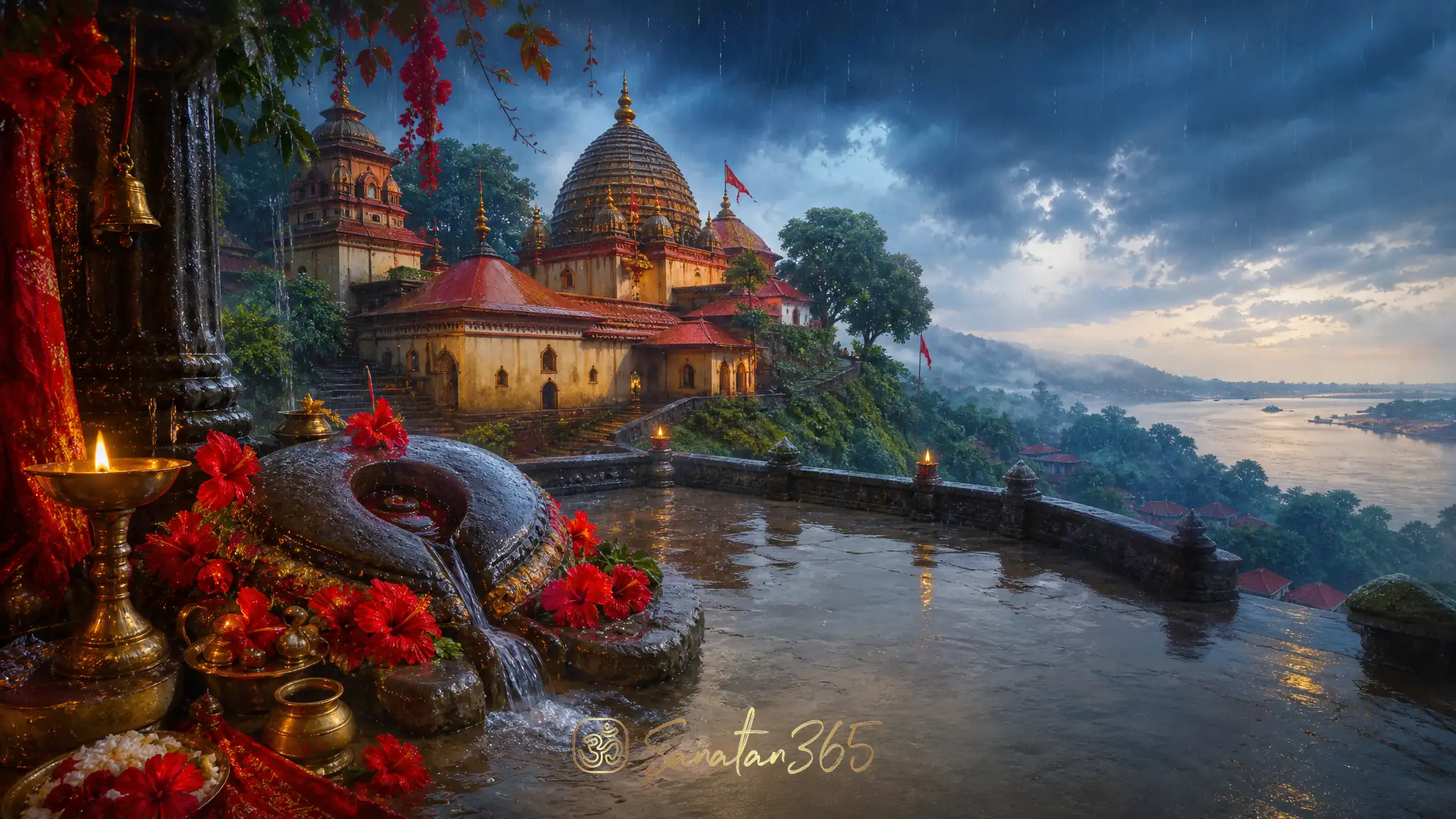
Kamakhya Temple meaning begins with Shakti (शक्ति, divine power): the living, creative force of the Divine Mother. Located on Nilachal Hill in Guwahati, Assam, Kamakhya Temple is revered as a major Shakti Peetha, a sacred seat of the goddess. Its most famous annual observance, Ambubachi Mela, honors the goddess's symbolic yearly cycle of rest and renewal during the monsoon. In 2026, public festival calendars place Ambubachi Mela from June 22 to June 26, making early June a fitting time to understand the temple with care, not sensationalism.
Kamakhya is not only a pilgrimage site. It is a way of seeing the sacred feminine as source, earth, fertility, restraint, protection, and mystery.
What Is Kamakhya Temple Meaning in Hindu Tradition?
The simplest Kamakhya Temple meaning is this: the temple honors the Divine Mother as the creative power through which life appears, rests, renews, and returns.
Kamakhya is associated with Devi Kamakhya, a form of Shakti worshipped in Assam's Nilachal Hill region. Assam Tourism describes Kamakhya as "The Shrine of the Mother Goddess in Assam" and identifies Ambubachi as the temple's most significant celebration. The temple's own public visitor references describe it as one of the sacred Shakti Peethas, seated on Nilachal Hill in Guwahati.
To understand this temple, it helps to define three terms early:
- Shakti (शक्ति, divine power): the active, creative energy of the Divine.
- Peetha (पीठ, sacred seat): a place where divine presence is ritually centered.
- Darshan (दर्शन, sacred seeing): the devotional act of seeing and being seen by the Divine.
Kamakhya differs from many temples because the central worship tradition is not built around a conventional standing image of the goddess. Devotees approach a sacred presence connected with the earth, spring water, and the womb-like source of creation. This is why Kamakhya is often described with language of origin, fertility, and feminine power rather than only with language of form.
Key takeaway: Kamakhya Temple teaches that the Divine Mother is not only worshipped as image, but also as source, earth, and living power.
Why Is Kamakhya a Shakti Peetha?
A Shakti Peetha is a sacred site connected with the presence of Devi's power. In popular Hindu memory, these sites are linked with the story of Sati, Shiva, and the dispersal of the goddess's body across the subcontinent. Different traditions preserve different lists and details, so careful writing should avoid pretending that every regional version is identical.
What remains consistent is the devotional meaning: a Shakti Peetha is not just a place to visit. It is a place where the Mother is felt as especially present.
Kamakhya is central to Shakta practice, especially in eastern and northeastern India. Shakta (शाक्त, related to Shakti worship) traditions honor the Divine as Mother, power, protection, wisdom, nourishment, and transformation. In the Kamakhya setting, this reverence becomes tied to land, monsoon, body, and cosmic renewal.
The location deepens the symbolism. Nilachal Hill rises above Guwahati, with the Brahmaputra flowing through Assam's landscape. A hilltop shrine, a river valley, monsoon rains, and the worship of the Mother all meet in one ritual geography. For pilgrims, this is not abstract theology. It is walked, climbed, waited through, and offered with flowers, lamps, and prayer.
Key takeaway: Kamakhya is revered as a Shakti Peetha because it concentrates the memory and presence of Devi as sacred creative power.
What Is Ambubachi Mela 2026 at Kamakhya Temple?
Ambubachi Mela 2026 is expected from June 22 to June 26 at Kamakhya Temple in Guwahati, according to current public festival date listings. Because Hindu festival timing can vary by local panchang (पञ्चाङ्ग, traditional Hindu calendar) and temple management decisions, pilgrims should confirm final access and darshan details with local or official sources before travel.
Ambubachi Mela is the annual festival associated with the goddess's symbolic menstrual cycle and rest. Assam Tourism describes it as a four-day festival and the most significant celebration of Kamakhya Temple. The Kamakhya temple website also explains that the festival is linked with the belief that the goddess undergoes her yearly cycle during Ashadha.
The tradition is often misunderstood because modern writing can become sensational. A respectful Hindu reading is quieter and deeper:
- The goddess rests.
- The temple rhythm changes.
- Devotees wait rather than rush.
- The earth is honored as fertile and alive.
- The reopening becomes a sign of renewal.
This is why Ambubachi is not merely a crowd event. It is a theological statement. The Divine Mother is not treated as an object for constant demand. Even the deity's rest is sacred.
For household seekers, the lesson is practical. Spiritual life is not only activity. It includes pause, restraint, waiting, and reverence for natural cycles.
Key takeaway: Ambubachi Mela honors sacred renewal by treating the goddess's symbolic rest as part of worship itself.
How Should We Understand the Feminine Symbolism Without Sensationalism?
Kamakhya asks modern readers to recover a more reverent vocabulary around the body, earth, and creation.
In many cultures, menstruation has been treated with embarrassment or impurity. Kamakhya's festival holds a more complex and sacred lens. It does not reduce the goddess to biology, and it does not turn sacred symbolism into shock. Instead, the temple places feminine generative power inside worship, ritual pause, and cosmic respect.
The word yoni (योनि, womb or source) can be misunderstood if removed from its sacred context. In Hindu thought, yoni symbolism often points to origin, creation, and the generative matrix of existence. At Kamakhya, the symbolism should be approached as sacred metaphysics and devotional reverence, not as spectacle.
This is also where regional sensitivity matters. Assam's Shakta traditions, Bengal's Devi worship, and wider pan-Indian goddess traditions do not always express devotion in the same way. A family in Guwahati, a Shakta devotee in Bengal, a pilgrim from Maharashtra, and a diaspora reader may all encounter Kamakhya with different inherited language. Good understanding allows for that diversity.
The safest devotional posture is humility. We do not need to flatten every temple into one familiar pattern. Some sacred places teach by being unfamiliar.
Key takeaway: Kamakhya's feminine symbolism is best understood as reverence for source, earth, and renewal, not as sensational or casual imagery.
What Can Pilgrims Expect Around Nilachal Hill and Guwahati?
During Ambubachi, Kamakhya becomes one of Assam's most crowded pilgrimage centers. The temple area on Nilachal Hill can draw very large numbers of devotees, sadhus, visitors, and local service networks. Travel pages and temple references regularly advise planning ahead because access, queues, and movement can change during the festival period.
For a pilgrim, basic preparation matters:
- Check current temple notices before final travel.
- Expect closure or restricted darshan during the goddess's rest period.
- Prepare for monsoon weather in Guwahati.
- Keep water, simple food, and medicines ready, especially for elders.
- Respect local queue discipline and temple instructions.
- Avoid treating ritual moments as photo opportunities.
- If traveling with children, explain the festival in gentle language: "The Mother rests, and devotees wait with respect."
The region itself is part of the experience. Nilachal Hill, the Brahmaputra, and Guwahati's layered sacred geography give Kamakhya a different feel from temples in Varanasi, Vrindavan, Madurai, or Tirupati. It belongs strongly to Assam and the northeastern sacred landscape.
Key takeaway: A Kamakhya visit is both spiritual and logistical. Respect for the goddess includes respect for local order, weather, crowds, and community.
How Does Kamakhya Speak to Modern Spiritual Life?
Kamakhya's message is surprisingly relevant for modern life because it pushes against constant extraction.
Many people approach spirituality as a tool for instant answers, instant calm, and instant personal improvement. Kamakhya offers a different rhythm. The goddess is not available as a machine. The temple closes. Devotees wait. Renewal happens in hiddenness. The sacred does not perform on demand.
This has three everyday lessons:
- Honor rest as spiritual discipline.
- Respect the body without reducing the self to the body.
- See nature's cycles as part of sacred life.
The temple also reminds families to teach children about Hindu tradition with dignity. When a child asks why the temple closes during Ambubachi, the answer need not be awkward. A simple response is enough: "This festival honors the Divine Mother and the power through which life renews. Devotees wait respectfully until the temple reopens."
For diaspora Hindus, Kamakhya can also widen the mental map of Sanatan Dharma. Hindu practice is not only the most familiar home altar, the most repeated mantra, or the most visible festival. It includes regional goddess traditions, temple ecologies, local calendars, and forms of worship that carry deep inherited meaning.
Key takeaway: Kamakhya teaches patience, reverence for cycles, and respect for sacred feminine power in daily life.
What Are Good Sources for Learning More?
For factual orientation, start with local and institution-linked references rather than viral summaries. Assam Tourism's page on Kamakhya Temple gives a public regional overview. The Kamakhya temple's visitor references explain Nilachal Hill, Shakti Peetha identity, and the temple's festival setting. Current festival-date pages can help with Ambubachi Mela 2026 planning, but final travel decisions should still be checked against local temple notices.
Useful starting points include:
- Assam Tourism: Kamakhya Temple
- Kamakhya Temple public visitor reference
- Kamakhya Devi temple information
- Ambubachi Mela 2026 date reference
Readers should be careful with social posts that overstate, mock, or exoticize the festival. Kamakhya is a living temple, not a curiosity. The goal is understanding that produces reverence.
Key takeaway: Use local, temple-linked, and current calendar references, then approach the living tradition with humility.
FAQ
What is Kamakhya Temple meaning in one sentence?
Kamakhya Temple meaning is the worship of the Divine Mother as Shakti, the sacred creative power that gives life, renews nature, and is honored through the temple's unique Shakti Peetha tradition.
When is Ambubachi Mela 2026?
Current public festival calendars place Ambubachi Mela 2026 from June 22 to June 26 at Kamakhya Temple in Guwahati. Pilgrims should confirm final temple access details with local or official sources before travel.
Why does Kamakhya Temple close during Ambubachi?
In the devotional tradition, the temple's changed rhythm honors the goddess's symbolic yearly cycle and rest. The closure teaches reverence, waiting, and respect for sacred renewal rather than constant access.
Is Kamakhya Temple only important for Shakta devotees?
Kamakhya is especially important in Shakta traditions, but its meaning speaks more widely to Hindu seekers because it honors Devi, sacred geography, pilgrimage, and the creative power of the Divine Mother.
How should families explain Ambubachi to children?
Families can say: "Ambubachi is a festival where devotees honor the Divine Mother and her power of renewal. The temple rests for a few days, and people wait respectfully before darshan resumes."
Kamakhya Temple is not meant to be reduced to a strange fact or a travel checkbox. Its deeper teaching is that creation itself is sacred, the Mother's rest is sacred, and waiting can be worship.
About the author
Sanatan365 Editorial
Bringing Sanatan Dharma to modern seekers through authentic, scripture-grounded content.
Related in Temples
 Temples
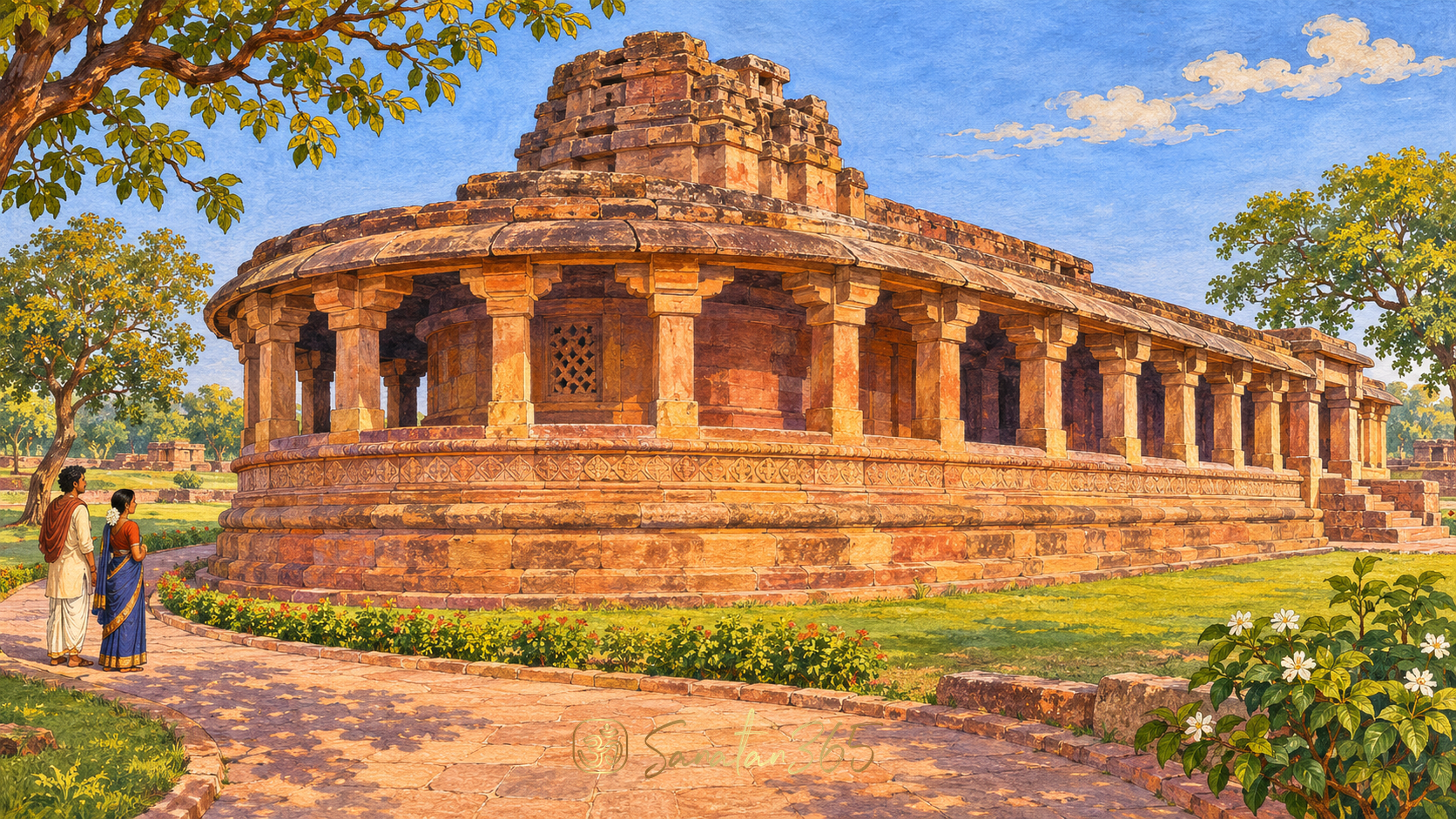
Aihole Durga Temple: Reading the Curved Stone Plan
Read Aihole’s Durga Temple through its rounded rear, raised plinth and pillared gallery, and see how a curved plan creates a sheltered rout…
 Temples
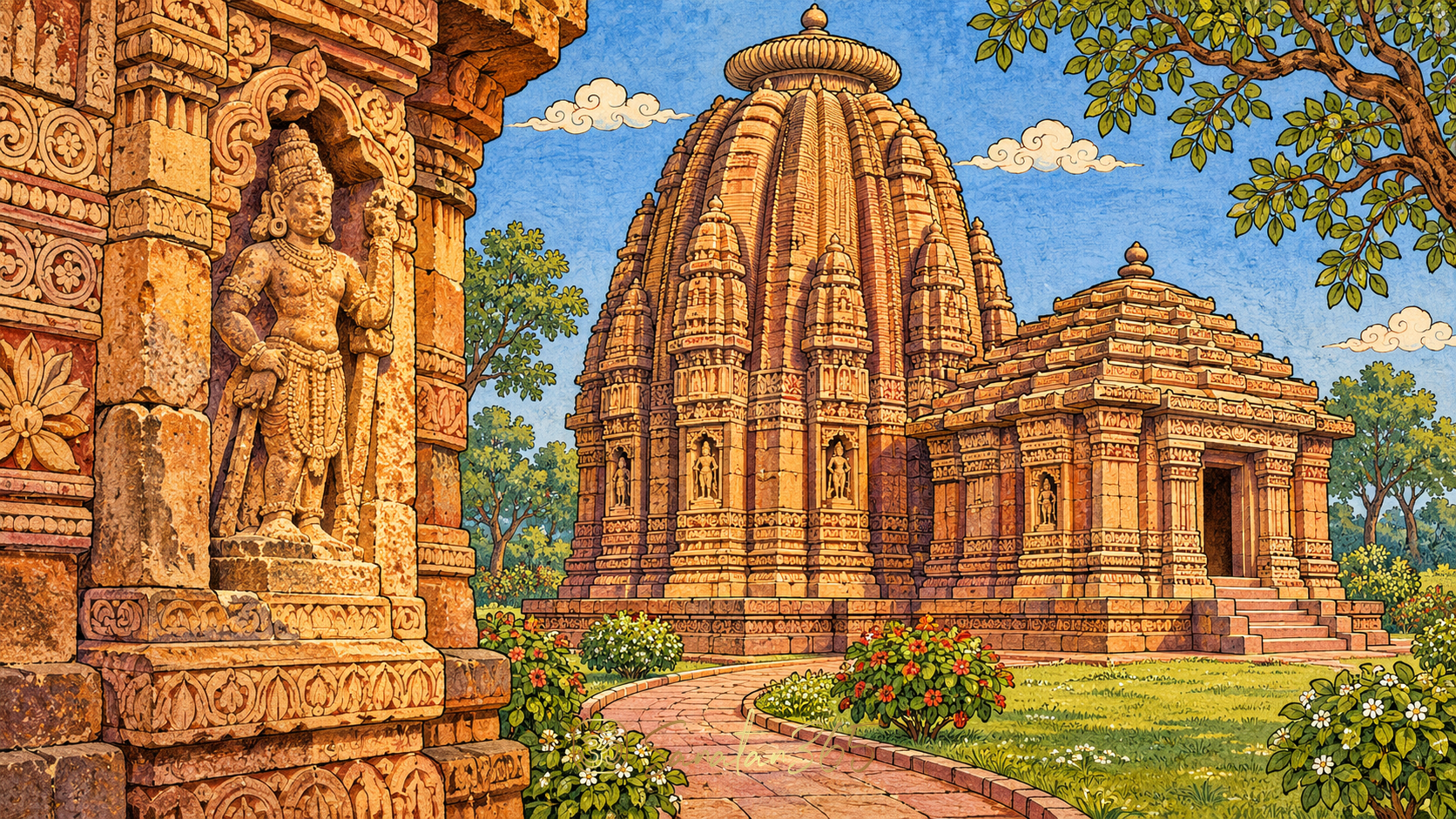
Rajarani Temple: How to Read Its Eight Guardians
Learn to read Rajarani Temple’s eight guardians, distinguish them from other figures, and understand what the carvings can tell us about th…
 Temples
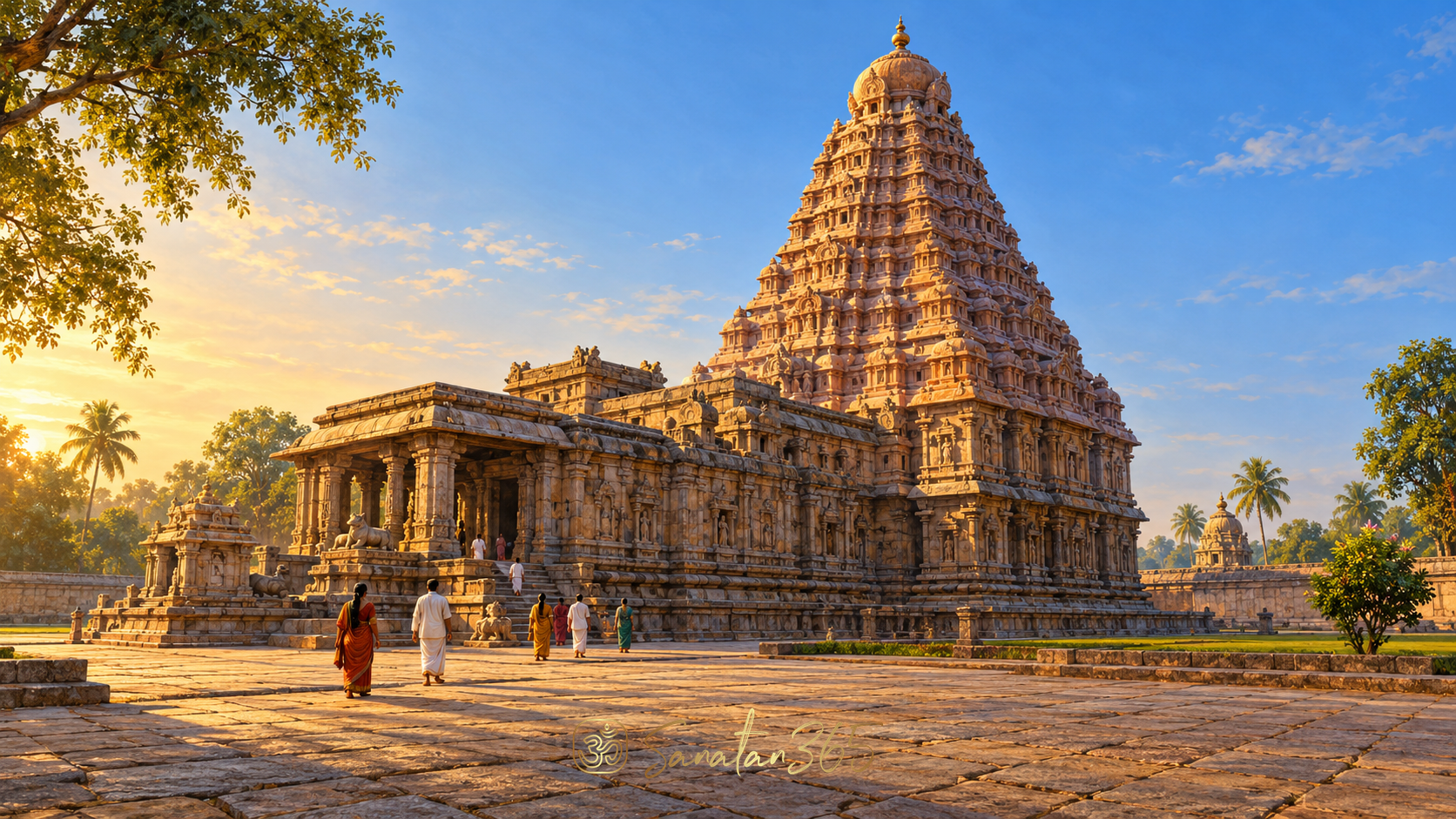
Gangaikonda Cholapuram Temple: Reading the Curve of Sacred Stone
How a curving Chola sanctum tower, carved surfaces and continuing Shiva worship invite a more attentive way of seeing Gangaikonda Cholapura…

