Gangaikonda Cholapuram Temple: Reading the Curve of Sacred Stone
How a curving Chola sanctum tower, carved surfaces and continuing Shiva worship invite a more attentive way of seeing Gangaikonda Cholapuram.
A monumental tower can rise without looking rigid. At Gangaikonda Cholapuram, the eye follows stone that seems to gather inward as it climbs.
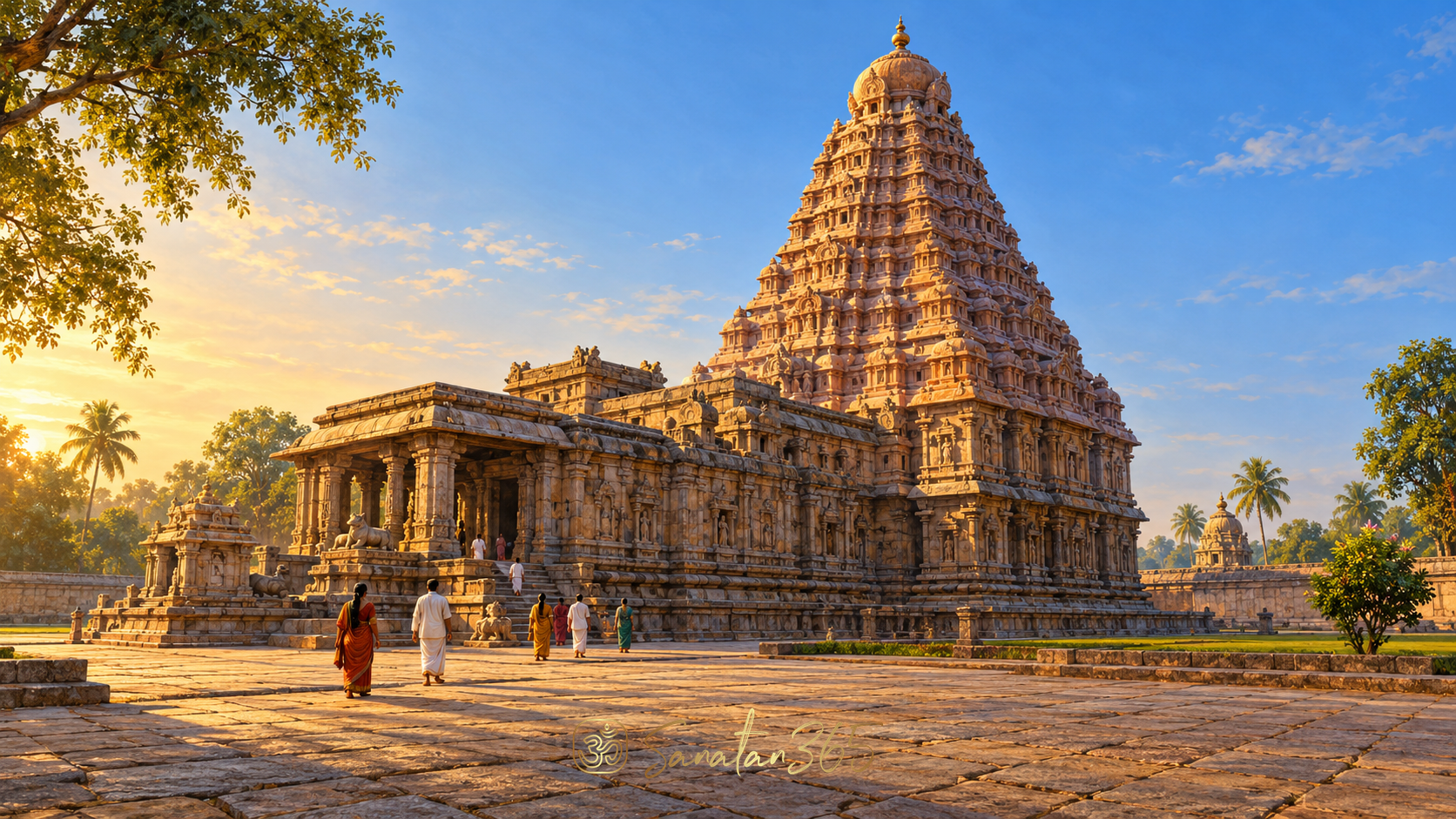
The Gangaikonda Cholapuram Temple is a Shiva temple in Tamil Nadu, built by Rajendra I and included in UNESCO’s Great Living Chola Temples. Its distinctive feature is the vimana (विमान, the tower above the sanctum): recessed corners and an upward-curving profile distinguish it from the straighter tower at Thanjavur. Reading those shapes slowly reveals more than a photograph of a famous monument. It also helps visitors remember that this architectural inheritance remains a place of worship.
What makes the Gangaikonda Cholapuram Temple tower different?
The useful first question is not whether this temple is bigger or better than another. It is what the tower asks the eye to do.
UNESCO’s World Heritage description identifies the temple with Rajendra I, gives its completion as 1035, and describes a 53-metre vimana with recessed corners and a graceful upward-curving movement. Those details offer a clear starting point. Instead of memorising a list of measurements, a visitor can look for the changing outline that the description names.
Stand at a permitted point far enough away to see the tower as a whole. Begin at its broad lower mass and follow one outer edge upward. The outline does not simply form an unvarying diagonal. Its changing slope gives the stacked structure a different visual rhythm from a straight-sided pyramid.
Calling that movement “graceful” is an aesthetic description, not a claim that stone literally bends. The building is composed of worked architectural forms. Their arrangement produces the impression of a continuous ascent. The distinction matters: attentive looking can be poetic without turning an impression into an engineering fact.
The comparison with Thanjavur is especially useful because UNESCO itself makes it. Rajendra’s temple belongs to a shared Chola architectural world, but shared vocabulary does not require identical expression. Related buildings can answer the same sacred purpose with different proportions and outlines.
Readers familiar with the Brihadeeswarar Temple at Thanjavur can therefore use comparison as a way to notice, not as a competition between shrines. Neither architectural difference nor personal preference establishes a hierarchy of devotion.
Key takeaway: The tower’s distinction lies in its upward-curving composition, not simply in its height or its resemblance to another Chola monument.
How do recessed corners change what the eye sees?
A corner can be more than the point where two flat walls meet. When parts of a building step back, they create alternating projections and recesses. Light catches the forward surfaces while deeper areas retain shadow.
UNESCO’s reference to recessed corners invites this second, closer reading. After tracing the outer silhouette, look at the tower’s surface. Which edges advance toward the viewer? Which withdraw? Where does one tier seem to settle over another? The answers may become clearer when the whole tower is no longer treated as one solid triangle.
A helpful observation sequence is:
- Find one clearly visible projecting edge.
- Follow the adjacent darker recess upward as far as it remains visible.
- Compare that vertical movement with a horizontal tier.
- Step only along an open, permitted route and observe how the relationship changes.
This is an exercise in seeing, not an instruction to approach restricted masonry. No architectural detail requires touching a carving, climbing a base or leaning across a barrier.
The same surface can appear different as light changes. That does not make one photograph false and another true. A photograph selects a viewpoint and moment; a building offers relationships that unfold as a visitor moves. Someone who has only seen a frontal image may be surprised by how much depth becomes visible from an oblique angle.
For a family visit, this can become a simple shared question: “Can two people looking at the same tower notice different things?” One person may follow the outline, another the shadows, and a child the repeated tiers. Comparing those observations encourages curiosity without requiring anyone to pretend to be an architectural specialist.
Avoid assigning a fixed spiritual meaning to every recess unless a reliable source or informed guide supports it. A surface can be carefully described before it is symbolically interpreted. Sometimes the most respectful statement is simply that a particular arrangement makes stone, light and depth unusually legible.
Key takeaway: Recessed corners break up the mass of the tower and reward changing viewpoints; observation should come before unsupported symbolism.
What does a sanctum tower reveal about sacred focus?
The word vimana is useful because it identifies what the tower belongs to. Here it rises over the sanctuary. It should not be confused with a gopuram (गोपुरम्, a monumental temple gateway), even though both may appear in discussions of South Indian temple architecture.
A gateway marks an entrance. A sanctum tower identifies the architectural mass above the sacred inner focus. Distinguishing them prevents a common misunderstanding: not every tall temple structure serves the same purpose.
At Gangaikonda Cholapuram, the principal deity is Shiva, worshipped in the form of a linga (लिङ्ग, a sacred emblem of Shiva). Knowing this changes how the exterior is read. The tower is not merely an isolated display of construction. Its placement belongs to a sanctuary directed toward worship.
That does not require a visitor to invent an invisible meaning for every dimension. It asks for a more basic recognition: the building’s outward grandeur and its inward sacred focus are related. A photograph may emphasise the skyline, while a devotee approaches for darshan (दर्शन, reverent seeing of the deity). Both encounters involve sight, but their purposes are not identical.
Someone interested in architecture can acknowledge that distinction without performing a ritual they do not understand. Someone arriving primarily for worship can appreciate workmanship without reducing the temple to an art object. Respect begins when neither perspective is allowed to erase the other.
This also helps explain why architectural terminology should remain a tool rather than an examination. A first-time visitor does not need a long glossary. Knowing the difference between entrance and sanctuary, outline and surface, observation and interpretation is already enough to look with greater care.
The related Airavatesvara Temple at Darasuram offers another point of comparison within the World Heritage group. Returning to each shrine’s own arrangement is more revealing than expecting every Chola temple to repeat one ideal template.
Key takeaway: Recognising the vimana as a sanctum tower reconnects architectural scale with the Shiva sanctuary it serves.
How can stone heritage remain a living place of worship?
“Living” in Great Living Chola Temples is not decorative language. In its feature on the temples’ continuing heritage, UNESCO describes daily, weekly and annual worship traditions as inseparable from the surrounding community. Its account connects ritual practice with the Agamas, traditional texts concerned with temple worship and related sacred disciplines.
This matters because heritage tourism can accidentally flatten time. A visitor arrives thinking only of an eleventh-century construction date and overlooks the people whose present-day responsibilities keep the place functioning. The historical building and the contemporary sacred place occupy the same ground.
For visitors, the practical consequences are straightforward:
- Let worshippers pass rather than holding a route for an uninterrupted photograph.
- Follow current footwear, access and photography instructions at the site.
- Ask before photographing people, particularly during personal acts of devotion.
- Treat barriers and restricted areas as meaningful boundaries, not inconveniences.
- Confirm current arrangements locally instead of assuming an old travel post is still accurate.
These are recommendations for considerate participation, not claims about a particular day’s opening hours or access rules. Such arrangements can change. A useful cultural article should not manufacture certainty about them.
The same distinction applies to conservation. Appreciating a carved surface does not create permission to rub it for luck or handle it for a photograph. Looking carefully is a form of restraint: the visitor receives an experience without demanding physical possession of the object.
There is also no need to stage devotion for an image. A quiet courtyard moment, an unhurried view of the tower or a question put respectfully to a guide can be sufficient. The point is not to collect evidence of having felt something. It is to make room for the place to be more than a background.
For readers in the diaspora, this perspective can travel home. A family conversation about the temple can hold together historical knowledge and present-day reverence. Children can learn who commissioned a building while also learning why other people’s prayer deserves space.
Key takeaway: A living temple is both inherited architecture and a present community of worship; a considerate visit honours both.
A slow-looking exercise for the courtyard
An attentive visit need not become an elaborate self-improvement task. Five quiet observations can provide a useful structure, whenever local access and the flow of worship allow it.
First, look without naming. Take in the whole tower before searching for a label. Notice whether attention moves toward its outline, the carved surface or the open space around it. This preserves the initial encounter instead of replacing it immediately with facts.
Second, trace one line. Follow an outer edge from the lower mass toward the top. Then compare the actual outline with the simple pyramid the mind may have expected. The purpose is to notice a difference, not force a dramatic reaction.
Third, find depth. Choose one recess and its neighbouring projection. Observe the light between them. Do not touch the stone to confirm what the eye can already investigate.
Fourth, restore context. Ask where the sanctuary lies and what is happening around it. If a worship sequence is under way, architectural looking should accommodate it rather than interrupt it. The monument is not paused for the observer.
Fifth, leave with one precise sentence. “The outer slope changes as the tower rises” says more than “the temple is magnificent” because it preserves a particular act of attention. Another visitor may remember the rhythm of recesses or the relationship between the courtyard and sanctuary.
These observations can be recorded later in a notebook. A quick sketch of an outline may be more educational than repeatedly searching for the perfect photograph. No artistic skill is required: the sketch is a record of looking, not a replacement for the building.
If visiting several temples, resist allowing comparison to become a ranking table. Ask what each site makes visible. Thanjavur may help clarify the difference in tower profiles; Darasuram may invite another kind of close attention. Gangaikonda Cholapuram deserves to be encountered on its own terms, not as a smaller entry in someone else’s achievement list.
The strongest memory may ultimately be a relationship: monumental stone above, ordinary human movement below, and worship continuing between them. That is an interpretive response rather than a historical measurement, but it is rooted in what the site actually holds together.
Key takeaway: Look at the outline, find the recesses and return attention to the sanctuary; grandeur becomes more meaningful when it is seen precisely.
FAQ
Who built Gangaikonda Cholapuram Temple?
UNESCO identifies Rajendra I as its builder and gives its completion as 1035. The temple stands in Ariyalur district, Tamil Nadu, and forms part of the Great Living Chola Temples World Heritage property.
What is special about the Gangaikonda Cholapuram vimana?
UNESCO highlights its recessed corners and graceful upward-curving movement. Its description gives the tower’s height as 53 metres. The changing silhouette distinguishes it from the straighter profile at Thanjavur.
Is the main tower a gopuram?
The tower discussed here is the vimana above the sanctum. A gopuram is a temple gateway tower. The terms describe different architectural roles and should not be used interchangeably.
Is this only a historical monument?
No. It belongs to a World Heritage group whose continuing worship traditions are explicitly recognised by UNESCO. Visitors should respect both the historical fabric and the people using the temple as a sacred place today.
About the author
Sanatan365 Editorial
Bringing Sanatan Dharma to modern seekers through authentic, scripture-grounded content.
Related in Temples
 Temples
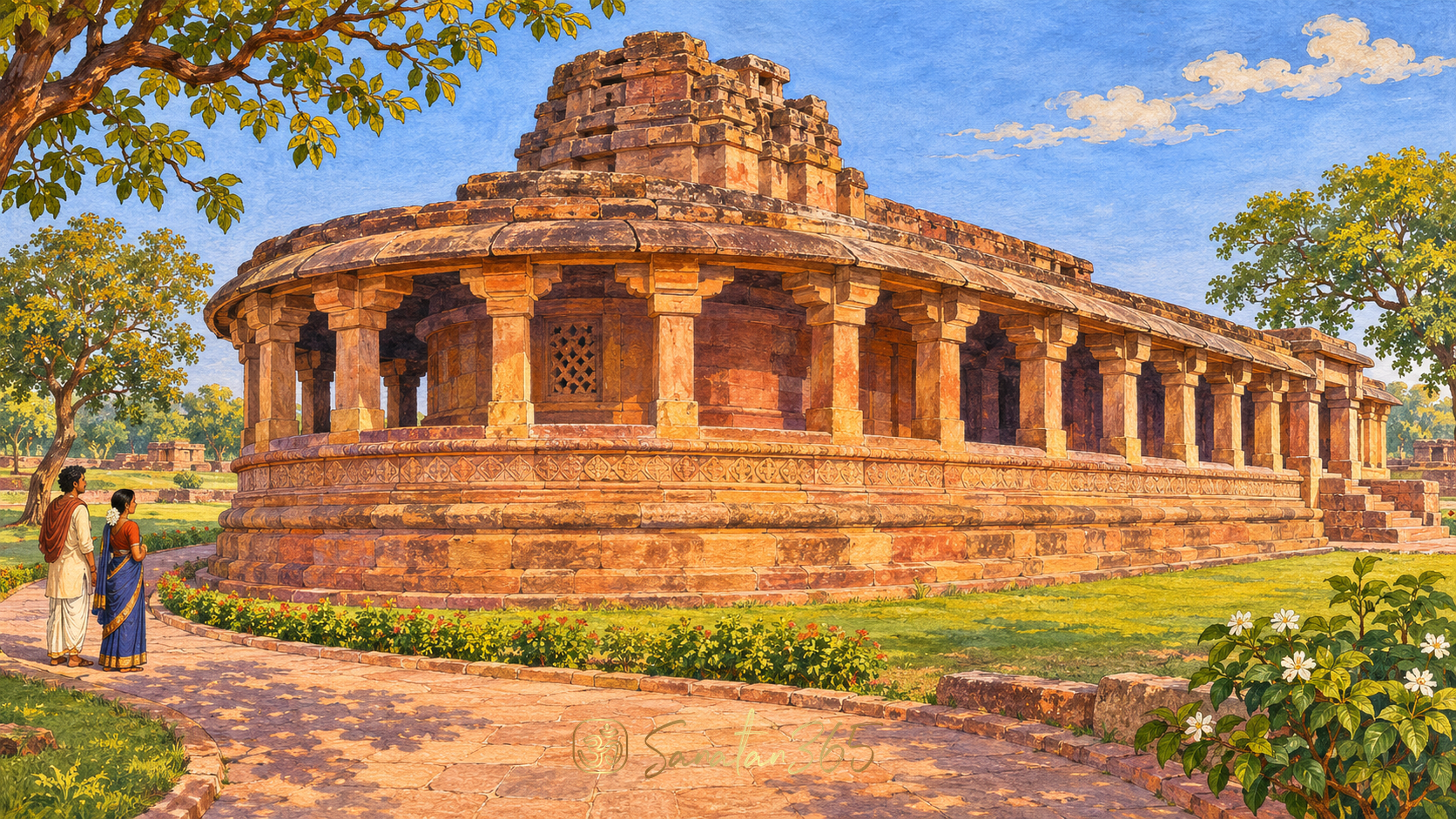
Aihole Durga Temple: Reading the Curved Stone Plan
Read Aihole’s Durga Temple through its rounded rear, raised plinth and pillared gallery, and see how a curved plan creates a sheltered rout…
 Temples
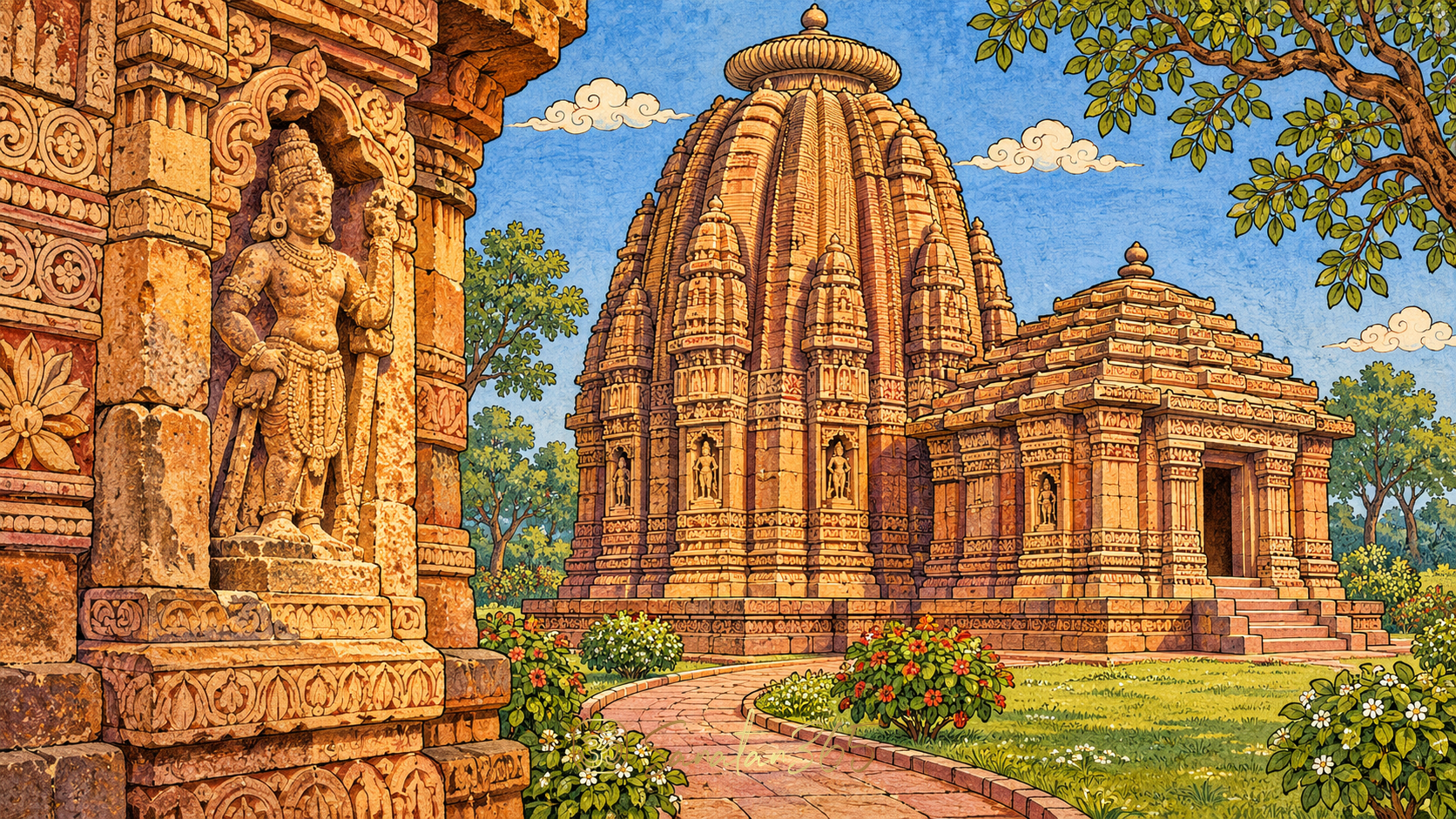
Rajarani Temple: How to Read Its Eight Guardians
Learn to read Rajarani Temple’s eight guardians, distinguish them from other figures, and understand what the carvings can tell us about th…
 Temples
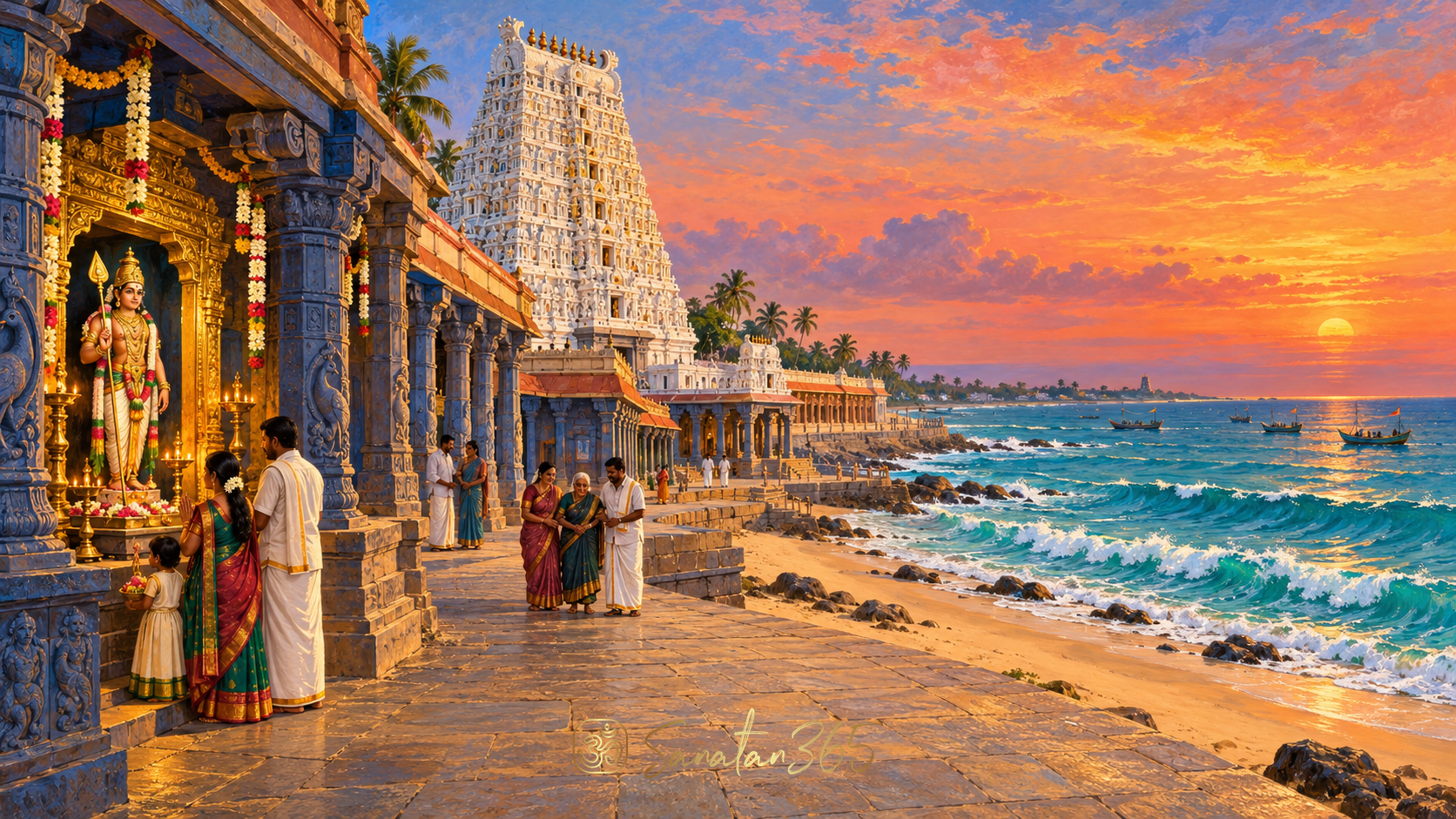
Tiruchendur Murugan Temple: Devotion at the Edge of the Sea
At Tiruchendur, Murugan worship meets the sea. Read its coastal setting, sacred traditions and water observances with devotion, care and hi…

