Krishnapingala Sankashti Chaturthi 2026: Ganesha Vrat, Moonrise, and Meaning
A clear guide to Krishnapingala Sankashti Chaturthi 2026, including date, tithi, moonrise, Ganesha worship, vrat practice, and spiritual meaning.
A monthly Ganesha vrat becomes especially tender when it is kept through a monsoon evening and completed only after the moon is seen.
Krishnapingala Sankashti Chaturthi 2026 falls on Friday, July 3, 2026, during Ashadha Krishna Paksha. It is a Sankashti Chaturthi vrat (व्रत, sacred observance) dedicated to Lord Ganesha, especially remembered as Krishna Pingala Maha Ganapati. Devotees worship Ganesha, keep discipline through the day, offer prayer after moonrise, and break the fast with humility. Drik Panchang lists the New Delhi moonrise for this observance at 09:53 PM and gives the Chaturthi tithi from 11:20 AM on July 3 to 12:39 PM on July 4 Drik Panchang.
What Is Krishnapingala Sankashti Chaturthi 2026?
Krishnapingala Sankashti Chaturthi 2026 is the July 2026 monthly Sankashti Chaturthi, observed on the fourth lunar day after the full moon. Sankashti means relief from difficulty or deliverance in a time of pressure. Chaturthi (चतुर्थी, the fourth tithi) is especially associated with Lord Ganesha, the deity of auspicious beginnings, wisdom, and the removal of obstacles.
Each lunar month has two Chaturthi tithis. The Chaturthi after Amavasya, in Shukla Paksha, is generally known as Vinayaka Chaturthi. The Chaturthi after Purnima, in Krishna Paksha, is Sankashti Chaturthi. Drik Panchang summarizes this distinction in its Sankashti date listings, noting that the Krishna Paksha Chaturthi after the full moon is known as Sankashti Chaturthi Drik Panchang.
The July 2026 observance is named Krishnapingala Sankashti. In devotional usage, Krishna Pingala Maha Ganapati is the form remembered for this month. The name evokes a deep, protective, obstacle-removing presence of Ganesha, but the heart of the vrata is not fear. It is steadiness. A devotee recognizes difficulty, turns toward Ganesha, and chooses disciplined prayer instead of panic.
For many families, the day includes fasting, simple puja, Ganesha mantra, listening to or reading the vrat katha, and waiting for moonrise before parana (पारण, breaking the fast). The discipline is gentle but serious: one learns to hold desire, hunger, worry, and impatience under the gaze of devotion.
Key takeaway: Krishnapingala Sankashti Chaturthi is a monthly Ganesha vrat that turns difficulty into disciplined remembrance.
What Are the Date, Tithi, and Moonrise Timings?
For New Delhi, Drik Panchang lists Krishnapingala Sankashti Chaturthi on Friday, July 3, 2026, with moonrise at 09:53 PM. It gives Chaturthi tithi beginning at 11:20 AM on July 3 and ending at 12:39 PM on July 4 Drik Panchang. Prokerala's July 2026 Sankashti page similarly places the observance on July 3 and gives an evening moonrise reference for the day Prokerala.
These details matter because Sankashti is traditionally connected with moonrise. Many devotees fast through the day and break the fast after sighting the moon or after the appropriate moonrise time, followed by prayer. Since moonrise changes by city, a devotee in Mumbai, Chennai, London, New York, Singapore, or Dubai should check a reliable local panchang rather than copying New Delhi timings.
For practical clarity:
- Date for New Delhi: Friday, July 3, 2026.
- Lunar context: Ashadha Krishna Paksha Chaturthi.
- Chaturthi begins: 11:20 AM on July 3, 2026.
- Chaturthi ends: 12:39 PM on July 4, 2026.
- New Delhi moonrise: 09:53 PM on July 3, 2026.
The panchang is not a decorative calendar. It teaches that spiritual practice happens inside sacred time. A person may perform Ganesha puja at home, but the timing links that home worship with a wider rhythm shared by temples and households across regions.
At the same time, household practice should remain humane. Elderly people, children, pregnant women, people with medical conditions, and anyone under health guidance should not imitate a strict fast without care. A vrat is meant to discipline the mind, not harm the body. Devotees can adapt food, water, and rest according to health, family tradition, and trusted guidance.
Key takeaway: Use July 3, 2026, for the New Delhi observance, but always confirm moonrise for the devotee's own city.
Why Is Lord Ganesha Worshipped on Sankashti?
Lord Ganesha is worshipped on Sankashti because he is Vighnaharta (विघ्नहर्ता, remover of obstacles) and also the deity who brings wisdom before action. The Hindu American Foundation notes that Ganesha is widely known as the remover of obstacles and is worshipped before major undertakings Hindu American Foundation. This is not only about success in outer work. It is also about removing inner confusion.
The Ganesha tradition is spiritually rich because obstacles are not always enemies. Some obstacles protect a person from careless choices. Some reveal impatience. Some force humility. Some make the devotee ask whether the desired path is truly dharmic. Ganesha does not merely clear the road like a servant of ambition. He teaches the seeker how to walk.
This makes Sankashti powerful. The word itself points to distress, pressure, or difficulty. On this day, a devotee does not deny trouble. The devotee brings trouble to Ganesha with discipline:
- Hunger becomes restraint.
- Moonrise becomes patience.
- Mantra becomes mental steadiness.
- Puja becomes gratitude.
- The story of Ganesha becomes moral orientation.
The Ganapati Atharvashirsha tradition reveres Ganesha not only as a helpful deity but as a doorway to the deeper reality behind all forms. Even when a household practice is simple, that philosophical depth remains present. A small modak, a lamp, and folded hands can carry a very large teaching: wisdom should lead desire, not follow it.
Key takeaway: Ganesha worship on Sankashti asks for obstacle removal, but it also asks for wisdom, restraint, and right direction.
How Do Devotees Observe the Ganesha Vrat?
Sankashti practice varies by family, region, health, and sampradaya (सम्प्रदाय, lineage or tradition). A Maharashtrian household, a North Indian family, a Tamil devotee, and a diaspora temple community may keep the vrat with different details. The shared center is devotion to Ganesha and disciplined completion after moonrise.
A simple home observance may include:
- Bathe and clean the puja space.
- Place a Lord Ganesha murti, image, or sacred symbol respectfully.
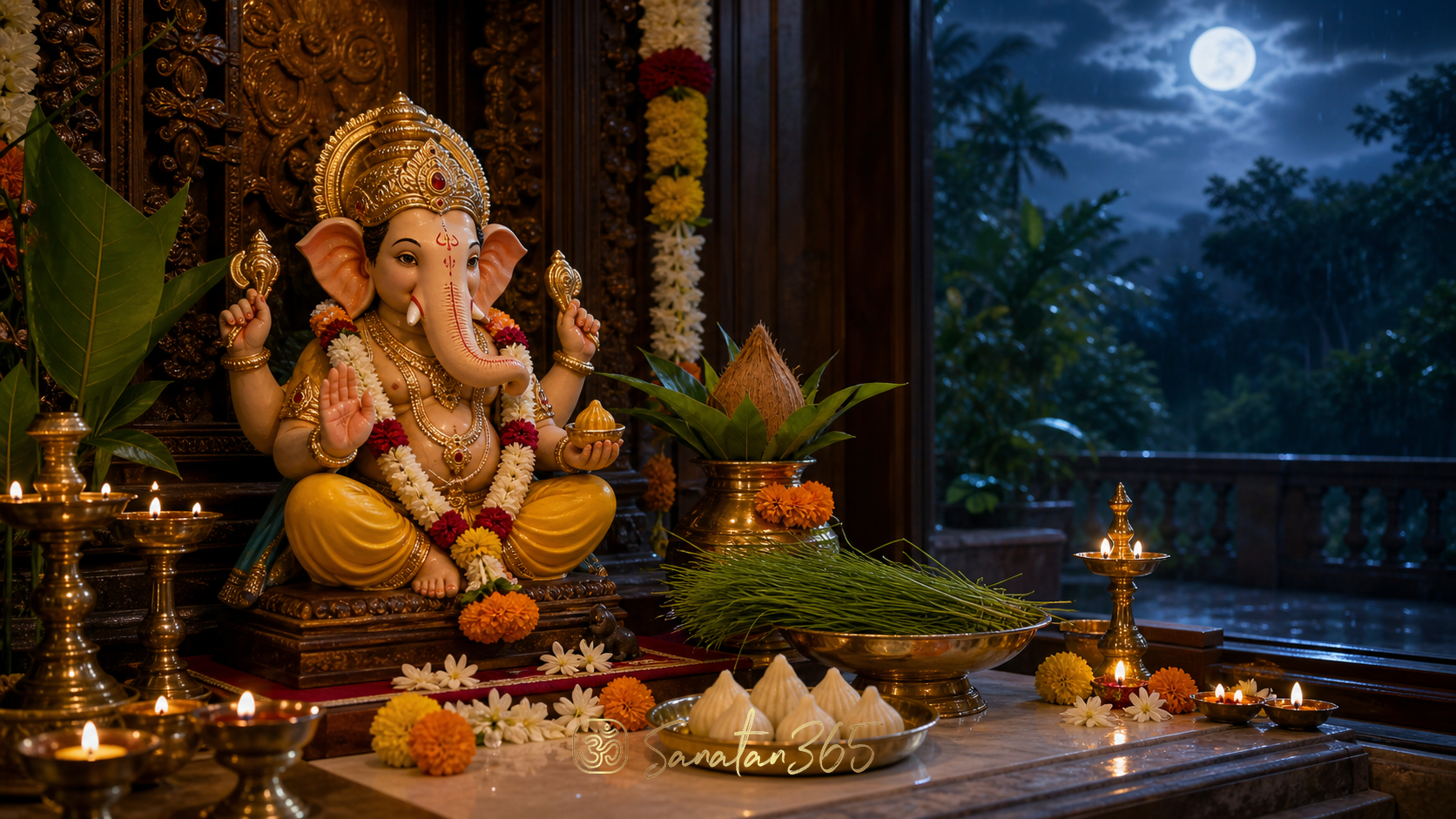
- Light a diya and offer flowers, durva grass, modak, fruit, or simple naivedya.
- Recite "Om Gam Ganapataye Namah" or another family Ganesha mantra.
- Read or listen to the Sankashti vrat katha.
- Keep a fast according to health and tradition.
- Offer arghya (अर्घ्य, respectful water offering) to Chandra, the moon, after moonrise.
- Break the fast with prayer and simple sattvic food.
The ritual should not become a checklist without attention. If a devotee has only ten quiet minutes, those ten minutes can still be meaningful when offered with sincerity. If a family performs a fuller puja, the fullness should deepen reverence rather than display.
Durva grass and modak are especially beloved in Ganesha worship. Durva suggests freshness, humility, and healing; modak symbolizes sweetness and the inner reward of wisdom. The mouse or mushika associated with Ganesha is often read as the restless desire-mind brought under guidance. In that sense, the altar becomes a map of practice. The large wisdom of Ganesha sits calmly over the small, quick impulses of the mind.
Parents can make the day accessible for children by explaining it simply: "We pray to Ganesha so our mind becomes wise before we begin anything important. We wait for the moon to learn patience." Such language protects the practice from becoming frightening or transactional.
Key takeaway: The strongest Sankashti observance combines Ganesha puja, mantra, restraint, moonrise prayer, and sincere attention.
What Is the Spiritual Meaning of Waiting for Moonrise?
Waiting for moonrise gives Sankashti its emotional texture. The devotee does not simply perform a morning prayer and move on. The day stretches. Hunger may appear. Restlessness may appear. The moon may be hidden by clouds. The mind has time to reveal itself.
In Hindu practice, the moon is often connected with mind, rhythm, nourishment, and time. On Sankashti, the devotee waits until Chandra is visible or until the appropriate moonrise time, then offers water and prayer before breaking the fast. The act is not about worshipping impatience. It is about placing impatience into a sacred sequence.
The moon also teaches reflected light. It does not blaze like the sun. It cools, softens, and marks phases. That is a fitting symbol for a Ganesha vrat. Not every obstacle is removed through force. Some are softened through patience. Some dissolve when the mind becomes cooler. Some require timing.
Ashadha's monsoon setting can make this even more vivid. Clouds may cover the sky. A devotee may not see the moon clearly. The practice then becomes less about visual certainty and more about trust, panchang guidance, and devotional completion. Families should follow their tradition for cloudy conditions and local timing.
This waiting can be brought into ordinary life. Before sending a harsh message, wait. Before making a fearful decision, wait. Before assuming failure, wait. Sankashti teaches that delay is not always denial. Sometimes delay is the space in which Ganesha removes the obstacle inside the devotee first.
Key takeaway: Moonrise teaches patience, cooling of the mind, and trust in sacred timing.
How Can Families Keep the Vrat Safely and Meaningfully?
A meaningful Sankashti is not measured by severity. It is measured by steadiness, reverence, and conduct after the puja.
First, choose a fasting level that is appropriate. Some devotees observe a strict fast until moonrise. Some take fruits, milk, or light vrat foods. Some cannot fast for health reasons and instead observe restraint through simple food, extra prayer, charity, or avoiding anger and careless speech. Spiritual discipline should be truthful about the body.
Second, avoid exaggerated promises. Sankashti is traditionally beloved for obstacle removal, but no article, priest, app, or ritual formula should promise guaranteed marriage, money, promotion, or miracle results. Devotion is not a vending machine. The prayer may be for help, but the deeper result is alignment with dharma (धर्म, sustaining order and right conduct).
Third, keep the home atmosphere sattvic (सात्त्विक, clear, balanced, and harmonious). A family can make the day gentle:
- Reduce unnecessary arguments.
- Keep food simple.
- Offer one act of kindness.
- Chant together for a few minutes.
- Teach children one Ganesha name and its meaning.
- Break the fast without overeating.
Fourth, remember that the obstacle may be internal. A difficult relationship may need patience and apology. A work problem may need planning. A financial worry may need discipline. A spiritual dryness may need regular practice. Ganesha's grace does not remove the need for responsibility; it strengthens the devotee to meet responsibility wisely.
Finally, close the day with gratitude. After moonrise prayer and food, sit quietly for one minute. Ask: "What obstacle in me should be softened?" That question can turn a monthly vrat into monthly self-correction.
Key takeaway: Keep Sankashti with health, humility, and ethical follow-through, not with fear or exaggerated expectations.
What Are Reliable Sources for Krishnapingala Sankashti Chaturthi?
For timing, use a panchang that supports local city calculations. Drik Panchang and Prokerala both list the July 3, 2026 Sankashti observance, but local moonrise can differ substantially by geography. A devotee outside New Delhi should check the same date for their own location.
For Ganesha's wider meaning, the Hindu American Foundation's overview is a useful accessible starting point because it explains Ganesha as the remover of obstacles and a deity honored before undertakings Hindu American Foundation. For deeper study, devotees can turn to the Ganapati Atharvashirsha, Ganesha Purana, Mudgala Purana traditions, and trusted teachers in their own lineage.
Reliable practice comes from combining three sources:
- Panchang for timing.
- Family or temple tradition for method.
- Scripture and teacher guidance for meaning.
This protects the vrat from becoming either superstition or mere content. A panchang without devotion becomes calculation. Devotion without guidance can become confusion. Guidance without humility can become pride. Sankashti brings them together in a simple monthly rhythm.
Key takeaway: Use panchang timing, living tradition, and careful study together.
FAQ
When is Krishnapingala Sankashti Chaturthi 2026?
Krishnapingala Sankashti Chaturthi 2026 is observed on Friday, July 3, 2026, for New Delhi. Drik Panchang lists Chaturthi tithi from 11:20 AM on July 3 to 12:39 PM on July 4, with moonrise at 09:53 PM.
What is the main purpose of Sankashti Chaturthi?
The main purpose is to worship Lord Ganesha for wisdom, obstacle removal, steadiness, and relief from difficulty. The vrat also trains patience because many devotees complete it only after moonrise.
Can Sankashti Chaturthi be observed without a strict fast?
Yes, many devotees adapt the observance according to health, age, family tradition, and practical responsibility. A person who cannot fast strictly can still pray to Ganesha, eat simply, chant, avoid careless speech, and keep the day with devotion.
Why is moonrise important on Sankashti?
Moonrise is important because the traditional vrat is completed after seeing or honoring the moon and offering prayer. The moon also symbolically teaches patience, cooling of the mind, and sacred timing.
Which Ganesha form is worshipped on Krishnapingala Sankashti?
Krishna Pingala Maha Ganapati is associated with Krishnapingala Sankashti. Devotees may worship Lord Ganesha through a murti, image, mantra, or family puja method with reverence.
Krishnapingala Sankashti Chaturthi's single key takeaway is this: when difficulty appears, begin with Ganesha, steady the mind through discipline, wait for the right light, and let wisdom remove the obstacle within before asking the world to change.
About the author
Sanatan365 Editorial
Bringing Sanatan Dharma to modern seekers through authentic, scripture-grounded content.
Related in Festivals
 Festivals
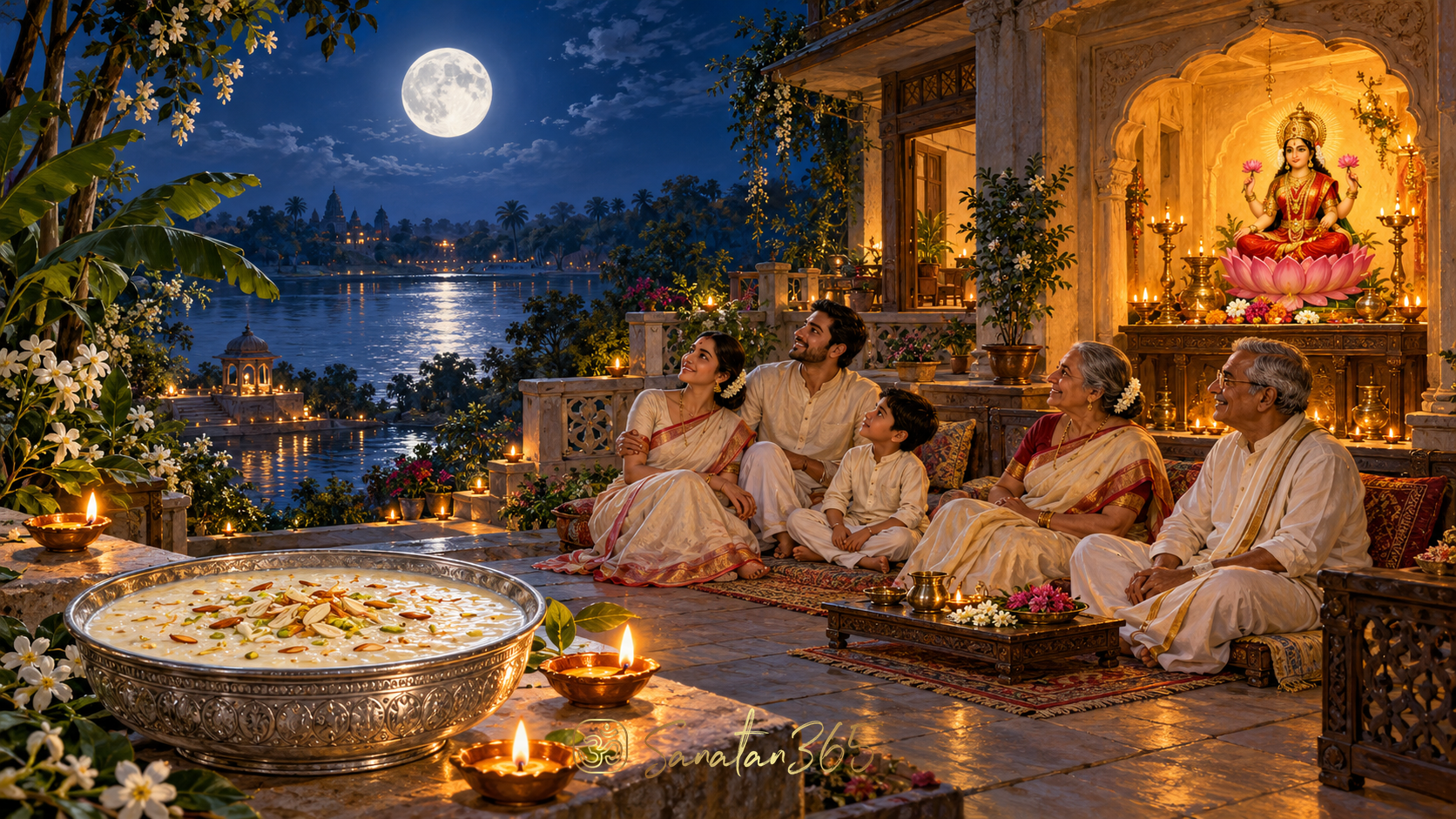
Sharad Purnima 2026: Date, Moonlight Traditions, and Kojagara Puja
Sharad Purnima falls on 25 October 2026. Understand the two-date calendar question, moonlight and kheer customs, and regional Kojagara Laks…
 Festivals
Dussehra 2026: Date, Vijayadashami Meaning, and Living Traditions
Understand the 2026 Dussehra date, the meanings of Rama and Durga’s victories, regional celebrations, and a thoughtful way to observe Vijay…
 Festivals
Garba Meaning: The Lamp at the Heart of Navratri
Garba is a Gujarati devotional dance associated with Navratri. Its central lamp, shared circular rhythm and reverence for Goddess Amba expl…