Pada Puja Meaning: Why Sacred Feet Are Honoured with Gratitude
Pada Puja is the Hindu practice of honouring the feet or symbolic sandals of a parent, elder, teacher, or sacred presence. Its deepest meaning is gratitude made visible through humility, service, and discernment.
A pair of feet may seem like the least exalted part of the body. In Hindu ritual language, that is precisely why bowing before them can carry such depth: reverence descends from abstract feeling into a concrete act of gratitude.
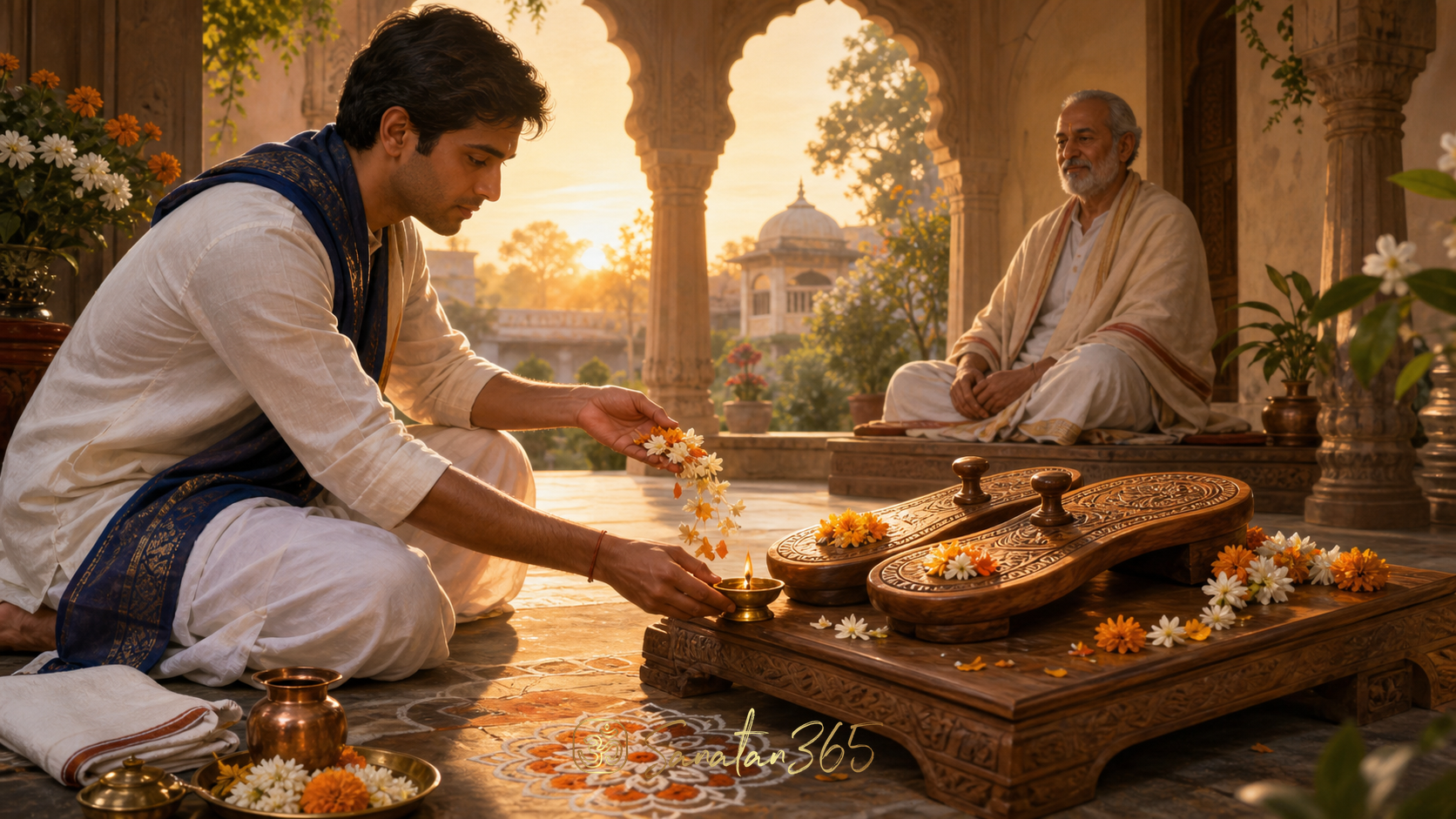
Pada Puja means respectfully honouring the feet, or the symbolic sandals, of a deity, parent, elder, teacher, or other revered presence. Pāda (पाद, foot) and pūjā (पूजा, reverential worship or honouring) name a ritual that may include washing, drying, anointing, offering flowers, lighting a lamp, and bowing. The outward form varies widely. Its central purpose is to remember what one has received and to respond with humility, service, and ethical responsibility.
What Is the Pada Puja Meaning in Hindu Tradition?
The most direct Pada Puja meaning is “worship or reverential honouring of the feet.” Yet English words such as worship can make the practice sound narrower than it is. In different settings, Pada Puja may express devotion to the Divine, gratitude toward parents, respect for an elder, or reverence for a teacher and the knowledge transmitted through a lineage.
The feet carry a person through the world. Symbolically, they represent the path already walked, the discipline that sustained it, and the ground on which another person now stands. To honour the feet is therefore to acknowledge dependence without pretending that dependence must be permanent or unthinking. A child receives life and care from parents. A student receives instruction from a teacher. A devotee receives a framework of practice from a tradition. Pada Puja makes that received inheritance visible.
This logic is consonant with the Taittiriya Upanishad 1.11.2, which instructs a departing student: mātṛ-devo bhava, pitṛ-devo bhava, ācārya-devo bhava—regard the mother, father, and teacher with the reverence due to the Divine. The passage is part of a larger ethical instruction, not permission to abandon judgment. It also asks the student to follow conduct that is blameless and worthy.
Regional names and forms differ. Pada Pooja, Paada Puja, and Pāda Pūjā are common spellings. Paduka Puja honours pādukā (पादुका, sandals or sacred footwear), often when the person represented is absent or when the lineage uses symbolic sandals as the focus. In some homes, adults ceremonially wash their parents’ feet. In temples and devotional settings, the feet of a deity’s murti (मूर्ति, consecrated sacred form) may receive offerings. In teacher-student traditions, the focus may be the teacher’s feet or padukas.
Key takeaway: Pada Puja turns gratitude for life, guidance, or sacred presence into an embodied act of reverence.
Why Are Feet Considered Sacred?
Hindu thought frequently uses the feet as a spiritual image because they unite humility, refuge, movement, and groundedness.
Feet represent the path
A teacher’s authority, at its best, is not based on performance or status. It comes from a path of disciplined study and practice. Honouring the feet can mean honouring that path rather than idolising a personality. The student bows to what has been lived, tested, and transmitted.
The Bhagavad Gita 4.34 describes approaching those who have seen truth through praṇipāta (प्रणिपात, respectful approach or bowing), sincere questioning, and service. All three matter. Bowing without inquiry can become passivity; questioning without humility can become vanity; service without discernment can become exploitation. Together they describe a mature relationship to learning.
Feet represent refuge
Devotional literature often speaks of taking refuge at the “lotus feet” of the Divine. This is poetic language for surrendering egoic control, not a claim that the physical foot alone possesses magical power. The lotus grows from mud without being defined by it; “lotus feet” therefore suggest purity, compassion, and a stable place of refuge amid change.
Feet represent grounded service
Feet remain closest to the earth. Honouring them reverses ordinary status-seeking: the devotee chooses to lower the body and place gratitude before self-importance. The gesture says, “What I have received matters more than appearing superior.”
This does not make humiliation sacred. Healthy humility is truthful self-placement, not self-erasure. A ritual is spiritually meaningful only when freely offered, culturally understood, and consistent with dignity.
Key takeaway: Sacred-feet symbolism honours a lived path, a place of refuge, and the humility required for real learning.
What Do Rama’s Padukas Teach About Sacred Authority?
One of the most powerful paduka images appears in the Valmiki Ramayana. When Bharata asks Rama to return from exile and rule Ayodhya, Rama remains committed to the duty he has accepted. Bharata then receives Rama’s sandals and places them on the throne as a sign that legitimate authority belongs to Rama, while Bharata serves as caretaker.
The episode is remembered in different retellings with devotional detail, but its ethical centre is clear: authority is held in trust. The padukas do not become a decorative substitute for responsibility. They remind Bharata that power is not personal possession.
This makes Paduka Puja especially relevant beyond a ritual room. A leader may ask: Whose values are represented by the seat I occupy? A teacher may ask: Am I serving knowledge or collecting obedience? A student may ask: Does reverence make my judgment clearer and my conduct more responsible?
The padukas signify the absent person without pretending that an object is the whole person. They also allow devotion to be directed toward a path and its principles. This distinction protects the ritual from collapsing into celebrity culture.
Readers interested in teacher-student responsibility may also explore the meaning of Diksha and disciplined initiation. For a related household ethic, Atithi Devo Bhava shows how reverence is expressed through practical care rather than slogans.
Key takeaway: Rama’s padukas symbolise authority as stewardship: power belongs to dharma, not to personal ego.
How Is the Pada Pooja Ritual Performed?
There is no single universal sequence. Family customs, temple traditions, and lineages differ, and participants should follow their own trusted tradition. A simple respectful form may include:
- Prepare a clean space. Place a low seat, cloth, tray, or padukas in an uncluttered area. If honouring a living parent or elder, ensure they are comfortable and willing.
- State the intention. A short saṅkalpa (सङ्कल्प, conscious intention) may name gratitude, learning, remembrance, or prayer.
- Offer water carefully. In traditions that wash living feet or a sacred object, use a small amount of clean water in a basin. Some customs use milk or other substances, but simplicity and comfort are preferable to waste.
- Dry and anoint. The feet or padukas may be dried and marked with sandalwood paste, turmeric, or kumkum according to custom. Not every material suits every context.
- Offer flowers and light. Flowers, petals, incense, and a small diya (दीया, oil lamp) may be offered. Fire should be handled safely.
- Bow or touch the feet. The gesture may be pranāma (प्रणाम, respectful salutation), touching the feet and then one’s head or heart, or simply folding the hands in Namaste.
- Receive blessing, then serve. A spoken blessing, shared meal, gift, charitable act, or commitment to better conduct can complete the ritual.
When worship is directed toward a deity, the sequence belongs within the temple or household puja tradition concerned. When directed toward parents, the act should not become a performance that ignores their daily needs. Washing a parent’s feet once has little meaning if impatience, neglect, or disrespect defines the rest of the year.
Diaspora families may adapt the practice without embarrassment or theatricality. A small flower offering, a letter of gratitude, a video call with elders, or service performed in their honour can preserve the core intention when geography prevents a full ceremony.
Key takeaway: The best Pada Puja is simple, willing, clean, and completed through real service after the ritual ends.
Is Honouring a Guru the Same as Obeying Without Question?
No. Hindu traditions praise the guru (गुरु, a teacher who dispels darkness) while also preserving standards for teachers, students, and knowledge. Reverence does not cancel conscience.
A responsible teacher does not demand secrecy around harm, financial coercion, sexual access, isolation from family, or surrender of independent judgment. A responsible student does not confuse charisma with wisdom. If a person feels unsafe, pressured, manipulated, or unable to say no, the ritual should stop. Trusted family, community leaders, or appropriate professional and legal support may be necessary.
The Gita’s pairing of respectful approach with paripraśna (परिप्रश्न, thorough or sincere questioning) is instructive. Questions are not an insult to truth. They help distinguish wisdom from authority theatre. The Taittiriya Upanishad likewise directs the student toward conduct that is ethically sound.
These safeguards do not weaken devotion. They protect it. A teacher worthy of reverence should welcome integrity, proportion, and freedom from coercion. A parent worthy of gratitude should not use a sacred custom to demand compliance with harmful behaviour. A tradition remains alive when its symbols deepen dharma rather than shelter abuse.
It is also helpful to distinguish humility from hierarchy. Humility says, “I am willing to learn.” Harmful hierarchy says, “I am forbidden to think.” Pada Puja belongs to the first statement.
Key takeaway: Reverence and discernment are partners; sacred honour never requires submission to harm or coercion.
How Can Pada Puja Become a Daily Practice?
Most people will not perform a formal foot-honouring ritual every day. The values behind it can still shape ordinary conduct.
- Remember the source. Before using knowledge, recall the people and traditions that made it available.
- Serve before displaying devotion. Call an elder, help with a practical need, or fulfil a responsibility without seeking praise.
- Keep learning accountable. Credit teachers and sources rather than presenting inherited wisdom as personal invention.
- Walk the teaching. The truest honour to a teacher is conduct shaped by what was learned.
- Practise gratitude without idealising. Parents, elders, and teachers are human. Gratitude can coexist with truthful boundaries.
- Care for the path ahead. Offer time, mentorship, or resources so another learner can benefit.
Touching elders’ feet before a journey, examination, wedding, or new undertaking is common in many Indian families. The gesture asks for āśīrvāda (आशीर्वाद, blessing) and acknowledges that no new beginning is entirely self-made. Some families embrace the custom; others express respect through folded hands or words. The spiritual principle is larger than one physical form.
Formal ritual can concentrate attention, but daily behaviour proves whether the attention was sincere. Pada Puja reaches fulfilment when gratitude becomes patience, learning becomes service, and blessing becomes responsible action.
Key takeaway: The ritual’s daily form is ethical: remember, serve, credit, practise, and pass the gift forward.
Conclusion
The Pada Puja meaning is not exhausted by washing feet or placing flowers before padukas. It is a disciplined remembrance that life and wisdom are received through relationships. The ritual lowers the body so gratitude can rise, but it does not ask conscience to disappear.
Sacred feet symbolise a path walked before us. Parents may represent life and care; elders, memory; teachers, knowledge; the Divine, refuge; padukas, authority held in trust. When reverence remains voluntary, discerning, and joined to service, Pada Puja becomes a profound lesson in how to receive without entitlement and honour without surrendering dignity.
Key takeaway: Pada Puja is gratitude made visible, and its most authentic offering is a life of humble, responsible service.
FAQ
What does Pada Puja mean?
Pada Puja means reverentially honouring the feet of a deity, parent, elder, teacher, or sacred presence. It may include washing, anointing, flowers, light, bowing, and receiving blessings. The central values are gratitude, humility, and service.
What is the difference between Pada Puja and Paduka Puja?
Pada Puja generally honours feet directly. Paduka Puja honours padukas, sacred sandals or symbolic footwear representing a deity, teacher, lineage, or revered person. Practices vary across families and traditions.
Why do Hindus touch elders’ feet?
Many Hindus touch elders’ feet as a respectful salutation and to receive ashirvada, or blessing. The gesture acknowledges care, experience, and continuity. Folded hands or verbal respect may serve the same purpose where touching feet is not customary or comfortable.
Can Pada Puja be performed for parents?
Yes. Some families honour parents through Pada Puja during birthdays, anniversaries, weddings, or other meaningful occasions. It should be voluntary, comfortable, and supported by genuine day-to-day care.
Does Guru Pada Puja require unquestioning obedience?
No. Reverence for a teacher should coexist with sincere questioning, ethical judgment, and personal safety. Hindu teaching itself values disciplined inquiry. No ritual justifies coercion, abuse, or surrendering conscience.
About the author
Sanatan365 Editorial
Bringing Sanatan Dharma to modern seekers through authentic, scripture-grounded content.
Related in Rituals
 Rituals
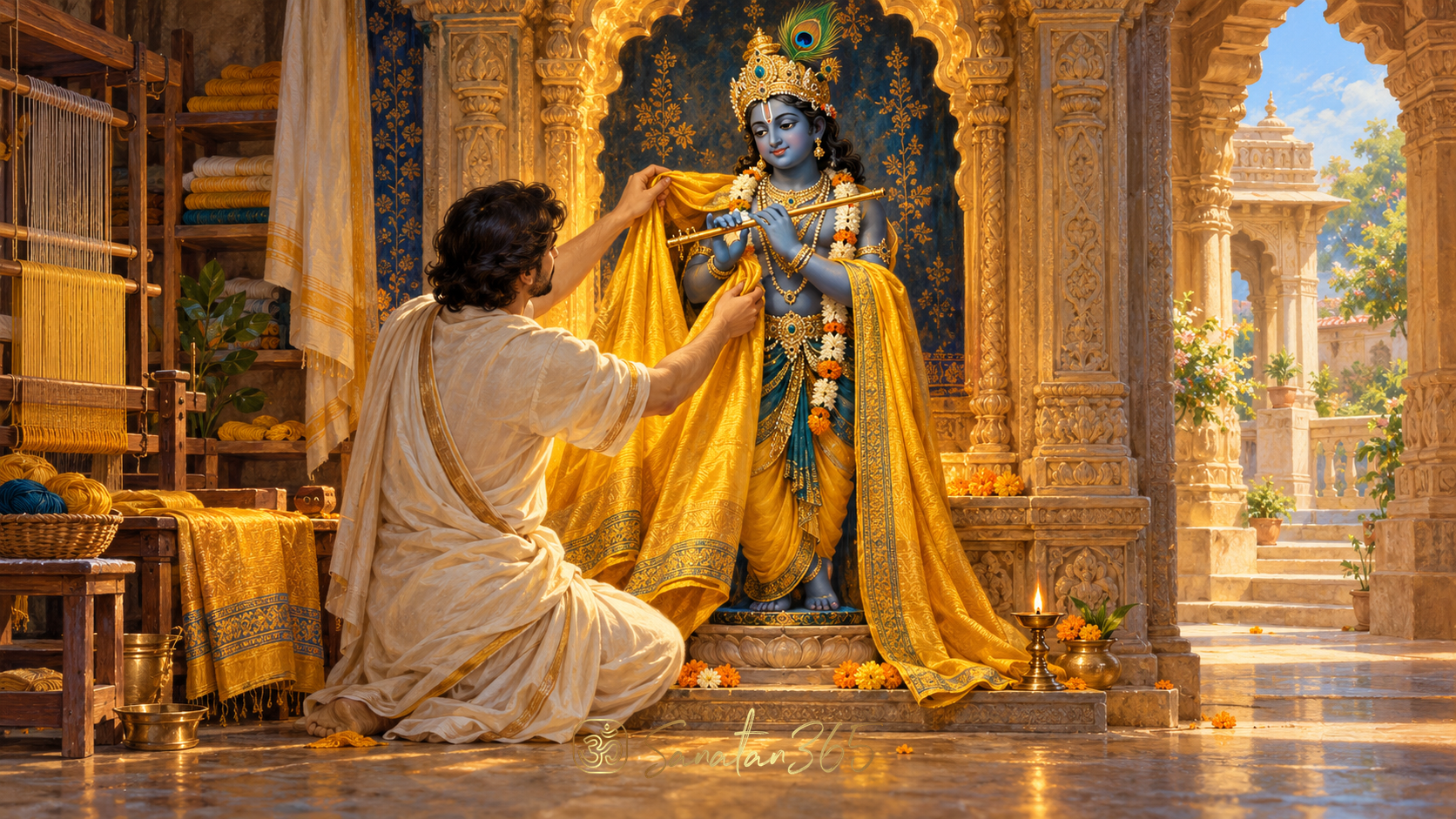
Vastra Offering Meaning: Why Clothing Is Offered in Puja
The offering of cloth turns ordinary care into sacred hospitality. Understand vastra in Hindu worship without confusing expense with devoti…
 Rituals
Madhuparka Meaning: Sweetness and Sacred Hospitality
Read madhuparka as a ceremonial honey mixture of welcome, exploring textual recipes, guest reception and its distinction from panchamrita.
 Rituals
Samavartana Meaning: Returning Home After Sacred Study
Samavartana marks the completion of traditional study through a ceremonial bath and return. Its lasting question is how learning becomes re…