Padmini Ekadashi 2026: The Rare Adhik Maas Vrat for Vishnu Devotion
A careful guide to Padmini Ekadashi 2026, its Adhik Maas significance, simple vrat practice, regional timing notes, and the inner discipline behind Vishnu worship.
Some sacred days feel rare not because they are loud, but because they appear only when the calendar itself makes space for correction.
Padmini Ekadashi 2026 is the Shukla Paksha Ekadashi (शुक्ल पक्ष एकादशी, eleventh lunar day of the waxing fortnight) observed during Adhik Maas, the extra lunar month also called Purushottam Maas. In many Indian panchang traditions it falls around May 26-27, 2026, with local observance depending on sunrise, tithi, and regional calculation. Its central practice is a Vishnu-focused vrat (व्रत, sacred vow) of restraint, worship, japa, charity, and inner cleansing.
This rare Ekadashi is not only about fasting from food. It is about fasting from carelessness. The day asks the devotee to simplify life for a few hours so the heart can become more available to Bhagavan Vishnu, who is worshipped in this month as Purushottam (पुरुषोत्तम, the Supreme Person).
Key takeaway: Padmini Ekadashi is a rare Adhik Maas vrat that uses simplicity, Vishnu devotion, and self-restraint to turn an extra month into extra spiritual attention.
What Is Padmini Ekadashi 2026 and Why Is It Rare?
Padmini Ekadashi 2026 is rare because it belongs to Adhik Maas (अधिक मास, extra month), the intercalary lunar month added periodically to keep the Hindu lunisolar calendar aligned with the solar year. Most lunar years are shorter than the solar year, so an additional month is inserted roughly every few years. Several 2026 festival calendars identify this period as Adhik Maas or Purushottam Maas, with Padmini Ekadashi listed as one of its special Ekadashi observances BhaktiBharat, Jyotirgamaya.
Ekadashi itself means the eleventh lunar day. In Hindu practice, Ekadashi is especially associated with Vishnu bhakti, moderation in food, mantra, prayer, and self-discipline. The Sanskrit word upavasa (उपवास) is often translated as fasting, but its deeper sense is "dwelling near" the Divine. Food restraint is one method; the real aim is nearness.
Padmini Ekadashi stands apart because it does not appear every year. It appears only in the bright fortnight of Adhik Maas. This gives the day a distinctive mood. Ordinary calendar time is interrupted by sacred surplus time, and the devotee is invited to ask: what should be done with extra time when it is given?
The traditional answer is not indulgence. It is purification through attention. Devotees may worship Vishnu, chant the Divine Name, offer Tulsi leaves, read or listen to sacred stories, give charity, and simplify daily habits. Those who cannot fast strictly can still observe the vrat through sattvic food, restraint in speech, mindful conduct, and sincere remembrance.
Key takeaway: Padmini Ekadashi is rare because it appears only during Adhik Maas, turning the calendar's extra month into a focused opportunity for Vishnu devotion.
When Is Padmini Ekadashi 2026 Observed in India and the Diaspora?
For Padmini Ekadashi 2026, public panchang listings vary between May 26 and May 27 depending on location and sunrise-based observance. Some Hindu calendar sources list the Ekadashi tithi around May 26, while others mark the festival day as May 27 Economic Times, Hindu Temple of South Dakota calendar. This is normal for Hindu festivals because the date is based on tithi, sunrise, local longitude, and tradition.
For India-based devotees, the common practical approach is to follow a trusted local panchang, family tradition, temple announcement, or sampradaya calendar. For diaspora families in North America, Europe, Africa, Southeast Asia, Australia, or the Gulf, local temple calendars are especially important because sunrise and tithi boundaries can shift the observed day.
The same care applies to parana (पारण, ritual breaking of a fast). Ekadashi fasting is traditionally completed during an appropriate Dwadashi window, not casually whenever convenient. However, this should be approached with humility and practical health awareness. A person with medical needs, pregnancy, intense work demands, or a history of disordered eating should not imitate strict fasting. A gentler vrata, guided by family elders, temple priests, or a qualified health professional when needed, can still be spiritually sincere.
Regional variation is not a problem to solve. It is part of Hindu calendar life. A Tamil household, a Gujarati Vaishnava family, a North Indian temple, and a diaspora mandir may phrase the observance differently. The shared center remains Vishnu remembrance, discipline, and sacred intention.
Key takeaway: Follow the local panchang or temple calendar for Padmini Ekadashi 2026, especially for parana timing, because tithi-based observance can vary by region.
How Is Padmini Ekadashi Vrat Practiced at Home?
A Padmini Ekadashi vrat can be meaningful without being complicated. The word vrat (व्रत) means a sacred vow or chosen discipline. The vow should be sincere, stable, and suited to the devotee's real life.
A simple home observance may include:
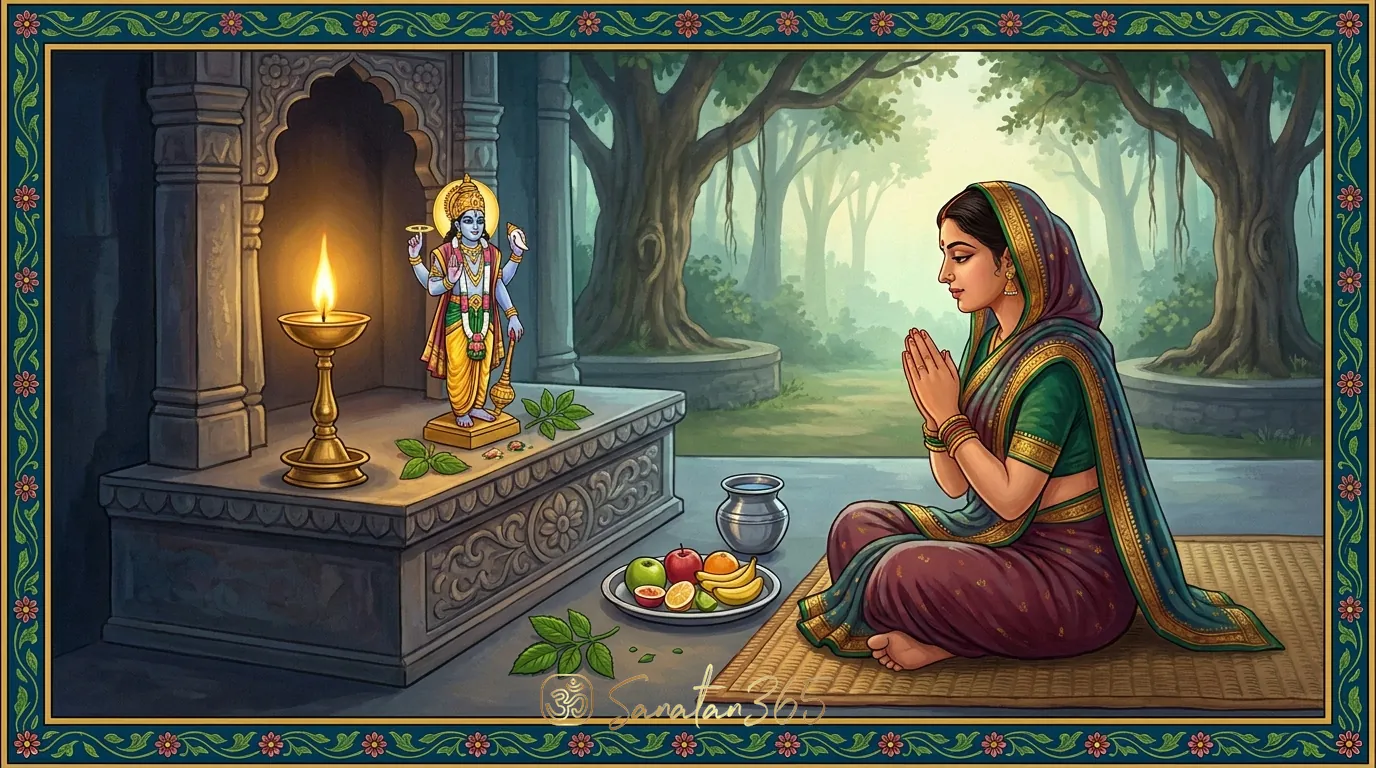
- Prepare the space. Clean the puja area, place a Vishnu image, murti, or sacred symbol, and keep the altar uncluttered.
- Begin with sankalpa. State the intention inwardly: "May this vrat purify thought, speech, and action."
- Offer Tulsi and light. Offer Tulsi leaves if available, a diya, water, flowers, or fruit according to family practice.
- Chant with steadiness. Recite a Vishnu mantra such as Om Namo Bhagavate Vasudevaya (ॐ नमो भगवते वासुदेवाय, salutations to the indwelling Lord Vasudeva) or the Vishnu Sahasranama if that is part of one's tradition.
- Read or listen. Spend time with the Bhagavad Gita, Vishnu Purana-linked stories, or a devotional katha from a trusted source.
- Practice restraint. Keep the day sattvic through gentler speech, reduced distractions, and avoiding anger, gossip, or excess.
- Give something. Offer charity, food, or help quietly, without display.
Fasting may take different forms. Some observe nirjala, without water, but that is not suitable for everyone and should not be romanticized. Others take water, fruit, milk, or a single sattvic meal. Some avoid grains and pulses according to family or sampradaya practice. The point is not to create pride around difficulty. The point is to make the body, speech, and mind less demanding for a day.
The Bhagavad Gita gives a useful spirit for such offerings. Krishna says that a leaf, flower, fruit, or water offered with devotion is accepted when given with bhakti Bhagavad Gita 9.26. This does not remove the value of traditional rules. It reminds the devotee that rules are meant to ripen devotion, not replace it.
Key takeaway: The best Padmini Ekadashi vrat is disciplined but not prideful: worship Vishnu, simplify food, guard speech, chant sincerely, and give quietly.
Why Does Adhik Maas Make This Ekadashi Spiritually Powerful?
Adhik Maas is often called Purushottam Maas because Vishnu is understood as the presiding Lord of this sacred extra month. Many devotional explanations describe the month as a time especially suited for japa, dana (दान, charity), vrata, scripture listening, and self-correction Sanatan Sanstha. The larger principle is simple: when an extra month appears, use it for extra clarity.
This is a profound teaching about time. Most people experience time as scarcity: not enough hours, not enough rest, not enough completion. Adhik Maas reframes time as a gift that can be consecrated. It asks the devotee not merely to become busier with religious activity, but to become more honest about what has been neglected.
Padmini Ekadashi sharpens that honesty. It appears in the bright half of the extra month, when the moon is waxing. The symbolism is gentle: let the inner light increase. If the heart has become dry, soften it. If speech has become harsh, restrain it. If prayer has become mechanical, make it attentive again. If charity has become occasional, make it natural.
For families, this can become a beautiful shared practice. Children can help prepare fruit, arrange flowers, hear a Vishnu story, or learn one simple mantra. Elders can explain why fasting is not punishment. Young adults can use the day to reduce digital noise and return to one neglected spiritual habit. Diaspora families can make the day a bridge between calendar memory and living practice.
Adhik Maas is sometimes surrounded by lists of what to do and avoid. Those lists have their place, but the inner meaning should not be lost. The sacred month is not meant to create fear. It is meant to create opportunity. Padmini Ekadashi gives that opportunity a concrete form.
Key takeaway: Adhik Maas makes Padmini Ekadashi powerful because it turns extra calendar time into a vow of extra devotion, simplicity, and self-correction.
What Should Devotees Avoid During Padmini Ekadashi?
Avoidance on Padmini Ekadashi should be understood as spiritual protection, not anxiety. Traditional households may avoid grains, excess sleep, anger, indulgence, harsh speech, and careless entertainment. Some may stay awake for kirtan or remembrance; others may keep a quieter household rhythm.
More important than a perfect external list is the inner pattern. The devotee avoids whatever makes the mind heavy, greedy, restless, or insensitive. This may include:
- Turning the fast into a status symbol.
- Judging others for observing differently.
- Overeating "fasting food" in a way that defeats the purpose of restraint.
- Arguing over date differences without humility toward regional calendars.
- Treating charity as social display.
- Ignoring health needs in the name of strictness.
Hindu vrata practice is strong because it joins discipline with discernment. Ahimsa (अहिंसा, non-harm) applies to the self as well as others. A vow should not become violence against the body or a cause of ego. If strict fasting creates illness, irritability, or pride, the devotee should choose a wiser observance.
For those who cannot fast from food, there are still meaningful options: fast from anger, fast from gossip, fast from unnecessary spending, fast from digital excess, fast from complaint. These are not inferior when practiced sincerely. In many homes, the most difficult fast is not from rice or wheat. It is from the habits that keep the heart from devotion.
Key takeaway: Avoid what makes the mind heavy or proud; Padmini Ekadashi is a vow of nearness to Vishnu, not a contest of hardship.
How Can Padmini Ekadashi Become a Modern Daily-Life Practice?
The deepest lesson of Padmini Ekadashi should outlive the day. A rare vrat is successful when it leaves behind a repeatable habit.
After the observance, a devotee may choose one small continuation:
- Chant one mala or a fixed number of names daily for the rest of Adhik Maas.
- Read a few verses of the Bhagavad Gita each morning.
- Offer water to Tulsi with gratitude.
- Keep one weekly sattvic meal in remembrance.
- Give quietly to someone in need before the month ends.
- Reduce one avoidable distraction during prayer time.
This is how festival energy becomes spiritual architecture. The day gives intensity; the habit gives continuity. Without continuity, even a powerful observance can fade into memory. With continuity, one Ekadashi can reset the direction of an entire month.
For modern seekers, this is especially relevant. Many people want spiritual depth but struggle with consistency. Padmini Ekadashi offers a practical answer: do not redesign your whole life in one day. Begin with one vow, keep it cleanly, and let it teach you where life needs less excess and more devotion.
Key takeaway: Let Padmini Ekadashi become one continuing habit during Adhik Maas, so the vrat becomes a doorway into steadier Vishnu remembrance.
FAQ
What is Padmini Ekadashi 2026?
Padmini Ekadashi 2026 is the Ekadashi observed during Adhik Maas or Purushottam Maas. It is dedicated to Bhagavan Vishnu and is traditionally marked through vrat, fasting or food restraint, mantra, puja, charity, and devotional reflection.
Is Padmini Ekadashi 2026 on May 26 or May 27?
Different calendars may list Padmini Ekadashi 2026 around May 26 or May 27 because Hindu festival observance depends on tithi, sunrise, location, and local panchang rules. Devotees should follow their trusted local temple, family panchang, or sampradaya calendar.
What should be offered to Vishnu on Padmini Ekadashi?
Common offerings include Tulsi leaves, water, flowers, fruit, a diya, and sincere mantra. Bhagavad Gita 9.26 emphasizes that even a leaf, flower, fruit, or water offered with devotion carries spiritual meaning.
Can someone observe Padmini Ekadashi without strict fasting?
Yes. A person who cannot fast strictly can observe through sattvic food, reduced distractions, mantra, charity, gentle speech, and Vishnu remembrance. Health, age, pregnancy, medical needs, and work conditions should be respected.
Why is Padmini Ekadashi connected with Adhik Maas?
Padmini Ekadashi appears only during the bright fortnight of Adhik Maas. Because Adhik Maas is traditionally dedicated to Vishnu as Purushottam Maas, this Ekadashi is treated as a rare opportunity for devotion, self-restraint, and spiritual renewal.
Conclusion
Padmini Ekadashi 2026 asks a simple question: when sacred extra time appears, will it be spent casually or consecrated? The day invites Vishnu remembrance, gentler habits, careful fasting, charity, and one clean vow that can continue beyond the festival itself.
Key takeaway: Padmini Ekadashi is rare, but its lesson is daily: simplify what is excessive, strengthen what is devotional, and use time as an offering.
About the author
Sanatan365 Editorial
Bringing Sanatan Dharma to modern seekers through authentic, scripture-grounded content.
Related in Festivals
 Festivals
Dussehra 2026: Date, Vijayadashami Meaning, and Living Traditions
Understand the 2026 Dussehra date, the meanings of Rama and Durga’s victories, regional celebrations, and a thoughtful way to observe Vijay…
 Festivals
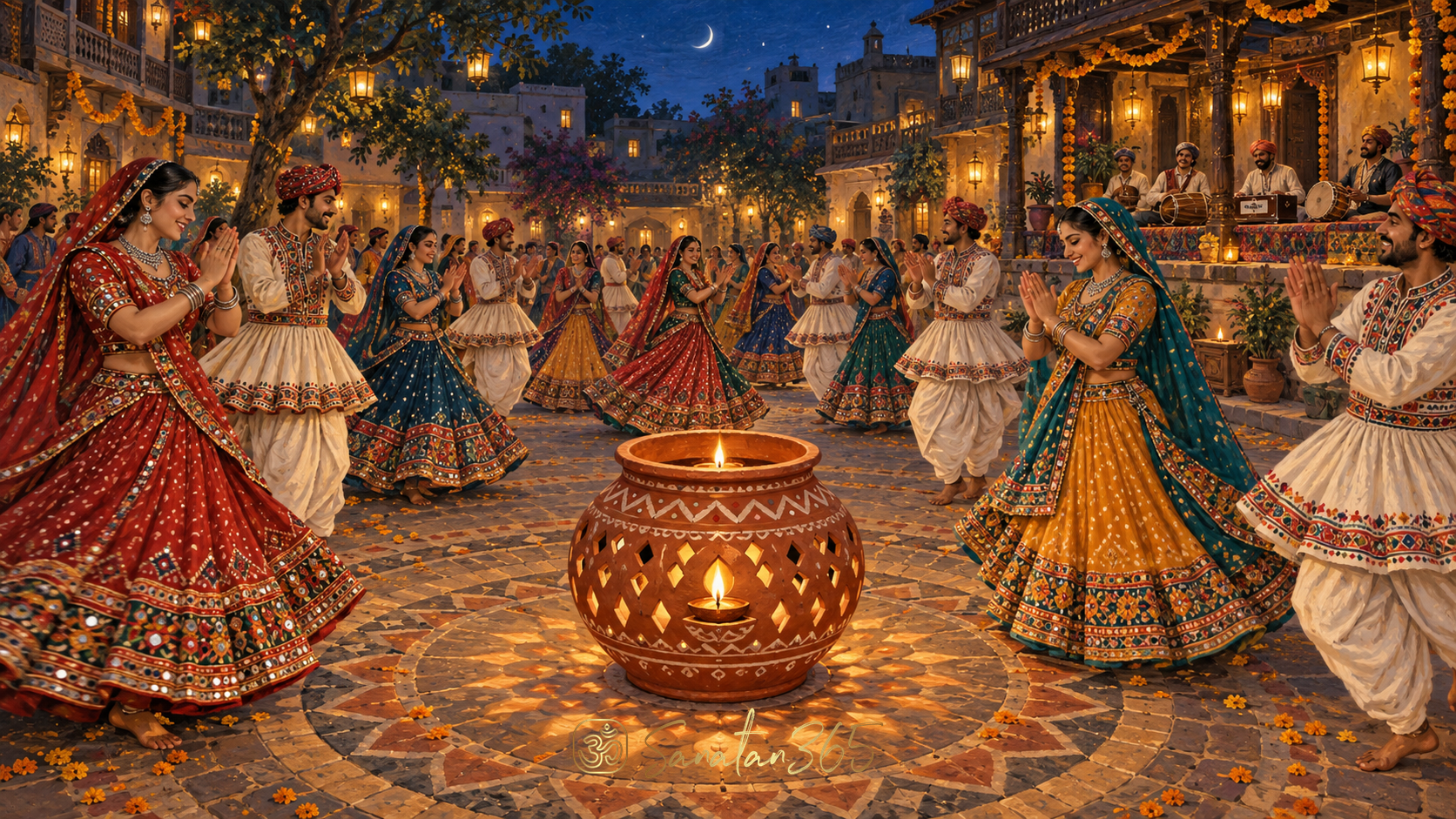
Garba Meaning: The Lamp at the Heart of Navratri
Garba is a Gujarati devotional dance associated with Navratri. Its central lamp, shared circular rhythm and reverence for Goddess Amba expl…
 Festivals
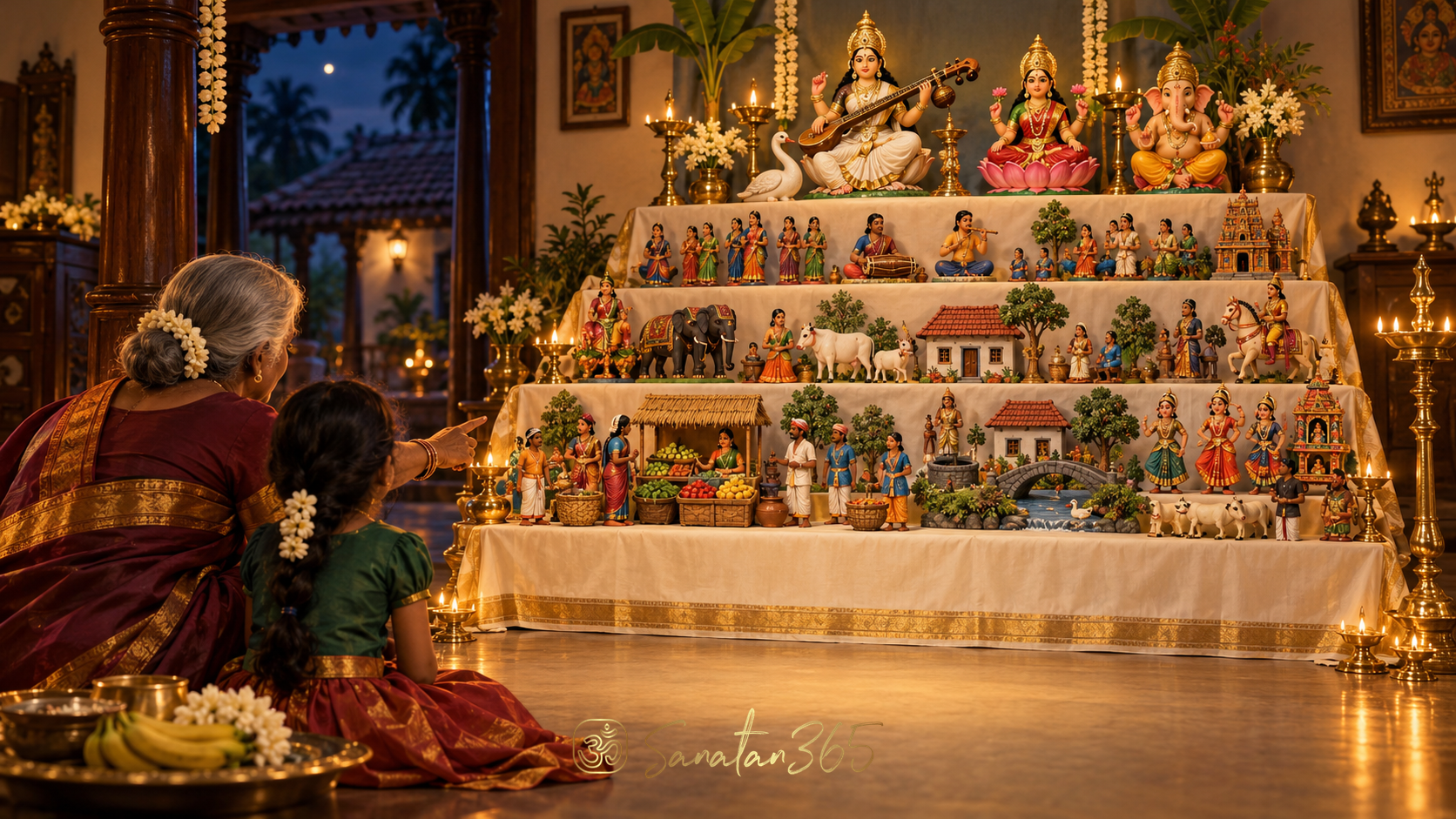
Golu Meaning: Navratri Dolls, Living Stories, and Hospitality
Understand Navratri Golu through its handmade dolls, regional names, family stories and welcoming home visits, with thoughtful preparation…

