
Rishi Dadhichi Story: The Sacrifice That Became the Vajra
The Rishi Dadhichi story turns a sage's final gift into a profound reflection on courage, service, detachment, and the ethical use of power.
One of Sanatan tradition's strongest weapons begins not in a forge, but in a sage's consent.
The Rishi Dadhichi story tells how the devas, unable to overcome Vritrasura, sought the sage's body so that a Vajra could be fashioned from his bones. Dadhichi agreed only after testing the moral seriousness of their request. His sacrifice is therefore not a celebration of death or force. It is a teaching about tyaga (त्याग, voluntary relinquishment), discernment, and offering one's strength for the protection of life.
What Is the Rishi Dadhichi Story?
In the account developed in the Srimad Bhagavatam, the devas lose their power after a chain of pride, offence, and conflict. Their adversary Vritrasura becomes extraordinarily formidable, and ordinary weapons cannot defeat him. Vishnu directs them toward the sage Dadhichi, explaining that a weapon made from his bones can become the means of restoring balance.
The request is severe. The devas are not asking for wealth, advice, or a ritual. They are asking Dadhichi to relinquish his embodied life. When they approach him, the sage does not immediately offer a sentimental answer. He first reminds them that every embodied being clings to life and that bodily pain is difficult to bear. His words make them confront the weight of what they are asking.
Only then does Dadhichi reveal the depth of his understanding. The body is impermanent, he says in essence, and if it can serve the good of other beings, its final use can become meaningful. In the Bhagavatam account, he enters disciplined yogic absorption and gives up the body consciously. Vishvakarma, the divine artisan, fashions the Vajra from his bones, and Indra carries it into battle.
The narrative appears within a larger and morally complex cycle. Indra is not shown as flawless, and Vritrasura is not presented as a flat embodiment of evil. The surrounding chapters repeatedly unsettle easy divisions between divine status and inner virtue. That complexity matters: Dadhichi's gift serves dharma (धर्म, the sustaining order and right responsibility), not the vanity of an unquestionable hero.
Key takeaway: Dadhichi's sacrifice becomes meaningful because it is informed, voluntary, and directed toward restoring a threatened order.
Why Did Dadhichi Give His Bones for the Vajra?
The central question is not simply why bones were needed. It is why a spiritually accomplished person would agree to such a request.
He saw the body as entrusted, not possessed forever
Sanatan teachings do not normally ask seekers to despise the body. The body supports learning, service, worship, family responsibility, and spiritual practice. Yet it is also anitya (अनित्य, impermanent). Dadhichi holds both truths together: embodied life is precious, but physical form is not the whole Self.
His response resembles the wider Upanishadic distinction between the changing body and the enduring Atman (आत्मन्, the innermost Self). This does not make bodily harm unimportant. It means that fear of bodily loss need not govern a person whose discernment is steady. Readers exploring that distinction may also read the Hindu meaning of Atman as the true Self.
He transformed personal power into shared protection
Dadhichi's austerity had made his body spiritually potent in the logic of the story. He could have treated that potency as private attainment. Instead, he allowed it to be converted into protection for others. The movement is from tapas (तपस्, disciplined spiritual effort) to seva (सेवा, selfless service).
This is a crucial ethical sequence. Tapas without service can become pride. Service without wisdom can become impulsive self-erasure. Dadhichi joins discipline, discernment, and benefit to others.
He required the requesters to recognize its cost
Before consenting, the sage exposes the devas' desperation and the gravity of their demand. This moment protects the story from being reduced to a slogan about obedience. Dadhichi is not coerced. He understands, questions, chooses, and acts.
That distinction is vital for modern readers. A sacred story about a realized sage's extraordinary gift must never be used to pressure ordinary people into unsafe sacrifice, abusive loyalty, or neglect of their own responsibilities. Dharma includes wise boundaries. Atithi Devo Bhava Meaning: Hindu Hospitality with Reverence and Wisdom explores a similar balance between generosity and discernment.
Key takeaway: Dadhichi gives because he is free enough to choose service, not because another person has the right to demand his self-destruction.
What Does the Vajra Mean in the Dadhichi Sacrifice?
The word vajra (वज्र) can signify a thunderbolt and something diamond-hard or indestructible. In Vedic literature, the Vajra is closely associated with Indra, who breaks obstruction and releases life-giving waters. The Rig Veda already knows Dadhyanc or Dadhichi in relation to Indra, while the full bone-sacrifice narrative is developed in later epic and Puranic traditions. Keeping these textual layers distinct avoids pretending that every detail comes from one source.
The weapon's material origin gives it a paradoxical meaning. The Vajra is powerful because it is made from a gift. Its hardness comes from a sage who has released attachment. Its force is therefore not merely mechanical; the story imagines spiritual integrity becoming protective strength.
Several symbolic readings follow.
- Clarity can become stronger than fear. Dadhichi acts after seeing mortality directly.
- Renunciation can become active service. His detachment does not withdraw from the world; it protects the world.
- Power carries moral debt. Indra's weapon exists because another being gave everything. The bearer cannot honestly call the power self-made.
- Obstruction is overcome through inner and outer effort. Vritra, whose name is linked with enclosing or obstructing, can represent forces that hold back what sustains life.
- The strongest instrument begins in character. Vishvakarma shapes the Vajra, but Dadhichi's integrity supplies its substance.
This does not make violence sacred by default. The Bhagavatam narrative itself places Indra under moral scrutiny and gives Vritrasura striking devotional depth in the chapters that follow. The text asks the reader to look beyond labels, status, and victory.
For a broader exploration of ethical power, aparigraha, non-possessiveness in modern life shows how releasing possessiveness creates room for responsible action.
Key takeaway: The Vajra symbolizes power that is borrowed from sacrifice and must therefore remain accountable to dharma.
Is the Rishi Dadhichi Story About Martyrdom?
It is more accurate to read the episode as an exceptional act of yogic relinquishment than as a general command to seek suffering.
Three guardrails help.
First, Dadhichi possesses unusual spiritual attainment and acts with clear awareness. The story does not portray an impulsive decision made under emotional pressure. Second, his gift addresses an extraordinary cosmic crisis within sacred narrative. It is not a template for ordinary conflicts. Third, the ethical focus rests on the sage's agency. The devas' need does not automatically create entitlement to his body.
In daily life, Dadhichi-like service usually looks far less dramatic:
- donating time or knowledge without demanding recognition;
- giving blood or registering for lawful organ donation after informed consent;
- mentoring someone so that hard-earned experience benefits the next generation;
- standing up for a vulnerable person while using proportionate, safe action;
- sharing resources while still meeting duties toward dependants;
- allowing personal prestige to fall away when cooperation serves a greater good.
Even these forms require judgment. Caregivers need rest. Families need stability. Health decisions belong with qualified professionals. Spiritual admiration must not replace medical, legal, or practical counsel.
The story also warns institutions and leaders. If their strength depends on sacrifice from others, they owe those contributors honesty, restraint, remembrance, and accountability. A community that glorifies giving while hiding its costs has missed Dadhichi's first lesson: name the cost before accepting the gift.
Key takeaway: The episode honors conscious service; it does not authorize coercion, reckless self-harm, or the romanticizing of preventable suffering.
What Can the Dadhichi Sacrifice Teach Modern Life?
The story becomes useful when its scale is translated into habits without shrinking its moral seriousness.
Ask what your strength is for
Education, wealth, influence, physical ability, patience, and spiritual practice can all become private identity markers. Dadhichi asks a sharper question: what protection or nourishment can this strength provide?
The answer need not be public. A person may quietly teach a skill, support an elder, preserve a family tradition, or create a fair system at work. The gift becomes dharmic when it reduces harm and increases another person's capacity.
Distinguish generosity from erasure
Healthy sacrifice is chosen with awareness. It does not require someone to pretend that pain, exhaustion, or danger is unreal. Dadhichi openly names the difficulty before transcending it. Modern service should retain the same honesty.
A useful reflection is:
- Is this freely chosen?
- Does it genuinely help, or only display virtue?
- Am I the right person to give this?
- What responsibilities could be harmed by the choice?
- Is there a safer, more sustainable form of service?
Remember the source of collective power
Every institution rests on gifts it did not create alone: a parent's care, a teacher's patience, a worker's skill, an ancestor's preservation of culture, or a stranger's civic responsibility. Remembering these sources makes power humbler.
Indra's Vajra is not merely his possession. It carries Dadhichi's offering. In the same way, achievements are rarely solitary. Gratitude corrects the illusion of self-sufficiency.
Let relinquishment create usefulness
Aparigraha (अपरिग्रह, non-possessiveness) is not neglect. It is freedom from clinging. An unused skill can be taught. A hoarded resource can be shared responsibly. A failed ambition can become wisdom for someone else. What is relinquished need not be wasted.
Key takeaway: The modern form of Dadhichi's teaching is to make strength useful while keeping consent, proportion, and responsibility intact.
A Story of Sacrifice That Also Questions Power
The lasting power of the Rishi Dadhichi story comes from its refusal to make sacrifice shallow. The sage does not die because life is worthless. He gives because life has been used so fully that even the body can become a final instrument of protection.
At the same time, the narrative leaves Indra accountable. A weapon created from another's gift can never be carried casually. That may be the story's most urgent lesson: power is sacred only when it remembers what made it possible.
Key takeaway: Dadhichi turns impermanence into service, while the Vajra turns every victory into a responsibility to remember its source.
FAQ
Who was Rishi Dadhichi?
Rishi Dadhichi, also called Dadhyancha or Dadhichi in different textual traditions, was a revered sage associated with Vedic knowledge and later celebrated for voluntarily giving his bones so the devas could fashion the Vajra.
Why were Dadhichi's bones used to make the Vajra?
In the Puranic account, ordinary weapons could not defeat Vritrasura. Vishnu directed the devas to seek Dadhichi's spiritually potent body, and Vishvakarma fashioned the Vajra from the sage's bones after Dadhichi freely relinquished his body.
Who made the Vajra from Dadhichi's bones?
The Srimad Bhagavatam names Vishvakarma, the divine artisan, as the maker who fashioned the thunderbolt weapon for Indra.
What is the moral of the Rishi Dadhichi story?
Its central lessons are that strength should serve life, genuine sacrifice requires consent and discernment, the body is precious but impermanent, and those who hold power must remember the gifts that made their power possible.
Where is the Dadhichi sacrifice described?
The developed sacrifice narrative appears in Puranic literature, prominently in the Srimad Bhagavatam, Canto 6, especially chapters 9 and 10. Earlier Vedic texts, including the Rig Veda, contain related Dadhyanc traditions, but not every later narrative detail.
About the author
Sanatan365 Editorial
Bringing Sanatan Dharma to modern seekers through authentic, scripture-grounded content.
Related in Stories
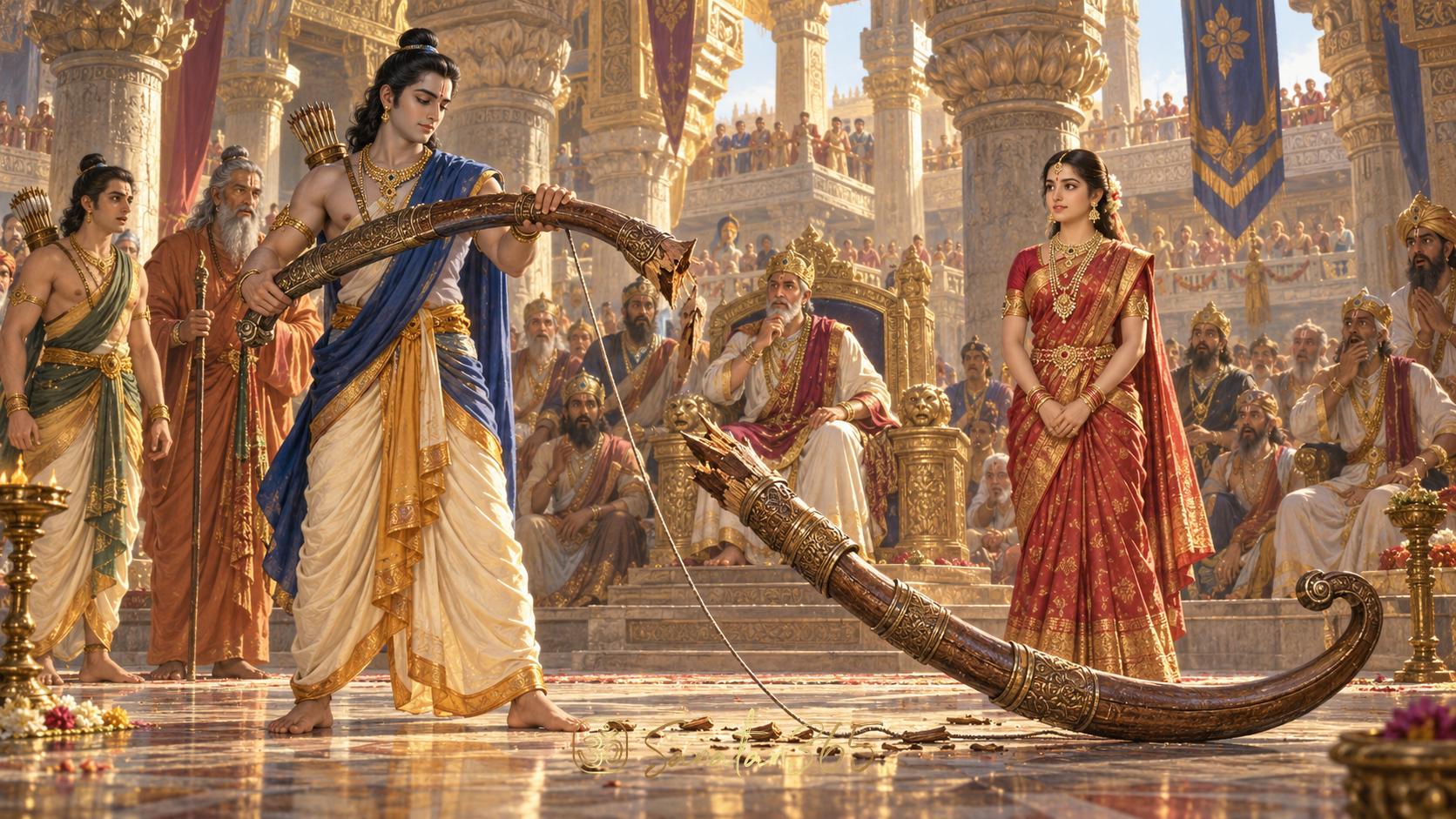 Stories
Sita Swayamvara in the Ramayana: Shiva's Bow and the Meaning of the Marriage
Read the Bala Kanda account of Rama, Sita, Janaka and Shiva's bow, and separate the text's sequence from later devotional retellings.
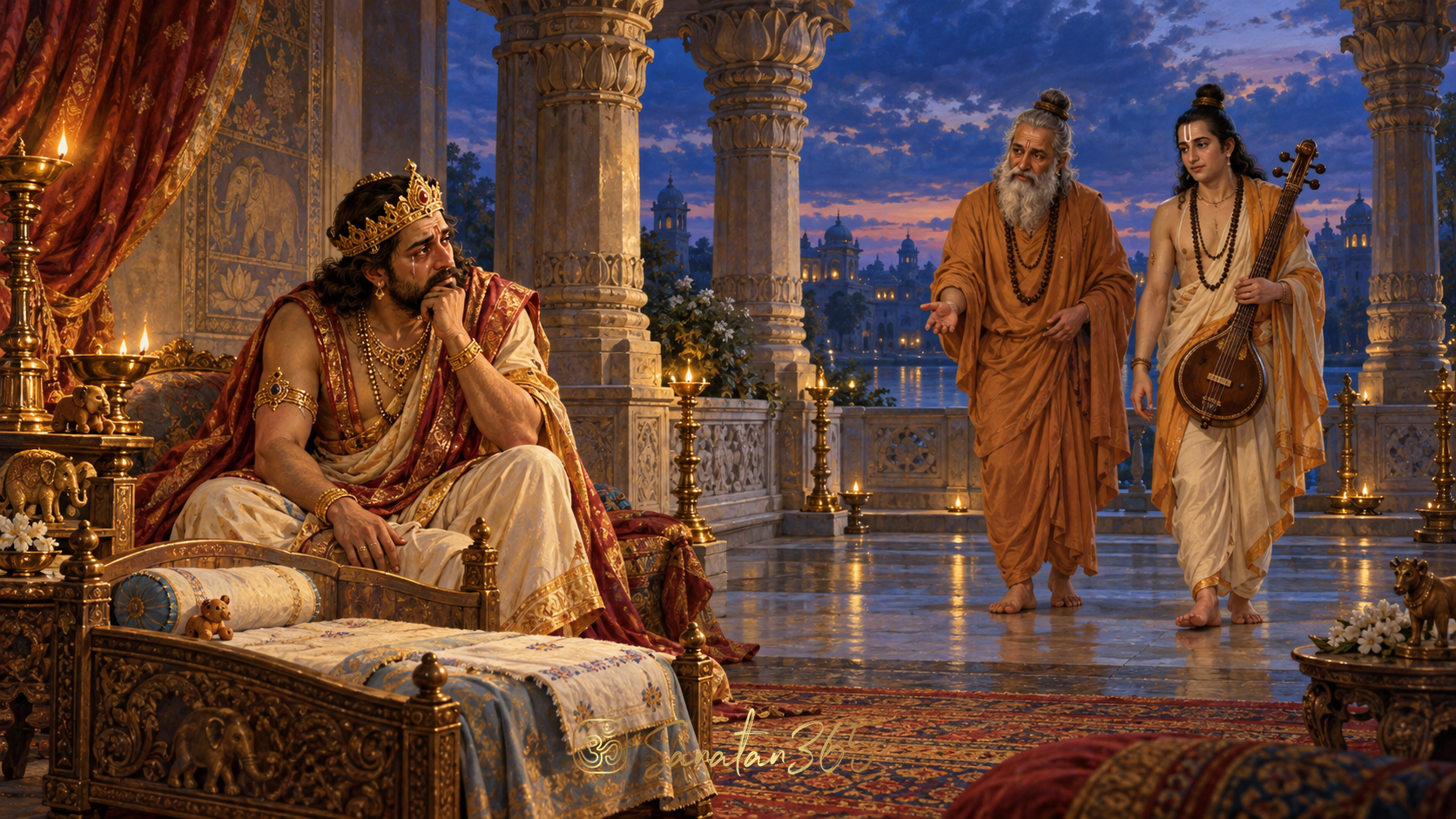 Stories
King Chitraketu Story: Grief, Wisdom, and Humility in the Bhagavata
The Bhagavata Purana tells how King Chitraketu met devastating loss, listened to Narada and Angira, and learned a difficult humility. Read…
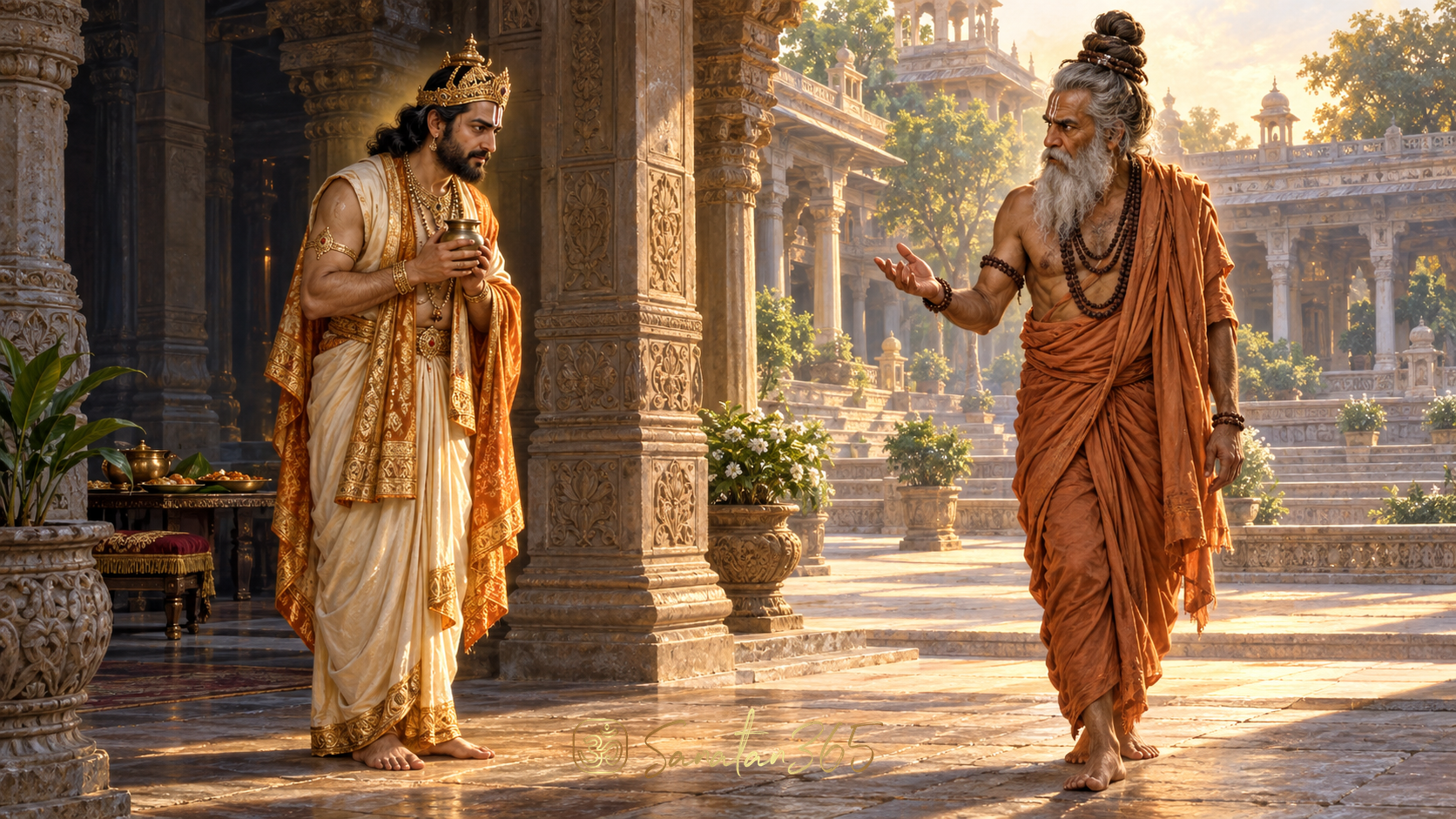 Stories
King Ambarisha and Durvasa: A Story of Devotion and Humility
The Bhagavata Purana story of King Ambarisha and Sage Durvasa explores a difficult fast, an angry visitor, and the restraint behind devotio…

