Skanda Sashti 2026: Meaning, Date, and Murugan Worship
A warm guide to Skanda Sashti 2026, Lord Murugan's Shukla Shashthi observance, with meaning, date context, symbolism, and simple devotional practices.
Skanda Sashti is a quiet test of courage before it becomes a festival of victory.
Skanda Sashti 2026 is the Shukla Shashthi observance dedicated to Lord Murugan, also known as Skanda, Kartikeya, Subrahmanya, and Kumara. For New Delhi, Drik Panchang lists the June observance on Friday, June 19, 2026, with Shashthi tithi beginning on June 19 and ending on June 20. The day is honored through vrat (व्रत, a sacred vow or disciplined observance), prayer, mantra, and remembrance of Murugan's victory over inner confusion, fear, and disorder.
For many families, especially in Tamil, South Indian, Sri Lankan, Malaysian, Singaporean, and wider diaspora communities, Skanda Sashti is not only about a date on the calendar. It is a way to ask: what must be made clear inside the heart before action becomes dharmic?
What is Skanda Sashti 2026?
Skanda Sashti 2026 refers to the monthly Shashthi (षष्ठी, sixth lunar day) dedicated to Lord Skanda in the bright half of the Hindu lunar month. In the New Delhi panchang, Drik Panchang lists the June Skanda Sashti on Friday, June 19, 2026, in Jyeshtha Shukla Paksha, with the Shashthi tithi running into June 20. Exact observance times can vary by location, so families usually follow their local panchang or temple calendar.
The word "Skanda" is one of Lord Murugan's Sanskrit names. "Sashti" or "Shashthi" means the sixth lunar day. Together, Skanda Sashti marks a sacred rhythm: the sixth day after the new moon, when devotees turn toward Murugan as the divine warrior of clarity, courage, discipline, and youthful spiritual force.
Britannica describes Murugan as the chief deity of the ancient Tamils of South India, later identified in part with the North Indian Skanda. That layered identity matters. In Tamil homes, he may be lovingly called Murugan, Kandhan, or Subramanya. In Sanskritic and pan-Indian contexts, he may be known as Skanda, Kartikeya, Kumara, or Mahasena. The names shift by region, but the devotional center remains the same: a radiant divine presence who cuts through confusion with the vel (வேல், sacred spear).
For 2026, this timing also lands in the wider June season when many seekers are already thinking about discipline, yoga, and daily sadhana (साधना, spiritual practice). Skanda Sashti brings that discipline into a specifically devotional frame.
Key takeaway: Skanda Sashti 2026 is a Murugan-centered Shashthi observance on June 19 for New Delhi, but its deeper meaning is disciplined courage aligned with dharma.
Why is Lord Murugan worshipped on Skanda Sashti?
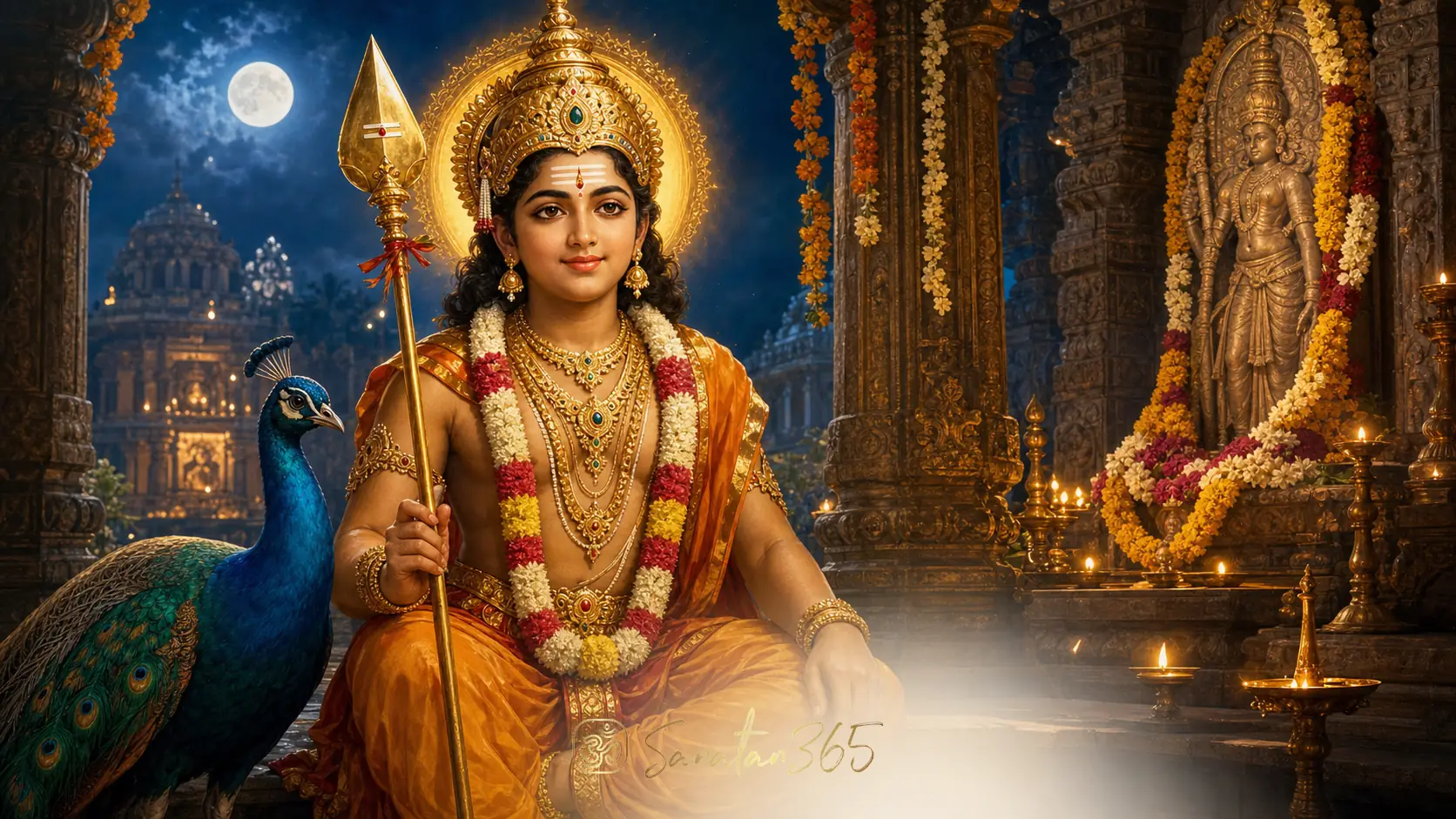
Lord Murugan is worshipped on Skanda Sashti because he represents victorious clarity. In devotional storytelling, he is the son of Lord Shiva and Goddess Parvati, the commander of the devas, and the wielder of the vel. In South Indian bhakti, the vel is not treated as a symbol of aggression. It is a symbol of sharp wisdom, protection, and the power to pierce avidya (अविद्या, spiritual ignorance).
Murugan's iconography carries several teachings at once:
- The vel points to focused discernment.
- The peacock vahana (वाहन, sacred mount) suggests beauty, alertness, and transformed pride.
- His youthful form reminds devotees that spiritual maturity does not require cynicism or heaviness.
- His many names make room for regional love: Murugan in Tamil tradition, Kartikeya in many Sanskritic tellings, Subrahmanya in temple worship, and Skanda in Purana-linked devotion.
Skanda Sashti often remembers the victory over Surapadma, a form of inner and cosmic disorder in Murugan devotional narratives. In a family setting, this can be understood without fear-based language: the festival invites a person to ask what confusion, anger, procrastination, envy, or restless desire needs to be brought under the guidance of wisdom.
This is why the day is especially loved by devotees who are seeking strength without harshness. Murugan's courage is not noisy. It is clean, alert, and dharmic. It does not shame weakness; it teaches the heart to stand upright.
Key takeaway: Murugan worship on Skanda Sashti is a prayer for clear action, not domination; the vel represents wisdom cutting through ignorance.
How do families observe Skanda Sashti vrat?
Skanda Sashti vrat is observed differently by region, health, family tradition, and temple custom. Some devotees fast fully. Some take fruit, milk, or simple sattvic food. Some focus on prayer, silence, and mantra without a strict food fast. A family should never treat fasting as a competition. Vrat means a sacred vow, and the vow should support devotion, health, and steadiness.
A simple home observance may include:
- Clean the home altar and place an image or murti of Lord Murugan, Skanda, Kartikeya, or Subramanya.
- Light a diya (दीया, sacred lamp) and offer flowers, fruit, water, or simple naivedya (नैवेद्य, food offering).
- Chant "Om Saravanabhava" or "Om Subrahmanyaya Namah" with attention.
- Read or listen to a Murugan hymn such as Kanda Sashti Kavacham where it is part of family tradition.
- Reflect on one habit that needs more discipline and one action that can serve the family or community.
- End with gratitude, prasad (प्रसाद, blessed offering), and a prayer for courage guided by compassion.
Families in Tamil Nadu may connect the day with Murugan temples and the memory of the Arupadai Veedu, the six sacred abodes of Murugan: Tirupparankundram, Tiruchendur, Palani, Swamimalai, Thiruttani, and Pazhamudircholai. Diaspora families may gather in temples across Malaysia, Singapore, Sri Lanka, Mauritius, South Africa, the United Kingdom, Canada, and the United States, where Murugan devotion often carries both spiritual and cultural memory.
Parents can also make the day accessible for children. Instead of only explaining "fasting," explain focus. The child can offer one flower, chant one mala, help prepare prasad, or choose one brave and kind act for the day. That turns Skanda Sashti from an adult ritual into a family value.
Key takeaway: A good Skanda Sashti vrat is disciplined but humane; the practice should deepen steadiness, prayer, and courage.
What is the meaning of the vel in Murugan worship?
The vel is one of the most recognizable symbols in Murugan worship. It is a spear, but in devotional meaning it is more than a weapon. It is jnana (ज्ञान, sacred knowledge) made sharp. It points to the grace that removes confusion and protects the devotee from inner disorder.
In many Murugan traditions, the vel is associated with Goddess Parvati's shakti (शक्ति, divine power). That detail gives the symbol tenderness as well as strength. Murugan's courage is not separate from the Mother's blessing. His victory is not brute force; it is divine clarity empowered by compassion.
This makes the vel especially relevant for modern spiritual life. Most people are not fighting mythic battles. They are facing scattered attention, anxiety before responsibility, anger in relationships, or the quiet pressure to choose convenience over dharma. The vel becomes a way to pray: may my mind become clear enough to do the right thing.
There are three useful reflections for Skanda Sashti:
- What must I cut away gently but firmly?
- Where do I need courage without ego?
- How can my strength protect, serve, and uplift?
This is why Murugan's peacock is also meaningful. The peacock is beautiful, but in devotional reading it can also suggest pride transformed into service. A proud mind wants to be seen. A devoted mind wants to be useful.
Key takeaway: The vel teaches that real strength is precise, compassionate, and guided by wisdom.
Why does Skanda Sashti matter beyond South India?
Skanda Sashti is deeply rooted in Tamil and South Indian Murugan devotion, but its meaning travels easily because the human need for courageous clarity is universal. Murugan devotion has long moved with communities across Sri Lanka, Malaysia, Singapore, Mauritius, Fiji, South Africa, the Caribbean, Europe, North America, and Australia. In many diaspora homes, Murugan festivals preserve language, music, temple memory, family identity, and daily faith at the same time.
This regional breadth should be honored carefully. Skanda Sashti may feel different in Chennai, Palani, Tiruchendur, Kuala Lumpur, Jaffna, Durban, Toronto, or Sydney. Some communities emphasize temple processions and collective chanting. Others keep a quiet home vrat. Some follow Tamil calendars closely. Others use a local panchang adapted to their city. None of these differences weaken the observance. They show how Sanatan Dharma carries one principle through many forms.
For seekers who did not grow up with Murugan worship, Skanda Sashti can still be approached respectfully. Begin with the name, the symbolism, and the spirit of the day. Learn the pronunciation of Murugan's names. Understand the vel as wisdom, not violence. Visit a temple if possible, or keep a small lamp at home. The doorway is reverence, not performance.
The festival also corrects a common misunderstanding about Hindu worship. Devotion is not only softness and surrender. It also includes discipline, boundaries, focus, and brave action. Murugan stands at that meeting point: bhakti (भक्ति, devotion) with courage, beauty with strength, youthfulness with wisdom.
Key takeaway: Skanda Sashti belongs especially to Murugan devotees, but its teaching of clear, compassionate courage can guide every sincere seeker.
How can modern seekers practice the teaching of Skanda Sashti?
A modern Skanda Sashti practice can be simple and still meaningful. The point is not to copy every custom perfectly. The point is to let the day reshape attention.
Try this three-part reflection:
- Clarity: Write down one confusion you are carrying. Ask what dharma would look like in that situation.
- Courage: Choose one action you have delayed because of discomfort. Make it small enough to complete.
- Compassion: Offer the fruit of that action for someone else's wellbeing, not only your own success.
This turns the festival into living sadhana. A student may use it to study with discipline. A parent may use it to speak more patiently. A founder or worker may use it to make a difficult decision without anger. An elder may use it for japa (जप, repeated sacred recitation) and blessing the family.
If fasting is part of your tradition, keep it with humility. If fasting is not medically appropriate, choose another vow: no harsh speech for the day, no wasteful scrolling, one act of seva (सेवा, selfless service), or one focused prayer period. Sanatan practice has always had room for wise adaptation under guidance.
One gentle Murugan prayer for the day is:
Om Saravanabhava. May the vel of wisdom remove confusion from the heart. May courage become service. May strength stay humble.
Key takeaway: Skanda Sashti becomes powerful when the devotee turns ritual into one clear action aligned with dharma.
FAQ
When is Skanda Sashti 2026?
For New Delhi, Drik Panchang lists the June Skanda Sashti observance on Friday, June 19, 2026, with Shashthi tithi beginning on June 19 and ending on June 20. Local timings vary, so follow your city panchang or temple calendar.
What does Skanda Sashti mean?
Skanda Sashti means the Shashthi, or sixth lunar day, dedicated to Lord Skanda, also known as Murugan, Kartikeya, Subrahmanya, and Kumara. It is a day of vrat, prayer, mantra, and reflection on courage guided by wisdom.
Is Skanda Sashti only a Tamil festival?
Skanda Sashti is especially important in Tamil and South Indian Murugan devotion, but Murugan is also worshipped as Skanda and Kartikeya across many Hindu traditions. Devotees in Sri Lanka, Malaysia, Singapore, and the global diaspora also observe the day with deep reverence.
What mantra can be chanted on Skanda Sashti?
Common chants include "Om Saravanabhava" and "Om Subrahmanyaya Namah." Families may also recite Kanda Sashti Kavacham where it belongs to their devotional tradition.
Do devotees have to fast on Skanda Sashti?
Many devotees observe a vrat, but the form varies. Some fast strictly, some eat simple sattvic food, and some focus on prayer and discipline. Health, age, and family tradition should guide the practice.
Skanda Sashti 2026 asks for a brave but gentle heart. The day honors Lord Murugan not only as a divine warrior, but as the guide who teaches strength without ego, beauty without vanity, and action without confusion.
Single key takeaway: Skanda Sashti is a vow of clear courage, where Murugan's vel becomes a reminder to cut through confusion and act with dharma.
About the author
Sanatan365 Editorial
Bringing Sanatan Dharma to modern seekers through authentic, scripture-grounded content.
Related in Festivals
 Festivals
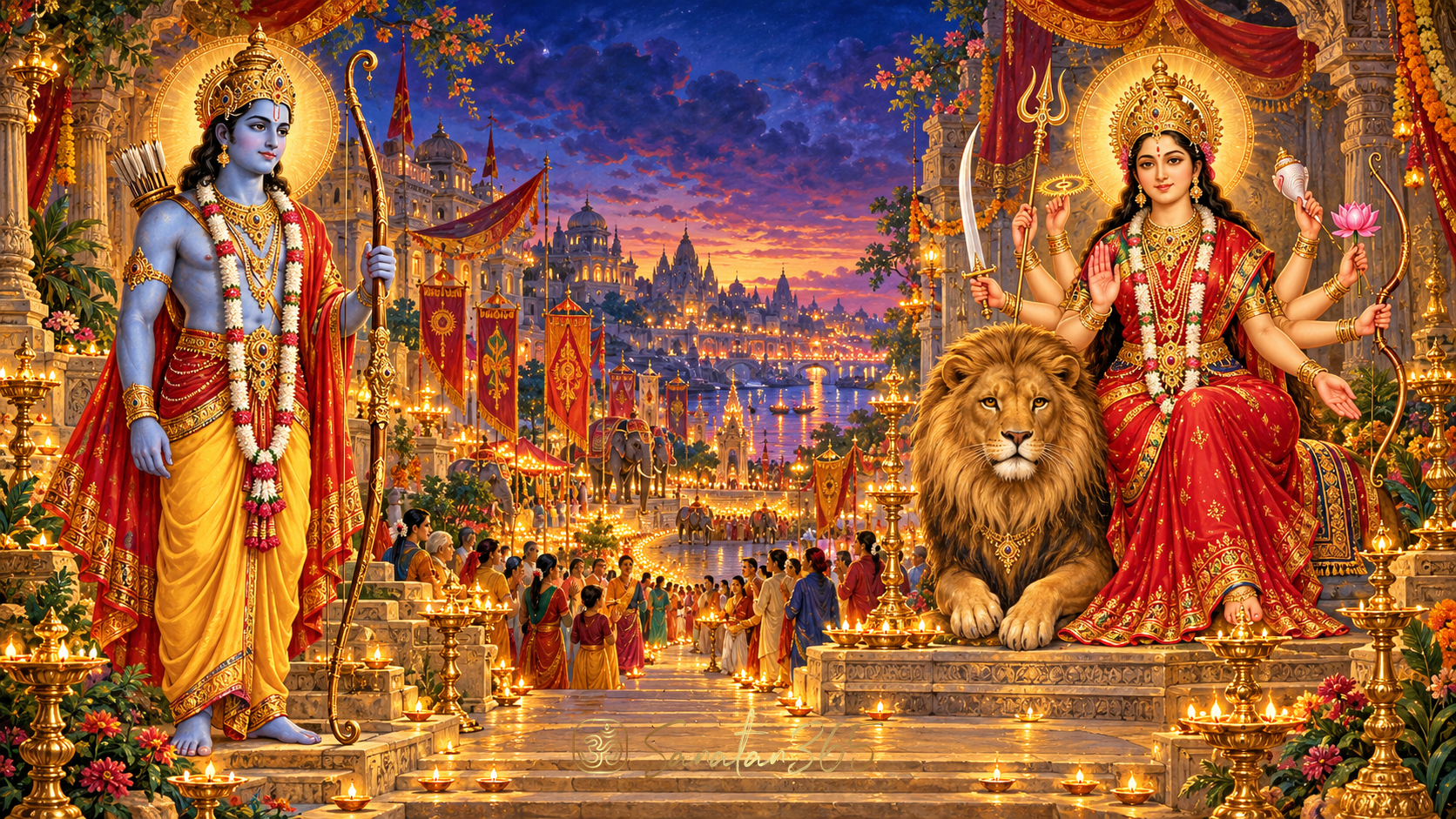
Dussehra 2026: Date, Vijayadashami Meaning, and Living Traditions
Understand the 2026 Dussehra date, the meanings of Rama and Durga’s victories, regional celebrations, and a thoughtful way to observe Vijay…
 Festivals
Garba Meaning: The Lamp at the Heart of Navratri
Garba is a Gujarati devotional dance associated with Navratri. Its central lamp, shared circular rhythm and reverence for Goddess Amba expl…
 Festivals
Golu Meaning: Navratri Dolls, Living Stories, and Hospitality
Understand Navratri Golu through its handmade dolls, regional names, family stories and welcoming home visits, with thoughtful preparation…