Snana Yatra 2026: Date, Meaning, and Jagannath Rituals
Snana Yatra 2026 falls on Monday, June 29. Learn the meaning of Jagannath's sacred bathing festival, 108 kalashas, Hati Besha, Anasara, and the path toward Rath Yatra.
Before the chariots move through Puri, the deities first come out for a bath.
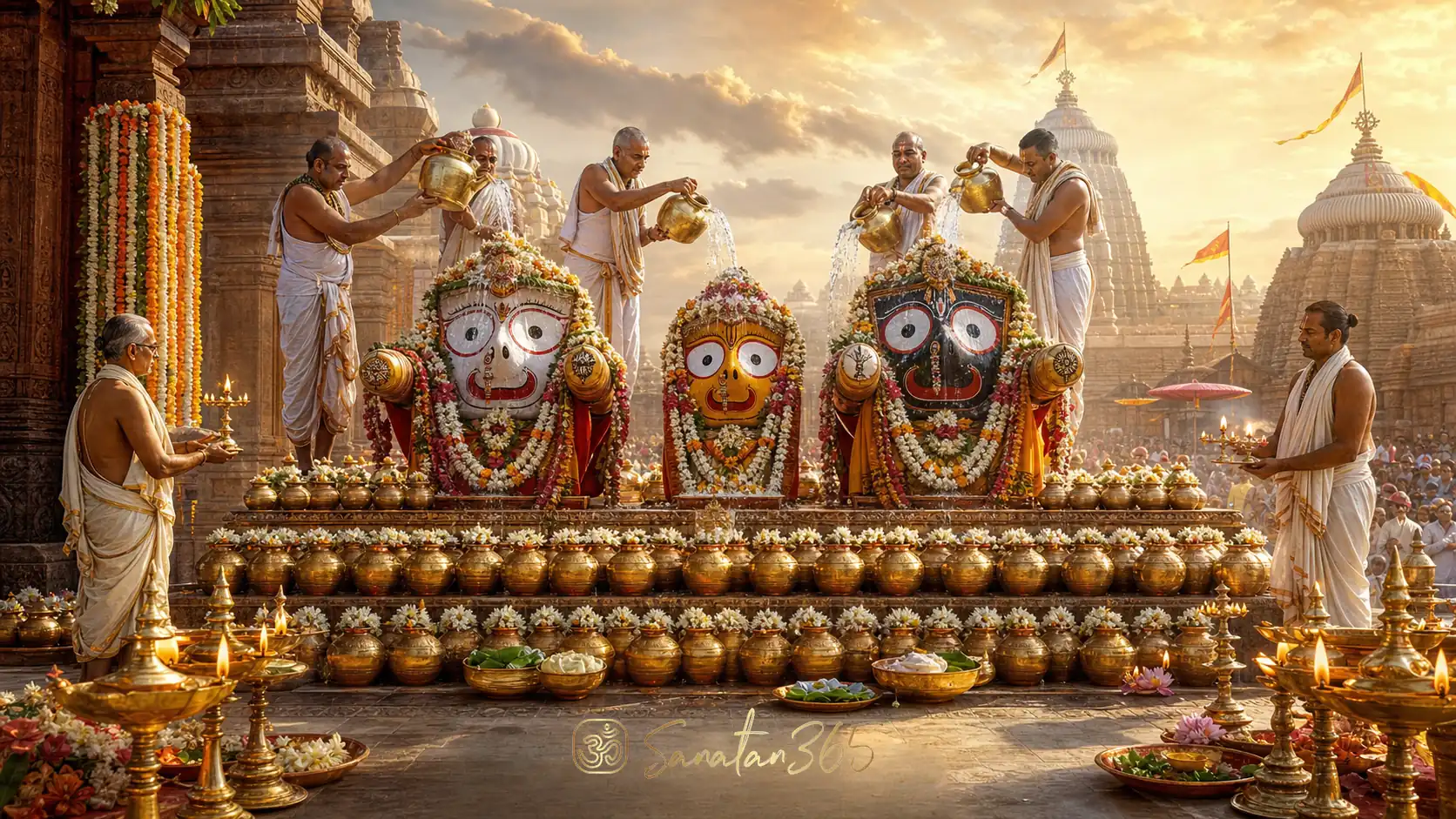
Snana Yatra 2026 falls on Monday, June 29, 2026. Also called Deva Snana Purnima, it is the sacred bathing festival of Lord Jagannath, Lord Balabhadra, and Goddess Subhadra, observed on Jyeshtha Purnima (ज्येष्ठ पूर्णिमा, the full moon of the Jyeshtha month). The deities are brought to the Snana Bedi, bathed with 108 pots of sanctified water, dressed in Hati Besha, and then enter Anasara, a period of seclusion before Rath Yatra. The festival teaches that divine nearness can be public, tender, and deeply human.
Key takeaway: Snana Yatra is the threshold festival that prepares devotees for the Rath Yatra season through darshan, purification, and loving service.
When Is Snana Yatra 2026?
Snana Yatra 2026 is observed on Monday, June 29, 2026. Contemporary temple and festival calendars list Snana Yatra or Snana Purnima on this date, including ISKCON Vrindavan's 2026 festival listing and the Shri Jagannath Temple Isnapur calendar for June 2026 ISKCON Vrindavan, Shri Jagannath Temple Isnapur.
The date follows the lunar calendar, so devotees should still check a trusted local panchang for tithi timing in their city. Jyeshtha Purnima can begin and end at different clock times depending on location. A family in Puri, Kolkata, Delhi, London, Singapore, or New Jersey may mark the same sacred day with slightly different temple schedules.
The festival also sits close to the wider Jagannath ritual calendar. Recent reporting from Puri notes Debasnan Purnima on June 29, 2026, and identifies Rath Yatra as scheduled for July 16, 2026 Times of India. This is why Snana Yatra feels like the first great public opening of the Rath Yatra season.
Key takeaway: The Gregorian date is June 29, 2026, but the devotional timing belongs to Jyeshtha Purnima and local temple practice.
What Is the Meaning of Snana Yatra?
Snana means bathing, and yatra means sacred movement or procession. Snana Yatra is therefore the festival in which the Lord comes out for a ceremonial bath before the public eye. It is also known as Deva Snana Purnima, "the full moon bathing of the deities."
In the Puri tradition, Lord Jagannath, Lord Balabhadra, Goddess Subhadra, Sudarshana, and associated forms are brought from the temple to the Snana Bedi, the bathing platform. There, the deities receive abhishek (अभिषेक, ritual bathing) with sanctified water. A common tradition describes 108 pots of water used in the ceremony. The number 108 is sacred across Hindu practice, seen in japa malas, mantra repetition, and temple ritual.
The festival's meaning is not only physical purification. A deity does not need cleaning in the ordinary human sense. The ritual is a form of loving access. The Lord allows devotees to witness intimate care: bathing, dressing, cooling, decorating, and resting. Devotees are not merely spectators. They are invited into a relationship of seva (सेवा, sacred service).
Snana Yatra also marks Lord Jagannath's appearance day in many accounts of the tradition. The public bath is therefore both celebration and preparation: a birthday-like darshan, a cooling rite in the hot season, and a gateway into the mystery of Anasara and Rath Yatra.
Key takeaway: Snana Yatra shows the Divine as approachable, loved, served, and cared for by the devotee community.
Why Are 108 Kalashas Used in Jagannath Snana Yatra?
The ritual bathing with 108 kalashas (कलश, sacred pots) is one of the festival's most memorable elements. In Hindu ritual thought, water is not only a substance. It carries purity, blessing, cooling, and renewal. A kalash filled with sanctified water becomes a vessel of prayer.
The number 108 appears across Hindu and yogic practice. A japa mala often has 108 beads. Many devotional names are recited in sets of 108. The number is associated with completeness, repetition, and sacred measure. In Snana Yatra, the repeated offering of water makes devotion visible: pot after pot, mantra after mantra, gesture after gesture.
At Puri, this bathing is not a casual act. It belongs to a regulated temple tradition with sevakas, prescribed movement, water sources, decoration, and timing. Other Jagannath temples in India and the diaspora may celebrate with local adaptations, but the central symbolism remains the same: devotees offer cooling love to Jagannath, Balabhadra, and Subhadra.
For a home devotee, this part of the festival can be remembered simply. One may not have access to the Puri ceremony, but one can offer a small abhishek to a home deity, pour a little clean water with reverence, chant a Jagannath mantra, or mentally offer 108 names or prayers.
Key takeaway: The 108 kalashas turn bathing into disciplined devotion, where repetition becomes love.
What Is Hati Besha After the Sacred Bath?
After the bathing ritual, the deities are traditionally dressed in Hati Besha, also called Gajanana Besha. Hati means elephant. In this form, Lord Jagannath and Lord Balabhadra are adorned in an elephant-like appearance, linking the festival with the beloved form of Ganesha. Many summaries of the Snana Yatra tradition describe this post-bath elephant adornment as one of the day's key visual moments Snana Yatra overview.
The elephant form is devotional, playful, and symbolic. Ganesha is associated with auspicious beginnings and the removal of obstacles. Snana Yatra, standing before Rath Yatra, naturally carries this feeling of auspicious opening. The Lord is bathed, dressed, seen, and then moved toward a period of rest before the chariot festival.
Hati Besha also reminds devotees that Hindu ritual is not dry abstraction. It uses color, form, touch, fragrance, rhythm, costume, and festival mood to teach. A child may not understand every Sanskrit term, but the image of Jagannath in elephant adornment can stay in memory for life.
For families teaching children, this is a gentle entry point. They can explain: "After the sacred bath, Jagannath is dressed beautifully. The elephant form reminds us of auspiciousness and joy." The teaching is simple enough for children and rich enough for elders.
Key takeaway: Hati Besha makes the festival visually joyful while pointing toward auspicious beginnings and childlike devotion.
What Happens During Anasara?
After Snana Yatra, the deities are traditionally understood to fall ill from the great ceremonial bath. They withdraw from public darshan for a period known as Anasara or Anavasara. This is one of the most tender parts of the Jagannath tradition.
The idea may surprise a new reader: how can the Divine become ill? The answer lies in bhakti (भक्ति, loving devotion). Jagannath's tradition often brings the Divine close to human emotion. He eats, rests, travels, receives care, and becomes absent in a way that intensifies longing. The illness is not weakness. It is sacred intimacy.
During Anasara, public darshan at the main sanctum is restricted according to temple practice. Devotees turn their attention to substitute forms, paintings, nearby sacred places, or inward remembrance. Some traditions speak of Anasara Patti, sacred painted representations shown during the period when the deities are not visible. The absence itself becomes a form of teaching.
Spiritually, Anasara asks devotees to practice devotion without constant visible reassurance. When the deity is hidden, does remembrance continue? When the temple door is not open, does the heart remain open? When the festival sound quiets, does japa continue?
This has practical force for modern devotees. Many people cannot visit Puri. Many live far from temples. Many experience seasons where spiritual life feels hidden. Anasara teaches that absence can deepen longing, and longing can become prayer.
Key takeaway: Anasara turns temporary separation into a devotional discipline of patience, longing, and inner darshan.
How Is Snana Yatra Connected to Rath Yatra?
Snana Yatra is one of the major ritual steps before Rath Yatra. The bath, the seclusion, the recovery, and the renewed public appearance all build toward the chariot festival, when Jagannath, Balabhadra, and Subhadra travel from the main temple toward Gundicha Temple.
The connection is not only calendar-based. It is emotional and theological. Snana Yatra brings the Lord out to be bathed. Anasara hides him from ordinary sight. Rath Yatra then brings him out again in a vast public movement. The rhythm is darshan, absence, longing, return, and procession.
This rhythm is central to Jagannath devotion. The Divine is not locked away from the world. Jagannath comes out. He meets people in public space. He travels beyond the sanctum. He allows lakhs of devotees to see him, call his name, and pull the chariot ropes with faith. Snana Yatra is the doorway into that public grace.
The 2026 cycle also matters for pilgrims. Anyone planning a Puri visit should understand that Snana Yatra, Anasara, Netrotsav, and Rath Yatra affect temple access and crowd patterns. Public reports already note administrative preparation for Debasnan Purnima in Puri, a reminder that the festival is both sacred and logistically large Times of India.
Key takeaway: Snana Yatra begins the devotional arc that moves from sacred bath to hidden longing to the public grace of Rath Yatra.
How Can Devotees Observe Snana Yatra at Home?
Not every devotee can stand in Puri on June 29, 2026. That does not make the day spiritually distant. A home observance can be simple, reverent, and family-friendly.
A household may observe Snana Yatra with:
- A clean altar with an image or murti of Lord Jagannath, Balabhadra, and Subhadra.
- A small offering of clean water, flowers, tulsi if appropriate, sandalwood paste, or incense.
- Chanting of "Jai Jagannath" or a Vaishnava mantra with attention.
- Reading a short account of Snana Yatra and the Rath Yatra cycle.
- Offering sattvic food as bhog (भोग, food offering) and sharing it as prasad.
- Teaching children one idea: "Jagannath comes close to devotees."
- Giving in charity or feeding someone in the spirit of seva.
The key is not to imitate Puri's temple ritual in an unauthorized or theatrical way. The home practice should be humble. A family may simply offer a spoon of water before a picture and pray for a clean heart. A devotee may chant 108 names, read about Jagannath, or sit quietly and remember the Lord's compassion.
For Odia and Bengali families, the festival may carry regional memory. For Vaishnava communities across India and abroad, it may be part of the annual Rath Yatra preparation. For newer seekers, it can become a doorway into understanding Jagannath as the Lord who comes toward the devotee.
Key takeaway: Home observance is best when it is simple, clean, respectful, and centered on remembrance rather than spectacle.
What Does Snana Yatra Teach Modern Seekers?
Snana Yatra teaches that devotion is not only asking. It is caring.
Many people approach spiritual life mainly through requests: protection, success, peace, relief, clarity. Hindu bhakti certainly has room for prayerful asking. But Snana Yatra shifts the emotional direction. The devotee sees the Lord being bathed, cooled, dressed, and later rested. The heart learns seva before demand.
This has a quiet modern lesson. A family can ask: whom do we care for without display? A professional can ask: can daily work become cleaner and less ego-driven? A student can ask: what would it mean to prepare the mind before a major event, the way Snana Yatra prepares the heart before Rath Yatra?
The festival also honors public devotion. Jagannath's tradition is not hidden spirituality for a few. It is community worship, song, crowd, food, art, administration, service, and shared longing. In a time when many people feel spiritually private or scattered, Snana Yatra reminds devotees that sacred life can be both intimate and collective.
Key takeaway: The modern lesson of Snana Yatra is to move from consuming blessings to offering care, discipline, and remembrance.
FAQ
What is Snana Yatra 2026?
Snana Yatra 2026 is the sacred bathing festival of Lord Jagannath, Lord Balabhadra, and Goddess Subhadra. It falls on Monday, June 29, 2026, and is observed on Jyeshtha Purnima before the Rath Yatra cycle.
Why are the deities bathed with 108 pots?
The 108 pots, or kalashas, represent a complete and disciplined ritual offering. The number 108 is sacred in Hindu practice and appears in japa malas, mantra repetition, and devotional counting.
What is Hati Besha?
Hati Besha is the elephant-like adornment associated with the deities after the Snana Yatra bath. It is also called Gajanana Besha and carries an auspicious connection with Ganesha.
What is Anasara after Snana Yatra?
Anasara is the period after Snana Yatra when the deities are traditionally understood to rest in seclusion and are not available for ordinary public darshan. It prepares devotees for the renewed appearance before Rath Yatra.
Can Snana Yatra be observed at home?
Yes. A home observance can include cleaning the altar, offering water or flowers to Lord Jagannath, chanting, reading about the festival, preparing sattvic bhog, and doing charity in a spirit of seva.
The single key takeaway: Snana Yatra 2026 invites devotees to meet Jagannath through sacred bathing, patient longing, and the loving service that prepares the heart for Rath Yatra.
About the author
Sanatan365 Editorial
Bringing Sanatan Dharma to modern seekers through authentic, scripture-grounded content.
Related in Festivals
 Festivals
Sharad Purnima 2026: Date, Moonlight Traditions, and Kojagara Puja
Sharad Purnima falls on 25 October 2026. Understand the two-date calendar question, moonlight and kheer customs, and regional Kojagara Laks…
 Festivals
Dussehra 2026: Date, Vijayadashami Meaning, and Living Traditions
Understand the 2026 Dussehra date, the meanings of Rama and Durga’s victories, regional celebrations, and a thoughtful way to observe Vijay…
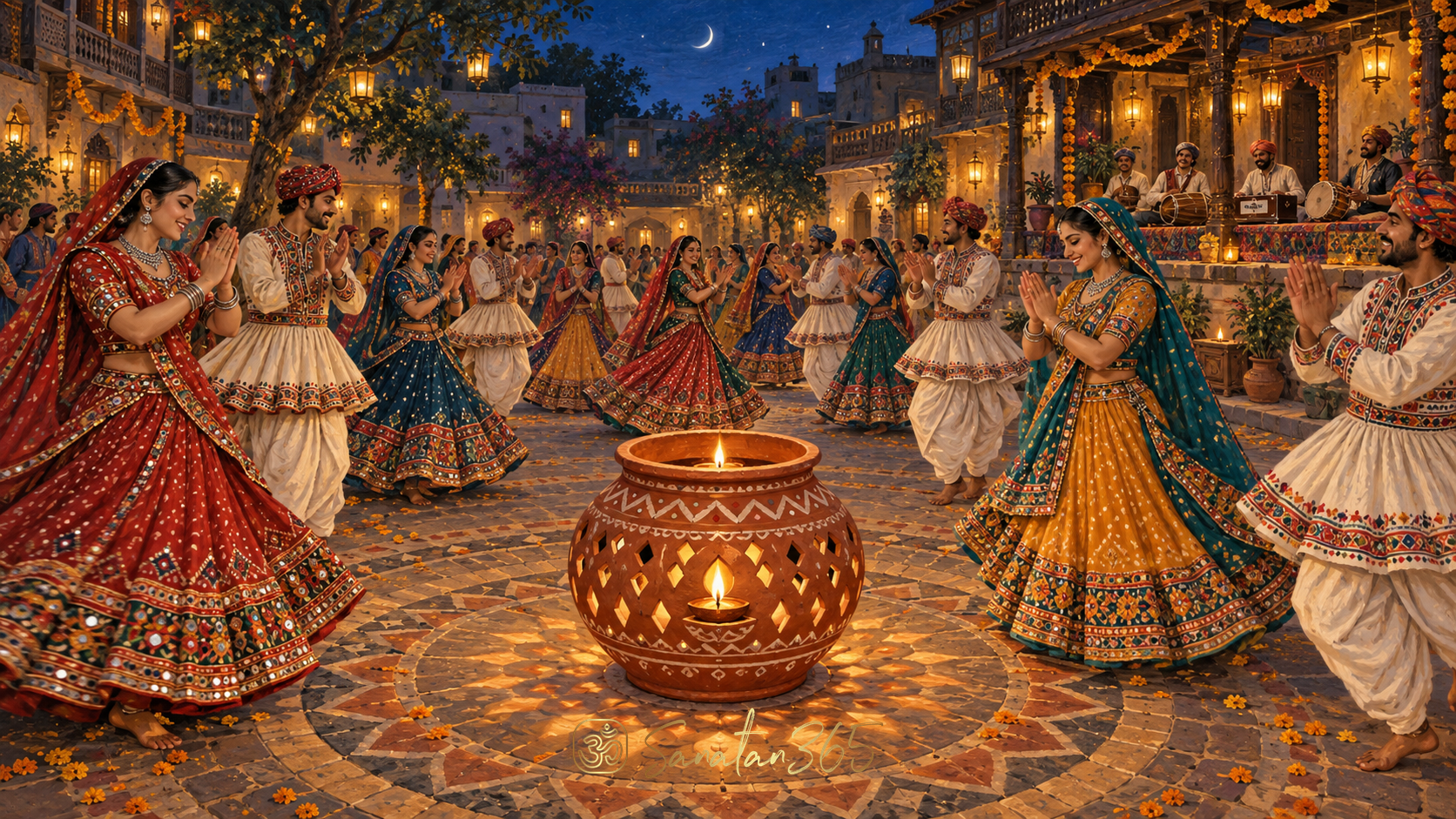 Festivals
Garba Meaning: The Lamp at the Heart of Navratri
Garba is a Gujarati devotional dance associated with Navratri. Its central lamp, shared circular rhythm and reverence for Goddess Amba expl…