Prana Pratishtha Meaning: How a Murti Becomes a Sacred Presence
Prana Pratishtha is the Hindu consecration through which a murti is ritually established as a living focus of divine presence. Its mantras, purification, and opening of sacred sight join invitation with enduring responsibility.
A sculptor may finish a murti, but a temple community does not therefore consider the work of sacred installation complete.
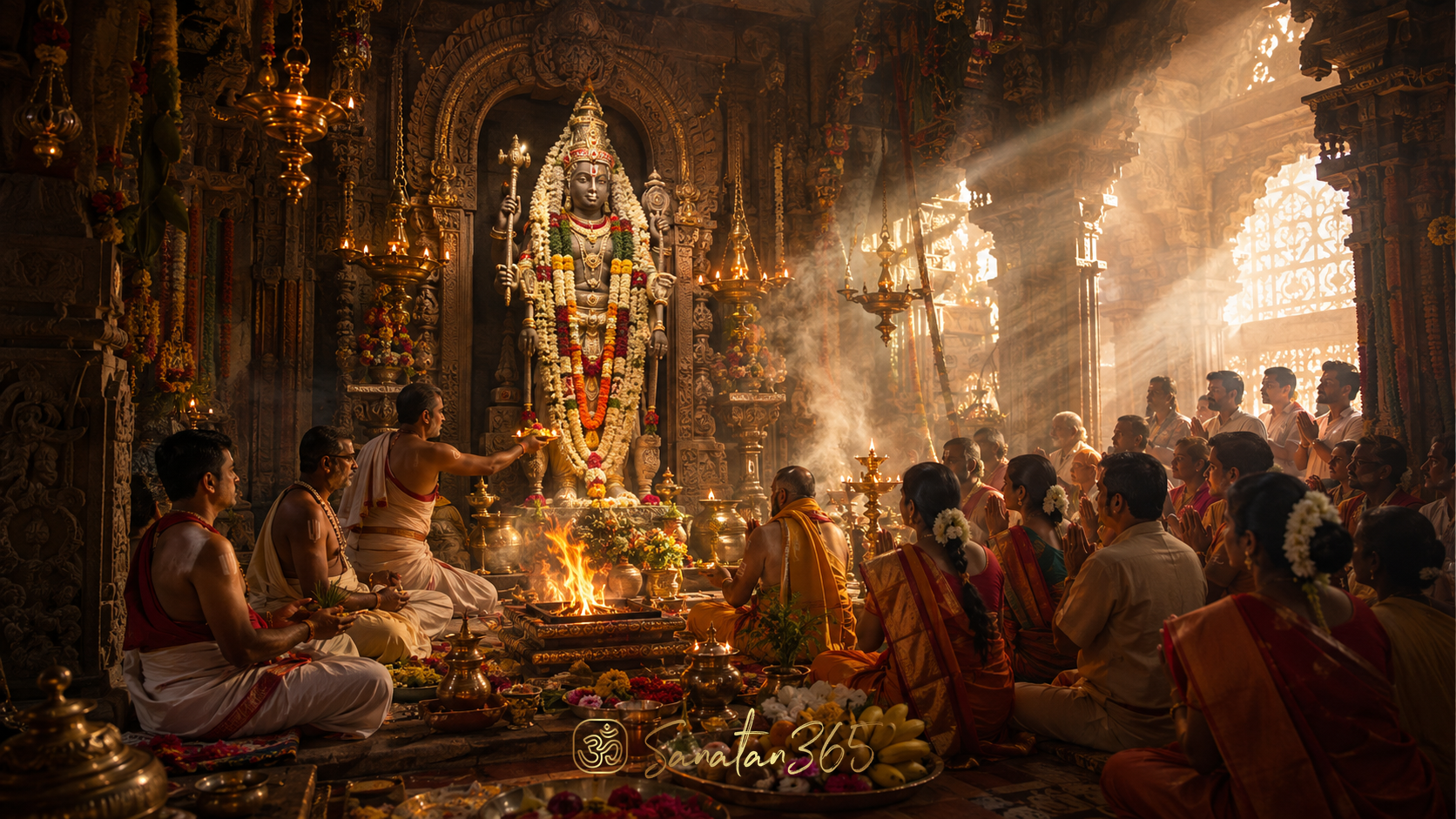
Prana Pratishtha meaning is the ritual establishment of sacred presence in a murti (मूर्ति, a consecrated or devotional form). Prāṇa (प्राण) means life-breath or vital presence, while pratiṣṭhā (प्रतिष्ठा) means establishing or firmly placing. Through purification, mantra, nyasa, invocation, offerings, and the opening of sacred sight, the form is welcomed into living worship. The ceremony is not a claim that human beings manufacture the Divine. It is a disciplined act of invitation that also binds the worshipping community to continuing care.
What Does Prana Pratishtha Mean in Hindu Worship?
Prana Pratishtha is commonly translated as “establishing the life-breath.” That phrase can sound as though an inert object is mechanically switched on. Hindu ritual thought is subtler. The Divine is not absent from the world before a ceremony, nor confined inside stone afterward. Consecration establishes a particular form as an authorized focus of darshan (दर्शन, sacred seeing), puja (पूजा, reverent worship), and relationship.
This distinction helps explain why a murti is not simply an idol in the casual sense of a decorative statue. Its material may be stone, metal, wood, clay, or another ritually appropriate substance, but its religious identity comes through form, scriptural convention, craftsmanship, intention, consecration, and sustained worship. The British Museum’s discussion of Hindu sculpture and worship situates sacred images within living South Asian religious practice rather than treating them only as aesthetic objects.
The Sanskrit term arcā (अर्चा, a form approached in worship) is useful here. A temple murti allows the immeasurable to be approached through measure: a face, a gesture, an attribute, a sanctum, a daily rhythm. The form does not exhaust the Divine. It makes reverent relationship possible.
That relationship is reciprocal. Devotees bring water, flowers, food, fragrance, light, song, and attention. They receive darshan and prasada (प्रसाद, grace received through a blessed offering). The logic resembles sacred hospitality, but it exceeds social metaphor: the deity is treated as truly present according to the theology and discipline of that tradition.
Key takeaway: Prana Pratishtha establishes a murti as a living center of worship without reducing the limitless Divine to the material form.
Why Is a Murti Consecrated Rather Than Merely Installed?
Installation answers a physical question: where will the image stand? Consecration answers a religious question: how will this form become the center of a faithful, accountable pattern of worship?
Before consecration, artisans and ritual specialists have already done demanding work. Classical traditions give attention to proportion, posture, attributes, material, orientation, pedestal, sanctum, and auspicious timing. The Brihat Samhita, a major Sanskrit compendium associated with Varahamihira, includes chapters on temple and image-making conventions, showing that sacred form was never treated as arbitrary decoration. The Digital South Asia Library provides access to scholarly reference resources for such Sanskrit textual traditions.
Yet correct proportions alone do not create temple life. Prana Pratishtha joins several domains:
- Shilpa: disciplined sacred craftsmanship.
- Agama: lineage-specific ritual and temple guidance.
- Mantra: sanctified sound used with authority and precision.
- Sankalpa: a clear sacred intention.
- Seva: ongoing service after the ceremony.
- Community: people who accept responsibility for the worship cycle.
This is why Prana Pratishtha is both culmination and beginning. It culminates the making of a sacred space, but begins the deity’s daily schedule of awakening, bathing, dressing, offering, aarti, rest, and festival celebration. The earlier guide to Panchopachara Puja explains how even five simple offerings can express this language of sacred welcome.
The ceremony also protects worship from casualness. A community cannot reverently invite sacred presence and then neglect the form, space, or daily offerings. Consecration creates obligation. Beauty must become service; enthusiasm must become continuity.
Key takeaway: A murti is consecrated because sacred installation is not only placement; it is the beginning of an enduring covenant of worship and care.
How Does a Prana Pratishtha Ceremony Unfold?
There is no single universal sequence for every temple. Shaiva, Vaishnava, Shakta, Smarta, and regional traditions follow distinct Agamas (आगम, authoritative ritual and theological traditions), paddhatis (पद्धति, ritual manuals or procedures), and priestly lineages. A large temple consecration may extend across several days, while another installation may follow a more compact authorized form.
Still, several ritual ideas often appear.
Purifying the place, participants, and materials
The temple, sanctum, vessels, water, fire, offerings, priests, and ritual boundaries are prepared. Acts such as achamana (आचमन, ritual sipping of water for purification) and punya-vachana (पुण्यवाचन, prayers invoking purity and auspiciousness) remind everyone that sacred action begins with readiness. The purpose is not to label ordinary life impure in a contemptuous sense. It is to gather attention and make the place fit for a concentrated encounter.
This same principle appears in household ritual. The guide to Achamana explores why a small act with water can mark the crossing from distraction into worship.
Establishing intention and ritual protection
A sankalpa (संकल्प, solemn sacred intention) identifies the purpose, place, time, and responsibility of the rite. Ritual boundaries may be established through prayers to guardians, directions, and divine powers. Ganapati is often invoked at beginnings, though exact sequences differ by tradition.
Preparing the murti
The form may undergo ritual bathing and rest in substances or elements prescribed by the lineage. Ceremonies described with terms such as adhivasa (अधिवास, preparatory ritual dwelling or immersion) symbolically refine and ready the image. Water-filled kalashas (कलश, sacred vessels) may hold invoked divine presence until ritual transfer or bathing.
Fire, mantra, and invocation
A homa (होम, fire offering) creates a sacrificial center. Priests offer substances into Agni while reciting mantras appropriate to the deity and ritual system. Fire carries offering, witnesses resolve, and joins the visible rite to Vedic and Agamic lineages of sacred action.
Establishing presence
Through mantra, mudra (मुद्रा, ritual gesture), nyasa, touch, visualization, and invocation, sacred powers are ritually located in the form. This is the heart of Prana Pratishtha, though it should not be isolated from the preparation that makes it meaningful.
Opening darshan and beginning worship
The murti’s eyes may be ceremonially opened, coverings removed, lamps offered, and the first public darshan given. Abhisheka (अभिषेक, ritual bathing), alankara (अलंकार, sacred adornment), naivedya (नैवेद्य, food offering), aarti, mantra, and blessing may follow according to lineage.
Key takeaway: Prana Pratishtha unfolds as a coherent movement from purification and intention to invocation, darshan, offering, and continuing service.
What Do Mantra, Nyasa, and Netronmilana Express?
Three ideas reveal the inner grammar of consecration: sacred sound, sacred placement, and sacred sight.
Mantra is not background music. In ritual use, mantra is disciplined sacred speech received and applied through a tradition. Its sound, deity association, meter, intention, and authorized use matter. Recitation names, praises, invites, protects, and establishes. The priest does not improvise a mood; the ritual speaks through inherited forms.
Nyasa (न्यास, placing or depositing) ritually locates mantras and divine powers in parts of the body or murti. A practitioner may touch specified points while reciting syllables. The gesture teaches that sacred embodiment is ordered, not vague. Head, heart, eyes, limbs, weapons, ornaments, and directions can each carry theological meaning.
Netronmilana (नेत्रोन्मीलन, opening of the eyes) or related eye-opening rites bring the symbolism to a powerful climax. The eyes may be completed or ritually opened with a fine instrument, followed by the first exchange of sight. The V&A’s educational material on Hinduism and sacred images explains the importance of darshan as seeing and being seen by the deity.
That last phrase matters: being seen. A museum visitor may look at sculpture. A devotee approaches darshan with the understanding that sight moves both ways. The opened eyes do not merely make the image more realistic. They announce relationship.
The imagery should not be turned into a crude biological claim. Ritual language works through theology, symbol, embodiment, and lived devotion. Different Hindu schools explain divine presence differently. Some emphasize the Lord’s gracious accessibility in the consecrated form; some stress consciousness pervading all; others speak through Shakti, mantra, or lineage-specific categories. Prana Pratishtha can hold these differences without declaring one explanation superior.
Key takeaway: Mantra gives sacred voice, nyasa gives ordered embodiment, and Netronmilana opens the reciprocal gaze of darshan.
What Changes After Prana Pratishtha?
After consecration, the greatest change is not spectacle but schedule.
The murti enters a living cycle of seva (सेवा, reverent service). Depending on the temple, this may include waking, bathing, dressing, ornamenting, food offerings, incense, lamps, recitation, music, processions, and rest. Festival calendars intensify the relationship, but daily worship sustains it.
This pattern explains why temple care requires trained people and material support. Priests preserve ritual continuity. Cooks prepare offerings. Flower workers, musicians, cleaners, administrators, artisans, donors, and volunteers all contribute. A consecrated temple is therefore not only a building with a holy object. It is an ecology of service.
The deity may also receive a distinct legal and social standing in Indian practice. Temple property, endowments, and service obligations have historically been organized around the deity as the sacred center. Specific legal arrangements vary and should not be simplified, but the broader point is clear: presence carries institutional responsibility as well as devotional feeling.
For the devotee, the change is experiential. The sanctum becomes a place to return, not merely to inspect once. Darshan joins memory across generations: a grandparent’s prayer, a child’s first visit, a festival procession, a vow completed, a grief carried silently. Consecration gives continuity a focal form.
Neglect after consecration is therefore serious. Traditions prescribe regular worship and, when necessary, rites of repair, renewal, or reconsecration. Temple renovation may culminate in kumbhabhishekam (कुम्भाभिषेकम्, ritual reconsecration with sanctified water from sacred vessels), especially in South Indian Agamic settings. The exact theology and procedure belong to competent lineage authorities.
Key takeaway: After Prana Pratishtha, sacred presence is sustained through a daily ecology of service, offerings, festivals, and responsible stewardship.
Can Prana Pratishtha Be Performed for a Home Murti?
Home worship ranges from a simple devotional image to formally installed murtis maintained through detailed daily rites. Families should not assume that every home murti requires the scale of a temple Prana Pratishtha. Nor should a complex consecration be copied from an online list without qualified guidance.
The practical question is capacity. What worship can the household sustain with cleanliness, respect, and regularity? A small murti or image may be worshipped with a lamp, water, flowers, mantra, and food offering according to family tradition. A formal Prana Pratishtha may carry specific daily obligations that should be understood before undertaking it.
A responsible approach is:
- Consult a trusted priest or acharya from the family’s tradition.
- Explain the murti’s material, size, deity, and intended place.
- Ask whether a simple sthapana (स्थापना, respectful installation) or a formal consecration is appropriate.
- Learn the daily seva expected afterward.
- Avoid fear-based claims that a harmless mistake guarantees misfortune.
- Plan respectfully for relocation, damage, or future inability to continue worship.
The emphasis on guidance is not gatekeeping. It respects the diversity of Hindu traditions and prevents sacred rituals from becoming content recipes. A priest trained in one lineage may prescribe a sequence different from another, and both may be internally coherent.
For a sustainable household rhythm, Nitya Puja offers a gentle framework for daily worship without pretending that every home must reproduce temple liturgy.
Modern diaspora conditions can require adaptation: apartments, rental rules, travel, smoke alarms, limited access to ritual materials, and distance from a temple community. Adaptation is possible, but it should preserve the essentials of attention, cleanliness, lineage respect, and honest capacity. The sacred is not honored by promising more daily service than a household can maintain.
Key takeaway: Home installation should match family tradition and sustainable capacity, with formal Prana Pratishtha undertaken only after competent guidance.
Why Does Consecration Matter in a World of Replicas?
Digital images can be copied instantly. Statues can be manufactured at scale. Prana Pratishtha offers a counter-teaching: sacred relationship cannot be reduced to visual resemblance.
Two forms may look identical, yet belong to different relationships. One may sit in a shop awaiting purchase. Another may stand in a temple after consecration, receiving daily worship from a community across generations. Material similarity does not erase ritual history.
This does not mean that the Divine is unavailable outside temples. Hindu traditions repeatedly find sacred presence in rivers, mountains, fire, sound, teachers, guests, animals, the heart, and the whole cosmos. Consecration does something more particular. It trains people to attend fully at one place, through one inherited discipline, over time.
That discipline is valuable in an age of endless replacement. A consecrated murti cannot be treated as disposable decor whenever taste changes. A temple cannot be reduced to a photogenic backdrop. Darshan cannot be consumed only as novelty. The form asks for fidelity.
Prana Pratishtha also corrects the fantasy that feeling alone is enough. Devotional emotion matters, but sacred life needs containers: timing, cleaning, food, light, memory, trained service, and community. Love becomes durable through form.
The central lesson is therefore ethical as well as ritual. To invite presence is to accept responsibility. The ceremony’s grandeur is justified only by the ordinary service that follows it the next morning, and the morning after that.
Key takeaway: Consecration matters because it turns resemblance into relationship and inspiration into sustained responsibility.
FAQ
What is the simple meaning of Prana Pratishtha?
Prana Pratishtha is the Hindu consecration through which a murti is ritually established as a sacred focus of divine presence and worship. The phrase combines prana, life-breath or vital presence, with pratishtha, establishment.
Does Prana Pratishtha mean the Divine was absent before the ritual?
No. Hindu traditions widely understand the Divine as all-pervading. Consecration establishes a particular form and place for authorized, reciprocal worship; it does not manufacture or imprison the Divine.
Who can perform Prana Pratishtha?
Formal temple Prana Pratishtha is performed by qualified priests and ritual specialists trained in the relevant Agama, paddhati, and deity tradition. Requirements vary, so a generic online sequence should not replace lineage guidance.
What is Netronmilana in a consecration ceremony?
Netronmilana means the ceremonial opening of the eyes. It expresses the beginning of reciprocal darshan: devotees see the deity and approach with the awareness of being seen.
What happens after a murti is consecrated?
The murti enters an ongoing cycle of seva, including regular bathing, clothing, food offerings, lamps, mantra, aarti, festival worship, and rest according to the temple or household tradition.
Prana Pratishtha finally teaches that sacred presence and human responsibility arrive together. Purification prepares the place, mantra gives voice, nyasa orders embodiment, sacred sight opens relationship, and daily seva keeps the invitation honest. The single key takeaway: consecration is not the moment a ceremony ends; it is the moment faithful care begins.
About the author
Sanatan365 Editorial
Bringing Sanatan Dharma to modern seekers through authentic, scripture-grounded content.
Related in Rituals
 Rituals
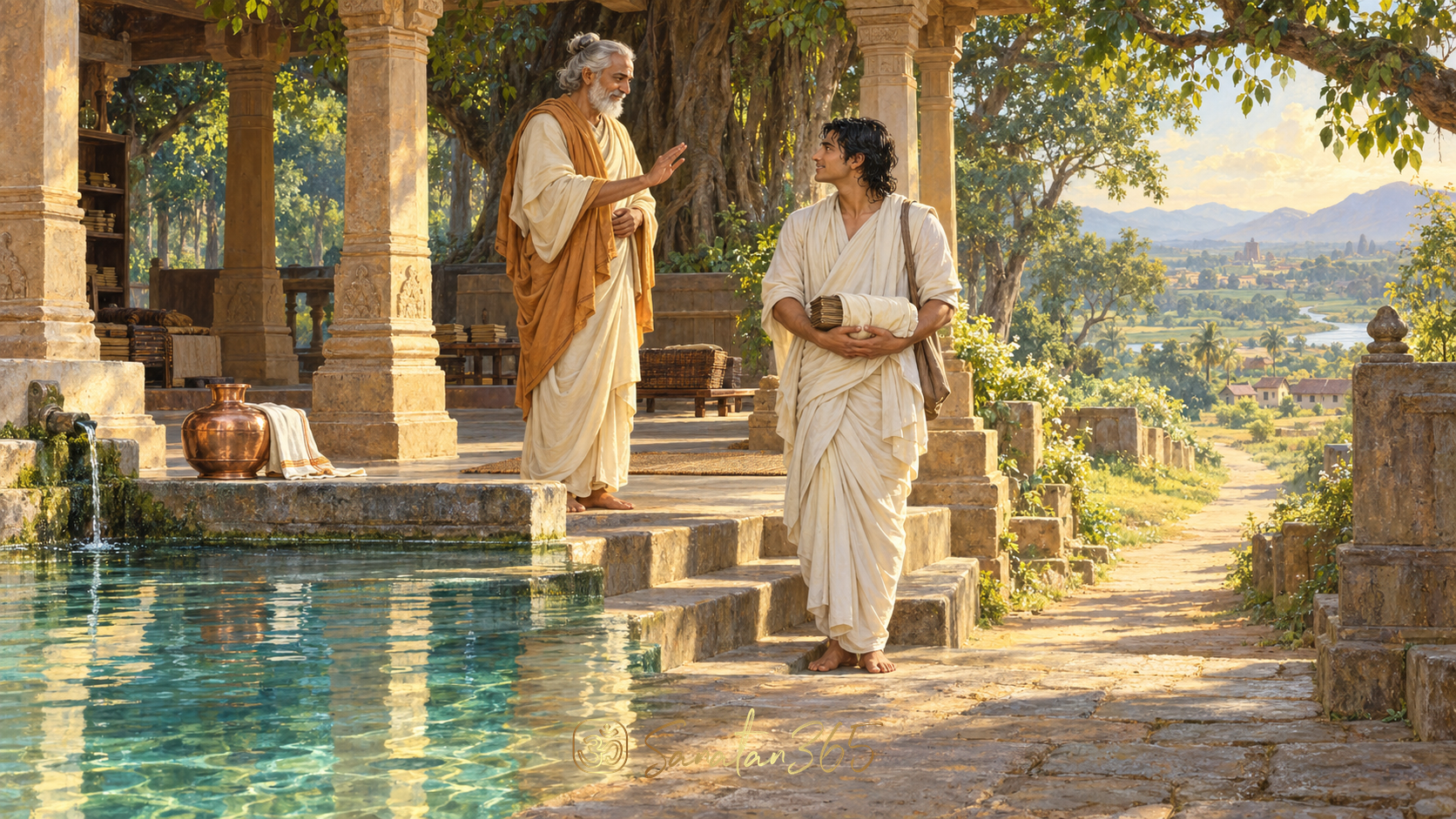
Samavartana Meaning: Returning Home After Sacred Study
Samavartana marks the completion of traditional study through a ceremonial bath and return. Its lasting question is how learning becomes re…
 Rituals
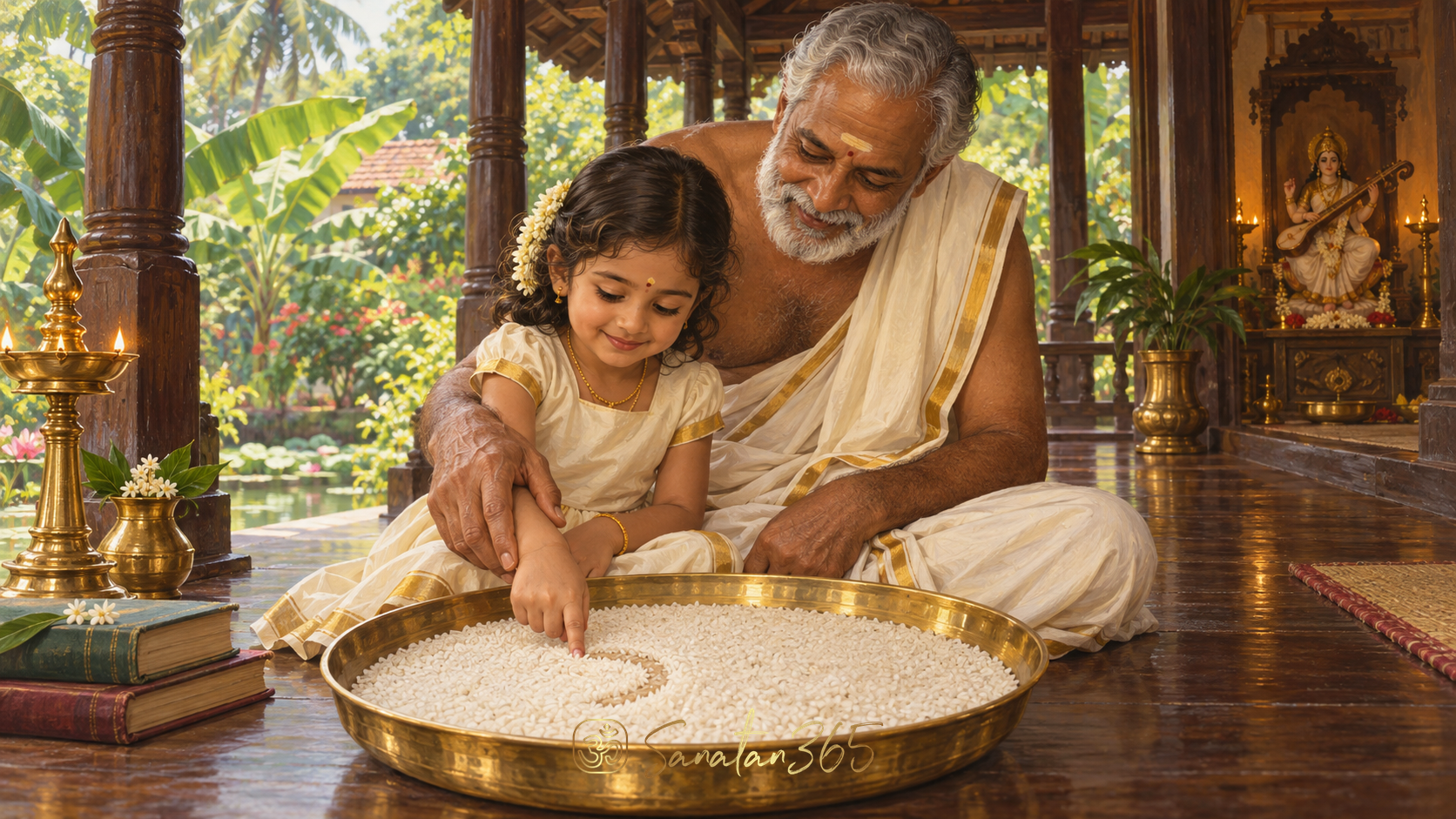
Vidyarambham Meaning: First Letters, Learning, and Reverence
Explore Kerala’s ceremony of beginning letters, its Vijayadashami setting, rice-writing customs, and the meaning of a gentle first step int…
 Rituals
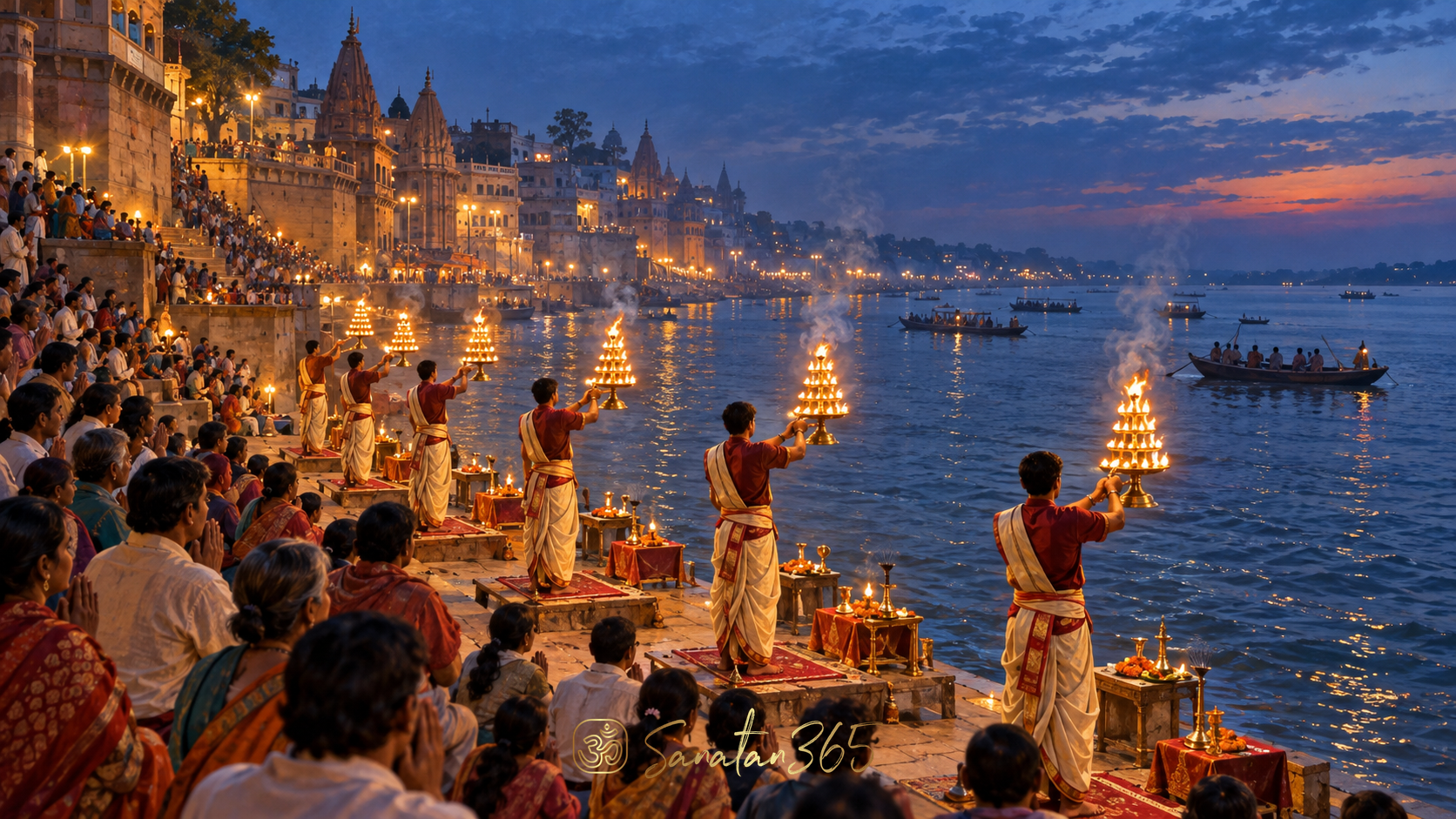
Ganga Aarti Meaning: Why Lamps Are Offered to the River
Why devotees offer light to the Ganga, what the public ceremony in Varanasi expresses, and how visitors can participate with care.

