Deepa Dana Meaning: Why Devotees Offer Lamps
Deepa Dana is the devotional offering or giving of a lamp. Learn how it differs from aarti, what shared light signifies, and how to observe it respectfully.
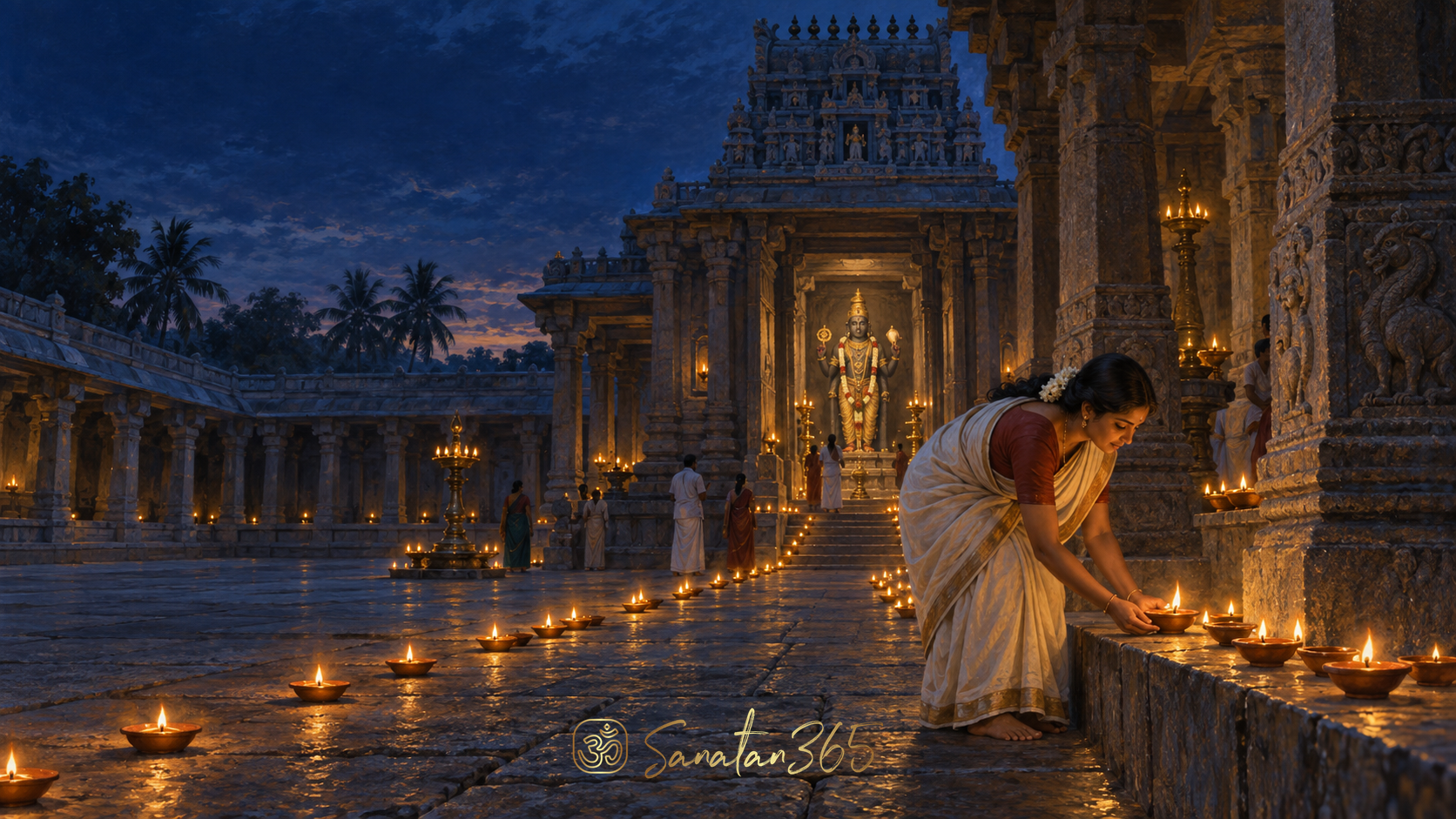
One small lamp can change the appearance of an entire threshold. Deepa Dana meaning begins there: dīpa (दीप, lamp or light) joined to dāna (दान, giving). In Hindu devotional practice, it refers to giving a lamp, its materials, or the opportunity for it to burn as an offering. The act may take place at a temple, in a household, or during a community observance. It is not a guaranteed transaction for luck or prosperity. Its most grounded meaning is an act of reverence made tangible through light, care, and generosity.
A flame is visible, but the intention behind it is not. That is why the practice deserves more attention than a quick instruction to “light a diya.” Who receives the offering? What distinguishes it from aarti? Does a lamp have to be elaborate? How does a devotee take part without confusing a devotional custom with a promise of a particular result? These questions lead to a richer and more responsible understanding of Deepa Dana.
Deepa Dana Meaning: What Does Giving a Lamp Involve?
Deepa Dana, also written Deep Daan or Dipa Dana, literally means the giving of a lamp. In ordinary use, the phrase can describe providing an oil or ghee lamp for worship, placing a lit lamp in a suitable sacred space, or supporting a temple's lamp service. The exact action varies by community. Some devotees give the vessel and fuel; others place or offer a lamp themselves where a temple permits it. Neither version is a universal requirement for Hindu worship.
The noun dīpa points to a lamp rather than to abstract illumination alone. A diya (दीया, a small lamp, often of clay) contains fuel and a wick; flame appears because someone prepares it and continues to tend it. That material detail matters. Deepa Dana is not just an idea about light. It asks for a real gift of time, attention, and resources, however modest. The lamp should be clean, stable, and appropriate to the place in which it will burn.
The word dāna suggests giving without reducing the recipient to a means of personal gain. Hindu discussions of giving do not all use the same theology, yet the Bhagavad Gita makes a useful distinction between gifts made without expectation and gifts made for return; see Bhagavad Gita 17.20–22. Those verses concern giving broadly, not a specific lamp rite. They help explain why the spirit of an offering cannot be measured by the price of its oil.
In some settings, a devotee offers a lamp to a deity before an image or murti (मूर्ति, consecrated form or image). Elsewhere, the lamp may be given to sustain a temple's regular worship or placed among many lamps in a communal observance. It is sensible to ask local custodians what is permitted. A lamp left on an unsuitable ledge is not more devotional than one placed safely where it can be cared for.
Key takeaway: Deepa Dana is the giving or offering of a real lamp in a devotional setting; intention, suitability, and care matter more than expense.
How Is Deepa Dana Different From Aarti?
The two practices are related but not identical. Aarti (आरती, worship with a lighted lamp and other offerings) is usually a structured act in which light is presented before a deity, often in a circular motion and accompanied by song, bells, or other ritual elements. The lamp is one part of the worship sequence. Deepa Dana emphasizes the gift or dedication of a lamp itself, whether it is placed, supplied, or offered according to local custom.
At a temple, both may happen near each other. A priest may conduct aarti while devotees support the lamps that burn in the shrine. At home, a family may light a diya near a shrine and later perform aarti. One action does not automatically become the other simply because the same flame is involved. To understand the distinction, ask what the action is doing: presenting light as part of a worship rite, or giving a lamp so that light may be offered or maintained?
The ISKCON Bangalore temple schedule illustrates the ritual use of lamps in several aarti services. Its description is not a rule for every Hindu temple. It does, however, show why “lamp offering” can refer to a precise liturgical movement rather than any moment when a diya is lit. For a fuller account of that rite, see the meaning of aarti. Deepa Dana deserves its own vocabulary because its center is the act of giving.
The difference is especially helpful for a first-time visitor. If a temple provides a designated area for devotees' lamps, placing one there is not permission to enter a priest's ritual space or to imitate a formal service. Follow signage and staff guidance. Watching respectfully can be an equally appropriate form of participation.
Key takeaway: Aarti is a ritual presentation of light; Deepa Dana centers the giving or dedication of a lamp, even though the two can meet in one worship setting.
Why Does Offering a Lamp Matter?
A lamp does something simple and extraordinary: it makes a shared space visible. Devotees often read that light as a reminder of knowledge, clarity, auspiciousness, or Divine presence. Those are devotional interpretations, not scientific effects caused by a flame. The Brihadaranyaka Upanishad's well-known prayer, “lead me from darkness to light,” uses light as a profound spiritual image; see Brihadaranyaka Upanishad 1.3.28. That text is not a manual for Deepa Dana. It offers a careful philosophical parallel: light can signify movement from confusion toward understanding.
The gift is also concrete. A lamp requires a wick, fuel, a vessel, a safe place, and someone willing to maintain or clean it. Giving a lamp may therefore be understood as helping sustain worship that others can see and share. In a community setting, one person's small contribution joins many without losing its personal intention. The eye sees a pattern of flames; the practice reminds the heart that collective devotion is built from individual acts.
This symbolism should not be flattened into a formula. A devotee may hope for well-being or pray for a loved one while offering a lamp. Hope and prayer are human. But a specific external outcome cannot be promised. Bhagavad Gita 9.26 speaks of a leaf, flower, fruit, or water offered with devotion; its stress falls on the devotion in the offering, not on its market value. See Bhagavad Gita 9.26. The verse does not prescribe Deepa Dana, but it supports the broader principle that sincerity is not purchased.
A lamp can also invite a moment of honest reflection. What needs attention in one's conduct? What would it mean to share knowledge, shelter, or care beyond the shrine? Such questions honor the ritual without pretending that lighting a flame substitutes for ethical action. The most enduring light may be the steadiness with which a person returns to ordinary duties after worship.
Key takeaway: The lamp's meaning lies in reverence, shared worship, and an image of clarity; it is not a mechanism that guarantees results.
Where and When Do Devotees Offer Lamps?
Temple practice is diverse. A shrine may keep lamps burning as part of daily worship. Another may offer a designated place where visitors can light a diya. Some sites restrict open flames, especially near textiles, crowds, or fragile architecture. A household may light a lamp before its own chosen form of the Divine during a regular prayer time. A diaspora community may use an approved indoor venue and electric alternatives where fire regulations prohibit flames. The devotional intention need not be dismissed because local safety rules differ.
In some Vaishnava communities, lamp offerings become particularly visible during Kārtika (कार्तिक, a Hindu lunar month falling broadly in October–November). ISKCON Bangalore's Deepotsava description documents its own observance and the offering of lamps to Lord Damodara, a name of Krishna. It also cites a traditional scriptural praise of such offerings. That is a tradition-specific devotional claim, not a universal promise to every reader, and the exact dates change each year. A visitor should check the current schedule and local panchang (पञ्चाङ्ग, Hindu calendar) rather than treating a fixed Gregorian date as the ritual rule.
Other communities may associate lamps with Diwali, temple festivals, evening worship, or household remembrance. Regional names, fuels, placement, and prayers vary. A clay diya is familiar in much of North India; southern temple contexts may use brass or other established lamp forms. These are broad patterns, not a strict North–South divide. A local priest, family elder, or temple notice is a better authority for the details of a particular observance than a universal online checklist.
The place also affects the meaning of “giving.” At home, the devotee supplies and tends the lamp. At a temple, a donation may fund lamps maintained by authorized attendants, or a designated station may allow direct participation. In either case, respect the institution's rules and the people who care for the site. Do not leave oil, used wicks, or vessels as unasked-for burdens. Generosity includes making the offering easy and safe for others to receive.
Key takeaway: Deepa Dana may be daily, seasonal, domestic, or communal; local custom and current venue rules determine the suitable form.
How Can a Household Practise Deepa Dana Respectfully?
A household practice does not require an ornate vessel or a long ceremony. It benefits from a clear intention and a safe arrangement. If a family already has a worship tradition, follow it. If someone is new to the practice, the following sequence offers a modest framework rather than a prescription for every lineage.
- Choose the place. Use a stable, heat-resistant surface away from curtains, paper, children, pets, and strong airflow. A small tray can catch oil or ash. Do not place a flame where it blocks an exit.
- Prepare the lamp. Use a clean diya or appropriate lamp, a suitable wick, and the fuel normally used in the household's tradition. Do not overfill it. If unsure about materials, ask a knowledgeable person rather than improvising with unsafe liquids.
- Name the intention. Offer the act with gratitude or prayer according to the family's tradition. An elaborate Sanskrit formula is not necessary for sincerity. Avoid attaching a guaranteed worldly result to the offering.
- Light and attend. Pause for a moment of attention. If reciting a familiar prayer, understand what can be understood and let the rest remain a subject for learning. Never leave a burning lamp unattended.
- Finish responsibly. Let the lamp burn only while it can be supervised, extinguish it safely if necessary, and dispose of materials according to local and household practice. A safe conclusion is part of reverent practice, not a failure of devotion.
Some temples will not allow a visitor to bring an outside lamp. In that case, use the temple's approved offering arrangement or make a permitted contribution toward lamp service. Likewise, a household in a building that forbids open flame can mark the intention in a safe way rather than violating rules. Deepa Dana concerns responsible giving; a fire hazard contradicts that spirit.
There is also an ethical dimension to what is purchased and left behind. Reusable vessels, modest quantities of fuel, and careful disposal reduce waste. A community lamp event may involve volunteers who prepare and clean the space. Thanking them, following their directions, and helping where invited may be as meaningful as placing one's own diya. Worship belongs to a network of care.
For readers exploring the broader place of light in Hindu worship, the aarti guide explains the presentation of a lamp, while the meaning of dana looks at giving as a discipline. Those are neighboring ideas. Deepa Dana joins them without collapsing one into the other: it is a gift made visible as a small, tended flame.
Key takeaway: Keep the offering simple, sincere, locally appropriate, and safely supervised; the generosity lies in care as much as in the flame.
Conclusion: A Gift That Lets Others See
Deepa Dana begins with an ordinary object: a lamp that somebody has prepared to give. It becomes meaningful through the relationship it expresses—to the Divine, to a place of worship, and to other people sharing that place. The light can evoke clarity and devotion, but it does not erase uncertainty or purchase a promised outcome. Its beauty is more modest and more durable: a person offers something useful and luminous, then remains responsible for it.
Key takeaway: The heart of Deepa Dana is not how brightly one lamp burns, but how thoughtfully its light is offered and shared.
FAQ
What is the English meaning of Deepa Dana?
Deepa Dana means “giving a lamp” or “lamp offering.” Dīpa means lamp, while dāna means giving. The practice can involve providing a lamp or its materials, or placing a lamp as an offering where local custom permits.
Is Deepa Dana the same as aarti?
No. Aarti is a structured presentation of light within worship, often with song and other offerings. Deepa Dana emphasizes giving or dedicating a lamp. A lamp may be involved in both, but the actions have different centers.
Does a lamp offering guarantee prosperity or the removal of problems?
No such result should be promised. Devotees may offer prayers and hold hopes, while different traditions speak of spiritual merit in their own ways. The practice should be approached as devotion and generosity, not as a guaranteed exchange.
Can Deepa Dana be done outside a temple?
Yes, a household may make a simple lamp offering within its own worship custom. Open flames require a suitable surface and constant supervision. Where flames are prohibited, respect the local rule and ask a community or temple about permitted alternatives.
About the author
Sanatan365 Editorial
Bringing Sanatan Dharma to modern seekers through authentic, scripture-grounded content.
Related in Rituals
 Rituals
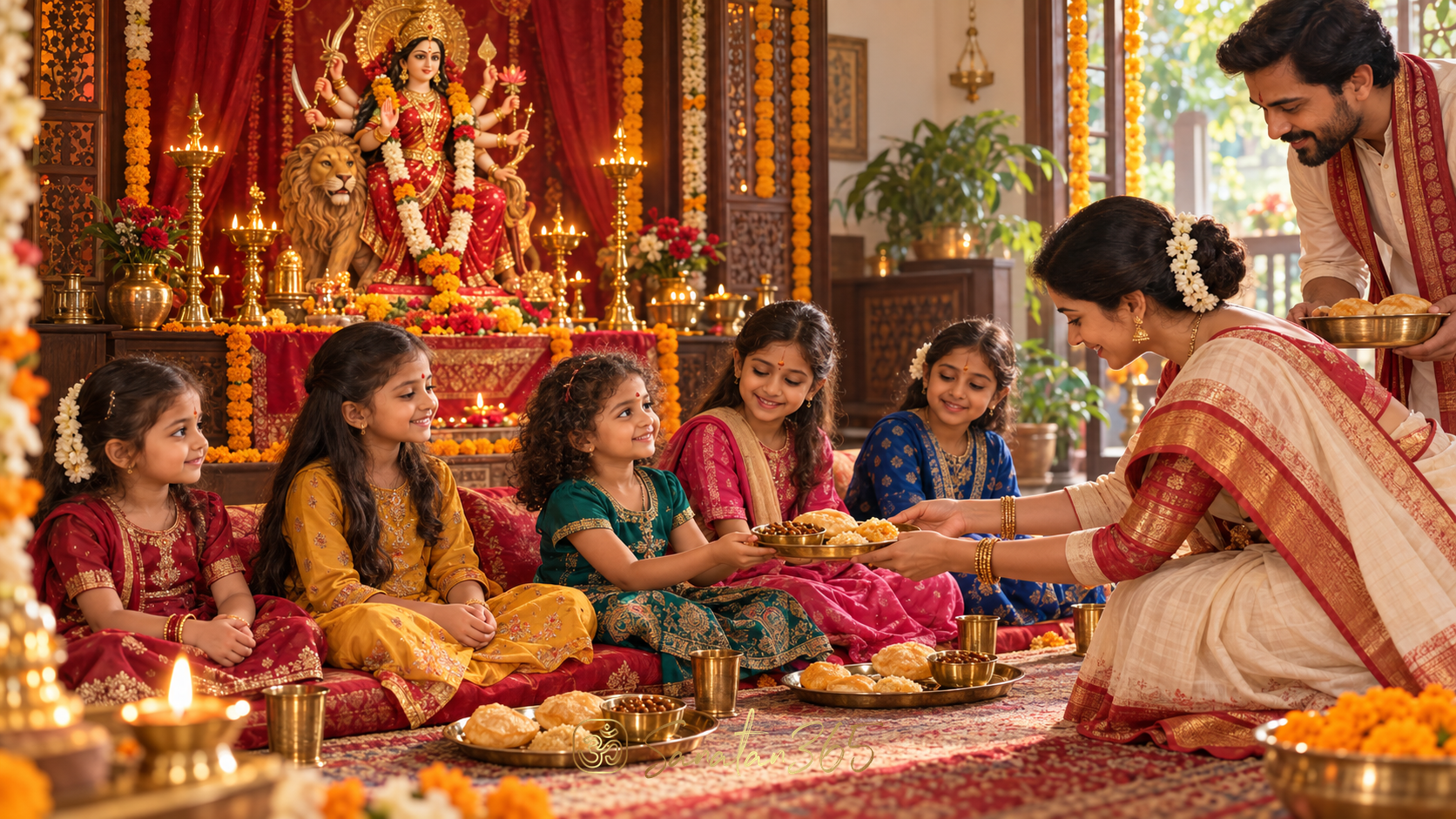
Kanya Puja Meaning: Honouring the Divine Feminine During Navratri
Kanya Puja honours young girls as living symbols of Devi during Navratri. Learn its meaning, timing, regional forms, offerings, and a respe…
 Rituals
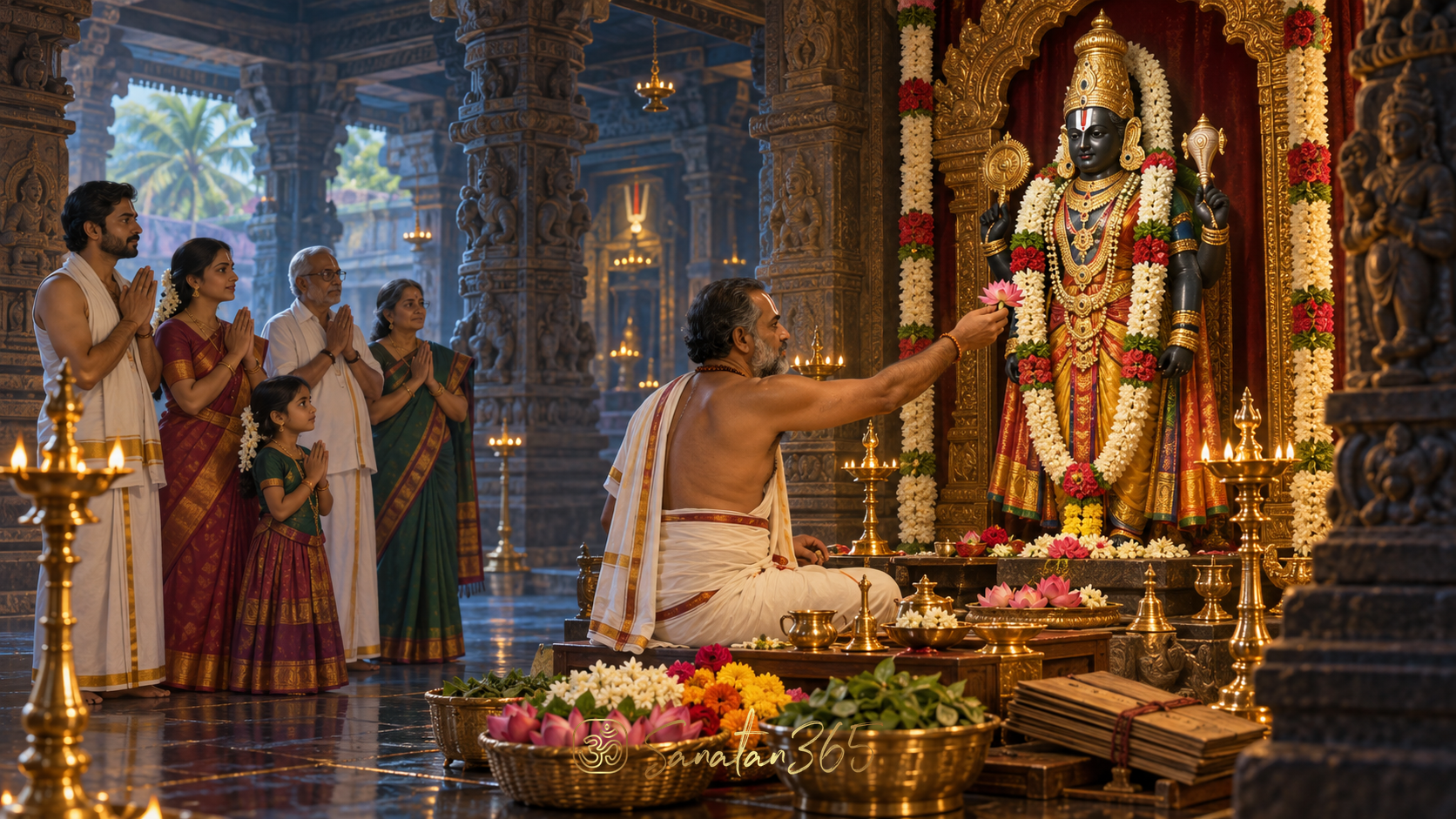
Archana Puja Meaning: Names, Flowers, and Personal Temple Worship
Archana Puja is focused Hindu worship through sacred names, mantra, and offerings, often performed on behalf of a devotee or family.
 Rituals
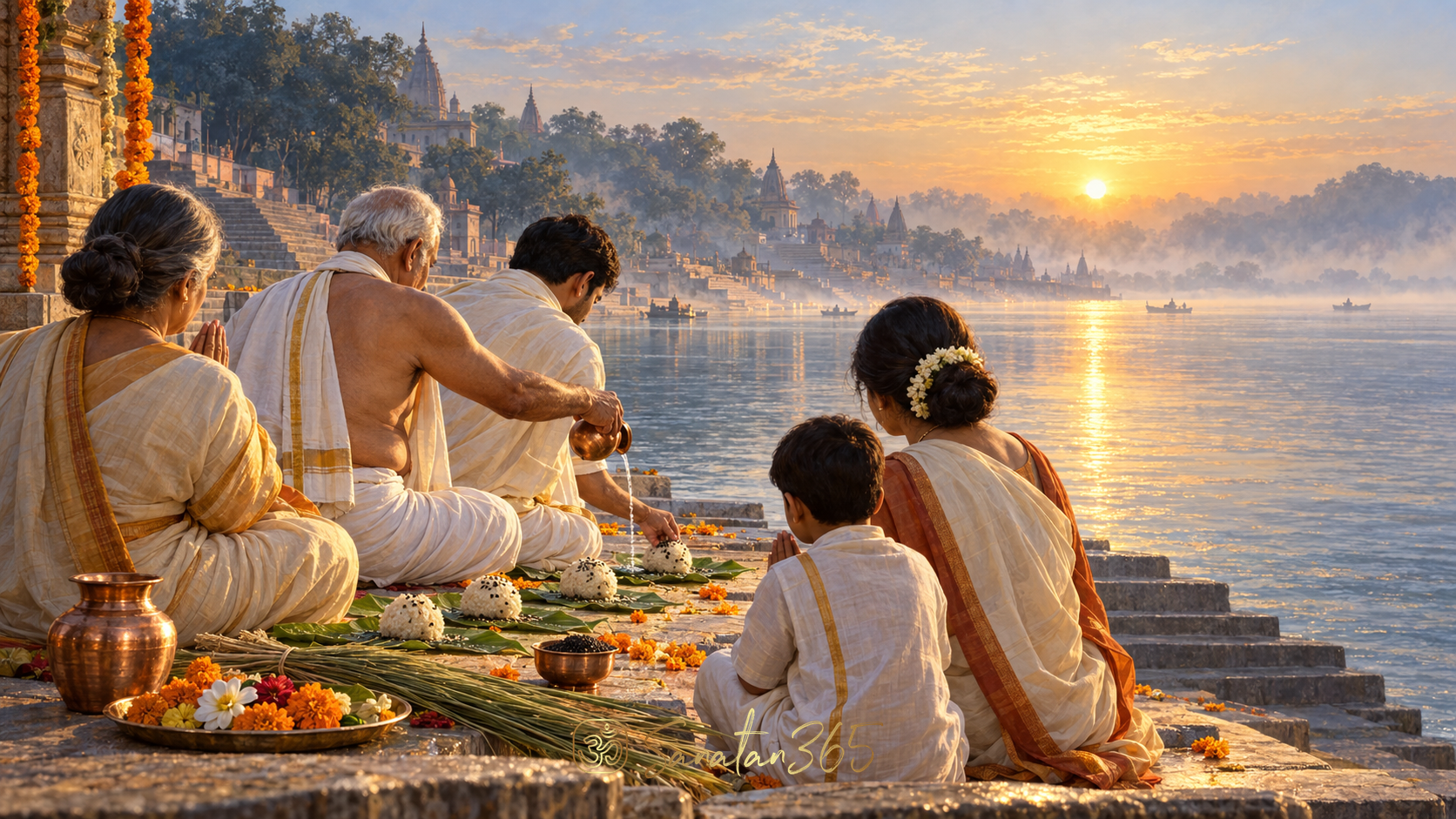
Pind Daan Meaning: An Offering of Memory, Gratitude, and Duty
Pind Daan is a Hindu ancestral rite in which pindas, usually shaped offerings of food, are offered with remembrance and sacred intention. I…

