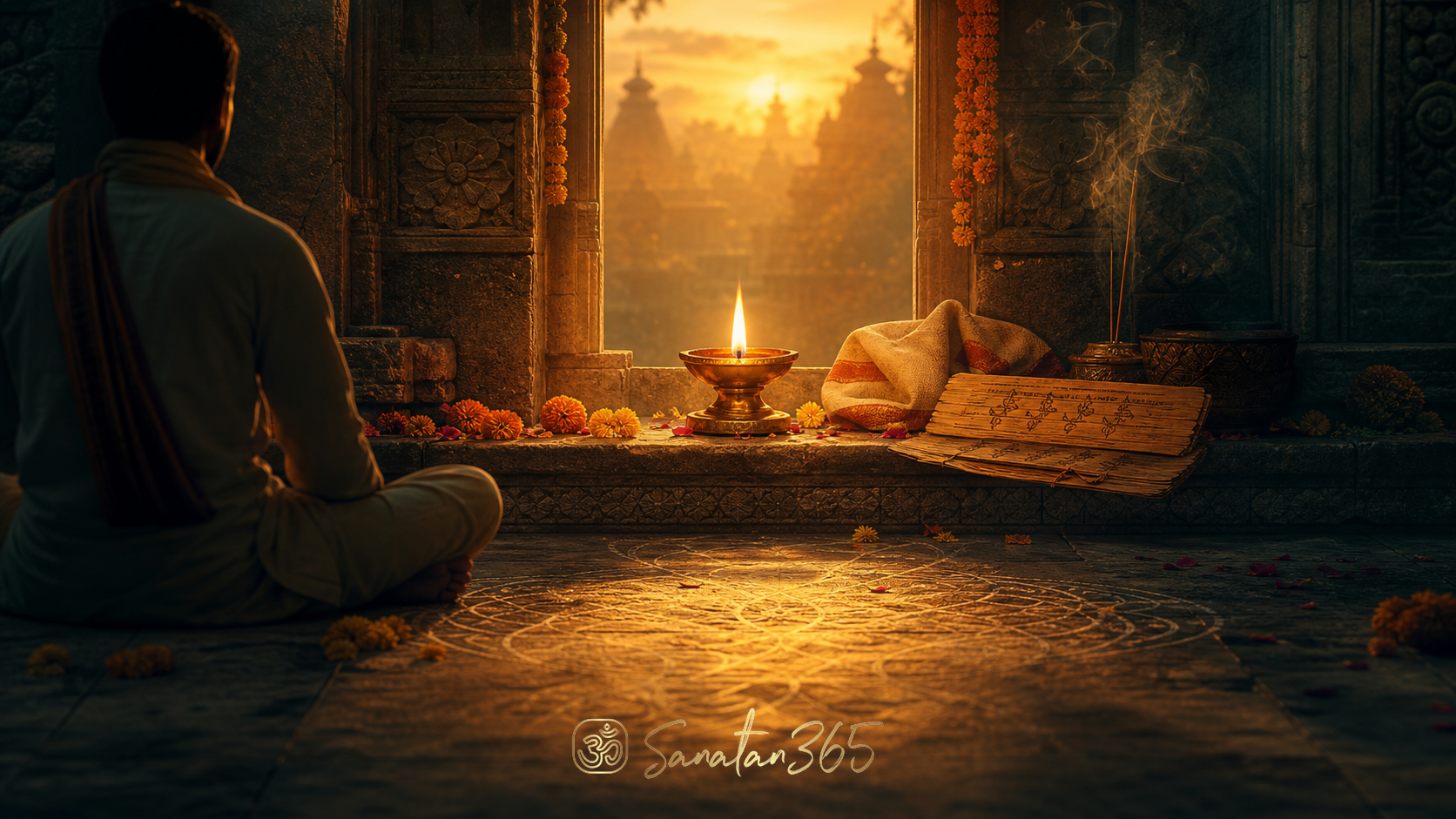
Dharana Meaning: Yogic Concentration Before Meditation
Dharana is the yogic art of holding attention steady. Learn its meaning in Patanjali's Yoga Sutras, how it differs from dhyana, and how to practice it with reverence.
The mind is not made steady by force; it is trained by returning.
Dharana meaning begins with dharana (धारणा, concentration or holding): the yogic discipline of placing the mind on one chosen focus and keeping it there with patience. In Patanjali's Yoga Sutras, dharana comes after pratyahara (प्रत्याहार, withdrawal of the senses) and before dhyana (ध्यान, meditation). It is the bridge between scattered attention and deeper meditative absorption, teaching the seeker to gather awareness around breath, mantra, sacred image, or a single point of contemplation.
What Is the Dharana Meaning in Yoga?
The simplest Dharana meaning is "holding the mind steady." The Sanskrit root dhri carries the sense of holding, supporting, or bearing. In practice, dharana is not blankness. It is the deliberate placement of attention. A seeker may focus on the breath, a divine name, a murti, a flame, the heart center, or a sacred teaching. The object matters, but the training is the same: remain, return, and refine.
Patanjali's Yoga Sutra 3.1 gives the classical definition of dharana. Traditional translations render it as the binding or fixing of the mind to a place or point; Wisdom Library's Yoga Sutra reference presents the sutra as citta, the mind-stuff, becoming fixed on a chosen point (Wisdom Library). This brief sutra is easy to read quickly, but it carries a deep discipline. Dharana is the beginning of inner steadiness.
The Yoga Sutras place dharana within ashtanga yoga (अष्टाङ्ग योग, eight-limbed yoga), not as a standalone technique. Yoga Sutra 2.29 lists yama, niyama, asana, pranayama, pratyahara, dharana, dhyana, and samadhi as the eight limbs. In that sequence, concentration grows from ethical living, disciplined habit, posture, breath, and sense-withdrawal. See Ashtanga Yoga Meaning: Patanjali's Eight Limbs of Inner Discipline for the wider map.
Key takeaway: Dharana is not merely focus for productivity; it is sacred concentration supported by the full yogic path.
How Is Dharana Different From Dhyana?
Dharana and dhyana are close, but they are not the same. Dharana is the repeated act of holding attention. Dhyana is the more continuous flow of that attention once interruptions quiet down. A beginner may spend most of a sitting session in dharana: choosing the breath, drifting into thought, noticing the drift, and returning. That returning is not failure. It is the practice.
An everyday example helps. If someone lights a diya and keeps looking at it, but the mind keeps moving to messages, deadlines, memories, or worry, the practice is dharana. The mind is being trained to stay with the flame. If attention becomes more continuous, tender, and uninterrupted, the same practice begins to approach dhyana. The object remains, but the struggle softens.
This difference protects seekers from discouragement. Many people say, "I cannot meditate," when they actually mean, "My attention does not stay steady." The yogic answer is not shame. It is dharana. First, the mind learns to gather. Then meditation becomes more natural. Sanatan365's earlier guide to Dhyana Meaning: Hindu Meditation as Steady Awareness, Not Empty Escape explores the next limb in more detail.
Key takeaway: Dharana is the training of attention; dhyana is attention becoming a more continuous meditative current.
Why Does Concentration Become a Spiritual Practice?
Modern life often treats concentration as a performance skill. In Sanatan Dharma, attention is also moral and spiritual. What the mind repeatedly holds, the heart gradually becomes colored by. If attention is constantly dragged outward by comparison, irritation, noise, and desire, inner life becomes restless. If attention is offered to mantra, breath, scripture, seva, or the presence of the Divine, the same mind becomes clearer.
This is why dharana follows pratyahara. Pratyahara draws the senses inward. Dharana gives the gathered mind a sacred direction. Without this step, sense withdrawal may become dullness or mere isolation. With dharana, the inward turn becomes meaningful. The seeker is not escaping the world; the seeker is learning to meet life from a quieter center.
The focus can be devotional. A Vaishnava may hold the mind on the name of Krishna or Vishnu. A Shaiva may use Om Namah Shivaya, a Shiva linga, or the image of Nataraja. A Shakta devotee may rest attention on Devi's presence. A Vedantin may contemplate mahavakyas, the great Upanishadic statements. The tradition allows many doors because seekers have different temperaments.
At the same time, dharana should stay humble. It is not a shortcut to supernatural powers, nor a claim of spiritual superiority. It is a disciplined friendship with attention. The mind wanders, and the seeker returns. Over time, this simple act purifies the inner field.
Key takeaway: Dharana turns concentration into worship by giving attention a sacred, steady, and purifying direction.
How Can a Beginner Practice Dharana at Home?
A beginner can practice dharana without performance pressure. The aim is not to produce an impressive inner experience. The aim is to train attention with steadiness and reverence.
- Choose one focus. Use the natural breath, a short mantra, a diya flame, a sacred image, or a line from scripture. Do not keep changing the object during the same session.
- Prepare the seat. Sit comfortably with the spine alert but not rigid. If sitting on the floor creates strain, use a chair.
- Set a modest time. Begin with five to ten minutes. A short practice done daily is usually stronger than a heroic practice done rarely.
- Name the return. When the mind wanders, notice it gently and return to the focus. The return is dharana in action.
- Close with gratitude. End with a moment of namaskara, prayer, or quiet thanks. This keeps the practice devotional rather than mechanical.
For a flame-based practice, keep the flame at a comfortable distance and never strain the eyes. Sanatan365's guide to Trataka Meaning: Candle Gazing, Steady Attention, and Inner Stillness explains the difference between safe gazing practice and careless intensity. For mantra practice, let the sound become the anchor rather than a race. For breath practice, observe rather than control unless trained in a specific pranayama method.
The most important instruction is gentleness without laziness. Dharana needs effort, but it does not need harshness. The mind is not an enemy to be beaten. It is an instrument to be tuned.
Key takeaway: A steady object, a realistic time, and repeated return are enough to begin dharana sincerely.
What Objects of Focus Are Used in Dharana?
Classical and devotional practice offers many possible supports for dharana. The object should be safe, respectful, and aligned with the seeker's tradition or temperament.
- Breath: Natural breathing is simple, portable, and useful for beginners.
- Mantra: A divine name or sacred sound gives attention both rhythm and reverence.
- Murti or sacred image: A respectful image of a deity can support bhakti (भक्ति, devotion).
- Diya flame: A flame can train steadiness when practiced safely and briefly.
- Scriptural phrase: A line from the Bhagavad Gita, Upanishads, or stotra can become a contemplative anchor.
- Inner location: Some traditions focus on the heart, eyebrow center, or other subtle points, usually under guidance.
The best object is not necessarily the most dramatic. It is the one the seeker can return to with sincerity. A mantra whispered with love may be stronger than an elaborate visualization performed with pride. A breath watched steadily may reveal more than a complex method rushed without discipline.
Regional and family traditions matter here. In many Hindu homes, concentration begins naturally before the household shrine. In yoga schools, the breath or a point of awareness may be emphasized. In bhakti communities, the divine name may be central. In diaspora homes, a short morning practice before work or school can keep the thread of dharma alive across busy environments.
Key takeaway: Dharana allows many sacred supports, but one session should hold one focus with care.
What Are Common Mistakes in Dharana Practice?
The first mistake is expecting instant silence. Dharana reveals restlessness before it refines it. When the seeker sits down, unfinished impressions may rise: worries, desires, old conversations, or plans. This does not mean the practice is weak. It means the mind has become visible.
The second mistake is changing techniques too quickly. If the breath feels boring after two minutes, a mantra is chosen. Then a flame. Then music. Then a new posture. This keeps attention entertained but not trained. Dharana asks for continuity.
The third mistake is turning concentration into tension. A tight jaw, strained eyes, rigid shoulders, and aggressive self-talk do not create yogic steadiness. They create fatigue. The focus should be firm, but the body and breath should remain kind.
The fourth mistake is separating practice from conduct. If daily life is filled with dishonesty, harsh speech, addiction to distraction, or constant agitation, ten minutes of dharana will be fighting the rest of the day. Yama and niyama are not decorations around meditation. They make concentration possible.
The fifth mistake is making claims too large. Dharana may support calmness and clarity, but it is a spiritual discipline, not a medical treatment. Anyone dealing with serious anxiety, trauma, depression, addiction, or medical symptoms should seek qualified professional care and trusted human support. Spiritual practice can accompany care; it should not replace it.
Key takeaway: Dharana matures through patience, consistency, ethical living, and freedom from exaggerated claims.
How Does Dharana Shape Daily Life?
Dharana does not remain on the meditation seat. A student practicing dharana studies one page with full attention. A parent listens to a child without half-scrolling through a phone. A devotee sings aarti with the mind present in the offering. A worker completes one task with steadiness instead of scattering energy across ten open loops.
This daily-life expression is important because Hindu practice does not separate the sacred from ordinary duty. Concentration can become a form of respect. To cook with attention, speak with attention, chant with attention, and serve with attention is to reduce inner fragmentation. The mind learns that presence is possible.
There is also a devotional sweetness in dharana. When the mind returns again and again to the Divine, the return itself becomes a small offering. The seeker may not feel advanced. The practice may feel ordinary. Yet each return says, "This matters. I choose this focus again."
Over months and years, that choice changes the texture of life. The mind becomes less easily pulled by every impulse. Speech becomes slower and cleaner. Worship becomes more heartfelt. Study becomes deeper. Meditation becomes less like a battle and more like homecoming.
Key takeaway: Dharana trains the same attention needed for prayer, study, family life, service, and steady inner growth.
FAQ
What is Dharana meaning in simple words?
Dharana means yogic concentration. It is the practice of holding the mind on one chosen focus, such as breath, mantra, flame, sacred image, or a contemplative idea.
Is Dharana the same as meditation?
No. Dharana is concentration, while dhyana is meditation. Dharana trains the mind to stay with one object; dhyana is a more continuous flow of awareness toward that object.
Where is Dharana mentioned in the Yoga Sutras?
Dharana is defined in Yoga Sutra 3.1 and appears as the sixth limb in the eight-limbed path listed in Yoga Sutra 2.29. It follows pratyahara and precedes dhyana.
How long should beginners practice Dharana?
Five to ten minutes daily is a good beginning for many seekers. Consistency matters more than long sessions. The practice can gradually increase when the body, breath, and mind feel steady.
Can Dharana be practiced with mantra?
Yes. Mantra is a traditional and powerful support for dharana. The seeker may hold attention on the sound, meaning, rhythm, and devotional presence of the mantra.
Conclusion
Dharana is the sacred art of returning. It teaches the mind to stop scattering itself and to rest, again and again, on what is worthy of attention. Before meditation becomes deep, concentration must become sincere. Before attention becomes continuous, it must learn to come home.
Key takeaway: Dharana meaning is not just concentration; it is disciplined, reverent attention that prepares the seeker for true meditation.
About the author
Sanatan365 Editorial
Bringing Sanatan Dharma to modern seekers through authentic, scripture-grounded content.
Related in Meditation
 Meditation
Kaya Sthairyam Meaning: Finding Steadiness Before Meditation
Kaya Sthairyam is the yogic practice of body steadiness. Learn how relaxed awareness, a supported seat and patient stillness prepare for me…
 Meditation
Chidakasha Dharana Meaning: Awareness of the Inner Space
Understand the space experienced with closed eyes, how observation differs from visualization, and a gentle introduction to this yogic conc…
 Meditation
Antar Mouna Meaning: Inner Silence Without Fighting Thought
Understand inner silence in Satyananda Yoga, its sensory and thought-awareness stages, and a responsible beginning that does not demand a b…