Ganga Aarti Meaning: Why Lamps Are Offered to the River
Why devotees offer light to the Ganga, what the public ceremony in Varanasi expresses, and how visitors can participate with care.
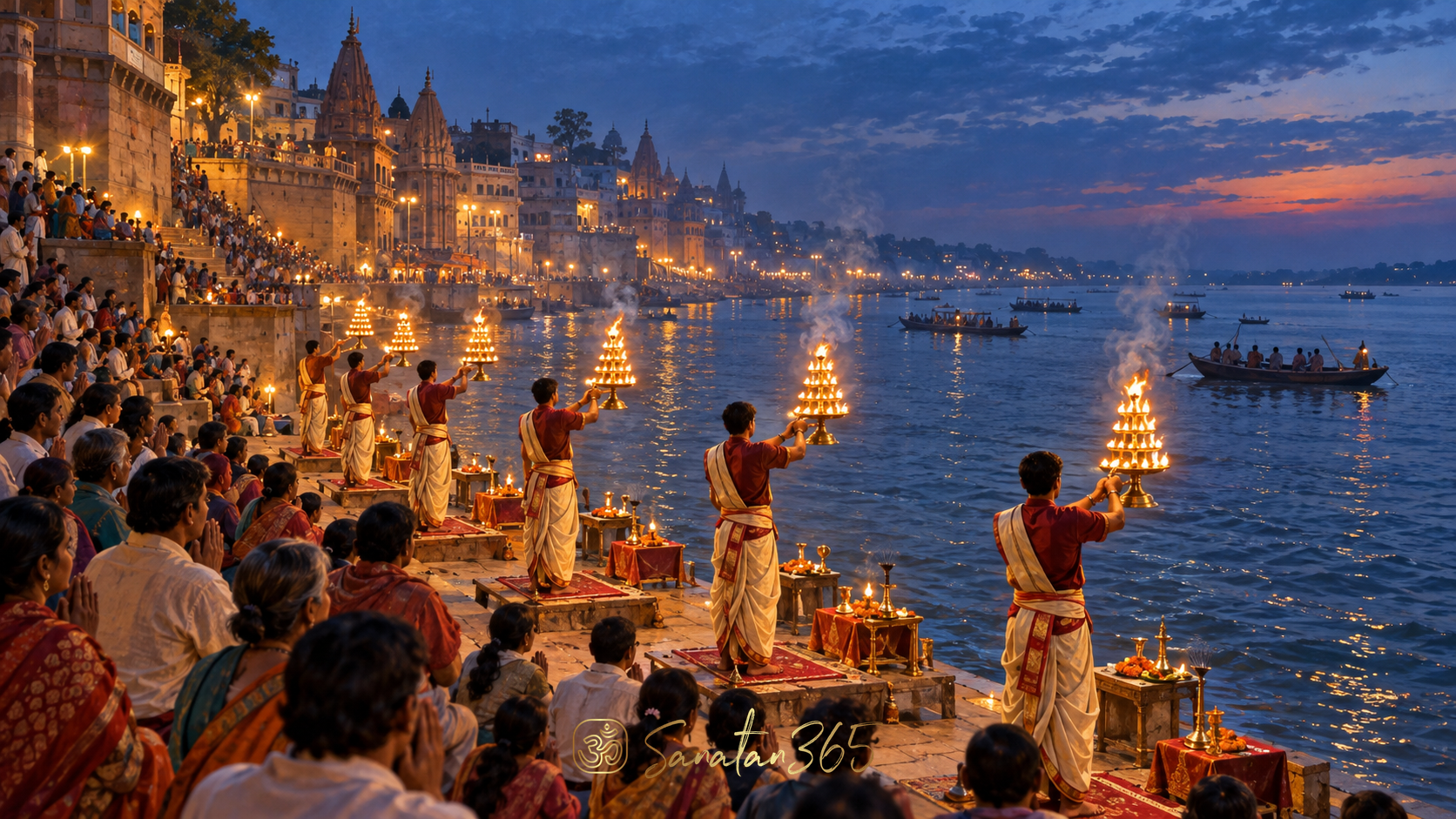
At dusk in Varanasi, flames rise above the river while people gather on the stone steps. The sight is arresting, but its meaning is easy to miss if it is treated only as a spectacle.
Ganga Aarti is a ritual offering of light to the River Ganga, revered by many Hindus as a sacred river and as the goddess Ganga. Aarti (also written arati) means a ceremonial offering of light, often accompanied by prayer, bells, and song. The lamps express gratitude and reverence; they do not imply that the river needs human light. The ceremony invites participants to notice their dependence on water, the living world, and the sacred. Its public form in Varanasi is one local expression of a much wider Hindu practice of offering light in worship.
What is the meaning of Ganga Aarti?
In an aarti, a lit lamp is moved before the object of reverence. At the river, the Ganga herself is the focal point. The gesture joins three simple elements: light, attention, and offering. A worshipper presents a flame with humility and receives its light as a reminder to live with greater clarity. This explanation describes devotional meaning, not a mechanical promise that one ceremony will produce a specific result.
The word puja means worship or an act of reverential offering. An aarti can be one part of a puja, but the public river ceremony is larger than a household lamp offering. It gathers people beside a particular place whose water has sustained settlements, travel, work, and worship. The river is therefore encountered both as a real ecological presence and, for devotees, as a divine one. These dimensions need not be flattened into a choice between “symbol” and “nature.”
The Rigveda's Nadi Sukta (“hymn to the rivers,” 10.75) praises rivers and names the Ganga among them. That early hymn is not a script for the modern evening ceremony; it is evidence of a long cultural habit of addressing rivers with respect. Likewise, the Bhagavad Gita 9.26 speaks of an offering made with devotion, but it does not prescribe the choreography of a Varanasi river aarti. Distinguishing scriptural themes from later local forms makes both easier to understand. Rigveda 10.75; Bhagavad Gita 9.26.
For a newcomer, the most useful question is not “What does every motion guarantee?” but “What kind of attention is being cultivated?” The ceremony answers through repeated, public gestures of gratitude. The river is neither a stage prop nor merely a backdrop for photographs. Its presence is the reason the gathering takes place.
Key takeaway: Ganga Aarti means offering light and attentive reverence to the sacred River Ganga, with gratitude rather than a promised transaction.
Why is light offered to the River Ganga?
A flame makes an invisible intention visible. In many Hindu traditions, dipa means a lamp or light; offering it can mark welcome, honor, and the wish for inner clarity. That is an interpretive layer of the gesture, not a single compulsory meaning shared identically by every community. The basic act is simpler: one brings light before the revered presence.
At the riverfront, that light also sets up a striking relationship. A small human flame is held toward a great, moving body of water. The worshipper cannot command the river. The gesture recognizes dependence rather than control. The lamps are sometimes multi-tiered and ceremonially elaborate, yet the meaning does not depend on their size. A family lighting one modest lamp at home may express the same gratitude without reproducing the public performance.
Devotees may receive the warmth or light after an aarti by drawing their hands toward themselves. In a river ceremony watched from a distance, the precise opportunity to do so depends on the local arrangement; visitors should not push through a crowd to imitate a gesture they do not understand. Watching quietly can itself be a respectful form of participation.
The River Ganga also raises a question that a purely visual account avoids. If water is honored as sacred, how should it be treated after the lamps are put away? Reverence gains substance when it discourages litter, wasteful consumption, and careless disposal of offerings. This is a practical ethical inference, not a claim that one ritual alone solves river pollution. The ceremony may prompt responsibility; that responsibility still requires daily action.
The older practice of aarti is discussed more broadly in our guide to light offerings. Here, the distinctive subject is the river: the movement of flame toward flowing water, the gathering on the banks, and the relationship between devotion and stewardship.
Key takeaway: The offered flame is a visible sign of welcome, gratitude, and clarity; honoring the river should also shape how people care for its water.
How does Ganga Aarti unfold in Varanasi?
Varanasi is an ancient city on the Ganga, and its riverfront steps are known as ghats: built approaches to the water used for bathing, travel, worship, and everyday life. The best-known evening public ceremony is associated with Dashashwamedh Ghat, though ceremonies at other ghats can have different scales and arrangements. A visitor should confirm the current location and time locally; schedules can change with season, weather, festivals, and local management. Uttar Pradesh Tourism's Varanasi guide provides visitor context.
A typical large evening gathering includes priests, lamps, bells, conch sounds, and devotional chanting. The order and visual form are shaped by the organizers of that particular ceremony. It is unwise to present a single sequence as the timeless or universal form of “Hindu Ganga Aarti.” What visitors see today is a living, public ritual that draws on wider worship practices and also responds to the particular riverfront setting.
People watch from the steps and, where permitted, from boats. Some come to pray; others come to learn, photograph, or accompany family. These motives coexist, but they do not give every visitor equal claim on space. The riverbank remains a place of active worship, not a theatre in which worshippers are extras. Arriving early, following local directions, and leaving pathways clear usually make the experience calmer for everyone.
The scale can be moving: a line of flames rises as daylight falls, music and bells carry across the water, and reflections shift with the current. Yet the ceremony does not require a visitor to feel a prescribed emotion. One person may feel devotion, another curiosity, another quiet concern about the river. The appropriate response is honest attentiveness and respect for those for whom this is prayer.
For a broader understanding of the river's festival associations, our Ganga Dussehra guide covers a different occasion. The evening aarti is not the same as that annual festival, even when the same river is at its center.
Key takeaway: The Varanasi ceremony is a living local form of river worship; confirm its current arrangements and remember that worship, not tourism, gives it its center.
What can visitors do to participate respectfully?
Begin with observation. Notice where worshippers, priests, residents, and visitors are standing. Follow posted or spoken instructions, especially around access to platforms, steps, and boats. Ask before photographing someone closely. If a ceremony is crowded, protect the space of children, older people, and those trying to pray. A good view never justifies blocking a passage or leaning over someone making an offering.
Clothing need not become an anxious performance, but modest, practical dress suits an active sacred site. Carry only what can be kept secure. If a boat is used, choose a legitimate operator, follow safety instructions, and do not stand or shift suddenly for a picture. The aim is to avoid turning reverence for a river into preventable risk on the water.
A visitor who is unfamiliar with the words being sung can listen without pretending expertise. A respectful question after the ceremony may be more useful than interrupting the officiants during it. If joining a gesture, follow local guidance rather than assuming that what happened in one video applies to every ghat. Observing silently is entirely acceptable.
Offerings call for particular care. Do not put plastic wrappers, synthetic decoration, or other refuse into the water. Even biodegradable material can be inappropriate in large quantities or in a locally restricted area. Use designated collection points where available, and defer to current local rules. Buying a floating lamp is not a prerequisite for meaningful participation; the ceremony is not a purchase.
Those who practice at home can keep the gesture modest: light a safe lamp, offer a moment of gratitude for water, and take one concrete step to use it responsibly. This is a personal reflection inspired by the public rite, not a replacement for a community's ritual instructions. Flame safety matters, particularly around children, fabrics, and confined rooms.
Aarti is sometimes described as “giving back light.” That phrase can be helpful if understood as poetry. It should not obscure the practical fact that the river gives far more than a person can return in one evening. Respect is measured not only in ceremonial moments but also in what happens afterward.
Key takeaway: Participate by protecting others' space, following local guidance, and leaving the riverfront cleaner than you found it.
How can river reverence shape everyday care?
The ceremony ends; dependence on water does not. This is the bridge between a meaningful evening and an ordinary morning. A household may conserve water, avoid putting harmful waste into drains, or support credible local restoration efforts. A traveler can refuse disposable plastic near the ghats and dispose of all waste properly. None of these actions requires a claim that a devotional practice is a substitute for environmental policy or scientific monitoring.
There is also a discipline of attention. A river is often discussed as a resource or as scenery. During Ganga Aarti it is addressed, thanked, and watched. Even a person outside the devotional tradition can understand the ethical shift: gratitude makes neglect harder to excuse. For devotees, the significance can be deeper, grounded in their relationship with Ganga as a sacred presence.
Hindu traditions are diverse. Not every family visits Varanasi, conducts river aarti, or explains Ganga's significance in the same way. The point of this guide is not to impose one rite on all Hindus. It is to make one prominent public ceremony legible while preserving room for regional custom, theological difference, and personal devotion.
It is equally important not to romanticize the river into an abstraction. Water quality, public access, livelihoods, and ritual practice all exist together. Reverence does not erase these realities. It can, however, motivate people to face them honestly. When ritual and care meet, an offering of light becomes more than an image to remember.
The deepest souvenir may therefore be a habit: pause before using water, consider where it comes from, and act with proportionate responsibility. The public lamps are temporary; the relationship they invite can last.
Key takeaway: River reverence is strongest when gratitude at the ceremony becomes practical care beyond it.
FAQ
Is Ganga Aarti the same as ordinary aarti in a temple?
Both involve offering light, but Ganga Aarti is directed toward the River Ganga and takes place in a riverfront setting. Local ceremony forms vary. Temple aarti is typically offered before the deity or sacred focal point within that temple's tradition.
Is Ganga Aarti held only in Varanasi?
No. River aarti is practiced in more than one place along the Ganga. Varanasi's public evening ceremonies are especially well known, but timings, scale, and customs differ by location. Check local arrangements before visiting.
Do visitors have to buy or float a lamp?
No. Quiet, respectful observation is a valid way to attend. Where offerings are available, follow local rules and avoid anything that adds litter to the water.
What is the main meaning of the offered flame?
It expresses reverence and gratitude through a visible offering of light. Devotees may also understand it as a prayer for clarity. It is not a guarantee of a particular outcome.
One takeaway: The clearest way to understand Ganga Aarti is to see the flame as gratitude offered to a living, sacred river, then let that gratitude guide respectful conduct and everyday care.
About the author
Sanatan365 Editorial
Bringing Sanatan Dharma to modern seekers through authentic, scripture-grounded content.
Related in Rituals
 Rituals
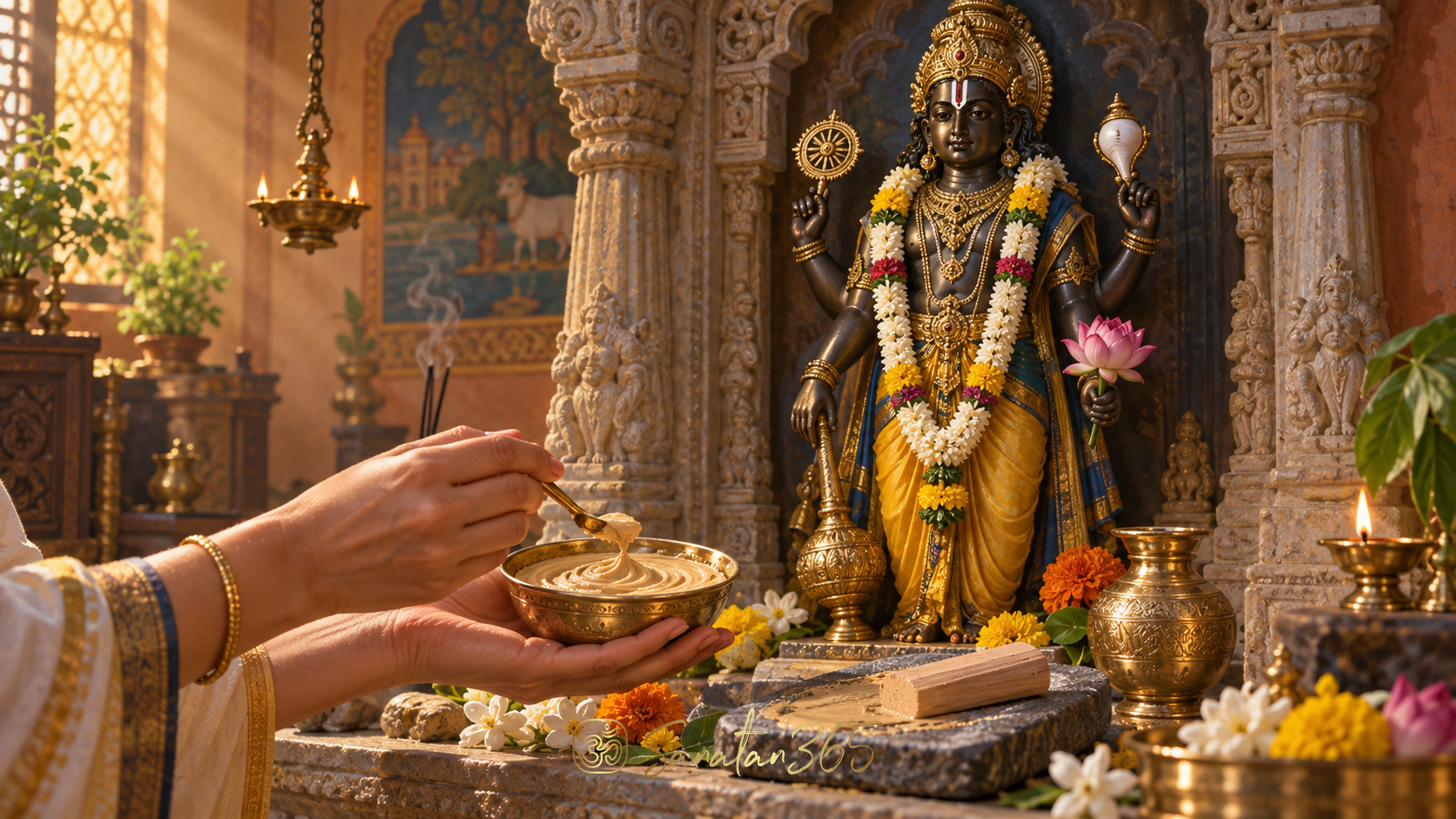
Chandan Offering in Hindu Puja: The Meaning of Gandha
Why devotees offer sandalwood paste in Hindu worship, what gandha signifies, how the custom varies, and how to practise with care.
 Rituals
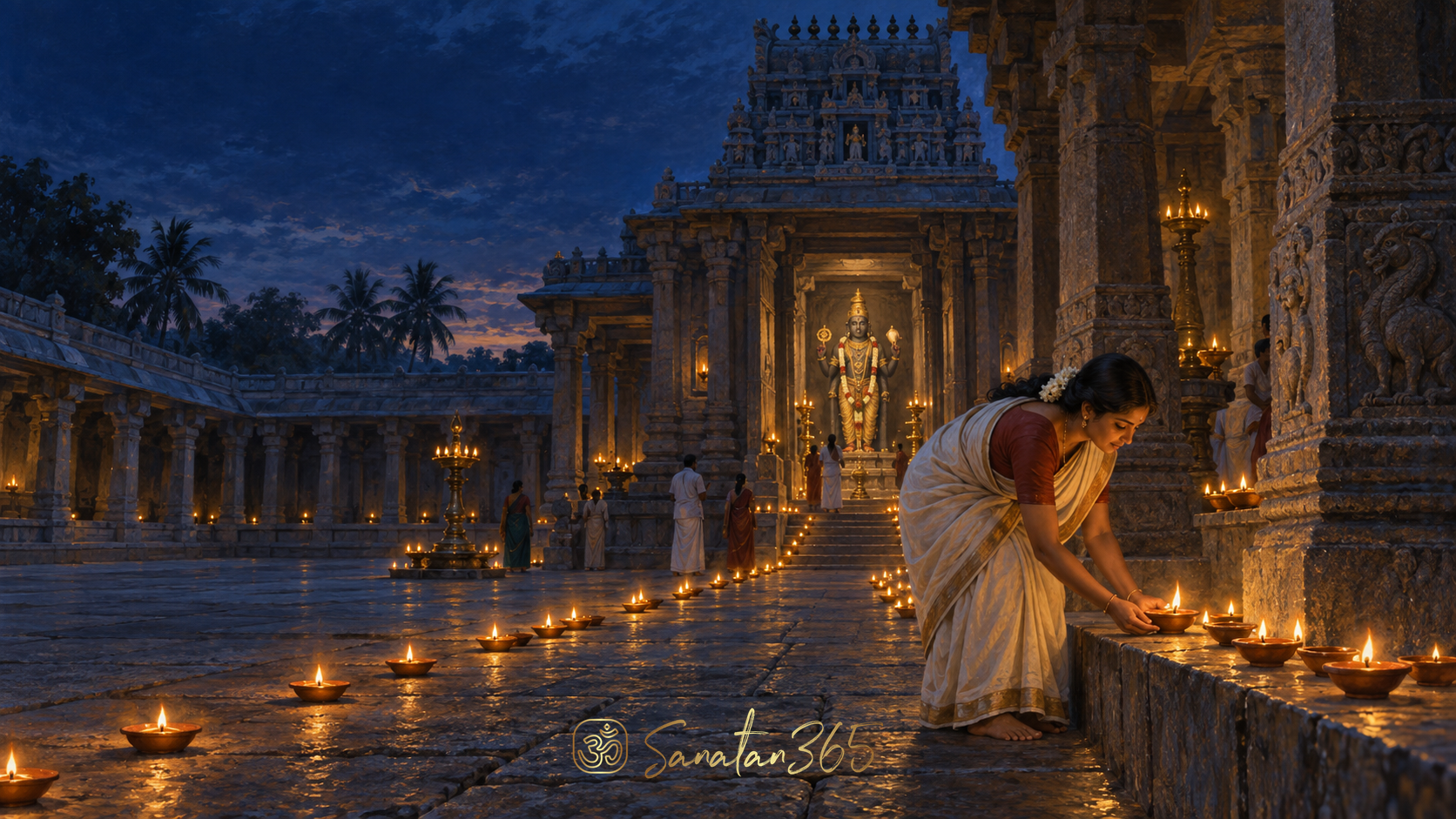
Deepa Dana Meaning: Why Devotees Offer Lamps
Deepa Dana is the devotional offering or giving of a lamp. Learn how it differs from aarti, what shared light signifies, and how to observe…
 Rituals
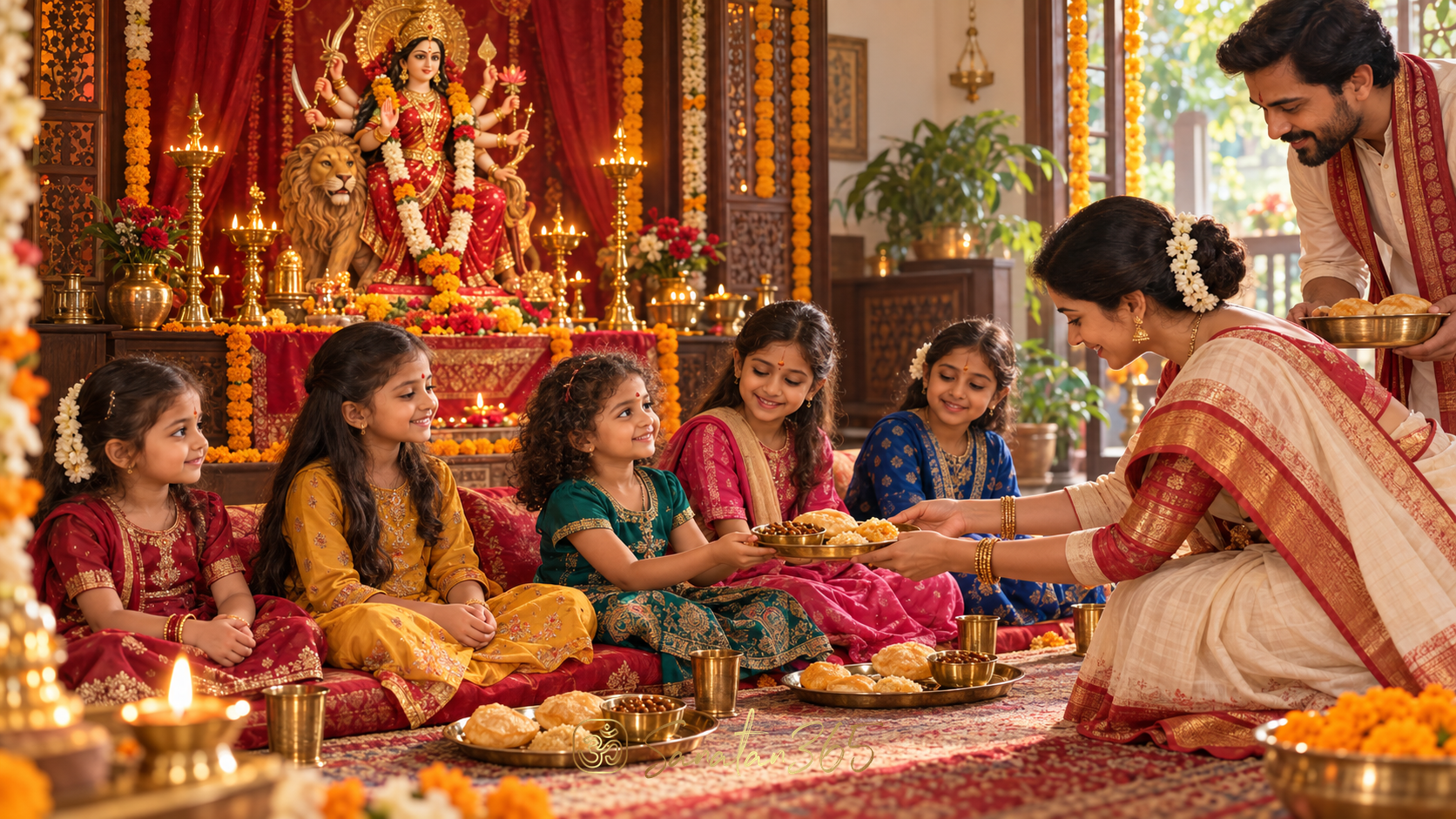
Kanya Puja Meaning: Honouring the Divine Feminine During Navratri
Kanya Puja honours young girls as living symbols of Devi during Navratri. Learn its meaning, timing, regional forms, offerings, and a respe…

