Hariyali Teej 2026: Date, Meaning, Puja, and Monsoon Traditions
Hariyali Teej celebrates Goddess Parvati, Lord Shiva, the greening monsoon, and bonds among women. Explore its 2026 date, meaning, regional customs, and respectful ways to observe.
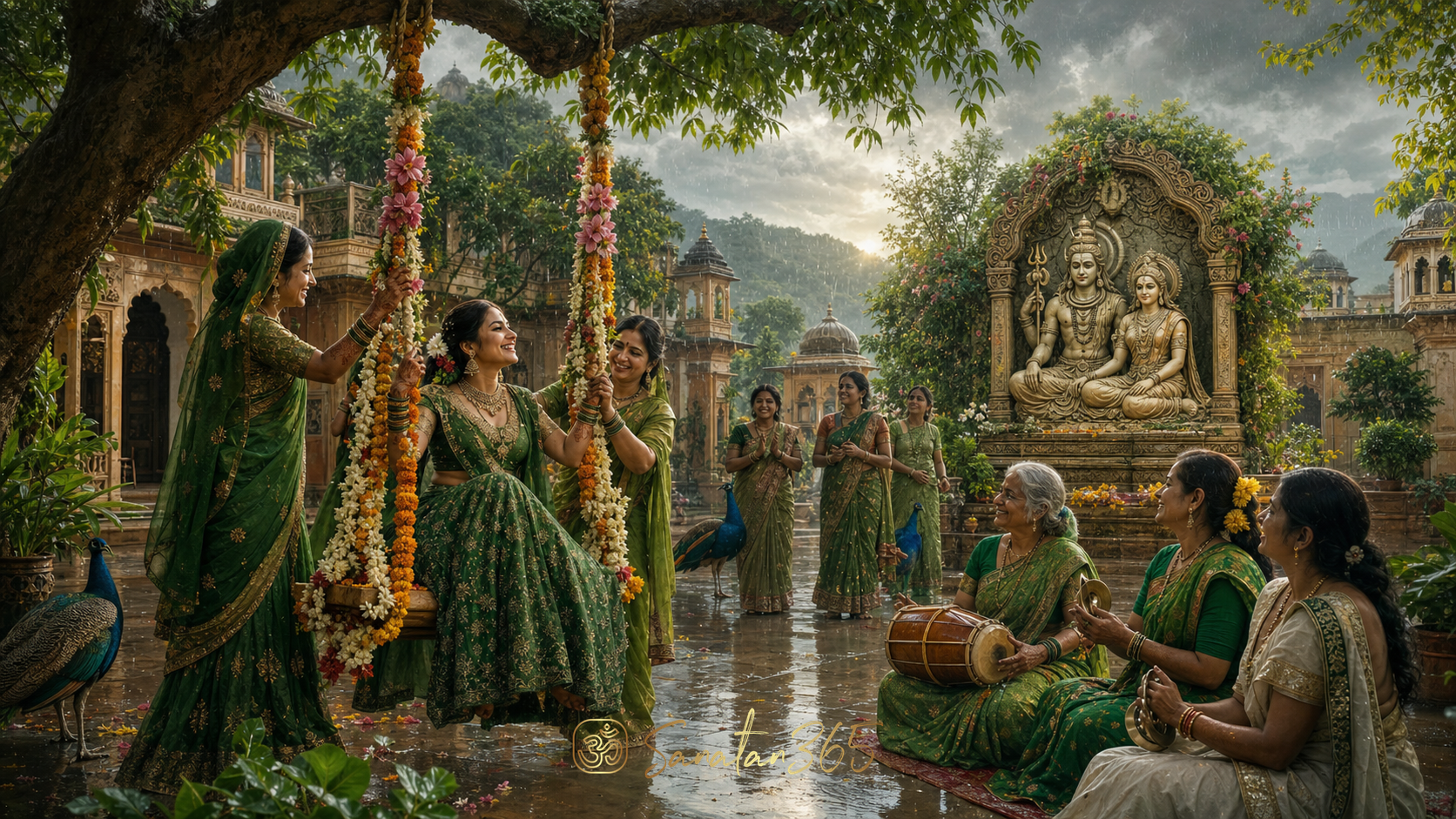
The most memorable image of Hariyali Teej is not a closed ritual room but a swing moving through rain-washed green leaves. Hariyali Teej 2026 falls on Saturday, August 15, celebrating Goddess Parvati and Lord Shiva while welcoming the renewal of the monsoon. The festival brings together puja (पूजा, reverential worship), songs, decorated swings, mehendi, festive clothing, visits to the maternal home, and, in many families, a voluntary fast.
Hariyali means “greenery,” while Teej refers to the third lunar day. The observance falls on Shukla Tritiya, the third day of the waxing moon, in the month of Shravana or Sawan. Its devotional center is Parvati’s steadfast love and her union with Shiva; its cultural life belongs equally to rain, friendship, family memory, and women gathering in joy.
When Is Hariyali Teej 2026?
Hariyali Teej 2026 is observed on Saturday, August 15. For New Delhi, Drik Panchang lists the Tritiya Tithi as beginning at 6:46 p.m. on August 14 and ending at 5:28 p.m. on August 15. A tithi (तिथि, lunar day) does not match the midnight-to-midnight civil day, which is why festival dates should be checked through a local panchanga (पञ्चाङ्ग, Hindu almanac).
Families outside Delhi should use the calendar followed by their temple, household, or sampradaya (सम्प्रदाय, living tradition), because tithi boundaries vary by location. The calendar determines the day; it does not reduce the festival to a single “auspicious minute.” Hariyali Teej is lived through a sequence of preparation, worship, meeting, singing, and celebration.
It also helps to distinguish this festival from two later observances:
- Hariyali Teej, or Sawan Teej, celebrates greenery, the monsoon, and Shiva-Parvati devotion.
- Kajari Teej comes later in the lunar cycle and carries its own regional songs and customs.
- Hartalika Teej occurs in Bhadrapada and has a distinct vrata narrative centered on Parvati’s resolve.
These festivals are related, but they are not interchangeable. A family may observe one, two, or all three according to region and lineage.
Key takeaway: Hariyali Teej 2026 is August 15, but local panchanga guidance remains the best source for location-specific observance.
What Is the Meaning of Hariyali Teej?
Hariyali Teej holds three meanings at once: devotional commitment, seasonal renewal, and women’s community.
The sacred narrative remembers Goddess Parvati’s determination to unite with Lord Shiva. In popular tradition, she undertakes disciplined spiritual effort and refuses a life chosen without her inner consent. Shiva recognizes her steadfastness, and their union becomes an image of love joined to tapas (तपस्, disciplined spiritual effort), discernment, and mutual recognition.
This story should not be reduced to the message that a woman must suffer to “earn” marriage. Parvati is Shakti (शक्ति, divine power): active, discerning, and spiritually sovereign. Her resolve is not passive waiting. It expresses clarity about the life she chooses and the discipline to align action with that truth. Shiva, too, is not a prize won by pain; their union joins complementary forms of sacred power.
The monsoon gives this theology a visible language. Dry earth becomes green, fields awaken, wells refill, and heat gives way to rain. Hariyali, greenness, suggests that renewal is not abstract. It can be seen in leaves, smelled in wet soil, and heard in songs carried through courtyards. The festival asks what should be nourished when life becomes fertile again.
The third meaning is social. In many communities, married women visit their parental homes, receive sindhara gifts, meet sisters and friends, apply mehendi, sing, and use decorated jhulas (झूला, swings). These practices create space for women’s relationships beyond everyday duties. Folk songs may hold affection, teasing, longing, memories of the maternal home, and observations about married life. The festival therefore preserves emotional history as well as ritual tradition.
Key takeaway: Hariyali Teej honors Parvati and Shiva while making monsoon renewal and women’s companionship part of sacred life.
How Is Hariyali Teej Puja Observed?
There is no single universal Hariyali Teej puja. Household practices differ across Rajasthan, Haryana, Uttar Pradesh, Punjab, Delhi, Madhya Pradesh, Bihar, and diaspora communities. A respectful home observance can remain simple.
1. Prepare a clean devotional space
Clean the puja area and place a respectful murti or image of Goddess Parvati and Lord Shiva as the worship focal point. Flowers, leaves, a diya, clean water, fruit, and a simple sweet may be offered according to family custom. Decoration should support attention rather than become a contest in display.
2. Begin with sankalpa
Sankalpa (सङ्कल्प, a clear devotional intention) gives the observance direction. A person may pray for harmony, courage, the well-being of loved ones, gratitude for rain, or steadiness in relationships. This intention can include spouses, families, friends, the wider community, and the natural world.
3. Offer worship to Parvati and Shiva
The puja may include lighting a diya, offering flowers and water, reciting familiar names or prayers, and listening to or reading the Hariyali Teej katha (कथा, sacred narrative). Anjali Mudra can gather attention before prayer. Families should follow their own learned procedure rather than mixing random internet instructions from unrelated traditions.
4. Share song, story, and food
Folk songs, bhajans, swings, mehendi, and shared food are not decorative extras; they are how festival knowledge travels between generations. Children can help make flower garlands, listen to the Shiva-Parvati story, or learn why monsoon rain matters to farms, rivers, and daily life.
5. Complete the observance with gratitude
Conclude by offering pranama (प्रणाम, respectful salutation), sharing prasad (प्रसाद, blessed food), and cleaning the space responsibly. Natural offerings should be composted or handled according to local practice; plastic decoration and unsafe disposal do not honor the greenness named by the festival.
Key takeaway: A meaningful Hariyali Teej puja needs a clear sacred focus, sincere intention, and respect for family tradition more than elaborate materials.
Must Everyone Fast on Hariyali Teej?
No. Fasting customs vary, and spiritual sincerity is not measured by dehydration, pain, or comparison. Some women observe nirjala vrata (निर्जल व्रत, a fast without water), some take fruit or liquids, some eat one simple meal, and others do not fast. The appropriate practice depends on health, age, pregnancy, medication, climate, work, caregiving, and household tradition.
A vrata (व्रत, a sacred vow) is broader than avoiding food. As explored in this guide to the meaning of vrata, a vow can include prayer, ethical restraint, charity, study, truthful speech, or service. A person who cannot safely fast may still observe Hariyali Teej through worship, reduced consumption, a digital pause, caring for women in the family, or supporting tree and water conservation.
Anyone with diabetes, an eating disorder, a chronic condition, pregnancy, breastfeeding needs, or prescribed medication should seek qualified medical guidance before fasting. Children should not be pressured into severe fasting. Spiritual practice complements responsible healthcare; it does not replace it.
The deeper discipline is relational. A festival associated with marital well-being should not place the entire moral burden of a relationship on one partner’s fast. Mutual care, honest conversation, nonviolence, shared work, and respect throughout the year matter more than public displays of austerity on one day.
Key takeaway: Fasting is one optional form of Hariyali Teej vrata; health, consent, and sustainable devotion come first.
Why Do Swings, Green Clothes, and Mehendi Matter?
Hariyali Teej traditions turn the season into a language of symbols.
- Green clothing echoes new leaves, crops, fertility, hope, and the cooling monsoon.
- Jhulas or swings bring movement into celebration. Suspended from trees or courtyard frames and decorated with flowers, they evoke freedom, childhood, rhythm, and seasonal joy.
- Mehendi marks festivity and patient artistry. Its patterns are social as well as aesthetic, often created while women talk, sing, and spend unhurried time together.
- Lehariya textiles, especially associated with Rajasthan, visually resemble waves and rain-bearing movement through their diagonal bands.
- Sindhara refers to gifts sent from a woman’s maternal family in many North Indian communities. The basket may include sweets, clothing, bangles, henna, or other festive items, expressing continued belonging after marriage.
- Folk songs preserve local memory. Their themes can include rain, parental homes, companionship, separation, Shiva-Parvati devotion, and playful commentary on family life.
The public Teej procession in Jaipur is among the festival’s best-known civic expressions, with the Teej Mata image carried through the historic city amid music and traditional pageantry. Elsewhere, celebrations may be intimate: a neighborhood gathering, a temple puja, or a single swing in a family courtyard. Scale does not determine sacred value.
Diaspora families can adapt without pretending geography has not changed. A secure indoor swing, a shared green meal, recorded folk songs, video calls with relatives, or a community-center puja can carry the festival’s emotional structure. Adaptation becomes authentic when the meaning is understood rather than reduced to costume.
Key takeaway: Hariyali Teej symbols translate monsoon renewal and women’s belonging into color, movement, art, and song.
How Can Hariyali Teej Be Celebrated Responsibly Today?
The name “Hariyali” offers a clear ethical test: does the celebration protect or burden the living world?
Choose local flowers and reusable cloth decoration where possible. Avoid plastic garlands, glitter, foam backdrops, and chemical color that may enter drains or soil. Secure swings carefully, inspect branches and ropes, supervise children, and avoid overcrowding. If rain or high winds make an outdoor swing unsafe, move the gathering indoors.
Honor regional differences without ranking them. A Rajasthani procession, a Haryanvi song gathering, a Uttar Pradesh family puja, and a diaspora community event can each be sincere. No one expression is the only “real” Hariyali Teej.
The festival can also renew relationships in practical ways:
- Invite an older relative to explain one family custom in her own words.
- Record a folk song with permission and preserve its regional vocabulary.
- Share festival labor rather than leaving cooking and cleanup to the women being celebrated.
- Pair puja with a small act for rainwater, trees, birds, or local green space.
- Make participation voluntary, especially for fasting, clothing, and marital rituals.
Hariyali Teej becomes more faithful to Parvati’s strength when women’s choices are respected. It becomes more faithful to Shiva’s stillness when celebration includes attention rather than pressure. And it becomes more faithful to the monsoon when greenery is protected beyond a single day.
Key takeaway: Responsible Hariyali Teej practice joins devotion with safety, consent, shared labor, cultural memory, and ecological care.
Conclusion
Hariyali Teej 2026 arrives on August 15 as a festival of sacred commitment and visible renewal. Its Shiva-Parvati devotion, women’s gatherings, swings, songs, green clothing, mehendi, and household puja all return to one insight: relationships flourish when they are tended, and the world becomes green when life-giving conditions are protected.
Key takeaway: Celebrate Hariyali Teej as Parvati’s strength, Shiva-Parvati harmony, women’s community, and gratitude for the renewing monsoon.
FAQ
What is the date of Hariyali Teej in 2026?
Hariyali Teej 2026 is observed on Saturday, August 15. Drik Panchang lists Tritiya Tithi in New Delhi from 6:46 p.m. on August 14 to 5:28 p.m. on August 15. Local timings should be checked through the panchanga followed by the household or temple.
What does Hariyali Teej celebrate?
It celebrates Goddess Parvati and Lord Shiva, the renewing monsoon, and bonds among women. The festival is associated with puja, swings, songs, mehendi, green clothing, visits to the maternal home, and varied fasting customs.
Is Hariyali Teej the same as Hartalika Teej?
No. Hariyali Teej falls in Shravana and emphasizes monsoon greenery and Shiva-Parvati devotion. Hartalika Teej occurs later, in Bhadrapada, with a distinct vrata story and set of regional practices.
Is fasting compulsory on Hariyali Teej?
No universal rule applies to everyone. Customs range from strict fasting to fruit, liquids, one simple meal, or no food fast. Health, medical needs, pregnancy, medication, age, and personal consent should guide the practice.
How can someone celebrate Hariyali Teej outside India?
A diaspora observance can include a simple Parvati-Shiva puja, folk songs, green clothing, mehendi, a safely installed indoor swing, shared food, and calls with relatives. Preserving meaning and relationships matters more than reproducing every material detail.
About the author
Sanatan365 Editorial
Bringing Sanatan Dharma to modern seekers through authentic, scripture-grounded content.
Related in Festivals
 Festivals
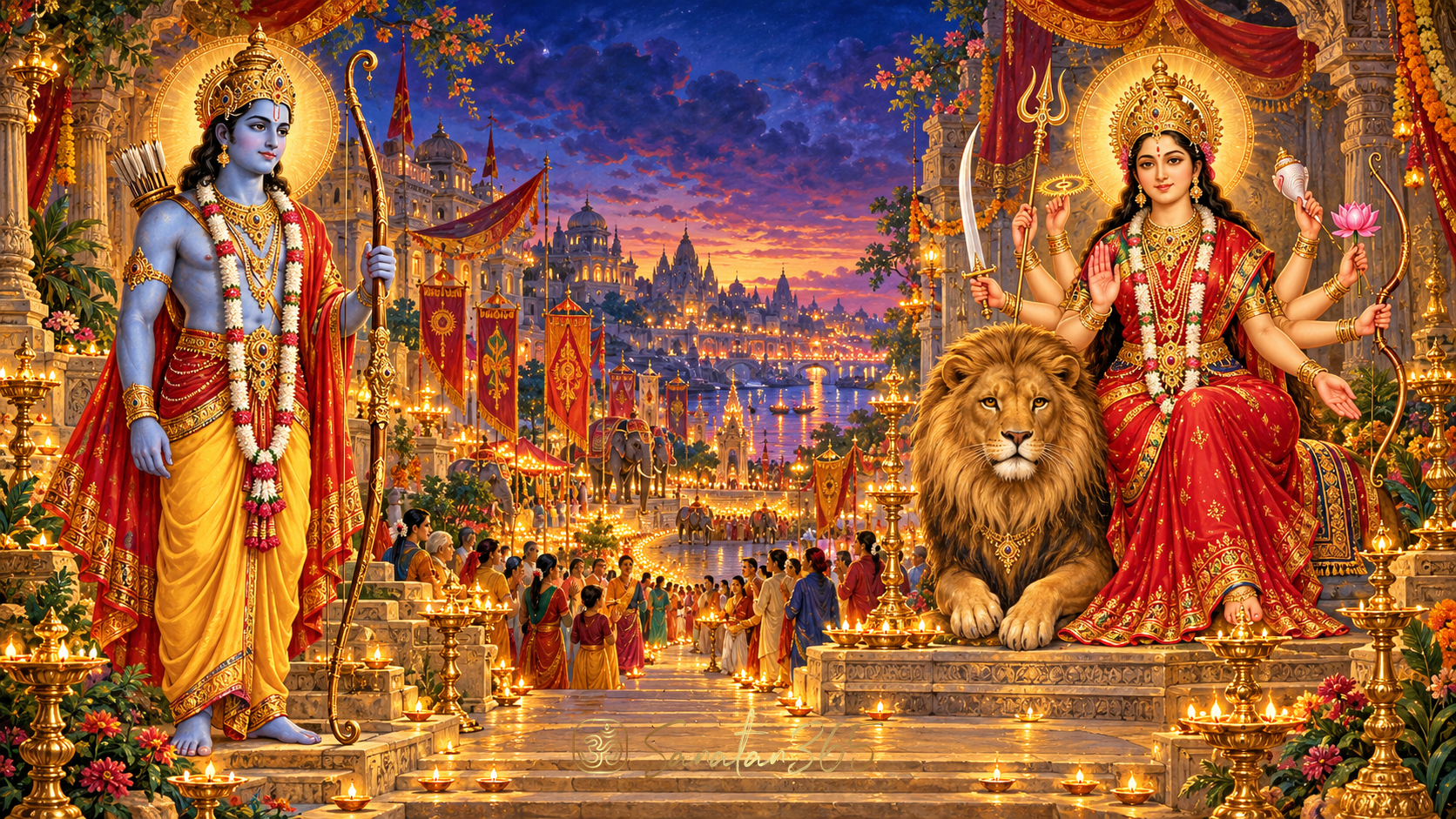
Dussehra 2026: Date, Vijayadashami Meaning, and Living Traditions
Understand the 2026 Dussehra date, the meanings of Rama and Durga’s victories, regional celebrations, and a thoughtful way to observe Vijay…
 Festivals
Garba Meaning: The Lamp at the Heart of Navratri
Garba is a Gujarati devotional dance associated with Navratri. Its central lamp, shared circular rhythm and reverence for Goddess Amba expl…
 Festivals
Golu Meaning: Navratri Dolls, Living Stories, and Hospitality
Understand Navratri Golu through its handmade dolls, regional names, family stories and welcoming home visits, with thoughtful preparation…