Mukteshvara Temple, Bhubaneswar: Shiva, Stone, and the Art of Arrival
Explore Mukteshvara Temple in Bhubaneswar through its sculpted torana, Kalinga architecture, Shiva devotion, and a thoughtful way to visit this intimate Odisha shrine.
A small temple can change the scale of a city. At Mukteshvara, an exquisitely carved stone arch asks visitors to slow down before they even reach the shrine.
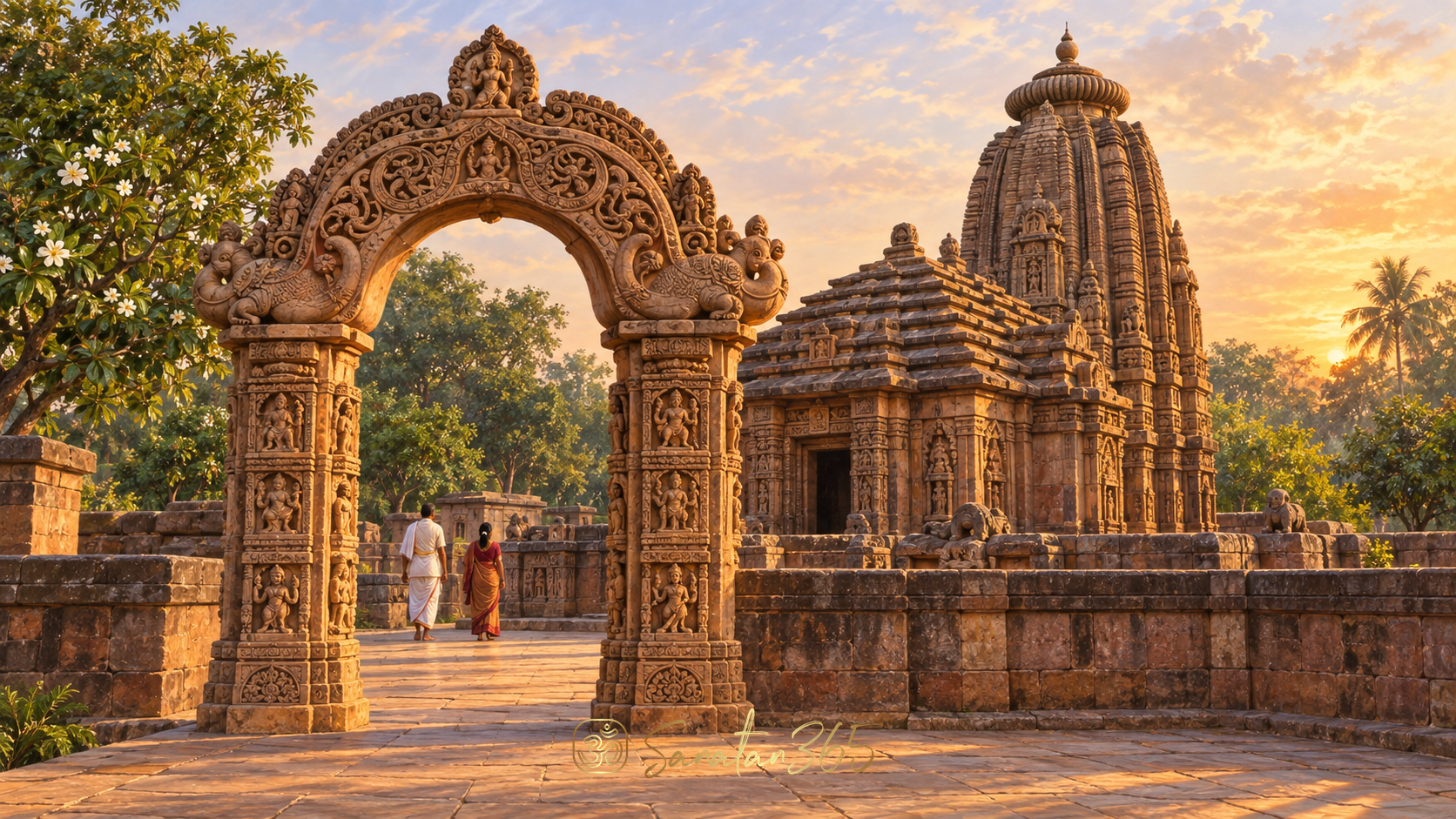
Mukteshvara Temple Bhubaneswar is a Shiva temple in Odisha's old temple district, generally dated to the tenth century. It is especially known for its freestanding sculpted torana (तोरण, ceremonial gateway), compact sanctuary, and exceptionally detailed Kalinga stonework. Its significance is not that it is the city's largest shrine. The gateway, enclosure, hall, tower, and living worship form an unusually coherent experience of approaching Shiva. Architectural study can deepen that encounter, but it should not replace it. Odisha Tourism describes it as a landmark of the region's temple architecture.
What Makes Mukteshvara Temple in Bhubaneswar Distinctive?
Bhubaneswar holds many centuries of temple building within a relatively small urban area. Seen among those shrines, Mukteshvara's modest physical size becomes one of its strengths. A visitor can take in the sequence almost at once: carved arch, low enclosure, assembly space, and the rising tower of the sanctum. Then details begin to emerge slowly. A window is not merely a gap; its stone lattice controls light. A carved surface is not merely decoration; it changes how the eye travels toward the sacred center.
Scholars commonly place the temple in the later tenth century, although an exact construction date should not be treated as settled beyond dispute. It belongs to the historical development of Odisha's Kalinga temple style. The temple's arch and remarkably worked interior have made it a frequent case study for how regional builders refined earlier forms. The architectural survey at Puratattva places those choices in conversation with earlier Bhubaneswar shrines and cites specialist scholarship; it does not require the visitor to imagine a single architect or a neat overnight “invention.”
That distinction matters. Buildings are often described as if artistic styles advance in a straight line from primitive to perfect. Sacred architecture is more human than that: patrons, sculptors, ritual needs, inherited forms, and local material conditions all contribute. At Mukteshvara, innovation is visible, but the temple is not a museum of progress detached from worship. Its named deity remains Shiva.
For comparison, Lingaraj Temple's scale and sacred setting show another dimension of Bhubaneswar's architectural tradition. Mukteshvara asks a different question: how much spiritual and aesthetic concentration can a compact site hold? A reader who knows only grand monuments may be surprised by the answer.
Key takeaway: Mukteshvara is distinctive because its small plan, sculpted threshold, and devotional purpose work together, not because any one carving can be isolated as a trophy.
Why Does the Torana Change the Way We Enter?
The torana is the temple's most recognisable feature. Two carved supports carry a rounded stone arch, creating a deliberate threshold before the enclosed shrine. Architectural descriptions note its layered ornament and the way it frames a view toward the temple beyond. It is a structure to pass through, not just to stand before. Puratattva's site study provides a close description of the arch and its carved supports.
It is tempting to assign a precise secret message to every motif. That temptation should be resisted. Some decorative forms can be identified and compared across regional temples; the total programme cannot be reduced to a single universal code. The arch is meaningful even without a speculative legend. It changes the visitor's pace. Approaching it from the surrounding street, the body has to cross into a more bounded space. The eye moves from broad urban view to crafted detail, then toward the shrine.
In Hindu worship, darshan (दर्शन, seeing and being present before the divine) is not identical to sightseeing. An entrance can prepare attention for that difference. The torana does not guarantee contemplation; a hurried visitor can pass beneath it without noticing anything. But its physical form offers a chance to pause. Look first at its overall curve and how the temple appears through it. Then notice how many scales of carving coexist: large architectural outlines, smaller repeating forms, and human- or animal-like figures. Finally, walk through rather than treating the arch solely as a photo frame.
This is not a claim that every historical visitor used the arch in the same way. Ritual and visitor practices change. It is a practical reading of what the building makes possible now. A threshold can be both artistic and devotional, both historically specific and immediately felt.
Other Indian temples use processional approaches of very different scale. At Belur's Chennakeshava Temple, sculptural detail also rewards patient looking, although the region, tradition, and architectural language differ. Such comparison helps us notice specific craft without flattening all temples into a single style.
Key takeaway: The torana's power lies in its role as an entrance: it frames the temple and invites an intentional change of attention.
How Does Kalinga Architecture Shape the Shrine?
“Kalinga architecture” names a regional temple-building tradition associated especially with Odisha. At Mukteshvara, the principal rising tower marks the sanctum, while a lower hall provides a space of approach. Architectural terms can help here if they remain tools rather than barriers. The deul (देउळ, shrine tower in this regional usage) draws the gaze upward; the jagamohana (जगमोहन, assembly or entrance hall) mediates the approach to the inner shrine. These are not two unrelated pieces placed side by side. They form a sequence of changing scale and light.
The tower's curved vertical movement contrasts with the more horizontal, accessible character of the hall. The visitor moves from exterior light, through architecture designed for arrival, toward the more concentrated sanctum. Stone screens and carved surfaces modulate that movement. In a small temple, the transition can feel particularly immediate. The body senses compression and release before the mind begins to catalogue styles.
A careful observer can ask four simple questions:
- Where does the temple first draw the eye: gateway, tower, or doorway?
- How do light and shade change while crossing the enclosure?
- Which carvings become visible only when standing close, rather than in a photograph?
- Where does ornament yield to the quieter focus of the shrine?
These questions are not a substitute for a guide or architectural survey. They prevent the common mistake of looking only for a famous facade. The temple was built for a sequence of use, not for a single front-facing image. Odisha's temple heritage is richer when each place is allowed its own proportions and purpose.
Dating and classification deserve humility. Writers often call Mukteshvara a “gem” or a decisive turning point. Such praise can be useful as shorthand but can also hide the craft of the earlier shrines from which it learned. The more grounded claim is that the temple displays a distinctive synthesis of Kalinga forms and sculptural workmanship, particularly in the gateway and hall. Puratattva's architectural discussion documents that relationship more carefully than a one-line superlative.
Key takeaway: The architecture works as a progression from public approach to sacred interior; style labels matter most when they help visitors understand that progression.
What Do the Sculptures Invite Us to Notice?
Mukteshvara's carved surfaces ask for close, respectful looking. Architectural accounts draw attention to the gateway supports, intricate windows, the hall's ceiling, and figural ornament. Some motifs have parallels elsewhere in Odisha; others are memorable precisely because of how they sit within this compact site. But a temple carving does not become more valuable merely because it can be given a dramatic interpretation.
A better practice is to separate three levels of knowledge. First is what can be seen: a form, placement, or repeated pattern. Second is what a reliable architectural source identifies. Third is a devotional or philosophical reflection it may inspire. Confusing those levels is how attractive but unsupported claims spread. For example, a carved figure may invite reflection on ascetic life without proving that every ritual ever performed here was an initiation ceremony. An arch may evoke welcome without providing a documentary record of its makers' exact intentions.
The hall ceiling is especially rewarding for visitors willing to look upward. From below, carved layers gather the gaze toward a center. Window screens create a different kind of artistry: they make light itself part of the architecture. These details show the sculptor's discipline. Each element has to belong to a building that will be approached, circled, and lived with, not just admired as an isolated artwork.
This also suggests an ethic for photography. A photograph can preserve a detail and encourage another person to appreciate the site. Yet a camera can narrow attention, interrupt worship, or cause a visitor to climb or touch fragile stone to get a better angle. Observe local instructions, avoid flash where restricted, and give worshippers space. The stone will remain more legible if treated as a shared sacred inheritance rather than an obstacle to an image.
The same care applies to comparison. At Lepakshi's Veerabhadra Temple, murals and sculpture belong to a different historical and regional setting. Comparing the two can sharpen attention to material and visual storytelling, but it should not imply that one tradition is the “better” expression of devotion.
Key takeaway: See the carvings first as situated craft, then consult evidence before assigning meanings, and let wonder remain possible without invention.
How Is Shiva Worship Kept Central?
The temple is dedicated to Shiva, worshipped here as Mukteshvara. The name is often understood as “Lord of Liberation,” linking mukti (मुक्ति, release or liberation) with Ishvara (ईश्वर, Lord). This meaning can invite profound reflection, but it should not be turned into a promise that one visit automatically grants liberation. In Hindu philosophical and devotional traditions, liberation is understood in multiple ways; a temple name is not a commercial guarantee.
The building's beauty does not compete with its devotional center. It is one way a community has made an approach to that center tangible. The gateway prepares arrival; the hall gathers the visitor; the sanctum directs attention toward the deity. For a devotee, these are not only aesthetic transitions. They can support prayer, reverence, and a quieter form of presence.
A non-devotional visitor can still respect that purpose. One need not imitate an unfamiliar rite or pretend to know its meaning. One can remove shoes where required, follow local guidance, avoid obstructing a worshipper, and keep one's voice low. If an offering is being made, step aside rather than treating the moment as a performance. If the sanctum has access or photography restrictions, the restriction is part of the site's living character, not an inconvenience to work around.
This distinction between studying and worshipping is useful across temple travel. A living shrine is simultaneously a cultural heritage site and a place of relationship for its devotees. Reducing it to either label loses something. The architectural account becomes more truthful when it remembers worship; the devotional visit becomes richer when it notices the care built into the place.
Key takeaway: Mukteshvara's sculptural beauty is an approach to Shiva's shrine, not a replacement for the worship that gives the temple its name.
How Can Visitors Approach the Temple Respectfully?
Begin with time. Allow enough of it to see the gateway as an entrance, not merely as a famous backdrop. The old temple district rewards walking between sites, but Mukteshvara deserves an unhurried visit on its own terms. A short sequence can help:
- Pause outside the torana and take in the full relationship between arch and shrine.
- Walk through the gateway, noticing the change from street to enclosed space.
- Observe the tower and hall from a distance before focusing on details.
- Read the carved surfaces closely without touching or climbing them.
- Leave space for worship; follow posted rules on shoes, offerings, and photography.
- Spend a final moment looking back through the gateway before leaving.
Current opening hours, access rules, and festival arrangements can change. Check the temple or Odisha tourism's current information shortly before travelling; do not rely on a fixed time copied from an old travel post. Weather matters too. Odisha's heat and monsoon rain can change the comfort of an outdoor heritage visit. Early or later daylight often makes carved relief easier to see, but devotional activity should determine where one stands and when a camera stays away.
For families, the temple can become a lesson in looking carefully. Ask children what they notice first, then what they discover after standing still. A gateway may appear like an arch in a picture; in person it becomes a passage. A carved window may look decorative; from another angle it filters light. Such questions invite curiosity without making confident claims about motifs nobody has verified.
For a diaspora visitor or someone new to Hindu temples, the best preparation is simple: learn the temple's name and deity, know that the site remains sacred to worshippers, and allow local practice to guide conduct. Curiosity and reverence can coexist. The visit need not be a test of religious expertise. It can be a disciplined encounter with a place where artistic labour and devotion have met for centuries.
Key takeaway: The most meaningful visit gives the architecture time, protects the site's fabric, and puts worshippers' access before the visitor's photograph.
Conclusion
Mukteshvara's lasting lesson is about scale. A small Shiva shrine can hold a remarkably complete experience: a threshold that slows arrival, architecture that draws attention inward, and craft that rewards patient looking. Its beauty is real, but its value is not exhausted by beauty. The temple becomes clearer when it is treated as a living sacred place as well as a major work of Odisha's stone architecture.
Key takeaway: Enter through the arch with care, and the temple's art becomes a way of noticing devotion rather than a distraction from it.
FAQ
What is Mukteshvara Temple in Bhubaneswar famous for?
It is especially known for its carved freestanding torana, compact Kalinga-style shrine, sculptural detail, and association with Shiva worship. Its gateway is an architectural highlight, but the temple's full approach is more than one photograph.
Is Mukteshvara Temple dedicated to Lord Shiva?
Yes. Shiva is worshipped there as Mukteshvara. The name is commonly understood in relation to liberation, though no visit should be presented as a guaranteed spiritual result.
When was Mukteshvara Temple built?
Architectural scholarship generally places it in the tenth century. Exact dates given in travel accounts vary, so an approximate dating is more responsible than an unsupported single year.
What does torana mean at this temple?
Torana (तोरण) means a ceremonial gateway or arch. At Mukteshvara it is the prominent carved entrance that frames the approach to the Shiva shrine.
How should a visitor behave at Mukteshvara Temple?
Follow current local rules, give worshippers space, remove shoes where required, avoid touching or climbing carvings, and check photography restrictions before taking pictures. Allow time to see the temple as a sacred site, not only as a heritage monument.
About the author
Sanatan365 Editorial
Bringing Sanatan Dharma to modern seekers through authentic, scripture-grounded content.
Related in Temples
 Temples
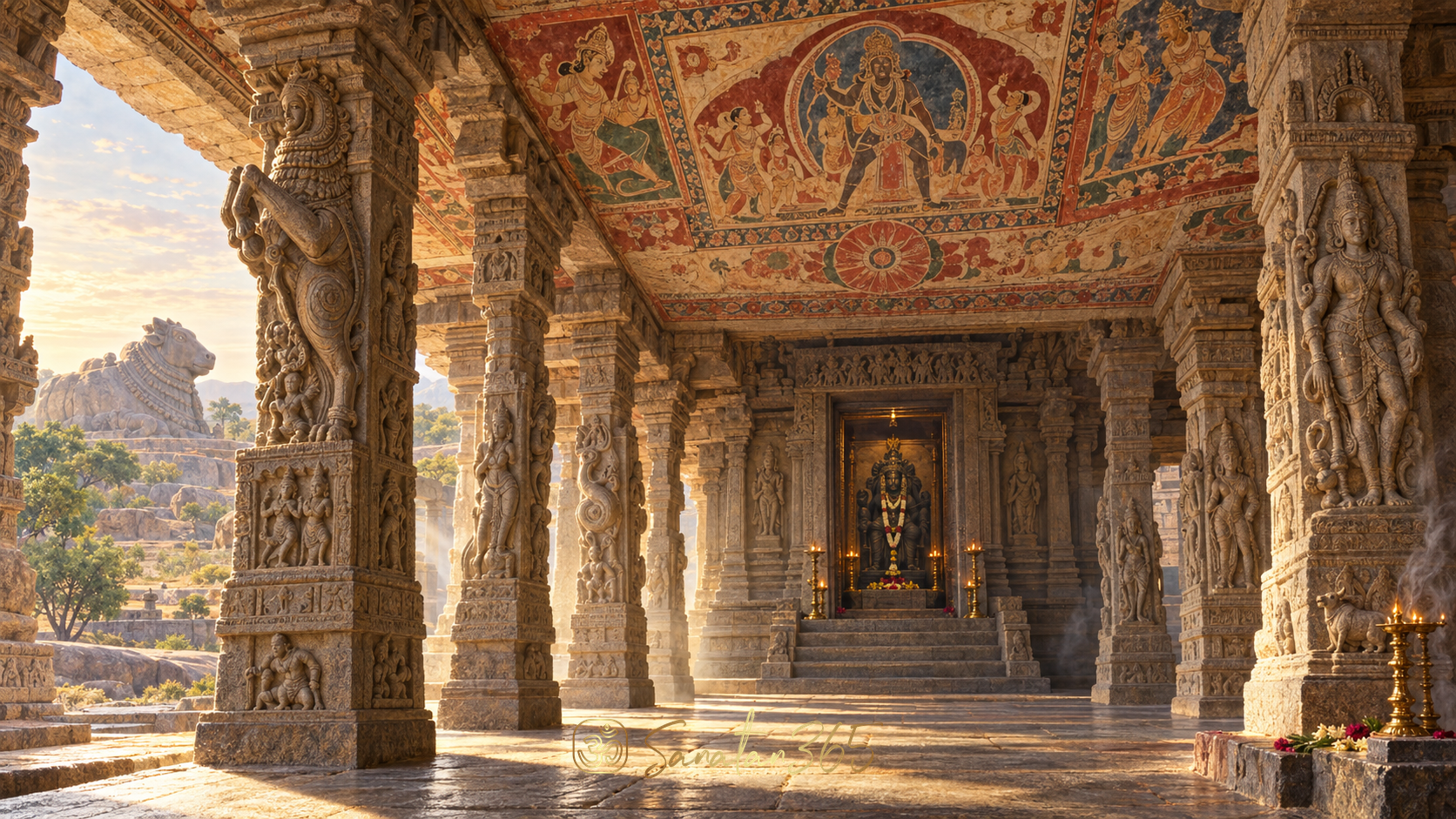
Lepakshi Veerabhadra Temple: Sacred Art, Architecture, and Devotion
Lepakshi's Veerabhadra Temple brings Vijayanagara architecture, Shaiva devotion, painted ceilings, carved pillars, and living sacred memory…
 Temples
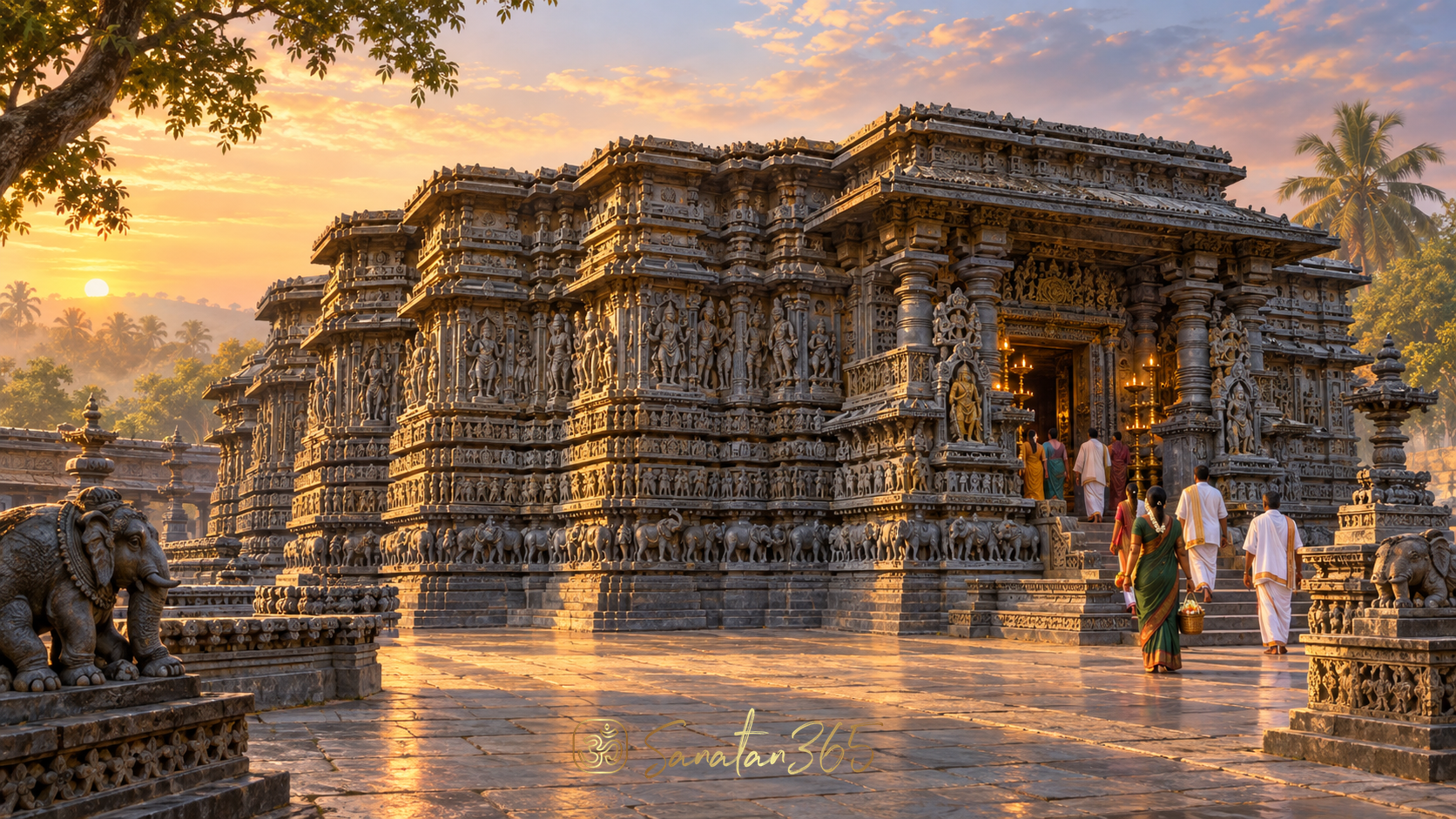
Chennakeshava Temple Belur: Vishnu, Hoysala Art, and Living Worship
Chennakeshava Temple in Belur is both a living Vishnu shrine and a landmark of Hoysala sacred architecture. Its sculpted surfaces show how…
 Temples
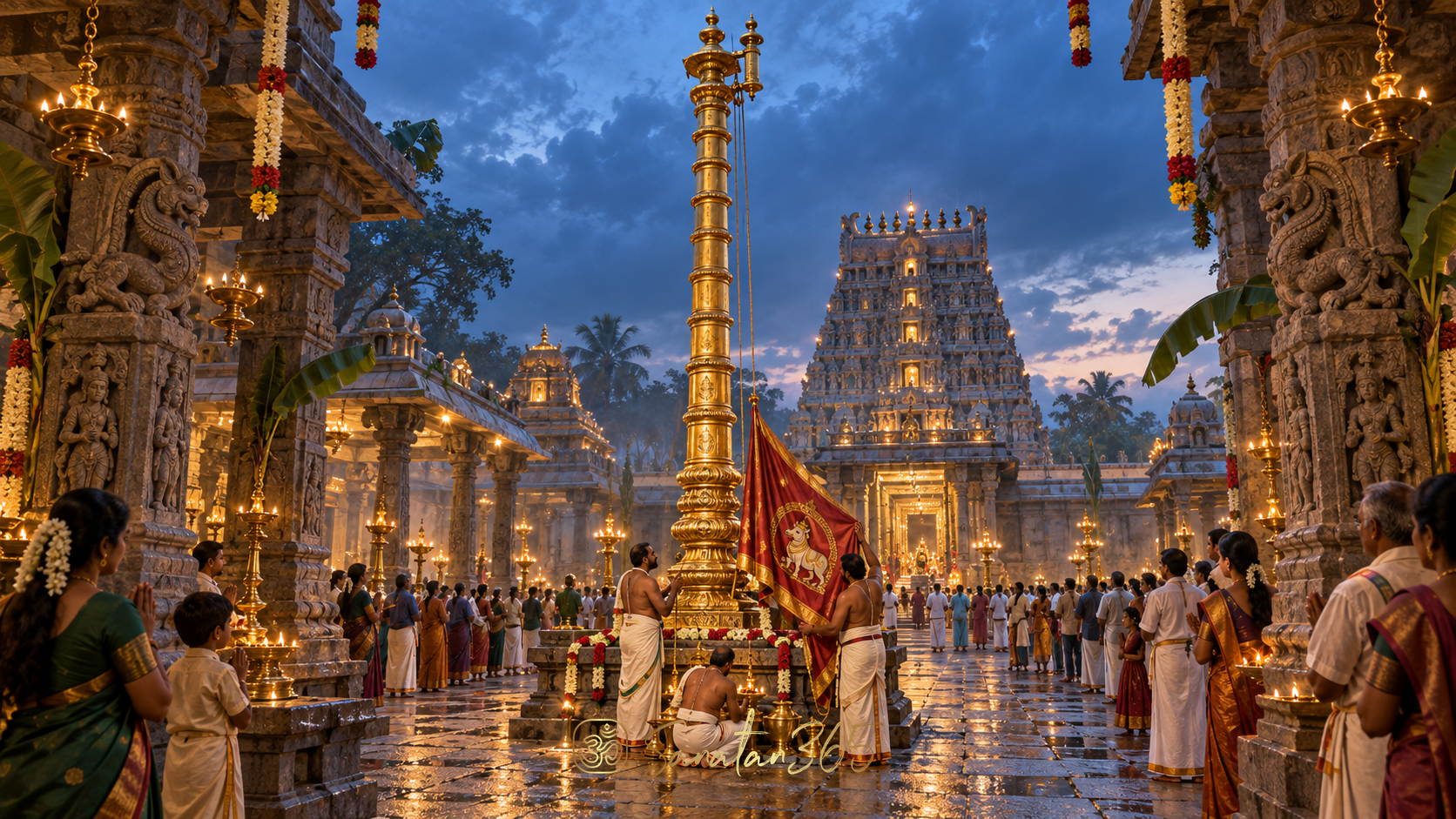
Dhwaja Stambha Meaning: The Sacred Flagstaff Before a Hindu Temple
Dhwaja Stambha meaning explained through the sacred flagstaff's place in Hindu temple architecture, festival ritual, deity emblems, and the…

