Mahesh Navami 2026: Meaning, Date, and Shiva-Parvati Grace
Mahesh Navami 2026 falls on Tuesday, June 23. Learn the meaning of this Shiva-Parvati festival, its Maheshwari community connection, and simple ways to observe it.
A community festival can carry a whole philosophy inside one date.
Mahesh Navami 2026 falls on Tuesday, June 23, 2026, on Jyeshtha Shukla Navami, the ninth lunar day of the bright fortnight. The festival honors Lord Shiva as Mahesh (महेश, the great Lord) and Goddess Parvati, and it is especially important for the Maheshwari community, which remembers this day as a sacred origin and identity festival. At its heart, Mahesh Navami teaches transformation: power should become service, livelihood should become dharmic, and family memory should stay joined to devotion.
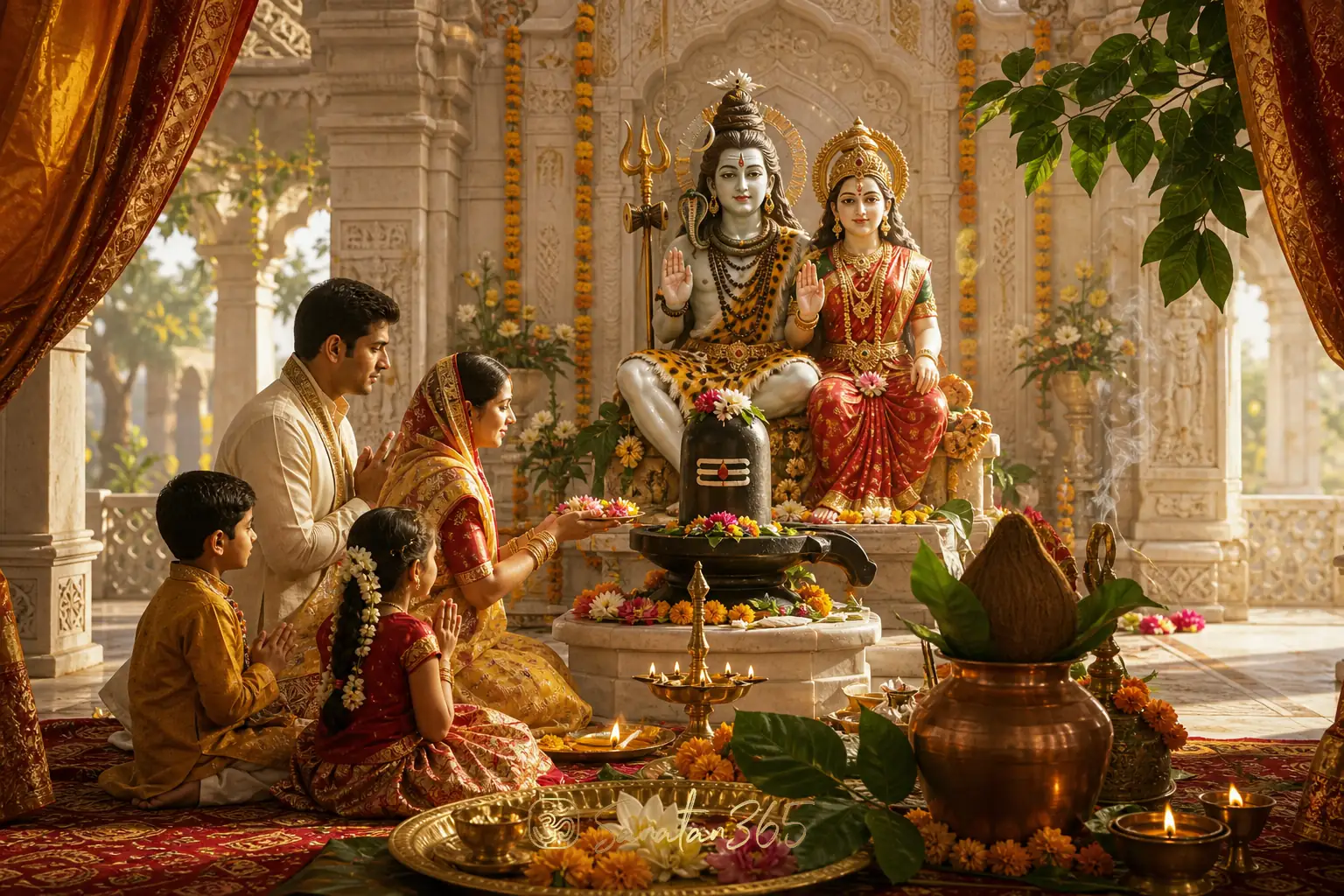
For many Hindu families, Mahesh Navami is a day for Shiva-Parvati puja, abhishek, mantra, charity, community gatherings, and reflection on righteous work. For Maheshwari families in India and the diaspora, it is also Vanshottpatti Divas, a day of lineage remembrance and collective gratitude.
Key takeaway: Mahesh Navami 2026 is not only a date on the calendar; it is a festival of Shiva-Parvati grace, ethical renewal, and community continuity.
When Is Mahesh Navami 2026?
Mahesh Navami 2026 is observed on Tuesday, June 23, 2026. Panchang listings place it on Jyeshtha Shukla Navami, with the Navami tithi beginning on June 22 and ending on June 23 in Ujjain-based calculations Prokerala. As with all lunar observances, exact timing can vary by location, so devotees should follow a trusted local panchang, temple calendar, or family tradition for puja timing.
The phrase Jyeshtha Shukla Navami can be unpacked simply:
- Jyeshtha (ज्येष्ठ) is a Hindu lunar month that usually falls around May-June.
- Shukla Paksha (शुक्ल पक्ष, bright fortnight) is the waxing phase of the moon.
- Navami (नवमी, ninth lunar day) is the ninth tithi.
That lunar framing matters because Hindu festivals are not only solar dates. They are rhythms of moon, season, deity remembrance, and regional custom. Mahesh Navami arrives in the heat of Jyeshtha, just before the monsoon turn in many parts of India. The season itself makes the festival's message feel practical: discipline, restraint, gratitude, and community service become especially meaningful when the body and society are tested by heat and transition.
For families outside India, the date may be easier to remember through the Gregorian calendar, but the observance still belongs to the tithi. A diaspora family in the United States, the United Kingdom, Singapore, or the Gulf may gather on the nearest convenient evening, while still honoring the traditional date through prayer or charity.
Key takeaway: Mahesh Navami 2026 is observed on June 23, but local tithi timing should guide exact puja and community programming.
What Is the Meaning of Mahesh Navami 2026?
The word Mahesh is a beloved name of Lord Shiva. It points to Shiva as the great Lord: the yogi, the compassionate one, the destroyer of ego, and the witness beyond worldly agitation. Goddess Parvati stands beside him as Shakti (शक्ति, divine power), household grace, strength, and maternal presence. Together, Shiva and Parvati represent balance: stillness and energy, renunciation and family life, silence and loving participation.
Mahesh Navami centers that balance. It is not only a day to ask for blessings. It is a day to examine how blessings should be used. If Shiva represents inner freedom and Parvati represents sustaining power, then a devotee is invited to ask: Is work becoming service? Is family prosperity joined with generosity? Is identity becoming humility rather than pride?
This is especially important because Mahesh Navami is strongly associated with a community origin story. Communities need memory, but memory becomes spiritually healthy only when it produces dharma. The festival therefore carries two levels:
- Devotional level: worship of Lord Shiva and Goddess Parvati through puja, mantra, abhishek, and gratitude.
- Ethical level: remembrance that life direction can change through grace, repentance, non-violence, service, and righteous livelihood.
That ethical layer keeps the festival from becoming only ceremonial. A person may offer bel leaves to Shiva, but the deeper offering is a cleaner life. A family may gather for a Maheshwari community event, but the deeper gathering is shared responsibility. A business family may honor ancestors, but the deeper honor is honest trade and generosity.
Key takeaway: The meaning of Mahesh Navami is Shiva-Parvati grace expressed through transformed conduct, family responsibility, and dharmic livelihood.
Why Is Mahesh Navami Important for the Maheshwari Community?
Mahesh Navami is especially important for the Maheshwari community, which observes it as a sacred origin day. Community accounts describe it as Vanshottpatti Divas, a day connected with the formation and renewal of Maheshwari identity. A diaspora report from New India Abroad notes that the festival is observed globally and is associated with a community memory of transition toward a business-oriented path inspired by Lord Shiva and Goddess Parvati New India Abroad.
The popular katha (कथा, sacred story) is told with regional variations, so it should be approached respectfully rather than as a single historical claim. In one widely shared form, a group connected with warrior life or hunting disturbs a sacred space and receives a curse. Their families pray with devotion. Lord Mahesh and Goddess Parvati show compassion, release the curse, and guide them toward a peaceful and ethical livelihood. The community then remembers Lord Mahesh as a divine source of protection and renewal.
The symbolic message is powerful even when different families narrate the details differently:
- Violence can become responsibility.
- Pride can become humility.
- Occupation can become service.
- Community can be rebuilt through grace and discipline.
- Ancestral memory should guide future conduct, not merely preserve nostalgia.
This is why Mahesh Navami often includes community gatherings, processions, cultural programs, seva, youth events, and honoring elders. The point is not only to celebrate a social label. The point is to remember a dharmic inheritance: work honestly, support society, protect family bonds, and keep devotion at the center of prosperity.
For young Maheshwari readers, especially in urban and diaspora settings, Mahesh Navami can answer a quiet question: What does community identity mean when daily life is global, digital, and fast-moving? The festival gives a grounded answer. Identity is not only surname, food, language, or association membership. It is a living ethic carried into studies, business, marriage, charity, speech, and public conduct.
Key takeaway: For the Maheshwari community, Mahesh Navami is a sacred origin festival that turns ancestry into responsibility.
How Do Devotees Observe Mahesh Navami?
Mahesh Navami observances vary by family, region, temple, and community association. A simple devotional pattern often includes Shiva-Parvati worship, mantra, abhishek (अभिषेक, ritual bathing of a deity or Shiva linga), offering of flowers and bel leaves, katha listening, charity, and community meals.
A traditional home or temple observance may include:
- Morning purification: cleaning the home altar or visiting a Shiva temple.
- Sankalpa: making a clear sankalpa (संकल्प, sacred intention) for the puja.
- Abhishek: offering water, milk, or other traditional items to a Shiva linga according to family practice.
- Bel leaves and flowers: offering bel patra, white flowers, or other appropriate items.
- Mantra japa: chanting Om Namah Shivaya (ॐ नमः शिवाय, salutations to Shiva) with attention.
- Parvati remembrance: honoring Goddess Parvati as Shakti, family grace, and compassionate strength.
- Katha and reflection: listening to or reading the Mahesh Navami story.
- Seva and dana: giving in charity, supporting community welfare, feeding people, or helping quietly.
Some communities organize larger gatherings. These may include bhajan, kirtan, youth programs, blood donation drives, cultural performances, recognition of elders, business-network gatherings, or service initiatives. In this way, the festival becomes both devotional and social. Shiva is worshipped in the temple, and his teaching is carried into public responsibility.
Families can make the day accessible for children without overloading them. A child may learn one name of Shiva, offer one flower, hear the story in simple language, or ask an elder about family history. Teenagers may be invited to connect the story with modern questions: What does ethical business mean? What does non-violence look like in speech and online behavior? What kind of prosperity honors ancestors?
Key takeaway: Mahesh Navami practice is strongest when puja, story, charity, and ethical self-correction are held together.
What Does Mahesh Navami Teach About Shiva, Work, and Dharma?
Shiva is often imagined in stillness: seated in meditation, ash-covered, beyond ordinary social hunger. Yet Shiva is also deeply present in family and community devotion. As Mahesh, he blesses not escape from life, but a cleaner way of living within it.
That is why Mahesh Navami has a special relationship with work. The festival's community memory is not only about who people are; it is about how people earn, serve, and use prosperity. In Hindu thought, dharma (धर्म, right order and righteous duty) does not reject livelihood. It asks livelihood to become truthful, restrained, and generous.
For business families, professionals, students, and founders, Mahesh Navami offers a practical mirror:
- Is ambition governed by ethics?
- Are customers, colleagues, and workers treated with dignity?
- Is wealth becoming only accumulation, or also dana (दान, giving)?
- Is family reputation used as pressure, or as a reason to act nobly?
- Is community networking joined to genuine service?
These questions matter because prosperity without self-examination becomes brittle. Shiva's presence cuts pride. Parvati's presence softens harshness. Together, they turn success into responsibility.
This teaching also speaks beyond one community. Anyone can honor Mahesh Navami by letting Shiva's name examine the quality of one's work. A student can study with integrity. A merchant can trade honestly. A parent can guide without domination. A leader can make decisions that protect people, not only numbers. A devotee can reduce ego before asking for blessings.
Readers who want to deepen Shiva-centered practice may also read Adiyogi Shiva Meaning: Why Shiva Is Called the First Yogi and Om Namah Shivaya Meaning: Shiva's Five-Syllable Mantra of Surrender. For a wider reflection on ethical discipline, Yama and Niyama Meaning: Yoga's Ethical Foundation for Daily Life offers a helpful companion.
Key takeaway: Mahesh Navami teaches that dharmic work is not separate from devotion; it is one of devotion's visible forms.
How Can Families Observe Mahesh Navami 2026 at Home?
A family observance for Mahesh Navami 2026 can be simple, reverent, and realistic. The goal is not to reproduce a large community event inside the home. The goal is to create a sacred pause.
Here is a gentle home pattern:
- Clean the altar or prayer space.
- Place an image or murti of Lord Shiva, Goddess Parvati, or a Shiva linga as the worship focal point.
- Light a diya and offer water, flowers, and bel leaves if available.
- Chant Om Namah Shivaya 11, 21, or 108 times according to capacity.
- Read or narrate the Mahesh Navami katha with humility, noting that versions differ by family and region.
- Ask each family member to name one quality to strengthen: honesty, restraint, service, gratitude, patience, or courage.
- Make one act of dana, such as feeding someone, supporting a temple, helping a student, or contributing to community welfare.
- Call or visit elders and ask them what Mahesh Navami meant in their childhood.
This last step is often overlooked. Festivals survive through stories. When children hear an elder speak about processions, temple bells, family gatherings, or the first time they understood the meaning of Mahesh Navami, the festival becomes embodied. It is no longer only information.
For diaspora families, the day can include a video call with relatives, a small group puja, or a weekend satsang. If the exact date is difficult because of work or school, a short prayer on June 23 and a fuller gathering nearby can still preserve the spirit. The key is sincerity.
Key takeaway: A meaningful Mahesh Navami home practice needs a clear worship focal point, Shiva mantra, family memory, and one concrete act of service.
What Should Be Avoided on Mahesh Navami?
Mahesh Navami is a joyful festival, but joy should remain disciplined. A few cautions help preserve its dignity.
First, avoid turning the festival into community pride without spiritual depth. Honoring ancestry is beautiful; superiority is not. A festival rooted in Shiva-Parvati grace should make people humbler, not louder.
Second, avoid making the katha into a weapon against any group or profession. Sacred stories teach transformation. They should not be used to shame others. If the story speaks of a change from violence toward peaceful livelihood, the lesson is ethical renewal, not social contempt.
Third, avoid unsafe fasting. Some devotees may fast or simplify food, but fasting should be guided by health, age, medical needs, family tradition, and common sense. Shiva is not honored by reckless harm to the body.
Fourth, avoid reducing puja to display. A small, sincere offering can carry more spiritual weight than a large event without attention. Devotion is measured by bhava (भाव, inner feeling), not by expense.
Fifth, avoid forgetting Parvati. Mahesh Navami is often spoken of through Lord Mahesh, but Goddess Parvati's compassion and Shakti are central to the festival's emotional meaning. Her presence reminds devotees that transformation is not only stern discipline; it is also grace, protection, and nurturing power.
Key takeaway: Mahesh Navami is best observed with humility, safety, cultural respect, and equal reverence for Shiva and Parvati.
Conclusion
Mahesh Navami 2026 arrives on June 23 as a festival of Lord Shiva, Goddess Parvati, and the Maheshwari community's sacred memory. Its outer forms may include puja, abhishek, katha, gatherings, and charity. Its inner teaching is sharper: allow grace to change conduct, let prosperity serve dharma, and keep community identity joined to humility.
Key takeaway: Mahesh Navami becomes truly meaningful when devotion to Mahesh and Parvati turns into ethical work, family gratitude, and service.
FAQ
When is Mahesh Navami 2026?
Mahesh Navami 2026 is observed on Tuesday, June 23, 2026. It falls on Jyeshtha Shukla Navami. Local tithi and puja timings can vary, so devotees should check a trusted local panchang or temple calendar.
What is the meaning of Mahesh Navami?
Mahesh Navami honors Lord Shiva as Mahesh and Goddess Parvati. It is especially important for the Maheshwari community, which observes it as a sacred origin festival. Spiritually, it teaches transformation, ethical livelihood, gratitude, and devotion.
Why do Maheshwari families celebrate Mahesh Navami?
Maheshwari families celebrate Mahesh Navami as Vanshottpatti Divas, a day connected with the community's sacred origin tradition. The festival remembers Lord Mahesh and Goddess Parvati as sources of grace, renewal, and dharmic direction.
How can Mahesh Navami be observed at home?
Families can clean the altar, worship Lord Shiva and Goddess Parvati, offer water or bel leaves, chant Om Namah Shivaya, read the Mahesh Navami katha, honor elders, and perform one act of charity or community service.
Is Mahesh Navami only for the Maheshwari community?
Mahesh Navami has special importance for the Maheshwari community, but any devotee of Lord Shiva and Goddess Parvati may observe the day with reverence. Non-Maheshwari devotees can honor it through Shiva-Parvati puja, mantra, charity, and ethical reflection.
About the author
Sanatan365 Editorial
Bringing Sanatan Dharma to modern seekers through authentic, scripture-grounded content.
Related in Festivals
 Festivals
Dussehra 2026: Date, Vijayadashami Meaning, and Living Traditions
Understand the 2026 Dussehra date, the meanings of Rama and Durga’s victories, regional celebrations, and a thoughtful way to observe Vijay…
 Festivals
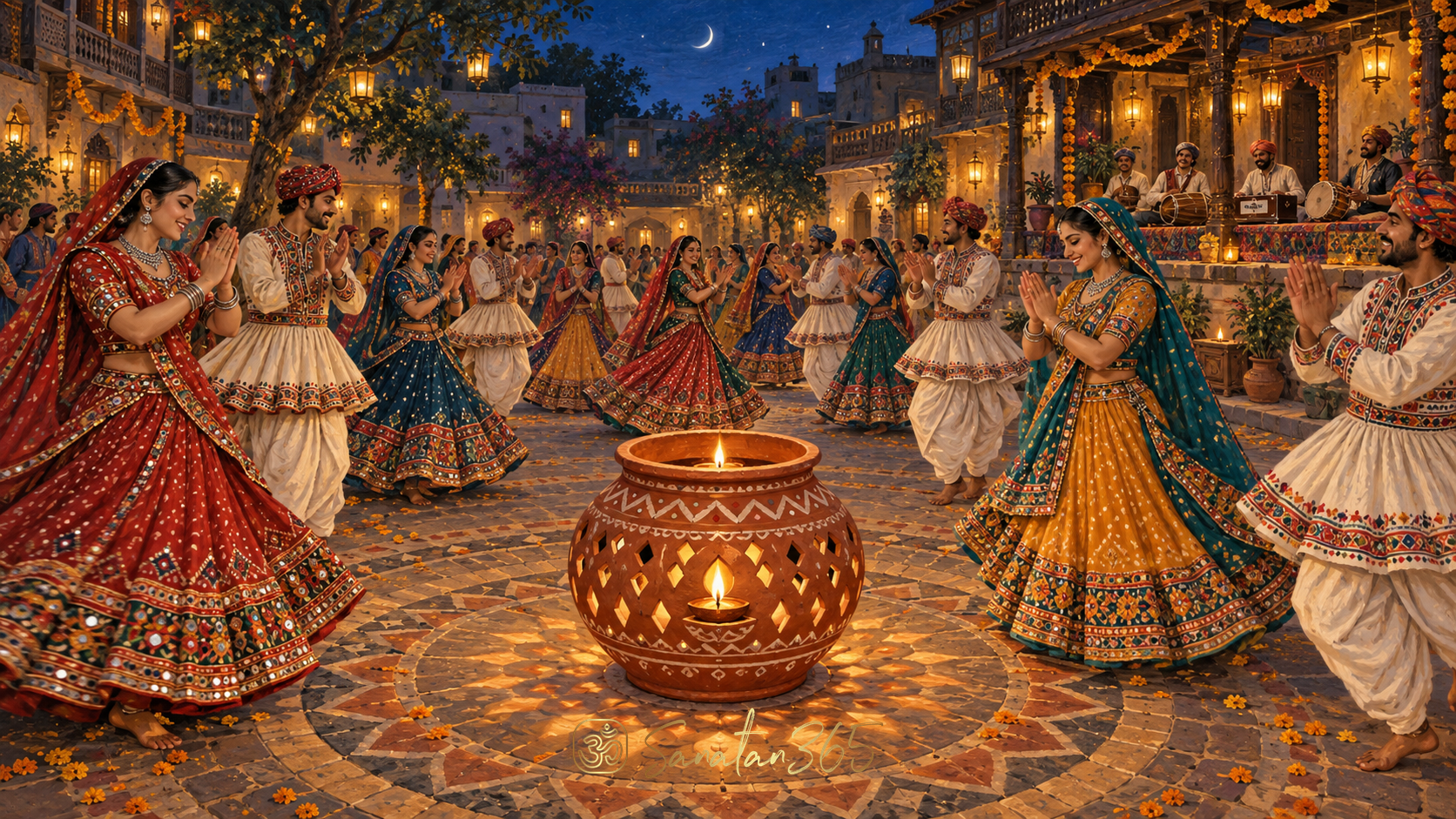
Garba Meaning: The Lamp at the Heart of Navratri
Garba is a Gujarati devotional dance associated with Navratri. Its central lamp, shared circular rhythm and reverence for Goddess Amba expl…
 Festivals
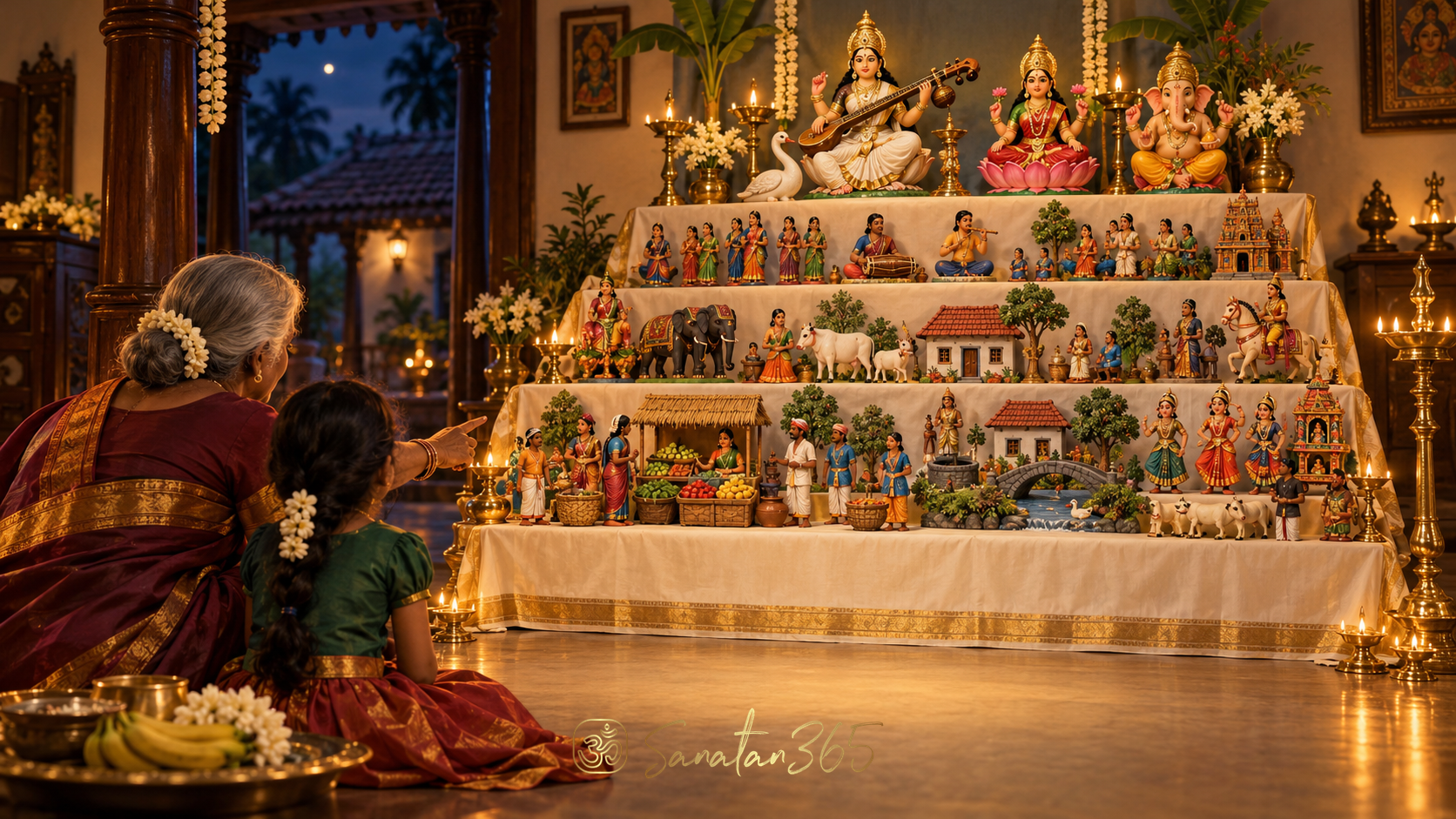
Golu Meaning: Navratri Dolls, Living Stories, and Hospitality
Understand Navratri Golu through its handmade dolls, regional names, family stories and welcoming home visits, with thoughtful preparation…