Naraka Chaturdashi 2026: Why Deepavali Begins Before Dawn
Naraka Chaturdashi falls on 8 November 2026. Read the Narakasura story, understand the dawn oil bath, and see why Deepavali can begin in the morning.
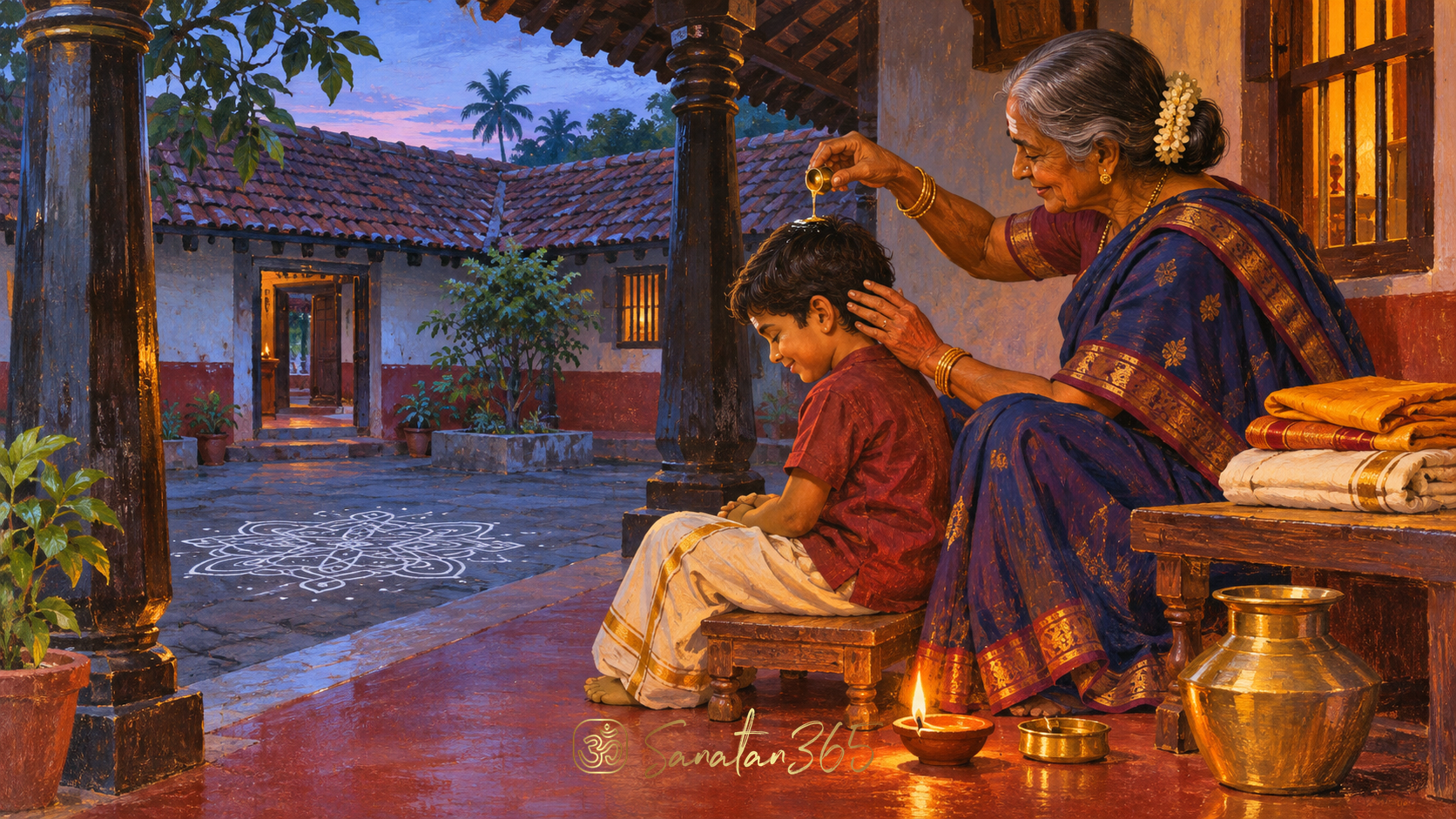
Before dawn, an elder puts a little oil on a child’s head. The fresh clothes are still folded, and the rest of the house is quiet. In some families this is already the beginning of Deepavali.
Naraka Chaturdashi 2026 falls on Sunday, 8 November. The observance remembers Krishna’s victory over Narakasura. In households that keep the early oil bath, the festival begins with a gesture of care before sunrise. That morning custom can share a civil date with evening worship of Lakshmi, the goddess of prosperity, without sharing its timing or purpose.
When is Naraka Chaturdashi 2026?
The name includes caturdaśī (चतुर्दशी, the fourteenth lunar day). Here it refers to the fourteenth day of the waning fortnight. The new-moon lunar day that follows is amāvasyā (अमावस्या, new moon). A tithi (तिथि, a lunar day) follows the changing relationship between the sun and moon. It can begin or end during a civil date, which is the date a household sees on its phone or wall calendar. A festival rule that looks to the hours before sunrise therefore asks a different question from one that looks to the evening.
For Sunday, 8 November, the Positional Astronomy Centre festival calendar lists the pre-sunrise Naraka Chaturdashi observance, southern Deepavali and evening-related festival observances on the same date, including Lakshmi Puja, or worship of Lakshmi. Goa Tourism’s account of Narak Chaturdashi makes the midnight boundary especially clear. It places the observance on Sunday, while describing celebrations beginning Saturday night and continuing into the early hours of Sunday. A programme that starts on 7 November and a festival listing that says 8 November can therefore both be accurate.
The dates make most sense when each is attached to an action. The start of a procession, the period for an oil bath and the time for evening worship are three different pieces of information. A family looking for one should ask for that specific observance and its location. The Diwali 2026 family guide explains the separate question of checking local evening worship times.
Key takeaway: Read the date together with the observance and the place. A morning bath and evening worship can belong to the same Sunday.
What happens after the victory in the Narakasura story?
In the Bhagavata Purana, Book 10, Chapter 59, Indra comes to Krishna after Naraka has taken, among other things, the earrings of Indra’s mother Aditi and the umbrella of Varuna. Krishna and Satyabhama go together on Garuda, Krishna’s divine bird mount. The chapter describes the formidable defences around Naraka’s city and the battle that follows. In this account Krishna defeats Naraka with his discus.
The chapter stays with the people affected by the battle. The earth goddess, Pṛthivī (पृथिवी, Earth personified), comes to Krishna and returns what was taken. She brings Naraka’s frightened son and asks Krishna to place his hand on the young man’s head. The next verse says Krishna grants him fearlessness. Krishna then enters the palace and finds the women whom Naraka had held captive. The text goes on to describe what happens to them and the return of Aditi’s earrings. These episodes belong to the narrative after the great moment of combat.
A family telling the story aloud might spend a little more time with Naraka’s son. He arrives after the battle with cause to be afraid and receives reassurance. That moment gives a young listener a concrete way to think about what happens when a wrong has been stopped. An adult might hear the return of the earrings in the same way. Returning something to the person who lost it is its own act, even when the dramatic part of the story has ended.
The chapter is one source for the Narakasura story. The early bath belongs to living festival practice, and families can have their own telling of how it came to be associated with the victory. Keeping the chapter and the household explanation distinct allows each to retain its character. A reader might hear an echo between Earth’s request for a protective hand and an elder’s gesture at dawn. The echo is a way of reading the two scenes together. The chapter gives the story, while the household telling can explain why someone gets up early to prepare the oil.
Key takeaway: Read past the battle to the returned possessions, the protected child and the people found in the palace. They give the victory its human consequences.
Why does the Deepavali oil bath come before sunrise?
Abhyaṅga snāna (अभ्यङ्ग स्नान, bathing after anointing the body with oil) names the practice in Sanskrit. At a household level the order is simple. A little oil is applied, then comes the bath, followed by a change of clothes. Someone who learned the observance from a parent or grandparent may remember one small thing especially well: whose hand first touched their hair, where the clothes were put out, or how the door looked when they came back to the front of the house.
The early hour gives the sequence a boundary. At other times a bath may be one task among many. Here it is the way some households enter the festival. The oil, water and clothes mark the passage in familiar materials. The care of the person who prepares them can make as much of an impression on a child as the hour itself. No elaborate arrangement is needed to explain that experience.
The timing has a calendar side and a family side. A local pañcāṅga (पञ्चाङ्ग, a traditional calendar or almanac) can help a family identify the festival and its local ritual window. Relatives can explain how their particular household carries it out. The calendar may say when the observance falls, while the family remembers who starts it and what follows. A person learning the custom for the first time can ask both questions.
This is a ceremonial bath. Its meaning can be understood without ascribing a health effect to the oil or a guaranteed spiritual outcome to taking a bath at an exact minute. What a visitor can observe directly is that the preparation sets aside time and gives the first moments of the festival a shape.
Key takeaway: The oil bath marks entry into the festival for families that keep it. The local calendar and household custom answer different parts of the timing question.
How do Tamil Deepavali and Narak Chaturdashi in Goa mark the morning differently?
In some Tamil households, the oil bath is already part of Deepavali morning itself. Akashvani’s account of Tamil Deepavali describes the customary pre-sunrise bath, with sesame oil applied to the head, often with an elder’s blessing. A household may start with its youngest members while folded clothes and the first meal wait. A Tamil family may use the word Deepavali for the morning when speaking of a festival that a friend elsewhere associates most strongly with lamps in the evening. Asking what happens first in the other person’s home makes the difference easier to understand.
Goa gives the preceding night a distinct public life. The tourism account describes neighbourhoods making figures of Narakasura from materials such as bamboo, paper and cloth. The work is visible before the effigies are traditionally burned in the early hours. The figures give the story a public scale. They also show the work of local makers, from the frame that must hold the shape to the expressive face visible above a crowd. Exact programme times vary by locality, and the oil bath and lamps belong to the household side of the celebration as the morning begins.
These are two examples from living communities. A Tamil house and a Goan neighbourhood each make the transition from dark to light perceptible, at different scales. One may be remembered through a gesture in a veranda. The other may be remembered through the figure a group built together and the families returning home as night ended. Neither example exhausts how people in the same region celebrate.
Food provides another way to talk about the differences without turning them into a contest. One family might describe what was ready when the baths were over. Another might remember the meal that came later in the day. A reader curious about the difference between offering food and sharing it can read the guide to naivedya and prasad in Hindu worship. The relevant household sequence is best learned from the people who keep it.
Key takeaway: Tamil Deepavali morning and Goa’s night-to-dawn celebration can be understood on their own terms, including the public and household customs in each place.
How can a family keep the dawn observance when away from home?
A relative can often pass on more than a date. Ask them to name the first three things they remember from that morning as a child. One may recall the sound of a vessel being set down. Another may remember waiting for everyone to finish before opening a box of sweets. The details provide a way to carry the custom into a different home without assuming that all the materials and spaces will be available.
A family that wants to keep the observance can start with three practical choices:
- Check the local festival calendar for the city where the family will actually wake up. Keep a separate note for any evening worship or community programme.
- Ask which early-morning gesture matters in the household’s own custom, and prepare the materials the night before. A familiar towel and a place for fresh clothes may be all the preparation that needs explaining to a child.
- Tell a short part of the Narakasura story in words appropriate for the listeners. A family can end at the point where Naraka’s frightened son is reassured, then ask what the listener remembers from that moment.
When relatives live in different time zones, a voice message recorded before the festival can travel better than a plan to call everyone at sunrise. An elder might record the name they use for the observance and a single memory of it. Hearing that voice on the morning can connect a household to the people from whom it learned the custom. It also leaves room for people in the new location to follow their own local timing.
The morning can be modest and still be memorable. To a child, the most lasting detail may be that an adult had woken early to make a place for them. When the festival comes around again, that child has something particular to describe and perhaps something they can do for someone younger.
Key takeaway: Learn the hour from the local calendar and the gesture from the family that keeps it. Together they give the morning a form that can travel.
FAQ
Is Naraka Chaturdashi on 7 or 8 November in 2026?
The observance discussed here falls on Sunday, 8 November. Some Goan community celebrations start on Saturday night, 7 November, and continue into the early hours of Sunday.
Can Naraka Chaturdashi and Lakshmi Puja fall on the same date?
Yes. In 2026 the two are listed for 8 November. Their ritual windows can differ because one is associated here with the hours before sunrise and the other with evening worship.
Who accompanies Krishna in the Bhagavata Purana’s account?
Satyabhama goes with Krishna on Garuda. Chapter 59 describes Krishna defeating Naraka and then reassuring Naraka’s frightened son.
Is the morning oil bath kept everywhere?
Customs differ by region and household. It is part of the Deepavali observance for some Tamil and Goan families, with local timing and details best checked with the family or community concerned.
About the author
Sanatan365 Editorial
Bringing Sanatan Dharma to modern seekers through authentic, scripture-grounded content.
Related in Festivals
 Festivals
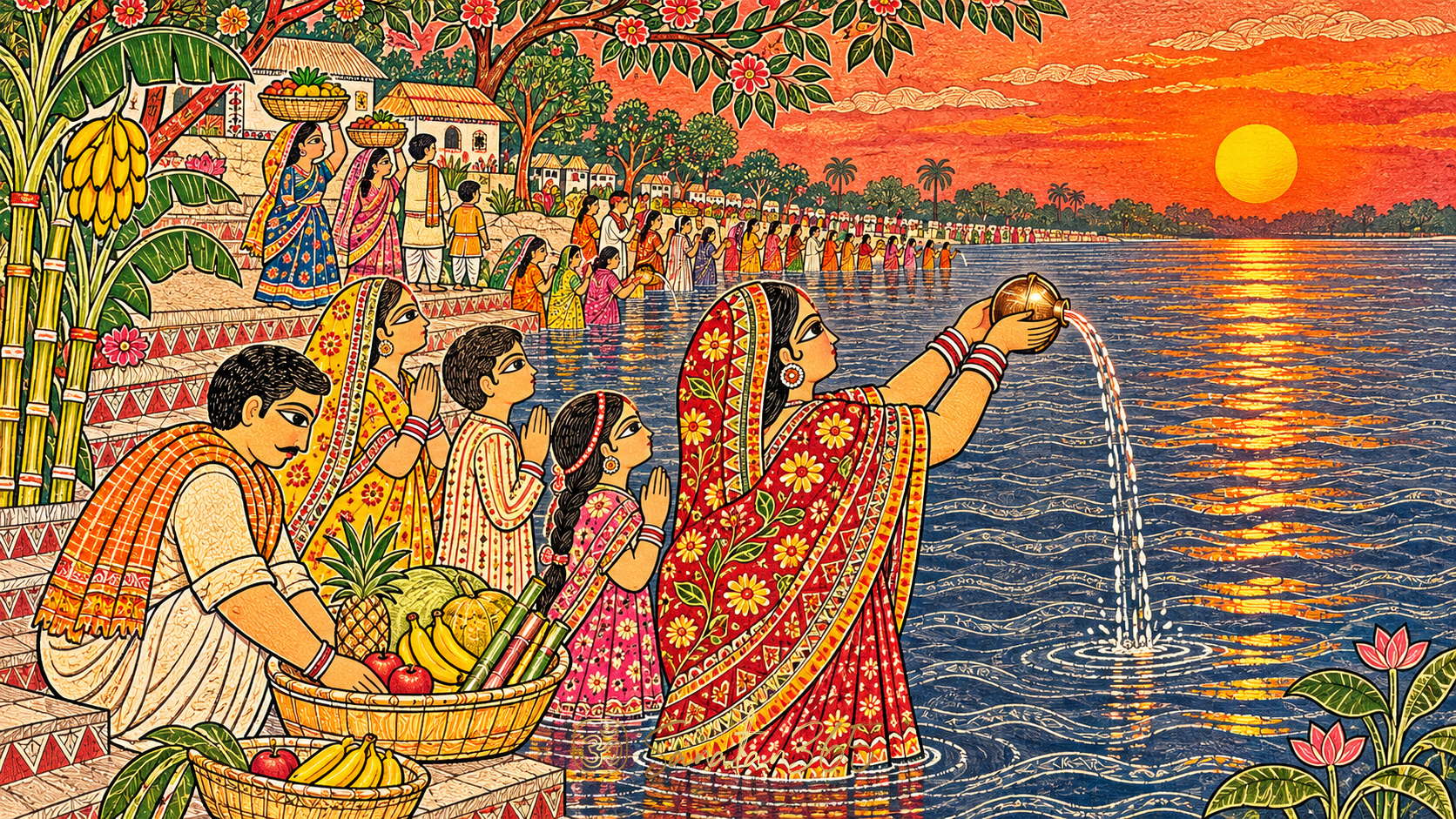
Chhath Puja 2026 Date: Sunset and Sunrise Offerings
Chhath runs 13–16 November in Patna. Follow the four days from household preparation to the sunset and sunrise offerings, with local solar…
 Festivals
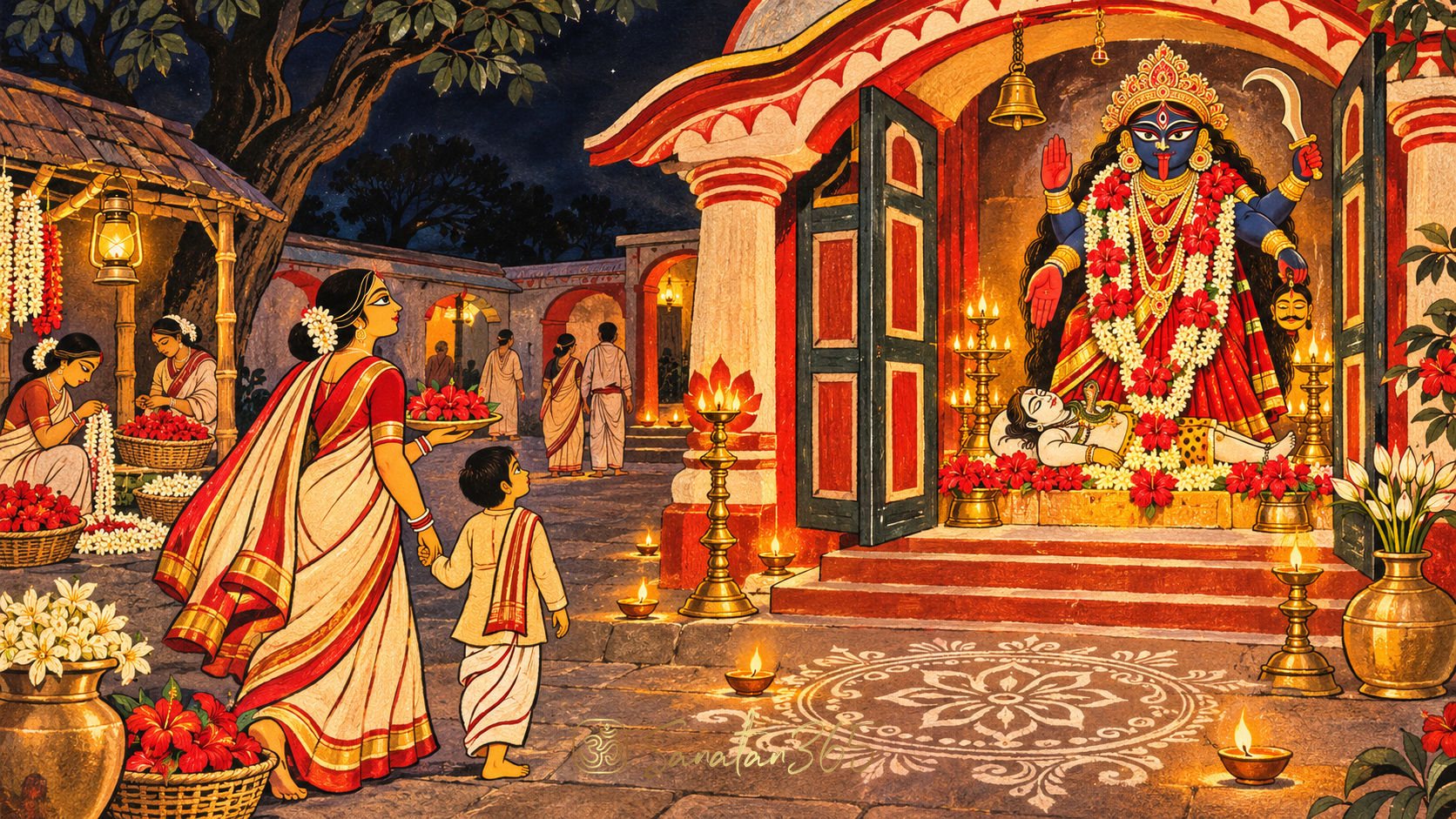
Kali Puja 2026: A Night of Prayer to the Divine Mother
Kali Puja falls on 8 November 2026. Understand the night-time calendar, the address to Kali as Mother, and ways to participate with thought…
 Festivals
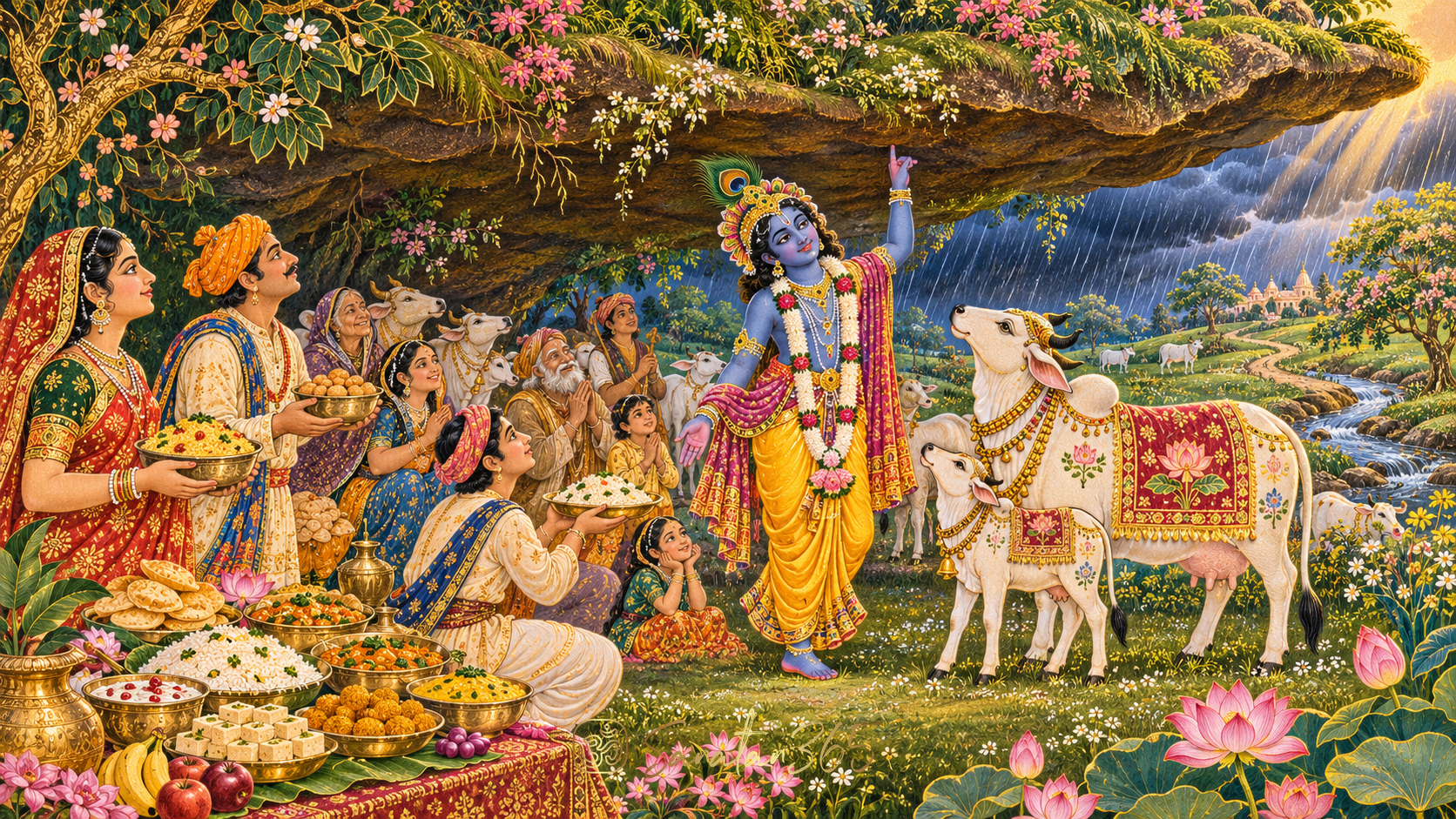
Govardhan Puja 2026: Date, Annakut, and a Thoughtful Offering
Prepare for Govardhan Puja on 10 November with a clear local calendar, an understanding of Annakut, and an offering shaped by gratitude rat…

