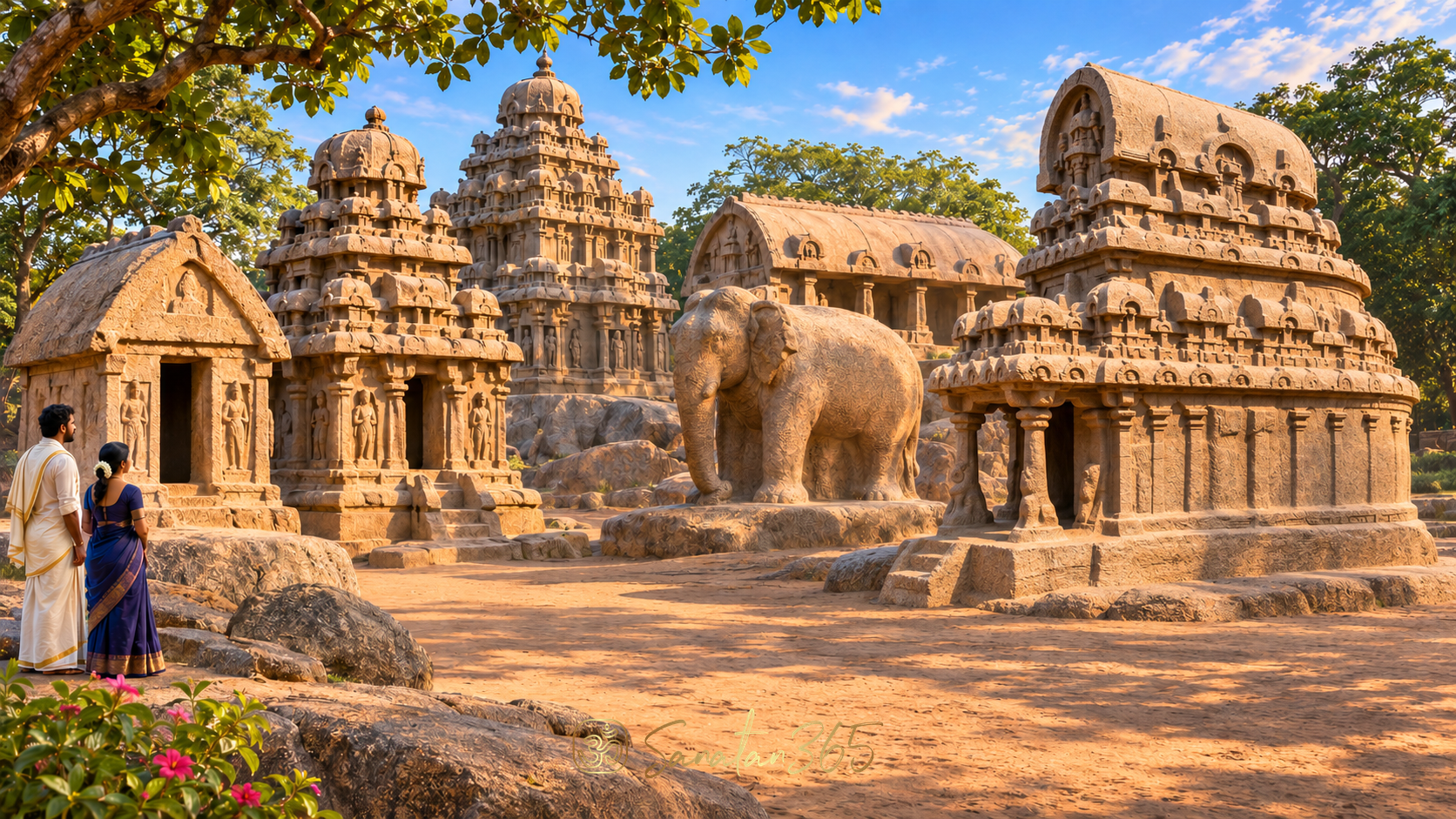
Pancha Rathas Mahabalipuram: Reading Temples Carved from Rock
The Five Rathas invite a different question about temple-making: what changes when a shrine is released from rock rather than assembled from separate stones?
A temple can be made by taking stone away. That simple reversal changes how the Five Rathas are seen.
Pancha Rathas Mahabalipuram refers to five celebrated monolithic shrine forms in Tamil Nadu's Pallava monument group. Pañca (पञ्च, five) and ratha (रथ, chariot) explain the familiar name; these are carved monuments, not wheeled vehicles. Their value becomes clearer when the reader separates three things: how rock becomes architecture, how the five forms differ, and how names drawn from the Mahabharata relate to archaeological history.
A photograph may first suggest a cluster of small temples. The more revealing question is what kind of making those shapes preserve. A roof, a pillar and a wall can resemble familiar building elements while belonging to a different relationship with the material beneath them.
What makes Pancha Rathas Mahabalipuram monolithic temples?
“Monolithic” means formed from a single mass of stone. In its description of the Group of Monuments at Mahabalipuram, UNESCO identifies the rathas as shrines hewn from large boulders, with varied plans and elevations. This establishes the essential starting point: the architecture is carved out of existing rock.
The term is easy to memorise and surprisingly easy to forget while looking. Once a surface has become a recognisable pillar, attention treats it as a pillar. Once an upper mass resembles a roof, the eye reads it as a roof. Familiarity with the finished form can obscure the unusual act of making.
Imagine two different starting situations. In one, separate pieces are brought together to create an enclosure. In the other, a rock mass is worked so that an enclosure and its surrounding forms become visible. This is a conceptual comparison, not a reconstruction of the exact sequence or tools used at the site. It helps explain what the word monolithic asks the viewer to notice.
The difference also changes the question asked of a photograph. “Where are the joints?” may be useful when studying assembled masonry. At a monolithic shrine, a more useful first question is where the continuous material becomes a column, edge, recess or opening. No touching or climbing is needed to consider it.
Look for relationships rather than hunting for one dramatic detail. A support beneath an overhanging form, a recessed entrance and the mass above it can be read together. Each contributes to the impression of a building, while the monolithic description keeps the starting material in view.
This does not justify treating the shrines as rough exercises with little sacred importance. Nor does it require claiming that every surface was completed exactly as intended. The narrower, defensible point is that recognisable temple forms were expressed through rock-cut making. Their architectural intelligence deserves attention on those terms.
Key takeaway: “Monolithic” describes the relationship between material and making, not merely a temple that happens to be made of stone.
Why do the Five Rathas have different roof forms?
The Five Rathas are particularly useful for comparison because they do not repeat one identical outline. The Archaeological Survey of India's Mahabalipuram account describes a hut-like Draupadi shrine, the tiered Arjuna and Dharmaraja forms, Bhima's elongated wagon-vaulted roof, and the rounded-ended Nakula-Sahadeva arrangement. These distinctions give a reader specific features to recognise.
A compact vocabulary helps. A vimāna (विमान) is the architectural superstructure associated with a temple sanctuary. An apsidal plan has a rounded end. A plan describes an arrangement as if viewed from above; an elevation describes its upright appearance. These terms identify different questions, so a curved roof should not automatically be treated as evidence for a rounded ground plan.
Begin with the largest difference visible in a broad view: long and low, compact and hut-like, or rising through tiers. Then consider the entrance and the mass behind it. A roof's outline is one part of a larger arrangement. Identifying that arrangement is more useful than giving every monument the same label of “pyramid.”
A simple comparison can be made without an elaborate checklist:
- Notice which form extends lengthwise.
- Compare that extension with a more compact shrine.
- Look for the way upper levels reduce or change as they rise.
- Keep the rounded-ended arrangement distinct from the square examples.
This is a reading exercise rather than a measured survey. It does not supply dimensions or establish a construction chronology. Its purpose is to make the differences named by the heritage sources visible in a reader's own understanding.
The phrase “five chariots” can encourage a search for vehicle-like details. That search can become misleading. UNESCO explains the local name through resemblance to temple processional chariots; it does not turn the stone shrines into actual vehicles. Added wheels in an imaginative reconstruction would therefore confuse the subject rather than clarify it.
Differences also need not become a ranking. The smallest or simplest outline can be as instructive as a tiered one. A compact form makes its relation between opening, enclosure and roof easy to grasp. A longer form raises different questions about repetition and proportion. Their juxtaposition invites patient comparison.
Key takeaway: Compare the rathas as distinct architectural solutions; neither their shared name nor their proximity makes them identical.
What do the Pandava names tell us and leave uncertain?
The Pandava names connect the monuments with familiar epic memory. ASI identifies the rathas through names associated with the Mahabharata's Pandava brothers; Draupadi also belongs to the familiar naming of the group. A reader should keep that naming tradition alongside the site's Pallava historical context, without making one substitute for the other.
A monument's name can carry cultural familiarity without functioning as a construction record. Hearing “Arjuna” may immediately bring a story or character to mind. Establishing who carved a monument, when it was made, and how it was used requires a different kind of evidence. The name alone cannot answer all those questions.
This distinction protects both narrative and history. Epic associations need not be dismissed because they are not a dated building inscription. At the same time, reverence for an epic does not establish that its characters commissioned the surviving rock-cut monuments. An article can represent the familiar names respectfully while keeping the archaeological account precise.
For a family conversation, it helps to ask what each statement is doing. “This is called the Arjuna Ratha” identifies a conventional name. “Arjuna personally carved it” would be a separate historical claim requiring support. Moving from the first sentence to the second without evidence changes the nature of the assertion.
The same restraint applies to explanations of symbolism. A visitor may experience a roof, doorway or stone figure as spiritually meaningful. That response can be valuable. It should be identified as interpretation unless a reliable source connects a particular architectural detail with that exact meaning.
There is room for wonder without filling every uncertainty. An unfamiliar carving can remain a question to bring to a qualified guide or a careful publication. A missing explanation is not permission to invent a deity, ritual or miraculous origin. Uncertainty can deepen attention by preventing a familiar story from becoming the only thing seen.
Key takeaway: Use the epic names to identify the monuments, while keeping claims about their makers and dates grounded in archaeological evidence.
How does Pallava architecture change the question of making?
Pallava architecture at Mahabalipuram includes several kinds of monument. UNESCO distinguishes cave sanctuaries, monolithic rathas, rock reliefs and structural temples. ASI places the major rock-cut works in the world of Narasimhavarman I, known as Mamalla, and discusses later structural development under Rajasimha. The group therefore offers more than one way of turning a sacred architectural idea into a built or carved place.
This wider context helps the rathas remain specific. A cave cut into rock and a freestanding monolithic shrine both involve removal of material, yet the resulting relationship with the surrounding mass differs. A structural temple introduces another set of relationships between separately worked elements. These distinctions are basic descriptions of making, not a claim that one approach is spiritually superior.
The nearby Shore Temple provides a relevant point of comparison within the larger monument group. Read its own account before treating it as interchangeable with the rathas. Sharing a location and dynastic context does not make two architectural processes the same.
It is tempting to turn this variety into an uncomplicated ladder: one form is “primitive,” the next is “advanced,” and the later building completes the story. That approach can make the earlier objects disappear into an account of what came afterwards. The rathas deserve to be examined for what their own forms accomplish.
Consider the precision involved in giving a mass a convincing architectural identity. A sheltered edge must relate to what supports it. A doorway must belong to the body behind it. Repeated elements must have a readable rhythm. These are useful questions about the visible result, even when the viewer cannot reconstruct the makers' working sequence.
The Durga Temple at Aihole offers a separate discussion of a rounded plan and gallery. The comparison is limited: a shared descriptive term does not establish the same building process, original dedication or direct historical influence. Keeping the question specific prevents architectural vocabulary from creating relationships it has not proved.
Key takeaway: The wider monument group makes the rathas' particular achievement clearer; comparison should preserve differences in making rather than flatten them.
How can the monument be read with care today?
A useful visit or photographic study can begin with one question and remain modest in its claims. Choose the relation between rock mass and architectural form. Then examine how that relation appears in a doorway, a supporting element and an upper outline. The aim is a clearer description, not a complete account of every monument in one encounter.
In person, follow the current access instructions and use permitted paths. Photographic curiosity does not justify climbing, touching carved surfaces or asking someone else to pose on the fabric of a monument. These are recommendations for considerate conduct, not a report of a particular day's opening arrangements. Current tickets, access and photography conditions should be checked through official information.
A reader studying photographs can also work carefully. Begin with a view that includes the full form and some surrounding ground. Then move to a detail and return to the broad view. A close crop can reveal carving while concealing the roof shape or the relative size of the shrine. Neither image is sufficient for every question.
Keep a short distinction between observation and inference in any notes. “The roof extends lengthwise” records a visible relationship. “The builders intended this to represent a particular cosmic structure” requires evidence beyond that observation. Giving the two statements different labels is a useful act of honesty.
An accessible learning exercise is to draw two very simple outlines: one compact, one elongated. Label them as personal reading sketches. Add one sentence about what the difference helps the eye notice. A sketch need not reproduce sculpture or claim accurate scale to help someone understand why the five forms are worth comparing.
The exercise can be shared across generations without testing children on unfamiliar terminology. One person may notice the doorway, another the upper tiers, another the continuous stone. Comparing those observations gives the place more room to speak than a competition to remember the most names.
The lasting insight is material and imaginative at once: a familiar architectural form can emerge through an unfamiliar act of making. At the Five Rathas, attention to that act gives devotional craftsmanship a concrete presence. It allows admiration to rest on something more precise than a general impression of antiquity.
Key takeaway: Read the rock, distinguish the forms and keep names separate from unsupported historical claims.
FAQ
What are the Pancha Rathas at Mahabalipuram?
They are five celebrated monolithic shrine forms within the Pallava Group of Monuments at Mahabalipuram in Tamil Nadu. Their names are associated with characters from the Mahabharata.
Does ratha mean these monuments were actual chariots?
No. Ratha means chariot, but these are rock-cut monuments. The architectural resemblance behind the name does not make them wheeled vehicles.
Are all Five Rathas the same shape?
No. Their forms include compact, tiered, elongated and rounded-ended arrangements. ASI's description distinguishes their plans and roof treatments.
Did the Pandavas build these monuments?
The familiar epic names do not establish that claim. The heritage sources place the monuments within Pallava history; names and archaeological dating should be kept distinct.
About the author
Sanatan365 Editorial
Bringing Sanatan Dharma to modern seekers through authentic, scripture-grounded content.
Related in Temples
 Temples
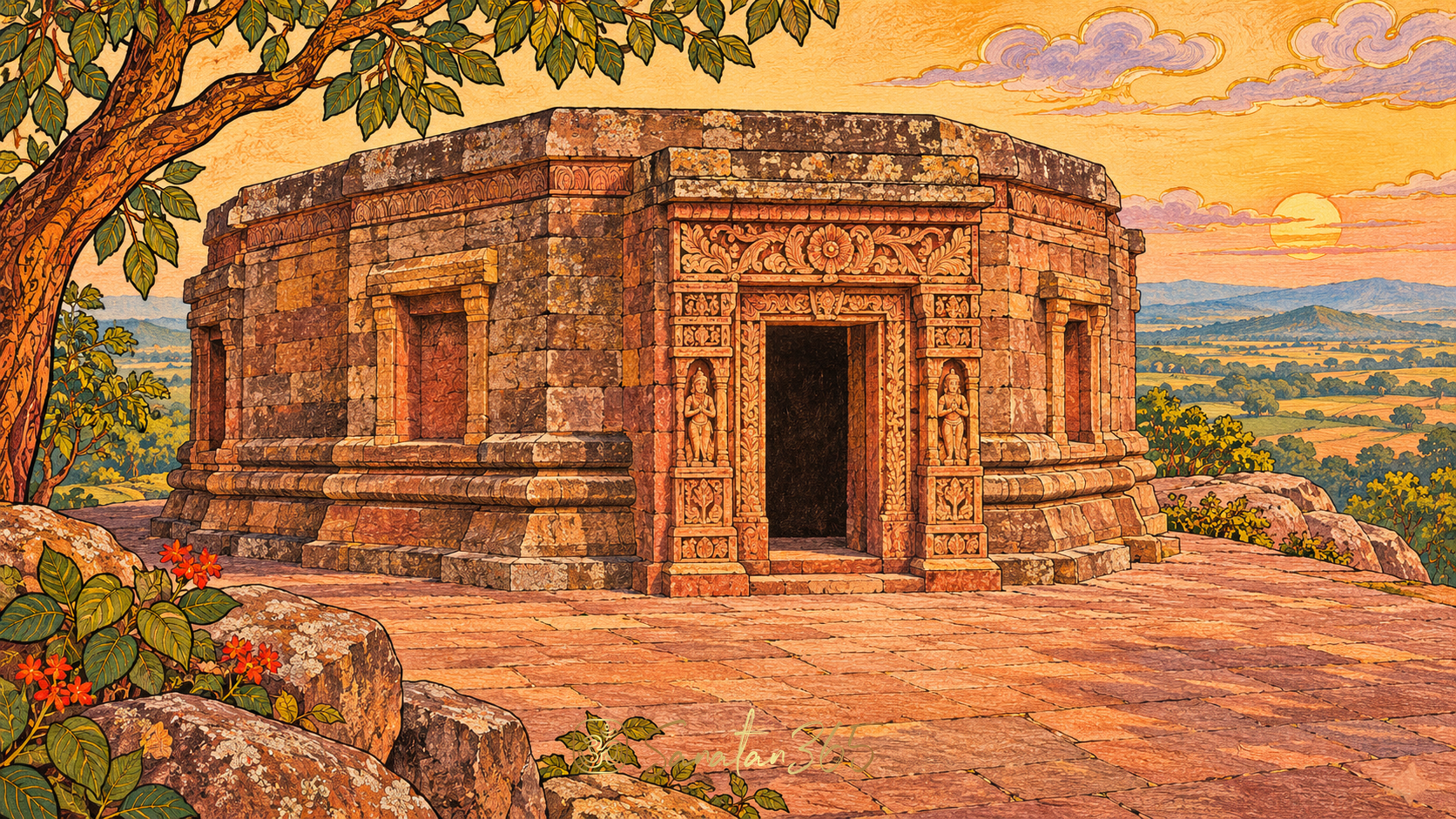
Mundeshwari Temple: Eight Sides, Four Doorways, One Centre
Read the Kaimur shrine from the outside in, from its octagonal stone walls and cardinal doorways to the sacred image at the centre.
 Temples
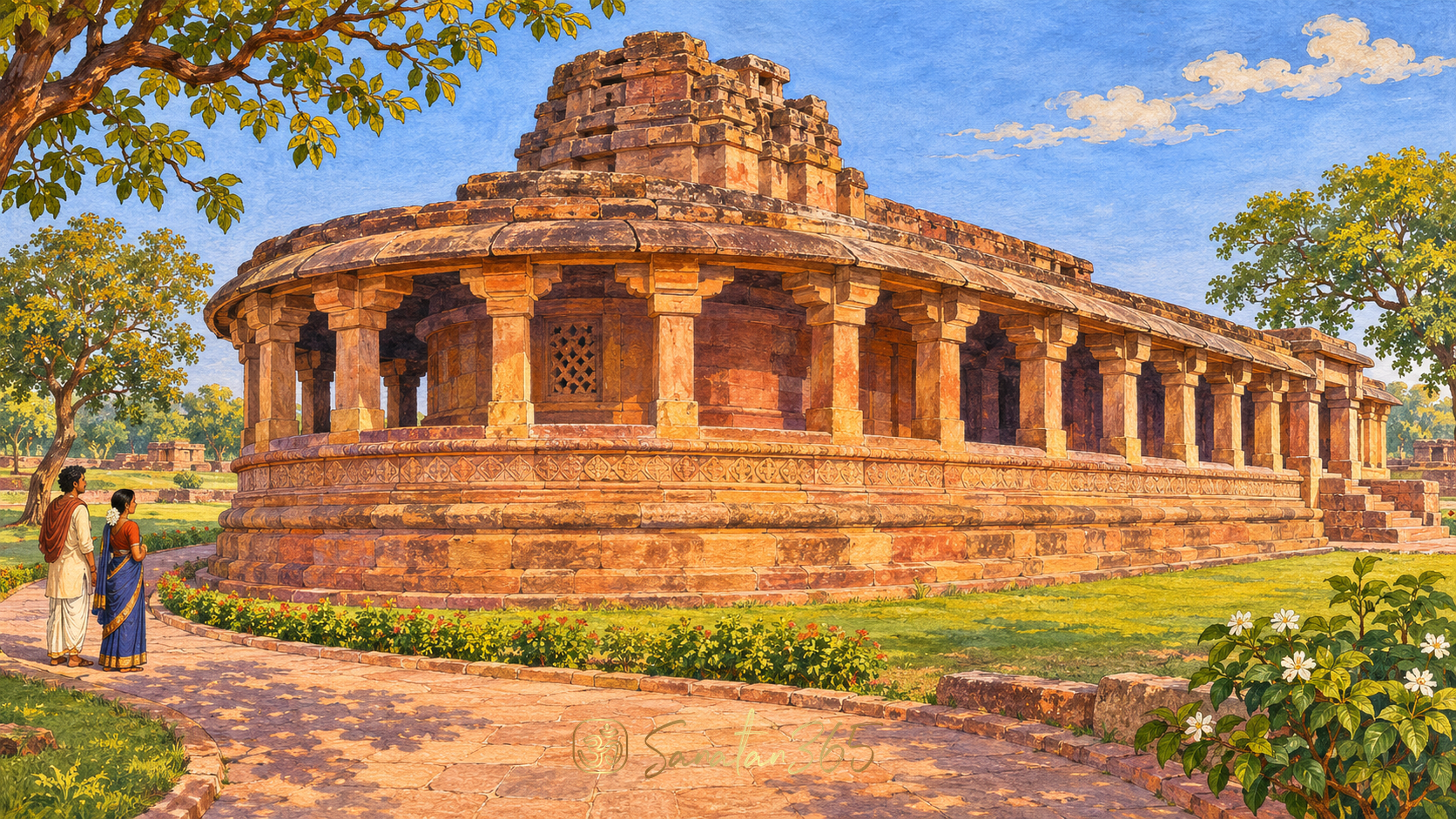
Aihole Durga Temple: Reading the Curved Stone Plan
Read Aihole’s Durga Temple through its rounded rear, raised plinth and pillared gallery, and see how a curved plan creates a sheltered rout…
 Temples
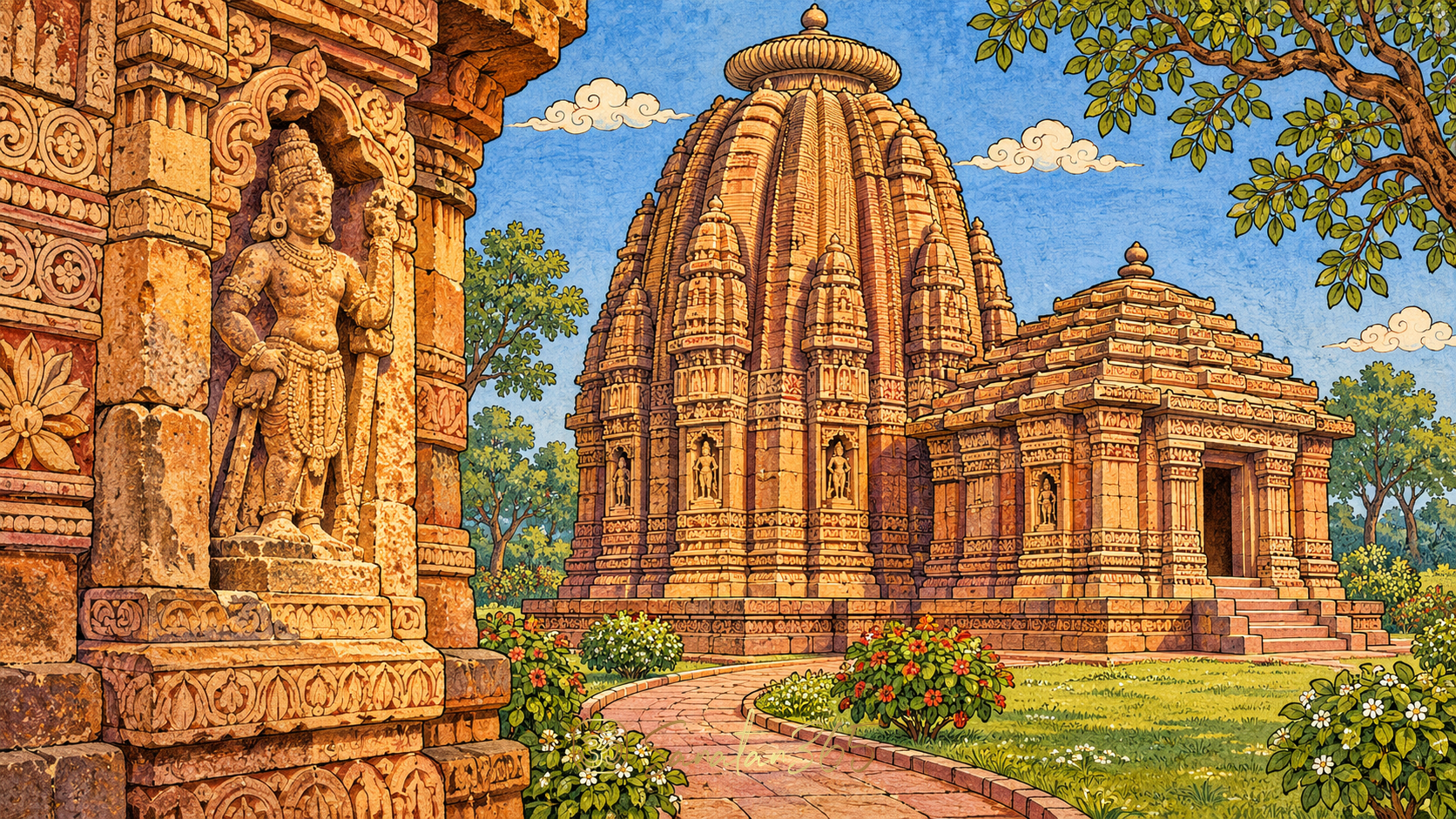
Rajarani Temple: How to Read Its Eight Guardians
Learn to read Rajarani Temple’s eight guardians, distinguish them from other figures, and understand what the carvings can tell us about th…

