Pradosh Vrat Meaning: Shiva Worship at Sacred Twilight
Pradosh Vrat is a twice-monthly Shiva observance centered on Trayodashi and the sacred twilight period near sunset.
Twilight is brief, but Hindu practice often treats brief thresholds as spiritually powerful.
Pradosh Vrat meaning begins with pradosha (प्रदोष, twilight or evening threshold) and vrat (व्रत, sacred vow or observance). Pradosh Vrat is a twice-monthly Hindu observance dedicated to Lord Shiva, kept on Trayodashi (त्रयोदशी, the thirteenth lunar tithi) in both the waxing and waning halves of the lunar month. The heart of the observance is Shiva worship during the evening period around sunset, with fasting, prayer, mantra, lamps, and simple offerings shaped by family and regional tradition.
What Is Pradosh Vrat Meaning in Shiva Worship?
Pradosh Vrat is a devotional vow centered on Lord Shiva at sandhya-kala (सन्ध्याकाल, the meeting time of day and night). The word pradosha is often understood as the time just before and after sunset, when the day softens and the mind naturally turns inward. The vrat is observed on Trayodashi, which occurs twice in each lunar month: once in Krishna Paksha (कृष्ण पक्ष, waning moon) and once in Shukla Paksha (शुक्ल पक्ष, waxing moon).
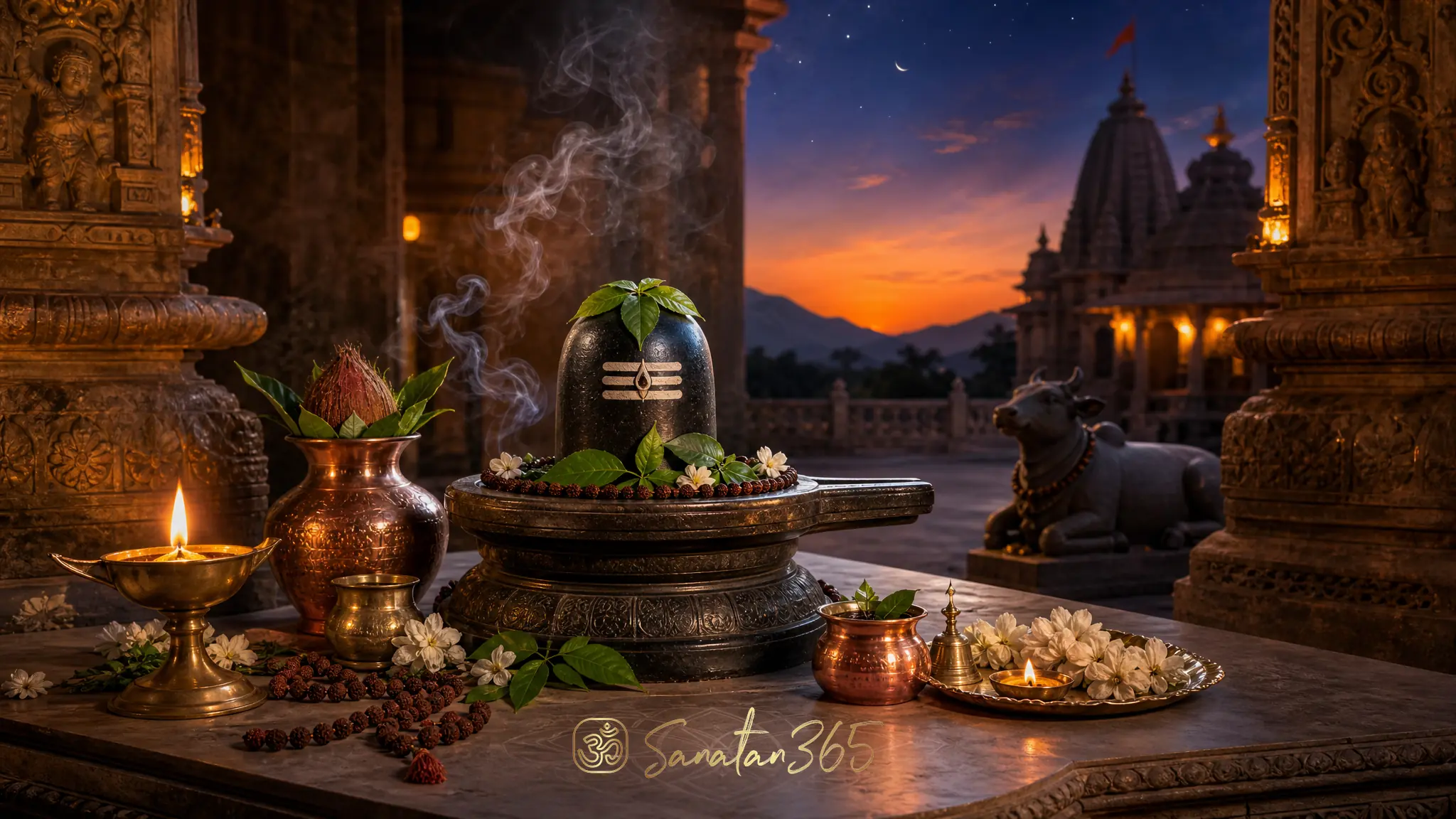
In practical terms, a devotee may fast according to capacity, bathe before evening worship, prepare a clean puja space, light a diya, offer water or milk to a Shiva linga, offer bilva leaves, chant "Om Namah Shivaya," and sit in quiet remembrance. Some families read or listen to Pradosh Vrat Katha. Some visit a Shiva temple. Some keep the observance very simply at home.
The point is not display. It is disciplined turning toward Shiva at a liminal time. Britannica describes Shiva as one of Hinduism's major deities, worshiped by Shaivas as supreme and understood through many roles, including yogi, householder, destroyer, and compassionate Lord Britannica. Pradosh Vrat gathers these meanings into a small but steady rhythm: pause, purify, remember, offer.
Key takeaway: Pradosh Vrat means a twice-monthly vow of Shiva worship observed on Trayodashi, especially during sacred twilight.
When Is Pradosh Vrat Observed and Why Does Timing Matter?
Pradosh Vrat is observed on Trayodashi tithi, the thirteenth lunar day, in each fortnight. Panchang-based dates can vary by location because tithi is lunar, not a fixed civil date. For India-based calendars in 2026, Drik Panchang lists Pradosh Vrat dates through the year, and June includes a Pradosh observance close to this article's publication window Drik Panchang. Readers should check a trusted local panchang for their city, especially outside India.
The timing matters because the observance is not only "a date." It is tied to Pradosh Kaal, the evening window around sunset. Many devotees treat this as a sacred threshold: the active day is ending, the night has not fully begun, and the mind can release scattered activity into stillness. In Hindu practice, such thresholds are often spiritually fertile. Dawn and dusk are both common times for prayer, japa, and lamp lighting.
This does not mean a family should become anxious if timing is difficult. A working parent, student, or diaspora devotee may not be able to perform every step exactly. The spirit of the vrat is reverence, steadiness, and sincere attention. If the exact Pradosh Kaal is impossible, many families still worship Shiva in the evening with humility.
Regional naming also varies. In many South Indian communities, the observance is called Pradosham, and temple worship may include special focus on Nandi, Shiva's sacred bull vahana. In North India, the term Pradosh Vrat is common, often with fasting and Shiva-Parvati worship at home or temple. The devotional center remains Shiva, twilight, and Trayodashi.
Key takeaway: The date comes from Trayodashi tithi, but the inner focus is the sunset threshold known as Pradosh Kaal.
How Do Devotees Observe Pradosh Vrat at Home?
A simple Pradosh Vrat at home can be reverent without becoming complicated. The Hindu American Foundation explains puja (पूजा, worship or reverential offering) as an act of respect, gratitude, and devotion that sanctifies the home and strengthens spiritual connection HAF. That spirit is enough to shape a family-safe Pradosh practice.
Common steps include:
- Clean the puja space and prepare a Shiva linga, Shiva image, or symbolic altar.
- Bathe or wash hands and feet before worship.
- Light a diya and offer flowers, water, milk, bilva leaves, or fruit according to family tradition.
- Chant "Om Namah Shivaya" or another Shiva mantra with attention.
- Read or hear a Pradosh Vrat Katha if it is part of the household tradition.
- Sit quietly for a few minutes after the puja instead of rushing away.
- Break the fast gently, according to health, age, and household practice.
Bilva patra (बिल्व पत्र, leaves of the bael tree) are especially associated with Shiva worship. Rudraksha (रुद्राक्ष, sacred seed beads linked with Shiva) may be worn or used for japa. Vibhuti (विभूति, sacred ash) may be applied in some traditions as a reminder of impermanence, purity, and surrender.
Fasting should be approached with care. Some devotees keep a full fast, some take fruit or milk, and some simply avoid heavy or tamasic food. Children, pregnant women, elders, people with medical conditions, and anyone whose health may be affected should adapt the practice responsibly. A vrat is not meant to become harm to the body.
For readers who want a related mantra practice, Om Namah Shivaya Meaning explains the five-syllable Shiva mantra in more depth. For the meaning of sacred beads, Rudraksha Meaning gives a practical devotional lens.
Key takeaway: A good Pradosh Vrat practice is clean, sincere, health-aware, and centered on Shiva remembrance rather than outward display.
Why Is Shiva Worship at Twilight So Powerful?
Twilight carries a quiet lesson. It shows that change is not always sudden. Day becomes night gradually. Light fades, lamps are lit, sounds soften, and the mind begins to notice what the day's speed had covered. Shiva worship fits this threshold because Shiva is deeply connected with transformation, dissolution, stillness, and return to the essential.
In Shaiva understanding, Shiva is not merely "destruction" in a crude sense. He dissolves what has completed its time. He burns impurity, cuts pride, steadies yogic awareness, and opens space for renewal. Britannica's overview of Shaivism notes Shiva's many forms and the strong devotional traditions centered on him Britannica. Pradosh worship gives these ideas a simple calendar rhythm.
For many devotees, the evening Shiva linga becomes a mirror. The linga is aniconic: it does not depend on detailed human form. It points toward presence beyond ordinary shape. The devotee offers water and leaves, but also offers fatigue, anger, confusion, and the residue of the day. The lamp flame becomes a small visible center for inner reorientation.
This is why Pradosh Vrat is often associated with forgiveness, inner cleansing, and release from accumulated errors. These should not be stated as mechanical promises. A vrat is not a transaction where one performs a ritual and receives guaranteed outcomes. Rather, the disciplined observance trains the heart. Twice a month, the devotee returns to Shiva and asks: What should be surrendered? What should be purified? What should become still?
Key takeaway: Pradosh twilight is powerful because it turns the natural transition of day into a practice of surrender, purification, and renewal.
What Is the Difference Between Pradosh Vrat, Maha Shivaratri, and Monday Shiva Puja?
Pradosh Vrat, Maha Shivaratri, and Monday Shiva puja all honor Lord Shiva, but they are not identical.
Pradosh Vrat occurs twice each lunar month on Trayodashi, with special emphasis on evening worship. Its strength is rhythm. It returns again and again, gently building discipline through repetition.
Maha Shivaratri is the great annual night of Shiva, observed once a year with intense worship, fasting, night vigil, mantra, and temple celebration. It is one of the most widely known Shiva observances across India and the diaspora. Its strength is depth and collective intensity.
Monday Shiva puja is a weekly practice because Monday, Somvar, is traditionally associated with Shiva. Many devotees visit temples, fast, or chant on Mondays, especially in Shravan month. Its strength is weekly steadiness.
The three can support each other. A person may keep Monday prayers lightly, observe Pradosh Vrat when possible, and reserve deeper discipline for Maha Shivaratri. Another person may focus only on Pradosh. Another may simply chant daily. Hindu practice has always included graded paths because households, temperaments, regions, and seasons differ.
This flexibility matters. Devotion becomes sustainable when it fits life without losing reverence. The point is not to collect observances anxiously. The point is to let each chosen practice mature into shraddha (श्रद्धा, living trust or faithful attention).
Key takeaway: Pradosh Vrat is the twice-monthly twilight Shiva vow; Maha Shivaratri is the annual great night; Monday puja is weekly Shiva remembrance.
How Can Families and Diaspora Devotees Keep Pradosh Vrat Meaningfully?
For families, Pradosh Vrat can become a simple shared rhythm. Children can place flowers, elders can chant, parents can explain one Shiva name, and everyone can sit quietly for one minute after the lamp is lit. The practice does not need to be long to be memorable.
Diaspora families may face calendar confusion because local sunset, tithi, and time zones can differ from Indian panchangs. The best approach is to choose one reliable local calendar source and keep the practice consistently. If the household cannot observe the exact time, it can still mark the evening with a lamp, mantra, and short reflection. Consistency often forms devotion better than occasional perfection.
A useful family practice is to choose one question for each Pradosh:
- What anger or resentment should be offered to Shiva today?
- What habit needs discipline?
- Where did the family receive grace this fortnight?
- Which Shiva name will be remembered tonight?
- How can the next two weeks become cleaner, kinder, and steadier?
This keeps the vrat from becoming only a ritual checklist. It becomes moral and spiritual training. Shiva is worshiped not only with bilva leaves, but with restraint, truthfulness, patience, and the courage to release what no longer serves dharma.
For a deeper Shiva mantra connected with healing and courage, Mahamrityunjaya Mantra Meaning can support reflection. Devotees should remember, however, that mantra and vrat are spiritual practices, not substitutes for medical care or professional help.
Key takeaway: Families can keep Pradosh Vrat meaningfully through simple worship, consistent timing, shared reflection, and health-aware devotion.
FAQ
What is Pradosh Vrat meaning in simple words?
Pradosh Vrat means a sacred vow or observance dedicated to Lord Shiva on Trayodashi, the thirteenth lunar tithi. It is usually centered on evening worship during the twilight period around sunset.
Is Pradosh Vrat observed once or twice a month?
Pradosh Vrat is observed twice in a lunar month: once during Krishna Paksha, the waning half, and once during Shukla Paksha, the waxing half. Exact civil dates depend on the local panchang.
What should be offered to Lord Shiva on Pradosh Vrat?
Common offerings include water, milk, bilva leaves, flowers, fruit, diya, incense, and mantra chanting. Households should follow their own tradition and keep the worship clean, respectful, and sincere.
Can beginners observe Pradosh Vrat without fasting?
Yes. Beginners may start with evening Shiva puja, mantra, and a simple sattvic meal rather than strict fasting. Health, age, work, and medical needs should guide the form of the vrat.
Is Pradosh Vrat the same as Pradosham?
Pradosh Vrat and Pradosham refer to the same broad Shiva observance. "Pradosham" is especially common in South Indian usage, where temple worship may also give special attention to Nandi.
Pradosh Vrat turns sunset into sadhana: a repeated chance to offer the day to Shiva, release what is heavy, and return to the next fortnight with a cleaner mind.
About the author
Sanatan365 Editorial
Bringing Sanatan Dharma to modern seekers through authentic, scripture-grounded content.
Related in Festivals
 Festivals
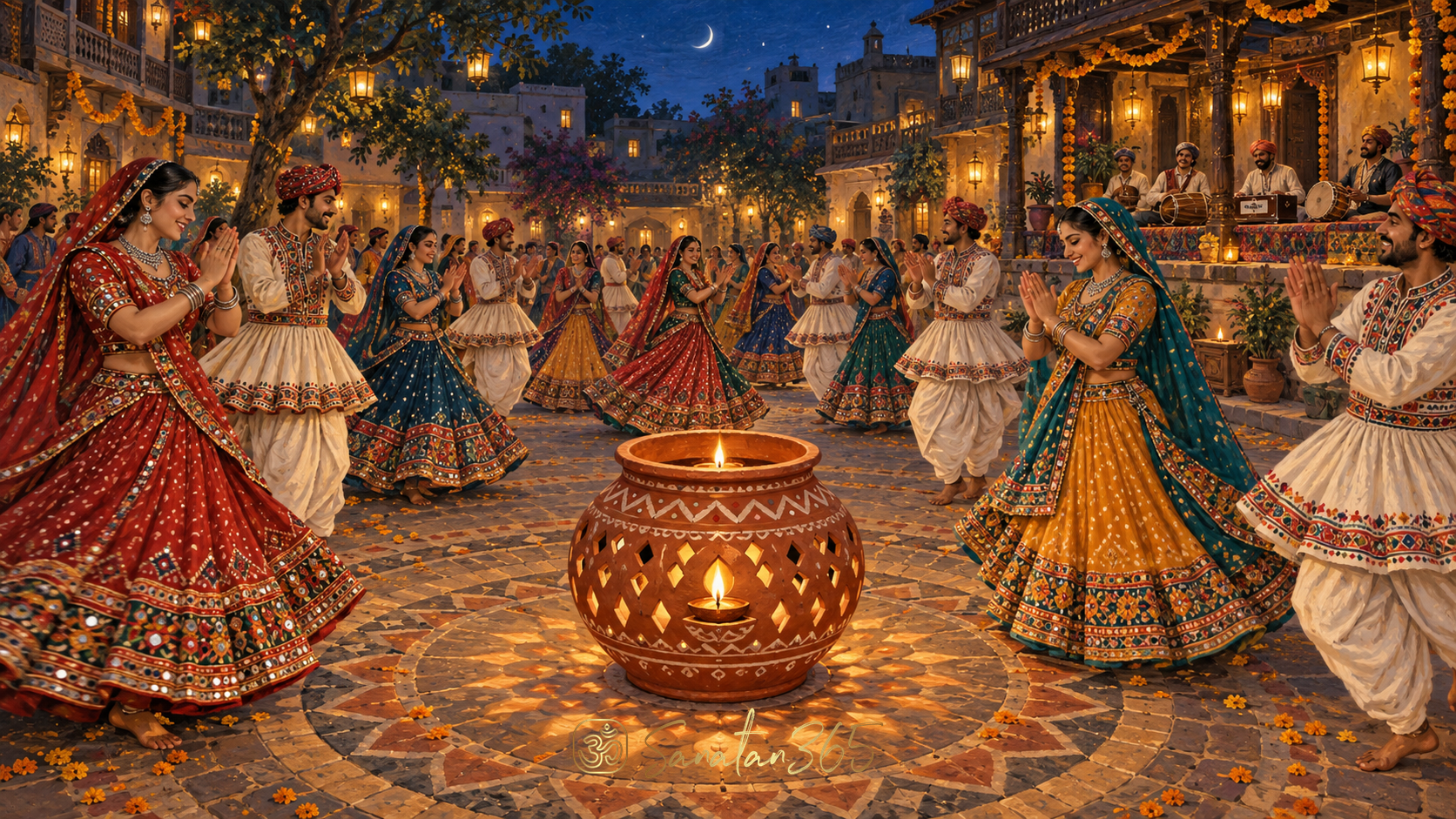
Garba Meaning: The Lamp at the Heart of Navratri
Garba is a Gujarati devotional dance associated with Navratri. Its central lamp, shared circular rhythm and reverence for Goddess Amba expl…
 Festivals
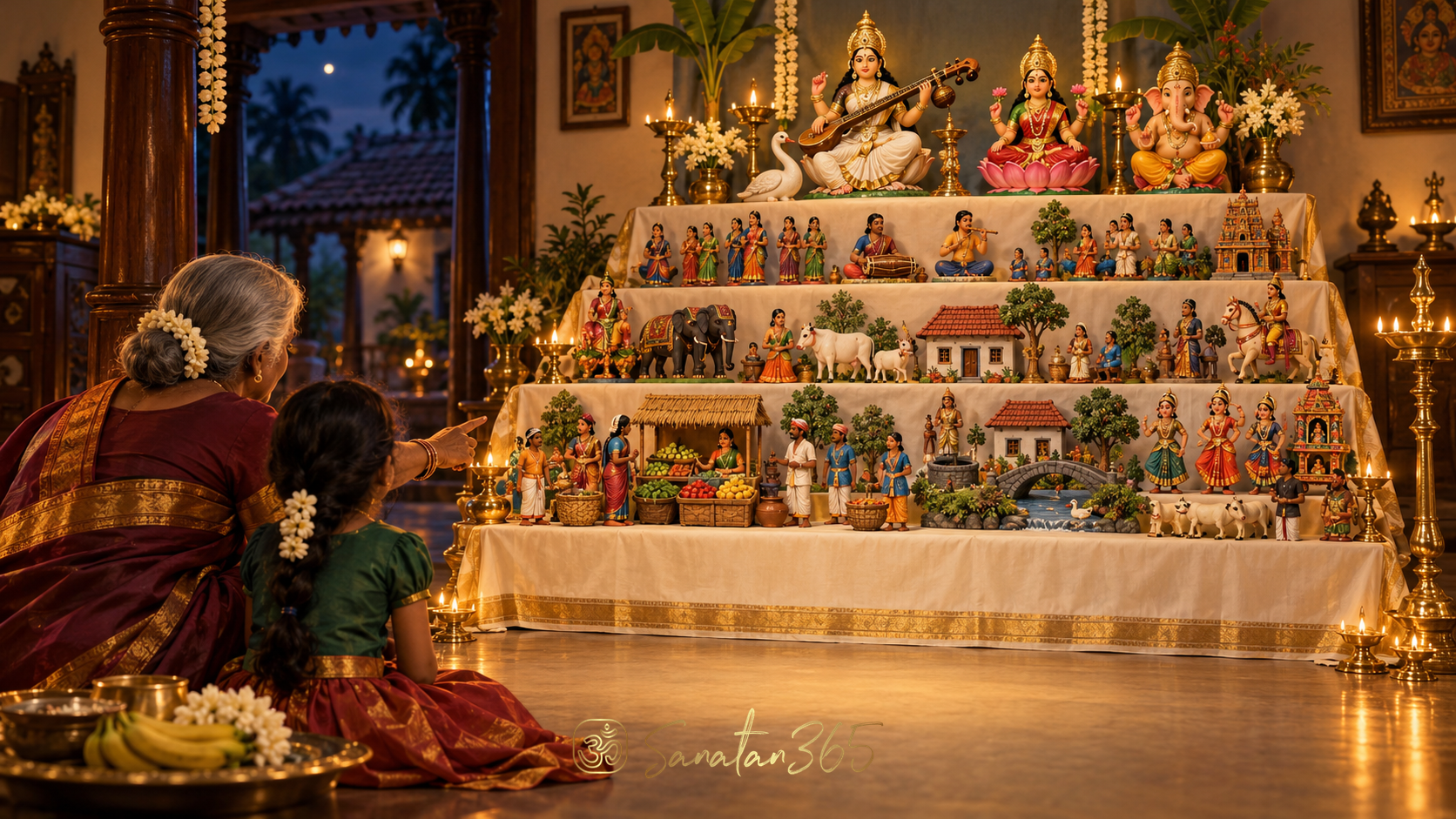
Golu Meaning: Navratri Dolls, Living Stories, and Hospitality
Understand Navratri Golu through its handmade dolls, regional names, family stories and welcoming home visits, with thoughtful preparation…
 Festivals
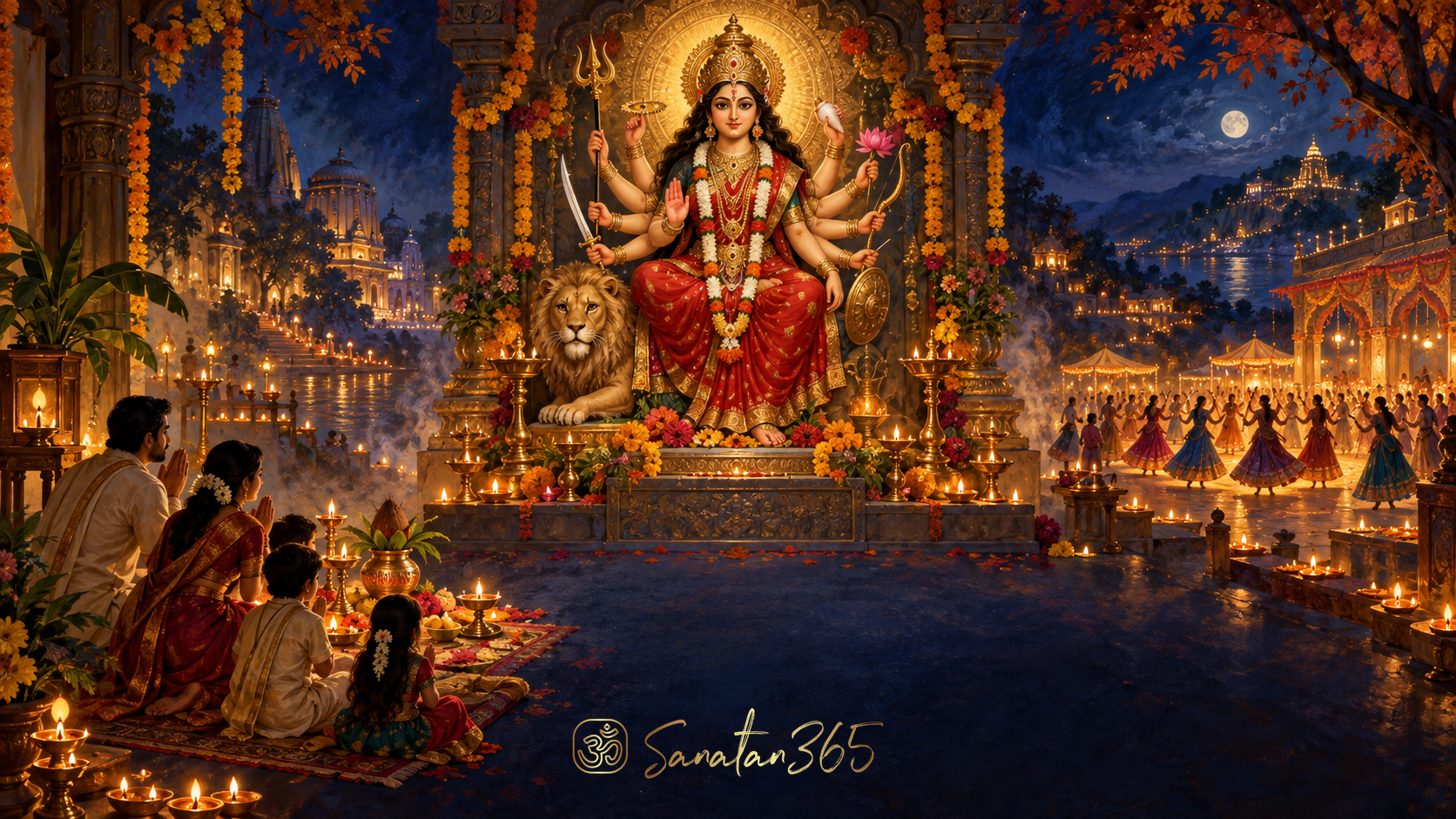
Sharad Navratri 2026: Dates, Nine Nights, and Devotion at Home
Understand Sharad Navratri 2026, its October dates, the meaning of nine nights, regional traditions, and a thoughtful home observance witho…

