Prasad Meaning: Sacred Food, Grace, and Sharing in Hindu Worship
Prasad is not only food after puja. It is the blessed return of an offering, teaching gratitude, humility, and shared devotion in Hindu homes and temples.
A small tulsi leaf on a sweet can change the way a devotee receives the whole meal.
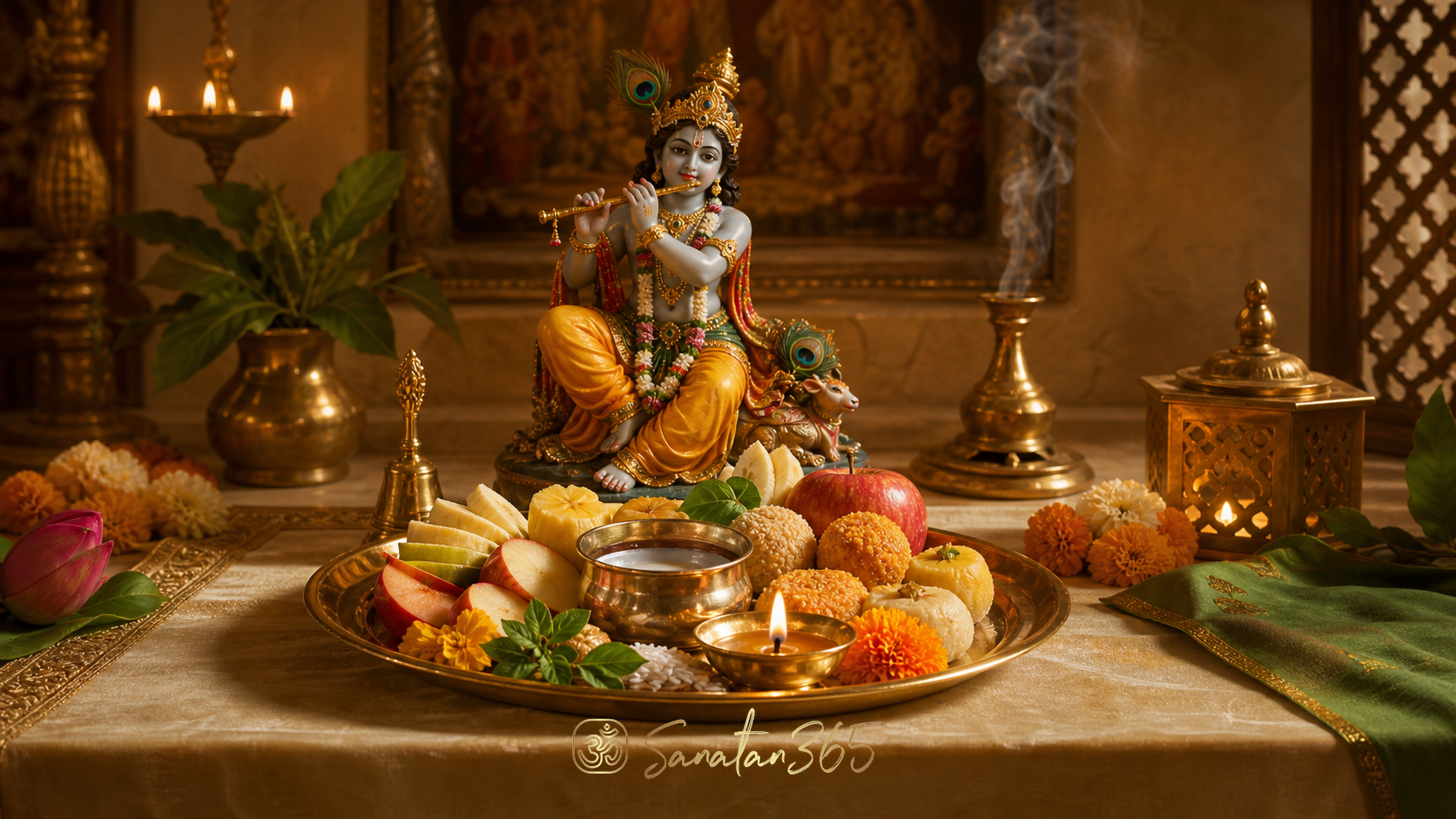
Prasad meaning begins with prasada (प्रसाद, prasada, "grace, clarity, favor"), the blessed return of something first offered to the Divine. In Hindu worship, food, fruit, water, flowers, or sweets may be offered as naivedya (नैवेद्य, naivedya, "food offered to a deity") during puja (पूजा, ritual worship). After the offering, devotees receive it as prasad: not ordinary leftovers, but a reminder that life itself is received through grace. The practice is central in homes, temples, festivals, and pilgrimages because it turns eating into gratitude, sharing, and sacred memory.
What is prasad meaning in Hindu worship?
Prasad is the sanctified offering that returns to the devotee after worship. The object may be simple: a banana, a spoon of charanamrit (चरणामृत, sacred water associated with the deity's feet), a laddoo, cooked rice, coconut, tulsi leaves, or a pinch of sugar. Its meaning does not come from price or quantity. It comes from the relationship between offering and receiving.
In a Hindu puja, the deity is often honored as a living divine presence. A devotee may offer water, sandal paste, flowers, incense, lamp, food, and prayer. The Hindu American Foundation's practical puja guide describes puja as a ritual that draws the senses toward worship and centers the heart through adoring focus on the chosen deity. Food offering belongs inside that larger pattern, where love is expressed through concrete care.
The Bhagavad Gita gives one of the most beloved foundations for this spirit. Krishna says that whoever offers a leaf, flower, fruit, or water with devotion is received by him with love, a teaching preserved in Bhagavad Gita 9.26. The verse matters because the offering is not measured by luxury. It is measured by bhakti (भक्ति, devotion).
This is why prasad is not a transaction. The devotee does not "feed God" because the Divine lacks food. The devotee offers what sustains life and then receives it back as a sign that sustenance itself belongs to the Divine order.
Key takeaway: Prasad teaches that worship is not only what humans give to the Divine; it is also how they learn to receive life with gratitude.
How does naivedya become prasad?
Naivedya and prasad are closely related, but they are not identical. Naivedya is the offering placed before the deity. Prasad is what is received after the offering has been made. In many homes, a plate may be placed before a murti (मूर्ति, sacred image or consecrated form), a picture, a Shiva linga, or another worship focal point. The devotee may chant a mantra, sit silently, ring a bell, wave the lamp, or simply pray with sincerity.
The change is spiritual, not chemical. A fruit does not become a different species of fruit. A sweet does not acquire a visible mark. The transformation is in its sacred status. It has passed through an act of surrender. It has been offered, remembered, and received back.
This gives prasad a powerful discipline: one does not grab it casually. Devotees usually receive it with the right hand or both hands, bow slightly, and consume it respectfully. In temples, prasad may be distributed by priests or volunteers. In homes, the eldest family member, the person who performed the puja, or a child may share it with everyone present. The same reverent rhythm appears in Mangala Aarti Meaning: Morning Worship, Light, and Auspicious Devotion, where the morning offering of light prepares the household or temple for the day.
The practice also trains humility. A person may have bought the fruit, cooked the food, or carried the sweets to the temple. Yet after offering, the language changes. It is no longer "my food." It is prasad. The ego loosens its grip on ownership. This spirit also connects with the householder discipline described in Pancha Maha Yajna Meaning: Five Daily Offerings in Hindu Life, where daily life becomes sacred through repeated acts of offering.
Key takeaway: Naivedya becomes prasad when an offering is returned through worship, reminding devotees that possession can become gratitude.
Why is food so important in Hindu sacred practice?
Food is never only biological in Hindu thought. It carries care, purity, discipline, family memory, seasonal rhythm, and social responsibility. The Taittiriya Upanishad is famous for honoring anna (अन्न, food) as deeply sacred, and many Hindu households still treat food with reverence before, during, and after meals.
Prasad brings that reverence into ritual form. When food is offered before eating, the act interrupts haste. It says: pause, remember, thank, share. Even a daily meal can become more mindful when a small portion is first offered mentally or physically to the Divine.
Temple prasad makes the teaching public. A devotee may stand in line with strangers and receive the same blessed food. In many temples, this sharing softens social distance because everyone receives from the same sacred source. Jagannath Temple in Puri is famous for Mahaprasad, and many pilgrimage centers have their own regional prasad forms, from Tirupati laddoo to panchamrit in Shiva temples. These forms vary across India, but the inner pattern remains: food becomes a medium of grace and community.
Prasad also reminds the devotee that the senses are not enemies of spirituality. Taste, smell, touch, sight, and sound all appear in puja. The flame is seen, the bell is heard, the sandal paste is touched, the incense is smelled, and prasad is tasted. Hindu worship often educates the whole person, not only the intellect.
Key takeaway: Prasad makes food a teacher of gratitude, sensory reverence, and shared belonging.
What should devotees keep in mind when offering prasad at home?
Home prasad does not need elaborate expense. A sincere offering may be as simple as fruit, water, milk, homemade sweets, cooked rice, or a small portion of the family meal. The most important conditions are cleanliness, reverence, and intention.
A practical home rhythm may look like this:
- Prepare or select a clean vegetarian offering according to family tradition.
- Place it on a separate plate or bowl before the deity, sacred symbol, or altar.
- Offer it with a short prayer, mantra, or silent remembrance.
- Wait respectfully for a few moments.
- Receive it back as prasad and share it with everyone present.
- Avoid waste; consume or distribute it with care.
Regional and family traditions differ. Some households avoid onion and garlic in offerings. Some offer specific sweets to specific deities. Some use tulsi for Vishnu and Krishna worship, bilva leaves for Shiva, or modak for Ganesha. These details should be followed according to one's sampradaya (सम्प्रदाय, lineage or tradition), family guidance, and temple custom.
The key is not anxiety about perfection. Hindu practice has formal rules, but the heart of prasad is loving offering. If a family is new to daily puja, beginning with clean water and fruit is often enough. Over time, the practice can deepen naturally.
Key takeaway: Home prasad should be clean, respectful, and sincere; simplicity is not a weakness when devotion is present.
How does prasad differ across temples and regions?
Prasad changes beautifully across regions because Hindu practice is both shared and local. In North India, devotees may receive mishri, peda, halwa, boondi, or fruits. In South Indian temples, prasadam may include pongal, puliyodarai, curd rice, laddoo, or vibhuti and kumkum depending on the temple and deity. In Odisha, Jagannath Mahaprasad has a complete temple-food culture. In Maharashtra, modak is closely associated with Ganesha worship. In Vaishnava homes, tulsi often accompanies offerings to Krishna or Vishnu.
These variations should not be flattened into one rule. Prasad is shaped by deity, temple tradition, region, season, festival, and household custom. During Navratri, offerings may reflect Devi worship. During Janmashtami, butter, milk sweets, and panjiri may appear in Krishna devotion. During Ganesh Chaturthi, modak becomes a beloved offering. During Shivaratri, bilva leaves, water, milk, and simple fasting foods may be central.
The diversity also teaches humility. A devotee visiting a new temple should observe local practice instead of assuming that their home custom is universal. Receiving prasad respectfully includes respecting the tradition that prepared it.
For diaspora Hindus, prasad often becomes a way to keep children connected to memory. A small sweet after aarti, fruit after Sunday puja, or shared temple meal can carry language, story, smell, and devotion across generations.
Key takeaway: Prasad is one practice with many regional forms, and its diversity reflects the living breadth of Sanatan Dharma.
What is the deeper spiritual lesson of prasad?
The deepest lesson of prasad is that the devotee is not the absolute owner of life. Food grows through sun, rain, soil, farmers, animals, labor, family, and unseen grace. Offering food before eating trains the mind to see dependence where ego sees control.
Prasad also corrects spiritual pride. The person who receives prasad does not receive a prize for being superior. They receive a blessing. In that sense, prasad is equalizing. A small child, a scholar, a wealthy donor, a tired pilgrim, and a first-time visitor all hold the same sweet in the palm.
It also changes the emotional tone of worship. Fear-based religion asks, "What must I do to avoid punishment?" Prasad-centered devotion asks, "How can I offer with love, receive with humility, and share with others?" That is a warmer and more transformative question.
The practice can even reshape daily life outside the temple. A meal cooked for family can be treated as service. A snack shared with a guest can become hospitality. A small offering before eating can become a daily reminder that consumption should not be careless.
Prasad, then, is not only about what happens after puja. It is a whole philosophy of giving and receiving. It says that the world is not merely raw material for appetite. It is a sacred field where gratitude must become action.
Key takeaway: Prasad turns food into a daily lesson in humility, grace, and shared responsibility.
FAQ
What is prasad meaning in simple words?
Prasad means a blessed offering received after worship. In Hindu practice, food or another item is first offered to the Divine and then shared as a sign of grace, gratitude, and devotion.
What is the difference between naivedya and prasad?
Naivedya is the food offered to the deity during puja. Prasad is the offering received back after worship. The same item may be called naivedya before offering and prasad after it has been ritually returned.
Can prasad be offered at home?
Yes. Families may offer fruit, water, sweets, milk, cooked food, or another clean item according to their tradition. A simple home offering made with sincerity is fully meaningful.
Does prasad have to be vegetarian?
Most Hindu temples and households offer vegetarian prasad, though local traditions vary. Devotees should follow the custom of their deity, temple, family, and lineage with respect.
Why do devotees share prasad?
Sharing prasad extends the blessing of worship to others. It teaches that grace is not meant to be hoarded; it should become gratitude, hospitality, and community.
About the author
Sanatan365 Editorial
Bringing Sanatan Dharma to modern seekers through authentic, scripture-grounded content.
Related in Rituals
 Rituals
Samavartana Meaning: Returning Home After Sacred Study
Samavartana marks the completion of traditional study through a ceremonial bath and return. Its lasting question is how learning becomes re…
 Rituals
Vidyarambham Meaning: First Letters, Learning, and Reverence
Explore Kerala’s ceremony of beginning letters, its Vijayadashami setting, rice-writing customs, and the meaning of a gentle first step int…
 Rituals
Ganga Aarti Meaning: Why Lamps Are Offered to the River
Why devotees offer light to the Ganga, what the public ceremony in Varanasi expresses, and how visitors can participate with care.