Puja Thali Meaning: How Sacred Items Create an Order of Worship
Understand the puja thali meaning, the purpose of common worship items, regional variations, and how families can prepare a simple tray with reverence.
A puja thali may fit in two hands, yet it can hold an entire grammar of worship.
The puja thali meaning lies in sacred preparation: a thali (थाली, tray or platter) gathers the items used in puja (पूजा, reverential worship) so that light, fragrance, water, colour, food, sound, and attention can be offered in an orderly way. No single tray is universal. A simple diya and flower may be complete when offered with sincerity, while a festival thali may carry many carefully arranged items. The tray matters because it turns scattered objects into one focused act of welcome.
What Is the Puja Thali Meaning?
The puja thali meaning is not merely “a tray of religious objects.” It is a prepared field of relationship between the worshipper and the chosen sacred presence. In many Hindu homes, the deity is approached as an honoured guest: welcomed, offered a seat, given water, adorned, shown light, offered fragrance and food, and finally greeted with gratitude. The thali keeps the materials for these gestures together.
The English word “worship” can sometimes suggest only belief or praise. Puja is more embodied. Hands clean the space, arrange flowers, light a wick, ring a bell, offer water, and place food before the deity. Encyclopaedia Britannica’s overview of puja describes it as ceremonial worship that can include offerings such as light, water, flowers, incense, and food. A thali gives those offerings practical and symbolic order.
This order is not meant to create anxiety. Hindu households differ widely in sampradaya (सम्प्रदाय, living tradition), region, family custom, available materials, and the deity being worshipped. A Vaishnava home may include tulsi leaves when appropriate. A Shaiva puja may centre bilva leaves and water. Devi worship may use kumkum, flowers, and other offerings according to local custom. The principle is steadier than the inventory: prepare cleanly, offer respectfully, and do not confuse abundance with devotion.
The tray also creates a pause before worship begins. Selecting each item makes the mind less scattered. It asks the worshipper to move from ordinary haste into sankalpa (संकल्प, sacred intention). By the time the diya is lit, worship has already begun through preparation.
Key takeaway: a puja thali gathers physical offerings and inward attention into one ordered welcome to the Divine.
Which Items Commonly Belong on a Puja Thali?
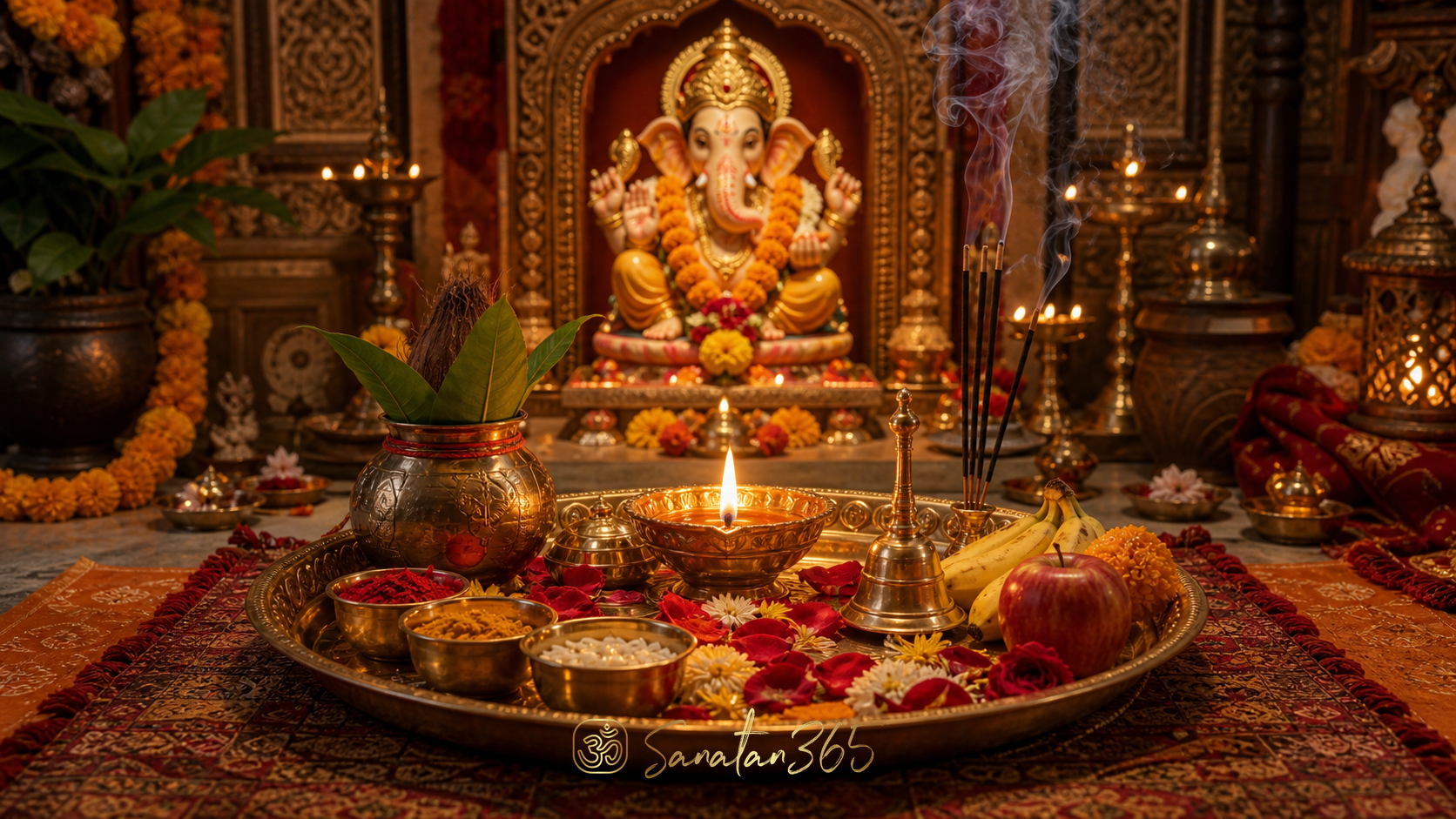
Common puja thali items represent different ways human beings receive and honour a sacred guest. The exact set varies, but many household trays include several of the following:
- Diya or deepa: A lamp, usually with a cotton wick and oil or ghee, offered as light. It represents clarity, auspicious presence, and the movement from darkness toward understanding.
- Kumkum and haldi: Kumkum (कुङ्कुम, sacred red powder) and haldi (हल्दी, turmeric) may be used for tilaka, auspicious marking, or offering according to family custom. Their use is not identical in every tradition.
- Akshata: Unbroken rice grains, sometimes mixed with turmeric, used as a sign of wholeness and blessing. Akshata (अक्षत, unbroken or unharmed) carries the symbolism of completeness.
- Flowers: Fresh flowers or petals express beauty, fragrance, tenderness, and the offering of what is naturally lovely.
- Incense or dhupa: Fragrance marks sacred space and symbolizes an offering that spreads beyond its visible source. Ventilation and household sensitivities should always be respected.
- Water: A small vessel and spoon may hold clean water for symbolic welcome, purification, sipping rites where customary, or offering.
- Naivedya: Fruit, sweets, cooked food, or another suitable item offered as naivedya (नैवेद्य, food presented to the deity) and later received as prasada (प्रसाद, grace-filled offering).
- Bell: A ghanta (घण्टा, ritual bell) may be rung to mark attention and the beginning of worship, where family custom permits.
- Camphor: Some families use karpura (कर्पूर, camphor) for the final aarti flame. It must be handled carefully and kept away from children, fabrics, and unstable surfaces.
- Sacred leaves or deity-specific offerings: Tulsi, bilva, durva grass, sandalwood paste, or other materials may be included when they are appropriate to the deity and tradition.
These items should not be reduced to a shopping checklist. Bhagavad Gita 9.26 names a leaf, flower, fruit, or water offered with devotion as acceptable to Krishna; the verse places bhakti (भक्ति, loving devotion) before material scale. Readers can consult the Sanskrit and translations through IIT Kanpur’s Gita Supersite.
A family that has only a clean lamp, water, and one flower has not performed an inferior puja. A larger festival tray is meaningful when its detail serves attention, hospitality, and inherited practice. It becomes empty display when appearance replaces bhava (भाव, devotional feeling).
For deeper context on individual materials, readers may explore the meaning of kumkum in Hindu worship, the sacred symbolism of the kalasha, and the meaning of akshata.
Key takeaway: each puja thali item carries a distinct gesture, but devotion gives the gestures their unity.
Why Does the Arrangement of a Puja Thali Matter?
Arrangement matters because good preparation protects both reverence and safety. The worshipper should be able to reach each item without confusion, crossing a hand over an open flame, or spilling water into powders and food. Sacred order is practical before it becomes symbolic.
Many people arrange the diya where it is visible and stable, keep food offerings separate from powders, place water in a secure vessel, and group kumkum, turmeric, sandalwood, or akshata in small bowls. Incense can remain in a fire-safe holder rather than lying loose on the tray. A bell may sit near the hand that will use it. Flowers can be placed where they remain fresh and clean.
This does not create one mandatory map. Some decorated festival thalis use concentric patterns. Some family trays are plain brass or steel. Some contain only the items needed for a brief morning puja. Others are prepared for aarti during Diwali, Navaratri, Raksha Bandhan, Janmashtami, or a family samskara. The tray should serve the actual rite.
The deeper symbolism is concentration. When every item has a place, the body moves without hurry and the mind can remain with mantra, darshan (दर्शन, reverent seeing of the deity), and offering. This is similar to the logic of a mandala: many elements are held around a sacred centre. The thali becomes a small map of attention.
Cleanliness also matters. The tray should be washed and dried. Edible offerings should be fresh. Used wicks, ash, wilted flowers, and leftover materials should be handled according to respectful household and local environmental practice. Sacredness does not excuse waste or unsafe disposal.
Key takeaway: thoughtful arrangement makes puja calmer, safer, and more attentive without turning family custom into rigid choreography.
How Do Puja Thali Traditions Vary Across Regions and Occasions?
Across India and the global Hindu diaspora, the form of a puja thali changes with climate, language, available plants, deity, festival, and family lineage. This variety is not a defect to be corrected. It is evidence that Sanatan practice lives through many communities.
In parts of North and western India, a household thali may prominently feature roli or kumkum, rice, diya, sweets, incense, and water. Maharashtrian practice may use haldi-kumkum with characteristic flowers and leaves. Bengali worship may arrange materials connected with Devi puja according to inherited ritual sequences. In Tamil, Telugu, Kannada, and Malayalam-speaking homes, vessels, lamps, turmeric, kumkum, betel leaves, flowers, coconut, and prasada may be arranged through distinctive local customs. Diaspora families often adapt responsibly when exact plants or materials are unavailable.
Occasion changes the tray too. A daily nitya puja (नित्य पूजा, regular worship) can be spare. Aarti requires a safe flame and may include flowers or akshata. A vrata may have deity-specific offerings. A wedding, naming ceremony, house blessing, or festival may require multiple trays serving different functions. A Raksha Bandhan thali is not identical to a Lakshmi puja thali, even if both contain a diya and kumkum.
The safest principle is to learn from one’s family, temple, or qualified priest rather than assembling a universal tray from internet images. When traditions differ, humility is wiser than declaring one regional practice “correct” for everyone.
Key takeaway: puja thalis share a language of offering while preserving real regional and family diversity.
How Can a Family Prepare a Simple Puja Thali Respectfully?
A simple thali can be prepared in a few unhurried steps:
- Clean the worship space, hands, tray, and vessels.
- Identify the deity or sacred focus of the puja rather than preparing an unfocused collection of objects.
- Choose only the materials genuinely needed: perhaps a diya, water, flower, kumkum or sandalwood, incense if suitable, and fruit.
- Place the flame on a flat, fire-safe base away from sleeves, curtains, children, and pets.
- Keep edible offerings clean and separate from camphor, ash, oils, and powders.
- Sit for a moment and form a sincere intention before lighting the lamp.
- Offer each item slowly, following family practice or a simple sequence of welcome, light, fragrance, flower, and food.
- Close with gratitude, receive prasada respectfully, and clean the space.
Children can help by placing flowers, filling a small water cup, or naming each item’s meaning. The goal is not to make them fear mistakes. It is to let their hands learn care. Elders can explain one item at a time so the thali becomes a living lesson rather than a decorative object taken out only on festivals.
Families living in small homes can keep a compact tray in a clean cabinet. People with mobility or sensory needs can simplify flame, smoke, and movement. An electric lamp may support safety where an open flame is impossible, though families can follow their own devotional understanding. Reverence should make worship more compassionate, not less accessible.
Key takeaway: a simple, safe, intentional puja thali is spiritually complete when it supports sincere worship.
What Should Be Avoided When Preparing a Puja Thali?
Avoid treating the tray as a test of wealth, aesthetic competition, or ritual perfection. Expensive silverware does not create devotion. Social-media styling should never make a family feel that ordinary brass, steel, clay, or a clean plate is unworthy.
Also avoid:
- mixing edible offerings with unsafe powders, fuel, or ash
- leaving flames or smouldering incense unattended
- using deity-specific leaves or substances without understanding their appropriateness
- wasting large quantities of food, flowers, oil, or water for display
- copying another region’s rite while dismissing local family knowledge
- placing an empty altar at the centre of a devotional setup without a clear deity, murti, sacred symbol, or intentionally formless focus
- making guaranteed claims that a particular arrangement will produce wealth, marriage, health, or protection
The thali is an aid to worship, not a machine that controls outcomes. Its deepest discipline is offering: the worshipper prepares what is beautiful and suitable, then releases possession of the act.
Key takeaway: the best puja thali avoids danger, waste, superstition, and display while preserving devotion and cultural care.
Conclusion
A puja thali turns preparation into prayer. Its lamp, water, flowers, fragrance, food, colour, and sound are not random accessories; they are forms of welcome gathered around a sacred centre. Families may arrange them differently, but the enduring principle remains simple: offer what is clean and appropriate, move with attention, and let devotion matter more than abundance.
Key takeaway: the puja thali is sacred not because it contains everything, but because everything on it has been gathered for worship.
FAQ
What is the simple puja thali meaning?
A puja thali is a prepared worship tray that holds items such as a diya, flowers, water, kumkum, incense, rice, and food offerings. It helps organise an attentive welcome and offering to the deity.
What are the essential items needed for a puja thali?
There is no universal mandatory list. A simple tray may include a diya, clean water, one flower, kumkum or sandalwood, and fruit. The deity, occasion, region, and family tradition determine additional items.
Which metal is best for a puja thali?
Brass, copper, silver, and stainless steel are all used in different homes. Cleanliness, safe handling, and family tradition matter more than cost. Foods and liquids should be placed only in suitable, well-maintained vessels.
Can a puja thali be prepared without incense or an open flame?
Yes. Smoke sensitivities, housing rules, children, pets, disability, or safety concerns may require adaptation. A flower, water, prayer, or safe alternative can preserve sincere worship without creating risk.
Why are flowers and food placed on a puja thali?
Flowers offer beauty and fragrance, while food is presented as naivedya and later received as prasada. Both express gratitude and the principle that life’s nourishment is first remembered as sacred.
About the author
Sanatan365 Editorial
Bringing Sanatan Dharma to modern seekers through authentic, scripture-grounded content.
Related in Rituals
 Rituals
Deepa Dana Meaning: Why Devotees Offer Lamps
Deepa Dana is the devotional offering or giving of a lamp. Learn how it differs from aarti, what shared light signifies, and how to observe…
 Rituals
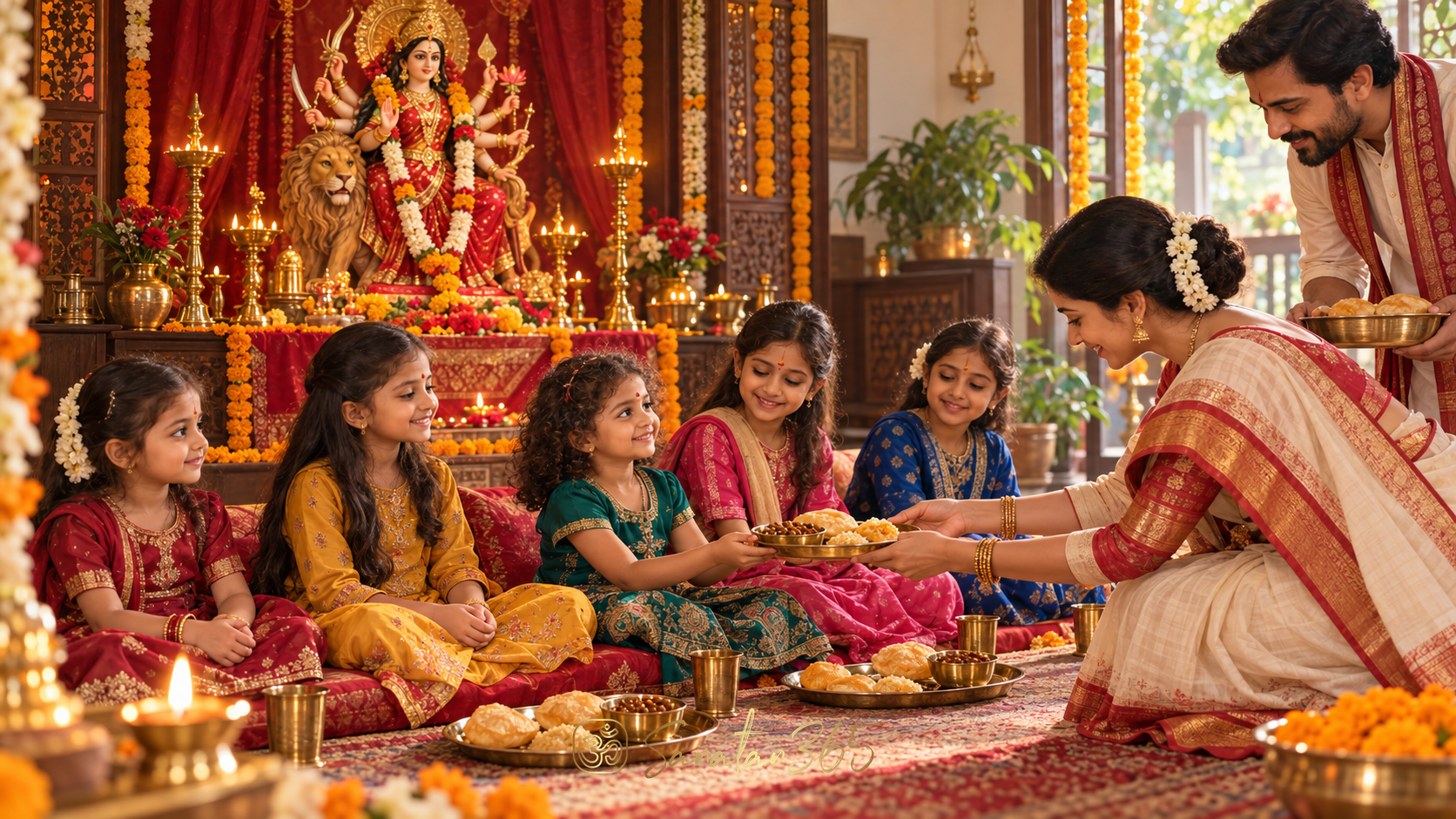
Kanya Puja Meaning: Honouring the Divine Feminine During Navratri
Kanya Puja honours young girls as living symbols of Devi during Navratri. Learn its meaning, timing, regional forms, offerings, and a respe…
 Rituals
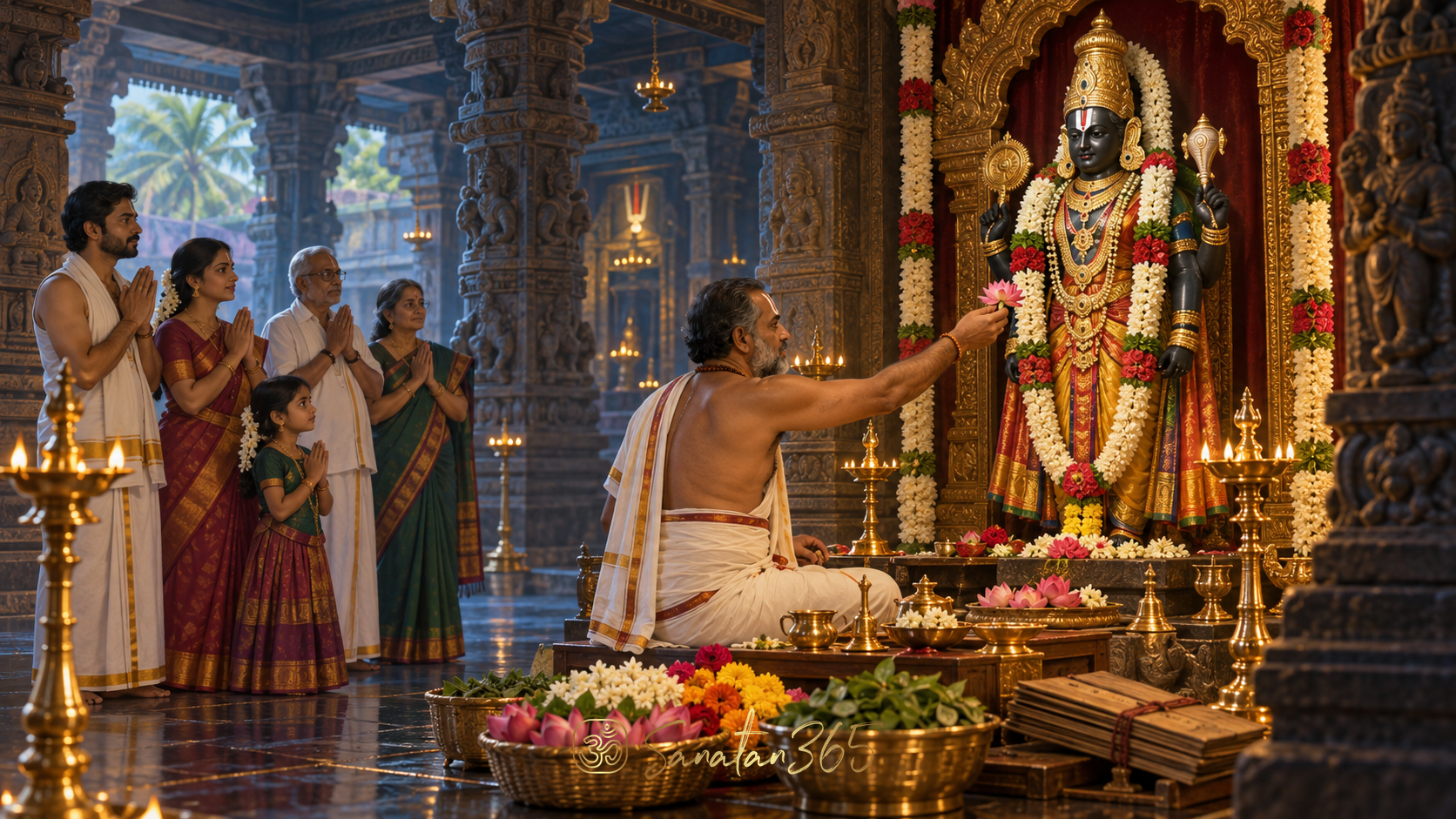
Archana Puja Meaning: Names, Flowers, and Personal Temple Worship
Archana Puja is focused Hindu worship through sacred names, mantra, and offerings, often performed on behalf of a devotee or family.