Samidha Meaning: Why Sacred Wood Is Offered in Havan
A grounded guide to samidha: the sacred fuel used in havan, its Vedic symbolism, commonly used woods, respectful offering practice, and ecological responsibility.
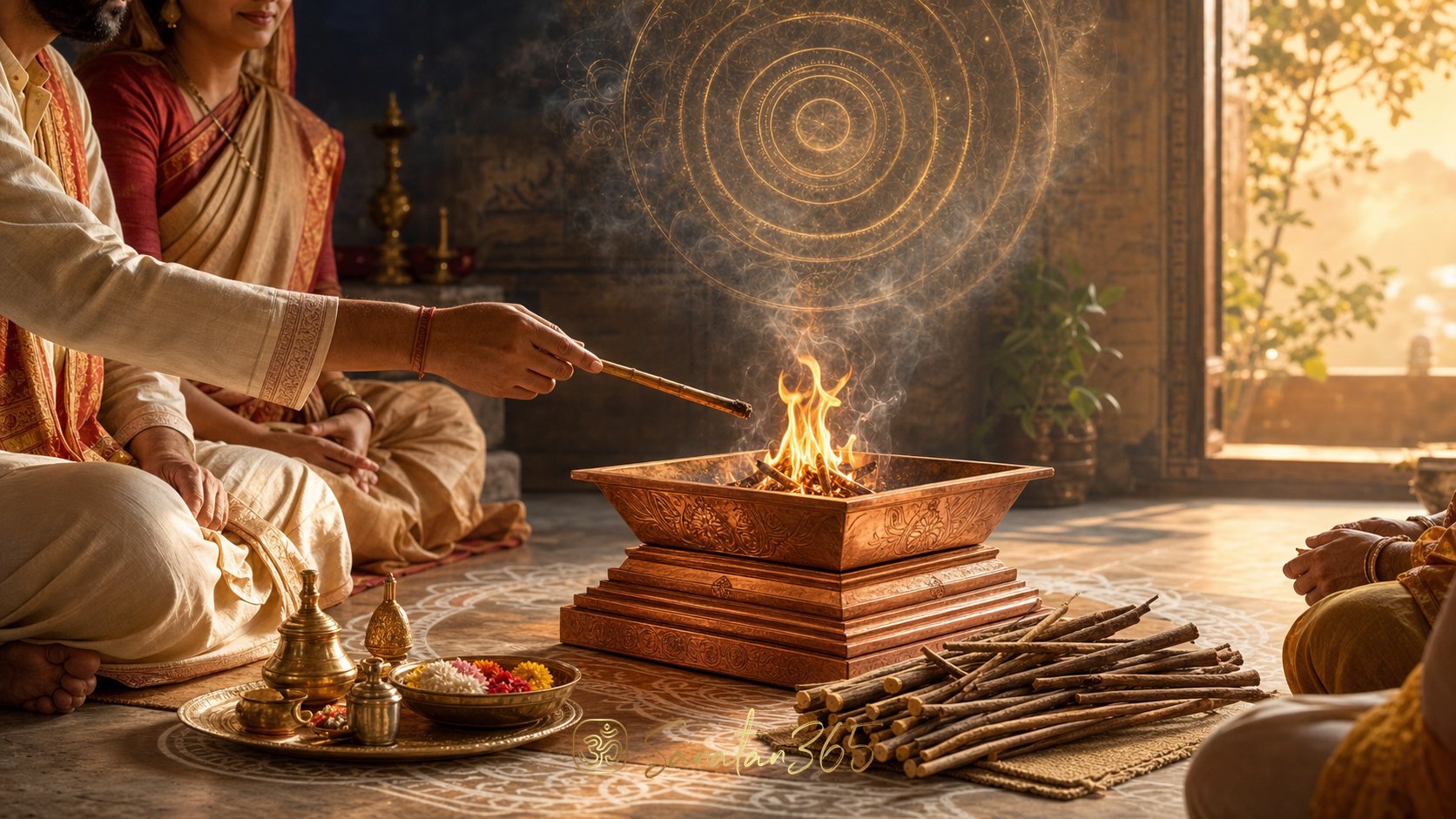
A small stick placed in a sacred fire may look ordinary, but its purpose is precise. The samidha meaning begins with fuel offered deliberately: clean, dry wood that sustains Agni during a havan (हवन, havana, a fire offering) or yajna (यज्ञ, yajña, a sacred act of offering).
Samidha (समिधा, samidhā, “kindling” or “fuel stick”) is not valued because wood is rare. It is valued because the worshipper chooses a natural substance, prepares it carefully, and places it into the fire with mantra and intention. The visible flame receives the offering; the deeper practice asks what within the person is ready to be clarified, disciplined, and given.
What Is the Samidha Meaning in Havan?
In its simplest ritual sense, samidha is the dry wood used to kindle and maintain a sacred fire. The term appears in Vedic ritual vocabulary, where keeping fire properly fed is part of the discipline of sacrifice. Agni is both the visible flame and the divine messenger who carries offerings toward the devas.
The Rig Veda’s opening hymn to Agni addresses him as priest of the sacrifice and giver of treasure. This helps explain why ritual fire is not treated as a disposal place. Each substance is selected, purified according to tradition, and offered in a measured way. Samidha creates the steady flame through which ghee, grains, herbs, or other prescribed materials may be offered.
Three distinctions are useful:
- Samidha is primarily the wood or kindling.
- Havis (हविस्, havis, “oblation”) is an offering placed into the fire, such as ghee or grain, depending on the rite.
- Havan samagri is a prepared mixture of aromatic and ritual ingredients used in many contemporary havans.
These can appear together, but they are not interchangeable. Wood gives structure and continuity to the flame; other offerings carry the specific intention and form of the rite.
The broader meaning of havan as a Hindu fire ritual provides the full setting. Samidha is one element within that sacred grammar, not an isolated charm.
Key takeaway: Samidha is clean, prepared fuel that sustains a sacred fire and makes disciplined offering possible.
Why Is Sacred Wood Offered to Agni?
Fire transforms whatever enters it. A solid stick becomes heat, light, ash, smoke, and subtle fragrance. Hindu ritual uses that visible transformation as both action and teaching.
Agni occupies a central place in Vedic worship because fire links domains. It is present on earth as flame, associated with the atmosphere through lightning, and connected with the solar radiance of the heavens. Ritual texts describe offerings entering Agni and being conveyed onward. The act therefore joins human intention, natural substance, mantra, and divine address.
Samidha serves this relationship in four ways:
- It makes the flame steady. A controlled fire supports attentive recitation and measured offerings.
- It embodies hospitality. Feeding the sacred fire resembles tending an honoured presence rather than demanding a result.
- It reveals transformation. The wood does not remain unchanged; it becomes part of a larger movement of heat, light, and ash.
- It trains participation. The worshipper must prepare, sit, listen, and offer at the right moment.
This is why a havan should not be reduced to “manifesting” a desired outcome. Hindu prayer may include legitimate hopes, but yajna also teaches reciprocity and responsibility. One receives from sunlight, soil, trees, water, ancestors, teachers, family, and society; offering interrupts the illusion that life is built by private effort alone.
The Shatapatha Brahmana, a major Vedic ritual text, repeatedly treats fire preparation and offerings as ordered acts rather than improvised spectacle. Readers can explore an English translation through the Sacred Books of the East archive. Exact procedures vary by rite and lineage, so textual study does not replace instruction from a qualified priest or teacher.
Key takeaway: Wood is offered to Agni because a tended flame becomes a meeting point of transformation, gratitude, and sacred order.
Which Woods Are Traditionally Used as Samidha?
There is no single universal list for every havan. Vedic rites, temple traditions, regional customs, family practices, and specific samskaras (संस्कार, saṃskāra, rites that refine and consecrate life) may prescribe different woods. Availability also changes across climates.
Commonly mentioned woods in Indian ritual practice include palasha, peepal, banyan, mango, khadira, and other locally respected species. Particular rites may call for particular twigs. This does not mean any branch from a sacred tree should be cut casually, nor that every named wood is appropriate for every ceremony.
Good samidha is generally:
- naturally dry and free from rot;
- untreated by paint, varnish, glue, or industrial chemicals;
- cut to a safe size for the havan kund;
- sourced without injuring a living tree unnecessarily;
- consistent with the rite and the guidance being followed.
Never use plywood, laminated board, printed paper, plastic-coated material, synthetic incense packaging, or painted wood. Their fumes are unsuitable for worship and may be harmful. Resinous or smoky wood should also be avoided unless a knowledgeable tradition specifically calls for it and the space is properly ventilated.
The sacred status of a tree does not authorize waste. A fallen dry twig gathered responsibly can express greater reverence than a fresh branch broken merely to enlarge an offering. When a prescribed species is unavailable in the diaspora, ask the officiating priest for a safe local substitute instead of importing wood illegally or guessing from an online list.
Key takeaway: The right samidha is ritually appropriate, clean, dry, untreated, safely sized, and responsibly sourced.
How Is Samidha Offered in a Household Havan?
A full Vedic yajna requires trained guidance. A simple household havan may be more accessible, but fire safety and lineage instructions still come first. The following is orientation, not a replacement for the family priest, temple, or teacher.
- Prepare a safe place. Use a stable havan kund on a heat-resistant surface, away from curtains, fans, children’s reach, smoke alarms that cannot be managed safely, and flammable objects. Keep water, sand, or a suitable extinguisher nearby.
- Arrange modest fuel. Use a few dry, untreated sticks suited to the vessel. More fire is not more devotion.
- Begin according to tradition. The officiant may invoke Ganesha, establish the sankalpa (संकल्प, saṅkalpa, sacred intention), purify the space, and kindle Agni with prescribed mantras.
- Offer at the instructed cue. A stick may be placed gently when the mantra or ritual sequence calls for it. Do not throw wood from a distance.
- Maintain a clean flame. Add only what the rite prescribes. Avoid smothering the fire with excess ghee or material.
- Close respectfully. Complete the prayers, allow embers to settle under supervision, and handle ash according to local custom only after it is fully cool.
The word svaha (स्वाहा, svāhā, an offering exclamation) often marks the moment of oblation. It should not be used as a theatrical shout. Voice, breath, gesture, and offering are gathered into one attentive act.
Families already familiar with a puja thali and its sacred order will recognize the same principle: arrangement supports attention. The materials do not perform devotion on a person’s behalf; they help body and mind participate together.
People with respiratory conditions, infants, elderly family members, or sensitive neighbours should choose ventilation and scale responsibly. A smokier ritual is not spiritually superior. When an indoor fire is unsafe or prohibited, a temple havan or priest-guided alternative is better than forcing the practice.
Key takeaway: Offer samidha gently and sparingly within a safe, guided sequence; control and attention matter more than size.
What Does Samidha Symbolize Beyond the Fire?
Samidha is sometimes explained as representing the tendencies, attachments, or actions a seeker places before the Divine. That symbolism is meaningful when it grows from the actual ritual: wood must be dry enough to burn, placed at the right time, and surrendered without being retrieved.
Several reflections follow.
Discipline prepares the offering
Wet wood produces smoke and struggles to catch. In the same way, an unexamined intention can cloud a practice. Preparation means asking honestly what is being offered: gratitude, a habit, a promise, a prayer for another person, or the fruit of work.
Surrender is transformation, not destruction
The stick does not vanish into meaninglessness. It changes form and supports light. Spiritual surrender need not mean passivity or self-erasure. It means releasing possessiveness so energy can serve dharma more clearly.
One offering supports the whole fire
A single stick is small, yet correctly placed it steadies the flame for everyone present. Daily acts work similarly: truthful speech, patient care, honest labour, and restrained consumption may be quiet, but they sustain a household’s moral atmosphere.
The meaning of nishkama karma offers a related teaching. Action is still performed carefully; what is surrendered is the claim to control every result.
Key takeaway: Samidha turns surrender into a visible discipline: prepare well, offer consciously, and let energy be transformed in service of dharma.
How Can Havan Practice Stay Ecologically Responsible?
Sacred practice and ecological care should reinforce each other. Trees make samidha possible; clean air makes gathering possible; soil and water sustain every ritual substance. Reverence becomes incomplete when procurement damages the life being honoured.
Responsible practice includes:
- using the smallest effective quantity of wood;
- choosing fallen, pruned, or sustainably supplied twigs where permitted;
- avoiding threatened species and illegally transported plant material;
- never cutting branches from temple or public trees without permission;
- keeping ghee and samagri quantities measured to reduce smoke;
- ensuring good ventilation and respecting local fire rules;
- cooling and disposing of ash without contaminating water bodies;
- planting or caring for trees as a continuing act of gratitude.
Regional diversity is practical wisdom here. A wood common in one part of India may be scarce elsewhere. Tradition includes living guidance, not only copied lists. A knowledgeable priest can distinguish an essential prescription from a respectful substitution.
The measure of devotion is not how much material is consumed. Yajna teaches a cycle of receiving and returning. If the ritual leaves the room reverent but the sourcing leaves a tree damaged, the cycle has not been understood fully.
Key takeaway: Ecological restraint is not an optional modern add-on; it expresses the reciprocity at the heart of sacred offering.
Samidha gives a havan its visible continuity, but its deepest lesson continues after the embers cool. The single key takeaway is this: sacred fire is sustained by measured offerings, and a dharmic life is sustained in the same way, through prepared, responsible acts given without waste or display.
FAQ
What is the simplest samidha meaning?
Samidha means the clean, dry kindling or fuel wood used to establish and sustain the sacred fire in a havan or yajna.
Which wood is best for havan samidha?
The answer depends on the rite, region, and lineage. Palasha, peepal, banyan, mango, and other woods are mentioned in different traditions. Follow the officiating priest’s guidance and use only dry, untreated, responsibly sourced wood.
Can any dry stick be used in a household havan?
Not automatically. The stick should be untreated, clean, safe to burn, appropriately sized, legally and responsibly sourced, and accepted within the tradition being followed. Never burn painted wood, plywood, plastic, or chemically treated material.
Is samidha the same as havan samagri?
No. Samidha is primarily the wood that sustains the fire. Havan samagri is usually a prepared blend of herbs and other offering substances. Both may be used in one havan, but they serve different roles.
How much samidha should be offered?
Only the amount needed for a steady, controlled flame and the prescribed sequence. A larger or smokier fire is not more sacred. Safety, ventilation, local rules, and ritual guidance should determine the scale.
About the author
Sanatan365 Editorial
Bringing Sanatan Dharma to modern seekers through authentic, scripture-grounded content.
Related in Rituals
 Rituals
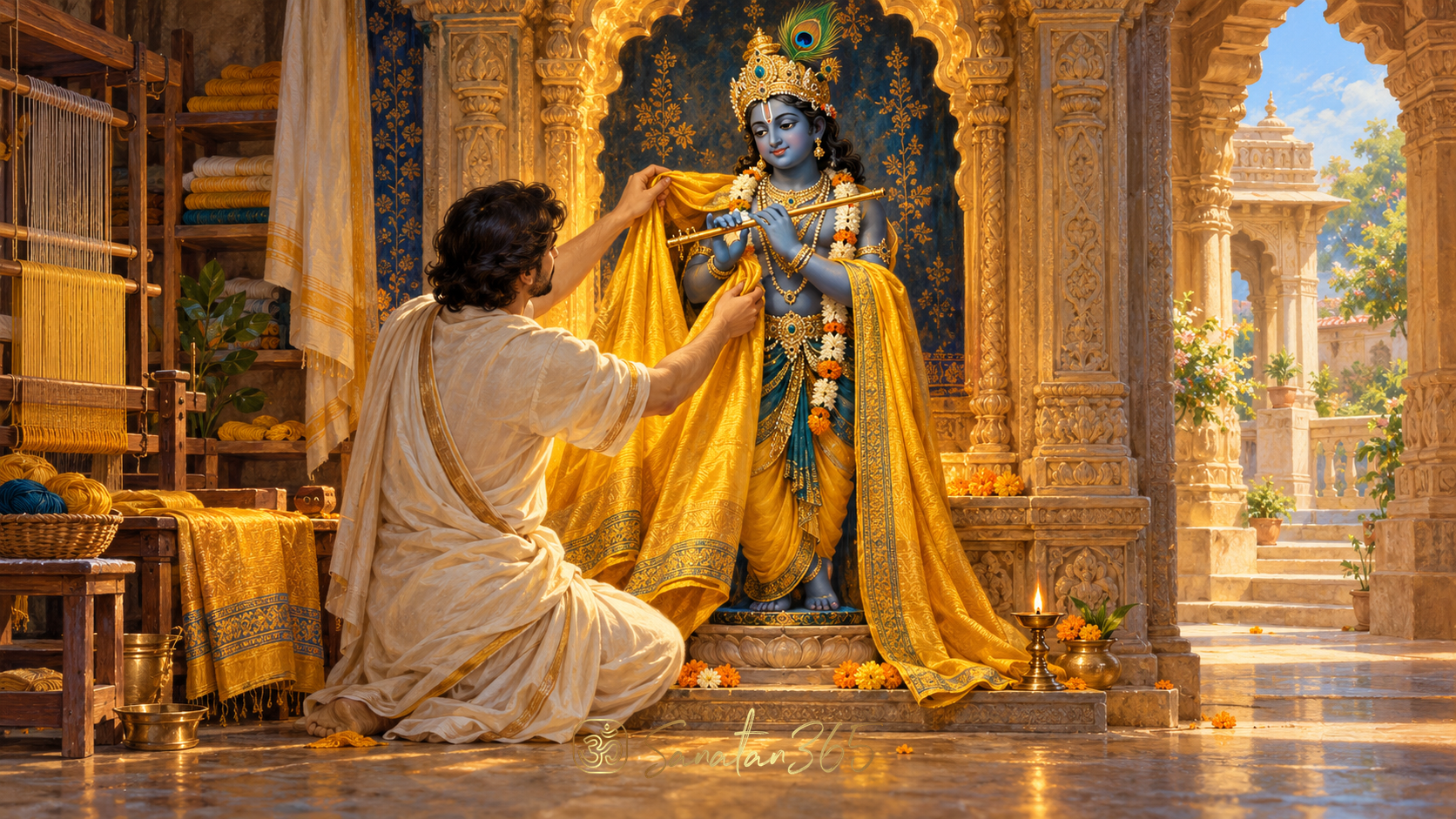
Vastra Offering Meaning: Why Clothing Is Offered in Puja
The offering of cloth turns ordinary care into sacred hospitality. Understand vastra in Hindu worship without confusing expense with devoti…
 Rituals
Madhuparka Meaning: Sweetness and Sacred Hospitality
Read madhuparka as a ceremonial honey mixture of welcome, exploring textual recipes, guest reception and its distinction from panchamrita.
 Rituals
Samavartana Meaning: Returning Home After Sacred Study
Samavartana marks the completion of traditional study through a ceremonial bath and return. Its lasting question is how learning becomes re…