Abhijit Muhurat Meaning: How the Midday Window Is Calculated
See why Abhijit Muhurat moves with local daylight and learn to check the eighth segment in a panchang without assuming a fixed clock time.
Two people can look up the same midday window on the same date, in the same time zone, and get different clock times. The difference begins with when daylight starts and ends where each person is standing.
Abhijit Muhurat meaning is a traditionally favourable interval near the middle of local daylight. Abhijit (अभिजित्, victorious) names the interval, while muhūrta (मुहूर्त, division of time) describes its unit. A pañcāṅga (पञ्चाङ्ग, traditional almanac) can show it for a selected place and date. In the convention used by Drik Panchang, it is the eighth of fifteen equal parts between local sunrise and sunset. Find the local daylight span, divide it into fifteen parts, and select the middle part. This explains both why the window is near noon and why noon on the clock does not fix its boundaries.
What is the Abhijit Muhurat meaning?
The Drik Panchang Abhijit entry identifies it as the eighth daytime division in a sequence of fifteen. When the time is consulted for beginning an activity, its favourability is a traditional judgment. The endpoints are a separate question that can be checked by arithmetic.
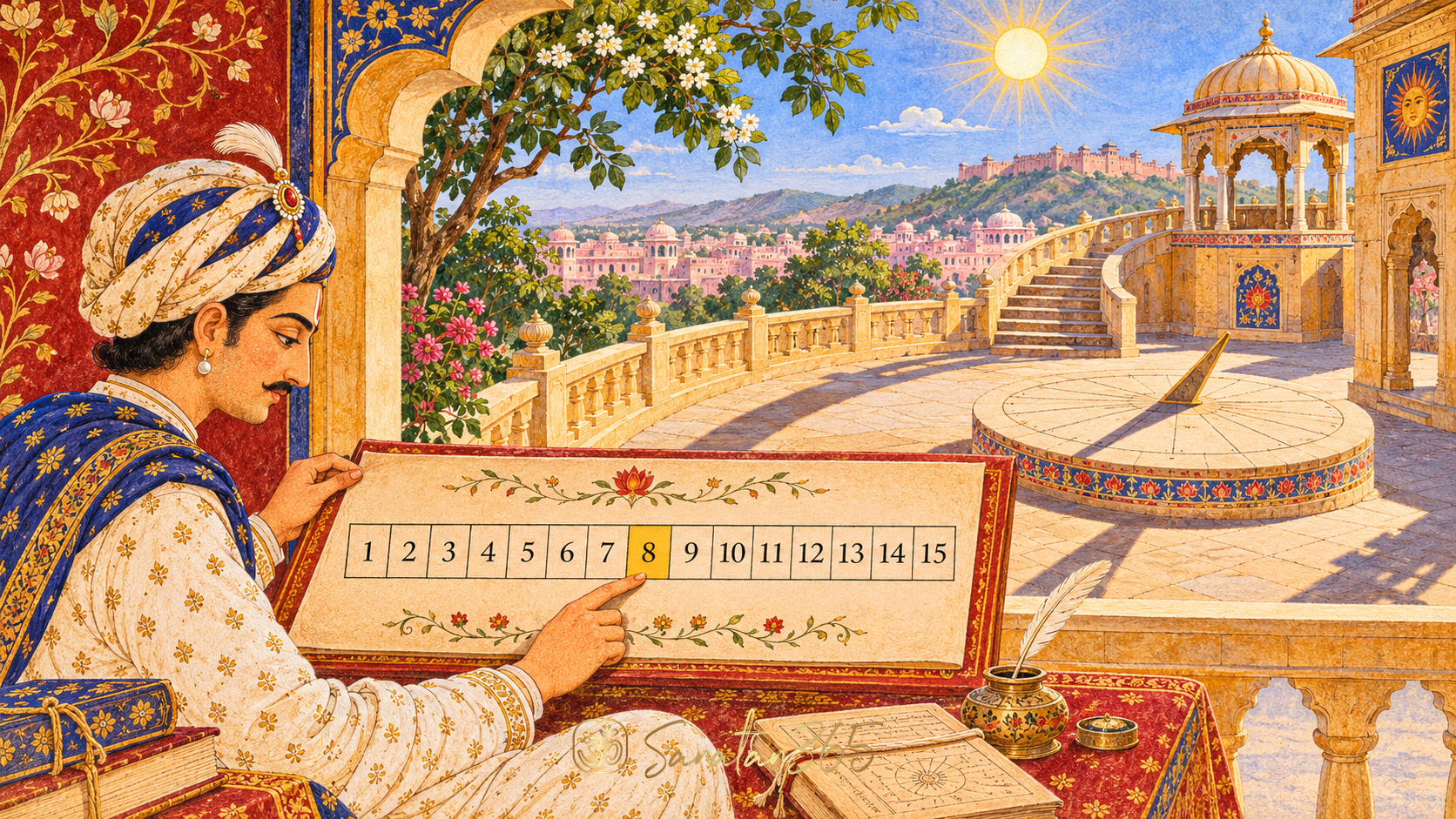
The interval can be pictured by laying out fifteen equal squares from left to right. The first begins at sunrise and the last ends at sunset. There are seven squares before the middle square and seven after it. Abhijit is that middle square. Its beginning is where the seventh square ends, and its end is where the ninth square begins. A timetable can then put clock labels on both edges.
A reader may also see “Abhijit” in the name of a nakṣatra (नक्षत्र, lunar mansion). Here the question is about a time interval derived from daylight. A lunar mansion is a different kind of almanac entry. There is no need to locate the Moon in order to divide a given sunrise-to-sunset interval into fifteen parts. The distinction matters when two search results have the same word in their headings but answer different questions.
This guide deals with a single convention for finding the daily window. The broader article on muhurta and auspicious time explains how traditional timing can involve more than a single daily interval. A reader who first separates those questions can follow the calculation without having to accept that one result answers every kind of timing question.
Key takeaway: Abhijit is the central daytime segment in this convention. Its calculation and its traditional interpretation answer different questions.
How do fifteen daylight segments make a midday window?
Start with local sunrise and sunset for the same civil date, both shown in the same local clock. Suppose, as an illustration, that sunrise is at 06:20 and sunset at 18:20. Subtracting gives twelve hours, or 720 minutes. Dividing 720 by fifteen gives 48 minutes per segment. The daylight midpoint is six hours after sunrise, at 12:20.
There are two ways to find the window. The first counts from sunrise. Seven segments of 48 minutes total 336 minutes, or five hours and 36 minutes. Add that to 06:20 to reach the opening edge at 11:56. The eighth segment lasts 48 minutes, so the closing edge is 12:44. The second way starts at the daylight midpoint of 12:20 and subtracts or adds half a segment, 24 minutes. Both methods give the same edges.
This is a teaching example using invented sunrise and sunset values. It does not identify a day or city. Its value is that a reader can repeat the arithmetic on a piece of paper. If the eighth segment begins somewhere that looks surprising, check the units first. Six hours and 20 minutes on a clock is a time of day. A span of six hours and 20 minutes is a duration. The two become connected when the duration is added to a known starting time.
A second example makes the dependence on daylight length clear. If sunrise were 06:00 and sunset 19:00, daylight would last 780 minutes. The segment would be 52 minutes long, with a midpoint of 12:30 and edges of 12:04 and 12:56. In both examples the interval is the eighth segment. In the second, the entire window falls after 12:00. The formula still gives a midday interval because it measures midday from the daylight span.
Key takeaway: Find the daylight midpoint and put half of one daylight segment on either side. A duration of 48 minutes follows from a twelve-hour daylight example.
Why does the window move even inside one time zone?
A time zone supplies a common clock for many places. It does not make the Sun rise or set at the same reading in all of them. If a place has both endpoints earlier, its daylight midpoint will also be earlier. If only one endpoint changes, then both the midpoint and the duration of a segment can change. This is why a time copied from a different city may appear plausible and still be wrong for the reader’s location.
The same distinction applies to seasons. For one location, the sunrise and sunset entries can differ between two dates. A longer daylight interval gives a longer fifteenth. Where its middle falls depends on both endpoints. Looking only at sunrise tells the reader where to begin the count but does not supply the duration needed to finish it.
When sharing an entry with family, include the city, the date, and the local clock reading shown by the almanac. A screenshot cropped to the two times can lose all three. The recipient may assume it refers to their own location or to the date on which the screenshot was sent. A city label is more useful than a bare “today,” especially when the people sharing the message live far apart.
The guide to the panchang’s five limbs gives context for reading the surrounding almanac entries. The page may contain several kinds of information at once. Checking the labels prevents a reader from applying a sunrise-and-sunset calculation to a lunar entry that changes for a different reason. It also prevents an apparently close numerical match from doing the work of identifying the right line.
Key takeaway: Use sunrise and sunset for the place and date that matter. A shared time zone is insufficient to establish the interval.
What can differ between two panchangs?
The first comparison is between the inputs. Look at the two place labels and sunrise and sunset values. Even small differences matter when a table shows seconds or rounds the opening and closing edges to minutes. Reconstruct the interval using one source at a time. Borrowing sunrise from the first and sunset from the second makes a third calculation that neither source supplied.
The second comparison is between conventions. B. V. Raman’s Muhurtha, chapter XVIII treats Abhijit within a broader discussion of the selection of a time. Its worked example starts with local sunrise and sunset to calculate a central time. The modern Drik listing, by contrast, expresses the interval with opening and closing edges. A reader comparing a traditional manual and a modern almanac should check what the author calls the central time, what the table displays as a window, and whether the work being considered has its own rules. A single shared name does not establish that the instructions are identical in every detail.
A simple check separates a mathematical position from a recommendation. The eighth slot remains the eighth when the daylight interval is divided by fifteen. An almanac may apply an additional rule in deciding what to display or recommend for a particular day or activity. For example, Drik Panchang’s notes give Wednesday special treatment, describing the window as unsuitable for beginning an auspicious activity on that weekday. This is a convention stated by that almanac. The eighth segment can still be calculated on a Wednesday, even if a practitioner following that convention chooses a different time. The absence of a recommended window on one listing is a reason to read that source’s notes. It does not alter the number of equal parts in the calculation.
Record the point of disagreement as precisely as possible. “The sources differ” is hard to investigate. “They use the same sunrise but display different sunset times” directs attention to the inputs. “They show the same inputs, but one does not recommend the interval” directs attention to interpretation. That distinction is often more informative than trying to decide which table is right at a glance.
Key takeaway: Compare place, date, daylight inputs, rounding, and interpretive rules before drawing a conclusion from different listings.
How can a reader use the entry with care?
A family may choose to look at the almanac before beginning a customary observance or a shared household task. The entry can give that beginning a clear place in the day. It is reasonable to learn the custom from people who practise it and to ask which almanac or local method they use. The arithmetic makes that conversation easier because everyone can point to the same part of the day.
The interval does not establish whether a task is feasible, whether everyone needed can attend, or whether the preparations are complete. If a ceremony has timing rules of its own, the family can discuss those rules with the person guiding the observance. A line in a daily table is one piece of information within that conversation. Urgent practical responsibilities can be addressed when they need attention.
A useful exercise is to select a place and day, write out the two daylight endpoints, and calculate the centre and edges before looking at the displayed interval. If a difference remains, check for rounding and read the source notes. Keep the calculation labelled with its inputs so someone else can reproduce it. That practice makes the result intelligible even to a reader who has never learned to use a panchang.
The picture of fifteen squares is enough to return to whenever the terminology feels dense. The centre square belongs to the daylight of a particular place. Its meaning as a traditional choice can be considered in context, while its position in the row can be understood and checked directly.
Key takeaway: Treat the listing as a local almanac entry with a traceable calculation and a traditional interpretation.
FAQ
Is Abhijit Muhurat always at 12:00?
No. Under the fifteen-part convention it straddles the midpoint between local sunrise and sunset. That midpoint can occur before or after 12:00 on the civil clock.
How long is the Abhijit window?
It lasts one fifteenth of local daylight in the convention described here. With twelve hours of daylight it lasts 48 minutes. A different daylight length yields a different duration.
Can one city use another city’s listed interval?
Look up the location where the activity will take place. Cities that share a time zone can have different daylight endpoints and therefore different listed times.
Is Abhijit Muhurat the same thing as Abhijit Nakshatra?
No. In this calculation Abhijit names the middle interval of daylight. In the other expression it is the name of a lunar mansion, a separate entry with a different basis.
About the author
Sanatan365 Editorial
Bringing Sanatan Dharma to modern seekers through authentic, scripture-grounded content.
Related in Astrology
 Astrology
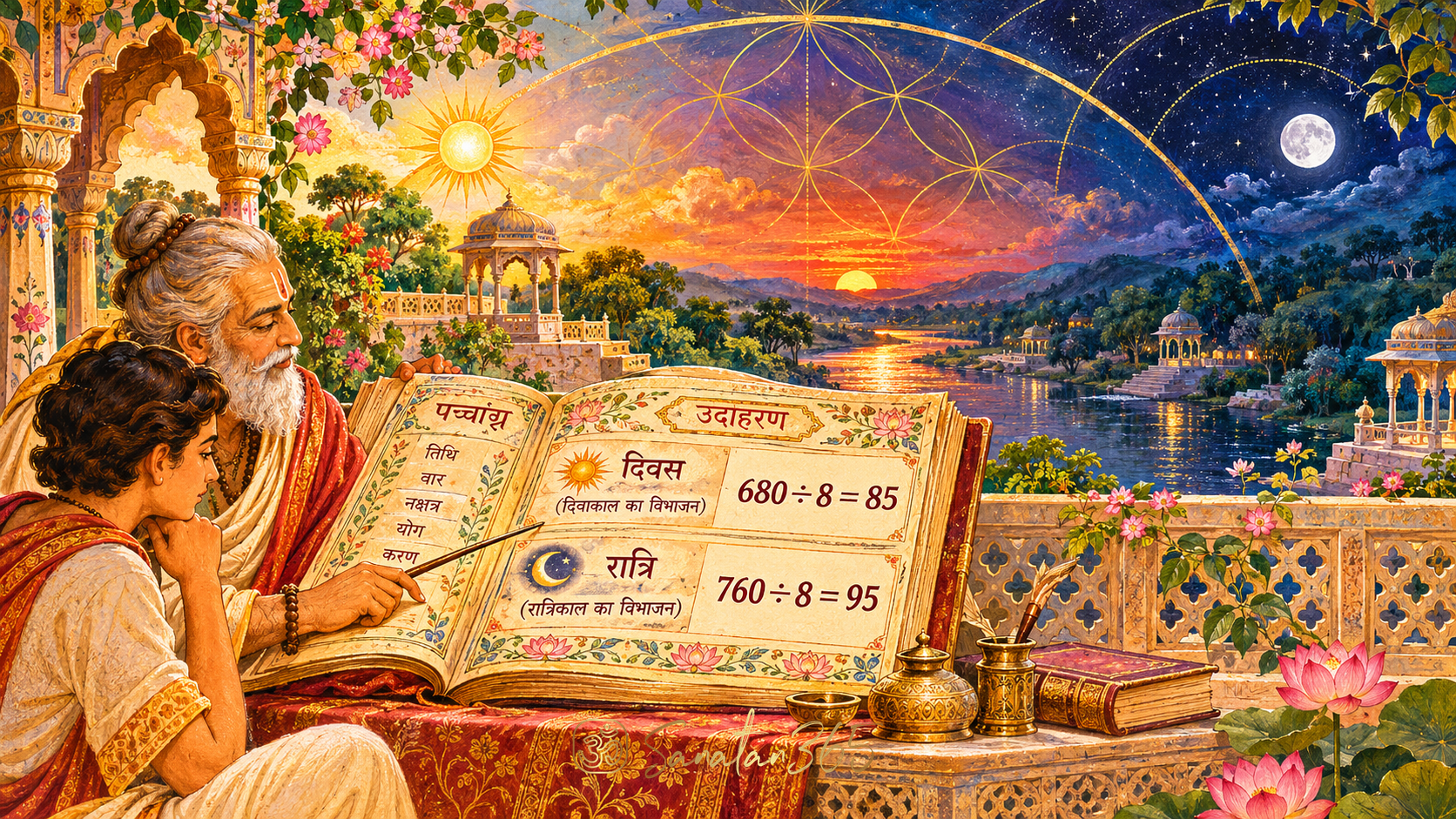
Choghadiya Meaning: Why Day and Night Have Different Slots
Choghadiya divides daylight and night separately. Follow a worked example to see why one slot need not last ninety minutes, then learn how…
 Astrology
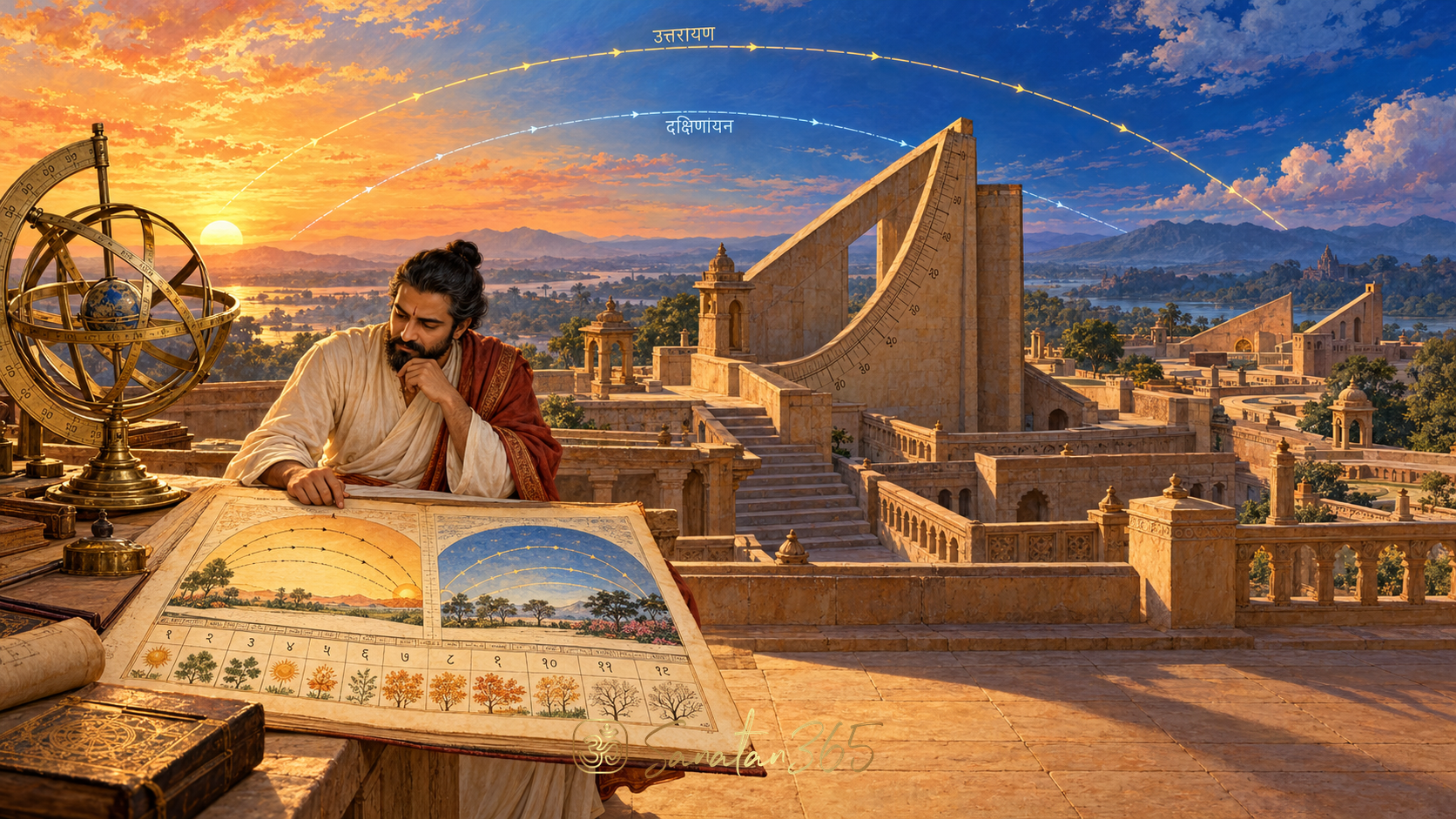
Ayana Meaning: Uttarayana, Dakshinayana, and the Sun’s Two Courses
Understand the two solar half-years, why solstice dates and sidereal calendar markers differ, and how to read an ayana entry without fear o…
 Astrology
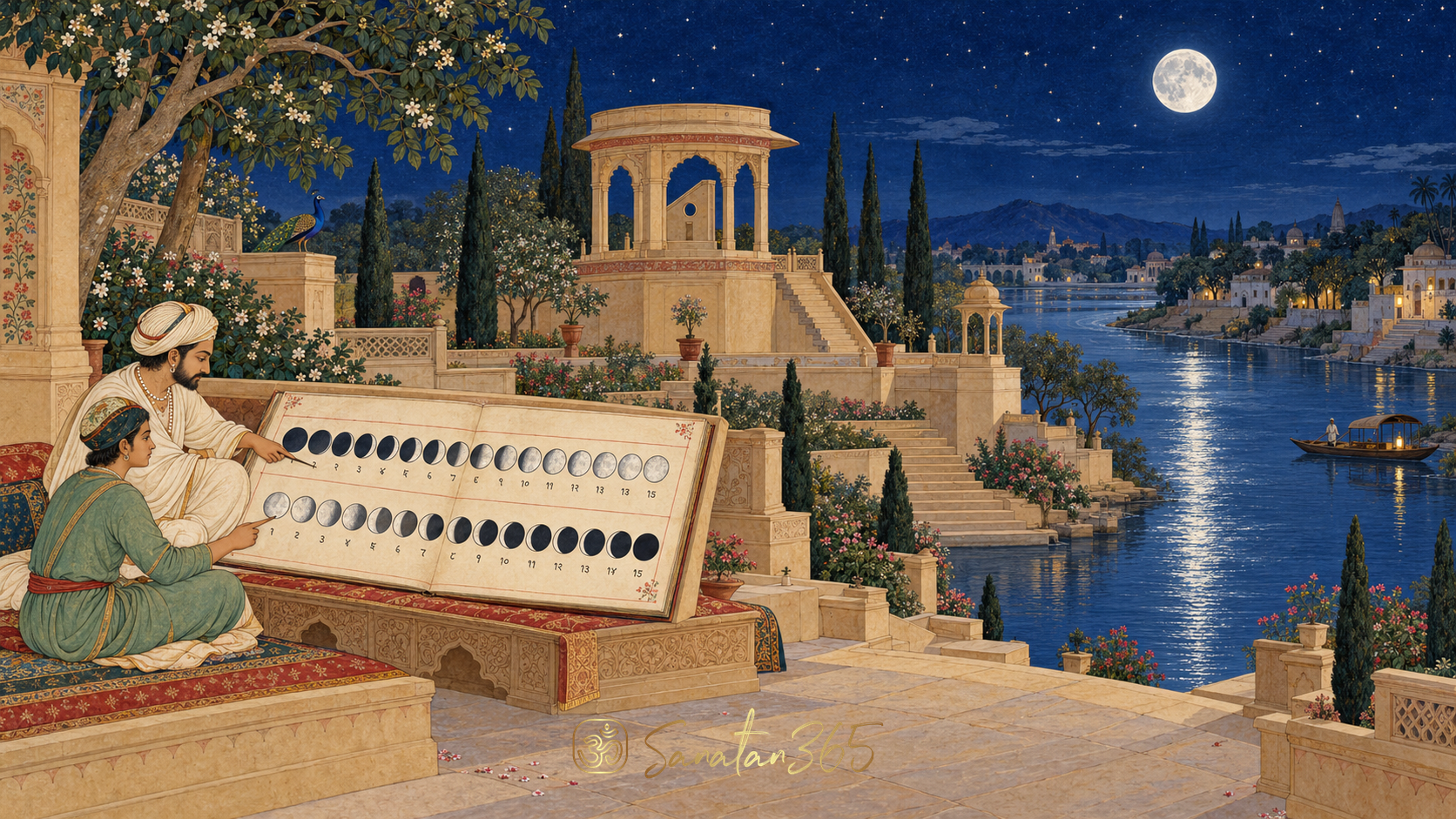
Paksha Meaning: Shukla and Krishna Lunar Fortnights
Learn how Shukla and Krishna Paksha divide the lunar month, why a tithi needs its fortnight, and how different month names can describe the…

