Ashadha Maas 2026: Meaning, Dates, Festivals, and Simple Practices
Ashadha Maas 2026 begins on June 30 and opens a sacred Hindu month of devotion, monsoon transition, Guru Purnima, Rath Yatra, and Chaturmas preparation.
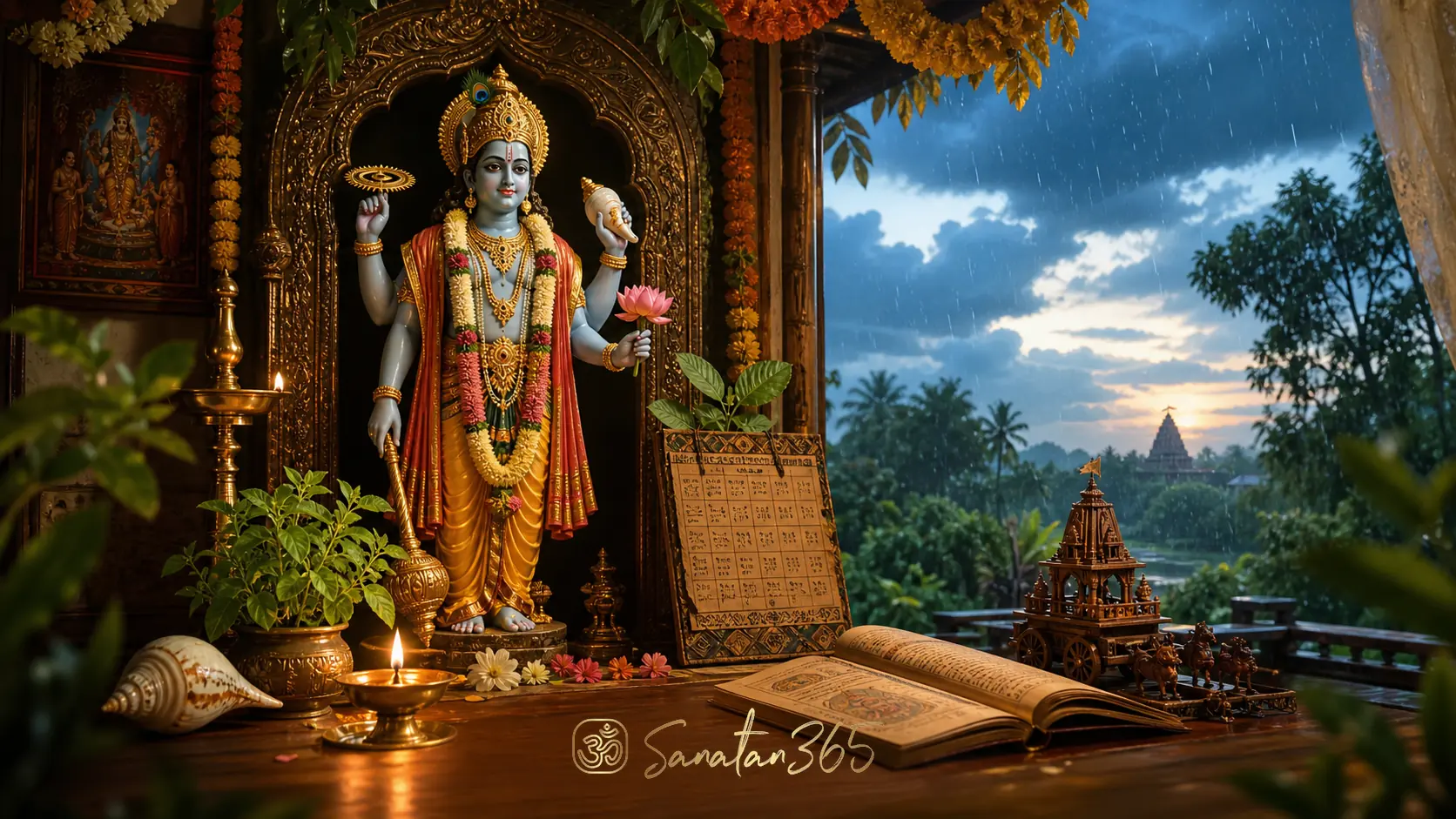
The first sound of Ashadha is often not a temple bell but rain on the earth.
Ashadha Maas 2026 is the Hindu lunar month that begins around June 30, 2026, and continues into late July in many North Indian panchang listings. Ashadha (आषाढ़, the lunar month after Jyeshtha) marks a spiritual turn from summer heat toward monsoon discipline: Lord Jagannath's Rath Yatra, Guru Purnima, Devshayani Ekadashi, and the beginning of Chaturmas all gather around this month. Its meaning is simple but deep: slow down, purify routine, remember the Guru, and turn devotion inward.
What Is Ashadha Maas 2026 in the Hindu Calendar?
Ashadha Maas 2026 is a sacred Hindu month in the lunar calendar, usually falling in June-July. Calendar sites that map Vikram Samvat 2083 list Ashadha 2026 from June 30 to July 29 for Ujjain-based panchang calculations (Prokerala). Recent panchang reporting also notes June 30, 2026 as the beginning of Ashadha Maas in common North Indian observance (Navbharat Times).
Because Hindu calendars are lunisolar, exact observance can vary by region, purnimanta or amanta month systems, and local sunrise-based tithi (तिथि, lunar day) calculation. A family in Varanasi, Mumbai, Ujjain, Chennai, Kolkata, or the diaspora may follow a local panchang before fixing vrat dates. That variation is not confusion; it is part of how Hindu time remains tied to sky, place, and lineage.
Ashadha arrives after Jyeshtha, when the heat of summer has reached its intensity and the monsoon begins to change the land. In the Indian sacred imagination, this seasonal shift matters. The outer world becomes wet, fertile, and unsettled. The inner world is asked to become quieter, more restrained, and more receptive.
Key takeaway: Ashadha Maas 2026 is not only a date range; it is a Hindu month of seasonal turning, devotional preparation, and disciplined practice.
Why Is Ashadha Month Spiritually Important?
Ashadha month is important because it gathers three spiritual movements into one period: public devotion, reverence for teachers, and inward restraint.
The public devotion is visible in Rath Yatra, especially the Puri festival of Lord Jagannath. Britannica describes Rathayatra as a festival honoring Jagannatha, a form of Vishnu/Krishna, with great chariots drawn by devotees in Puri, Odisha (Britannica). The image is powerful: the deity who is usually inside the sanctum comes into the street, and the community becomes part of the movement.
The reverence for teachers appears through Guru Purnima. Britannica notes that Guru Purnima is observed on the full moon day of Ashadha and honors spiritual and academic teachers (Britannica). In Hindu tradition it is also remembered as Vyasa Purnima, connected with Maharshi Veda Vyasa, the great compiler and arranger of sacred knowledge.
The inward restraint begins with Devshayani Ekadashi, also called Shayani Ekadashi or Hari Shayani Ekadashi. It marks the beginning of Chaturmas (चातुर्मास, the four-month sacred period of discipline), when Lord Vishnu is traditionally said to enter yoga nidra (योग निद्रा, divine yogic rest). Many families and sadhus reduce outward celebration and increase japa, study, vrata, sattvic food, and self-observation.
These three movements balance one another. Ashadha is not only about joining a festival crowd, not only about bowing to a Guru, and not only about private austerity. It teaches that Dharma has public, relational, and interior dimensions.
Key takeaway: Ashadha matters because it moves the seeker from festival energy to gratitude for the Guru and then toward Chaturmas discipline.
What Are the Main Festivals and Vrats in Ashadha Maas 2026?
The exact dates should be confirmed with a local panchang, but the broad Ashadha cycle includes several major observances.
- Rath Yatra: Lord Jagannath, Balabhadra, and Subhadra are taken in chariots, most famously in Puri. For many devotees, this is the month when divine presence comes close to the public road rather than remaining hidden inside the temple.
- Devshayani Ekadashi: A Vishnu-focused Ekadashi (एकादशी, the eleventh lunar day) that begins the Chaturmas period in many traditions. Devotees often observe fasting, mantra, Vishnu puja, and restraint.
- Guru Purnima: The Ashadha full moon dedicated to honoring the Guru (गुरु, spiritual teacher or remover of ignorance), teachers, parents, mentors, and the lineage that carries wisdom.
- Chaturmas beginning: The four-month inward season traditionally associated with reduced travel for ascetics, increased study, and disciplined food and conduct.
- Regional Ashadha observances: Different communities observe Gauri Vrat, Jayaparvati Vrat, Aadi-linked Tamil traditions, monsoon worship, village deity worship, and local family vratas.
Ashadha also carries agricultural memory. In many regions, monsoon means planting, waiting, and dependence on forces beyond human control. The month therefore teaches humility in a very physical way. No farmer, householder, monk, student, or business owner controls the rain. The season invites a more honest relationship with time.
For families, this makes Ashadha an excellent month to revive simple practices: one weekly Vishnu puja, one scripture-reading evening, one Guru gratitude ritual, or one Ekadashi discipline. The point is not to perform every observance perfectly. The point is to let the month reshape attention.
Key takeaway: Ashadha Maas 2026 brings Rath Yatra, Devshayani Ekadashi, Guru Purnima, Chaturmas preparation, and many regional devotional practices into one sacred seasonal frame.
How Should Families Observe Ashadha Maas at Home?
Ashadha can be observed at home without making the household anxious or rigid. A balanced practice begins with steadiness.
A simple home rhythm may include:
- Light a diya (दीप, sacred lamp) each morning or evening before a Vishnu, Krishna, Jagannath, Rama, or family altar.
- Offer tulsi leaves, water, or flowers when appropriate to family tradition.
- Chant one short mantra daily, such as "Om Namo Bhagavate Vasudevaya" or a family Guru mantra received through lineage.
- Read a small portion of the Bhagavad Gita, Ramayana, Bhagavata Purana, or a saint's teaching.
- Keep one food discipline, such as avoiding excess, eating more sattvic meals, or observing Ekadashi according to capacity.
- Perform one act of dana (दान, selfless giving), such as feeding someone, supporting a temple, helping a student, or giving quietly without display.
- On Guru Purnima, write the names of teachers who shaped the family and offer gratitude.
This kind of practice is sustainable because it is not performative. It can fit into a modern apartment, a joint family home, a student hostel, or a diaspora household. Children can join by placing flowers, reading one story, or naming a teacher they appreciate.
There should also be care around fasting and bodily discipline. Elderly people, pregnant women, children, diabetics, and anyone with medical needs should not treat vrata as a test of toughness. Hindu vrata (व्रत, sacred vow or observance) is meant to discipline the ego, not damage the body. A gentle food restraint, extra prayer, or act of service can carry the spirit of the month when full fasting is unsuitable.
For related home-practice reading, families can connect Ashadha routines with Nitya Puja Meaning: Daily Worship as a Living Hindu Practice, Dana Meaning: How Hindu Giving Becomes Selfless Dharma, and Grihastha Ashrama Meaning: Householder Dharma in Hindu Life.
Key takeaway: Ashadha home practice works best when it is simple, repeatable, and rooted in gratitude rather than pressure.
What Is the Link Between Ashadha and Chaturmas?
Ashadha opens the door to Chaturmas. In many Vaishnava and broader Hindu traditions, Chaturmas begins from Devshayani Ekadashi in Ashadha Shukla Paksha. Lord Vishnu is understood to enter yoga nidra, and the four months until Devuthani Ekadashi become a period of reduced outward auspicious ceremonies and increased spiritual restraint.
This does not mean life stops. People still work, study, care for families, and serve society. The teaching is subtler: not every season is for expansion. Some seasons are for consolidation. Chaturmas asks the seeker to examine habits, speech, food, sleep, anger, consumption, and spiritual laziness.
A householder version of Chaturmas may be modest:
- Choose one avoidable indulgence to reduce.
- Keep one daily reading commitment.
- Observe Ekadashi more carefully.
- Reduce gossip and harsh speech.
- Give in charity each month.
- Visit a temple or attend satsang regularly.
Ashadha is the preparation ground for this. Instead of waiting until the vow becomes difficult, the seeker can use the month to decide what is realistic. A vow that survives four months is better than a dramatic promise abandoned in one week.
Chaturmas also has an ecological wisdom. The monsoon historically made travel difficult for wandering ascetics. Staying in one place protected tiny life forms that emerge in the rains and created a season for teaching, listening, and community learning. The physical season and spiritual discipline were not separate.
Key takeaway: Ashadha prepares the mind for Chaturmas by asking a practical question: what one discipline can be kept with sincerity for four months?
How Does Ashadha Teach Guru Bhakti?
Guru Purnima gives Ashadha its most intimate lesson: no one receives Dharma alone.
The word guru is often explained as the remover of darkness, but the living meaning is broader. A Guru may be a spiritual teacher, a scripture, a parent, a schoolteacher, a music teacher, an acharya, a saint, or the inner wisdom awakened by sincere practice. Guru bhakti (गुरु भक्ति, devotion and gratitude toward the teacher) is not blind personality worship. At its best, it is reverence for the light that removes confusion.
On Guru Purnima, devotees may perform Guru puja, offer flowers, read the Guru's teachings, serve the ashram or community, or simply recommit to the discipline given by the teacher. For those without a living Guru, the day can still be meaningful. One may honor Veda Vyasa, remember family elders, study a text carefully, or bow before the principle of wisdom itself.
This is especially useful for children and young adults. Modern life often trains the mind to consume information quickly. Guru Purnima teaches a different relationship to knowledge: receive, reflect, practice, and become worthy of what has been given. The difference between information and wisdom is discipline.
A family Guru Purnima practice can be very simple:
- Place a book, mala, or teacher's photo near the altar.
- Offer flowers or a lamp.
- Let each person name one teacher and one lesson.
- Read one short passage from a sacred text.
- Close with a promise to practice one teaching for the next month.
Key takeaway: Ashadha teaches that spiritual progress is not self-made; it is received through teachers, lineage, humility, and practice.
What Should Be Avoided During Ashadha Maas?
Ashadha practice is not built on fear, but restraint is part of its discipline. Many families avoid unnecessary excess, harsh speech, careless food, avoidable travel for purely indulgent reasons, and major celebratory actions during Chaturmas according to tradition.
Common household cautions include:
- Do not turn fasting into pride.
- Do not use festival rules to shame people with different family customs.
- Do not make guaranteed claims about wealth, health, marriage, or fate.
- Do not treat panchang variation as error; check local tradition.
- Do not reduce Ashadha to superstition or to mere calendar trivia.
- Do not ignore the inner discipline while focusing only on festival dates.
The deeper avoidance is carelessness. Ashadha asks a person to be more deliberate with food, words, sleep, devotion, and study. This is why sattvic living is emphasized. Sattva (सत्त्व, clarity, balance, and purity) does not mean a lifeless mood. It means the mind becomes more transparent to Dharma.
For diaspora Hindus, another caution matters: do not feel that a smaller home practice is inferior to a large public observance in India. A lamp lit with sincerity in New Jersey, London, Singapore, Dubai, or Toronto can carry the spirit of Ashadha when it is connected to knowledge and reverence.
Key takeaway: What Ashadha asks us to avoid is not ordinary life, but careless living.
Conclusion
Ashadha Maas 2026 begins as the monsoon gathers and the Hindu calendar turns toward devotion, Guru gratitude, Rath Yatra, Devshayani Ekadashi, and Chaturmas. It is a month for bringing the mind back from scattered activity into disciplined remembrance.
Single key takeaway: use Ashadha Maas 2026 to choose one sincere practice, honor the Guru principle, and prepare for Chaturmas with steadiness rather than spiritual show.
FAQ
When does Ashadha Maas 2026 start?
Ashadha Maas 2026 is listed by common North Indian panchang sources as beginning on June 30, 2026, and continuing into late July. Exact observance can vary by region and calendar system, so families should confirm vrat dates with a local panchang.
What is the meaning of Ashadha Maas?
Ashadha Maas is a Hindu lunar month that falls around June-July. Spiritually, it marks the monsoon transition, Rath Yatra, Guru Purnima, Devshayani Ekadashi, and preparation for Chaturmas.
Which festivals come in Ashadha month?
Major Ashadha observances include Rath Yatra, Devshayani Ekadashi, Guru Purnima, and the beginning of Chaturmas. Regional traditions may also include Gauri Vrat, Jayaparvati Vrat, and local monsoon-linked worship.
Why is Ashadha connected with Lord Vishnu?
Ashadha is connected with Lord Vishnu because Devshayani Ekadashi falls in this month. In many traditions, this Ekadashi marks Lord Vishnu entering yoga nidra and the beginning of Chaturmas.
How can a beginner observe Ashadha Maas at home?
A beginner can light a diya, read a few verses daily, chant a simple Vishnu or Guru mantra, observe Ekadashi gently, give in charity, and honor teachers on Guru Purnima. The best practice is one that can be kept sincerely.
About the author
Sanatan365 Editorial
Bringing Sanatan Dharma to modern seekers through authentic, scripture-grounded content.
Related in Festivals
 Festivals
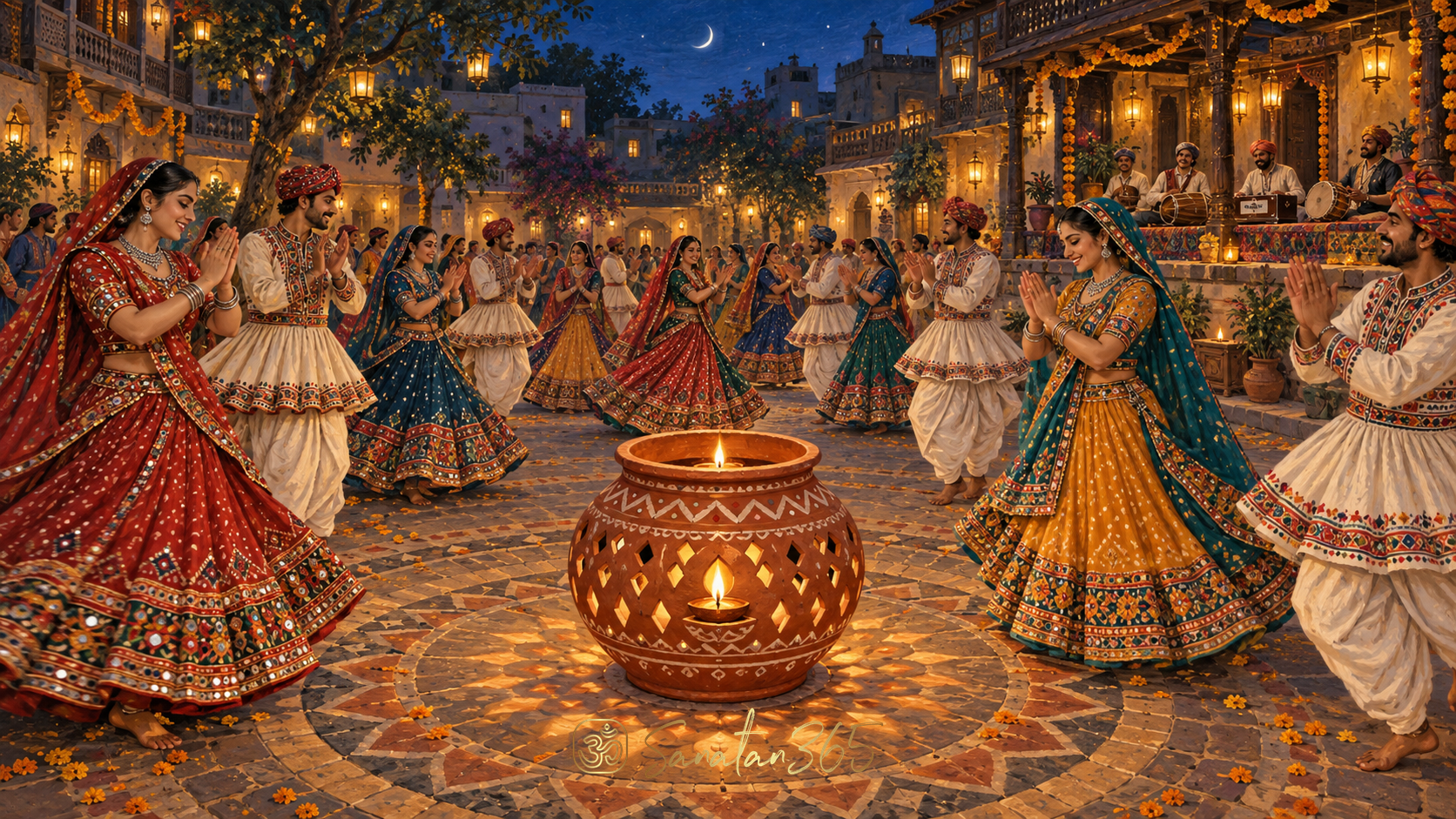
Garba Meaning: The Lamp at the Heart of Navratri
Garba is a Gujarati devotional dance associated with Navratri. Its central lamp, shared circular rhythm and reverence for Goddess Amba expl…
 Festivals
Golu Meaning: Navratri Dolls, Living Stories, and Hospitality
Understand Navratri Golu through its handmade dolls, regional names, family stories and welcoming home visits, with thoughtful preparation…
 Festivals
Sharad Navratri 2026: Dates, Nine Nights, and Devotion at Home
Understand Sharad Navratri 2026, its October dates, the meaning of nine nights, regional traditions, and a thoughtful home observance witho…