Brihadeeswarar Temple Meaning: Thanjavur, Shiva, and Chola Vision
Brihadeeswarar Temple in Thanjavur is a living Shiva temple, a Chola architectural masterpiece, and a lesson in sacred scale.
Brihadeeswarar Temple Meaning: Thanjavur, Shiva, and Chola Vision
A temple can be a prayer, a map, and a statement of civilization at the same time.
Brihadeeswarar Temple meaning begins with Lord Shiva as Brihadeeswarar, the "Great Lord," worshipped in Thanjavur, Tamil Nadu. Also called the Thanjavur Big Temple or Peruvudaiyar Kovil, it is a living Shiva temple, a UNESCO-listed Chola monument, and one of South India's clearest examples of how Hindu architecture turns devotion into space, stone, rhythm, and memory.
UNESCO includes the Brihadisvara Temple at Thanjavur within the Great Living Chola Temples, a World Heritage property associated with Chola achievement in architecture, sculpture, painting, and bronze casting (UNESCO World Heritage Centre). Tamil Nadu Tourism also places it within the heritage of the Chola period, where Dravidian architecture becomes a visible expression of history and devotion (Tamil Nadu Tourism).
Key takeaway: Brihadeeswarar Temple is not only an old monument. It is a living Shaiva temple where Chola power, sacred geometry, and Shiva bhakti still meet.
What is the Brihadeeswarar Temple meaning?
The phrase Brihadeeswarar Temple meaning points to two layers. The first is linguistic: Brihat means great or vast, and Ishvara means Lord. Brihadeeswarar is therefore the Great Lord, a form of Shiva worshipped through the temple's central Shiva linga. The second layer is spiritual: the temple trains the eye to move from outer scale toward inner stillness.
In Hindu temple language, a linga (लिङ्ग, sacred emblem of Shiva) is not merely a stone object. It is a focused sign of the formless Divine made available for darshan (दर्शन, sacred seeing). The devotee does not only look at the deity. The devotee is also seen by the deity. At Brihadeeswarar Temple, that exchange is framed by massive courtyards, gateways, inscriptions, corridors, and a soaring vimana (विमान, tower above the sanctum).
The temple is often called the Big Temple because almost everything about it is intentionally large. The scale is not decorative excess. It communicates a sacred idea: the human being enters a space that dwarfs ordinary ego, yet invites participation through pradakshina (प्रदक्षिणा, clockwise circumambulation), offering, silence, and attentive seeing.
Readers exploring Shiva temple symbolism may also compare this with Adiyogi Shiva and Rameswaram Temple, where Shiva is approached through different but related sacred forms.
This is why the temple's meaning cannot be reduced to engineering. Its height, stonework, and symmetry matter because they serve worship. The immense form points toward something beyond itself.
Key takeaway: The temple's grandeur is a spiritual method. It makes the devotee feel small enough to become receptive.
Why is Brihadeeswarar Temple important in Chola history?
Brihadeeswarar Temple was built under Rajaraja Chola I in the early 11th century, and it stands as one of the defining works of imperial Chola culture. The Cholas did not treat temples as isolated prayer halls. A major temple could be a ritual centre, artistic workshop, landholding institution, inscriptional archive, music-and-dance patron, and civic landmark.
UNESCO describes the Great Living Chola Temples as outstanding evidence of Chola achievement. The Thanjavur complex was first inscribed in 1987, and the broader Chola grouping was extended in 2004 to include Gangaikondacholapuram and Airavatesvara at Darasuram (UNESCO World Heritage Centre). The phrase "living" matters. These are not only archaeological remains; they continue to hold cultural and devotional life.
Rajaraja's temple also speaks through inscriptions. Chola inscriptions recorded gifts, rituals, personnel, lamps, land, jewels, and temple administration. For a modern reader, this turns stone into documentation. The temple is not only art; it is a record of how a society organized sacred responsibility.
The Chola world also carried Tamil devotional memory. Shaiva bhakti (भक्ति, loving devotion) had already been shaped by saints, hymns, temples, and pilgrimage. Brihadeeswarar Temple gives that devotional inheritance imperial scale without making worship impersonal. The devotee still comes to Shiva, offers reverence, and receives darshan.
Key takeaway: Brihadeeswarar Temple is important because it preserves Chola art, administration, devotion, and public sacred life in one place.
How does the architecture teach Shiva worship?
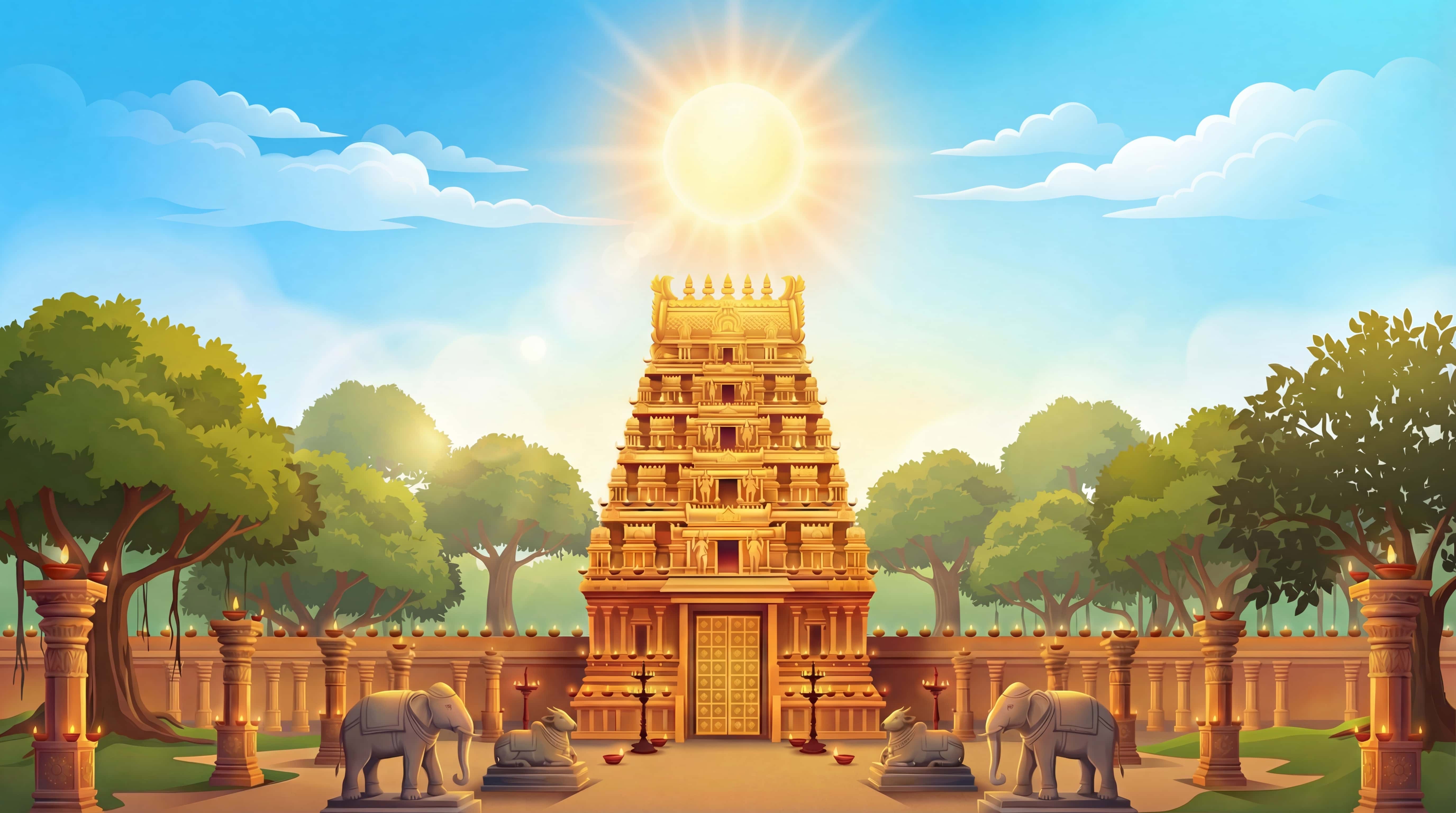
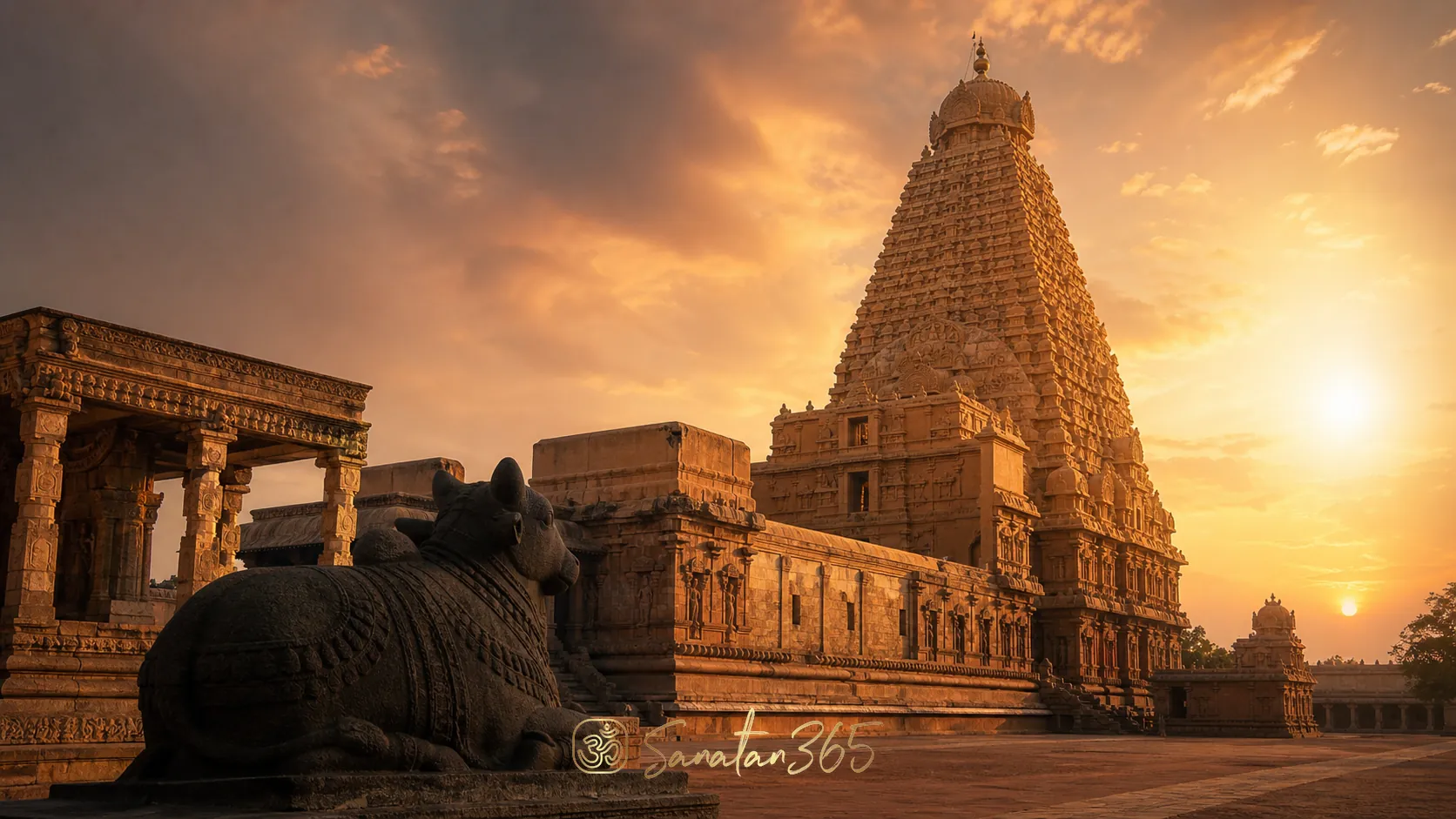
Brihadeeswarar Temple architecture teaches through direction, height, mass, and progression. The visitor moves through gateways into a courtyard where the main shrine dominates the horizon. The eye rises toward the vimana, then returns to the sanctum, where the linga receives worship.
This is a classic Hindu movement: from the visible to the subtle. The temple does not reject the body, stone, art, or public space. It disciplines them toward sacred attention.
Several elements are especially worth noticing:
- The vimana above the sanctum signals the axis between earth and heaven.
- The Nandi mandapa honors Nandi, Shiva's sacred bull and model of steady devotion.
- The stone corridors and walls guide circumambulation and reflection.
- The sculptural program places divine, ritual, and cultural memory into the temple body.
- The open courtyard allows the temple's vertical power to be seen clearly.
The temple is sometimes associated with the name Dakshina Meru, the Meru of the South. Meru is the cosmic mountain in Hindu imagination, a symbol of sacred centrality. Whether one approaches this poetically or ritually, the point is clear: the temple is designed as more than a building. It is a sacred mountain made in granite.
The granite itself matters. Stone gives permanence to prayer. The devotee who walks there today enters a rhythm shaped by centuries of worshippers, artisans, kings, priests, musicians, dancers, and pilgrims.
Key takeaway: Brihadeeswarar Temple uses architecture to make Shiva's presence feel vast, stable, central, and alive.
What should a devotee notice at Thanjavur Big Temple?
A first visit to Thanjavur Big Temple can be overwhelming. The best way to receive it is slowly. Begin by allowing the scale to work on the mind before rushing to collect facts. Then observe how the temple gathers many forms of attention.
Notice Nandi first. Nandi is not simply a guardian animal. In Shaiva understanding, Nandi represents patience, strength, surrender, and unbroken focus toward Shiva. A devotee can learn from Nandi before even entering the main line of worship: sit steady, face the Divine, and let the mind become one-pointed.
Notice the courtyard. Its openness creates a powerful relationship between sky, stone, and shrine. Unlike dense urban temples where the deity is approached through compressed lanes, Brihadeeswarar Temple gives the eye room to rise. That spaciousness is part of the experience.
Notice the inscriptions and carvings. Even when a visitor cannot read every inscription, their presence communicates a serious idea: worship leaves records. Devotion is not only emotional; it becomes maintenance, donation, music, schedule, architecture, and social memory.
Notice the rhythm of movement. Temple practice is not passive sightseeing. Walking, pausing, folding hands, watching lamps, hearing bells, and receiving prasad (प्रसाद, blessed offering) all shape the visit.
For families and diaspora visitors, this temple can also become a bridge into Tamil Hindu history. Children may first see it as a giant stone temple. With guidance, they can also understand it as a living classroom of Shiva worship, Chola art, and disciplined public devotion.
Key takeaway: At Brihadeeswarar Temple, look for Nandi's focus, the courtyard's spaciousness, the inscriptions' memory, and the sanctum's quiet centre.
How is Brihadeeswarar Temple different from other South Indian temples?
Every great South Indian temple has its own devotional personality. Meenakshi Amman Temple in Madurai is famous for its vibrant gopurams and festival life. Rameswaram carries Ramayana memory, pilgrimage bathing, and Jyotirlinga reverence. Chidambaram is inseparable from Nataraja, cosmic dance, and the mystery of space.
Brihadeeswarar Temple has a different signature: majestic restraint. Its central visual force is the soaring vimana over the sanctum rather than a later profusion of huge painted gateway towers. The temple's power feels concentrated, mathematical, and luminous. It is not empty; it is disciplined.
This distinction helps explain why it is such a strong example of Chola sacred vision. The temple's form suggests order without coldness. It honors Shiva not through softness, but through clarity, height, and weight. It feels like a king's offering, yet it survives because worshippers continue to make it a living place.
The UNESCO grouping also helps visitors place Thanjavur alongside Gangaikondacholapuram and Airavatesvara. Together, these temples show the Chola ability to create sacred architecture that was technically ambitious, artistically refined, and ritually active across centuries.
Key takeaway: Brihadeeswarar Temple feels distinct because its power is concentrated in stone, scale, symmetry, and the vertical presence of Shiva's sanctum tower.
How can modern seekers understand its lesson?
The modern lesson of Brihadeeswarar Temple is not merely "ancient India was advanced," although the architectural achievement is undeniable. A deeper lesson is that a culture reveals its priorities through what it builds, maintains, and gathers around.
The Cholas built a temple that could outlive individual ambition. Artisans carved stone with the confidence that devotion deserved excellence. Administrators recorded gifts because sacred institutions required responsibility. Worshippers continued the temple's life because stone alone is not enough; ritual breath must keep moving through it.
For modern seekers, this offers three gentle practices:
- Build one stable sacred habit rather than chasing constant novelty.
- Let beauty support devotion, not replace it.
- Treat spiritual life as something maintained through time, attention, and service.
This is especially relevant for people who feel spiritually scattered. Brihadeeswarar Temple says: become steady. Return to the centre. Let the mind rise, but let it bow. Let greatness make you humble, not inflated.
That is Shiva's teaching in stone. Vastness is not noise. Power is not restlessness. The Great Lord is approached through attention, surrender, and inner stillness.
Key takeaway: The temple's modern lesson is steadiness: build a life where devotion is not occasional inspiration but maintained presence.
FAQ
What is Brihadeeswarar Temple meaning in simple words?
Brihadeeswarar Temple meaning is the worship of Shiva as the Great Lord at Thanjavur. The temple expresses Shiva's vastness through a massive linga, a towering vimana, Nandi's steady devotion, and Chola architecture designed for sacred attention.
Where is Brihadeeswarar Temple located?
Brihadeeswarar Temple is located in Thanjavur, Tamil Nadu, South India. It is also called the Thanjavur Big Temple, Peruvudaiyar Kovil, and Brihadisvara Temple.
Why is Brihadeeswarar Temple a UNESCO World Heritage site?
It is part of the Great Living Chola Temples UNESCO World Heritage property. UNESCO recognizes the Chola temples for their outstanding architecture, sculpture, painting, bronze casting, and continuing cultural importance (UNESCO World Heritage Centre).
Who built Brihadeeswarar Temple?
Brihadeeswarar Temple was built under Rajaraja Chola I in the early 11th century. It reflects the Chola period's artistic, devotional, and administrative strength.
What should visitors respectfully remember?
Visitors should remember that Brihadeeswarar Temple is a living place of worship, not only a monument. Dress modestly, follow local temple rules, avoid disruptive photography where restricted, and approach the shrine with quiet respect.
Conclusion
Brihadeeswarar Temple meaning is the meeting of greatness and surrender. In Thanjavur, Shiva is worshipped through stone, scale, silence, inscription, ritual, and living memory. The temple teaches that sacred architecture is not only meant to impress the eye; it is meant to reorder attention.
Key takeaway: Brihadeeswarar Temple is Chola vision made devotional: vast enough to humble the mind, precise enough to focus it, and living enough to keep calling devotees back to Shiva.
About the author
Sanatan365 Editorial
Bringing Sanatan Dharma to modern seekers through authentic, scripture-grounded content.
Related in Temples
 Temples
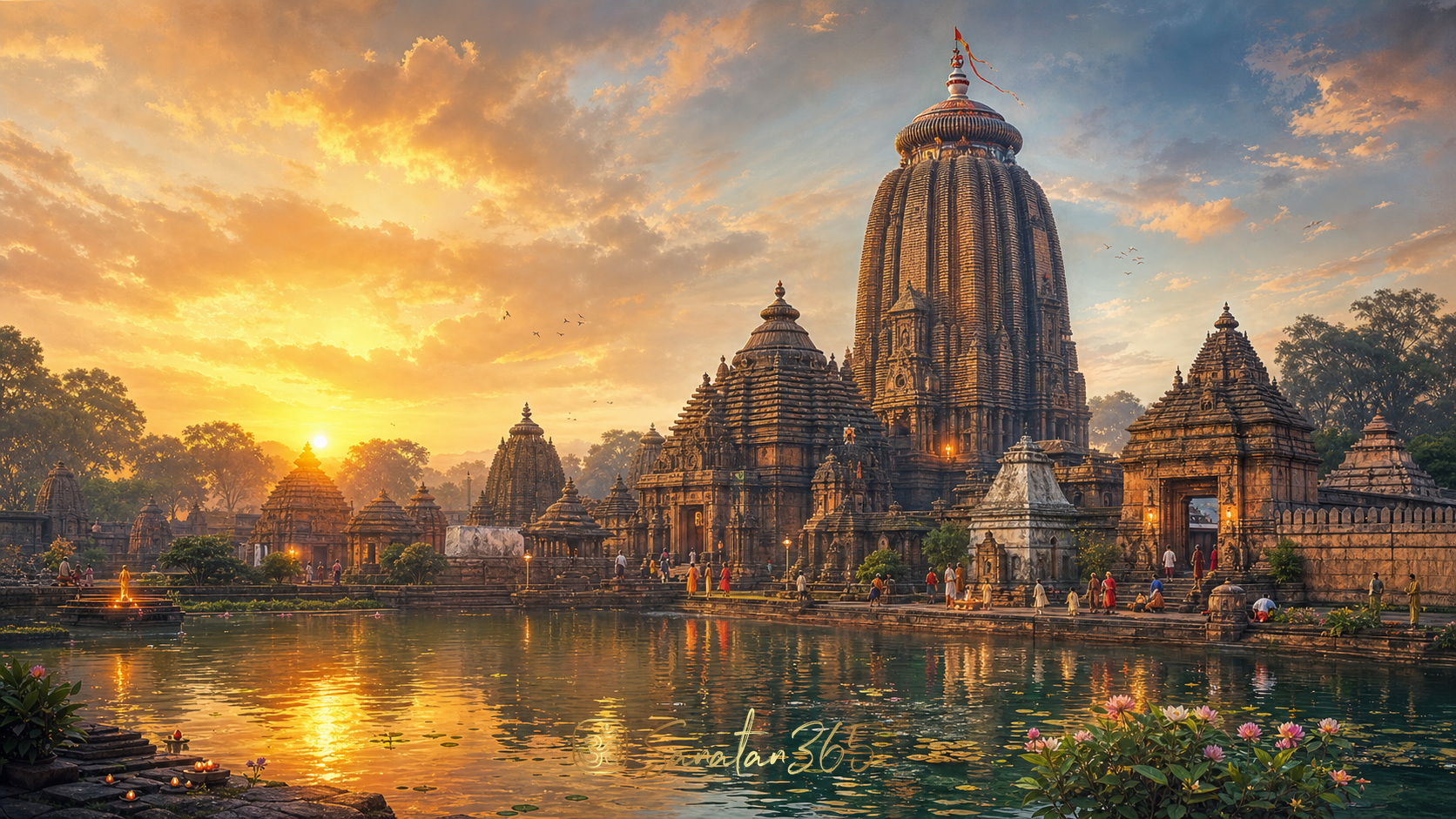
Lingaraj Temple: Shiva, Harihara, and Kalinga Architecture
Lingaraj Temple in Bhubaneswar joins Shiva devotion, Harihara theology, Kalinga architecture, sacred water, and living worship in one histo…
 Temples
Dwarkadhish Temple Meaning: Krishna, Dwarka, and Sacred Pilgrimage
Dwarkadhish Temple remembers Krishna as the responsible ruler of Dwarka. Explore its meaning, sacred geography, living worship, and respect…
 Temples
Udupi Krishna Temple: Darshan, Madhvacharya, and a Living Tradition
Explore Udupi Sri Krishna Matha through its distinctive window darshan, Madhvacharya's Dvaita legacy, the Ashta Mathas, Paryaya, and practi…