Dev Uthani Ekadashi 2026 Date: Understanding 20 and 21 November
For New Delhi, the calendar lists Dev Uthani Ekadashi on 20 November and a Gauna observance on 21 November 2026. Learn how to read the dates, tradition labels and nearby Tulsi Vivah observance.
Two dates beside the same festival name can look like a mistake. For Dev Uthani Ekadashi in 2026, the calendar labels explain why both appear.
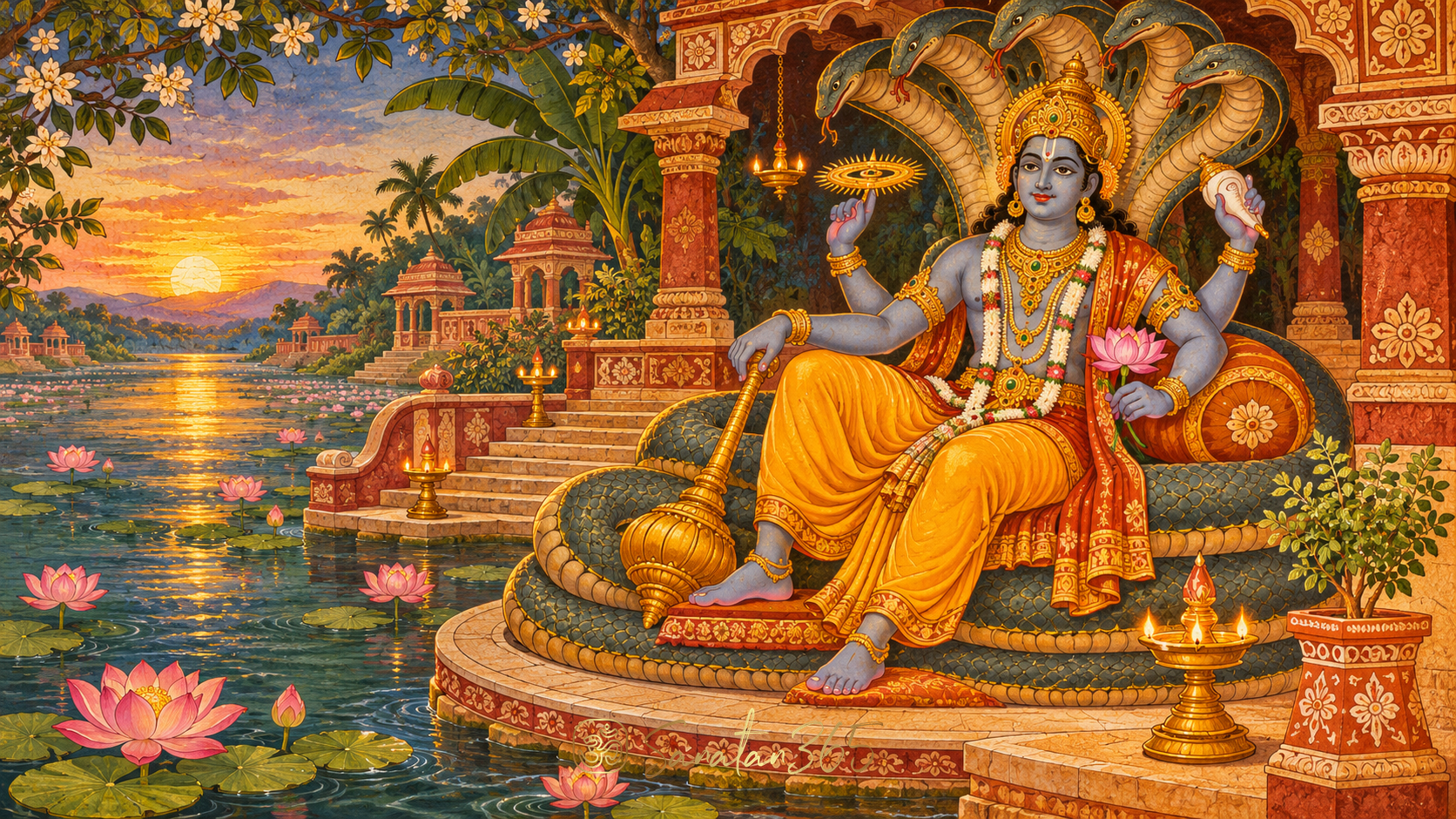
The Dev Uthani Ekadashi 2026 date is Friday, 20 November in Drik Panchang’s primary New Delhi listing; it also gives Saturday, 21 November for the Gauna observance. These entries should be read with their tradition and location, rather than treated as two compulsory days for every household. देवउठनी एकादशी (Dev Uthani Ekādaśī, the Ekadashi of divine awakening) is associated with Vishnu’s awakening from yogic sleep.
The useful next step is to identify the entry followed by the household or temple. A date becomes practical guidance only when the relevant context stays attached to it.
What is the Dev Uthani Ekadashi 2026 date?
The 2026 Prabodhini Ekadashi calendar for New Delhi distinguishes two observances:
| Calendar entry | New Delhi date |
|---|---|
| Devutthana Ekadashi | Friday, 20 November 2026 |
| Gauna Devutthana Ekadashi | Saturday, 21 November 2026 |
The date and the label belong together. गौण (gauna, secondary or alternate) is a calendar designation here, not a statement that one community’s devotion is less worthy.
The same source also separates the festival date from the beginning and end of तिथि (tithi, a lunar day). A tithi can extend across parts of two civil dates. Its boundary is not, by itself, a complete instruction for how an individual should observe the occasion.
For that reason, this article does not turn New Delhi’s clock times into a timetable for every reader. A person in another city should open the calendar for that place and retain the relevant tradition label. A person outside India should avoid copying an Indian timing simply because the festival name is familiar.
This is a matter of reading the information accurately, not making the occasion unnecessarily difficult. Start with the year, the place and the observance name. Then check which entry the household or temple actually follows.
A screenshot that removes the city name or crops away “Gauna” can lose the distinction that explains the dates. When sharing a calendar with relatives, keeping the full label visible is more helpful than sending only a number.
Key takeaway: For the cited New Delhi calendar, keep 20 November’s primary entry distinct from the Gauna entry on 21 November.
Why does the calendar also show 21 November?
एकादशी (ekādaśī, the eleventh lunar day) belongs to a lunar calendar. A civil calendar date and a lunar-day interval are different kinds of information, so a festival page may need more than one line to explain an observance.
Drik Panchang’s general explanation distinguishes the customary first-date observance followed by Smarta householders from the alternate entry that can coincide with Vaishnava observance. A household should still use its own documented calendar and guidance. A broad explanation cannot replace every community’s particular rule.
The practical mistake is to see two dates and assume that one must be deleted. Another mistake is to assume that both must be imposed on every reader. The calendar’s labels should be understood before either conclusion is drawn.
This distinction can be especially useful in a family whose members consult different sources. Before deciding that two people disagree, compare the location and the name of the entry each person is reading. They may be answering different calendar questions.
The same habit helps when a temple announces its programme. The date of a temple’s celebration and the observance followed at home should not be assumed identical without checking. A short question to the organiser can clarify more than a long argument over a cropped image.
The goal is not to make one tradition seem superior. Calendar differences can be approached with ordinary precision and mutual respect. A label that describes a particular observance need not become a judgment about the sincerity of someone following another established practice.
Where a reader is uncertain, the most useful question is specific: “Which Dev Uthani entry does this household or temple follow for this location in 2026?” That question preserves the information needed for a clear answer.
Key takeaway: Different entries can reflect different observance rules; identify the relevant rule before choosing a date.
What does the awakening of Vishnu express?
Dev Uthani is also called Devutthana or Prabodhini Ekadashi. The name प्रबोधिनी (Prabodhinī, associated with awakening) and the calendar’s image of Vishnu waking from yogic sleep give the observance its devotional character.
That image should be approached as sacred language rather than an account of an ordinary person’s sleep schedule. Its meaning in worship is not established by comparing divine presence to human tiredness.
A contemporary reflection can begin with renewal of attention. Something familiar can be returned to with care: a neglected prayer, a regular time for reading, or a willingness to listen more patiently at home. These are suggested ways of reflecting on awakening, not newly prescribed obligations attached to the festival.
The distinction matters because a festival article can easily turn a meaningful image into a list of demands. A reader may appreciate the observance without being told that every household must buy the same objects, repeat an invented count or expect a particular material result.
The symbolism of Vishnu’s conch, discus, mace and lotus offers a separate introduction to familiar devotional imagery. For the present occasion, the central idea is the awakening being celebrated; a complete account of Vishnu’s forms is not needed to read the calendar correctly.
An image of dawn can serve that meaning artistically. Darkness recedes, the surroundings become visible and attention returns to what is present. This is a devotional interpretation, not a claim that the festival’s calendar calculation is based on a particular painting.
The same care should accompany any personal resolve. A modest, workable act of attention may be more meaningful than a grand promise made only because an occasion has arrived. The reflection is an invitation to sincerity, not a scale on which devotion can be measured.
Key takeaway: Read awakening as devotional meaning and an opportunity for renewed attention, without adding unsupported promises or compulsory practices.
How does Tulsi Vivah fit the same weekend?
The 2026 Tulasi Vivah calendar for New Delhi lists that observance on Saturday, 21 November. It describes a ceremonial marriage associated with Tulasi and Vishnu, including the sacred stone form honoured as शालिग्राम (Śālagrāma, a stone revered in Vishnu worship).
तुलसी विवाह (Tulasī Vivāha, the ceremonial marriage of Tulasi) is therefore a related but separately named observance. Its appearance beside Dev Uthani in festival discussions does not mean that every entry has the same purpose or that every household conducts an identical ceremony.
The distinction is useful for planning. A family may receive an invitation to a Tulsi Vivah celebration while also consulting an Ekadashi calendar. Read each notice for what it actually says: the event name, location, date and organiser’s instructions.
Someone wishing to understand the plant’s devotional place can read the meaning of Tulsi in home worship. That broader subject is different from deciding which date a particular ceremony follows.
Regional and household customs should remain visible rather than being compressed into one universal schedule. The calendar source itself notes a range of traditions associated with the observance. This article uses its New Delhi listing as a clear example, not as permission to overrule another community’s documented practice.
A useful calendar note might therefore contain two separate lines rather than one crowded label: the relevant Ekadashi entry, and the particular Tulsi Vivah event the family plans to attend. Keeping them separate can prevent a simple planning question from becoming a theological disagreement.
The relationship between the occasions can be honoured without making them interchangeable. Clarity about names supports devotion by helping people arrive at the right event with a better understanding of what is being observed.
Key takeaway: Tulsi Vivah is closely associated with this festival period, but its event details should be checked separately.
How can a household confirm its observance responsibly?
A short verification process is often enough. The aim is to preserve the context that a forwarded date can lose.
- Confirm the year. A familiar festival name does not make an old calendar current.
- Select the actual location. Keep the city visible when reading timing information.
- Read the observance label. Distinguish the primary and Gauna entries instead of removing one from the page.
- Check household or temple guidance. Use the source followed by the community conducting the observance.
- Keep related events separate. An Ekadashi entry and a Tulsi Vivah invitation may require different planning notes.
पारण (pāraṇa, concluding a fast) is another term a reader may encounter. The calendar lists it separately from the festival date. Anyone following a particular observance should consult the corresponding local entry, rather than borrowing a time from a different city or from the other date’s listing.
A calendar explanation is not a personal instruction to restrict food or water. The form of observance belongs to the individual’s circumstances and trusted guidance. Reading a date correctly should not become pressure to adopt someone else’s practice.
Nor does uncertainty require alarm. A family can ask its question calmly and keep a record of the answer for the occasion. Reverence and practical clarification are compatible.
When information is shared, include enough detail for someone else to check it. “20 November, primary Devutthana entry, New Delhi” is more precise than “Ekadashi is on the twentieth.” The extra words preserve the scope of the statement.
For a temple programme, rely on the organiser’s actual notice for attendance details. A general article cannot establish the timing of an event it has not been given. The calendar and the invitation serve related but distinct purposes.
The single lesson is to keep date, tradition and place together. For 2026, that approach explains why 20 and 21 November can both appear while helping each household identify the entry relevant to its own observance.
Key takeaway: Verify the year, location and observance label together, then follow the appropriate household or temple guidance.
FAQ
Is Dev Uthani Ekadashi 2026 on 20 or 21 November?
Drik Panchang’s New Delhi page lists the primary Devutthana observance on 20 November and Gauna Devutthana on 21 November 2026. The relevant entry depends on the tradition followed; both labels should be retained when comparing dates.
Are two days of observance compulsory for everyone?
That conclusion should not be drawn from two calendar entries. The page distinguishes observances, and a reader should consult the guidance appropriate to the household or community rather than treating both dates as a universal requirement.
Can New Delhi timings be used for another city?
They should not be copied as universal timings. Open the calendar for the relevant location and check the correct observance entry. This is particularly useful when comparing information between India and a household abroad.
Is Tulsi Vivah the same observance as Dev Uthani Ekadashi?
They are closely associated in the festival period but separately named. The cited New Delhi calendar lists Tulsi Vivah on 21 November 2026; a particular ceremony’s date and attendance details should be confirmed with its organisers.
About the author
Sanatan365 Editorial
Bringing Sanatan Dharma to modern seekers through authentic, scripture-grounded content.
Related in Festivals
 Festivals
Chhath Puja 2026 Date: Sunset and Sunrise Offerings
Chhath runs 13–16 November in Patna. Follow the four days from household preparation to the sunset and sunrise offerings, with local solar…
 Festivals
Kali Puja 2026: A Night of Prayer to the Divine Mother
Kali Puja falls on 8 November 2026. Understand the night-time calendar, the address to Kali as Mother, and ways to participate with thought…
 Festivals
Naraka Chaturdashi 2026: Why Deepavali Begins Before Dawn
Naraka Chaturdashi falls on 8 November 2026. Read the Narakasura story, understand the dawn oil bath, and see why Deepavali can begin in th…

