Tiruchendur Murugan Temple: Devotion at the Edge of the Sea
At Tiruchendur, Murugan worship meets the sea. Read its coastal setting, sacred traditions and water observances with devotion, care and historical clarity.
A temple beside the sea asks for a different kind of attention: the horizon remains open while devotion gathers around a sacred presence.
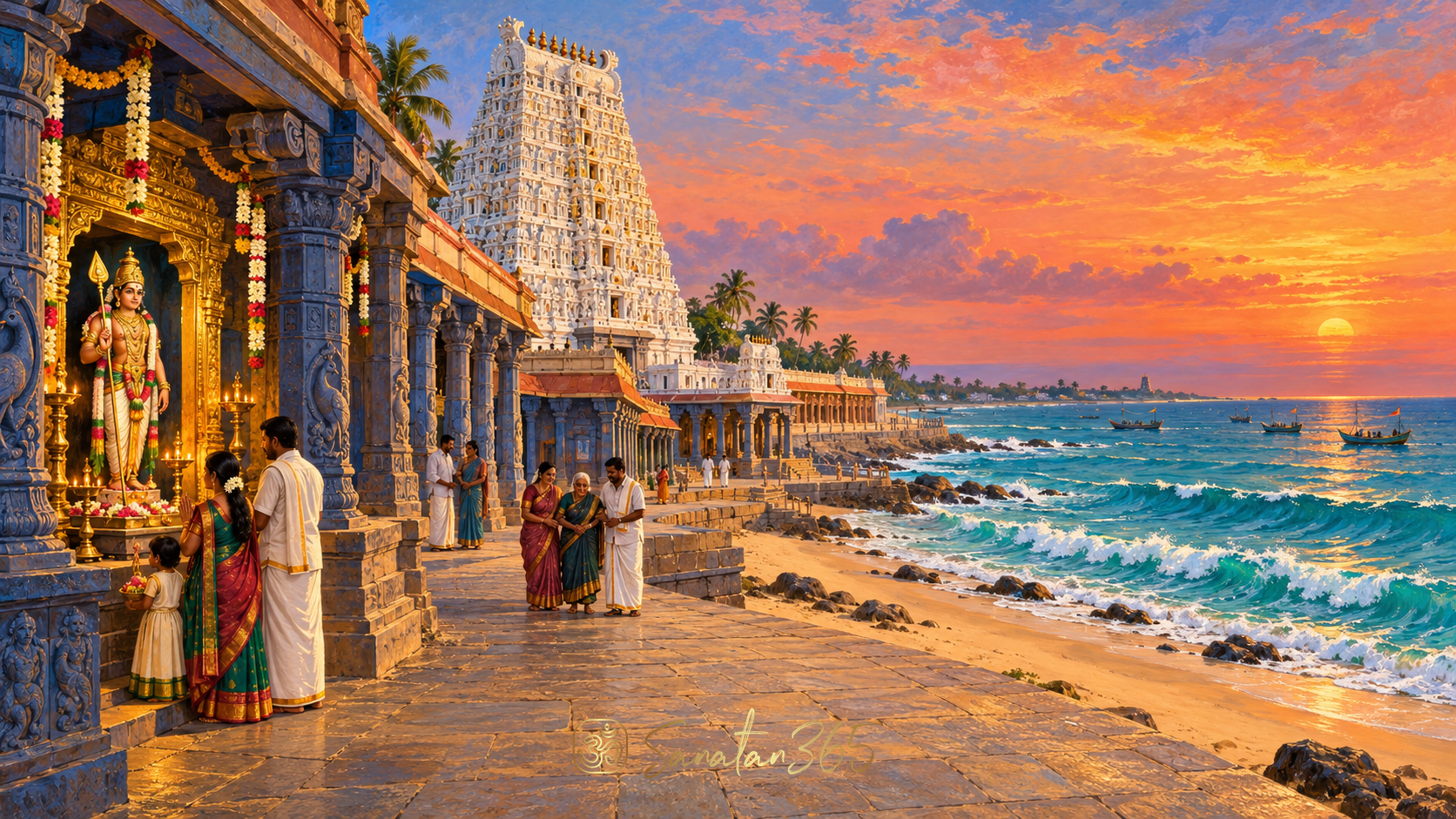
Tiruchendur Murugan Temple is a seashore shrine to Lord Murugan in Tamil Nadu’s Thoothukudi district and one of the Arupadai Veedu, the six sacred abodes of Murugan. Its coastal setting, the tradition of Murugan’s victory over Surapadman, and water observances associated with the sea and Nazhikkinaru give the place its distinctive devotional character. The district administration’s account identifies these relationships without requiring visitors to treat every popular story as archaeological history.
The most rewarding question is therefore not simply what can be seen here. It is how a shore, a shrine and inherited acts of reverence can be approached together, with understanding rather than haste.
What makes Tiruchendur Murugan Temple a coastal sacred landscape?
The sea is not an incidental backdrop added to a familiar temple photograph. Tiruchendur’s identity is inseparable from its shore. The official temple introduction places the shrine on the Bay of Bengal, while the district tourism account describes it directly as a sea-shore temple dedicated to Muruga, another widely used form of Murugan’s name.
The Tamil expression Arupadai Veedu is commonly rendered as the six sacred abodes of Murugan. Tiruchendur belongs within this connected devotional geography, but belonging to a group does not make its experience interchangeable with every other shrine. Here the open water changes the scale of arrival. A pilgrim can encounter the breadth of a coastline and then the more focused attention of worship.
This is an interpretive way of reading the setting, not a claim that every visitor feels the same emotion. Some arrive with family memories; some are fulfilling a devotional commitment; some are learning about Murugan worship for the first time. The same place can hold all those approaches without needing a single prescribed response.
Read the tower without reducing the place to a monument
The district account describes a nine-tiered tower, 157 feet high, and associates it with the seventeenth century. A gopuram is a monumental temple gateway tower. That term describes a built form, not the entire purpose of a living shrine.
The distinction matters. A tower may be discussed through height, date and craftsmanship, while worship continues through prayer, service and repeated return. The visitor who notices only the tower misses the community around it. The visitor who cares only about receiving a quick blessing may overlook the patient labour that makes a shared sacred place possible.
A useful first act is modest: put away the camera long enough to notice how people move, where a queue begins, which directions are given and where passage must remain clear. Attention starts before the central moment of worship.
Key takeaway: Tiruchendur’s coast and temple belong to one devotional setting; neither scenery nor architecture alone explains the place.
How does the Surapadman tradition shape devotional memory?
The official temple introduction presents Murugan as the divine commander who overcomes Surapadman, whose name also appears in variant spellings. It connects that victory with the annual observance of Skanda Shasti: Skanda is another name of Murugan, and Shasti, from Sanskrit ṣaṣṭhī (षष्ठी), means the sixth lunar day. These are the temple’s own statements about its sacred tradition.
In this devotional context the expression names an observance associated with Murugan, not a fixed date in the Gregorian calendar. Anyone planning around a particular year’s festival should consult the current official announcements rather than copy dates from an older travel account.
The story’s force is not limited to military imagery. The official introduction also recounts Murugan offering worship to Shiva in gratitude after victory. Puja (पूजा, reverential worship) is the Sanskrit term often used for such an act. Within the temple’s telling, accomplishment is followed by reverence rather than self-sufficiency.
That sequence offers a thoughtful devotional reading: courage need not end in pride. A person may complete a difficult responsibility and still remember guidance, help and obligations to others. This is a reflection prompted by the tradition, not a claim that the story has only one authorized interpretation.
Readers interested in Murugan’s wider symbolism can compare the meaning of Murugan’s vel. The vel is his sacred spear in Tamil devotional iconography. Its presence should not make every discussion of Murugan a celebration of aggression; precision, disciplined courage and protection also shape how devotees understand it.
Keep sacred narrative and historical dating distinct
Temple introductions sometimes combine remembered sacred events, references to ancient literature and claims about great antiquity. These are not identical kinds of evidence. A tradition of divine action belongs to sacred narrative. Dating a surviving architectural feature requires a different historical argument.
Respect does not require collapsing those categories. It is possible to say, “The temple tradition recounts this,” without claiming that a modern archaeological study has dated the event. Equally, describing a later tower does not establish that worship began only when that tower was built.
For families explaining the place to children, that distinction can be expressed simply: this is the story devotees remember; this is the building detail the district account records; these are questions for further reading. Such honesty makes reverence more durable, not less sincere.
Key takeaway: Hear the Surapadman tradition as sacred memory, and distinguish its devotional meaning from claims about the dates of buildings or events.
What do the sea and Nazhikkinaru mean to pilgrims?
The district administration lists sea bathing and bathing at Nazhikkinaru, a named sacred well associated with the pilgrimage, among Tiruchendur’s holy observances. It also mentions Valli Cave as a place visited by pilgrims. This establishes their place within local devotional practice; it does not establish a requirement that every visitor must perform every observance.
Water can make an intention tangible. Washing, pausing and approaching worship in a different frame of mind give an ordinary physical act a devotional setting. That reading explains why a water observance may matter without promising that a particular action will guarantee wealth, success or an immediate change in circumstances.
Accounts circulating online may add precise measurements, physical explanations or sweeping claims about the well. Unless those details are supported by a reliable source, they should not become the foundation of a visitor’s understanding. The essential point is already substantial: the community recognizes particular waters as part of the sacred landscape.
Sacred water does not cancel coastal conditions
The sea remains a sea. Waves, weather, slippery surfaces and local restrictions must be taken seriously. No devotional account should be interpreted as a guarantee of physical safety, and no person needs to demonstrate faith by entering water that feels unsafe or is restricted.
Follow current notices and instructions from authorized staff. Keep children under close supervision, avoid improvising access to a closed area and do not pressure an older relative to copy the actions of a more mobile visitor. If a practice cannot be undertaken safely, respectful participation need not become a contest of endurance.
Care also includes what is left behind. Packaging, bottles and clothing are not harmless simply because a visit has religious meaning. Keeping belongings secure and disposing of waste properly are ordinary ways of respecting a place shared by worshippers, workers and coastal communities.
There is no contradiction between inward reverence and practical caution. A ritual gesture becomes less attentive when its performance requires ignoring the person standing beside it.
Key takeaway: Understand water observances within their devotional context, while treating safety, access instructions and the coastline with care.
How can a visit move from sightseeing to attentive darshan?
Darshan (दर्शन, reverential seeing or beholding) describes an encounter with the sacred, not merely the successful acquisition of a photograph. At a busy temple, that distinction has practical consequences. A brief opportunity to stand before the deity may follow a much longer period of waiting.
The waiting can be approached as part of the visit rather than as an obstacle that licenses impatience. This does not mean pretending that fatigue, heat or crowding are pleasant. It means refusing to turn discomfort into entitlement over other people.
An attentive approach might follow this sequence:
- Arrive with a clear, modest intention. Gratitude, remembrance or a sincere question is enough; an elaborate private script is unnecessary.
- Learn the current arrangements. Ask authorized staff about queues, belongings and permitted areas instead of relying on an old video.
- Let local worship lead. Observe before acting, and ask courteously when a custom is unfamiliar.
- Make room for others. Avoid blocking a passage for a photograph, a family discussion or an extended personal moment.
- Carry something back into conduct. A visit can be remembered through patience, gratitude or an act of care after returning home.
These are suggested habits of attention, not an official ritual order. The temple’s own guidance governs what is permitted and how specific observances are performed.
A different local tradition can be explored through darshan at Udupi Krishna Temple. Tiruchendur has its own coastal rhythm: an immense horizon outside and a concentrated act of reverence within.
Share the visit without taking possession of it
Photography, where permitted, can preserve a meaningful memory. Permission does not remove the need for consideration. Avoid photographing someone’s private prayer without consent, and never assume that a permitted exterior photograph authorizes a photograph in every interior space.
For diaspora families, the temptation may be to compress a long-awaited visit into a complete record for relatives abroad. A smaller, considerate record often serves memory better than constant filming. A remembered conversation with an elder, a note about a custom or a quiet description afterward can carry meanings that a crowded frame misses.
Key takeaway: Darshan begins with attention and consideration, not with securing the longest view or the most complete recording.
What should a coastal pilgrim prepare before leaving home?
Preparation should separate lasting context from changeable arrangements. The shrine’s dedication to Murugan and its coastal identity are durable. Queue timings, access routes, festival arrangements and permitted items can change. An article cannot replace the latest directions from the administration.
Before departure, check the official temple channel for current information. Confirm transport independently, allow enough time for the people actually travelling and make a family meeting plan. Keep essential medicines and personal necessities accessible within the rules in force. A plan designed around an energetic adult may not work for a small child or an older companion.
A compact preparation list is more useful than a rigid attempt to optimize every minute:
- Verify the current opening, queue and festival notices.
- Check weather and coastal restrictions close to the visit.
- Agree on a meeting point if family members become separated.
- Carry only what can be managed responsibly under local rules.
- Leave room for rest, food, drinking water and changes of plan.
- Avoid treating every optional observance as compulsory.
Visitors comparing coastal sacred places may also find the Shore Temple at Mahabalipuram a useful contrast. That is a different site with its own history and sacred forms, not a substitute for Tiruchendur or evidence that all seashore temples share one story.
The enduring lesson is simple. A meaningful pilgrimage does not need to defeat the clock, complete every possible activity or prove devotion through difficulty. At Tiruchendur, the sea can remain vast, the sacred narrative can retain its depth and the visitor can remain an ordinary person learning to pay closer attention.
Key takeaway: Prepare carefully enough that the visit can be generous toward people, faithful to local guidance and open to unhurried reverence.
FAQ
Where is Tiruchendur Murugan Temple?
It is in Tiruchendur in Tamil Nadu’s Thoothukudi district, on the coast. The district administration identifies it as a major pilgrimage centre and one of Murugan’s six sacred abodes.
Why is Tiruchendur associated with Surapadman?
The official temple introduction recounts Murugan’s victory over Surapadman and links that sacred tradition with Skanda Shasti. It should be described as temple tradition rather than presented as an independently dated historical battle.
Is sea bathing compulsory before darshan?
The district account describes it as a holy observance, not a universal condition for receiving darshan. Follow current temple directions and safety restrictions; do not enter unsafe or prohibited water to satisfy social pressure.
What is Nazhikkinaru?
Nazhikkinaru is a named sacred well included by the district administration among Tiruchendur’s holy water observances. Check current local access arrangements rather than assume every online description remains accurate.
Can visitors rely on opening times from an older guide?
No. Timings and access arrangements can change, particularly around festivals. Use current official notices and confirm the needs of the people travelling before making a tightly timed plan.
About the author
Sanatan365 Editorial
Bringing Sanatan Dharma to modern seekers through authentic, scripture-grounded content.
Related in Temples
 Temples
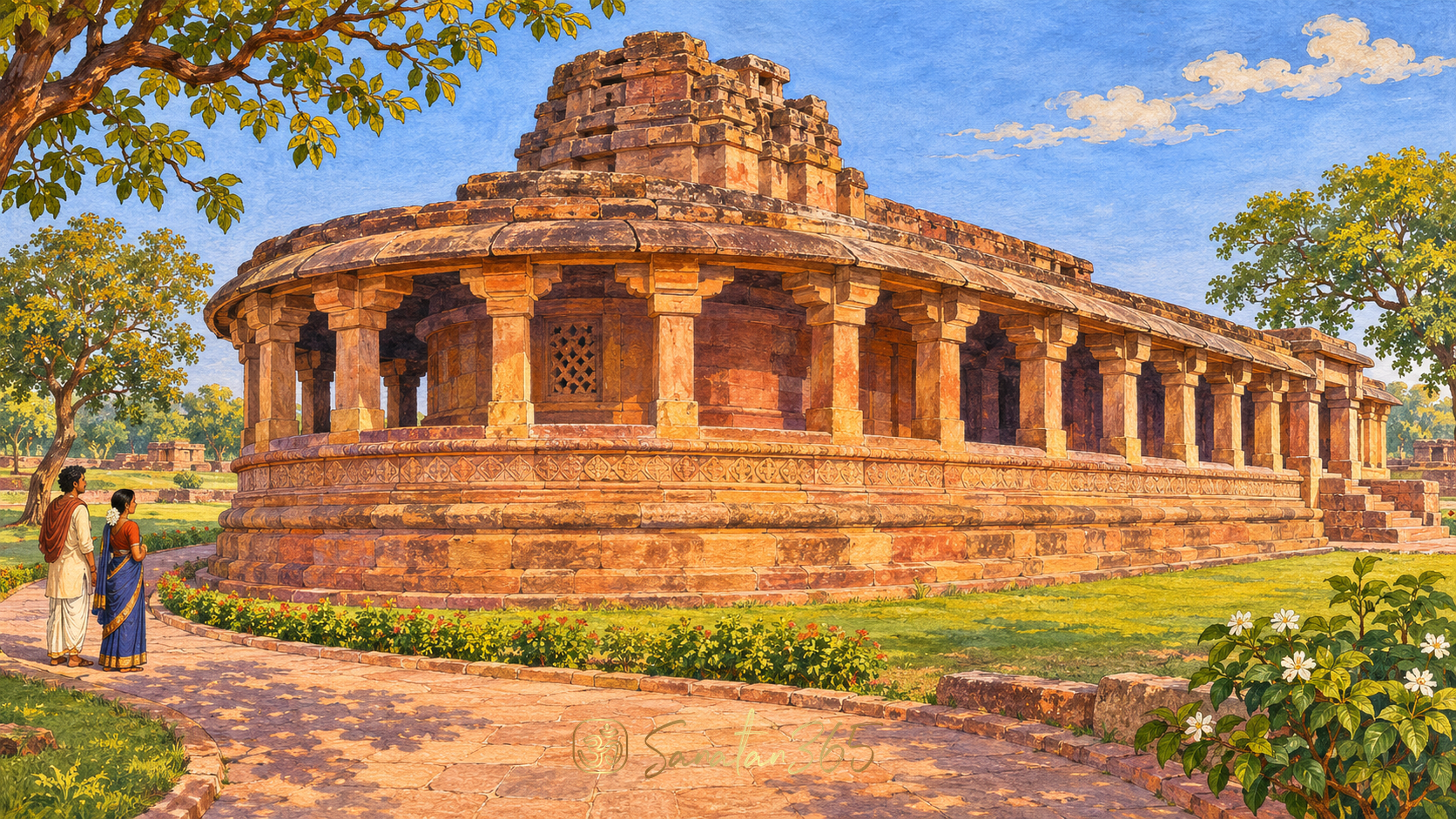
Aihole Durga Temple: Reading the Curved Stone Plan
Read Aihole’s Durga Temple through its rounded rear, raised plinth and pillared gallery, and see how a curved plan creates a sheltered rout…
 Temples
Rajarani Temple: How to Read Its Eight Guardians
Learn to read Rajarani Temple’s eight guardians, distinguish them from other figures, and understand what the carvings can tell us about th…
 Temples
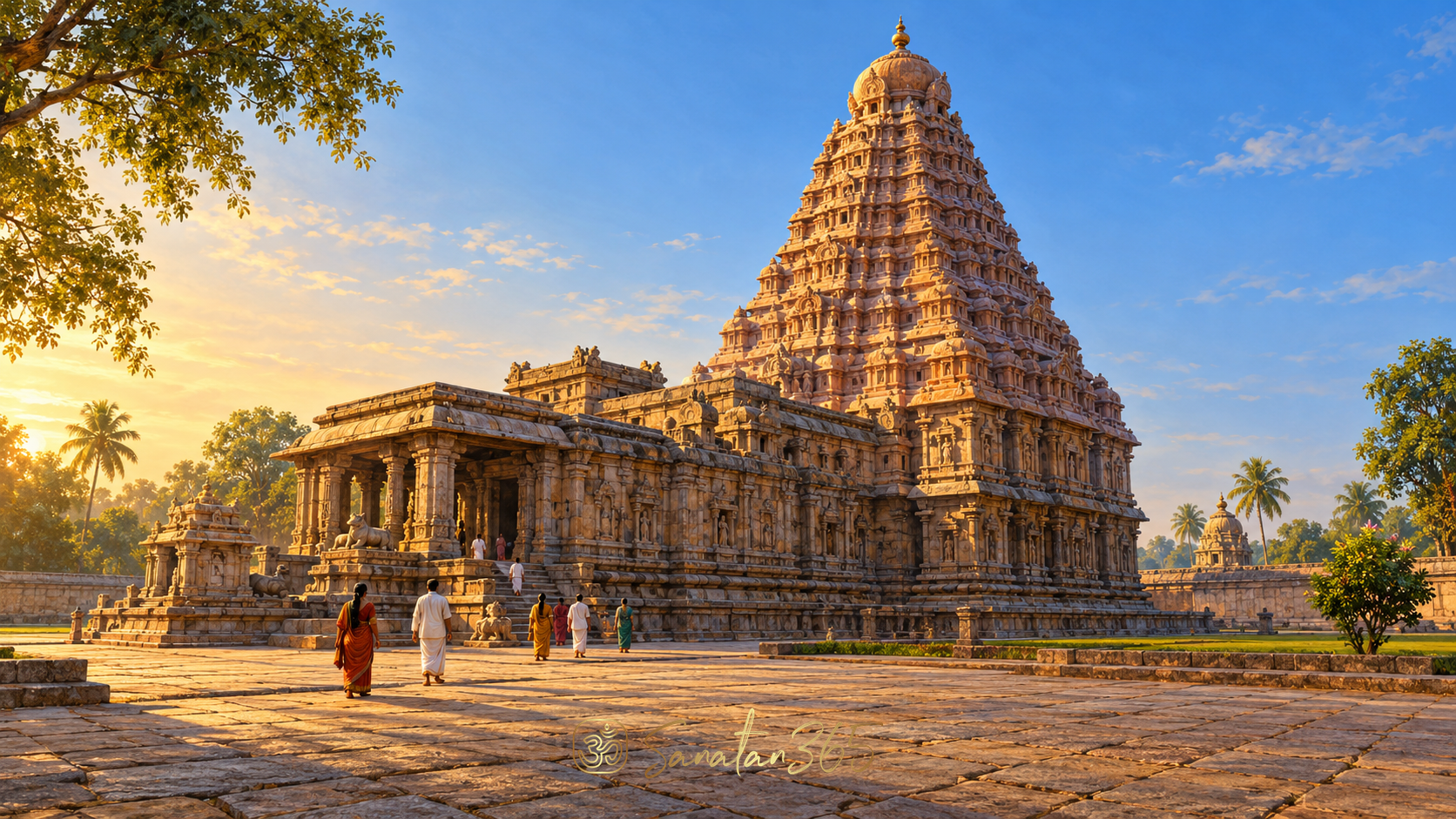
Gangaikonda Cholapuram Temple: Reading the Curve of Sacred Stone
How a curving Chola sanctum tower, carved surfaces and continuing Shiva worship invite a more attentive way of seeing Gangaikonda Cholapura…

