Jatayu Ramayana Story: Courage When Victory Is Uncertain
Jatayu confronts Ravana, protects Sita, and receives Rama’s final honours. Explore courage, truthful testimony, and duty beyond guaranteed victory.
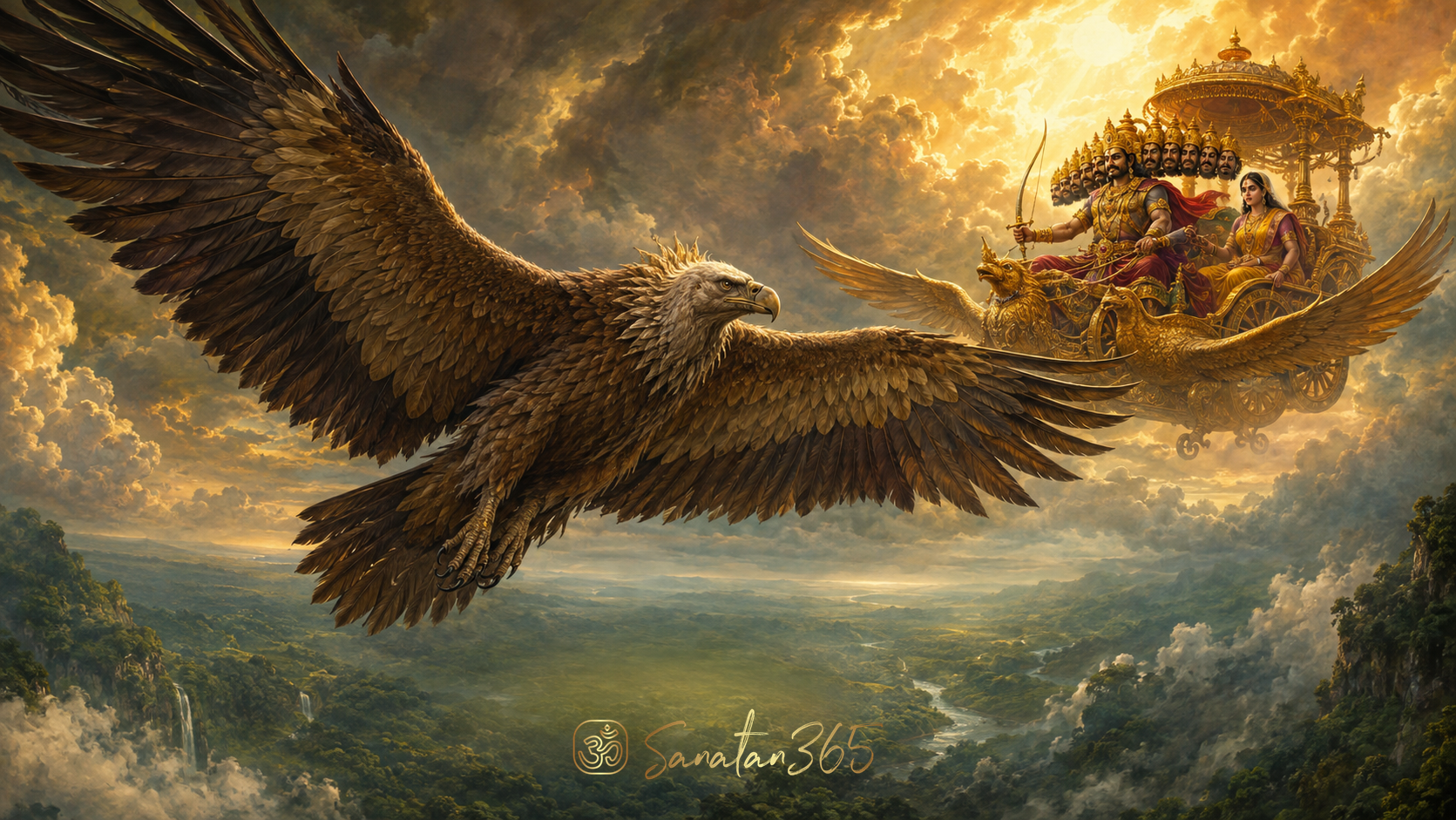
An aged bird stands between a powerful king and the woman he is carrying away. Jatayu knows that the contest is unequal. He intervenes anyway.
The Jatayu Ramayana story tells how Jatayu (जटायु, Jaṭāyu), an aged vulture and friend of Rama’s father, confronts Ravana during Sita’s abduction. Gravely wounded, he later tells Rama what happened and receives funeral honours from him. The episode explores dharma (धर्म, responsible and sustaining conduct): the obligation to oppose a wrong, the value of truthful testimony, and the dignity of service that does not end in visible victory.
Jatayu Ramayana story: who is the aged protector?
Jatayu belongs to the forest world of the Ramayana (रामायण, the epic of Rama). He is neither a court commander nor an invincible warrior arriving with an army. He is old, vulnerable, and personally connected to Dasharatha, Rama’s father. That relationship helps explain his concern for Rama and Sita, but the moral force of his intervention extends beyond family friendship.
The narrative unfolds in the Aranya Kanda (अरण्यकाण्ड, the Forest Book), during Rama, Sita, and Lakshmana’s exile. Ravana takes Sita while the brothers are absent. Her resistance and calls for help make the nature of the act unmistakable. This is an abduction, not a willing departure or a romantic encounter.
For readers following the Sanskrit epic, the chapter 50 translation of Jatayu’s confrontation begins the encounter, followed by the combat; chapters 67–68 describe Rama’s discovery of him and the final rites. Translations may vary in spelling, division, and descriptive detail. The essential sequence remains clear: intervention, injury, testimony, and honour.
That sequence matters because a compressed retelling often ends with the battle. Yet the story’s second half changes how the first should be understood. Rama does not dismiss Jatayu because Sita was not rescued. He receives him as someone whose loyalty and sacrifice deserve personal attention.
Nor should Jatayu be confused with Garuda, Vishnu’s great bird companion. Hindu sacred narratives contain several important avian figures, each with a distinct identity and role. Recognising those differences protects the specificity of the story: this is the act of an aged protector responding to the wrong immediately before him.
Key takeaway: Jatayu’s importance comes from his response to Sita’s danger, not from being the strongest figure in the forest.
Why does Jatayu confront Ravana?
Before the struggle becomes physical, Jatayu addresses Ravana. His intervention includes moral speech: a ruler should protect others, not abuse power to take another person away. Rank does not make an unjust act right. The rebuke exposes the contradiction between Ravana’s royal status and what he is doing.
This is a crucial part of the episode. Courage is not introduced simply as force meeting force. Jatayu names the wrong and calls upon the wrongdoer to stop. The story gives judgment and speech a place before combat.
When Ravana refuses, Jatayu attacks. Although old, he damages Ravana’s means of escape and fights fiercely. The narrative does not portray him as making a merely symbolic gesture. He attempts to interrupt the abduction. Ravana eventually severs his wings, leaving him mortally wounded, and carries Sita onward.
There is no need to make this scene graphic when sharing it with children. The facts can be stated plainly: Jatayu tries to help, is badly injured, and cannot complete the rescue. His courage does not depend on an embellished description of suffering.
Three distinctions keep the meaning of the confrontation intact:
- The person being protected is central. Sita’s resistance and danger are the reason for intervention, not scenery for a hero’s display.
- Power is accountable to conduct. Ravana’s position does not excuse his action.
- An uncertain outcome does not erase responsibility. Jatayu recognises the imbalance without treating it as a reason to look away.
This does not turn the epic into a universal instruction to enter every dangerous confrontation alone. A sacred narrative can reveal a moral demand without supplying identical practical instructions for every situation. In contemporary life, effective protection may require alerting emergency services, gathering help, or following established safeguarding procedures.
The relevant question is not whether someone can reproduce Jatayu’s battle. It is whether concern for another person produces a responsible response. Sometimes the bravest useful action is a clear call for assistance, made without delay or self-display.
Key takeaway: Jatayu confronts the abuse of power through truthful speech and active protection; courage must remain directed toward the person who needs help.
What happens when Rama finds Jatayu?
Rama and Lakshmana are searching for Sita when they encounter the wounded bird. The surrounding signs of struggle do not immediately explain themselves. In the narrative, Rama initially misunderstands what he sees. Jatayu’s words correct that first impression.
This moment gives the story an additional depth. A person can encounter the aftermath of a wrong without knowing who caused it or who tried to resist it. Attention to a witness can change the meaning of the evidence. Rama listens, learns of Jatayu’s intervention, and recognises him as a protector rather than an enemy.
Jatayu identifies Ravana as the abductor and gives what information he can before dying. His physical strength has failed, but his testimony still serves the search. The story does not treat speech as insignificant merely because the battle has ended.
Rama’s response is grief and gratitude. He honours Jatayu with funeral rites, treating him with the affection and respect due to a close elder. The account of these rites belongs to the same narrative arc as the rescue attempt. It is not a decorative ending added after the action.
Readers can trace the episode in the chapter 68 translation of Jatayu’s final testimony and rites. Its details should be read within the epic’s sacred and literary setting, rather than converted into claims about a universally agreed modern geographical location.
Rama’s care also rejects a narrow way of measuring service. If the only question were whether Jatayu brought Sita back, the attempt would count as failure. Rama’s conduct recognises what that measure cannot capture: loyalty, truthful effort, suffering incurred for another, and the relationship created by protection.
There is an important limit to this reading. Honouring Jatayu does not mean that the abduction no longer matters. Rama continues searching. Gratitude for those who help and commitment to the unfinished task belong together.
Key takeaway: Rama honours Jatayu personally while continuing the search, showing that gratitude and unfinished responsibility are compatible.
What does Jatayu teach about duty without guaranteed victory?
The episode challenges the assumption that only a successful outcome makes an action meaningful. Jatayu does not rescue Sita, yet the narrative grants his intervention lasting dignity. His effort matters because of its purpose, sincerity, and actual attempt to protect someone.
That is different from saying that intentions are always enough. A person who means well can still act carelessly. Jatayu’s story invites serious responsibility, not exemption from judgment. Purpose, method, and consequence should all be considered.
A useful reading holds three questions together:
- What is happening to the person at risk? Begin with their situation, rather than an imagined heroic identity.
- What action could genuinely help? Seek an effective response, including support from others.
- What remains to be done afterward? Protection, accurate reporting, and continued assistance may outlast the first intervention.
The final question is especially easy to neglect. Many accounts of courage focus on one dramatic instant. Jatayu’s remaining service takes the form of testimony. Rama’s service then includes listening, honouring him, and carrying the search forward. Responsibility moves between participants without becoming less real.
This theme can be read beside the account of Sanjaya as a truthful witness. The stories are distinct, but both invite attention to how truth is conveyed when events are difficult. A witness does not need to invent certainty or embellish what was seen to make testimony valuable.
Jatayu also gives a different perspective on the relation between age and contribution. His age makes the struggle unequal; it does not make his concern irrelevant. The lesson is not that physical limits should be denied. It is that a person’s worth cannot be reduced to youth, speed, or visible power.
For families, a discussion can begin with a small question: who helped today without receiving credit? The answer may involve a teacher, a neighbour, a colleague, or someone who quietly corrected a harmful misunderstanding. These ordinary acts are not equivalent to Jatayu’s sacrifice, but they can train attention toward service that is easily overlooked.
Key takeaway: Duty deserves more careful judgment than a win-or-lose score, while good intentions still need effective and responsible action.
How is Jatayu remembered across places and retellings?
Jatayu lives in more than one form of memory. He belongs to the Sanskrit epic, regional storytelling, devotional explanation, painting, sculpture, and place-based traditions. These forms can enrich one another without being treated as identical kinds of evidence.
When a storyteller connects an episode with a particular landscape, two questions help: what does the cited text actually say, and what does the local tradition remember? A careful retelling identifies its source instead of turning every association into a conclusively established map of the epic.
The distinction is respectful rather than dismissive. A place can hold profound devotional meaning without every claim about it being a settled historical conclusion. Readers should be able to tell when an article is summarising a text and when it is describing a living local tradition.
Retellings also change emphasis. One may dwell on the battle, another on Sita’s appeal, and another on Rama’s funeral honours. A family comparing versions can ask what each telling brings into focus. Variation need not become a contest over which community cares most about the story.
The episode can be shared with younger readers through a simple sequence:
- Jatayu notices that Sita needs help.
- He tells Ravana to stop and tries to protect her.
- He is injured, but later tells Rama what happened.
- Rama listens, grieves, and honours him.
- The search for Sita continues.
This preserves both courage and consequence. It does not reward children for imagining reckless danger, and it does not disguise the sadness of the episode. An adult can explain that asking trusted people for help is a real form of responsible action.
For another angle on speaking against wrongdoing, Mandodari’s wise counsel in Ravana’s court offers a related but separate narrative. Jatayu intervenes from outside Ravana’s circle; Mandodari’s position is within it. Keeping their contexts distinct makes each story more meaningful.
Key takeaway: Jatayu’s regional and artistic remembrance is richest when textual narrative, local tradition, and practical reflection are clearly distinguished.
Jatayu’s story ends neither with a victory celebration nor with indifference. It ends with truthful testimony, honour, and the continuation of a necessary search. Its lasting invitation is to recognise a wrong clearly, respond with care, and refuse to measure another person’s service only by the result they could control.
FAQ
Who is Jatayu in the Ramayana?
Jatayu is an aged vulture, a friend of Dasharatha, and a protector who tries to stop Ravana from abducting Sita. His confrontation, final testimony, and funeral honours appear in the Forest Book of the Valmiki Ramayana.
Did Jatayu save Sita from Ravana?
He attempts to rescue her and fights Ravana, but he is gravely wounded and Ravana escapes with Sita. The epic honours his courageous service without changing that outcome into a successful rescue.
Why does Rama perform Jatayu’s funeral rites?
Rama recognises Jatayu’s loyalty and sacrifice in protecting Sita. His personal performance of the rites expresses grief, gratitude, and the affection owed to an elder who acted with extraordinary care.
Are Jatayu and Garuda the same figure?
No. They are distinct figures with different narrative roles. Jatayu is the aged protector in Sita’s abduction episode; Garuda is especially associated with Vishnu. Their shared avian imagery does not make them interchangeable.
What is the main lesson of Jatayu’s story?
The central lesson is courageous, responsible duty even when success is uncertain. In daily life, this means taking another person’s danger seriously, seeking effective help, speaking truthfully, and honouring sincere service without demanding that it control every outcome.
About the author
Sanatan365 Editorial
Bringing Sanatan Dharma to modern seekers through authentic, scripture-grounded content.
Related in Stories
 Stories
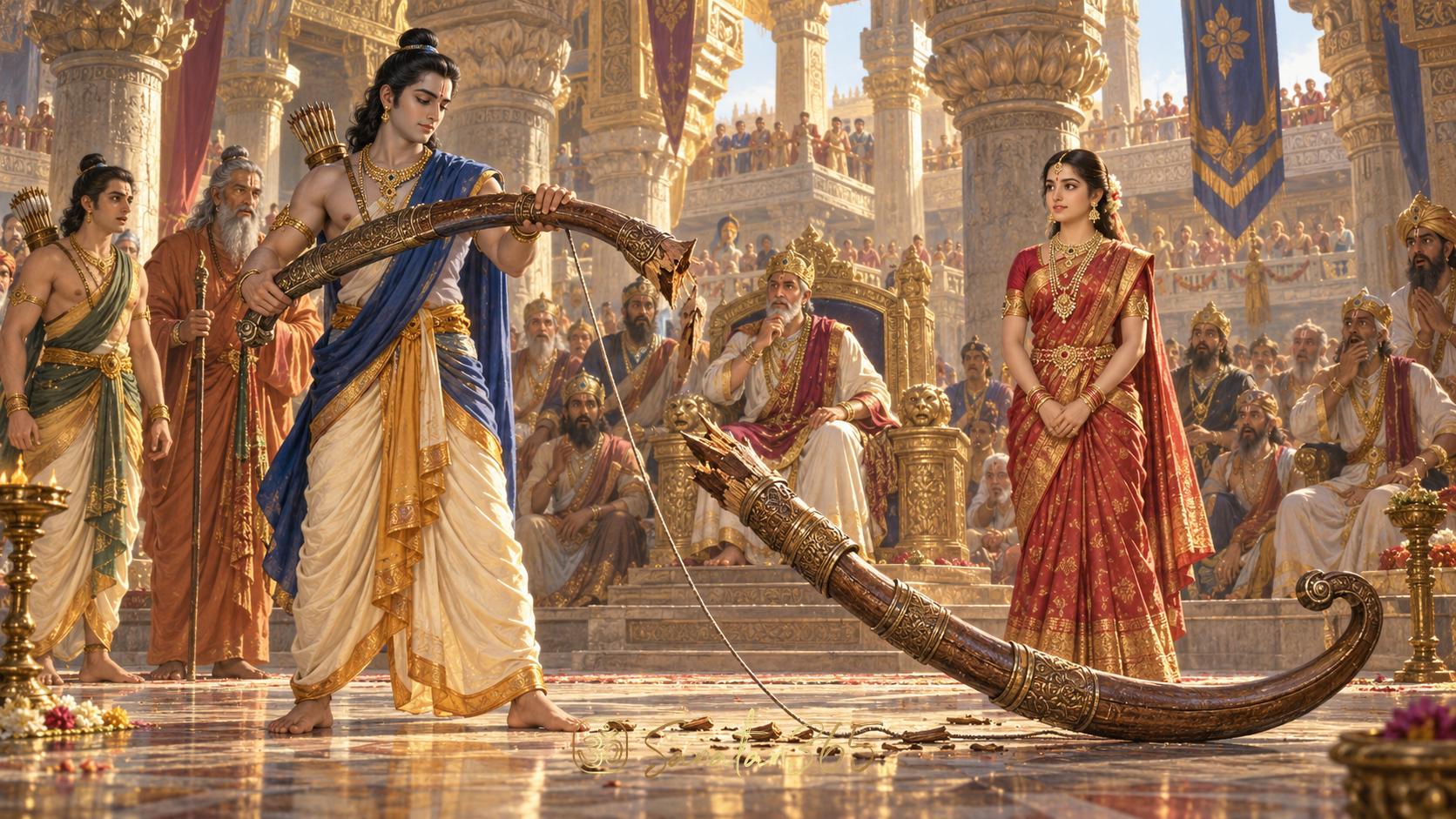
Sita Swayamvara in the Ramayana: Shiva's Bow and the Meaning of the Marriage
Read the Bala Kanda account of Rama, Sita, Janaka and Shiva's bow, and separate the text's sequence from later devotional retellings.
 Stories
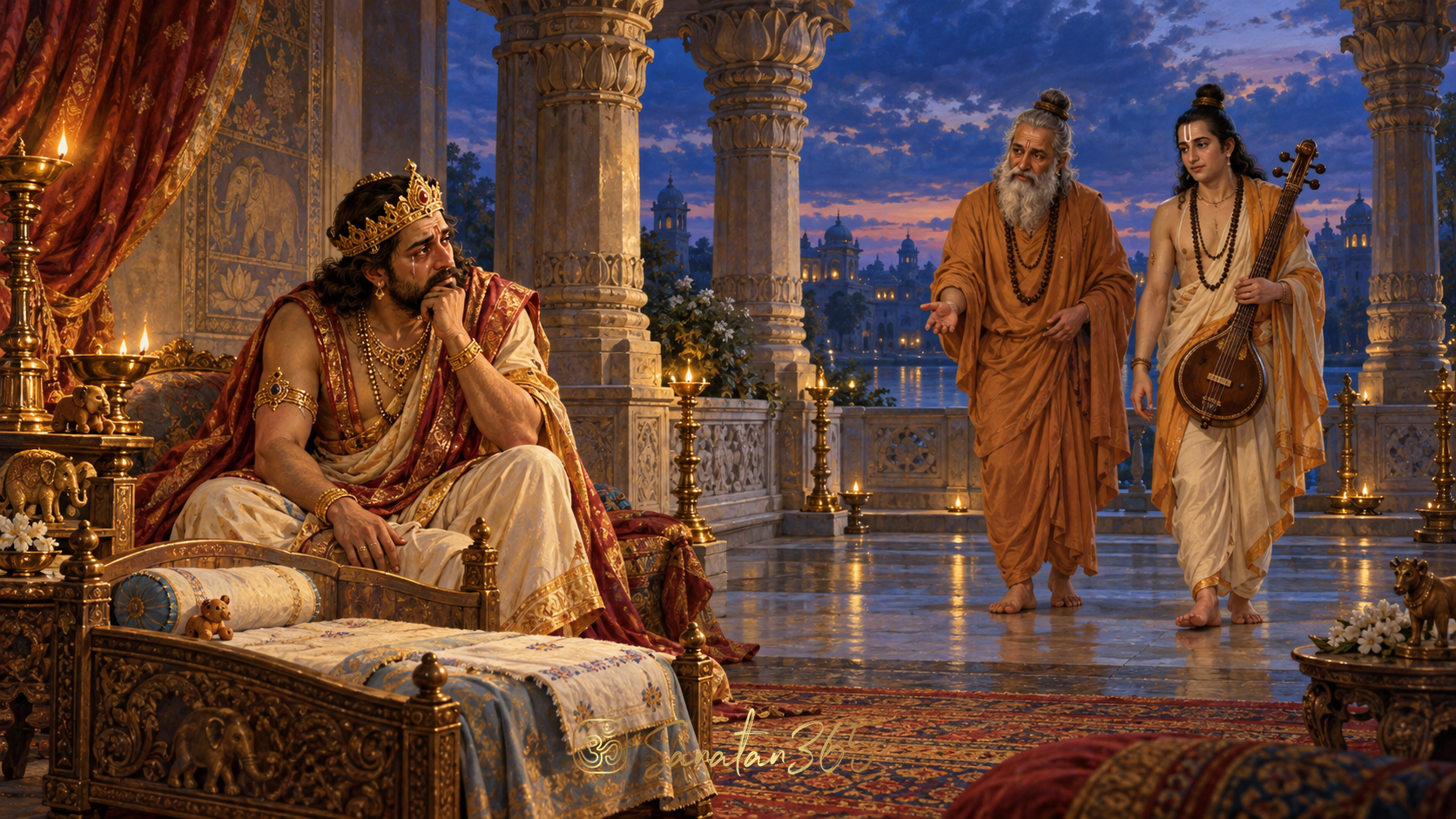
King Chitraketu Story: Grief, Wisdom, and Humility in the Bhagavata
The Bhagavata Purana tells how King Chitraketu met devastating loss, listened to Narada and Angira, and learned a difficult humility. Read…
 Stories
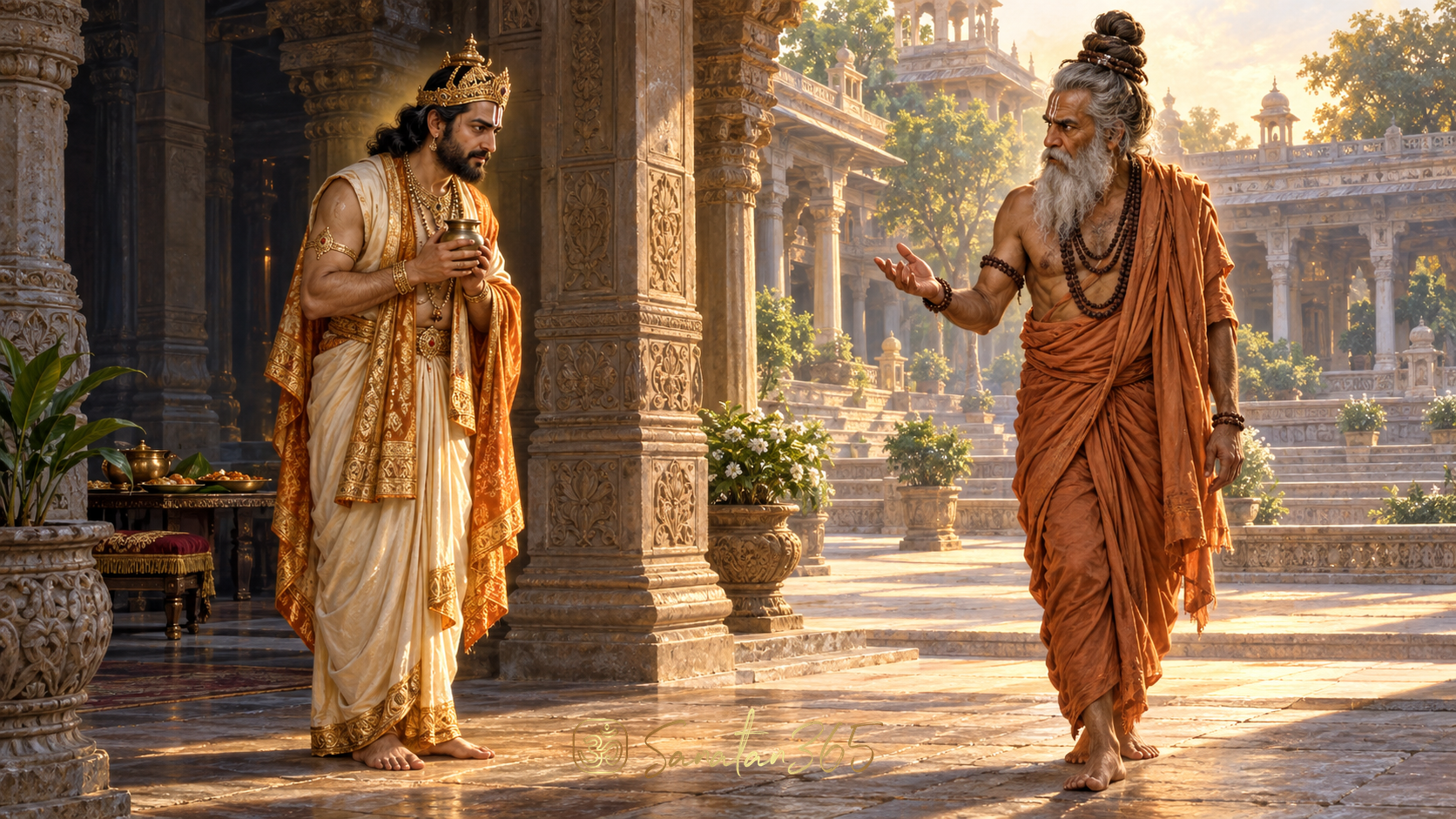
King Ambarisha and Durvasa: A Story of Devotion and Humility
The Bhagavata Purana story of King Ambarisha and Sage Durvasa explores a difficult fast, an angry visitor, and the restraint behind devotio…

